Search

band annie's Weblog

I have a parallel blog in French at http://anniebannie.net

Category

Syria

Tammam Azzam

Tammam Azzam’s latest exhibition ‘The Road’ from 18 January – 3 March 2016 at Ayyam Gallery Dubai (11, Alserkal Avenue). Exhibition will feature the artist’s first series of paintings produced since leaving Damascus four years ago. Read more:http://bit.ly/1OpCKWL

tammam

“A Trip to the ‘Caliphate’: Oppressive Justice under ISIS,”

By Omar al-Wardi

A Trip to the “Caliphate,” Oppressive Justice under ISIS
By OMAR AL-WARDI (a pseudonym for a Syrian who was brought up in the Jazeera region of Syria, where ISIS now rules and who has visited the region many times since.)
For Syria Comment, Nov 21, 2015

Translated by Richard Hanania, a political science PhD student at UCLA

Many believe the subjects of the Islamic State (ISIS) live in a constant state of terror. Some may also think that there is no such thing as normal life in these areas. I myself have written a great deal about the crimes and inhumane acts carried out by the group in its territories in Eastern Syria, particularly Raqqa and Dar al-Zour. Indeed, most of what has been written on these topics is true. But most authors have written from a narrow point of view and with one eye closed. Many of these authors haven’t spent time on the ground and only imagine the reality. They accept the stereotypes repeated ad nauseam by the media. I grew up in the Jazeera and have traveled their a number of times since ISIS took over, spending time in different cities in order to explore the attitudes of acquaintances and relatives alike.

Screen Shot 2015-11-21 at 9.52.53 AM

Region around al-Bukamal

When I traveled to al-Bukamal the first time since after had been conquered by ISIS in the summer of 2014, I believed that I was traveling to hell. I was terrified. At any moment, I expected to be picked out on my vehicle, manically and tortured. I thought I would never return from ISIS-controlled territory alive. I had internalized the notion that ISIS rules only through terror. I nearly passed out from fear at the checkpoints along the way. But, aside from the natural intensity of security barriers and checkpoints, I did not see a picture that fit with the ISIS stereotypes that I had accepted and which had been propagated by the media.

In al-Bukamal, I found a city that was surprisingly safe; one where individuals are unable to attack others, defraud people in the market, or festoon the streets with cigarette butts. Indeed, the city looked cleaner and seemed healthier than I had ever seen it; smoking has disappeared completely, as did any appearances of people sitting around wasting time in cafes as they used to do. It was a city completely different than the one I knew at the outbreak of the Syrian crisis. A consensus among its inhabitants, which number around 400,000 in the city and its surrounding towns, has emerged regarding ISIS rule. Perhaps the biggest proof of this is the fact that ISIS areas are among the regions of Syria from which young people are least likely to flee to Europe, a point that many seem to have missed. For if life were truly hellacious in this city and its surrounding towns, everyone would have migrated to Germany, Austria, or even Turkey. Yet most people have stayed put; they do not abandon their homes and land.

Screen Shot 2015-11-21 at 9.59.19 AM

I disregarded the well-known question: Do you hate ISIS? This is because I already know the answer of why some people hate this group, and the question I had come to answer was how others can love such a bloody and criminal organization, which cuts off heads and drags people in the street after killing and cutting them up. The answers I was given were realistic and coherent, converging on a single theme: ISIS had brought “justice” to the city.

With my own eyes, I saw how the people of al-Bukamal are not as oppressed as they had been in the past. In al-Bukamal most of the people that ISIS have imprisoned are ISIS members themselves. The ISIS regime does not hesitate to punish its own members when they break the law. Even an ISIS emir was prosecuted and thrown in prison by the local governor when it was found that he had abused his power and assaulted innocent people.

This is the model of justice that ISIS is strives to bring the residents of al-Bukamal as well as to Raqqa. The cities of the region have embraced ISIS and ceded their right to use violence in order to punish those who commit crimes or do wrong. They forfeit the use of violence willingly in order to live a life of greater justice and equity. The strong are not permitted to dominate the weak, nor the rich exploit the poor, nor tribal leaders their tribesmen. All live under ISIS law equally, without “wasta” or exception.

The single most important factor that has persuaded people to accept the “Caliphate” is the fact that citizens can go out at any time of day or night without being harassed by the Free Syrian Army or being robbed blind by men claiming to be from Jabhat al-Nusra. This is most true in the tribal areas of the province.

More than one person has told me that the honor of women is never violated. Even the enemies of ISIS in the region concede this. They admit that since ISIS assumed authority, not a single incident of assault against a woman or young girl has occured. This is contrary to the desultory state of social life when Jabhat al-Nusra ruled al-Bukamal. Then, brothels operated openly. Today, you can rest assured that traveling from Dar al-Zur to al-Anbar, a distance of some 350 kilometers, you will not be harmed as long as you obey the law.

One of the main reasons ISIS has been accepted by a vast majority is that corruption was rampant in the area during the first years of the uprising against Assad. First, the militias that called themselves the Free Syrian Army ruled. They disported themselves no differently than thieves and bandits. Civilians lived in a state of anxiety that their possessions would be lifted from them one after the other and fear that they would be harassed and possibly killed. Then came al-Nusra, which was concerned only with power and gave little care to justice or good government. Between the Free Army and Nusra, society was lost. No one dared approach the authorities to resolve disputes. Once the Caliphate established control over the region, however, people have breathed easier and feel less oppressed.

In fact, the residents of al-Bukamal cannot hate members of the organization and those who work with them when they see them trying to deliver water and electricity to the people at affordable prices. Nor can they hate the organization when prices are set at reasonable levels. The ISIS fighters are vigilant on their behalf and up into the night in order to provide for them. This reality destroys hatred, and although some people in the area may not want the organization to remain in power, the weak do, as do the poor who have no one else to fend for them. It is true that some fighters have special privileges, but these are a minority and do not compare to those enjoyed by the officials who were previously aligned with the government, or the fighters of the Free Syrian Army or al-Nusra.

ISIS has all the moral and material capability it needs in order to rebuild the cities it controls. More importantly, it possesses the will to provide a better life for the people. It is still unable to adopt the modern techniques necessary to improve the lives of its people as it promises, but it strives to attain them.

The planes that fly over ISIS-controlled territories have had only one real victory. It is not the killing of fighters or the obstruction of the movement of the organization. Rather, they have simply prevented the group from delivering services to the community, and this is the only real achievement of the coalition fighting ISIS.

I seek to draw a realistic image of ISIS, one that can be compared with and contrasted to the picture of a bloody organization. For it is impossible for a bloody murderous regime to rule without inducing physical and societal security. But this is rarely mentioned in order to tarnish the image of the organization, one that does not need any more than the truth to do so.

The question is, has there developed an ISIS society, meaning has the organization integrated into the larger community? Until now, the group cannot speak of an “ISIS society” in any real sense; in that it is fear and terror that still rules the community. But with the passage of time, if the regime stays in power at least three more years, I expect that there would be a real ISIS society, and this is the biggest fear with regards to the Eastern regions. From this ISIS society will be born extremist and terrorist ideas.

In the next report: How ISIS exploits societal contradictions and historical grudges.

15. SYRIALOVER said:

“They forfeit the use of violence willingly in order to live a life of greater justice and equity. The strong are not permitted to dominate the weak, nor the rich exploit the poor, nor tribal leaders their tribesmen. All live under ISIS law equally, without “wasta” or exception.” (from lead post)

Oh sure!!! Syrians are thrilled to be living under the self-appointed “rule” of misfit, fantasist, power drunk, thrill seeking(frequently criminal and mentally ill) invaders from Pakistan, Egypt, Chechnya, Belgium, Tunisia etc. Having their businesses, homes, school buildings etc commandeered, personal freedoms curtailed and a sinister atmosphere of brutal public punishments for alleged “spies”, blasphemers, homosexuals, cigarette smokers, adulterers – often people dobbed in for personal gain.

I didn’t read this, I have heard it from friends with family caught in the ISIS net around Raqqa.

But the author is 150% right about one thing – the Assad regime has managed to make ISIS look good, having set the bar so low it’s buried underground. After failing to make serious efforts to contain the spread of ISIS across Syrian territory, the regime ruthlessly cut the power and water supplies to the local population when its officials quit Palmyra, then came back and savagely bombed the town into dust without making a dent on its ISIS friends.

I suspect the writer would not necessarily know (or admit) details about the treatment of women by ISIS, especially those arrested or traded. That is one of their main recruitment drawcards.

There are also local collaborators and opportunists who are happy to offer their daughters as ISIS brides in return for loot and privileges, regardless of how the women are treated and subsequently handed on if their “husbands” are killed or leave. (Seehttp://www.nytimes.com/2015/11/22/world/middleeast/isis-wives-and-enforcers-in-syria-recount-collaboration-anguish-and-escape.html)

source

Talking Descartes with Syrian Refugee Children


Maysaloon Talking Descartes with Syrian Refugee Children

Posted: 18 Nov 2015 01:13 PM PST

There are a lot of things people might go and teach to Syrian refugee children in Turkey, but philosophy isn’t usually one of them. In spite of doing an MA in Philosophy at Birkbeck years ago, I felt hopelessly unqualified for the task at hand. In fact, I wasn’t even sure what I was planning to accomplish. Tightly holding my copy of Peter Worley’s, “The If Machine: Philosophical Enquiry in the Classroom” I travelled to Reyhanli, near the border with Syria, to meet the seven hundred and fifty children of the Ruwwad school. Housed in a commercial part of the town, the school was really a converted office that took over a whole floor, with a massive indoor hallway that the children could dash around in during their break. The classrooms were small and cramped, windows were optional, and going to the toilets was a horrifying experience. Sure, I thought, we could talk philosophy here, I mean how hard would it be once we got the discussion going? Harder than I thought, I would later discover.

Owing to the ongoing war in Syria, Reyhanli is full of Syrians, and as they don’t speak any Turkish, Arabic language schools have sprouted up to provide some form of education for the community. The children themselves come from a variety of backgrounds, but the fact that they are even in a school meant they were some of the lucky ones. For a lot of Syrian refugee families, life is too wretched and hard right now for them to worry about sending the children to school.

I started off my first sessions by hurriedly introducing myself to the classroom and, while apologising for my child-like Arabic handwriting, deliberately mis-spelling philosophy. Turning around, I could see some of the children already chuckling. I’d wanted to get the children to relax and so instead of “falsafa” I wrote down “fasfasa“, which literally means farting about. I’d do a mock cringe and apologise when one of the students laughingly pointed out the error, and then correct the word. In explaining philosophy, I used the duck-rabbit picture Wittgenstein liked, and they sort of got my point about being able to see things differently in philosophy.

Right, I’d ask as I turned around, who has heard of philosophy? I’m greeted with total silence, but only a few of the children would raise their hands. In the Middle East, parents usually scold their children when they try to get clever or give cheeky answers, telling them to “stop philosophising”. It’s basically an insult for someone who is being pedantic. None of them ventured to explain what they knew, but they all nodded and grinned when I explained how I thought they’d heard the term. So far we seemed to be on to a good start. Prior to the class, I’d written a few study cards for the topic of the day, and I thought it would be a brilliant idea to start the children on one of the exercises mentioned in Worley’s book, the story of the “Chair”. I started off by asking the children what they thought the chair was, they looked at me like I was crazy. “It’s a chair” one of them would say, and I’d say OK, we’ll see by the end of the session. As it turned out, this lesson was much tougher to get across to the children than I expected. I tried to ask open questions and trigger a bit of controversy but they would only smile back at me nervously, unsure of what I was expecting.  They just didn’t seem to “get” where we were going with this, and their answers were cautious and flat. If the more outspoken children used a particular answer, the next dozen children would all raise their hands and then say the same thing. 

In Worley’s book, he recommends that the children all sit in a circle in order to promote discussion. As soon as I saw the state of the classrooms I knew that this would be impossible. There were forty children crammed into the room, all facing one direction, and all used to only one type of teaching and to rote learning. Furthermore, the teacher, a kindly older man, stayed on, ostensibly to help “control” the classrooms. I was too polite to ask him to leave and that turned out to be a mistake. As I tried to get the children to respond to the story before each “discussion”, he would helpfully repeat what I said, sternly asking the children to sit up straight and “think carefully, then answer the Teacher’s question!”. I cringed inwardly. This was not going to work, and I was conscious of Worley’s recommendation to avoid “leading” the children to the answers they might think I want to hear. The same kind of problems occurred in the other grades, and by the end of the first day, my head was reeling and my confidence was in tatters. I began to have serious doubts about whether this was going to work. After all, my previous three volunteering trips with Karam were about running a “writing” workshop that I’d slowly built up through experience. This was totally outside my comfort zone, and I’d even picked the exercises to match all the ages for the classes. The book had made it seem so easy, and yet when it came to trying to have a philosophical discussion about our perception of objects, my mind seemed to draw a blank. There just didn’t seem to be any feedback.

Steeling my nerves, I decided to follow through the next day, as planned, with the next subject. This time, I threw politeness out of the window and point blank asked the teachers to leave me with the children. “No”, I’d reply, “I’ll manage to control them fine. Sit this one out, go have a coffee and I’ll see you in forty minutes. Thank you.” I closed the door and put on my “theatrical” hat. Building up the story with suspense and dramatic pauses, I finally managed to get the children’s attention and told them the story of the Ring of Gyges, transliterating his name in Arabic on the whiteboard. I stopped and stared at the classroom. “What would you do if you were walking home tonight, after school, and found this ring in the street? What would you do?” I asked them.

At first, they all answered uniformly that they would do good and “help people”. Very nice, I thought, but this isn’t what we’re here for. I could tell some of the boys were grinning mischievously. I walked up to one of them and asked him what he was really thinking. After seeing my enthusiastic acting, and enactment of the story, I felt like I’d broken the teacher/student barrier, and earned their cautious trust. “Well, sir, are you saying that nobody would know if I did something? Or catch me?”

I nodded and waited. “Well, I’d be in paradise. I’d go and smack the people I don’t like and get myself a fast car and all the things I’d want!”

From here, we got the ball rolling. The story “clicked” in the student’s minds far better than my “chair” story, and I felt like this was something they could relate with. A lot of the children in all four grades said they would use the ring to go and “kill Bashar al Assad” and I chuckled at that. I hadn’t wanted to bring Syria up in the workshops, but, as I would later find out, this was not only inevitable, but extremely useful. The girls were not so ready to accept the idea of actions without consequences. Within minutes, the first girl brought up the A-word, Allah. 

“Even if no body sees you, Allah sees everything, and He will punish us for any wrong we do”, she explained. OK, this was getting interesting, and I was aware the whole class was listening intently. Here, I used Worley’s “If” machine, and it turned out invaluable. In Arabic, “If” translated directly doesn’t quite carry the same meaning, in my opinion, so I used the word “Iftirad” – which can be loosely translated as “Assume”. I’m not an expert on this stuff, but I know enough Arabic to know when a word works and it doesn’t. I also quite liked the idea of being the first to introduce Worley’s “If Machine” to Syrian students as the “If-tirad Machine”. So I asked her, “If Allah said that anybody who wears this ring can do whatever they want, what would you do with it?”. She thought for a minute, and then replied that “yes but I would still know I did those things, and I’d be punishing myself”. A tough, but evasive answer. We ran out of time sooner than I expected, but we did get to ponder briefly Socrates’ question of why somebody should do good even if they suffer. Not many had heard of him, so telling them a bit about ancient Greece and how he’d been put to death for basically being “annoying” was the first time many of them had heard about the classical world. Still, I felt that the discussion rolled a lot easier from here, and though the children were still talking mainly to me rather than each other, I felt a lot more confident by the end of the second day that things were going to work out.

The third workshop I carried out with them proved to be much more successful. The children, even the older ones in grades six and seven, all remembered the story of Giges and the magical ring and were now interested to hear my next “story”. I introduced them to the old fable of the frog and the scorpion, and now the children were starting to get active. Differences of opinion were starting to emerge, and even the bashful children were feeling more confident in voicing their opinion. Even the ‘rebels’, sitting in the back wanted to have a say in the matter. I was now rolling with it, so I complicated the story by substituting it with people, again with appropriate theatrical flair. From here, the classes started to take a life of their own, but the discussion still wasn’t as active as I’d have liked. We talked about human nature and whether it was fixed, and asked for a show of hands to see what the children thought, then I told them what Schopenhauer, Sartre, and Aristotle thought. Surprisingly, most of the children changed their mind when they heard of Aristotle’s idea (which I mentioned last) that “habit” was what shaped our character. They nodded their little heads sensibly and asked to be moved to “his” side. Schopenhauer had a few die hard supporters who remained adamant that people can never change.

During my discussion with one of the grades, and through no prompting from me, the subject of “good” and “bad” people came up. I asked the children whether they thought people were inherently good or bad, and they all, unanimously, said that people are bad, and that given half a chance everybody would take advantage of you. After seeing war, exile and a hard life in a border town in the middle of nowhere, these children all had a firm idea of what human nature was essentially like. I took the chance to talk about Thomas Hobbes and his view that the life of man was “nasty, brutish and short”. The children shrugged indifferently. I felt at the time that maybe I hadn’t explained properly, and that that’s why they weren’t that interested in discussing this idea further. It’s only now, as I recall that class and sit writing about my experience, that I realise why that was the case. To them, this Hobbes chap wasn’t saying anything profound or controversial, it was just life. That this is the world they live in (at this very moment), that it’s all they know, is unsettling to me. It might as well be a million miles away from the brightly lit lecture halls in London where I read my masters.

On our final day, all the stops were pulled. My final “story” was the “Identity Parade” question: A criminal takes a pill to wipe his memory and gains a new identity, but the police arrest this new person who is law abiding and nice, and want him to go to prison for the crimes of the previous personality. The discussions were getting surprisingly sophisticated, and the children were starting to disagree with each other openly. Here, a fundamental problem with the size of the classes got the better of me, they were too big, and I went hoarse trying to make myself heard and to get the children to speak in turn. I watched with some amusement as one of the formerly disruptive boys turned around to a mate of his who was chattering in the background and told him to shut up because he wanted to listen to the discussion.

The discussion was flowing so smoothly that I had just enough time to broach the topic of identity, and that moved us nicely to Descartes and his famous thought experiment, “I think therefore I am”. I doodled a stick man with arms and legs outstretched, closed eyes and closed mouth, and wrote the phrase in Arabic after I’d acted out the thought experiment to them. At this stage, one really needs to have been in the room to see the light come up in their eyes. For some of the children, I could see them staring at me thoughtfully as they pondered the implications of what I was trying to explain. Then I gave them the counter argument from Locke, at the risk of being slightly more controversial. At this stage, the teachers were asking to sit in the classes, and seemed very interested in the topics we were covering.

On the final two days, an unexpected challenge came up. I was asked to do a workshop with the ninth grade, older boys and girls. So far, my style was geared more towards children. How would the Identity Parade go down? My “Frog and Scorpion” workshop went down quietly, unlike with the younger grades, and again I had to overcome the uncomfortable silences and uncertainty about what we were trying to do. I felt like they hadn’t been impressed with our earlier encounter. Sweating nervously, I walked into their class for the last workshop of the week. It was showtime.

To my surprise, they were now fascinated with what I had to say. It turns out my little whirlwind tour of philosophy in the Arabic and Islamic world, and its Greek origins, had fascinated them. The discussion kicked off in ernest, and the students started vigorously debating their ideas about whether the man should go to prison or not. What did it mean to be one person and then another? When was it right to ascribe the blame for something? In what conditions? What would they do if they were that person? The points flowed effortlessly and with little guidance from me. As I started to wind down the class, I noticed that many of the students were of the opinion that the “new” person in the Identity Parade story should not be punished for the previous personalities actions.

“OK”, I asked them “now imagine that the person who did those crimes was Bashar al Assad, and that he’d taken a pill and was now a completely different person with no recollection of his previous crimes”. The class literally erupted as most of the students said no, several making cutting gestures across their necks saying that they would still execute him. “Why not?” I asked them. I hadn’t planned on this little twist, but it just came to mind, and it seemed so right. Many sat silent and didn’t have an answer, but I could tell they were pondering the question extremely seriously now. Some of the students now started arguing bitterly with each other about whether the thought experiment still applied. With this small question, I concluded the class and explained to the students that philosophy was about asking the hard questions, the unsettling ones, that challenged our view of what was right and wrong, and that this is why it was as important today as it was two thousand years ago. I think I was talking mainly to myself, because I walked out of that class with unexpectedly new insights about what philosophy meant.

source

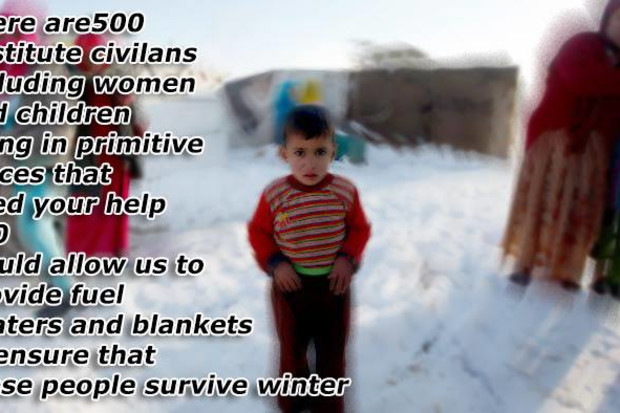
Helping Syrians survive winter

Ndnat3p66ylglftxl6nr
$** would allow us to provide fuel, heaters and blankets to ensure that these people survive winter.
Thumbnail
Mzahem Alsaloum

Contact  Voir plus d’informations

Very soon, there will be a volunteering campaign to be launched in the Northern of Syria for IDPs` families of over 500 people from the city of Deir Ezzor, due to the march of ISIL forces towards the Northern of Syria. In fact, those families live under extremely harsh circumstances, where they have no shelter, no resources, and no food (they are dwelling in the open areas and abandoned ruined houses, with no windows, doors, or even any piece of furniture).

Therefore, the campaign is designed to provide heating devices, blankets, and diesel. Also,it will be providing all necessary items to fight the up- coming freezing winter, that is estimated to last for over six months( with possible harsh snow storms-that could last for over 20 days-, according to the weather reports)

There will also be a fully-documented process for the entire campaign( formal receipts, videos of distribution, etc).

Speaking the language of figures, it is worth mentioning that only ($50) can provide full coverage for one person of those families. So, with only ($50) you can save somebody`s life throughout this campaign. No limitations on the number of people you want to sponsor, so, you can protect as many people as you can, with only($50).

All the above-mentioned cases( including the elderly, women and children) cannot provide themselves with the minimum living standards, so in providing assistance to them, you are actually saving their lives, for warmth means life in the midst of the freezing winter.

All documentation papers and videos will be available on the following link:

https://drive.google.com/open?id=0B2lbjhz45dweREdWQXM3Ym80dFU

Attention point: The minimum amount of the donation does not include the taxes imposed by the assurance companies, therefore, providing the minimum amount of donation does not mean providing the required amount of warmth for the families.

سيكون هنالك حملة تطوعية في ريف حلب الشمالي لـ 500 شخص من عوائل نازحين من ريف ديرالزور بسبب تنظيم داعش نحو ارياف الشمال السوري، هؤلاء النازحين لا يوجد اي أحد يدير لهم بالاً لذلك يعيشون ظروفاً سيئة للغاية حيث أنهم لا يمتلكون قوت يومهم ويعيشون في العراء او منازل بدائية لا يوجد لها حتى شبابيك او نصف مكتملة او ينامون في ابنية مكشوفة على صفائح توتياء.

ستتضمن الحملة شراء مدافئ وديزل وبطانيات وكل مستلزمات تحمّل الشتاء كاملة عن 5 أشهر من الشتاء والبرد القارس، يمر خلالها 3 عواصف شديدة سيكون 2 منها طولها 15-20 يوماً، وستكون من اقسى العواصف التي مرت على المنطقة.

وسيكون هنالك عمليات توثيق من خلال فواتير رسمية بالاضافة الى فيديوهات وصور عن كامل الحملة وعمليات الشراء والتوزيع.

تستطيع أن تكفل شخص بـ 50$ تشمل تدفئته خلال الشتاء كاملة، حيث أنه بعد وضع خطة ودراسة للأمر ستكفل الـ 50$ هذه تدفئة كل شخص من هؤلاء لفترة الشتاء كاملة وستبقيهم على قيد الحياة بمعدل الحد الأدنى من المتطلبات الإنسانية للشخص الواحد كي يستطيع تحمّل أعباء الشتاء القاسي.

كل 50$ تكفي شخص واحد، دون تحديد لعدد الاشخاص الذي تستطيع كفالتهم.

ان جميع الحالات المشمولة في الحملة لا يستطيعون تأمين ما يأكلونه في يومهم لذلك تأمين هذا الحد الادنى من التدفئة لهم يعني انقاذ حياة الكثيرين منهم وبينهم أطفال ونساء وشيوخ، وتعني بالتأكيد انقاذ صحتهم وكرامتهم الانسانية جميعاً من ناحية التدفئة خلال فترة الشتاء كاملة.

سيتم اتاحة كافة الوثائق والصور والفيديو للحملة وصرف المبالغ على الرابط التالي:

https://drive.google.com/open?id=0B2lbjhz45dweREdWQXM3Ym80dFU

تنويه : الحد الأدنى لا يشمل الضرائب المفروضة من الموقع ومن ادارة شركات الائتمان والتحويلات الخارجية، لذلك الوصول للحد الأدنى لا يعني الحصول على القدر الكافي لاتمام عملية التدفئة.

SYRIA – The long journey of a Syrian refugee (part 2/3): Turkey’s bad guys*

 0

The Redaction of The Maghreb and Orient Courier publishes the story of Nori, a 21-years-old Syrian refugee, in three parts (in its issues of September, October and December)*. Nori told our correspondent the story of a journey towards life. He was a citizen of Homs and after his family had fled the war and his brother had died, nothing kept him in his city. He decided to leave his city behind, and the violence, war and misery that went with it. Here is his story.

* ALL DONATIONS TO THE MAGHREB AND ORIENT COURIER WITH THE MENTION “SYRIAN REFUGEE” WILL ENTIRELY BE TRANSFERED TO NORI, THIS STORY’S PROTAGONIST – THANKS A LOT TO OUR READERS FOR SUPPORTING HIM.


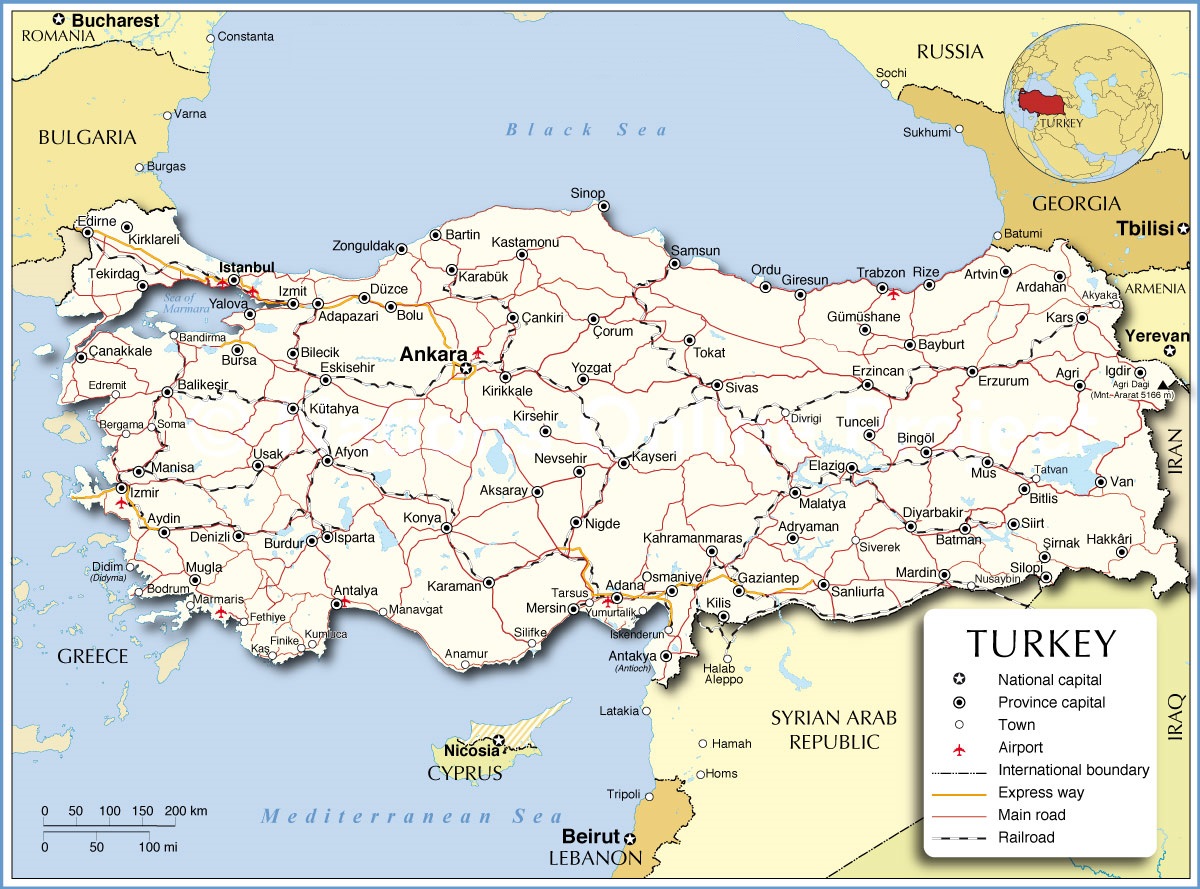
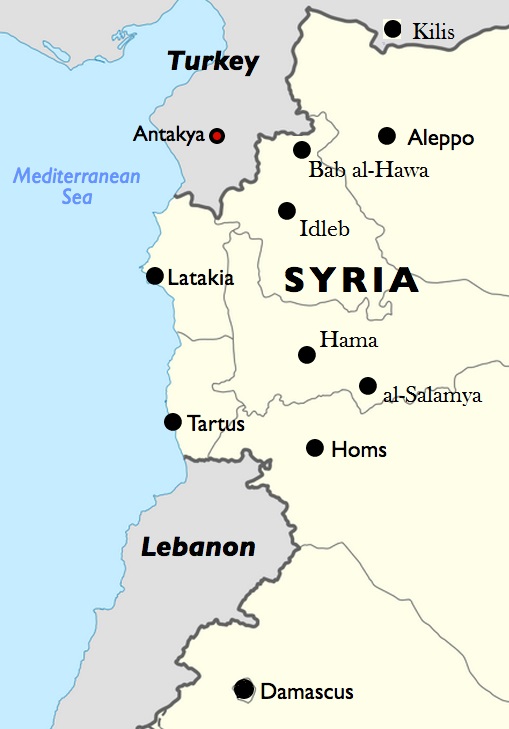
On Friday, 17th of October (2015) I met my friend in Antakya, he rented a house for his family, that was coming from Syria… I had not seen him in five years. We had one good week together. I felt free and safe. We spoke a lot and went for walks outside. After one week, I moved to Reyhanli city, which is about 30 kilometers East of Antakya, to meet another of our friends; he was in an hospital. There, I spent ten days among their sufferings… I saw unexpected situations, and how badly the responsible men treated the wounded. I decided to stay.

SYRIA - October 2015 - Amhed SAYED'

After a while, the patients organised a small ‘revolution’ and got rid of the head of the service and his assistants, kicking them out of the house with their crutches and walking sticks… They chose my wounded friend to become the new bearer of responsibility. They wanted to depend on themselves -my friend told me I could help them and would even receive a salary. But I declined and said that I had come to Turkey to be free and not to stay in a place of suffering. Very soon they obtained new supporters and more money every month… Their lives changed for the better, they had fun every day, money was distributed a few times a week …

But I thought, I must get to work, so I called a friend in Adana to find me a job; there are a lot of Syrian refugees in Turkey… He told me to visit him and then he could find a job for me. I did not really have any trouble with the Turkish language, because I had taken some lessons in my village, near Homs. At my friend’s house, his family inquired about every thing concerning their house, neighbours, relatives and the position in the city…. They were so happy to see a man from our city… After three days, their neighbour found me a job in the Imam Oğlo village in a wheat grinding mill, about 40 kilometres West of Adana, and I agreed. He gave me the address and told me that I could just go to the place.

At the beginning, I felt happy about the good treatment by the boss. There was a twenty-year old guy working with me; his name was Musa. And a fifty-year old man called Mevlud (he used to tell me about his five fantastic years in Germany, as an illegal resident).

Day after day, the boss depended on me concerning everything in the place; I was student in engineering, in Homs University, and I began to be very helpful in managing his business… He taught me how all things work; everything about wheat and corn, dealing with the customers and how I scale the full cars when they came… There was also an old man; his name was Recep. His father was Bulgarian and every night I used to sit with him for about two hours. He only knew Turkish, but I could understand. His job was to guard the place at night; he became expendable because I would sleep in the office, so there was no need for him.

Although the boss was drinking with him every night, he got rid of him to save money…

The owner of the place is my boss’ brother who has a big factory in Ankara. After about twenty days he told Musa that he was not needed anymore. I told Musa that I would find another job for him to do, so that the boss would need him again…

At the end of the month, the boss did not give me the whole salary of 800 Turkish Liras he promised. He said he did not have enough money! After a while, three guys from Homs came to work at the same place but they had a hard job with corn; the boss brought Kurdish workers to do this job for a lot of money, but he became happy to exploit the Syrians for less money…

When we have a day off on Sunday, the boss drove with us to Adana and stayed with us, watching us… I don’t know why!

One day, he asked my friend to work all the night, but in fact, he couldn’t… I was translating for my friends and advising them what to do…  He had no problem for them to give up the work, but he needed me… So, he gave them all their money and only a little to me, because he thought that maybe I would go with my friends… Something he wished to avoid.

So, he planned a game for me, with his local police friends…

One afternoon, two policemen came and asked me for the Turkish ID card, and I showed them my Syrian card… They arrested me.

They told me on our way to the police station that I had stolen 15 Liras from the market, at five o’clock this day, and showed me a picture of the bicycle standing in front of the grind mill place – I did not know what they meant to communicate with it… We arrived at the station and four policemen wanted me to say that I stole the 15 Lira from the market, in a bakery. But I insisted that I did not understand them and that I needed a translator; when you are refugee, it is better to communicate with a translator than with bad policemen…

After a moment, one of them started beating me. But I did not fight back… because they are policemen… We know that very well in Syria.

They brought the poor baker in and asked him whether I was the one who stole the money and he said yes … I think they had simply asked a poor man to say so for some coins.

Finally, after two hours of waiting and investigations, the translator came; he told me just to tell them that I stole the money and they would let me free. But I told him that I have never stolen anything, so why would I steal 15 Liras? I also used to give poor people more money when I was in Adana. The translator told them that I refused to admit. Then they told him to convince me that I was dealing with security and they could put me into prison for long time. I answered him that I prefer to be in prison for ever and die there than to steal…

My boss then entered, perfectly times – I think he was preparing for his role next to the door – he said that on Sunday morning at five I was with him, he was driving me and my friends to Adana… He continued, that the robbery was on Sunday in Imam Oğlu and that I was in Adana…. Then he told the policemen to leave me … and that I was innocent.

We came back for work and I understood why he had planned all this story…

First, he would get my freedom – anytime I would decide to go, he would make problems for me, threatening about the robbery. Second, I must always work and do not receive all my money… So, I planned my game to change things, I told the boss that my brother would be in Turkey soon and I must bring him here. I asked him if my brother could work here and he gladly accepted.

But on the next Sunday I couldn’t go to Adana because the police said that I must not leave the village until eight days after the incident…

So, I decided to leave my job not on Saturday or Sunday but I simply left without getting my whole pay… I prepared myself at seven in the morning, and when Mevlut came to open the office, I told him that my brother was waiting for me in Reyhanli, and I had to go, so he should give me my money. But he said that he had to ask the boss – he called the boss, but the boss did not answer… Because every night the boss drinks too much and then talks with girls on the phone… Mevlut told me that I should go to his house, but I refused and insisted to have my money. Eventually he gave me half of it, leaving about 100 euros with them. I then took another way, a shortcut to Reyhanli where I had contacts that could help me further.

After few months, I became a bit mad… Where was my life?

I contacted a Belgian friend… He is journalist; I met him in Tal-Biseh, my village, near Homs, at the beginning of the revolution. He came to us; he was the first European journalist I saw.

I told him that I was thinking to go back to Syria; impossible for me to continue this life in Turkey… I thought to go to the governorate of Idleb, to find a job; Sarmada was still a lively city, but maybe not for a long time… I didn’t know what to do… He helped me to find a job in Istanbul: he gave me contacts, and one of his Syrian friends in Istanbul welcomed me… I told the guys of Reyhanli that I must leave and they gave me some money, but I refused.

I got to Istanbul and I started working as a painter, earning good money… My new boss and the workers were Kurdish; they were very good people and they became friends. I remain in contact with them until now – I even learned a little bit of Kurdish language with them.

About three months later, our job was done and there were no more jobs for us to find… The three Kurdish workers were refugees too… So, we decided to go to Europe, to rebuild our life.

With my three new friends, we travelled to Greece; from Aderna, by foot. When we got there, we understood that we were not the only refugees wanting a better life in Europe: we met a lot of Syrians who had tried many times to cross the border, but in vain… To tell the true, I knew it: I had a friend in Lebanon, a refugee too; he also wanted to come to Turkey. His plan was to travel through the sea, on one of these “boats of death”. This trip was our last solution to find our life again and a future…

So, we decided to sail to Greece. But we did not have enough money for that… Turkish guys who organize the refugees business with the boats ask a lot of money…

source

Fragments of so-called life in Syria

SILAY SILDIR – Ankara

In her latest book ‘The Crossing,’ PEN award winning Syrian journalist Samar Yazbek gives an account of what she witnessed in Syria

“The Crossing” is neither fiction nor a memoir. It is a testimony of a Syrian journalist on the people left behind in Syria. Samar Yazbek documents the real people, living (or more accurately dying) under the current aerial bombardment.


In her book, the PEN award winning journalist gives an account of what she has witnessed. From the 2011 protests demanding human rights to the formation of local militias by common people, “The Crossing” accounts for the gradual metamorphosis of the rebellion into a fragmented opposition dominated by extremists.

“Before our homeland became a magnet attracting radical Islamists and paid soldiers, we had an honorable revolution,” says Yazbek, referring to the beginning of the protests she participated in as an activist. Her critical writings and activism against the autocracy of the Assad regime forced her into exile. She was arrested for five times, beaten and forced to watch young activists hanging upside down in the dungeons of the regime.

Yet, she believes writing is essential in this turmoil. Unless documented, she says, the truth will be forgotten because of the chaotic environment and manipulations of the media under the pressure of the intelligence service. That is why, starting from 2012, she sneaked back into her country multiple times to document sometimes even the front line.

She talks about the inability of a child to run, with her already shrapnel-blown arms and legs when planes start to drop barrel bombs. She also talks about a regime soldier, executed for disobeying a direct order and refusing to rape another child.

Her testimonials are heavy, as she answers our question “How is the daily life under current war conditions?” She points to the shrapnel-loaded barrel bombs of the regime once again as the biggest danger threatening the survival of innocent civilians today.

“Access to primary health care, water and gas requires a long journey on unsafe roads,” she says. In her own words, daily life is hell in Syria, both for children and adults. In areas under the control of the Islamic State of Iraq and the Levant (ISIL), Yazbek explains children are taken from their mothers suddenly in the daytime, to be armed under their so-called army. These children then become numbers in death tolls in air strike operations.

She has met elderly people who refuse to run and hide during aerial bombardment. “Hope for survival is lessening,” she tells us. “The number of civil organizations including Turkish volunteers actively working within Syrian borders is decreasing,” she reports. “Bettering the daily life for those we left behind becomes harder by this very fact.”

Yazbek says the primary reason is the expanding ISIL activity, with its morbid brutality and the interventions of other radical religious groups in civil society, while the regime’s bombs drop from the sky.

Indeed, the hegemonic wars of the international community in the region have replaced humanitarian solutions. Military solutions trampled the priority to protect. The United Nations held their meeting in New York last week. No deterrent decision was produced for Assad’s helicopter-dropped barrel bombs killing civilians indiscriminately. Besides, France started its first air strikes against ISIL militants in Syria, which means more bombs on already decaying towns. The civilian left behind in Syria seems to be nobody’s top priority. Russia appears to be more concerned about extremist Islamic formations with its air force backing up the regime. Europe’s biggest source of worry is most probably people marching to their borders. “We do not see measureable gains, the murderer ISIL is expanding and Assad’s tortures make things worse,” says Yazbek. “Where politics fail to accomplish its objective to produce a solution what can media or literature do?” we ask Yazbek.

Her answer is simple: “We should keep on writing and put civilian massacres on the agenda.” She believes literature constructs social memory and remembering the truth nourishes hope to reconstruct society.

“Syria’s major problem is that our demands of justice and freedom have been transformed into a refugee and donation problem,” says Yazbek. “This is a political decision and manipulation of the truth by international actors,” she explains.

Meanwhile, EU leaders gathered in Brussels. They announced a short-term action plan: the EU would offer at least 1 billion euros more to the U.N. refugee agency and others, to increase funding for Syrian refugees in Turkey, Jordan, Lebanon, etc. However, so far this year, the U.N. has received only 37 percent of its appeal for aid in Syria. The World Health Organization has only received 27 percent of needed funds for the devastated country. When it comes to those we left behind, neither side seems to have much regard for civilians under the crossfire.

“The Crossing” appeared on the bookshelves on July 2. The book aims to keep an eye on the people in Syria left to suffer alone in political maneuvers.

October/13/2015

source

Syria’s war: A 5-minute history

Vox
Syria’s war has killed at least 250,000 people and displaced 12 million. To understand how Syria got to this place, it helps to start at the beginning:

Toward a People’s History of the Syrian Uprising—A Conversation with Wendy Pearlman

October 8, 2015 § Leave a comment

In the increasingly disfigured debate about Syria, it is scarcely even remembered that it all began as a popular uprising—indeed, as a nonviolent and non-sectarian one whose goals were dignity, justice, and freedom from a one-family mafia torture state in power for more than four decades.

Wendy Pearlman is out to set that record straight and explain why the Syrian uprising happened in the first place.

Pearlman, an associate professor of political science at Northwestern University in Chicago who serves on the faculty of the university’s Middle East and North African Studies Program, is the author of Occupied Voices: Stories of Everyday Life from the Second Intifada and Violence, Nonviolence, and the Palestinian National Movement.

For the last two years Pearlman has been working on a book that she conceives as something of a people’s history of the Syrian uprising. She has interviewed more than 150 Syrian refugees in Jordan and Turkey about their experiences in the uprising and war. Along the way, she has published a series of powerful articles, among them “Love in the Syrian Revolution”, “Fathers of Revolution” and “On the Third Anniversary of the Syrian Uprising”.

In September, our Center for Middle East Studies at the University of Denver had the pleasure of co-hosting Pearlman (along with the Sié Chéou-Kang Center for International Security & Diplomacy) for a pair of presentations about her book-in-progress. While she was in Denver, I conducted this interview with her for our Middle East Dialogues video series:

SYRIA – The long journey of a Syrian refugee (part 1/3): on the “Road of Death”, from Homs to Antakya*

 SOURCE

The Redaction of The Maghreb and Orient Courier publishes the story of Nori, a 21-years-old Syrian refugee, in three parts (in its issues of September, October and December)*. Nori told our correspondent the story of a journey towards life. He was a citizen of Homs and after his family had fled the war and his brother had died, nothing kept him in his city. He decided to leave his city behind, and the violence, war and misery that went with it. Here is his story, how he fled the regime and arrived in Turkey, just to find himself in a similar uncertainty about his future as back home – although less lethal.

* ALL DONATIONS TO THE MAGHREB AND ORIENT COURIER WITH THE MENTION “SYRIAN REFUGEE” WILL ENTIRELY BE TRANSFERED TO NORI, THIS STORY’S PROTAGONIST – THANKS A LOT TO OUR READERS FOR SUPPORTING HIM.


SYRIA - September 2015 - Amhed SAYED'“On the 16th of January 2014, my brother died and left me to live alone after my family had already fled to Jordan. Life became very hard for me in Homs. The position in the city became increasingly harder to maintain…

The bombardments increased after the leader of the biggest brigade of the Free Syrian Army (FSA) fighting in Homs received new weapons… The regime provoked the city in order to deplete the rebels’ weapons and to get a better morale amongst the troops so as to recruit further soldiers. Many massacres happened until an air strike killed the main leader of the FSA.

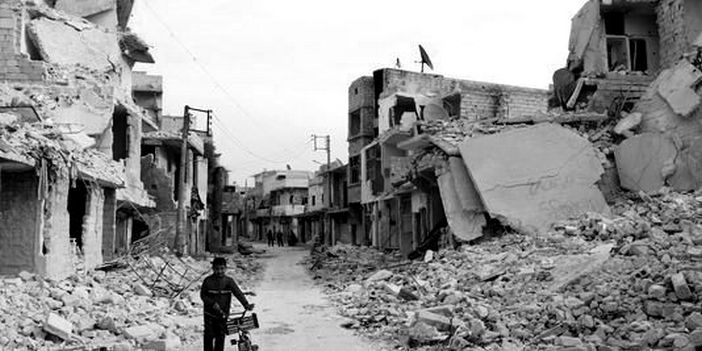
At that time, I decided to fill my loneliness by teaching in the poor schools, but the following massacres and murders caused by the rockets and the air strikes of the regime further demoralised me because I could not do anything to protect the children and even to save my life. The bombardments continued to destroy houses; the schools which I was teaching in and my house were destroyed… Six children died together… They were my students…

The only thing I could do was either to get out of the country or to die myself…

READ ON HERE

Blog at WordPress.com.

Up ↑