Search

band annie's Weblog

I have a parallel blog in French at http://anniebannie.net

Category

Uncategorized

Robert Fisk: Israel has crept into the EU without anyone noticing

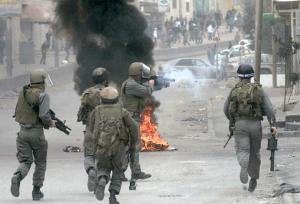
Israeli troops clash with Palestinians protesting against last year's Gaza offensive Abbas Momani

Saturday, 31 July 2010

The death of five Israeli servicemen in a helicopter crash in Romania this week raised scarcely a headline.

There was a Nato-Israeli exercise in progress. Well, that’s OK then. Now imagine the death of five Hamas fighters in a helicopter crash in Romania this week. We’d still be investigating this extraordinary phenomenon. Now mark you, I’m not comparing Israel and Hamas. Israel is the country that justifiably slaughtered more than 1,300 Palestinians in Gaza 19 months ago – more than 300 of them children – while the vicious, blood-sucking and terrorist Hamas killed 13 Israelis (three of them soldiers who actually shot each other by mistake).

But there is one parallel. Judge Richard Goldstone, the eminent Jewish South African judge, decided in his 575-page UN inquiry into the Gaza bloodbath that both sides had committed war crimes – he was, of course, quite rightly called “evil” by all kinds of justifiably outraged supporters of Israel in the US, his excellent report rejected by seven EU governments – and so a question presents itself. What is Nato doing when it plays war games with an army accused of war crimes?

Or, more to the point, what on earth is the EU doing when it cosies up to the Israelis? In a remarkable, detailed – if slightly over-infuriated – book to be published in November, the indefatigable David Cronin is going to present a microscopic analysis of “our” relations with Israel. I have just finished reading the manuscript. It leaves me breathless. As he says in his preface, “Israel has developed such strong political and economic ties to the EU over the past decade that it has become a member state of the union in all but name.” Indeed, it was Javier Solana, the grubby top dog of the EU’s foreign policy (formerly Nato secretary general), who actually said last year that “Israel, allow me to say, is a member of the European Union without being a member of the institution”.

Pardon me? Did we know this? Did we vote for this? Who allowed this to happen? Does David Cameron – now so forcefully marketing Turkish entry to the EU – agree with this? Probably yes, since he goes on calling himself a “friend of Israel” after that country produced an excellent set of forged British passports for its murderers in Dubai. As Cronin says, “the EU’s cowardice towards Israel is in stark contrast to the robust position it has taken when major atrocities have occurred in other conflicts”. After the Russia-Georgia war in 2008, for example, the EU tasked an independent mission to find out if international law had been flouted, and demanded an international inquiry into human rights abuses after Sri Lanka’s war against the Tamil Tigers. Cronin does not duck Europe’s responsibility for the Jewish Holocaust and agrees that there will always be a “moral duty” on our governments to ensure it never happens again – though I did notice that Cameron forgot to mention the 1915 Armenian Holocaust when he was sucking up to the Turks this week.

But that’s not quite the point. In 1999, Britain’s arms sales to Israel – a country occupying the West Bank (and Gaza, too) and building illegal colonies for Jews and Jews only on Arab land – were worth £11.5m; within two years, this had almost doubled to £22.5m. This included small arms, grenade-making kits and equipment for fighter jets and tanks. There were a few refusals after Israel used modified Centurion tanks against the Palestinians in 2002, but in 2006, the year in which Israel slaughtered another 1,300 Lebanese, almost all of them civilians, in another crusade against Hizbollah’s “world terror”, Britain granted over 200 weapons licences.

Some British equipment, of course, heads for Israel via the US. In 2002, Britain gave “head-up displays” manufactured by BAE Systems for Lockheed Martin which promptly installed them in F-16 fighter-bombers destined for Israel. The EU did not object. In the same year, it should be added, the British admitted to training 13 members of the Israeli military. US planes transporting weapons to Israel at the time of the 2006 Lebanon war were refuelled at British airports (and, alas, it appears at Irish airports too). In the first three months of 2008, we gave licenses for another £20m of weapons for Israel – just in time for Israel’s onslaught on Gaza. Apache helicopters used against Palestinians, says Cronin, contain parts made by SPS Aerostructures in Nottinghamshire, Smiths Industries in Cheltenham, Page Aerospace in Middlesex and Meggit Avionics in Hampshire.

Need I go on? Israel, by the way, has been praised for its “logistics” help to Nato in Afghanistan – where we are annually killing even more Afghans than the Israelis usually kill Palestinians – which is not surprising since Israel military boss Gabi Ashkenazi has visited Nato headquarters in Brussels to argue for closer ties with Nato. And Cronin convincingly argues an extraordinary – almost obscenely beautiful – financial arrangement in “Palestine”. The EU funds millions of pounds’ worth of projects in Gaza. These are regularly destroyed by Israel’s American-made weaponry. So it goes like this. European taxpayers fork out for the projects. US taxpayers fork out for the weapons which Israel uses to destroy them. Then EU taxpayers fork out for the whole lot to be rebuilt. And then US taxpayers… Well, you’ve got the point. Israel, by the way, already has an “individual co-operation programme” with Nato, locking Israel into Nato’s computer networks.

All in all, it’s good to have such a stout ally as Israel on our side, even if its army is a rabble and some of its men war criminals. Come to that, why don’t we ask Hizbollah to join Nato as well – just imagine how its guerrilla tactics would benefit our chaps in Helmand. And since Israel’s Apache helicopters often kill Lebanese civilians – a whole ambulance of women and children in 1996, for example, blown to pieces by a Boeing Hellfire AGM 114C air-to-ground missile – let’s hope the Lebanese can still send a friendly greeting to the people of Nottinghamshire, Middlesex, Hampshire and, of course, Cheltenham.

source

Jewish protester who lost eye

Emily Henochowicz wounded by tear gas canister in demonstration following Israel's Gaza flotilla raid.

By Avi Issacharoff

The Israeli government is refusing to pay the cost of medical care for an American-Jewish activist who lost an eye when Border Police officers fired a tear gas canister at her during a demonstration.

Emily Henochowicz, who studying at the Bezalel Academy of Art in Jerusalem and also holds Israeli citizenship, took part in a protest on May 31, shortly after Israel killed nine pro-Palestinian activists in a raid on a Gaza-bound aid flotilla.
Emily Henochowicz

Emily Henochowicz after losing an eye at a protest at the Qalandiyah checkpoint − she was struck by a teargas grenade.
Photo by: Daniel Bar-On

Dozens of activists took part in the protest against the Israeli blockade of Gaza next to the Qalandia checkpoint, south of Ramallah.

According to the IDF, demonstrators began to throw stones at the Border Police, after which the army responded by firing tear gas canisters.

According to Henochowicz, one policeman shot a canister directly at her face, shattering her jaw and causing her to lose her left eye. A Haaretz reporter witnessed the incident.

Following her her treatment at Hadassah Hospital in Jerusalem, Henochowicz’s father, who had traveled from the U.S., was handed a bill for NIS 14,000. Under advice from his lawyer, Michael Sfard, he asked the Defense Ministry cover the expense, but officials refused.

In justifying the refusal, the Defense Ministry claimed the tear gas was not fired directly at Henochowicz.

“The canister ricocheted at her after it rebound off a concrete barrier and changed direction – it was not shot directly at her,” the ministry said in a statement drafted by lawyer Sharon Zimmerman. The statement also accused Henochowicz of putting herself at risk by voluntarily participating in a breach of the peace.

In response, Sfard said that as police were still investigating the incident, it was impossible for the Defense Ministry to judge exactly what occurred.

“Either way, even if wounding of my client was the result of negligence and not criminal intent -even then the State of Israel has a moral, ethical and legal obligation to pay for her treatment,” Sfard wrote.

The Defense Ministry responded: “From our reports, we know that the Border Police acted in accordance with the law at the violent demonstration at Qalandia, and that the shooting of tear gas canisters at demonstrators was justified. Of course, we regret that Emily Henochowicz was wounded in her eye. But under such circumstances, the Defense Ministry does not cover the expenses of medical treatment.”

source

US condemns massive leak of Afghan war files

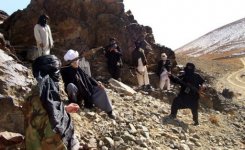
Taliban fighters pose during a patrol in Ghazni province, Afghanistan, earlier this year. The White House denounced a massive leak of secret military files Sunday that allegedly describe how Pakistan's spy service aids the Afghan insurgency, but said the information was no surprise.

AFP – The White House denounced a massive leak of secret military files that allegedly describe how Pakistan’s spy service aids the Afghan insurgency, but said the information was no surprise.

In all, some 92,000 documents were released by the web whistleblower Wikileaks, containing previously untold details of the Afghan war through Pentagon files and field reports spanning from 2004 to 2010.

According to the New York Times, one of the first three media outlets to review and report on the leaks, they “suggest that Pakistan, an ostensible ally of the United States, allows representatives of its spy service to meet directly with the Taliban.”

Britain’s Guardian newspaper said the files, many of which detail growing numbers of civilians dying at the hands of international forces as well as the Taliban, painted “a devastating portrait of the failing war in Afghanistan.”

The White House issued its condemnation shortly before the leaks were posted online, saying the information could endanger US lives but also pointing to the administration’s long-held doubts about links between Pakistan intelligence agents and Afghan insurgents.

“The United States strongly condemns the disclosure of classified information by individuals and organizations which could put the lives of Americans and our partners at risk, and threaten our national security,” said White House National Security Advisor James Jones.

read on

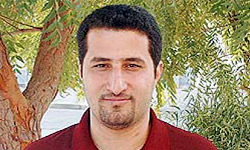
Kidnapped Iranian Scholar Interrogated by Israeli Agents


TEHRAN (FNA)- Shahram Amiri, an Iranian scholar who returned home after being kidnapped by CIA in Saudi Arabia last year, said that Israeli agents interrogated him while he was in the US.

Amiri made the announcement while talking to reporters upon arrival at the International Imam Khomeini Airport in southern Tehran this morning.

Amiri, a university lecturer, was kidnapped in the holy Saudi city of Medina on June 3, 2009 during a pilgrimage to Saudi Arabia. He was abducted by US agents with the help of the Saudi intelligence service.

The Iranian scientist, who took refuge in Iran’s interest section at the Pakistani Embassy in Washington on Tuesday, left the United States for Tehran Wednesday.

Amiri said he was under the harshest mental and physical tortures during the initial two months of his captivity in the US, adding that the US agents had threatened to transfer him to the Zionist regime’s prisons if he refused to cooperate with them.

“I was kidnapped during a joint operation by the US and Saudi intelligence agents when I was in front of my hotel in the holy city of Medina. I was made unconscious and was transferred to unknown places first in Saudi Arabia and then in the US,” he said.

He reiterated that by his abduction, Washington wanted to exert pressure on the Iranian government. “Washington, through a political play, was trying to announce to the world that I had applied for asylum,” Amiri added.

The released Iranian researcher dismissed remarks made by US Secretary of State Hillary Clinton saying he had freely come to the US and was free to go whenever he wanted.

He said US officials had even offered him $50 million if he changed his mind and decided to stay in the US. “They also assured to take my family out of Iran,” he added.

Amiri reiterated that he was a simple researcher and that he had nothing to do with the Natanz and Fordo sites. “I am a simple researcher who works in a university which is open to all and there is no secret work happening there,” he noted.

source

‘Tape proves Shin Bet tried to coerce me to commit murder’

In newly released recordings, alleged Shin Bet agent can be heard urging Chaim Pearlman to assassinate Sheik Ra’ad Salah.

By Chaim Levinson

New recordings released Thursday claim to prove that Chaim Pearlman, a right-wing Israeli extremist arrested Tuesday over the murder of four Palestinians, was encouraged by an alleged Shin Bet agent to commit violent acts, including the assassination of Sheik Ra’ad Salah, the head of the Islamic Movement in Israel.

Chaim Pearlman in court Wednesday.

Chaim Pearlman was arrested earlier this week, initially on suspicion of carrying out two murders in 1998, and for a series of attacks against other Palestinian victims over the last 12 years. The Petah Tikva Magistrates’ Court on Thursday extended his remand by six days.

According to Pearlman, he was contacted by a person who allegedly worked for the Shin Bet security service while disseminating fliers for the extreme right-wing Kach movement. Pearlman maintains that the person had tried to convince him to get involved in violent acts.

Pearlman recorded all his conversations with the man and says he has 20 hours of recordings.

The Shin Bet denied Thursday claims it tried to coerce Pearlman into carrying out attacks against Arabs, saying the exchanges recorded in the tapes released earlier Thursday represented a legitimate method of extracting a confession from a suspect.

In his conversation with the person Pearlman claimed was a Shin Bet agent, Pearlman can be heard supporting non-violent, educational activities, with the alleged agent apparently incites him to violence.

In the recordings released Thursday, the alleged agent can be heard saying that only an “extreme move” could change public opinion, citing the assassination of Sheik Ra’ad Salah as one such extreme move.

“I could do it,” the agent can be heard saying, referring to the proposed killing of the Islamic Movement leader, saying that Salah’s security would prevent him from succeeding, adding that if he were Pearlman he would commit the assassination.

“It’s not about hitting him [Salah] and getting in trouble. It’s about coming over, hitting him, and see you later, like that guy in Bar Noar” the alleged Shin Bet agent can be heard saying, referring to the killing of a counselor and a teenager at a Tel Aviv gay center last year.

The agent continues to explain how he would carry out Salah’s assassination, saying Pearlman would have to “use another person for that,” adding that if he himself had grown up where Pearlman had grown up, “I wouldn’t be spray painting slogans.”

“You don’t really want to do it,” Pearlman can be heard as saying, with the alleged Shin Bet agent replying: “Says who? Says you? What are you relying on? Can you check me? Come check me, I’m ready.”

When Pearlman asked if the alleged Shin Bet agent understood the ramifications of such an act, and if he would be willing to take responsibility for it, the agent said: “sure, why not.”

“How long will the noise continue? Will it lead to war? Won’t there be war without it happening?” the agent can be heard asking, adding that “war has casualties.”

“Listen I don’t have a problem [inaudible] someone who takes a life once and gets that feeling…. I would never do it to a Jew. It would be hard,” the alleged Shin Bet agent said, adding, “but I wouldn’t have a problem with one of those.”

After again discussing the risks such an action would entail, Pearlman can be heard asking if the alleged agent even knew where Salah lived, with the agent answering: “somewhere in the North, in one of the villages in the North.

“Look, it shouldn’t be much of a problem. The car passes. You shoot a burst. Chances are the driver will get killed,” the agent added, saying that Pearlman would have to either “finish him with one burst, or a few split ones.”

The alleged agent continues his description of the potential assassination, saying that it would not be the kind of operation where one would “come in close.”

“You need to be as far away as you can in this kind of situation. Or put a bomb in the car. That’s the classic one. Nothing’s left, everything goes everywhere,” the agent added, saying Salah would then “go to all hell.”

Throughout the recordings Pearlman can be heard rejecting the alleged agent’s call for violence, and instead supporting educational and spiritual activity.

At one point Pearlman can be heard saying that he was “a youth counselor, I organized rallies. I organized a rally in front of a store that sold pork.” The alleged Shin Bet agent subsequently asks Pearlman “and where did that get you?”

When Pearlman answers that he wanted to raise awareness to the fact that the store had been selling pork, the alleged agent asks if it wouldn’t have been “simpler to throw a fire bomb – people would get the message.”

“If you throw a fire bomb twice, the insurance [companies] won’t insure him anymore,” the alleged Shin Bet agent can be heard saying.

When Pearlman apparently rejects the idea of physically attacking the shop, saying that such a course of action could not be sustained, since he would eventually be caught, the person he claims is a Shin Bet agent can be head saying: “you throw once, you throw twice, and the insurance won’t insure. No one will open there.”

“That could mean prison for several years. I’m talking about spreading ideas,” Pearlman can be heard saying, adding that he was after “the long run, not a one time thing.”

To that the alleged agent answers “sometimes the one-time thing affects the long-run,” adding “let’s do something you and me. Let’s do something,” to which Pearlman replies that he is more interested in family.

The recordings continue to document the discussion between the two, in which Pearlman insists on the value of educational action, with the alleged Shin Bet agent dismissing that approach.

The agent can then be heard suggesting that Pearlman take the same people he had been working with distributing fliers and “sit on a nice village and organize a fireworks show,” referring to an armed assault on an Arab village.

“The Shin Bet is everywhere,” Pearlman can be heard answering, adding that “every second or third person is connected.”

“They keep taking people in to give them warnings. Arrest them for nothing, take people and frighten them,” Pearlman says, adding that the Shin Bet were conducting arrests and were “listening to every call.”

source

U.S. conservatives form new pro-Israel lobby group

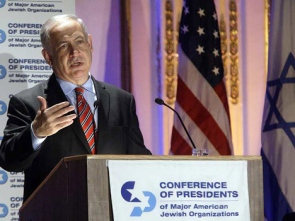
Benjamin Netanyahu speaks to members of the Conference of Presidents of Major American Jewish Organizations in New York, on July 7, 2010.

A group of leading American conservatives has set up a new group to attack President Obama over his “anti-Israel” stance, U.S. website Politico reports.
By Haaretz Service

Washington observers may feel there is no obvious shortage of pro-Israel lobbyists in the city – but a group of leading American conservatives thinks otherwise and has set up a new campaign group to attack President Obama over his “anti-Israel” stance, U.S. website Politico reports.

The Emergency Committee for Israel presents a potent combination of Republican Party neoconservatives and Evangelical Christians. The new group’s board includes Weekly Standard Editor William Kristol and Gary Bauer, a former Republican presidential candidate who leads the group American Values, as well as Rachel Abrams, a conservative writer and activist.
Netanyahu U.S.

Benjamin Netanyahu speaks to members of the Conference of Presidents of Major American Jewish Organizations in New York, on July 7, 2010.
Photo by: AP

“We’re the pro-Israel wing of the pro-Israel community,” Politico quoted Kristol as saying. Bauer described the Obama presidency as “the most anti-Israel administration in the history of the United States.”

Under U.S. law the group does not have to disclose the sources of its funding but has already raised enough to finance its first television advertisement, which launched a savage attack on Rep. Joe Sestak, the Democratic Senate candidate in Pennsylvania.

The ad slammed Sestak for signing a letter criticizing Israel’s blockade of Gaza while declining to add his name to a defense of Israel circulated by powerful pro-Israel lobby AIPAC (the American Israel Public Affairs Committee).

The group also attacked Sestak for appearing at a fundraiser for the Council on American Islamic Relations, which it said was an “anti-Israel organization the FBI called a ‘front group for Hamas.”

“Does Congressman Joe Sestak understand Israel is America’s ally?” the ad’s narrator asked.

This is just the opening shot in what the Emergency Committee for Israel intends to be a series of ads to sway congressional races across the U.S.

“We want to be hard-hitting; we want to get into the debate and shake things up and make some points in a firm way,” said Noah Pollak, the group’s executive director.

Kristol said this group was inspired in part by another new group, the liberal J Street, which he said had shown the power of small organizations to influence the debate.

“There are some who say they’re pro-Israel but aren’t really,” he said, referring to J Street. “Then there’s AIPAC, which is a wonderful organization, but one that’s very committed to working with the administration, so they pull some punches publicly.”

Thumbing Its Nose at the Censor

Politically explosive films and television series from Syria are storming the Arab market. Now the film “The Long Night” – the first Syrian feature film to highlight the fate of political prisoners – has become ensnared in the censorship process. It is nevertheless reaching its audience via satellite television – even in Syria. Susanne Schanda reports

“Sensitive political subject”: although the censors were full of praise for “The Long Night”, they passed it on to a higher authority for consideration

Four men in blue prison gear with unkempt grey hair and stubble sit in their cell drinking tea. The light is crepuscular, the plaster is peeling off the walls. They have been behind bars for 20 years for criticising the regime. Karim is the oldest, he stays lying down on his metal bed and has his tea brought to him. He is resigned to his fate. Then the heavy iron door swings open, and out of all the men it is Karim who is ordered to pack his things and go with the guards. He is being released.

The opening scenes of “The Long Night” are almost wordless, and there is no music to break the silence. We watch as Karim washes himself, as the guards shave him and cut his hair. Then suddenly he’s out on the street, in a shirt and suit, a leather bag in his hand – he sniffs the air, and takes in his surroundings with amazement.

The film by Haitham Hakki, one of Syria’s best-known filmmakers, does not focus on prison conditions or the arbitrary nature of detentions. It deals instead with members of the released prisoner’s family, who have come to an arrangement with the regime and made their compromises.

The unexpected release of Karim throws their lives into confusion, and triggers recriminations and feelings of remorse.

“I am concerned with the human drama, the film does not operate with political slogans,” says Haitham Hakki in an interview with Qantara.de in Damascus. He wrote the screenplay himself. Once this was approved by the censors, the film could be made in Syria with Syrian actors, under the supervision of star director Hatem Ali.

But the film required further authorisation before it could go on general release in Syrian cinemas. “The censors were full of praise for the film, but because of the sensitive political subject they passed it on to a higher authority for consideration. That was about six months ago. I’ve heard nothing since,” says the author.

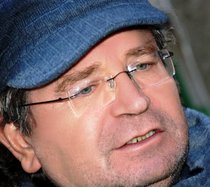
“The censors can’t shut down the universe”: Syrian scriptwriter and filmmaker Haitham Hakki
Nevertheless, in an era of globalised satellite television, the long arm of the censor is actually not that long at all: “It’s only a matter of time before Syrian audiences will also be able to see the film,” says Haitham Hakki, who produced the film for the Saudi production company Orbit. “Orbit will soon be broadcasting the film on a cable broadcaster. Then we’ll sell it on to other television stations, and it’ll soon be broadcast everywhere, even in Syria. The censors can’t shut down the universe.” “The Long Night” has already been shown at numerous film festivals and honoured with prizes, for example in Cairo, Delhi and Taormina.

Close to the taboo zones

Haitham Hakki is a decidedly political filmmaker. Has he ever been sent to prison for his views? He waves his hand in negation: “No, but I know many families who have suffered similar tragedies.” He is unimpressed by films that propagate a direct political message, and says that in any case, it would not be possible to make such a film in Syria.

Some Arab critics have accused him of taking a clear-cut stance against the government in “The Long Night”. Hakki, who describes himself as a social democrat, says: “That doesn’t interest me. My social dramas are always political, even if they’re not explicitly about politics. If you want to instigate change, you draw back the veil on society’s failings. That is political in itself.”

Ten years ago, the censorship process in Syria was considerably more stringent than it is today. When the new government of Bashar al-Assad came to power following the death of his father Hafez al-Assad in the year 2000, the change ushered in a period of liberalisation. But what became known as the Damascus Spring was short-lived. Artists, writers and filmmakers have now learned how to circumvent censorship and express criticism without calling a spade a spade.


“Then suddenly he’s out on the street”: “The Long Night” deals with members of the released prisoner’s family, who have come to an arrangement with the regime and made their compromises

Haitham Hakki explains that there are red lines that are not to be crossed, but it’s not always clear where they have been drawn. Sometimes a decision can depend on the mood or the character of the official responsible at the time. Generally in the Arab world, the three main taboos apply: sex, religion and politics. “But it’s not possible to make any film without at least touching upon these issues,” says Hakki. “I always manoeuvre in very close proximity to these taboo zones and continually try and broaden their acceptance.”

New stimuli from the Syrian film and television industry

Just like Egypt, Syria also has its fair share of cheap and cheerful soap operas, but the nation also has a proud tradition of television series that weave more challenging subjects into their storylines such as social problems and modern Syrian history; or Arab issues such as the Palestinian-Israeli conflict and the situation in Iraq – an approach that is popular with audiences.

Since 1980, the 61-year-old director, scriptwriter and producer Haitham Hakki has made numerous political and socially explosive feature films and television series. He has often had to wait years for permission to screen them. For example, for the 23-part series “Khan al-Harir” (“Silk Market”) by the writer Nihad Siris, directed by Hakki. The censorship authorities withheld the screenplay for two years, until permission to go ahead with filming eventually came in 1996.

The story of love and trade in the souq of Aleppo highlights the negative impact of the Syrian-Egyptian union of 1958-61. “The government didn’t like that,” Hakki suspects. “But in the end, authorities even allowed the series to go out during the most advantageous period for broadcasts – the fasting month of Ramadan. It was a huge success and was later shown again several times.”

After “Khan al-Harir” came increasing numbers of Syrian television series and films that were huge hits beyond national borders across the Arab world. This success posed a threat to the Egyptian film industry, which had dominated the market up to that point. “We brought a cinematographic perspective to the series, filmed with just one camera at locations outside the studio, and chose brazen subjects,” Hakki explains the strategy. Previously, television series production had been restricted to the studio. “It looked like filmed theatre and bored people,” he says.

Financial boost from liberal Arab satellite broadcasters

Apart from the inspiration and courage of Syrian filmmakers, the emergence of satellite broadcasters in the Gulf States from the mid-1990s also played a key role in enhancing the popularity of Syrian series. It meant more money had now come into play.

Increasing numbers of Syrian television series and films are huge hits beyond national borders across the Arab world. Pictured: star director Hatem Ali

MBC, Rotana and Orbit are the best-known Arab media concerns investing robustly in feature films and series. “Previously, when there were only local broadcasters in each individual country, we had to sell each series to around 20 foreign broadcasters to recoup the money we’d invested. Now the lion’s share of the financing comes from the media concerns in the Gulf, which are owned by Saudi princes or businesspeople,” says Hakki.

As for what influence or even censorship is exerted on the part of the investors, this is extremely small. Hakki concedes that there were initially some problems with the Kingdom’s strict moral codes, but now that most of the broadcasters have relocated abroad, companies run by Saudis are the most liberal in the Arab world. “Those who invest large amounts of money want to see profit, and ideological questions are of secondary importance,” he says soberly.

So, the fact that the censor’s knife no longer reaches the controversial objects of desire looks to be less a case of political intention, and more a side effect of competition between satellite broadcasters in a realm where the sky’s the limit. “‘The Long Night’ is the best example of that,” confirms Haitham Hakki.

Susanne Schanda

© Qantara.de 2010

Translated from the German by Nina Coon

Edited by: Lewis Gropp/Qantara.de

source

Death of a legend

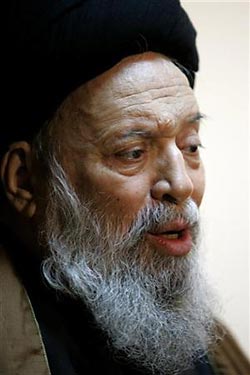
Ayatollah Fadlullah

Muslims worldwide this week mourned the loss of an icon of Islamic thought and jurisprudence. Omayma Abdel-Latif reflects on the lifelong struggle of Ayatollah Fadlullah

In one of his Friday sermons in January, 75- year-old Grand Ayatollah Sayed Mohamed Hussein Fadlullah, who died Sunday in Beirut, spoke to his followers about “true Islam”. “The true Islam,” he said, “wants us to base our lives on reason and to elevate it by means of knowledge, so as to enrich it and be enriched by it.” This sentence summed up Fadlullah, or Al-Sayed as his followers called him, and the doctrine he embraced across a lifelong struggle for Islam. It was also this doctrine that earned Al-Sayed iconic status across the Muslim world for his great contribution to Islamic thought and jurisprudence, elevating him as one of the great Islamic thinkers of his time.

On Tuesday, tens of thousands of mourners flocked to Beirut’s southern district to pay their last respects to a man that at times of bleak fitna (strife) emerged as a guiding light to millions of Muslims, regardless of their sectarian affiliation. At a time when very few Islamic figures were able to nurture a cross sectarian following, Fadlullah did. Although media outlets — both Western and non-Western — identify Fadlullah as a “Shia” scholar, this identification was one he did not subscribe to. His contribution to the renewal of Islamic thought and jurisprudence in general through his countless fatwas offering original insights was significant beyond his contributions to Shia faith.

Born in 1935 in the city of Najaf to Lebanese parents, Fadlullah grew up in a family of scholars. His father, Ayatollah Abdel-Raouf Fadlullah, migrated to Iraq to complete his religious education in Al-Hawza Al-Deeniya (the religious seminary). Fadlullah followed in his father’s footsteps and was the disciple of many celebrated Shia scholars, including Abul- Qassem Al-Khoei, Mohsen Al-Hakim and Mohamed Baqir Al-Sadr. Upon completing his religious education, Fadlullah displayed great talent in interpretation and inspired a growing following of students. In 1966, he went to Lebanon to establish the Institute of Islamic Jurisprudence.

Fadlullah’s Friday sermons were not just about religious teachings alone. What perhaps singled him out among his peers was that he never separated politics from religion. While the first parts of his sermons would tackle religious issues, Fadlullah was keen to address current affairs in subsequent parts. At the heart of his body of teaching, three key issues rose to dominance: the struggle for Palestine, fighting for Islamic unity, and resisting US hegemony and Arab despotism. Hardly a sermon went by without reference to these topics and Fadlullah always displayed an impressive knowledge of current affairs. He reserved the harshest words for Arab officialdom, the US and Israel. Indeed, his scathing criticism of US policies in the region and Israel’s occupation of Arab land made him a target of numerous assassination attempts on his life. The most dangerous was during the 1980s when an explosion targeted his headquarters in Al-Imam Al-Reda Mosque in Bir Al-Abad area. Fingers pointed to both the US and Saudi Arabia.

Over the years Fadlullah grew to become one of the most prominent scholars of Islamic thought and an inspiration for the nascent Islamic movement in Lebanon. When the Islamic Resistance Movement (Hizbullah) came into existence in 1982, Fadlullah became its spiritual leader. Along the years, the relationship grew complicated. The year 1994 represented a watershed. Fadlullah declared himself a marjie taqlid (a source of emulation) and addressed the issue of wilayat al-faqih (the guardianship of the clerics), which he did not accept. He maintained a distance from both Hizbullah and the Islamic Republic of Iran, presenting himself as an independent scholar and jurist. Despite being subject to smear campaigns from time to time, Fadlullah remained committed to the cause of resistance. Until his last days, Fadlullah defended both Iran and Hizbullah against campaigns that targeted them.

A notable number of Hizbullah followers continue to consider Fadlullah as their source of emulation. Hizbullah Secretary-General Hassan Nasrallah once described the relationship with Fadlullah by saying “both Hizbullah and Sayed Fadlullah have a unity of purpose and of vision.” Following Fadlullah’s death, Nasrallah issued a statement referring to himself and other resistance leaders as “among Fadlullah’s disciples”. The statement was viewed as a move to put an end to speculation surrounding the complicated relationship. After the 2006 Israeli war on Lebanon, Fadlullah was among the few voices that continued to lend support to the resistance, both in his sermons and interviews.

But perhaps Fadlullah’s greatest achievement, followers would argue, is the fact that he radically changed the ways in which religious scholars interact with their societies. He was a man of the people and he made frequent reference to his relationship with his followers. One reason he chose to be buried in Al-Emamyen Al-Hassanyein Mosque in Beirut’s southern district and not in Najaf, according to tradition, was in his words because “I want people to be able to reach me even after I am gone.” Identified as a great reformer, Fadlullah once explained that reform “does not mean to innovate Islam itself… rather innovation is in how to understand this revelation, the Holy Quran.”

Among the legacies Fadlullah is leaving behind is an extensive network of social institutions. This includes nine orphanages, 18 schools, and a large number of religious and cultural centres in Lebanon, Syria and Iraq.

source

9,000 request to participate in Flotilla 2

06-07-2010,09:07

BRUSSELS – The Brussels-based European Campaign to End the Siege on Gaza said that there has been a large turnout for Freedom Flotilla 2, in terms of activists requesting to participate, and in terms of the number of ships.

The campaign, which was one of the founders of the Freedom Flotilla coalition, in a press statement on Monday, boasted that the new flotilla has a few surprises in store for Israeli occupation, one of which is that seven of the ships scheduled to participate in the flotilla are from European counties.

The European campaign added that it received around nine thousand requests forms from sympathizers from around the world since opening registration to participate in the second Freedom Flotilla, which is expected to set sail into the Gaza Strip within a few weeks, despite Israel’s May 31st raid against the first Freedom Flotilla, which left nine dead, others injured, and properties confiscated and damaged.

The first Freedom Flotilla carried 750 activists from more than 40 countries, including 44 Arab and European government and political officials, including ten Algerian MPs, more than 10,000 tons of medical supplies, building materials, and timber, and 100 ready-made houses in support of the tens of thousands of people who lost their homes in the Israeli war on Gaza in late 2008 and early 2009. The ships also carried 500 electric vehicles for the use of the disabled, especially since the recent war left nearly 600 disabled in Gaza.

Meanwhile, in Gaza, independent MP Jamal al-Khudari, Chairman of the Popular Committee against the Siege, has confirmed that the Zionist entity has publically announced that it will ease the aggravated siege on Gaza, without any mention of ending the root of the crisis.

Khudari, in a press release on Monday, noted that ending the blockade would require a series of measures on the ground, the most important of which would be to completely open commercial crossings to allow the flow of goods, and to put an end to the “restricted lists” policy, underlining that Gaza is need of all the supplies it was deprived of since the institution of the blockade four years ago.

He noted that the Zionist entity was still closing all Gaza commercial crossings except the crossing point at Kerem Abu Salem, the absorptive capacity of which is small when compared to the Strip’s needs, the biggest proof that the broadcasted ease of the siege is merely an attempt to ease international pressure.

Preparations by European, Arab, and Islamic parties for new ships headed for the Gaza Strip are well underway, Khudari confirmed, adding that scheduled departures will soon be announced.

source

Blog at WordPress.com.

Up ↑