Search

band annie's Weblog

I have a parallel blog in French at http://anniebannie.net

Category

Syria

A Call to Stop the Bombing of Aleppo

Friends for a NonViolent WorldF N V W Calls for Stopping the Bombing of Aleppo

It is time for all peace organizations to speak out clearly.  We at FNVW since 2011 have supported both the Syrian nonviolent movement and nonviolent activists in their struggle for human rights and a democratic Syria for all Syrians without any group monopolizing power to impose its own agenda.

Throughout this struggle FNVW has opposed the United States as well as any other country or organization sending weapons and/or troops to any of the parties in the conflict. Friends for a NonViolent World affirmed that the United States must remain solely committed to diplomatic and humanitarian efforts to resolve this crisis.  And we have been outspoken in our opposition to the extreme Salafist groups in the armed opposition and any party in the conflict who have committed crimes against humanity.

Both the Guardian and the New York Times document what has been happening in Aleppo.

We at FNVW unequivocally condemn the crimes against the Syrian people and crimes against humanity, Russia and the Assad regime are perpetrating in Aleppo. The intentional killing of civilians is a war crime.  Putin’s and Assad’s brutal use of bunker busting bombs, thermobarbaric weapons, barrel bombs and phosphorus are resulting in devastating, unspeakable consequences for civilians. Government forces also have targeted the volunteer humanitarian group, the White Helmets, halting their rescue efforts.

The chart from the Violations Documentation Center in Syria answers the question of “Who kills civilians in Syria?”

These weapons do not distinguish between civilians and combatants.  Their goal is to terrorize into submission or displace people.  The use of this lethal weaponry is immoral and contravenes international law.

FNVW calls on both the Russian and Syrian governments to immediately halt their air strikes and war crimes in Aleppo.

Both the Guardian and the New York Times document what has been happening in Aleppo.

“‘Hell itself’: Aleppo reels from alleged use of bunker-buster bombs”, The Guardian

“Why So Many Children Are Being Killed in Aleppo”, New York Times

source

Against all odds, village republics take hold in Syria


Robin Yassin-Kassab

thenational.ae |


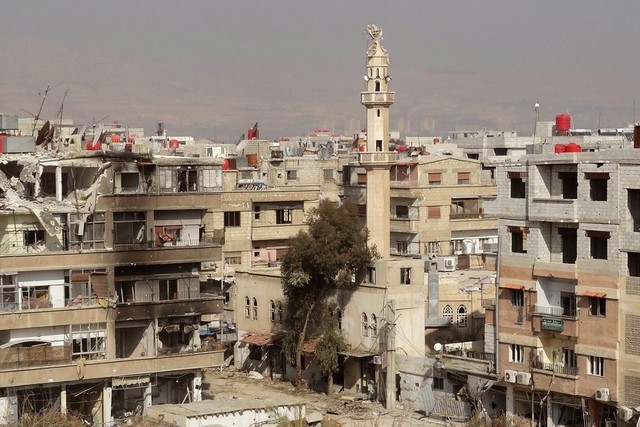
Destroyed buildings near a mosque in Daraya, Syria. AFP Photo

You may think Syrians are condemned to an unpleasant choice between Bashar Al Assad and the jihadists. But the real choice being fought out by Syrians is between violent authoritarianism on the one hand and grassroots democracy on the other.

Interviewing activists, fighters and refugees for our book Burning Country: Syrians in Revolution and War, we discovered the democratic option is real, even if beleaguered. To the extent that life continues in the liberated but heavilybombed areas – areas independent of both the Assad regime and ISIL – it continues because self-organised local councils are supplying services and aid.

For example, Daraya, a suburb west of Damascus now suffering its fourth year under starvation siege, is run by a council. Its 120 members select executives by vote every six months. The council head is chosen by public election. The council runs schools, a hospital,and a public kitchen, and manages urban agricultural production. Its office supervises the Free Syrian Army militias defending the town. Amid constant bombardment, Daraya’s citizen journalists produce a newspaper, Enab Baladi, which promotes non-violent resistance. In a country once known as a “kingdom of silence”, there are more than 60 independent newspapers and many free radio stations.

And as soon as the bombing eases, people return to the streets with their banners. Recent demonstrations against Jabhat Al Nusra across Idlib province indicate that the Syrian desire for democracy burns as fiercely as ever.

Where possible, the local councils are democratically elected – the first free elections in half a century. Omar Aziz, a Syrian economist and anarchist, provided the germ. In the revolution’s eighth month he published a paper advocating the formation of councils in which citizens could arrange their affairs free of the tyrannical state. Aziz helped set up the first bodies, in suburbs of Damascus. He died in regime detention in 2013, a month before his 64th birthday. But by then, councils had sprouted all over the country.

Some council members were previously involved in the revolution’s original grassroots formations. They were activists, responsible first for coordinating protests and publicity, then for delivering aid and medicine. Other members represented prominent families or tribes, or were professionals selected for specific practical skills.

In regime-controlled areas, councils operate in secret. But in liberated territory people can organise publicly. These are tenacious but fragile experiments. Some are hampered by factionalism. Some are bullied out of existence by jihadists.

Manbij, a northern city, once boasted its own 600-member legislature and 20-member executive, a police force, and Syria’s first independent trade union. Then ISIL seized the grain silos and the democrats were driven out. Today Manbij is called “Little London” for its preponderance of English-accented jihadists.

In some areas the councils appear to signal Syria’s atomisation rather than a new beginning. Christophe Reuter calls it a “revolution of localists” when he describes “village republics””such as Korin, in Idlib province, with its own court and a 10-person council.

But Aziz envisaged councils connecting the people regionally and nationally, and democratic provincial councils now operate in the liberated parts of Aleppo, Idlib and Deraa. In the Ghouta region near Damascus, militia commanders were not permitted to stand as candidates. Fighters were, but only civilians won seats.

In Syria’s three Kurdish-majority areas, collectively known as Rojava, a similar system prevails, though the councils there are known as communes. In one respect they are more progressive than their counterparts elsewhere – 40 per cent of seats are reserved for women. In another, they are more constrained – they work within the larger framework of the PYD, which monopolises control of finances, arms and media.

The elected council members are the only representative Syrians we have. They should be key components in any serious settlement.

In a post-Assad future, local democracy could allow polarised communities to coexist under the Syrian umbrella.

Towns could legislate locally according to their demographic and cultural composition and mood. The alternative to enhanced local control is new borders, new ethnic cleanings, new wars. At the very least, the councils deserve political recognition by the United States and others. Council members should be a key presence on the opposition’s negotiating team at any talks.

And the councils deserve protection. Mr Al Assad’s bombs hit the schools, hospitals, bakeries, and residential blocks that the councils are trying desperately to service. If the bombardment were stopped the councils would no longer be limited to survival. They could focus instead on rebuilding Syrian nationhood and further developing popular institutions.

As the US-led invasion of Iraq showed us, only the people themselves can build their democratic structures. And today Syrians are practising democracy, building their own institutions, in the most difficult of circumstances. Their efforts don’t fit in with the easy Assad-or-ISIL narrative, however, and so we rarely deign to notice.

Robin Yassin-Kassab is co-author of Burning Country: Syrians in Revolution and War


Omar Souleyman – Warni Warni (Official Video)


Warni Warni (Come to Me) English translation lyrics:
Come to me come to me
Oh beautiful, you charmed me with your dark complexion
You can have me and my love easily
Oh beautiful, you charmed me with your dark complexion
You can have me and my love easily
Oh beautiful, you charmed me with your dark complexion
They told me that we’ll get married, I cannot live without you
You’re for me like the water and the air that I breathe that I cannot survive without
They told me that we’ll get married, I cannot live without you
You’re like the water and the air that I breathe that I cannot survive without
Come to me come to me
Oh beautiful, you charmed me with your dark complexion
You can have me and my love easily
Oh beautiful, you charmed me with your dark complexion
May God punish who tries to separate you and me
When are we going to be together for you to hold me in your arms?
Come to me come to me
Oh beautiful, you charmed me with your dark complexion
You can have me and my love easily
Oh beautiful, you charmed me with your dark complexion

Stories from Hama (Memories of Painter Khaled Al-Khani) Part I

A repost updated from  2012

Introduction by Off the Wall

A painting by Syrian painter Khaled Al-Khani

In few more days, the thirtieth anniversary of the massacre of Hama (February, 1982) will befall us. This time, the anniversary has a special meaning as Syrians, who have broken the fear barrier, are now openly talking about the events that transpired thirty years ago in their homeland. We are helped nowadays in that even the dumbest observer can recognize the lies of the Assad regime, and that has made many of us search for the real narrative of Hama, a narrative that the regime has for decades tried to suppress through its demonization of the Muslim Brotherhood, and to hide, by extension, the stories of the innocent victims of Hafez Assad and his henchmen which according to people from Hama, may have reached 40,000 murdered souls, not to mention the rapes, the pillaging and hateful acts of barbarism the aging thugs are now trying to blame each others for.

As the sons of the perpetrators of the Hama Massacre,  helped undoubtedly by some of those who participated in it, now attempt to suppress the current Syrian uprising through similar machination of brutality, lies, and deceptions, it becomes more necessary than ever for us to recover the real narrative of Hama. It is the narrative of the children who witnessed their fathers and older brothers being murdered, of women who were raped and killed in cold blood, and of entire city districts raised to ground out of vengeful hate that shames us all for its existence among our sentient specie.

My friend Khaled Al-Khani, then a seven years old child, is now a renowned Syrian painter. He tells the story of the massacre as he witnessed it and lived it through the murder of his father, his own epic journey with the few women and children who survived Assad’s murderous machine. In this and the next two posts, I will attempt to bring Khaled’s memories to English readers. It is only my way of telling the Assad gang, we will hold those who did it accountable, and we will not allow you to do the same, Never again.

This story can also be read in French, thanks to my friend annie

Part 1 (French) Histoire de Hama : souvenirs du peintre Khaled Al-Khani

**********

Stories from Hama (Memories of Painter Khaled Al-Khani) Part I

I do not know what happened to me today…? I don’t want to remain in hiding and I will go to my workshop and to every demonstration. I can no longer hide my real identity. I, the artist, have turned into a rebel ever since the Libyan embassy incident. My transformation has nothing to do with my distant memories, in Hama, of my father’s murder and the death of the city of my childhood, the rape our women, our imprisonment, our bombardment, and the subsequent conquering and forcible displacement of those who were left alive among us to the countryside as means to cover the crimes.

I swear to God I’m not hateful and I am not seeking revenge, but just retribution. My current sorrow is related to what I witness transpiring around me daily. We demonstrate, they shoot us with bullets, we then join funeral processions, and they rain a hail of lead on us. And as we walk once more in the next funeral procession, they reply with the same, and so on. We stay in our homes, they break our doors arresting us and intimidating our mothers, if I am not killed, someone else will be.

I swear to God I love life, but I love justice more. Please, tell me what to do. I do not know what befell me today? Today I remembered, more than any other day, I remembered my father. My father was an ophthalmologist in Hama. He was not a member of the Muslim Brotherhood, but he sided with the people of his ravished city. Believe me, and half the people of Hama testify to that. They gouged one of his eyes while he was a live, then they killed him and horribly mutilated his body. I was little when we buried him and I remember that he had no eyes.

In February 1982, I was a 6 year old first grader. We had just finished the first school semester and had gone on spring break, and what a holiday..  At night, and as we slept, we could hear loud sounds breaking the place’s silence and turning its serenity into a murderous horror.  Obvious was the panic on my aunt who raised me and next to whom I would sleep to compensate her unfulfilled motherhood because she never married, and thus lived with us in our beautiful two-story traditional Arabic home. The rest of my family and my father and my mother slept on the second floor.  Soon, I would hear the voices of my siblings and my father and mother becoming louder coming down the stairs and entering my aunt’s room as the shooting increased. My mother said to my father “Didn’t I tell you to stay on the farm?” For many year, this sentence did not go away from my memories, and the idea that my father left the farm hurt me a great deal and remained with me until I had grown up, forgiven him and  reckoned, It was destiny.

******

The sound of firing fills life. It was the first time I heard its wheeze. It rose further and then began the thunder of explosions. As the hours passed, we got used to these sounds. Time passed and some of the neighbors started flocking to our home. Chaos is everywhere, children crying, women reading the Qur’an, and great concern. This continued for three days, and then we heard a big explosion. Father said that a shell hit the top floor. The house shook as dust filled my lungs like it filled the place and women recited Surat Yassin (the verse of Yassin). Meanwhile, a wave of sharp cries rose and father said we must leave the house as fast as possible, so we went out and people started to gather while shouting. Panic dominated everything, and we went to the house of a neighbor, then to a dark cellar thought by the men a more secure place. There were more of us than the place could accommodate. We stayed there for three days while the firing continued with no stopping. Then an artillery shell, Surat Yassin kept rising all the way to the sky, a second shell and a third, causing the cellar to vibrate madly. While no one of those who took refuge in the basement was hurt, many residents of our neighborhood perished and many were wounded. The doctor who lived in the neighborhood was able to save some. We stayed in the basement until the bombardment and firing calmed down and they got us out saying that we must leave towards safer neighborhoods. Little they knew, for they were wrong as it did not occur to them that a campaign of genocide was taking place. We went out hurriedly through the Hadher market to reach the Ameeriyyah district. We encountered streets through which we had to crawl because snipers were everywhere.

After incredible difficulties, we reached the Ameeriyyah neighborhood having just crawled the last street with my father helping my aging aunt to whose side I was totally stuck. My mother and sisters crossed with the rest of the people, and the three of us stayed. But then my father asked me to leave with everyone and I refused because I wanted to stay with my aunt who raised me. He forced me to catch up with my mother and the others and he stayed with my aunt, and this was the last time I saw my father alive.

In the Ameeriyyah district, we continued to search for a shelter and we found a cellar packed with people, but they could not let us in because our numbers were very large (most of the population of Baroudeye neighborhood). Later, they let my father and my aunt in because they were only two. The refuge in the Ameeriyyah is where my father was arrested and  where my aunt survived to witness and tell of what happened.

****

Our group followed the road towards Northern Ameeriyyah where we found a shelter large enough for all of us. We stayed in that shelter until the arrival of the “Syrian Arab Army” whence the shelter was turned into a prison. They took all the men including young men out of the shelter and promptly executed some of them right at the door and arrested the elderly men. Only women and children remained in the place. Some were crying, while the majority were forced to shout, at gun threat (“with our blood we sacrifice ourselves for you Hafez“, بالروح بالدم نفديك يا حافظ  and  “O God, it is high time for  Hafez to take your place” يا الله حلك حلك يقعد حافظ محلك) in order to worsen our humiliation. Our imprisonment lasted three days while they murdered whomever they wanted. I swear to God we stayed without food, and I still remember the smell of the place. It was unbearable. We constantly heard screaming voices outside the basement, voices of women being raped, and of and torture that would still visibly affect me whenever I recall or try to describe. Some women had few candies ad Chocolate with them, and before they took the men, one of them brought a few loaves of bread and olives that we shared, and which was barely enough for one man.  Women kept reading Qur’an continuously, albeit in hushed voice.  Then the door opened and they ordered us to get out because they said they will now execute us. We got out as we were shouting “we sacrifice our blood for you …..”, but then they told us that we must head in the direction of the Aleppo Road outside the city.

We walked, raising our arms and repeating what we were told to repeat. The landscape was surreal, the place was full of corpses, swollen, of black blood, and as we moved from one street to another, bodies and destruction were everywhere. We proceeded until we reached the Omar Ibn Khattab Mosque (of which you have been hearing lately as the place where demonstrations to demand freedom started). The Mosque was  destroyed completely, with the washing room being the only section left.  In there, there were some army soldiers who terrified us by pointing their rifles and machine guns at us forcing us to lie face down on the ground. Then they  brought us into the washing room and shut the door tightly. Some women begged the army men to kill us and let everyone else out of the city, but they refused. When we entered the washing room we found fungus covered stale bread that we ate. There were also two ornamental statues of white doves. I do not know why they were there, but to me they signaled the beginning of salvation from the bloodbath. The door remained locked for a day and a half, after which one of officers shouted a speech at us in which he said:

“she who awaits her husband or brother or son or father, don’t be waiting for him because he will not come out alive and will never return.”

They released us in the direction of Aleppo, we walked more than ten kilometers racing against time as we cried and barefoot women kept reading the Qur’an, and whenever we heard the shooting, we instantly lied down, until we reached the point where they had allowed the villagers access to help the survivors. What can I say … I swear by God, this is only the tip of the iceberg.

……….. To be continued

I encourage you to visit the online gallery of Khaled Al-Khani and see how Hama echos resonate in his work

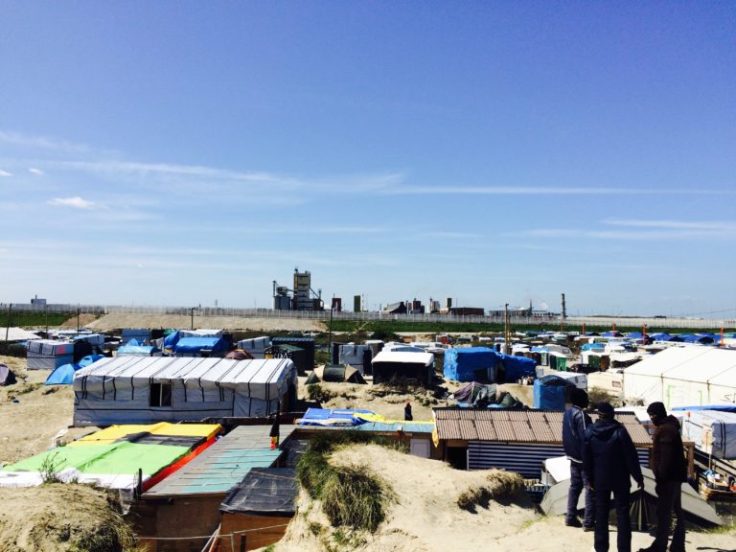
A Day in The Life of The Jungle: Syrians Camped out in Calais


Mohammed’s Story

“I will certainly return to my country, whether it is rebuilt or not.”

After his father as taken by Isis, 14-year-old Mohammed became the man of the house. Now, he’s starting a new life in Germany but is keen to cling onto his past.

Filmmaker Marcel Mettelsiefen followed one family for three years as they struggled to survive in besieged Aleppo, eventually becoming refugees and fleeing to Germany. 

Watch part 1, Children on the Frontline on All 4: http://bit.ly/1eoNelB 

Watch part 2, Children on the Frontline: The Escape on All 4: http://bit.ly/1NqkH48

Bravo, Boris: Three Jeers for Idiocy, Insensitivity, and Ignorance on Syria


Boris Johnson (Image: REUTERS)

Boris Johnson, the Mayor of London and U.K. MP for Uxbridge and Uislip, has just tried to parrot Winston Churchill the way many aspiring—and, indeed, established—writers of English extraction ape Christopher Hitchens: some of his style, less of his substance, even less of his sense, and almost none of his sensibility.

In his tepidly-written, terribly-reasoned piece in The Telegraph, Johnson essentially gave us his “Two Cheers for the Dictator.” Casually conceding that the dictator in question, Syrian President Bashar al-Assad, is a “monster” who “barrel-bombs his own people,” fills his jails with “tortured opponents,” and serves as the son and successor of a man who ruled “by the application of terror and violence,” Johnson nonetheless celebrates Assad’s conquest of Palmyra—and indeed goads him on.

Perhaps writing with the best of intentions, Johnson displays an audacious amount of idiocy, insensitivity, and ignorance on Syria.

Johnson demonstrates sheer idiocy in expressing “elation” in reaction to the Assad regime’s move on Palmyra. Assad’s recent and brief campaign against ISIS has not unfolded in some sort of strategic and moral vacuum. (Syria’s war did not begin when ISIS seized Palmyra or beheaded an octogenarian archaeologist, any more than the militarization and radicalization of the struggle for Syria began when rebels began skirmishing with Assad’s security services.)

Assad’s campaign comes only after the Russians have helped him, as Johnson himself put it, “turn the tide.” During a months-long incursion into Syria, amid a years-long effort to support Assad militarily, financially, and diplomatically, the Russians have helped him route rebels of all stripes—without so much as sneezing at ISIS and the territories it controls. Having helped Assad secure and stabilize his hold over areas he deems necessary for strategic survival, the Russians are already trying to create more strategic space, leverage, and legitimacy for themselves and their client. At a minimum, they’ll fight ISIS fleetingly to position Assad as a partner in peace at Geneva. And they may very well succeed in the longer term, too: by wiping out the only factions that could conceivably challenge Assad in shaping Syria’s future, they can now wage war against ISIS, drag international participants and perhaps some Syrian rebels into a coalition of the awkward, and help Assad survive and spin his story as he already has for more than five years.

From that baseline, Johnson then moves to peddle the propaganda of both ISIS and Assad: he amplifies the terror of ISIS while feting—and indeed goading—on Assad, the latest in a long line of brutes branded as bastions of civilization. To be sure, ISIS—and the menace we’ve made of ISIS—seems far worse than the image of the Syrian regime. But that’s largely because they’ve each distorted their deeds differently as part of propaganda campaigns aimed at specific audiences as part of their respective, self-styled struggles.

ISIS tries to terrorize, and tries to instigate and empower others to terrorize, the West: it thus commits barbaric acts, spews hate, and tweets and taunts about it all. Instead of trying to mask its dark deeds, ISIS plasters them up as posters. It beheads American and British journalists and aid workers, burns Jordanian fighter pilots, shoots up cultural capitals and political capitals of the West—and then trots out sinister spokesmen like Jihadi John and his ilk, other Anglojihadist villains, it conjures from time to time—precisely because most of the world views such as beyond the pale. The Assad regime, meanwhile, tries to terrorize its own people (and any others in the Levant who stand in its way or otherwise fail to demonstrate sufficient fealty). Unlike the bearded barbarians they brandish as bugaboos today, Assadists deny their deeds on the diplomatic stage, before the press, and in the halls of power; but they then use the threat of such deeds to sow fear and chase respect at home (buttressing their credentials with the Alawite communal core, for instance, or deterring dissidents who—understandably—prefer not to be murdered, maimed, or maimed and then murdered). 

Against that backdrop, Johnson now sees Assad as Assad sees and sells himself: a suited and booted secularist ready to do business with the West as he did before the war and at key junctures during the war—like when he gave up chemical weapons, after using them, in 2013; allowed airstrikes against others competing to control Syria; or when he now offers to work with archeologists and preservationists to restore the ruins of Palmyra while he cleaves through the Sunnis of Syria. He does not duly acknowledge or address how Assad created conditions for the sort of radicalization and militarization of Syria’s struggle that have caused so much grief today. Nor does he consider how Assad contributed to the resurgence of radicals specifically (by, for instance, cooperating with terrorists bound for Iraq after the American invasion of 2003 or releasing hundreds of jailed jihadists after protests against his rule began spreading across Syria in 2011).

Johnson’s also insensitive to the lives, plights, and perspectives of the many Syrians, Iraqis, and Lebanese that don’t fall within the communities he and so many in the West have concerned themselves with. Cheering on the Assad regime as some sort of protector of minorities, unlike an ISIS “engaged in what can only be called genocide of the poor Yazidis,” Johnson—like so many others—again misses the mark. By fixating on and fascinating himself with the Yazidis, which he uses as a proxy for all minorities in the Middle East, he only elevates communities over individuals and categories of human beings over human beings themselves. Sunnis in Syria—or in Iraq or Lebanon, where they constitute minorities too—are being slaughtered by the thousands. Their lives don’t matter less, Johnson would surely agree, because they aren’t Jews in Israel, Christians in Lebanon, Alawites in Syria, or Kurds in Iraq. And yet he dumbly and dangerously suggests as much, by mirroring majoritarianism with the sort of minoritarianism that the Assad regime has used to shape Syria through decades of brutal rule and years of bloody war.

And, finally, Johnson essentially equates ruins and rubble with people. He ignorantly cheers on the regime responsible for the onset of war and for most of the hundreds of thousands of lives lost in it because that regime, see, at least hasn’t dynamited the ruins and historical artifacts of Palmyra. But while Palmyra is of course worth cherishing, saving, and restoring, it doesn’t matter more than the people of Palmyra—and of Syria—themselves.

Swept up in a struggle between civilization and barbarism, and caught up in his appreciation for art, culture, and history, Boris fails to focus on a few simpler, deeper, and far more pertinent truths. He celebrates how Assad has driven out the barbarians at the gates, but does not warn of the savages that lurk within the walls, too—or care to tell us that such savages have proven to be more dangerous to states and societies in the long sweep of history. He celebrates a symbol of our common heritage, but does not really remind us that our common heritage is itself a symbol and aspect of—not a substitute for—our common humanity.

And he cheers on civilization, but does not have the clarity or courage to see and say that civilization means—and must mean—more than ruins and rubble it has accrued or the value it gives them. A civilization is, and must be, about more than whether and how its people—and especially its leaders!—remember the past… It is, and must be, about whether and how they understand and cope with the crises of the present. It is, and must be, about whether and how they see and forge the future.


Anthony Elghossain would torch the Cedars of Lebanon to save a life—let alone hundreds of thousands of lives. He tweets @aelghossain

source

حقيقة بشار الاسد وثائقي subtitled in English The news according to the regime

Syrians take to streets for second Friday after truce

Yallasouriya 6:44 am on March 12, 2016

Syrians prepared large numbers of flags and microphones on Thursday to be used in the anti-Assad demonstrations on Friday.

The planned demonstrations took place today amid relative calmness and uneasy tension in most cities and towns which are held by the Syrian opposition amid risks that Assad barrel bombs and artillery would attack again.

Among the places which witnessed anti-Assad demonstrations were the city of Idlib, Jar Janaz, Saraqeb, Maaret al-Muaman, al-Raten, Talbisah, al-Qaboon, Douma, Harasta, Kafr Batna, Zamlka, Kafr Zeitah, al-Waar, Kafr Naboza, Ezaz and many others.

Read more: http://www.orient-news.net/en/news_show/105667/0/Syrians-take-to-streets-for-second-Friday-after-truce

Blog at WordPress.com.

Up ↑