Search

band annie's Weblog

I have a parallel blog in French at http://anniebannie.net

Category

Syria

Maher Almounnes + Amal Hanano: Hallucinations of War

Amal Hanano (@amalhanano)  –  April 13, 2013
This post, called “Hallucinations of War,” was originally published in Arabic on the blog “Overdose”, which is written from Damascus by journalist Maher Almounnes. It is translated here by Syria Deeply associate culture editor Amal Hanano.Before this war, I used to be described as the smiling optimist. Maybe it was a blessing to be known to my friends as a good listener, because I would simplify situations and solve problems and so forth. However, I still, despite all the pain, continue to smile. And I still, despite all the weariness, find meaning within every tragedy.My first sorrows were losing loved ones, one after the other, as they left the country. But I would console myself with the belief that we would meet again and that our reunion will be sweeter after our separation.

Then we started losing loved ones who would never return. Their martyrdom was both a source of mourning and solace, as “the afterlife is better and everlasting.”

And when we left our home, I told myself that we were leaving one home for another, while there were thousands who had left their homes to live without shelter.

Then my father lost his job. I soothed my mother and told her there were others who had lost their eye or their leg or maybe even their life; thank God my father had not been harmed.

Then one of my best friends was abducted. The silver lining was that he returned with his head still attached to his body and that all that they had given him were a few bruises and slightly swollen soles.

Between these events are countless details, from having to postpone my sister’s wedding dozens of times to losing so many friends because of politics.

However, these details and others, like watching scenes of death in repetition, are details that every Syrian knows well. Death has come so close to each one of us that we no longer even see it.

All we see now is that we are political commodities or material for the media, or at best we are a number that scrolls on the red ticker on a television screen proceeded by the word: Breaking!

*

Two years. They seem like 20 years of wisdom and 50 years of sorrow. They made me change how I think about a lot of things. (By the way, I write now because I feel like it, not for any other reason.) But they did not stop me from taking advantage of this miserable reality and conspire with the girl I love.

The irony is, I forced this war to bend to my demands and serve my personal interests.

I claim to be the greatest lover in the dirtiest war. I claim to love her as much as the sorrow in Damascus, the number of the bullets in Aleppo, the destruction of the neighborhoods in the old city of Homs.

Every explosion is another reason to listen to her voice with the excuse to make sure she is alright. Would you believe that I now love the sound of explosions? Just so I can rush to call my love even though I know with certainty that she is safe at home.

Our new home that we fled to is located on the outskirts of Damascus, in a conflict zone. It’s wonderful for your home to be in a “hot” zone, because you have a daily appointment with death. And that’s another opportunity for her to worry about me and to call me every morning to make sure I woke up in my bed, still alive.

I work in a neighborhood where people are often detained. Amazing! A little bit of fear in exchange for more chances to be indulged and receive a few sweet words from here or a warm message from there.

And so what else is there in this war? Snipers? Suicide bombers? Mortars?

How beautiful they all are.

Because of them, I made a pact to never upset her no matter the reason. Because my fear is that death will come quickly, leaving a melancholy gaze between our eyes forever.

I owe our neighborhood sniper a rose. Because of him, I call my love every day, a few meters from my home, and each time it feels like our final phone call. I don’t know how I invent the words of endearment. I’m surprised by the beautiful words flowing out of my mouth that melt her and in turn melt me. Until I arrive safely to my doorstep.

I owe this war: 2,000 text messages; tens of handwritten letters; more than 4,000 “I love yous”; hundreds of kisses, embraces and tears of joy when we meet; and hours of pining and waiting.

Who said this war is all bad? I made the most beautiful love story out of this war.

Forgive me darling, our love story is written in steel and fire.

I swear by the blood of martyrs that spilled over my land that I love you until the last bullet, the last bomb and the last drop of martyr’s blood.

Not only because you are my angel, but because I believe: love is mightier than war.

You are mightier than war.

Analysing Assad’s Al-Ikhbareya TV interview

atwan-e1351254980644

No one can deny that Syrian President Bashar al-Assad is stuck in a quagmire, militarily speaking. But when it comes to the media he is free to manoeuvre.

Earlier on in the civil conflict which is devastating Syria, he voiced the theory, ‘We dominate the ground while they control the sky’ with reference to pro-opposition Arab satellite channels. Now he has changed his tactics.

When Assad speaks to a foreign newspaper, it makes headlines across the world. Newspapers and broadcasts splash his words while intelligence experts analyse them.

Syria’s president chose Al-Ikhbareya news channel to make a statement marking Independence Day.

The interview was clearly well prepared. We can’t rule out the possibility that Assad’s presidential office prepared the questions themselves, while the interviewer’s role was limited to reading them off to avoid potential repercussions or violations.

The president wanted to address as many authorities as possible in his answers. I will clarify exactly what here.  READ ON HERE

Al Jazeera World – Syria The Reckoning

Syrian Revolution Song Arabic Nasheed

[youtube http://youtu.be/Z4_-3ULNuIA?]

Why I predict a Flaming June for the Arab World

Sources close to Arab and Gulf decision-makers suggest that serious – maybe even critical – developments in Syria, are likely in June.

atwan-e1351254980644

While there are no specific details as yet, several indicators give credibility to the chatter.

First of all, British army scientists have found evidence of chemical weapons used during the two-year Syrian conflict. The Ministry of Defence says that soil samples taken near Damascus have proven the use of chemical weapons, although nobody has directly implicated either the regime or the opposition.

Then, CNN has revealed that the US administration will revive plans to intervene militarily in Syria, in response to pressure from both Democrats and Republicans in Congress.

Further, Military training and exercises for Free Syrian Army (FSA) forces in Jordan and Turkey by US and British special forces, under the supervision of the CIA, will end in mid-May.

Next, the moratorium on the European Union’s decision to impose an arms embargo on the Syrian opposition will end early on in June, paving the way for free and independent action from both Britain and France. They could well provide the opposition with modern arms and equipment, including heavy armour and anti-aircraft missiles.

And finally, the aggravated dispute between Syrian authorities and the UN about international investigations into chemical weapons continues.

British Defence Ministry leaks about soil samples taken from Damascus must come as part of some bigger plan.

It is reminiscent of another incident when British intelligence officials sent British-Iranian journalist Farzat Bazoft to Baghdad to take soil samples near chemical plants. A British laboratory supposedly found traces of weapons of mass destruction (WMDs) close by.

This helped justify the US-British invasion of Iraq.

Six months ago, US President Barack Obama issued a stern warning to Syrian President Bashar al-Assad’s regime, claiming that any use of chemical weapons would precipitate an international response.

It’s no coincidence that the G8 summit in London last week repeated the same statement.

What we are about to witness is a repeat of events used to justify economic sanctions on Iraq – and then invasion – after a chemical weapons attacked killed 5,000 civilians in the Kurdish town of Halabja. The West blamed Iraq for the tragedy.

The question remains: Is future military action, which could mean no-fly zones or arming the opposition, designed to lure Iran into the conflict; or will it come in the form of a joint US, Israeli and Arab war on Iran and Syria at the same time?

Israeli reports warn that Iran could become a nuclear state before the end of the year. This means that US and Israel have just a few months to halt a dangerous and strategic shift in the region.

What changes things in this case – and could turn everything upside down – is that when Saddam Hussein’s regime faced blockade and war, he was alone and without allies.Under Gorbachev, Russia was bankrupt and China was preoccupied with its own economic development.

Today, the Assad regime has the support of Russia, Iran, Hezbollah in Lebanon and the BRICS countries (Brazil, China, India and South Africa).

June is one of our hottest months. It’s ironic that it begins 40 days before the holy month of Ramadan this year.

I wouldn’t be surprised, and can’t rule it out, if this June becomes one of the most incendiary months in the history of the Arabs.

source


Irish-Syrian Activist A Martyr in Syria Conflict 10-April-13 Al Jazeera Reports

[youtube http://youtu.be/GIcu9hwBJ-w?]

Syria anthem of the free

[youtube http://youtu.be/x2uSPsJr0vE?]

Palestinian cartoonist Mohammad Saba’aneh sentenced to 5 months in prison

by on April 12, 2013 2

 
RWerr GqRTCxnoJGUKl9Ow
Right to life with dignity by Mohammad Saba’aneh  Oct 30, 2012

Very sad news.  Mohammad Saba’aneh, the acclaimed Palestinian Cartoonist who was detained February 16th at the Allenby Bridge checkpoint, was sentenced by the Israeli Salem Military Courton April 4th to 5 months in an Israeli prison for contact with a hostile organization

Pam9VroDTiybFmBe9IJEgQ
Freedom by Mohammad Saba’aneh 05 Dec 2012

Initially Saba’aneh was held without charge. On March 19th an Israeli military court was supposed to announce a decision whether to present an indictment against Saba’aneh, instead they extended his detention.

At the time  Saba’aneh’s lawyer said there was no evidence Saba’aneh had committed any offense.

QDMH1UdTSZqj92U0HJJArQ
Don’t Shoot by Mohammad Saba’aneh

According to the following report Saba’aneh’s lawyer informs Mohammad had contacted a publisher in Amman Jordan who published a book about Palestinian prisoners. Possibly Israel considers books about Palestinian prisoners  a threat to their security.

The Cartoon Movement, courtesy of Radio Netherlands Worldwide (RNW), Mohammad Saba’aneh Sentenced to Five Months in Prison:

Thursday April 4, Palestinian cartoonist Mohammad Saba’aneh was sentenced by a military court in Salem to five months in prison and a fine of 10,000 shekels for ‘contact with a hostile organization’. The news is confirmed by Mohammad’s brother Adel and his lawyer Riadh Arda.

……..

Book about Palestinian prisoners

According to Saba’aneh’s lawyer Riyadh Arda, Mohammad was accused of contact with and assistance to a hostile organization and transporting money for a hostile organization. Adel Saba’aneh tells RNW: “The only thing Mohammad did was contact a publisher in Amman who publishes a book about Palestinian prisoners.” This book was compiled by their other brother, Thamer Saba’aneh. Thamer has been a member of Hamas and was arrested weeks after Mohammad. He is still being held.

Tired of transport and food

Initially, Mohammad denied all accusations. The only reason that Mohammad has accepted the conviction is, according to Adel Saba’aneh, because he could no longer bear the conditions in the prison where he was held. “He’s sick, he was transported to a different place every few days and a pre-existing intestinal condition was aggravated because of the prison food.”Adel Saba’aneh thinks that the cartoons of his brother and his international reputation have played a role in sentencing. “In similar cases, the lawyers say people are often released, but the authorities were determined to convict Mohammad. The longer he would refuse to confess, the higher the sentence would be. They would not let him go.”

Some people have a problem with Saba’aneh’s Cartoons:

c2be3493ce42ee658842d93c6d54529d L
by Mohammad Saba’aneh

Mohammad’s brother Thaer Saba’aneh, now arrested, was a specialist in prisoners’ affairs. Perhaps the ‘hostile’ organization was Addameer Prisoner Support and Human Rights Organization, or perhaps Israel considers Mohammad Saba’aneh’s ideas and talent a threat to its national security.

861554212
by Mohammad Saba’aneh

The International Council for Human Rights reports Saba’aneh has been actively critical of the Israel’s policies on administrative detentions:

His work is focusing on addressing and supporting the Palestinian hunger striker detainees in the Israeli prisons. Sabaana has received many awards at national and international festivals for his cartoons.

This is what threatens Israel:

6a014e5f5d3c7c970c017c385cf02e970b 750wiPalestinian prisoners in Israeli jails by Mohammad Saba’aneh Apr 27, 2012

About Annie Robbins

Annie Robbins is Editor at Large for Mondoweiss, a mother, a human rights activist and a ceramic artist. She lives in the SF bay area. Follow her on Twitter @anniefofani

I almost died in Syria


I’ve covered wars for years, but nothing prepared me for the conflict on the ground – or in my head

By

I almost died in Syria A photo of the author

There’s a private bar in London whose members are nearly all war correspondents. The men and women standing at the bar could easily convince you that war reporting is one of the most exhilarating experiences that life has to offer, a gateway to the outer limits of human experience. This, of course, is absolute nonsense, and they all know it. I can tell you that because I’m frequently one of those people drinking there, and I’ve spun that line on more occasions than I care to remember.

I’ve been making documentaries in war zones on and off for the last 10 years, and I can assure you that working in a conflict zone is absolutely the most horrible, lonely and uncomfortable experience you’re ever likely to have.

But that’s easy to forget.  Within days or even hours of getting home, the bitter and complex reality of seeing a conflict close-up quickly melts into a series of increasingly honed anecdotes whose veracity I can’t quite guarantee.

The only true and abiding memory I have of the weeks and months spent in places like Helmand province in Afghanistan or a field hospital in Iraq is a vague and intangible sense of my split personality.  One part of me becomes the journalist thief, prowling in search of people and stories to turn into a film. And at the same time I’m something quite different but also connected:  a profoundly moved and thin-skinned witness to the awful extremes of human behavior.  Both sides need the other, but they pull in very different directions.

For five weeks last fall, I embarked on a new project, living on both sides of a sectarian front line in rural Syria to make a documentary for the PBS series “Frontline,” and for Channel 4 in the U.K. I filmed with Sunni rebels on one side and regime loyalists on the other as they descended into an increasingly hateful feud.

Nothing could have prepared me for the imperial-scale level of violence that I witnessed there. It was totally unprecedented in my experience. And it’s only now, reading journals and looking back at footage, that some of it is even becoming real.

A family reacts in shock after a government airstrike on the Sunni village of Al-Bara on Oct. 28, 2012.

Six months ago, I was on a bed in a Turkish hotel, a few miles from the Syrian border. I was waiting for my fixer Abdulqader to come back to the room we shared.  He has a hell of a reputation for helping journalists “get inside” (the euphemism of choice among correspondents operating in Syria).

Before that day, I’d only met him once, for just a few hours, in a hushed and somewhat secretive meeting in the corner of a hotel foyer in Istanbul.  Two hours into our second meeting, I was sat in my boxer shorts in our shared room, our beds only inches apart, and the next day we were going to try to sneak into Syria for an extended stay in possibly the world’s most dangerous war zone.  In friendship terms, it was “in at the deep end.”

I kept wondering if I should be more scared. The smugglers who were helping us cross the border were full of horror stories about their friends being killed in airstrikes, or so-and-so “disappearing near Homs.” Then there was the casual warning I’d been given:  ”There’s been a lot of shelling on the road you want to take …” It alarmed me at first, but then I caught myself wondering how much danger this last line really indicated — the road we wanted to take stretched for miles, and people were vague about when it was actually shelled.  It sounded to me then like I was being advised not to drive on a highway because there’d been a car crash there the previous week.

We crossed into Syria the next day, and it took two more to reach our filming destination: the Orontes River valley in Idlib province. It’s a beautiful stretch of Syria’s rural heartland, peaceful for generations, but now a sectarian fault line: On one side of the river, Sunni fighters of the rebel Free Syrian Army hold sway. On the other side, less than a mile away, Alawite villagers remain fiercely loyal to the government, and were protected by a line of well-armed regime checkpoints.

On our second day on the rebel side, the army positions shelled the village we were living in.  The sound was almost innocuous at first — a distant pop, a pause of about 20 seconds, and then a vicious crunch as the shell landed nearby.

After the fourth explosion, we headed to the makeshift field hospital to see what had happened. As I got out of the car, someone grabbed my hand and pulled me into a rudimentary emergency room.

There on a metal gurney was an elderly man, probably mid-60s, lying on his back, his face covered in dust, and his right leg blown off at the knee, a shredded flap of skin dangling from his bloodied stump.  The medical team looked resigned, and gave me vague shrugs that I took to indicate their impotence, or their familiarity with a scene like this. I looked at the old man lying on the table in front of them. He was semi-conscious and shivering. He died a few minutes later.

The man who had brought me in pulled at my sleeve and took me into the room next door. It was completely dark.  He flicked a switch on his cigarette lighter to produce a tiny torch light, and shone its weak beam into the room to reveal two badly injured men lying in the darkness. The nearest man was making a strange, hoarse, stuttering sound that I realized was his faltering breath. The second man was reaching out to the man lying next to him, his cousin it turned out, and was saying, in Arabic, “I bear witness that there is no god but Allah.” He wanted these to be his last words.

The quiet, dark horror of the scene froze me for a moment.  I asked myself, quite deliberately, if I realized what I was looking at. I found myself slipping into that weirdly safe mental space, a kind of filming autopilot. I took the lighter from my guide’s hand, and shone the torch beam onto the men in the dark. I concentrated on keeping the camera steady. I asked the people behind me to be quiet so I could get good, clean sound of the dying man’s last words.  I told myself I could think about it later.

Outside the hospital, a truck had pulled up with three mangled corpses in the back.  A crowd had gathered around it, but a path quickly opened up and I was pushed through to film the bodies. ”Film, film,” people around me urged. It was a horrendous sight, and I flicked the camera to automatic — I didn’t trust my reactions to this.

A man was standing in the truck, holding something up for me to film. The sun was in my eyes, and I couldn’t see. Then the man slipped into silhouette, to reveal the awful outline of a severed foot, dangling there in his hand, displayed as evidence. For a few seconds, I forgot to breathe.

A rainbow forms over the Orontes River valley.

I wanted to find stories away from the violence, and three days later went to visit a group of young peace activists down in the valley. But when I arrived, a man appeared in the doorway and asked if I’d come to “film the bodies.” I was confused, and was led to the mosque next door. There on the blood-stained carpet were three shrouded corpses: a mother, I was told, and her two children. One of the bodies was painfully small. I lowered my camera to take this in, but someone tugged my arm. “Film, film!” he said.

I asked to be driven to where they’d been killed, and by the look of the crater it had probably been a mortar strike. It had landed about 3 meters from the garden patio of a small house whose walls were spattered with blood. A small boy was frantically digging in the crater to pull out bits of shrapnel.  I was told the mother and her kids had been sitting outside shelling corn, and were killed instantly. Two others were also killed nearby.

At the funeral procession, the body of a small boy was carried aloft on a piece of cardboard. I realized I was standing in a grave as men lowered in the bodies of two women. Blood trickled from the stretcher as they lifted it over the heads of the crowd. I worried that it would get on the camera.

Jamal Maarouf, seconds before being targeted in an airstrike.

By the second week, I could hardly sleep.  I lost all confidence in what I was doing. There was no privacy. I got the shits. I was bitten to pieces by mosquitoes. And I became increasingly aware of my split perspective on what I was seeing:  I’d experience total sensory and emotional overload, and then find myself thinking solely about framing or continuity, or about how this story would “work in the edit.”

It got worse.  One day, we heard we’d finally been granted an interview with Jamal Maarouf, the leader of the Martyrs of Syria Brigade, the most powerful rebel faction in the region.

We were summoned to  meet him in an anonymous house in the small village of Al-Bara, and I’d only just started filming when the house shook as a regime jet flew overhead, dropping the most almighty bomb on the village.  I was standing in the doorway trying to see the plane when the blast knocked me to the ground.  It had landed 300 meters away.  Even Jamal looked shocked.

I knew immediately that filming Jamal in the aftermath of an airstrike was “a good scene,” and was scampering around thinking about exposure and focus. But at the same time, the most awful, visceral reaction was taking place. Beside the huge crater, an old sheikh urged me to film something on the ground, and then he started wobbling something in front of him, some sort of sack of jelly or meat.  And suddenly I realized what I was looking at: the remains of someone who was alive just minutes ago, killed in the most brutal and sudden of ways, lying there debased in the dust. The body was not recognizable as human.

I felt a terrible expression contort my face: I was pulling back my lower jaw and cheeks, my top teeth were bared, and my eyes were wide. I was still filming, but was aware that my face had contorted into a look of horror. The weirdest part was that I was relieved to be horrified, to be human among all this inhumanity, and not just some robot with a video camera.

While I stood there in the rubble, shouts started going up that the jet was returning to bomb a second time. I ever so slightly pissed myself. Where does one stand in a situation like this? Would the jet strike an area it had just hit, to kill rescuers and survivors? Or would it regard that as a “waste” of a bomb, and drop it somewhere else? Was that crater, in fact, the safest place for miles?

I’m sure there’s a training course somewhere that teaches what to do in that situation. Actually, I’ve probably done that course.  But right then, all I could do was run for it like everyone else.

A young boy is consoled after his grandparents appear to have been killed in a government airstrike on the Sunni village of Al-Bara on Oct. 28, 2012.

That night, I walked down to our little supermarket to buy cigarettes. The men at the counter pointed at my jeans and asked why I was so dirty. I said “al-Bara,” and pointed vaguely towards the north. I think they understood.

An old man pulled up a chair and sat right next to me while we smoked in silence. His sleeve was touching mine.  The shopkeeper came out and handed me a little bottle of orange juice. He’d opened it for me and had put in a straw. There was something about this gesture that broke me. I just looked at the ground and started crying. I didn’t try to hide it. It was the first time in a while I’d felt normal.

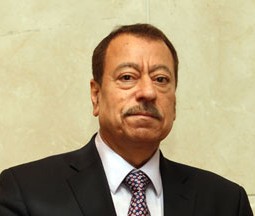
 

Olly Lambert has a decade of experience documenting life in conflict zones. His latest film, “Syria Behind the Lines,” airs on the PBS investigative documentary series FRONTLINE on Tuesday, April 9 at 10 p.m. It will also be broadcast as “Syria: Across the Lines” in the UK on Channel 4 on April 17 at 10 p.m. More Olly Lambert.             

source

Blog at WordPress.com.

Up ↑