via Qunfuz
October 12, 2013
I have tried hard for the last two and a half years to stay in Syria. It was important for me as a writer to stay in the country and live the events I was writing about, and it was doubly important for me as a man of culture to live among the people I belong to, like they live, trying to understand their concerns. I wanted to stay not because I was doing something invaluable, but because that was my place which I could not replace. I wished to see Syria change after spending half a century of my age watching it immune to change.
To stay in the country demanded great efforts from me in order to avoid falling in the sinister hands of the Assadi regime. After two and a half years of the Revolution I was compelled to also leave Damascus where I had lived for twelve years, the last two years of them in hiding. I was smuggled out of Damascus to the suburbs (gouta), then after 100 days I set out to Raqaa, the city where I had spent my childhood and teen age years and where my brothers live or those left of them. The journey to Raqqa was extremely hard, not because it took 19 days of travelling in the sweltering heat of the summer amid considerable dangers, but because even before the journey had ended and during the several stages it took, I was becoming aware that my destination and the last expanse of my journey were falling gradually under the influence of the State of Iraq and the Levant ( Daesh داعش ), this name which invokes the specters of the figures of horror, the ghouls, of our childhood. A few days before leaving Ghouta, it came to my knowledge that the ghoul captured and imprisoned my brother Ahmad. Then at Ruhaiba in Qalamoun, while I was trying to get news of my brother Ahamad, I also knew that my second younger brother Firas was captured by them too.
The journey lost its meaning for me, never the less, I had to proceed with it. I needed to come to the end of a hard journey which was only made bearable by the company of some defecting young men and a cameraman friend who was recording some stages of our journey. As the trip neared its completion, my interest in it waned and the prospect of the journey’s end lost its thrill.
In Raqqa, I spent two months and a half in hiding without succeeding in getting one piece of information about my brother Firas. Nothing could be worse than this. Therefore, instead of celebrating my arrival at Raqqa, I had to keep in hiding in my own liberated city, watching strangers oppress it and rule the fates of its people, confiscating public property, destroying a statue of Haroun Al-Rasheed or desecrating a church; taking people into custody where they disappeared in their prisons. All the prisoners were rebel political activists while none of them was chosen from the regime’s previous loyalists or shabiha. With the exception of this flagrant oppression of the people, their property and symbols, the new rulers have shown no sign of the spirit of public responsibility which is supposed to be the duty of those who are in power.
I wished to stay in Raqqa for the longest possible time to understand why events had taken this turn and to form an idea about the new leaders. I was able to collect some useful information but not as much as I had wished because I was not able to explore the city’s streets and listen to the people tell me their stories, not to mention holding interviews with the Emirs of the State of Iraq and the Levant and their mujahideen.
Not to walk in the streets of Raqqa in autumn? This is not an adequate reason for leaving, yet it is quite important on its own for me. At the onset of the Revolution, I used to say jokingly to my friends: I wish to topple the regime so as to get a passport. I wanted a passport to feel free and to travel where I wished. Today I leave behind comrades who will carry the struggle on. Our presence together inside the country used to give us courage and the strength to continue. I do not feel bitter, but I am a little angry. I realize how impossible our situation has become, yet notwithstanding, I feel that whenever I am able to understand something or shed light on another, I believe I am taming the brutal multi- headed monster which wants to keep us in darkness, without the right to speak up, and not desiring but what it desires.
What frightens me most now is not to be able to understand the world outside Syria and for things to lose their clarity for me. I used to understand things Syrian. Syria was my country. I do not know exactly what I am going to do in exile. I always felt ill at ease with this word. It seems to me to be making a mockery of the people still inside the country. Perhaps its meaning will change and expand to include the whole of our terrible experience: the experience of uprootedness, seeking asylum, dispersion then eventually the hope of return. I do not know exactly what I am going to do, but I am now part of this massive Syrian exodus and the dream of return, although it feels right now as an amputation.
This is our country which is all that we have. I know that there is no other country that can be as merciful to us as this terrible country.
Robin Yassin-Kassab

the radishes are at ground level
For a long time it’s been too late for a happy ending in Syria. The longer this process continues, the less we can hope for.
How do you fight a monster without becoming a monster? How, particularly when the monster’s chief strategy is to make a monster of you? How, when the world’s most powerful storytellers depict you as a monster? How, when monsters hiding behind human facades walk by blindly as you are tortured, raped, humiliated, maimed, murdered?
I don’t really know. I’d welcome a reading list, if anyone has one.
I know this monster must be fought, even if we become monsters while fighting it. I know we must fight both internally and externally. I know the greater and lesser jihads must be fought simultaneously.
At some point, somehow, this stage will be replaced by another. Most probably that stage like this one will be bumbled through blindly. Human beings seldom or never achieve control over their larger social movements. Still, it’s pleasant to imagine that Syrians will be able to defuse the sectarian tensions which have existed at least since ibn Taymiyyeh, which were immeasurably exacerbated by Sykes-Picot and the French occupation’s construction of an ‘army of minorities’, and then set afire by Assad’s gang and its allies. It’s good to hope too that a new constitution will guard against any party, clique or ideological police imposing its straitjacket on the plural people.
Beyond religion and politics, environmental factors should also be taken into account.
It’s interesting to note that Jared Diamond’s three factors of civilisational collapse (deforestation, soil erosion, water management problems) have been present in Syria since late Ottoman times, and rampant in the last couple of decades. People my age who grew up in Damascus remember that in their childhoods the Ghouta still consisted of orchards and streams, that summer temperatures almost never climbed above the mid to high thirties. Wasn’t Damascus the city the Prophet refused to enter, fearing to sin by imagining himself prematurely in paradise? The dicatorship’s corruption (anyone with connections or money could build in the green zone) put paid to that. Stupidly grand development schemes repeated the pattern all over the country (Lake Assad, like Lake Nasser, was an environmental and social disaster – see Omar Amiralay’s film A Flood in Ba‘ath Land – a wonderful exercise in quiet irony). People’s lack of control over the public space meant they were alienated from it, and threw black plastic bags all over it (this explains the discrepancy between people’s spotlessly clean homes and the filth in the streets outside). Over the decade before the revolution erupted, a million climate change refugees, according to the UN, left the desertifying north east for the impoverished outskirts of Dera’a, Homs, Damascus and Aleppo. This, combined with the effects of Bashaar’s crony capitalism, provides the backdrop to the uprising. The revolutions to the west, and the monster’s extreme violence, provided the spark.

in Atmeh camp
When the next stage comes, every Syrian city (except two, Tartus and Lattakia – but they may well be burnt in the near future) will have to be rebuilt.
Rebuilding them to incorporate gardens for food security is an excellent idea, and surely not so difficult. All it requires is a return to tradition and a rejection of recent perversions. Damascus and Hama already incorporate fields into the inner city. Go back 40 years and the interconnection of agriculture and urbanity was much more evident.
In Atmeh camp I found refugees who’d lost everything growing herbs around their tents. At Hamood’s house in Kafranbul, where I spent a night, a rocket had punctured a wall. Beneath the damage, Hamood pointed to his flourishing radishes. His face lit up in repeatable wonder as he showed me these leaves. Despite the destruction, the people are planting seeds.
Here’s Permaculture Arabia’s website. In a region facing an imminent thirst crisis, you’d think there’d be more inerest in this. Whoever inherits Syria (please God, let that be the people themselves) needs to think about this very hard.
By mlynxqualey on October 12, 2013 • ( 1 )
 Ahmedzai writes, in commentary that originally ran on her blog:
This compelling novel takes the form of the diary of a Syrian prisoner of conscience, locked up for 14 years without trial in one of the Middle East’s most notorious jails. There are conflicting reports about whether it is indeed fiction or autobiography, but as far as I understand it is a fictionalised account based on the Khalifa’s real life experience of being imprisoned for unsubstantiated political offences from 1982 to 1994 under the previous president, Hafez al-Assad. The narrator, Musa, composes the diary in his head while in prison and only writes it down upon his release, embellishing it with only the occasional retrospective comment.
Musa returns to Damascus for the first time after several years studying film in Paris and is arrested at the airport. He is accused of being a member of the Muslim Brotherhood (MB), a charge he denies – after all, he’s Christian and an atheist, an admission for which he is severely beaten, ironically, by his interrogators. Making the same mistake in the first prison where he is held, where up to 80 men are crammed into an unimaginably small cell, he is shunned by fellow inmates, mainly MB hardliners, as an apostate and presumed government spy, a curse which will remain with him throughout his many years in jail.(See first extract, translated by Ruth Ahmedzai Kemp.)
He’s transferred to the infamous Tadmur high security prison in the desert, where he languishes for over a decade without charge. Trials, or military tribunals, are held in an office on site but the verdict seems always to be guilty and the sentence is death by hanging. Not that an inmate needs to be tried to face arbitrary death at the hands of the bloodthirsty wardens. No one is ever acquitted or seems to leave the prison alive. Arriving at the prison, he and the other new inmates are severely beaten and humiliated, including being made to drink from the cesspit. Musa nearly dies from injuries inflicted in this initiation ‘reception’ ceremony and indeed the body count is high. (See the 2nd extract, translated by Elisabeth Jaquette.)
Musa spends years on end in a huge dormitory, where 300 men are crammed into beds just 25 cm apart. The only movement is to the latrines at the end of the room and into the yard outside every few days for a ‘breather’ – a humiliating parade which regularly involves torture and beatings. On New Year’s Eve, for example, they are made to stand naked in the freezing cold until many perish.
Treated as a pariah, Musa endures literally years without speaking or being spoken to, without making eye contact with any of the men around him. Instead, he becomes a detached observer and listener, documenting the other men’s lives and relationships, hearing news from other prison cells communicated by Morse code tapped out on the walls, and learning to memorise the Quran and Hadith from hearing the words recited so often by his fellow inmates. Without pen or paper, he hones the skill of committing his diary to memory and records minute details of their surreal life, inspired by the other inmates who actively keep a mental record of the unspeakable goings on within the prison, to honour the memory of those who are killed there.
His ‘voyeurism’ reaches another level when he discovers a hole one day in the wall looking on to the courtyard outside. Taking cue from a mentally disturbed prisoner who sits for hours on end huddled beneath his blanket, Musa starts to do the same, secretly watching the suffering inflicted on prisoners in the yard and the regular executions.
The novel does, of course, contain horrendous and shocking violence, but mercifully such episodes do not overload the narrative and are all the more powerful for their infrequency. (Or perhaps it just seemed that way to me, as I fully expected the book to be page after page of hideous torture.) The narrator establishes a background of fear and pain, but stoically focuses on other details of life between those walls: the bitter cold, the unbearable heat and dust in the summer sandstorms, starvation, outbreaks of highly infectious diseases, visits paid for with bribes at astonishingly high prices (kilos of gold), disputes and vendetta killings…
The style of narration is simple and concise, but not without emotional reflection, and perhaps the most compelling aspect of the narrative is the psychological depth to the characters – something that is achieved in a film-like way through minimal description. We are drawn ever deeper into Musa’s complex psychology as well as that of the inmates and the jailors, as Musa reflects on the relationships around him and the shifting tensions. At a painfully slow pace, he himself develops relationships and starts to emerge from his shell. Inevitably, he comes to identify with the institutionalised prisoner community, a mental state of being from which he will probably never be able to extricate himself, a trauma from which a survivor of such an ordeal can perhaps never fully recover.
Things do gradually improve for Musa after several years when he offers his watch to be fashioned into a scalpel for an operation, performed in secret, on an inmate left to die of appendicitis by the prison authorities. (See the 3rd extract, translated by Ruth Ahmedzai Kemp.) Still, no one speaks to him, but he is at least treated with a little more warmth. The real turning point comes when a new intake of prisoners includes a group of Islamic extremists and Musa’s life is again at risk: moderates among the prisoners intervene to protect him. Vicious fights break out, but in a dramatic showdown, Musa finally breaks his decade-long silence and speaks out publicly in defence of his personal choice to have or not to have a faith. His bravery and honesty open up new friendships as a small group of liberal doctors begin to speak to him and when he shares the secret of the spyhole he gains more trust, especially that of the representative among the inmates, the ‘barracks chief’, Abu Hussein.
Ahmedzai goes on to tell everything, including how the book ends. If you want to know, go ahead and visit her blog. If not:
For all its stark, documentary-style narration, this is a deeply moving psychological story of a noble attempt at personal resistance, and yet an eventual crushing defeat at the hands of a brutal impersonal power. It is a forceful indictment of the Assad regime in Syria, but stands equally strongly as a universal rallying cry for justice and freedom from political persecution and arbitrary military rule.
The author, Mustafa Khalifa, lives in exile from Syria. Besides writing this novel, he is an eloquent and insightful political commentator on the situation in his native country. (See his 2012 editorial ‘What if Bashar Assad Wins?’) The novel has been translated into French as La Coquille and I believe it would find an avid readership if translated into English.
I concur, and thanks to Ruth for sharing this.
http://pulsemedia.org/2013/10/11/a-slaughter-of-alawi-innocents/
October 11, 2013
For the first time there is proof of a large-scale massacre of Alawis – the heterodox Shia offshoot sect to which Bashaar al-Assad belongs – by Islamist extremists among Syrian opposition forces. In its context, this disaster is hardly surprising. It follows a string of sectarian massacres of Sunni civilians (in Houla, Tremseh, Bayda and Banyas, and elsewhere), the sectarian ethnic cleansing of Sunnis from areas of Homs province, and an assault on Sunni sacred sites such as the Khaled ibn al-Waleed mosque in Homs, the Umawi mosque in Aleppo, and the Omari mosque in Dera’a. It follows two and a half years of rape, torture and murder carried out on an enormous scale by a ‘Syrian’ army commanded by Alawi officers and backed by sectarian Shia militias from Iraq, Iran and Lebanon, and by Alawi irregular militias. Assad and his backers have deliberately instrumentalised sectarian hatred more effectively than the Americans did in Iraq, and they must bear the lion’s share of responsibility for the dissolution of Syria’s social mosaic. Next, the counter-revolutionary forces in the West (chief among them the United States) must be blamed for obstructing the flow of arms to the Free Syrian Army, a policy which has inevitably strengthened the most extreme and sectarian jihadist groups (some of whom, such as the foreign-commanded Islamic State of Iraq and Syria, are actively fighting the Free Army). Human Rights Watch’s important report on the massacre of Alawi villagers is summed up in the video below. Sadly, HRW fails to adequately distinguish between Syrian and foreign, and moderate and extremist anti-Assad militias. The excellent EAWorldview critiques the report here. Its conclusion:
The HRW report illustrates the dangers of conflating the various factions of the insurgency under the heading “armed opposition groups”.
Coincidentally, that conflation is a tactic of the regime who seeks to portray the insurgency as extremist-led, largely foreign fighters rather than an extension of the indigenous protest movement that took up arms after Assad’s forces used violence to quash it from March 2011.
By this conflation, HRW (a fine organisation which has done great work in uncovering the truth of the Syrian conflict) veers dangerously close to the orientalist/racist stereotyping of the Syrian people’s struggle now dominant in both the rightist and liberal/leftist Western media.
It goes without saying that the crimes committed against Alawi civilians in northern Lattakia province are grotesque and idiotic, and constitute another strategic blow against the revolution and the survival of the Syrian state.
bandannie’s answer You BET !
By mlynxqualey on October 8, 2013 • ( 0 )
Jaquette adds that readers should “remember to add your thoughts on the author page for Mustafa Khalifa on And Other Stories’ website! Our feedback is how AOS can decide whether they might like to publish one of these books, so please do weigh in!”
More on Mustafa Khalifa and The Shell from AOS:
Mustafa Khalifa (b.1948) is a Syrian author. He went to university in France, where he studied art and film direction, and was arrested at the Damascus airport when he returned from Paris. From 1982-1994, Khalifa was held without trial at various state security prisons, including the infamous Tadmur Military Prison, a detention center described as a “kingdom of death and madness” by poet Faraj Bayraqdar and the “absolute prison” by dissident Yassin al-Haj Salih. The Shell is his first and only book, and has been lauded as one of the finest examples of Arabic prison literature.
The Shell (Beirut: Dar al-Adab, 2008) is a gripping memoir, written in spare, stripped-down prose punctuated by introspective, poetic reflection. In it, the first-person narrator describes being apprehended by state security and the twelve years in prison that follow. He details the brutal torture at the hands of the prison guards and military police, as well as the social fabric of prison life. Early on, Khalifa tells the guards that he is a Christian, hoping they will understand that their accusation that he is working with the Muslim Brotherhood is clearly false. Yet with true catch-22 logic and a belief in the infallibility of Syria’s state intelligence, the guards tell him that if he has been arrested, it must be for good reason, and as a Christian accused of working for the Brotherhood, he is doubly a traitor. As a professed atheist, Khalifa is ostracized by his fellow inmates, members of the Muslim Brotherhood, who suspect he may be a spy planted among them by the state. Tortured by the guards and shunned by the other prisoners, he retreats further into himself, forming a protective shell around himself for which the book is named.
For more, read Shareah Taleghani’s review in the Syrian Studies Association Bulletin, or Anne-Marie McManus’ review in Jadaliyya. You can also take a look at Mustafa Khalifa’s 2012 editorial: ‘What if Bashar Assad Wins?’
On 10 August, 2013, Syrian security forces arrested Syrian journalist and Marxist dissident Jihad Asa’ad Muhammad near Athawra Street in central Damascus. News of his arrest was confirmed by his sister Lina, a fellow Marxist and anti-regime activist forced into hiding. Jihad had been among the few revolutionary activists who remained in the Syrian capital, a deceptively quiet bubble under the strangling iron fist of the regime, despite the ominous threat of arrest hovering over his head. Soon after his arrest, a Facebook page was created that both demanded Jihad’s immediate release and re-published articles he had written during and before the uprising.
There exist, according to conservative estimates, tens of thousands of Syrian civilians similarly languishing in the myriad detention centres across Syria. The vast majority of them are not well-known tech-savvy activists or writers; they do not speak a foreign language or possess social media accounts; and no-one, except for their families, will care to call for their release and will shed a tear if they die in jail. But it is precisely those – the unsung and unknown heroes and heroines of the revolution, the forgotten women and men of impoverished neighbourhoods and the marginalised countryside, and Syria’s wretched of the earth – were the protagonists of Jihad Muhammad’s pieces.
His pieces tell us about Massoud, the “Lionel Messi of the Syrian revolution,” a 17-year-old schoolboy from one of the poorest Damascene cantons. Massoud, a top-scorer of his neighbourhood’s football club, participated in demonstrations wearing Messi’s shirt for FC Barcelona. Taking advantage of his Messi-like speed and diminutive size, he raised the revolutionary flag and freedom signs on rooftops, scrawled anti-regime graffiti, and constantly dodged the security forces. Massoud was arrested from his classroom and, for two months, tortured while in custody. After his release, he joined the Free Syrian Army.
Jihad also tells us about Umm Haytham, as one of thousands of Syrian women tirelessly going to jails and security branches to look for the whereabouts of their detained and forcibly disappeared sons, brothers, husbands and loved ones. They travel every day under shelling and despite checkpoints, in scorching sun and heavy rain, and put up with insulting remarks of police officers and soldiers. And they remain steadfast, buoyed with hope.
He tells us about revolutionary women from socially-conservative and patriarchal communities. Despite their frontline role in the uprising, those women are viewed with repugnance by the self-styled “feminists” and bourgeois “leftists” who claim to promote women’s rights while not being able to see beyond a woman’s veil and looks.
He tells us about Adnan, an Alawite soldier from the Latakia Mountains who served in Assad’s army but vehemently supported the uprising. Unable to defect, he was ultimately killed in battle, prompting his bereaved mother to murmur helplessly: “Their sons are in mansions while our sons go to graves.”
In addition, Jihad explores the social, economic and political roots of the Syrian uprising and its evolution into an asymmetrical militarised civil conflict, elegantly discussing the sectarian demographics and the gluttonous neo-liberalism that characterises Assad’s ostensibly secular and socialist Syria.
Issues concerning social justice, class struggle, and critique of the urban bourgeoisie were focal points of Jihad’s articles, coupled with themes of civil and political liberties and the struggle against tyranny.
Born in 1968 to a left-wing family in Damascus countryside, Jihad is the eldest male among nine siblings. Between 2003 and 2004, the Damascus-based Radio Sawt Asha’ab aired folktales he wrote and edited. The first major turning point in Jihad’s journalistic career came in 2006 when he became Editor-in-Chief of the Qassioun newspaper, founded that year by the National Committee for the Unity of Syrian Communists, an off-shot of the Syrian Communist Party. But Jihad was more than just an editor. He encouraged young Syrian writers to contribute and kept the newspaper going through the thick and thin for five years. Jihad himself wrote columns about a plethora of subjects ranging from arts and culture to state corruption, capitalism and imperialism. His vocal criticism of the government made him a target of persecution by the police state long before March 2011.
For him, the Syrian uprising lay bare several truths. The biggest of them, as Jihad puts it, is that “long gone are the times when the omnipotent, corrupt and pretentious political and corporate elite dominated their subjects. Now that people have virtually lost what gave them the little that was left for them, people no longer have anything to lose except for the chains that used to shackle them and hinder their liberation.” Moreover, “He who kills his people and burns his country, its cities, patrimonies and historical citadels is not entitled to claim that he supports other peoples’ struggles for freedom.”
Another truth that was exposed by the Syrian revolution is that while people began to liberate themselves, the mainstream leftist elite in Syria tightened its own fetters. The communist Qassioun newspaper took a hostile stance towards the revolution ‒ Jihad’s column existed as the paper’s sole space that truly sided with the people’s demands until he left the paper and began to write independently only a few months after the revolution’s outbreak. Jihad’s writings got more radical and revolutionary as the uprising went on. Though his articles could fall into populism and excessive optimism occasionally, he always maintained a room for rational and critical analysis while never pontificating or pretending to know more than the revolting masses.
Jihad’s ex-comrade Qadri Jamil, co-founder of Qassioun paper and the national Committee for the Unity of Syrian Communists, would go on to become the Deputy Prime Minister of Economic Affairs. Many of Jamil’s fellow veteran Syrian communists, who for decades lectured the Syrian proletariat about revolution and liberation, now looked down with degradation and repulsion at the “rabble” causing chaos and riots. In one of his most eloquent and scathing symbolic texts, published on the first anniversary of the beginning of the uprising in Dara’a, Jihad used the shoe metaphor to describe those old “revolutionaries”: A privileged bourgeois man suddenly discovered a newfound empathy with the poor so he called himself a revolutionary and started seeking a way to help the oppressed and subjugated attain their rights. He started preaching to the villagers, peasants and farmers who understood nothing from his big slogans, complex language and empty rhetorics. People visited him out of pity only when he was attacked by the police, landlords and village leaders. Ostracised, hungry, naked, and disappointed that his passionate speeches failed to “inspire the masses,” the self-proclaimed “revolutionary” man sold himself out to the new affluent leaders of the village who sought to keep him in their pocket. The revolutionary man quickly began attending their bountiful feasts wearing the shoes he was gifted. With the passing of some years, he was reduced to a mere pair of shoes whose only mission is to attend meals and be worn by those who lavished him with their charity. The metaphor used by Jihad in this article articulates the situation of many self-appointed revolutionaries not only in Syria but in the Middle East and worldwide.
In another sharp piece, Jihad Muhammad addressed the artists and intellectuals who thought they are entitled to celebrity treatment within the revolutionary movement. In April of 2011 when mass protests spread to the working-class suburb of Douma in Damascus’ Eastern Ghouta, some artists, intellectuals and actors hoped to climb on the bandwagon and hire themselves as its custodians and spokespersons. Engaging the revolution as an opportunity to nurture their egos, they considered the people of Douma a worthless, ignorant mob that must be educated. To their disbelief, people in Douma did not look at them with awe. Unwilling to allow another power dictate or lecture them, the people treated them as demonstrators rather than VIP guests. Those artists would abandon the revolution when it stopped being “cool and “sexy,” and when it no longer lived up to the lofty standards of their ivory towers. Jihad’s letter to them succinctly and rigorously sums up the Syrian revolution:
“This uprising does not need the intellectual elite as masters and theoreticians. Rather, it is the elite who need the uprising to liberate them from their ignorance. And in order to deserve to be a part of the uprising, the elite must be ready to take classes in the Syrian streets about the art of giving, living and freedom.”
Having taken inventory of Jihad’s writing and of his participation on the ground, it is not surprising at all that he was eventually arrested. Perhaps some might be shocked that two and a half years into what has become a grinding military stalemate, the Syrian regime is still arresting seemingly harmless unarmed activists and writers. Certainly not all of the regime’s actions are rational, but the systematic bid to arrest or kill people with free pens and loud voices is a deliberate, concerted tactic that the regime will deploy until the end.
(SAUL LOEB/AFP/Getty Images)

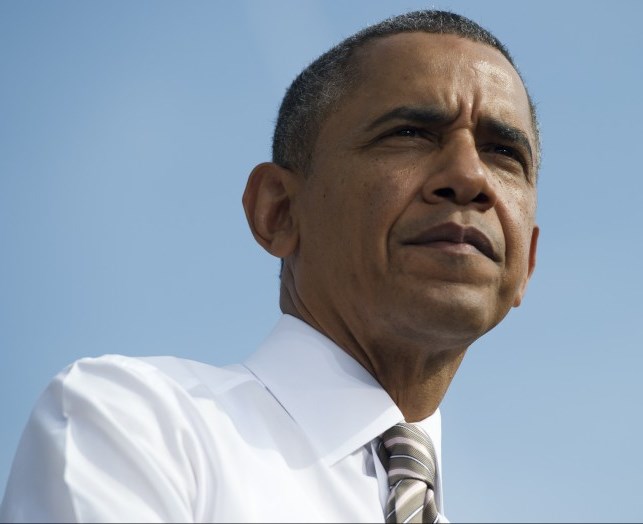
Despite Secretary of State John Kerry’s frenetic efforts, preparations for the “Geneva II” peace conference on Syria’s civil war are already foundering. The rebel movement has become increasingly radicalized against Syrian dictator Bashar al-Assad and more fractured. A newly confident Assad, meanwhile, has somewhat relegitimized himself as a signatory to a new chemical-weapons ban negotiated by the United States and Russia under U.N. auspices, which his government is tasked with implementing over the next year. Defying global opprobrium over his use of sarin gas, Assad has also positioned himself in a series of high-profile TV interviews as a preferable alternative to Islamist rebels who want to create a fundamentalist state.
All of which should prompt a reexamination of the first Geneva conference in the summer of 2012, on which Kerry’s new push for peace is based. According to some officials involved, perhaps the greatest tragedy of Syria is that, some 80,000 lives ago, President Obama might have had within his grasp a workable plan to end the violence, one that is far less possible now. But amid the politics of the 2012 presidential election—when GOP nominee Mitt Romney regularly accused Obama of being “soft”—the administration did little to make it work and simply took a hard line against Assad, angering the special U.N. Syria envoy, Kofi Annan, and prompting the former U.N. secretary-general to quit, according to several officials involved.
Former members of Annan’s negotiating team say that after then-Secretary of State Hillary Rodham Clinton and Russian Foreign Minister Sergei Lavrov on June 30, 2012, jointly signed a communique drafted by Annan, which called for a political “transition” in Syria, there was as much momentum for a deal then as Kerry achieved a year later on chemical weapons. Afterward, Annan flew from Geneva to Moscow and gained what he believed to be Russian President Vladimir Putin’s consent to begin to quietly push Assad out. But suddenly both the U.S. and Britain issued public calls for Assad’s ouster, and Annan felt blindsided. Immediately afterward, against his advice, then-U.N. Ambassador Susan Rice offered up a “Chapter 7” resolution opening the door to force against Assad, which Annan felt was premature.
Annan resigned a month later. At the time, the soft-spoken Ghanaian diplomat was cagey about his reasons, appearing to blame all sides. “I did not receive all the support that the cause deserved,” Annan told reporters in Geneva. He also criticized what he called “finger-pointing and name-calling in the Security Council.” But former senior aides and U.N. officials say in private that Annan blamed the Obama administration in large part. “The U.S. couldn’t even stand by an agreement that the secretary of State had signed in Geneva,” said one former close Annan aide who would discuss the talks only on condition of anonymity. “He quit in frustration. I think it was clear that the White House was very worried about seeming to do a deal with the Russians and being soft on Putin during the campaign.” One of the biggest Republican criticisms of Obama at the time was that he had, in an embarrassing “open mike” moment, promised Moscow more “flexibility” on missile defense after the election.

Administration officials deny this account, as do some who were involved at the State Department. Nonetheless, Frederic Hof, a U.S. ambassador who was Clinton’s special adviser for transition in Syria at the time, agrees that the negotiations could have been better handled. The harsh demand that “Assad must go” voiced by Clinton and British Foreign Secretary William Hague was “gratuitous,” says Hof, a senior fellow at the Atlantic Council. “Perhaps a greater effort should have been made to give Annan the time to do his due diligence.” Still, Hof says he saw no evidence that the administration was posturing for political reasons.
A current senior State Department official concedes that one of the problems with making the Annan communique work may have been Clinton’s distaste for getting involved in extended direct mediation, in dramatic contrast to her successor, who has opened up negotiations on several fronts at once—with Syria and the Russians, with Iran, and between the Palestinians and Israelis. “We’ve made more trips to the Mideast in the last nine months than she made in four years,” says this official.
While Clinton excelled at “soft” power—selling America’s message abroad—one emerging criticism of her four-year tenure at State was that she consistently avoided getting her hands dirty with direct mediation. Clinton agreed to leave key negotiations in crisis spots—in particular the Mideast and south-central Asia—to special envoys such as George Mitchell and Richard Holbrooke, and she rarely stepped in as each of them failed. Veteran reporter David Rohde, in an assessment as Clinton was leaving office in January, suggested that Clinton wanted to avoid embarrassment or failure ahead of a 2016 presidential run; he quoted one State Department official as saying that he was “really happy to have someone in the job who does not retain political ambitions.”
Still, Hof and critics of the administration say a 2012 peace deal would have been a steep, uphill climb at best. “I think there were a couple of problems that raised their ugly head in the immediate wake of this thing being signed on June 30,” Hof says. “Number one, it became clear to both Annan and the Russians that Assad had no interest whatever in being ‘transitioned.’ He was able to read the text of the Geneva agreement quite accurately…. By the same token, the opposition was unhappy with Kofi’s handwork because there was no explicit language to the effect that Assad will step down.”
But what happened next was that the Geneva communique disappeared onto a dusty shelf; even Kerry when he took office chided the Obama administration for being “late” in pushing peace. And what Kerry faces now is a newly assertive Assad and a vastly more fractured opposition riddled with extreme elements that want no part of a U.S.- or Western-brokered peace. All of which makes that missed opportunity even more painful.
This article appears in the October 5, 2013, edition of National Journal Magazine as A Lost Chance for Peace.


