Search

band annie's Weblog

I have a parallel blog in French at http://anniebannie.net

Category

Syria

Syria : Watch it now until to-morrow

CLICK ON IMAGE
Our_terrible_country_2_jpg_700x394_q85

IN FACT MOVIE HERE http://dafilms.com/download/key/i35Dc9iVYr

This road movie portrays the perilous journey of well-known intellectual Yassin al-Haj Saleh and young photographer Ziad Homsi through Syria, at a time when the country edges towards the brink.
Yassin (53), who spent 16 years in prison for belonging to the Syrian left, goes underground in 2011 to serve Syria’s popular uprising, while Ziad (24) – occasionally fighting with the rebels – takes photographs in his hometown Douma. In this Damascene suburb – where Yassin and his wife Samira Khalil found shelter – the two men meet and become friends.
Together, they embark on an adventurous journey through the desert to al-Haj Saleh’s native town Raqqa in Northeast Syria. Upon their arrival, Raqqa is occupied by the “Islamic State in Iraq and Levant” (ISIS), which also kidnapped two brothers of Yassin.
Consequently, the thinker leaves for Istanbul to pursue his writing for the revolution, hoping for a reunion with his wife Samira who remained in Douma. Ziad – abducted by ISIS on his way back – rejoins Yassin after his release, hoping to return home soon. All hopes are shattered when Samira gets abducted jointly with human rights lawyer Razan Zeitouneh.
And the film ends while Syria tumbles into a yawning abyss.

Syria’s new atrocities

Comments 25


By Editorial Board April 18

TWICE SINCE 2011, President Obama has delivered major speeches citing the free flow of oil as a U.S. “core interest” in the Middle East. The prevention of mass atrocities has been a lower priority; in a 2013 address Mr. Obama said that it should be pursued only in conjunction with allies and without the use of U.S. military force.

It was therefore surprising to hear an apparent reversal by the president in an interview this month. “At this point, the U.S.’s core interests in the region are not oil,” he told the New York Times. “Our core interests are that everybody is living in peace . . . that children are not having barrel bombs dropped on them, that massive displacements aren’t taking place.”

In making this rare reference to the ongoing crimes against humanity in Syria, Mr. Obama could have been referring to something very specific. On March 16, according to the State Department, the regime of Bashar al-Assad dropped barrel bombs on the town of Sarmin that reportedly contained chlorine. Six people, including three children, were killed. According to a report released Monday by Human Rights Watch, this was one of six barrel bomb attacks involving the suspected use of chlorine or other chemicals around the northern city of Idlib between March 16 and March 31.

Secretary of State John F. Kerry reacted strongly to the first strike, issuing a statement saying that the regime’s use of chlorine would violate the Chemical Weapons Convention. “The international community cannot turn a blind eye to such barbarism,” Mr. Kerry said. “We are looking very closely into this matter and considering next steps.”

We’d like to hope that the words of the president and secretary of state suggest that the administration is reconsidering its refusal to take consequential action against the Assad regime, which continues to cross the red line once established by Mr. Obama by using chemical agents against civilians — and is the root source of the turmoil destroying both Syria and Iraq.

So far, unfortunately, turning “a blind eye” remains the best description of U.S. behavior. The administration is nominally pursuing a weak initiative to train 15,000 Syrian fighters over three years, with the help of regional allies. But the effort has been excruciatingly slow to get off the ground, in part because of the administration’s insistence that the sole mission of the force must to fight the Islamic State.

A report issued last week by the Atlantic Council offered one way forward: converting the underpowered training mission into a project to build a 50,000-member “Syrian national stabilization force” capable of imposing order across the country. As Frederic Hof, a former State Department adviser on Syria, noted in presenting the study, just the announcement that the United States intended to build such a force could soften the diplomatic impasse that now makes a negotiated end to the Syrian war impossible.

Without question this would be a major undertaking: As a starting point it would require the creation of the northern Syrian safe zone that Mr. Obama has resisted for years. But it would offer a path to ending the Assad regime and its crimes. That makes it a more realistic course than the president’s refusal to act — which won’t protect core U.S. interests, or save a single child from a barrel bombing.

Read more on this issue:

Valerie Amos: Who cares about Syria?


source

Maysaloon – ميسلون It’s All “Unfortunate”

Posted: 18 Apr 2015 01:48 PM PDT
Welcome to the Middle East, where the only monsters are the ones you bring with you. In the primordial past, in a time before writing became prevalent, maybe our ancestors were trying to make sense of the world and so they created stories that had a beginning, a middle, and an end. They told their children that existence was a phenomenal struggle between good and evil, and ever since then we have been cursed to live that same story over and over. It’s like we have something ingrained within us, and we want to believe. The dictators know that we want to believe, and they feed that story continuously. They give us stories about foreigners coming to kill us, stories about Jews dominating the world, stories about other tribes that can never be trusted no matter how long you have dealt with them. But the dictators are above these stories of good and evil. They stoke the fires, and the region burns long after they are gone.

When I talk to a liar – a person who supports the dictators – they tell me that we should stop looking at the dictator’s actions as good and evil. They tell me that this is not a useful way of understanding things and that we should try to see things from their perspective. The question that begs itself, today as well as four years ago, is why? Why do we need to see things from the perspective of an Assad or a Mubarak or a Saddam or a Gaddafi? Is it so that we can understand that they are just acting out of fear? That they are forced to behave this way? Or maybe it is that they believe they are locked in a never ending struggle with the great enemy abroad? With imperialism or the Great Satan? If so, how is that different to just explaining things as a battle of good versus evil?

When I read through my list of news articles each day (reading is a strong word, I mostly skim through them nowadays), I group the stories into positive and negative: ISIS lose – good; regime loses – good; civilian casualties – bad. It’s unconscious, because there are things that I care for more than others. I feel, internally, a great anger at the site of barrel bombs being dropped on Syrian towns and cities, as is the case when I watch the victims of the regime’s chemical attacks. I want it to stop, I hope it’ll stop. A part of me can’t accept that something like this can go on without a judgment being called, without a punishment being meted out to the responsible party. I want there to be a hell for the dictators and their followers. I hope that a “good” side will win. I want the side that waves the green, white and black flag to win. I still believe they represent the best – albeit imperfect- hope for this wretched country and whatever is left of it. Does that mean I am locked into a narrative of good versus evil?

Fine, maybe I am. The dictator’s apologist tells me, “Look, there you go again! You’re talking in terms of good versus evil! We’ll never get anywhere that way”. And again I’m puzzled. What on earth does he want? What is it that the dictator’s apologist is really asking of me? Does he want me to stop using the words, “Good” and “Evil”? Or does he want me to stop labelling the actions as good and evil? That’s it, the latter. I think he wants me to stop judging the actions. Perhaps, and here I am thinking for them, they would like me to label these events that we hear trickling out of Syria as “unfortunate”. The word unfortunate takes the sting out of describing the action. They want me to say unfortunate because fortune is a concept that is beholden to no man. That popular saying, “Fortune is a fickle mistress” and all that. It’s basically that there are these winds of fortune that blow in the world, and sometimes they are what we desire, and other times they are not. And when they are not, the dictator’s apologist reasons, then we should label them as unfortunate.

Therefore, it is “unfortunate’ that the dictator had to listen to the advisors who told him that a firm hand was needed, and unfortunate that the dictator’s men were told to fire at unarmed civilians or else they themselves would be shot. It is “unfortunate” that when shooting and tanks and artillery and aerial bombardment didn’t work as effectively as they liked that somebody decided to load chemicals into a bomb and to fire these at civilian areas that had “unfortunately” decided they didn’t want a dictator to rule them anymore. This is the neutral ground that the dictator’s apologist wants us to meet on. The sting has to go, the victim’s condition is “unfortunate” and perhaps something can be done about that later, much later. But for now, we don’t need to point fingers. After all, one series of unfortunate events let to another series of unfortunate events, and since everybody has blood on their hands, then nobody must pass judgment.

This is the same logic a ten year old uses when they’ve been told off about something. The child will try to remove the blame by pointing the finger elsewhere, “Everybody else is doing it”, or “he told me to do it”. And that kind of argument has been used over and over, but not by children, but by dictators and by the people who follow them. These were grown men and women who did, what did you like to call it Mr Dictator apologist? “Unfortunate” things. They did unfortunate things over and over until somebody stopped them and put them in front of everybody and asked them why they did what they did. And over and over, they used the same arguments as guilty children. Isn’t that curious? That dictators and the people who follow them cannot give a grown up, reasonable and rational answer to why they caused these “unfortunate” incidents to occur?

They could argue that if they did not do what they did, that others would have, that this is the way of the world. And I would say you are right, it is the way of the world. We cannot hope to change and eliminate all war, all greed, and all murder from our world. You could say that there is something in the human being, innate, that calls for this. That it has been this way since the time that Cain killed Abel. But then, I would ask of you, aren’t you taking us back to the stories of good and evil? You have told me not to use the words good and evil, and yet you come back and tell me that all these bad things I spoke of are in our nature as humans. And would that not mean that all the good things in the world, like honesty, charity, and love, are also parts of human nature, and that the mixtures of these things are such that some people have more of one part and less of the other, and others the opposite? And if so, I ask of you, apologist to dictators, what do you think you are doing when you support a man who does the things that he does to stay in power? You’ve taken us around in a big circle and we are back to where we began, although we do have a clearer understanding of good and evil.

Evil is not something that exists abstract from human actions, it is our judgment on the actions of other human beings. We call earthquakes, diseases, and floods “unfortunate”, we call the Holocaust, the Armenian Genocide, and the Cambodian Genocide, “evil”. They are evil because these things were thought up and acted upon by men and women – normal, average, even likeable, but they were men and women nonetheless, not monsters. Other people, not saints, not angels, pronounced judgment on the actions of these men and women to hold them accountable. The battle of good versus evil is not something metaphysical, it is not some abstract superstition that is being battled out in the heavens, but of this earth – of our flesh and blood. The “battle” of good versus evil is our struggle with what it means to be human, and the harder you try to escape it, the more embroiled in it you become.

You don’t want me to use the word “evil” for certain actions because you won’t be able to face yourself in the mirror. If you’re going to be ugly you want the whole world to be ugly. If you can’t have something you’ll burn it before anybody else does. That is what it all boils down to, and that is why you’re not a man, but a spoilt child that needs a good smacking. You and your dictator.

24 hours in a fuel tank


Three refugees from the war in Syria met in Turkey and crossed into Greece – but they wanted to go further. With money running out and their families in Turkey relying on them to find a new home, they made a last-ditch attempt to get into Italy. Said tells their story.

We knew the fuel tank was a bad way to go. There were Syrian guys who had tried it before and they all said, “Don’t do it!”

But we were desperate to get out of Greece. I’d been stuck there for two months, living in a flat in Athens with Anas and Badi. There was no work, no help, no way to survive. The police were hassling us every day, aggressive as hell. “Where are your papers? Where are your papers?”

The traffickers sat around in the cafes, Kurdish and Arab guys mainly, talking quite openly about the ways they could get people into other Western European countries. By plane. By boat. In the fuel tank of a lorry.

The fuel tank was the worst, but it was a surefire way to get in. “You might be a corpse by the time you arrive,” they said, “but you’ll get there.”

Fuel tank of a lorry
Many lorries have two fuel tanks, but may only need one

The guy who told us about the lorry was an Egyptian who ran an internet cafe near Omonia Square. The cafe was just a front for the smuggling operation, really. A lot of Arab kids would be in there talking to their parents on Skype, and he would listen in to find out who was trying to get into France or Italy. He told us he knew a Greek driver going to Milan. For 5,000 euros (£3,630, $5,386) each, he could take four of us in the second fuel tank.

We left Athens in a taxi, me and Badi and Anas and an Iraqi guy who we didn’t really know. The driver took us to a warehouse in an industrial zone outside Thessaloniki, not far from the sea. The lorry was hidden inside and the driver shut the warehouse doors so no-one could see what was going on.

He told us all to go to the toilet before we got in. The other guys all took a leak, but I just couldn’t go. I was too tense.

We had to get into the tank by crawling under the axle of the lorry and squeezing through this tiny door. As soon as I saw it I thought, “We’re going to die in there.”

Crawling under the lorry

When we’d taken a look we scrambled back out from under the lorry and prayed, there on the floor of the warehouse. We prayed for our children, all four of us together. Then we crammed ourselves into the tank and the driver started the engines.

As soon as the lorry started to move we knew we wouldn’t last an hour. It was burning hot and filled with diesel fumes. Anas was frantic, banging on the tank and screaming this weird scream. The driver heard him and the lorry stopped before it had left the warehouse. We scrambled out. Anas said, “I have kids, I don’t want to die.”

There was no way all four of us could go in that tank, so we agreed that the Iraqi guy would go back to Athens. The rest of us had been together for months. We were like brothers. We trusted each other.

The driver was going to lose 5,000 euros, but he didn’t want to arrive with a bunch of dead bodies in the tank. So he squeezed an extra 500 euros out of the three of us and we got back in.

Within an hour, I needed to pee so badly it hurt. We were squished together like dough. There was a rubber sheet on the floor of the tank and it just melted in the heat. I mean it turned to liquid. We were covered in this black stuff. It was like an oven, pitch black. It stank of melting plastic and diesel fumes. I was 100% certain that we were going to die.

We had a small plastic Pepsi bottle with us, and Badi and Anas managed to pee in it. Well, half of it went in the bottle and half of it went everywhere, all over their clothes and on to the floor of the tank with the melted rubber. Badi emptied the bottle outside the tank, but the lorry was going fast and the wind blew the spray back inside.

line

Where are Syrian migrants trying to go?

Said
Said en route

Syrian refugees often enter the EU in Italy or Greece, but most would prefer to get to a country with more jobs and better social welfare. Police harassment can also be a problem.

The most popular countries are in northern Europe. The UK, the Netherlands, Germany, and the Scandinavian states are all seen as places that offer a degree of support to asylum seekers and provide migrants with a chance of finding work.

Professional migrant smugglers operate all over Europe, the Middle East, and North Africa. Some advertise their services and answer enquiries on Facebook.

Desperate migrants often pass huge sums of money, saved over years of work or borrowed from families, into the hands of criminal smuggling gangs.

line

By then I was really in agony, but I just couldn’t pee in that bottle with my friends there. Towards the end of the journey the pain was so bad that I was actually blacking out. I tried to keep quiet for their sakes, but all the way I was screaming inside.

After a while the lorry drove on to a ferry. Without the engine noise we were scared they’d hear us, so we never said a word except when the lorry was going fast. We just stayed there silently, listening to the boat’s engines and struggling to breathe.

None of us thought we’d make it. I had my mobile in my hand and I kept looking at the screen in the darkness, looking at photos of my wife and my girls. I have twin girls, Deema and Reema. They’re four years old. I did this whole journey just for them. I left Syria to get my girls out of this war. I just kept thinking, “How are they going to survive if I don’t make it?”

Said's daughters, Deema and Reema

We had another girl on the way, too. I’d already seen the ultrasound in Turkey, so we knew it was a girl. I just lay there looking at my family on the phone and wondering if God would give me life to see that baby.

In the end the battery died.

Finally the engines started again and we started to move, slowly slowly slowly. When we stopped we could hear men talking loudly outside – “Buongiorno! Grazie! Prego! Grazie!” – and we knew we were in Italy. We were relieved, because whatever happened we would not be sent back to Greece.

The driver was supposed to take us to Milan but after a few more hours we just couldn’t stand it any more. We started banging on the side of the tank, yelling, but he didn’t hear us or he didn’t want to stop.

Badi still had some juice in his phone, so he called the trafficker in Athens from inside the tank and said, “Call the driver and tell him to let us out or we’re going to die in here.” Not long after that the driver turned off the big road and after a while he stopped.

We collapsed out of the tank on to the floor. We couldn’t unfold our legs, couldn’t even feel them, so we had to drag ourselves out from under the lorry with our hands. It was the middle of the day. We were in a wood somewhere in Italy.

The driver made it clear that he no longer knew us, that we were on our own. After he drove off we rolled down a slope and crawled into a concrete storm tunnel under the road. We just lay in there trying to move our limbs and to breathe. After 10 minutes, lying there on my side, I managed to take a pee.

When we got our breath back we sat up and looked at each other. And then we really laughed, because we were covered in black melted rubber and we stank. We stripped of our shirts and turned them inside out and used them to clean off the worst of it. We’d each brought a small bag with a change of clothes, so we got into clean shirts and left the old ones in the tunnel.

We had no idea where we were. Badi used the GPS on his phone to find a village, and we started walking towards it. There were vineyards everywhere, and after a while we saw farms. When cars came past we were scared that the villagers would report us to the police as they had in Greece, so we turned our backs on the cars and pointed at the scenery, acting as though were tourists out for a stroll in the hills.

When we got into the village we had to ask for help. We hadn’t eaten or drunk anything for 24 hours. The other guys pushed me to the front, because I was the whitest and the most educated. I have a degree in economics, and a bit of English, and I’d learned a few Italian words before we set off. So I had to do the talking.

The Italians were so kind to us. They actually took us by the hand, physically took our hands, and led us to the restaurant. It was closed, so we went to a cafe instead.

There was nothing to eat in there. The waiter brought us coffee and water. The water was fizzy. I had never had fizzy water before, and I just couldn’t drink it. So we drank the coffee. It was espresso. Black. Bitter. That was the next time we laughed. We survived the fuel tank, we said, but this coffee’s going to kill us.

line

Said split up with Anas and Badi (the narrator of the video, above) in Italy. He took a train over the Alps and arrived in Vienna. Anas bought a fake passport from smugglers in Italy and used it to fly to Sweden. His cousin, Badi, was eventually able to join a cousin in Leeds. All three have been granted asylum.

As soon as he was settled, Said sent for his family. Almost a year earlier he’d left a wife and twin daughters in Turkey. They arrived in Austria carrying a new member of the family – Mais, the baby that Said feared he’d never see.

He told his story to Daniel Silas Adamson and Mamdouh Akbiek of the BBC World Service. Animation by Osamah Al-Rasbi, video editing by Shayma Alissi. Exploremore stories from Syrian refugees.

Said with all three of his daughters
Said with all three of his daughters, in Vienna

Find out more

Syrian family

Explore more stories from refugees who have fled Syria’s civil war

Choose your own escape route

I nearly drowned in chocolate

Syrian Journey: What would you take with you?

The special shoes

source

Haid: Why you need to join Planet Syria

Syrian Poet Al-Ma’arri: Through the Lens of Disability Studies


This interview with Dr. Tom Shakespeare first appeared on the Library of Arabic Literature website:shakespeare1-300x300Scholar, blogger, and public-health advocate Tom Shakespeare recently did a five-part series on “The Genius of Disability” for BBC Radio 3. The first radio essay in the series focused on the blind poet and writer Abū l-ʿAlāʾ al-Maʿarrī, whose The Epistle of Forgiveness was recently edited and translated, in two volumes, by Geert Jan van Gelder and Gregor Schoeler for the Library of Arabic Literature.Shakespeare is a sociologist focused on disability studies who currently lectures at the Norwich Medical School and is also keenly interested in disability arts. His interest in al-Maʿarrī began with a post on his blog, “Our Statures Touch the Skies,” where he writes about disabled people of consequence throughout history—that led to more reading and research, and the essay on Radio 3.

For the LAL blog, Shakespeare talks about how he engages with al-Maʿarrī’s work through the contemporary lens of disability and how he hopes the LAL volumes “are the beginning of a longer engagement with him,” as, with the new translations, “suddenly you can experience this tenth, eleventh century writer as if he was here.”

ArabLit: How did “The Genius of Disability” originate, and how did you settle on profiling al-Maʿarrī?

Tom Shakespeare: The background is that I have been running this blog for a number of years called “Our Statures Touch the Skies,” which is a quotation from Emily Dickinson. And what I wanted to do was write short biographies of famous disabled people.

I think that people need to know that disabled people have made all sorts of contributions throughout history. So, I was doing this blog, and one of my colleagues at the WHO [World Health Organization] was an Iranian psychologist, Taghi Yasamy. I was telling him about my blog and he said: “Obviously you should do al-Maʿarrī.”

I wrote the entry on the blog and, fastforward a couple of years, Radio 3 accepted a proposal to do five broadcasts. And I wanted to cover a range. I wanted men, women. I wanted a range of art forms. And, particularly, I wanted a range of impairments.

Al-Maʿarrī speaks to us today in a way that many more orthodox Muslim thinkers may not: he was a vegan, he was a pacifist, he was a freethinker, he was a skeptic. By including him, not only was I saying, Look, somebody with visual impairment can be at the forefront of the poetic tradition. But also that somebody from the Muslim tradition can be a freethinker and challenge our idea of what Islam includes.

[In 2013, Syria’s] al-Nusra Front beheaded a statue of al-Maʿarrī. So a thousand years after he lived and worked, he’s still a threat. This presumably fairly frail, old, blind guy, who lived to the age of eighty-something, and all he did was write poems—this poet was a challenge to the orthodoxy then and now.

AL: As you read through his body of work in translation, were you able to connect with the poems and prose as much as with his personal story?

TS: The truth is that I could connect with the ideas, but the actual poetry was harder to connect with, and I think that’s because the versions I was reading were by Reynold Nicholson, who obviously was this pioneering Arabist of the first half of the 20th century, so credit to him. But I don’t think he was a great poet himself. So what we read is in that slightly stilted early 20th-century style and so it was difficult for me to connect with it as poetry. Some of it more than others.

What’s really helpful about the new volumes of The Epistle of Forgiveness is that they’re very modern and you can read it as a story. It’s fresh. And suddenly you can experience this tenth, eleventh century writer as if he was here.

I really hope that what’s been done with his prose, in The Epistle of Forgiveness, is also done with the collections Tinder Box and with The Unnecessary Necessities. Because I think that would bring this poet to a much wider audience.

I know that it’s not true to say that The Epistle of Forgiveness inspired Dante, but there is a comparison in that previous translations of Dante have been somewhat cumbersome. And then you get a fresh translation, by a poet, and suddenly it comes alive. And I think it’s the same with al-Maʿarrī. We have to have a translation for our own contemporary time.

Of course, there are poems in this prose [of The Epistle of Forgiveness], and they come out much better than they ever did before. What I hope is that these volumes reach beyond scholars of Islam or the Arab world. We need an accessible volume of the prose and the poetry. He can certainly appeal to a much wider audience.

The idea that this poet is writing in the eleventh century! Now, I studied Old English at Cambridge, and I read Beowulf, and I read other works of that time, and they are nowhere near the sophistication and the philosophical and dramatic interest of these writings. I think it’s a shame that we don’t hear more of these sorts of poets and prose writers in our Western tradition.

AL: It’s interesting to think about al-Maʿarrī in this category, “disabled,” which as you point out is a very recent one. As you said in your radio essay, he would’ve been viewed differently in his time. How do you think looking at him through the lens of “disability” or “blindness” can help us see him afresh or connect to his work?

TS: It’s interesting: Immediately you’re using a visual metaphor, “looking at his work through that lens.” That’s an example of the way that all our language is taken up with visual metaphors. I think it’s an interesting question: What does it do to us? Maybe we might look at his metaphors. Maybe we might look at his language and descriptions, and maybe we might say: How many times does he use a visual metaphor? We can ask, as critics and readers, questions based on our knowledge of him. I think that what’s really interesting is that he would’ve memorized vast amounts of the poetic tradition.

He must’ve composed huge strands of poetry or prose in his head. I think he had four or five amanuenses who he dictated to. He had many, many students, and people came to study with him from all over the place. We know that various later scholars were trained by him.

I don’t know the extent to which [blindness] informs his works in a very direct sense. Other people I’ve written about—for instance there’s Virginia Woolf, who had depression, and I think you can say that that’s informed her work. With other writers, their physicality or their mental state doesn’t necessarily directly inform their work, but it does say something about the state in which the work was composed.

What’s interesting is that his prose and his poetry are very technically complex. So we have here an extraordinarily scholarly person who couldn’t read any of that, but he must have had at his disposal an immense range of references.

Maybe when you are blind or you lack a sense, you concentrate on other parts of your sensory apparatus. I think this is very commonly the case, that people who are restricted actually go much deeper with what they have left.

If he wasn’t blind, he wouldn’t be the poet he was. I’m almost certain of that.

AL: You said, in an interesting short moment in the radio program, “I imagine his needs were met.” That would’ve been key.

TS: Yes, he was a man who was very venerated. He came from quite a noble family, so that would’ve been a help. I suspect he put his hand on someone’s shoulder, and he wandered around and was guided by somebody.

He lived to the age of 84, and when he died, apparently, 80-some poets created poems in his honor. This guy would’ve been rather a celebrity. He’d written a considerable amount of poetry and intervened in the political debates of the day. He’s a really fascinating figure and of course remains famous to this day. And he did all this despite beyond blind.

We also know that right at the core of the Islamic tradition, there is an acceptance and an inclusion of blindness, which must’ve helped.

AL: How would you place al-Maʿarrī’s disability in a context of how blindness is and was seen elsewhere? You said it’s often, across places and times, been seen as a blessing.

TS: Yes, it often has been. Obviously, Homer is said to have been blind, and I don’t know if he actually was, but that’s the tradition. And some of the Old Testament prophets were said to have been blind. It’s almost like a trope that blindness doesn’t stop you, that people with blindness maybe even have additional insight. There’s almost like a special status. Right up to the present day, blind people have had a special status which other disabled people haven’t had. And sometimes blind people don’t want to be lumped in with everybody else because they might lose of their specialness.

AL: On your blog, you wrote, “Throughout history, disability has led to isolation, either because people are excluded and shunned by their community, or else because their mobility or communication problems make it hard for them to participate. The upside of isolation can be a blossoming of creativity …” Did you see evidence of this in al-Maʿarrī’s case?

TS: I don’t think disabled people have always been excluded and shunned. I think they often have been. But on the blog, I talk about a lot of people from different eras who did manage to be accepted and included, and I think you have to be quite exceptional to manage that. If [al-Maʿarrī] had been a kid who’d gone blind at the age of four and had not shown any particular talent, we obviously would never have heard of him, and his life might’ve been far more short and brutal. But the fact was, at an early age, he showed that he had something to offer.

If you are disabled, you’re much more likely to have fallen by the wayside, to have not been able to make a contribution, to have been excluded. Unless you had a particular talent, in which case there are these few people in history who, because of their abilities or talent, do survive and do make a contribution and are remembered.

For example, on my blog, I talk about an Egyptian called Seneb. We only know about him because there’s this funerary monument, and it’s wonderful, and he’s a dwarf. And we have this beautiful rendering. He’s a little guy and he’s sitting on a bench next to his average-height wife and his two children. And he’s a civil servant in the pharaoh’s household, and he clearly lived, thrived, survived, had a happy life, was accepted and venerated. And you think, well, isn’t that great. And every now and then, you get a figure like this. But they’re not many and we must think that disability was actually very common.

We don’t hear from 99.99 percent of them, but every now and then, in the pages of history, we find that despite whatever ailed them, they were nurtured and did thrive. We can’t be sort of Pollyanna-ish and think that maybe it wasn’t a problem. It was a problem. But every now and then, disabled people managed to overcome the obstacles and make a major contribution. And he’s one of them.

I think from a Disability Studies point of view, and a Disability History point of view, it behooves us to remember, celebrate, and popularize these people. Because otherwise we end up with some glib assumption that, ‘Oh, it was always impossible, oh there was never hope for people.’ When that’s not quite true.

And today [it’s much the same]: one third of the children out of school are disabled. If you are blind in Syria today, or in many parts of the Arab world, you’d have real trouble getting an education. You would be at risk of exclusion. There are blind people who flourish, of course, but they’re facing additional barriers today as they would’ve done then.

AL: You found evidence of al-Maʿarrī’s blindness possibly affecting his relationship to the body, for instance in, “The Body is Your Vase”?

TS: “What matters is inside,” is what it says. It’s not that he ignores it completely, but he’s not defined by it. Disability was different in those days. It wouldn’t have been a sense of identity. If you were a modern American poet with a disability, that would be part of your identity, and you would probably talk about it. You would probably affiliate with other disabled people. It would be part of your makeup. It might not be the theme of your work, but you would have made a conscious choice to avoid it. Whereas in those days, it was just one of those things. God had sent you an ailment, and it was up to you to deal with that.

AL: What do you hope next for al-Maʿarrī’s work?

TS: I hope that these volumes are the beginning of a longer engagement with him. I sincerely hope that more of the poetry will be translated and that these efforts that the publishers have made will lead to a wider appreciation of his work. If my small little broadcast is part of that, I’m really, really pleased.
You probably won’t read this piece about Syria

AJE this week ran special content on a grim milestone because it’s important. But our data told us something: few cared.

17 Mar 2015 13:47 GMT |

  • Injured women arrive at a field hospital after an air strike hit their homes in the town of Azaz on the outskirts of Aleppo, Syria. [AP Photo/ Khalil Hamra, File, Aug. 15, 2012]

    About the Author

    Barry Malone

    There’s something in her eyes. Something more than the bafflement you so often see in the faces of innocents victimised by the wars of others. It’s something that haunts. Something that reaches you most powerfully not in your mind, but somewhere more prosaic. In your guts. In your bones.

    Her expression seems to plead directly. To ask of you, do you care? Do you see me?

    When we saw this image, there was no other that seemed more apt to lead our website on March 15th, the day Syria entered its fifth year of misery and mayhem. Its fifth year of slaughter.

    Several human rights groups, and many Syrians, had a powerful accusation to make that day. The world, they said, had failed the country and her people. The world didn’t care anymore.

    The twisted steal the attention. And the people we should pay attention to fade into the background, bit players in a narrative wrongly and unfairly dominated by the grotesque.

    Sometimes journalism itself feels like a fight to get people to care.

    And as often, maybe more often, it’s a fight to get yourself to. Every day, the media deals in stories of death and devastation and despair. Too often, it feels like work, just there to be processed. A day’s pay to be earned.

    But we have a duty. Because these are other people’s stories.

    And they deserve to have them heard.

    On the anniversary, we published a lot of content. There were stirring documentaries, powerful polemics, Syrian paintings, infographics, analysis, interviews, features and news. There was streaming TV. We tried to take our audience into the lives of those caught up in this.

    And all of it was fronted with the bloodied woman, that gaze taking up most of the screen.

    But the number of people who came to our site that day was far lower than expected. As we watched the analytics, tracked our traffic, that stinging accusation of apathy seemed justified.

    There are variables, of course. Anniversaries don’t tend to grab the imagination, some people may prefer other news organisations for Syria reporting, and perhaps our work wasn’t what it could be.

    Then there’s fatigue. It’s been a rough few years for the world. Syria, Iraq, Nigeria, Libya, the Central African Republic, South Sudan, Ukraine, Somalia and more. Dark stories dominate.

    I have never heard so many journalists say that the job is grinding them down nor so many people who watch the news say that they cannot stand to do so anymore. Bearing witness is gruelling.

    Confronting our indifference

    We have seen a stagnation in traffic to our Syria conflict stories since 2012 with intermittent peaks when it makes headlines – Assad says something unusual, the possibility of Western missiles.

    Recently, though there have been occasional spikes, they appear mostly related to ISIL. The taking of Fallujah, the fall of Mosul, the detestable beheadings, and the sledgehammering of history.

    The twisted steal the attention. And the people we should pay attention to fade into the background, bit players in a narrative wrongly and unfairly dominated by the grotesque.

    We find that stories about the suffocating grind and everyday hardship of war don’t do as well. Stories about the almost four million Syrians who have been forced to flee their country, the same.

    When we tweeted the accusation that the world didn’t care, many people retweeted it. But most didn’t click the link to read our stories. Perhaps they wanted to be seen to care. Perhaps they believed that people should care. But they didn’t care enough to read what we had written.

    That’s a shame.

    Because this was an opportunity to take stock. To stand back. To reflect on the fact that more than 220,000 people have been killed and half a country’s population pushed from their homes. To ask the Syrian people what they need from us. To pressure our governments to take them in.

    Our indifference is something we need to think about and talk about. As journalists, we should question our performance. As people, our humanity. Because we can do better.

    And that woman in the photograph should know that we see her.

    Barry Malone is an online editor at Al Jazeera. Twitter: @malonebarry

    Source: Al Jazeera

After Syria horrors, refugees start life anew in Germany – interactive

big

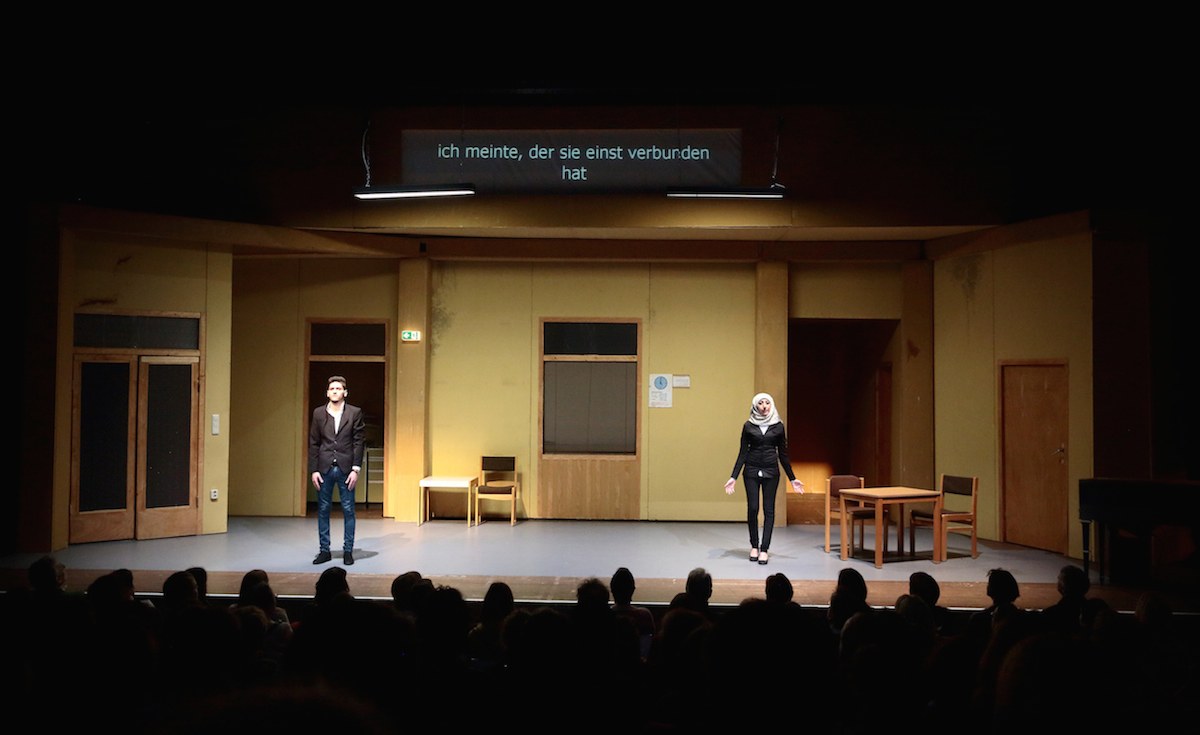
In December, about 60,000 Syrians made their way to Germany. Some went through UN agencies, while others travelled illegally; all had suffered untold hardship in their homeland. Nine of these refugees relate their experiences, describing how they have found support and a sense of purpose in Germany, not least by participating in a reimagined version of Mozart’s Così Fan Tutte alongside German opera singers. Click on the images below to read their stories

The full article here will break your heart but also give you some solace and hope. Really Worth your read and time.

source

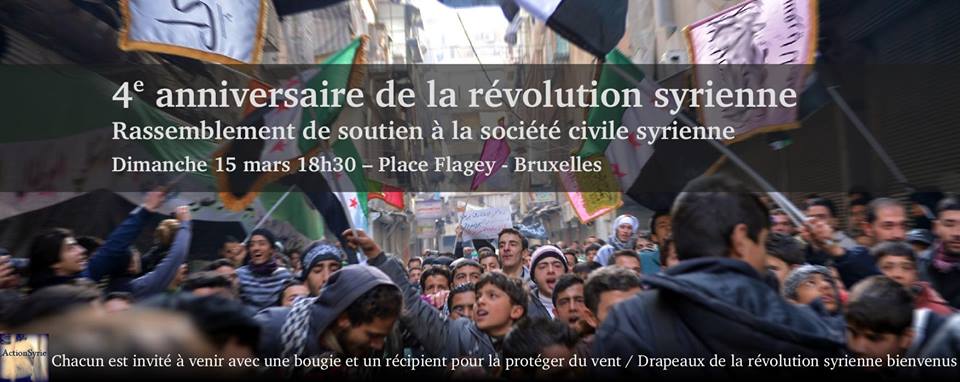
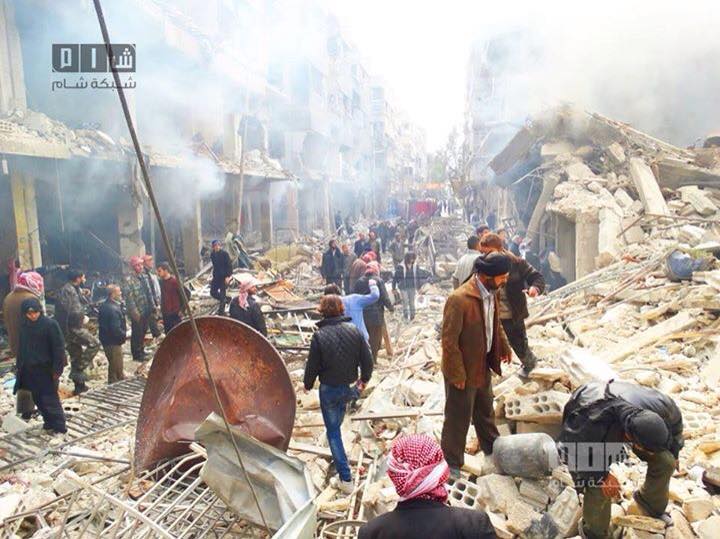
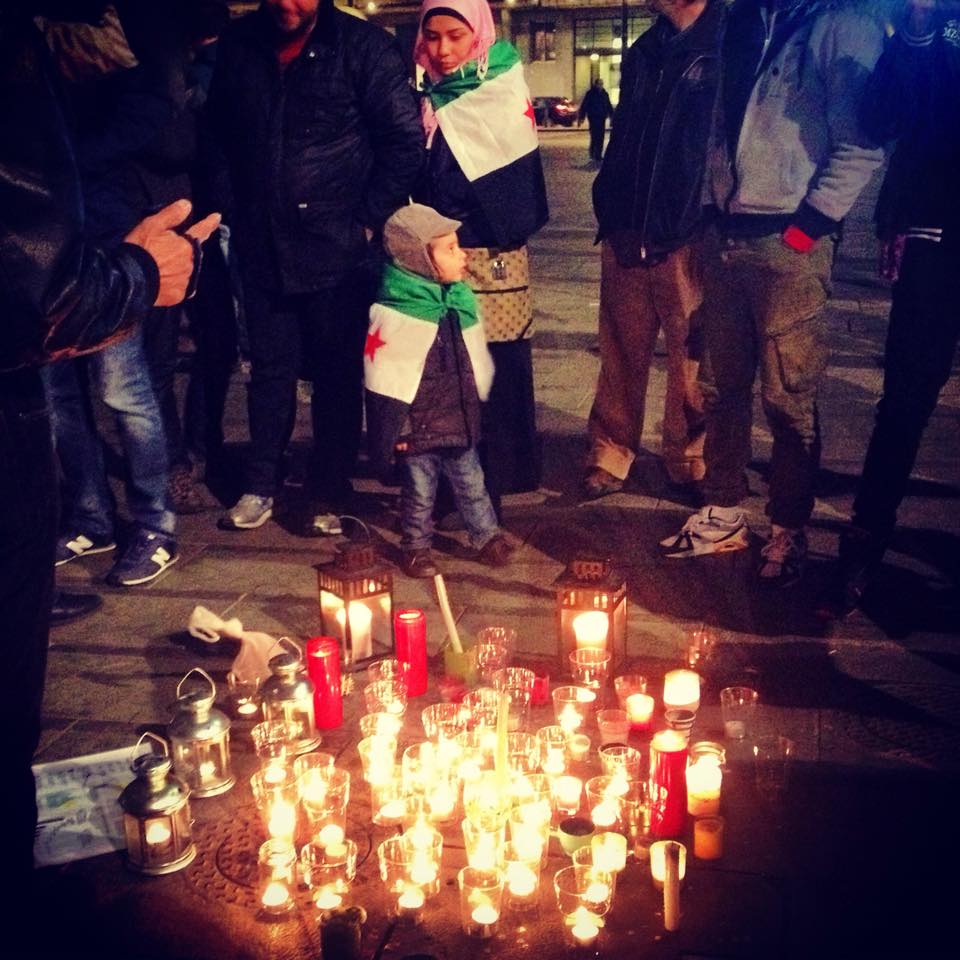
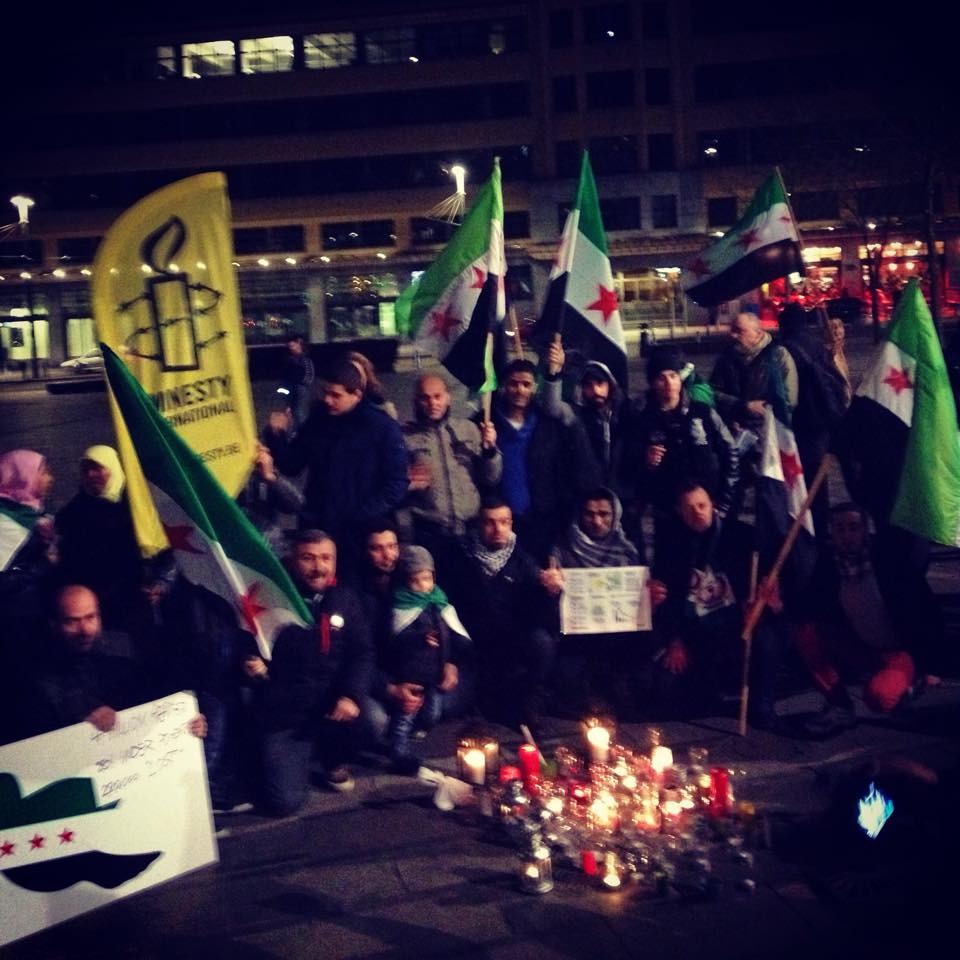
Syria : Four years

manif

s3

sy1

s2

s4


Blog at WordPress.com.

Up ↑