Search

band annie's Weblog

I have a parallel blog in French at http://anniebannie.net

Author

bandannie

A Syrian voice

9. Observer said:

I have one reservation about Majbali’s response. He claims that Syrians are intolerant and that a liberal Syria is very hard to achieve. In reality the people are the salt of the earth, generous, hard working, hospitable, and proud without ostentation. It is not hard to have a liberal Syria, you may not be old enough to remember the times when people lived under the old constitution and laws were respected. My father took a security service agent to court when he discovered that he was reading his mail without a warrant. That was in the 50′s.

In reality, the hard part is the “fear” of the minority from a perceived abuse by the majority. Abuse there is in every society but all societies that achieved stability and prosperity chose a participatory form of rule. Historically speaking the right to vote was given to a few males in Britain in the 1680′s and the vote was not secret. It took persistent and ongoing and continued demands to wrest from the Tudors and others the right to vote, the independence of the justice system, the rule of law, and the limitations of power. All of these elements existed in Syria after 1945 and the plight of Syria came when no one objected to the first coup d’etat by Hosni Zaim. He was a Kurd and put his people in key places and there followed many coups until the most ruthless of them did the final coup in 1970 and then built a security house of cards meant to keep him and his clique in power.

I hope that there is no inherent racism when you claim that Syrians are intolerant.

The one main thing that all of us are clearly and unequivocally thirsting for, including the most pro regime apologists and supporters on this blog is justice.

Justice from past and perceived future abuse by every faction. Read how ZOO clamors about the abuse of Islamists in Tunisia and how he is elated when liberals seem to have won in Libya. Read JAD lament the fact that victors write history and that Bush and Blair did not face the war crime music; and even Irritated in his writings reminds us of what he perceives as extreme actions by the opposition.

Justice therefore means that the last and current constitutions are inadequate, that the election of the current regime figures is illegitimate and that the use of force without a mandate from the people and form the independent judiciary is a crime.

I too wish to see Sharon and Bush and Blair and Zappatero and many others brought to justice just as I would love to see the current regime brought to justice.

I personally worked diligently to defeat McCain in his election bid and worked hard to remove and with success my pro war congressman and I challenged my current congressman on sending more troops around the globe.

I wish for Syria the same that I enjoy in my exile, but not only for Syria but for all people.

In the meantime, the eloquence of Syrian Hamster in his crisp and sharp analysis of the situation is unparalleled.

Syrian Hamster for Supreme Court Justice, more important than President.

Cheers.

Source

Backer of NY ads exposing Palestinian land-loss says response has been ‘astounding’ and news ‘coverage is pouring in’

by on July 13, 2012 27

bilde
Henry Clifford’s advertisement at the Chappaqua Metro-North train station July 10, 2012.
(Photo: Seth Harrison / The Journal News )

Last night I talked to Henry Clifford, the 83-year-old Connecticut man who paid for the smashing ads on New York commuter train platforms that describe the dispossession of Palestinian lands over the last century.

“I’ve been plowing this field for many years and I am absolutely astounded by the response I’ve received, and the news coverage,” the former financier said. “We’ve been begging for coverage for years. Now it’s pouring in.”

He said he had been interviewed by CBS, Fox News, NBC and many radio stations, and the questions were fair ones.

“I have received nothing but positive responses with two exceptions [by email],” said Clifford, whose email address hcliffordws@aol.com, is on the ads. “This has produced an overwhelming response.”

Over the years Clifford and his group Committee for Peace and Palestine have run ads and written countless letters to newspapers with nothing like this impact, he said. It never got covered. Last year he put up billboards in New Haven and Old Saybrook, CT, asking Americans about the $30 billion in aid pledged to Israel over ten years, “Can we afford this?”

“The response was really pitiful,” he said.

The commuter platform ads seem to have struck a nerve, he said, because they are in the heart of New York’s media zone, viewed by movers and shakers, the affluent and the educated.

There have already been threats to take the ads down, he said. A Brooklyn religious Jewish group went to the MTA to demand that the ads be pulled. “To their everlasting credit, they said, These ads were brought to us by CBS Outdoor, a reputable company. They screened them, they approved them. It is not our job to censor them.”

But CBS Outdoor folded on less-provocative billboards put up around Los Angeles a month back, and tore them down. What’s to stop these ads from being ripped down?

“They can’t. I have a contract. The ads are there and have been paid for. I can take legal action if they fail to abide by the contract.”

I said the success of the ads indicates a shift in public opinion. Clifford said he wasn’t sure about that. “I really don’t see that the American people are any better informed than they were a year ago about this matter. There is a great amount of lack of knowledge, misinformation and even lack of interest. They think, ‘Oh it’s a mess over there,’ and then they yawn. We are trying to spread the word.”

Clifford’s Committee for Peace and Palestine has tried to stir a change in US policy for over ten years.

I asked him about the charge that the ads are anti-Semitic.

“My response is that maps are historically and geographically the truth. You cannot make a map anti-Semitic. Either it’s accurate or inaccurate. Those who disapprove of these ads, if they want to show they’re inaccurate, they should bring that proof forward.”

About Philip Weiss

Philip Weiss is Founder and Co-Editor of Mondoweiss.net.

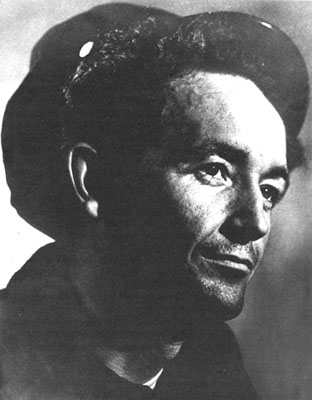
On Woody Guthrie’s Centennial, Celebrating the Life, Politics & Music of the “Dust Bowl Troubadour”

This Democracy Now show is a fascinating must for anyone interested in US history and this whole section of American society which made me like that country so much when I lived there; click on image.

The Never Ending Lies…

The first Syrian diplomat has defected, the ambassador to Iraq Nawaf al Fares. But some people will, as always, seek to minimise the importance of this fact. Let’s get this straight, this is a big deal. The people who work for the Syrian foreign ministry and diplomatic service practically worship Bashar. They cannot pass the rigorous inspections and monitoring to hold such positions if they did not. If an ambassador has finally decided to defect, then it is the latest in a series of important developments.

But firstly, here is a list of the lies I can remember being told since the start of this revolution:
1. There is nothing happening.
2. There are some minor protests, but these are isolated and not important.
3. Some people have been killed, it was a mistake.
4. People are getting killed, but it is because they are being violent.
5. There are armed gangs who are shooting at the security services – one month into the uprising.
6. Hamza al Khateeb was not tortured to death by the security services, and neither was his friend. Hamza al Khateeb is a rapist, he is not a child.
7. The repression in Bayada never happened, the footage was in Iraq and the perpetrators were Kurdish peshmerga.
8. The repression in Bayada did happen, and the man the regime arrested who was filmed disproving the lie was alive and well in a Syrian prison, to show Syrians that the man they hold, who was repressed in the town that was not in Syria, allegedly by the Kurdish peshmerga, has not been murdered.
9. The demonstrators are getting paid and being given drugs. Some of the drugs had al Jazeera stamped on them.
10. The demonstrators were waving Israeli flags.
11. The demonstrators were all salafists and funded by Bandar bin Sultan.
12. The first defection videos of soldiers are a lie, the uniforms and ID’s presented are fakes.
13. The first defections of government officials and high ranking officers are a lie, the men were kidnapped and coerced.
14. The people crossing the border to escape the violence were “visiting their family” in Turkey or Lebanon.
15. The refugee camps in Turkey were set up months in advance.
16. The women in the refugee camps were getting raped and giving birth to illegitimate children – five months into the uprising…
17. The protests shown on Youtube were filmed in elaborate studios and film sets in Qatar.
18. The people who were allegedly out protesting were really out to celebrate the fall of the rains.
19. The massacres in Deraa were committed by the salafists, the massacres in Houla were committed by salafists, the massacres all over the country were carried out by salafists.
20. It’s over.
21. It’s really over.
22. It’s definitely, certainly over.
23. The defection of the treasury official is a lie, he is an embezzler.
24. Seventy percent of the Syrian people want Assad to stay.
25. Assad has no interest in power and will leave if the people no longer want him.
26. Syria will have a democracy that will be the envy of the world.
27. The Syrian revolution is a conspiracy hatched by the Mossad, Al Qaeda, Turkey, Qatar, Saudi Arabia, and the West.
28. Syria is the last bastion of Arabism and is being targeted because of its foreign policy
29. Syria is a sovereign nation

Please feel free to add more to this list, I’m tired and I want to go to bed now.

Source

Film “Ibn al Am Online” فيلم “ابن العم أونلاين”ـ رياض الترك

Subtitled in English

          Publiée le  7 juil. 2012 par

A film by M. Ali Atassi on Riad Turk, the syrian leading opposition figure who spent 20 years in Assad jails, and who lives underground in Syria today – English subtitles

[youtube http://youtu.be/BFOdOdCVKiE?]

The Syria Conundrum

July 12, 2012

Maher Arar on the Syrian Intifada and the left’s confused response.

Homs after 37 days of a brutal siege

Deciding whether or not to oppose Syria’s rulers has been the recent dominant preoccupation of many anti-imperialist and left-leaning movements. This hesitant attitude towards the Syrian struggle for freedom is nurtured by many anti-regime actions that were recently taken by many Western and Middle-Eastern countries, whose main interest lies in isolating Syria from Iran. However, I believe a better question to ask with respect to Syria is whether the leftist movement should support, or not support, the struggle of the Syrian people.

What I find lacking in many of the analyses relating to the Syrian crisis, which I find oftentimes biased and politically motivated, is how well the interests of the Syrian people who are living inside are taken into account. Dry and unnecessarily sophisticated in nature, these analyses ignore simple facts about why the Syrian people rebelled against the regime in the first place.

A brief historical context is probably the best way to bring about some insight with respect to the events that are unfolding in front of our eyes today. Before doing so, it is important to highlight that, unlike many other Arab countries, Syria is not a religiously homogenous Middle-Eastern country. I am mentioning this because it is through religion that the majority of Arabs identified themselves for centuries. As it stands today, Syria’s population is composed 74 per cent of Sunnis (including Kurds and others), 12 per cent Alawites (including Arab Shia), ten per cent Christians (including Armenians) and three per cent Druze.

Syria earned its independence from the French in 1946. As has always been the case with any occupying and imperial force, France worked diligently to ensure that Syrian minorities were placed in top government and military positions.  The Alawites’ share of the pie was the military. By the time France left Syria, Alawites became well entrenched in this crucial government institution.

After two decades of military coups and counter-coups, it was no surprise that Hafez al-Assad, an Alawite and minister of defence at the time, seized power in a bloodless coup in 1970. Within a few years he was relatively able to bring about economic and social stability – which made him a hero in the eyes of the majority of Syrians, regardless of their religion or ethnicity.

Bolstering power

A cunning politician and an experienced military officer, Assad knew that unless he solidified his rule, the time would soon come when other military officers would mount a coup against him. Over the span of few years, he made sure the top brass of the military and intelligence was filled with fellow Alawite officers who, thanks to France’s pro-minorities policy, were available in abundance.

These Alawite officers were also less likely to mount a coup against a fellow countryman. To deprive the mukhabarat[“intelligence service”] of the opportunity to be able to mount a serious coup against him, Assad created 13 different intelligence agencies – completely independent of each other.

When I was detained at the Sednaya prison in 2003, a 60-year-old man told me of a conversation between him and a general in the political security directorate. The old man was trying to have a rational dialogue with the general during the interrogation, by advising the him that the regime must treat people like human beings if it wanted to rightly earn the respect of the Syrian people.

The general responded: “We want to rule people by our shoes.” This is a famous Syrian expression akin to: “We want to rule people with an iron fist, humiliating them.” This example sheds some light on the type of mentality that dominates the inner circles of the Assad regime even today. Understanding this point in particular is crucial to understanding the violent response that the regime showed towards the protesters since day one.

Crushing dissent

Those who still buy Assad’s anti-imperial rhetoric should know that the old man whose story is mentioned above was imprisoned simply because he and other fellow citizens organised a small rally to denounce the illegal US invasion of Iraq.

In fact, it is not uncommon to find prisoners – including some of those I met in Sednaya prison – whose only “crime” was to help Palestinian groups. How could a regime that claims to be anti-Israel not even dare to protect itself against the frequent Israeli air incursions throughout the past decade?

I remember vividly the day I was released, when Israeli warplanes bombarded a site inside Syria under the pretext that it was being used to train Palestinian fighters. Syria’s response on that day was mute – as had always been the case.  Finally, it is no secret that Syria, like many other Arab countries, cooperated closely with the US in the so-called “war on terror”. I am only one of few living examples of this covert cooperation.

I hope this brief historical context and the few stories mentioned above contain enough information which can now help us analyse the current situation. Contrary to the conspiracy theory type of analysis, which accuses the US and its allies of starting the unrest in Syria, it is now an established fact that spontaneous and peaceful demonstrations erupted after the government refused to hold to account those who tortured those teenagers who sprayed anti-regime graffiti on school walls.

In fact, the initial demands of the protesters were very simple, and did not contain a single slogan which demanded the downfall of the regime.

As peaceful demonstrations widened, and spread from one city to the next, Assad’s security forces naively thought that by using lethal force to crush these growing protests, the barrier of fear that was starting to collapse would be immediately restored. Contrary to their wishes, however, the more lethal the force they used, the more Syrians became determined to overthrow the regime – by then most had lost hope that their simple demands were going to be met.

When it became clear that there was no genuine commitment that security forces and affiliated shabiha gangs were going to refrain from using force to crush the demonstrations, people felt the need to defend themselves against the excessive aggression and atrocities committed by state agents – some of whom had reportedly gone totally rogue.

Emergence of the opposition

It is amid this atmosphere that political and armed opposition groups started to galvanise, resulting in the emergence of opposition coalitions – the largest of which was the Syrian National Council (SNC), mainly comprised of Syrians living abroad. The composition of the SNC came back to haunt it later, as dissidents living inside Syria accused the SNC of being detached from the true demands of the people on the ground.

For instance, the main point of contention between a newly spun group led by longtime dissident Haitham al-Maleh and the SNC was the issue of how best to respond to the regime’s growing brutality. Al-Maleh believed that the priority was to arm what is called the Free Syrian Army (FSA), a group that was mostly formed, reportedly, from army defectors. It seems that al-Maleh was responding to the popular will of the people inside Syria who had lost hope in peaceful means to bring down the regime. It also seems that revolutionaries inside Syria had also lost hope that sanctions, which the SNC heavily lobbied Western countries for, would have any meaningful effect on the regime.

People also came to realise that outside military intervention would never happen. It is worth highlighting that, despite its name, the FSA is composed of hundreds of independent groups. Their emergence is a miracle, considering that the regime has become known for taking revenge upon the families of deserters. It is also worth highlighting that Syrian conscripts are usually assigned to detachments that are hundreds of miles away from their home town (another regime tactic which makes it more likely that soldiers will obey orders to kill.)

The FSA’s disorganised nature, in the sense that it does not have a single command structure, is – in my opinion – a strength and not a weakness, at least given the circumstances with respect to the excessive brutality of the regime, and the fact that the regime has a huge network of informants. Because of a lack of any other viable alternative, many Syrians see the “FSA” as their last hope.

Exaggeration of ‘outside influence’

Now to claim that there is no outside, foreign interference in Syria’s internal affairs is to deny the obvious. But in my opinion this “interference” has been exaggerated (the analyses I’ve read with respect to this issue are based on speculations that are not supported by facts on the ground). Yes, there are countries who have always had a strong desire to see the Syrian-Iranian marriage fall apart. But to what extent these countries are influencing events on the ground is far from certain. For instance, the efforts reportedly led by Qatar and Saudi Arabia to equip the rebels with heavy arms have not yet borne fruits, and it seems the FSA is mostly using light to medium weapons.

Most of these weapons have either been bought from corrupt army officers, or are acquired by raiding weapons caches. Qatar and Saudi Arabia reportedly would want to make sure that weaponry would only be distributed to those groups that would pledge allegiance to them. While some groups may accept the deal, it is far from certain that all groups would accept any preconditions – as recently reported by Time magazine.

While the CIA may be present near the Syrian-Turkish border, all evidence points to the fact that the US is not very keen to arm the rebels, out of fear the arms would eventually fall in the hands of al-Qaeda and like-minded groups. In fact, Washington, despite the anti-Assad rhetoric we read about in media headlines, is not very keen on replacing the Assad regime with one whose allegiance to the US would be uncertain.

This explains why the US has so far reportedly refused to supply weapons to Syria’s armed opposition. The latest discussions that took place in Geneva demonstrate that the US still prefers “a political solution” (whatever that means).

The fact that Syrian revolutionaries are not receiving the help they need to win the battle against the Syrian regime will certainly prolong the conflict. While many Syrians are disappointed by this indifference, I believe it is better for the future of Syria and its independence.

Syrians have already demonstrated mind-boggling courage and determination. They have made sizeable gains over the past year and they will certainly continue to make more. The signs are clear: the murderous Assad army, the regime’s iron first, is disintegrating, albeit slowly. While it is no reason to celebrate, it is the Syrians’ last hope, and if I were living inside Syria, I would hope the same.

Maher Arar is a human rights activist, and the publisher of Prism Magazine, who first came to public attention after he was rendered by US authorities to Syria, his native country. A public inquiry in Canada later cleared his name. Follow him on Twitter: @ArarMaher. This article first appeared on Al Jazeera. 

source

New Russian movie: “Saving Bashar Assad”

Iceland’s Economy Recovers by Going After the Banksters, while Europe’s Malaise Continues and the US Barrels Toward Collapse

Sarah Lyall
The New York Times
Sat, 07 Jul 2012 00:00 CDT

© Andrew Testa for The New York Times
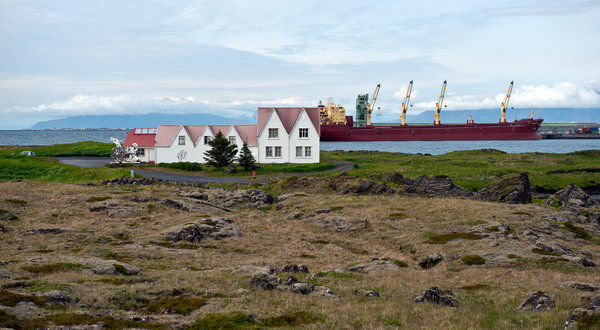
A ship docked at an aluminum plant near Reykjavik last month.
Reykjavik, Iceland – For a country that four years ago plunged into a financial abyss so deepit all but shut down overnight, Iceland seems to be doing surprisingly well.It has repaid, early, many of the international loans that kept it afloat. Unemployment is hovering around 6 percent, and falling. And while much of Europe is struggling to pull itself out of the recessionary swamp, Iceland’s economy is expected to grow by 2.8 percent this year.”Everything has turned around,” said Adalheidur Hedinsdottir, who owns and runs the coffee chain Kaffitar, the Starbucks of Iceland, and has plans to open a new cafe and start a bakery business. “When we told the bank we wanted to make a new company, they said, ‘Do you want to borrow money?’ ” she went on. “We haven’t been hearing that for a while.”

Analysts attribute the surprising turn of events to a combination of fortuitous decisions and good luck, and caution that the lessons of Iceland’s turnaround are not readily applicable to the larger and more complex economies of Europe.

But during the crisis, the country did many things different from its European counterparts. It let its three largest banks fail, instead of bailing them out. It ensured that domestic depositors got their money back and gave debt relief to struggling homeowners and to businesses facing bankruptcy.

“Taking down a company with positive cash flow but negative equity would in the given circumstances have a domino effect, causing otherwise sound companies to collapse,” said Thorolfur Matthiasson, an economics professor at the University of Iceland. “Forgiving debt under those circumstances can be profitable for the financial institutions and help the economy and reduce unemployment as well.”

Iceland also had some advantages when it entered the crisis: relatively few government debts, a strong social safety net and a fluctuating currency whose rapid devaluation in 2008 caused pain for consumers but helped buoy the all-important export market. Government officials, who at the height of the crisis were reduced to begging for help from places like the Faroe Islands, are now cautiously bullish.

“We’re in a very comfortable place because the government has been very stable in fiscal terms and is making good progress in balancing its books,” said Gudmundur Arnason, the Finance Ministry’s permanent secretary. “We are self-reliant and can borrow on our own without having to rely on the good will of our Nordic neighbors” or lenders like the International Monetary Fund.

But not even Mr. Arnason says he believes that all is perfect. Inflation, which reached nearly 20 percent during the crisis, is still running at 5.4 percent, and even with the government’s relief programs, most of the country’s homeowners remain awash in debt, weighed down by inflation-indexed mortgages in which the principal, disastrously, rises with the inflation rate. Taxes are high. And with the country’s currency, the krona, worth between about 40 and 75 percent of its pre-2008 value, imports are punishingly expensive.

Strict currency controls, imposed during the crisis, mean that Icelandic companies are forbidden to invest abroad. At the same time, foreigners are forbidden to take their money out of the country – a situation that has tied up foreign investments worth, according to various estimates, between $3.4 billion and $8 billion.

“The capital controls are worse and worse for companies, but the fear is that if we lift them, the value of the krona will collapse,” Professor Matthiasson said.

He said the only solution would be for Iceland to dispense with the krona and join a larger, more stable currency. The choices at the moment seem to be the euro, which is having its own difficulties, and the Canadian dollar.

Not everyone buys into the rosy picture presented by officialdom. Jon Danielsson, an Icelander who teaches global finance at the London School of Economics, said that both the I.M.F., which bailed Iceland out during the crisis, and the government had a vested interest in painting a positive picture of the situation.

“When I hear people say that everything is fine, it’s colored by P.R.,” Mr. Danielsson said. “They have clearly stabilized the economy and gotten out of the deep crisis, but they have not yet found a way to build a prosperous country for the future.”

A visit to Iceland late last month revealed a far different place from the shellshocked nation of 2008. Stores and hotels were full. The Harpa, a glass-and-steel concert hall and conference center designed in part by the artist Olafur Eliasson and opened in 2011, soared over the Reykjavik skyline, next to a huge construction site that is to house a luxury waterside hotel. Employers said that instead of having to lay off workers, they were in some cases having trouble finding people to hire.

Icelanders said that they had stopped feeling ashamed and isolated, the way that they did during the worst of the crisis, when their country was portrayed as a greedy and foolish pariah state and its British assets were frozen by the British government using the blunt and humiliating instrument of antiterror legislation. Enlarge This Image Andrew Testa for The New York Times

The Harpa, a glass-and-steel concert hall and conference center designed in part by the artist Olafur Eliasson, opened in 2011 in Reykjavik.

“We went through this complicated and terrible experience and were in the center of world events,” said Kristrun Heimisdottir, a lecturer in law and jurisprudence at the University of Akureyri in northern Iceland.

She compared Iceland’s shame to that of a private person thrust onto the front pages by a lurid scandal. “It might take 20 years to recover from the stress and humiliation of having their personal life paraded before the world,” she said. “But it turned out that what happened to us was a microcosm of the whole crisis.”

Some Icelanders say they have been soothed, too, by the country’s bold decision to initiate an extensive criminal investigation into the financial debacle. Many members of the old banking elite have been identified as possible suspects, and some of their cases are beginning to come to trial; several people were convicted of financial crimes last month.

People in Reykjavik say that while things are hardly perfect, they are certainly better.

“Everyone was scared, and we didn’t know what was going to happen,” said Kristjan Kristjansson, 49, manager of the store Bad Taste Records downtown. But Icelanders are adaptable people, he said, and many never really believed the economic boom was real, anyway.

“Of course, what happened has affected everybody – our loans are higher, and it’s more expensive to live,” Mr. Kristjansson said. But there have been other financial crises before. “I remember when they cut two zeros off the Krona,” he said. “I’m old enough to have seen it go up and down.”

Syria, Imperialism and Revolution Simon Assaf Marxism 2012

Blog at WordPress.com.

Up ↑