Search

band annie's Weblog

I have a parallel blog in French at http://anniebannie.net

Month

January 2012

Maysaloon : A Response to Creative Syria’s Author

Sunday, January 15, 2012

Creative Syria has been relaunched with a fresh new look and an emphasis on the many crises that Syria is currently facing. Whilst the presentation of the site is excellent, the politics that are behind it will cause some consternation by Syrians who support the revolution. I do not intend to argue my own position in this post, instead I wish to critically examine the latest post, “Ten Reasons Why Many Syrians Are Not Interested Yet“, and see whether his opposition to the Syrian revolution is justified or not. He enumerates these reasons first and then expands on his arguments. Naturally, I will begin by examining each point and then dissecting the rest of his argument. Like Camille, I will also backup my arguments, and examine whether the sources he cites are justified or not, and whether they support his argument.

1. The first argument is that there are no true democracies. Citing the Economist Intelligence Unit’s democracy index, the idea that even the Arab world’s better examples are all “flawed democracies” seems to be enough of a reason that Syrians are not interested, but in what, that is not yet mentioned. Are Syrians not interested in democracy because there are no truly democratic Arab countries? Or perhaps they are not interested in the “revolution” because even those Arab countries that are said to be nominally democratic (like Iraq or Lebanon) are a mess? Regardless of what is intended by this thesis, it is clear from that same index that countries such as Lebanon (scoring 5.32) and Iraq (scoring 4.03), are still higher than Syria, which scored a paltry 1.99

This score is derived from several factors according to the Wikipedia article quoted: Whether elections are free and fair; the security of voters; the influence of foreign powers on government; the capability of civil servants to implement policies. The Democracy index then places Syria firmly in the “Authoritarian Regime” category.

It is interesting that the author of the Creative Syria piece does not see the widespread protests that have paralysed the country for almost a year as enough evidence that Syrians are in actual fact very interested regardless of the flawed examples of Arabic democracies cited. The unprecedented level of presidential “reforms” in the past year alone, concerning everything from national health insurance companies to offering additional points to students at technical colleges, is a sign that the government is very interested in the revolutions that are sweeping the Arab world. Perhaps those many Syrians that Camille is referring to should be interested in democracy regardless whether they think Iraq and Lebanon are flawed democracies.

2. Camille states that in 2010 Lebanon and Iraq were perceived to be more corrupt than Syria. That statement is simply not true. In 2010, Transparency International rated the Worldwide Corruption Perception of Syria and Lebanon as an equally atrocious 2.5 for each, whereas Iraq was rated with a marginally higher score of 1.5. You can see the scores here.

3. A problematic description of “formerly proud” Arab countries is used for countries that have underwent the drastic changes that Camille believes “many Syrians” are not interested in. I’m not quite sure how he gauges whether or not a country used to be “proud”. Iraq is described as a formerly leading Arab state, but I’m not sure how proud Iraqis felt of losing an entire generation (estimated at 300,000) in a war of aggression against Iran. Nor can we be sure how proud Libyans were before the overthrow of Gaddafi for us to snidely criticise Qatar’s assistance of the Libyan rebels and their NTC. Were they more or less proud when Gaddafi gave up his weapons programmes for inspection to the West, and agreed upon massive oil concessions to BP, whilst hugging Tony Blair during the infamous “deal in the desert” saga. Most tellingly, Camille admits that the political process in Iraq, in spite of that country’s occupation by the United States, could not proceed without consultations with Syria and Iraq. Obviously, and this is something conveniently ignored, this was because both Iran and Syria turned Iraq into their battlefield with the United States, which was the real reason for the atrocious levels of deaths amongst Iraqi civilians – apart from the American invasion and occupation. I’m not quite sure how valid an argument is when it depends on the “pride” of a nation. Especially in countries with such little transparency or scope for expressing genuine political opinion.

4. Yemen and Sudan are cited as examples of states that could be divided, and because three is a lucky number, I think Camille added Somalia – a curious and quite arbitrary addition. Yemen and Sudan, the most corrupt of Arab states, have been ruled by despots who will be judged by history to have been instrumental in dividing their states. The curious reversal of Omar Bashir’s opposition to the division of his country, and the stupidity of Ali Abdullah Saleh, who had to despatch a team to Libya to ask Gaddafi how to react to a revolution (the latter told him to start shooting, and Saleh’s forces promptly began firing at the crowds after an initial period of peaceful protest). Both of these countries are staunch allies of the Syrian regime, though the Syrian regime knows how brutally corrupt Saleh’s regime is, when a team sent by Rami Makhlouf (the Syrian president’s cousin) to negotiate a confidential deal in Yemen had to be flown out in secrecy in the dead of night when they were going to be forced to sign on Saleh’s terms. But what are such little niggles between friends, eh? These countries are risking being dismantled because of the incompetence of their rulers, so citing them as an example is slightly misleading, if not wilfully inaccurate.

5. We are told that women’s rights deteriorate after changes that allow Islamists a powerful role in the new state. That’s quite an interesting play on words when you think about it. These “changes” Camille refers to are revolutions which removed despots and families that had been in power for decades. It assumes that women’s rights were better prior to the revolution, whereas it is known that sexual harassment in Egypt reached epidemic proportions during Mubarak’s reign; Gaddafi’s vulgar use of virgin women “nuns of the revolution” and his importing of Italian women for his bunga bunga parties was on a par with Gulf potentates’ excess. Why is the case of Tawakul Karman and many other women in Yemen – perceived as a hotbed of Islamic fundamentalism – not cited as an example? Why, when ever Egyptian on the street in Tahrir square knows the revolution there is not over until the ruling military council, which is a continuation of Mubarak’s rule, is removed? Again, a skilful omission of such nuances gives us the picture that the Islamic bogeyman will wreak havoc with women’s rights in a region which already had a dismal record of women’s rights even under the supposedly secular dictatorships which have dominated them for decades. Furthermore, no mention is made of the Islamic Republic of Iran, a staunch ally of Syria and a country not without its own thriving pro-democracy movement, yet with a dismal respect for women’s rights. To capitalise on the plight of women in the Arab world and try to score cheap political points by claiming that it is a problem exclusively caused by political Islam – which is not true – is an ugly way that deflects from the real problems that women face in Arabic society.

6. The theme of the Islamic bogey man is continued in point six, where the issues of minorities is now discussed. Could somebody please explain to me where the Jewish minorities of Syria are? Or how the security situation in Iraq was deliberately undermined by both Iran and Syria to fight the Americans there by sending Islamists across the border? Another story from 2005 shows how the Syrian regime turned a blind eye to men who went to Iraq to carry out a jihad against the occupying American forces. Ironically more Iraqis (and especially people from Iraqi minorities) died as a result of this policy than actual American soldiers. It seems that the Syrian regime was not too concerned with women’s rights when it wanted to use Islamists, though it did not hesitate in discarding them just as quickly when they were no longer useful. When we are being frightened off by the Islamic bogeyman, we are being frightened from the Islamic extremism that is itself a product of regimes like those in Syria, and it is misleading to equate such groups with the politically Islamic groups that will now be forced to answer to a people that have not hesitated to topple far more brutal dictators. Far from being a reasonable precaution, using the Islamic bogeyman appears more useful for terrifying people into accepting the status quo of a dictator.

7. We are told that these “changes” that Camille warns against have come at the cost of enormous human casualties. For some very curious reason, he thinks that the Lebanese civil war is relevant to the Arab spring (it is not) and then ignores the role of Syria and Iran in Iraq, or the incompetence of Sudan’s regime, in the grotesque orgy of violence that those countries had to endure. In Libya, Gaddafi’s men were using anti-aircraft weapons to disperse crowds that had begun their protests peacefully, and the magical figure of 50,000 dead has now been conveniently used by those who lament the fall of Gaddafi and ignore the fact that if he was in the least bit concerned about the welfare of his country, and if he had allowed effective government institutions to be formed in his forty year long rule, then he should have resigned like any self-respecting ruler who has failed in his task. Instead, we are to blame the victim because a dictator did not step down and instead led his country into civil war.

8. We are told that change without a strong central authority leads to chaos and loss of instability. If this is supposed to be an argument against change then it fails. The strongly autocratic regimes that exist in the Arab world are so by design and not coincidence. Saddam Hussein threatened to turn Iraq into dust if he was to leave power, and so did Gaddafi. In an interview with the New York Times, Rami Makhouf, Assad’s cousin, said:

“We will sit here. We call it a fight until the end.” He added later, “They should know when we suffer, we will not suffer alone.”

If such an attitude by the very people that are supposed to care for the welfare of the country is not a good enough reason for change, then I do not know what is.

9. We are told that revolutions and civil wars will devastate the economy. That is true, but so will dictatorship and untrammelled power over half a century by powerful dictators and their corrupt families and supporters. In fact when you have decades of political and economic corruption, then a revolution or civil war will be inevitable. Just ask King Louis the XVI of France.

10. Finally, the oldest bogeyman of all is invoked – Israel. This is curious when we hear statements from Rami Makhlouf saying that:

“If there is no stability here, there’s no way there will be stability in Israel,”

This, again, is the Syrian president’s cousin and one of the richest men in Syria. Riad Seif, a Syrian member of Parliament, was arrested after he questioned the monopoly on mobile phone networks that was being cornered by Makhlouf and his family. At the start of the Syrian revolution, analysts questioned whether Makhlouf was being offered as a sacrificial goat to deflect from public anger at the political and economic corruption of the Assad regime. For the regime to distance itself from Makhlouf’s comments to the New York Times does not fit with how closely associated this man is to the regime and its interests.

At the end of these ten points we are given a chart with information that is unsourced, and appears to be compiled from information that is not verifiable. A blurb in a red box presents the erroneous assumptions listed above as fact, and proof that most Syrians believe removing Assad is a bad idea. The author then proceeds to rubbish and character assassinate the Syrian opposition figures, and selectively lists sources which do so. Conveniently ignored is the glaring problem that the reliance on such technology is precisely because the Assad regime prevents dissent, brutalises political dissidents, and attempts to crush any sign of dissent with Assad’s rule. The fact that the Assad family has been in power for forty years, and still finds freedom of information, assembly and basic communications technology as a threat to be banned and censored, shows how dismally they have failed in their responsibility to the Syrian people. It begs the question of whether they should be given the benefit of the doubt and allowed time for more “reforms”.

To conclude, the piece on Creative Syria does not tell us on what basis “many” Syrians are wary of change – any more than the opposition tells us that most Syrians are against Assad’s rule. It also gives ten flimsy, and quite sophistic arguments as to why Syrians are allegedly not interested in the revolution. If Camille intended to make the case for why negotiation and peaceful discussion should be the way forward in this impasse, then, sadly, he has failed dismally.

Source

Voters Choice: Ron Paul or Bibi Netanyahu

Ron Paul stands alone on US foreign policy and wars.

By William A. Cook

A curious glance at the current crop of presidential candidates makes it clear that Ron Paul stands alone when it comes to the issue of US engagement in foreign wars. He stands with George Washington against foreign entanglements while the rest of the candidates stand with Teddy Roosevelt and the attempted creation of America’s first empire one hundred and twelve years ago. Mark Twain responded to that effort by creating the Anti-imperialist society while he caustically satirized the effort in his depiction of the massacre of the Moros in the Philippines. Now we have more massacres, using drones instead of canons, on equally hapless civilians who are caught unawares or hiding from the wrath of America’s righteousness as we drive to bring virtue to a primitive world.

Today America has an estimated 700 military installations in about 140 nations around the world; its bases surround Iran as does its nuclear capability, and it is engaged in executive “wars” in Iraq, Afghanistan, Pakistan, Libya, Syria, Yemen, Saudi Arabia and Palestine. All of this while carrying a debt that exceeds thirteen trillion dollars, cutting budgets in education, medical care and social security, and retaining a Pentagon budget that exceeds that of the 16 declared developed nations combined. And to top it all off, we are considering armed aggression against Iran that could plunge America into the biggest war since WW II. Why?

Why add Iran to the list of wars when we have succeeded in losing the “wars” in Afghanistan and Iraq? Let’s admit the truth, we do not control Afghanistan and, while we have ostensibly left Iraq, we have left it in chaos and disarray. The question persists, why?

Why invade Iran? Ask first, why did we invade Iraq? Why did we not object to Israel’s bombing in Syria? Why didn’t we object to Israel’s invasion of Lebanon or Gaza? The world’s nations objected in UN Resolution after Resolution. But America voted to support Israel’s illegal aggression. Why? It is America’s reputation that has been placed in the gutter; it is America that is ranked with Israel as the most dangerous nations on the planet; it is America’s democracy that has been diluted, nay emaciated, as our liberties have been eroded with ever increasing draconian delusions that they are purportedly designed to protect while they make the citizen fodder for the few in control. So the question persists, why?

Not long ago, the answer may have been provided when Netanyahu was interviewed by Piers Morgan about the Iranian threat. Relative to this discussion is a comment made by Netanyahu in his interview with Morgan, a comment that I have not seen mentioned in America’s press.

When pressed by Morgan about the Iranian threat constantly broached by Israel and its U.S. supporters and what Israel intends to do about it, the repartee always returns to Iran as not only a threat to Israel, it is a threat to “Europe and the United States.” Morgan asks again, “What is the answer, Prime Minister?” Having successfully avoided saying that Israel would attack Iran to rid it of this danger, Netanyahu resorts to “I’m talking about a credible military action.” “Lead by who,” asks Morgan. “Lead preferably by the United States,” replies Netanyahu. “Could you contemplate some kind of land invasion,” asks Morgan. “Well, I think the United States has proven great effectiveness and I’m going to divulge a secret to you about their capabilities. They’re greater than ours.”

So says the Prime Minister of Israel as he talks about using America’s military to take out the Iranian threat to Israel. Why not use American boys and girls to kill your enemy and save your own sons and daughters? Why not indeed. Mark the tone. It’s almost as though he is saying to this imported talk show host, “Why do you ask, Stupid, it’s so obvious.”

According to recent polls, Americans have fallen out of favor with our numerous wars in countries we neither know nor can spell: Afghanistan, Pakistan, Iraq, Libya, Palestine and Syria. This fact seems to be of little interest to the candidates who appear committed to the military-industrial complex that funds their respective campaigns. Indeed all seem committed to the addition of Iran since it appears to threaten, existentially, our aborted child, Israel. In short, if an American believes that he or she should vote to end America’s foreign entanglements, he or she has only Ron Paul to vote for. All the others have stated unequivocally their support for the state of Israel and its drive to stop Iran from gaining nuclear power. A vote for Romney, Perry, Gingrich, Santorum, or Huntsman means a vote for Netanyahu and his expressed desire to have American boys and girls serve Israel in this cause, or so he says.

Consider these statements by our candidates:

* Romney on Israel:”I will reaffirm as a vital national interest Israel’s existence as a Jewish state. I want the world to know that the bonds between Israel and the United States are unshakable…If I’m president of the United States, my first trip, my first foreign trip will be to Israel to show the world we care about that country and that region.” Mark that Romney makes no reference to Palestine or Palestinians; how does one resolve a conflict if one does not recognize the second party?

* Now consider Perry’s comment: “We are going to be there to support you. And we are going to be unwavering in that. So I hope you will tell the people of Israel: Help is on the way.” Perry makes no reference to Obama’s unequivocal support for Israel having outspent all previous administrations in dollars and military hardware.

*Not to be outdone, Santorum offered the following: He said more or less what Newt Gingrich stated last month, “All the people who live in the West Bank are Israelis. They’re not Palestinian. There [are] no Palestinians. This is Israeli land.” What can one say, Santorum needs to read some history before opening his mouth.

“Gingrich has all but declared that under his presidency, the American position would be that of Netanyahu’s,” Andrew Sullivan recently wrote, and with his recent multi-million dollar support from Adelson, who is linked to Netanyahu by an umbilical cord, he is chained to Israel’s dictates should he be elected.

*And, finally, Jon Huntsman presented his views: “The United States should not pressure Israel to negotiate with terrorists, nor to enter into any negotiated deals that threaten Israel’s security. This is a particularly delicate moment. We are inspired by the “Arab Spring,” in which the Arab people are calling for an end to decades of dictatorial and corrupt leadership. These events also give the lie to the notion Israel is somehow the source of all problems in the Middle East.”

Note that Huntsman does not mention that Israel has occupied Palestine for 63 years, illegally according to international law and the charter of the UN that the US has agreed to. Moreover, the constantly reiterated cause of unrest in the mid-east is the occupation of Palestine by the Israelis. To say it is not so, is, to borrow Gingrich’s eloquent phrase, “baloney.”

*Since we know that our current president has bragged that his administration has outspent all previous administrations in support of Israel, there is no need to argue that he would change course now. Since we also know that Israel can count on close to 400 supporters in the House and virtually all 100 Senators, as votes in support these past twelve years attest, the choice for Americans who desire a return to George Washington’s admonition that American democracy can be destroyed by foreign entanglements have only Ron Paul as an option.

Here is what Ron Paul says about American imperialism, a voice crying in the wilderness:

• Islamists attacked us for US bases on Arab lands. (Sep 2011)
• Neither Dems nor GOP will cut one nickel from militarism. (Aug 2011)
• American Empire is big government war & militarism. (Apr 2011)
• We can’t keep troops in 135 countries & 900 bases forever. (Feb 2011)
• We’re broke and we just can’t continue to police the world. (Feb 2008)
• Stop policing the world and we can get rid of income tax. (Dec 2007)
• Bring all troops home from abroad & save $100B’s every year. (Dec 2007)
• 9/11 resulted from blasphemy of our bases in Saudi Arabia. (Dec 2007)
• Pre-emptive war policy is a grave mistake. (Jun 2007)
• Pre-emptive war is not part of the American tradition. (Jun 2007)
• Military aggressiveness weakens our national defense. (May 2007)
• Jihadists attack because we have bases in their countries. (Jan 2006)
• Costs of war always higher than expected & go on for decades. (Jun 2005)
• Conscription is a trait of totalitarian government. (Dec 1987)

This is the choice presented to the American voter.

What we know clearly is that America has set out on a course of world domination that mocks the very concept of democracy where people are free to choose their government, not be told who will govern them by a foreign power. What we know tragically is that the American government is content to support and sometimes to create dictators that oppress their own people, if they obey America’s dictates, as the fall of Mubarak in Egypt attests. What we also know is that our government has been bought by a foreign power to secure its own ends regardless of the consequences to the people of the United States. What we know unfortunately is that any citizen wishing to run for the office of President must kowtow to the desires of the state of Israel by declaring his or her allegiance to that state or be declared a nut case. What we know truly is that America is no longer the nation of the free citizen, since we are now subject to the fear that resides in the gut when threatened by unsubstantiated allegations of suspicion as a terrorist that can result in indefinite detention without trial or due process. Such is the decline of the once proud and free experiment that was the United States of America.

(Photo Credit: Free Ron Paul Campaign Supplies.)

– William A. Cook is a Professor of English at the University of La Verne in southern California. His works include Psalms for the 21st Century, Mellon Poetry Press, Tracking Deception: Bush Mid-East Policy, The Rape of Palestine, The Chronicles of Nefaria, and most recently in 2010, The Plight of the Palestinians. He contributed this article to PalestineChronicle.com. Contact him at: wcook@laverne.edu or visit: www.drwilliamacook.com.

Leaked Video Shows U.S. Soldiers Urinating On Dead Afghan Bodies

By Daniel Bates

http://www.facebook.com/plugins/like.php?api_key=213582385356652&channel_url=https%3A%2F%2Fs-static.ak.fbcdn.net%2Fconnect%2Fxd_proxy.php%3Fversion%3D3%23cb%3Df23d46ed4b1f1a%26origin%3Dhttp%253A%252F%252Fwww.uruknet.info%252Ff1aa23c0701518e%26relation%3Dparent.parent%26transport%3Dpostmessage&extended_social_context=false&href=http%3A%2F%2Fwww.uruknet.de%2F%3Fp%3Dm84732%20&layout=standard&locale=en_US&node_type=link&sdk=joey&send=true&show_faces=false&width=450

January 11, 2012

Marine Corps probe after video emerges showing American troops ‘urinating on dead Afghan bodies’

* The anonymous person who put it online wrote, ‘Scout sniper team 4 with 3rd battalion 2nd marines out of camp lejeune peeing on dead talibans’

The U.S. Marine Corps today launched an official investigation after footage emerged which showed American soldiers urinating on dead bodies.

The 40-second clip shows four men in combat gear standing over the three corpses with their genitals exposed as they relieve themselves.

At one point one of the men can be heard saying: ‘Have a great day, buddy’ to laughter from his colleagues.

Horrifying: A video posted online claims to show four Marines urinating on dead bodies

Grinning: One of the men can be heard saying: ‘Have a great day, buddy’ as his colleagues laugh and another jokes: ‘Golden like a shower’ and ‘Yeahhhh!’

Another of them jokes: ‘Golden like a shower’ and ‘Yeahhhh!’ as they groan with relief whilst urinating.

It is not clear if the corpses belong to civilians or insurgents engaged in combat, although the film does appear to have been shot in Afghanistan.

The anonymous person who posted it included the caption: ‘Scout sniper team 4 with 3rd battalion 2nd marines out of camp lejeune peeing on dead talibans.’

The film is likely to spark a huge diplomatic row between Washington and Kabul and rekindle memories of the abuse meted out by American troops at Abu Ghraib in Iraq.

The three corpses are all male and are wearing civilian clothes. The youngest lies on his front with an overturned wheelbarrow dumped by his side.

The other two are on their backs and one has a large blood stain on his chest.

Marines spokeswoman Kendra Hardesty said: ‘While we have not yet verified the origin or authenticity of this video, the actions portrayed are not consistent with our core values and are not indicative of the character of the Marines in our Corps.

‘This matter will be fully investigated and those responsible will be held accountable for their actions.’

A spokeswoman for the Marines said: ‘While we have not yet verified the origin or authenticity of this video, the actions portrayed are not consistent with our core values and are not indicative of the character of the Marines in our Corps’

The footage emerged on Liveleak.com where some people left comments in support of what the soldiers had done.

One commenter wrote: ‘We’re all proud of you guys’, while another put: ‘The first bath they have had in years!’ and ‘cut their heads off and bury them with a pig’.

However others were disgusted and wrote: ‘Not cool.. fight with honor and dignity for others, you sign up to get shot at so deal with it , set an example for future Soldiers. dont pee on the dead.’

Camp Lejeune is in North Carolina and is the largest Marine Corps Base on the East Coast of the U.S., home to 40,000 marines.

The 3rd Batallion 2nd Marines consists of 800 Marines and sailors and is nicknamed the ‘Betio Bastards’, a reference to the island of Betio in the Tawara Atoll and the site of one of the most deadly battles with the Japanese in World War II.

More recently they have served in Iraq, the Haiti earthquake of 2010 and in Afghanistan.

Their motto is: ‘We quell the storm, and ride the thunder!’ or ‘Strength and Honour’.

The video adds to a list of embarrassments that includes the abuses pictured from Abu Ghraib

The image of American troops has been battered by a series of scandals involving troops behaving appallingly whilst in Iraq and Afghanistan.

The further revelations are likely to make winning the hearts and minds of locals in the field even harder.

The most shocking instance was the abuse at the Abu Ghraib detention facility in Baghdad in 2004 where detainees were piled naked into human pyramids for the amusement of their American guards.

Other inmates were put on wooden platforms with a hood over their heads and told they would be electrocuted if they stepped off.

There were also reports of rape, sexual abuse and other forms of torture. Eleven soldiers and a number of officials were disciplined over the scandal.

There was also the ‘Thrill Kill’ squad which murdered three Afghan civilians for sport and took their body parts as trophies.

Their leader, Sgt Calvin Gibbs, 26, was jailed for life for blasting innocent bystanders to death at random then covering his tracks by leaving grenades next to their bodies.

Nine other members of the 5th Stryker Combat Brigade of the 2nd Infantry Division were also implicated.
British troops were also accused of abusing and urinating on an Iraqi detainee.

The photos used to back up the story were later proved to be a hoax but not before they were dubbed ‘a recruiting tool for Al Qaeda’.

Source

Revealed ::: Who killed Gilles Jacquier?? حقيقة مقتل جيل جاكييه ؟؟

Syria : Is this the freedom that you want?

Off a back alley, on the floor of a small room,
you lie  in a pool of crimson blood, dying
the doctor, with nothing but a bandage
is unable to heal your gaping wounds
Your family pleads with strangers in orange vests
from far off Egypt, Sudan and Mauritania
because your privileged compatriots in the  City
show no empathy for your ilk
You are but a hoax to them, a conspiracy,
a figment of fevered, primitive minds,
who demand the right to freedom and dignity
and place their fate in the hands of  the divine
Your protestations are disturbing to them,
you expose their fake modernity for what it is,
the basest form of human existence,
privilege as reward for absolute subservience
They are the modern slaves whose master,
a deified leader with no redeeming qualities,
demands absolute obedience and yet,
unlike your God, shows no mercy or compassion
And so when one of the privileged
stands by your expiring body and chides:
“Is this the freedom that you want?”
you answer: “Yes, God save your rotten soul…..”

Posted by at 12:46 PM

As physicians, we are taught to “first, do no harm”.

And so, in life, I like the middle road, where reason prevails over
the harm that is the inevitable result of ignorance, prejudice and intolerance.

Syria’s Bashar al-Assad Chooses the Qaddafi Model

January 10, 2012 ⋅ 8:38 pm ⋅ Post a comment

This morning, in his first public speech in two months, Assad made an angry, rambling, nearly two-hour long speech vowing to crush with “an iron first” the “conspiracy” against his regime. He made delusional claims that nobody believes: there have been no orders to fire on civilians, the protesters are all terrorists, foreigners are to blame. He sounded, in other words, like the “mad dog of the Middle East” himself, Muammar Qaddafi, whose defiant and wild-eyed speeches nearly a year ago presaged the Libyan civil war.

Back in April, an NPR producer wrote up the 11 steps that Middle Eastern dictators take on the path to losing power. Her list, like the many similar lists floating around Arabic-language blogs and social media, drew from the examples of Tunisia’s Zine el Abidine ben Ali (fled in January), Egypt’s Hosni Mubarak (forced out in February), and Yemen Ali Abdullah Saleh (pressured by the U.S. to resign in early April, a still-ongoing process). The pattern looked indelible, and still does. Here’s the list:

1- Shut down the internet
2- Send thugs (on foot or horseback)
3- Attack and arrest journalists
4- Shoot people
5- Promise to investigate who shot people
6- Do a meaningless political reshuffle
7- Blame Al Jazeera
8- Organise paid demonstrations in favor of your regime
9- Make a condescending speech about how much you love the youth
10- Warn that the country will fall into chaos without you
11- Blame foreign agitators

Step 12 is the dictator’s departure. But, in the Arab Spring’s first year, two autocrats have resisted this formula, sometimes appearing to painstakingly avoid the paths of their fallen brethren: Libya’s Muammar Qaddafi and Syria’s Bashar al-Assad. Both actually did (and do) follow the above list, but only made it one half of their two-part strategy for staying in power. The other half is much simpler, a list with one item: open war against anyone who resists his rule.

In Libya, that strategy led to civil war, an international intervention, and the awful, bloody death of Qaddafi. Syria’s path is a bit different but still surprisingly parallel. Defected soldiers and impatient dissidents are taking up arms as part of an insurgency that might well devolve into civil war, perhaps one that could divide Syria as it did Libya. The Arab League, long a club for dictators, appears to be slowly (too slowly) turning against Assad as they turned against Qaddafi. Their monitors, though initially sent in what looked like a lip-service gesture to international pressure, have witnessed horrific things and themselves been injured, something that will make it more difficult for the Arab League to avoid action.

The international community, however, still seems far away from intervention. Russia opposes intervention absolutely. Syria’s geography means a Libya-style, air-based intervention would not be enough; stopping Assad’s crackdown would probably require ground forces, something for which the Obama administration appears to have zero appetite. Still, China’s regional business interests might lead it to drop its opposition, which could in turn bring around Russia, and although a U.S. ground invasion will almost certainly not happen in this lifetime, the White House does appear to be gearing up for the possibility of some kind of action.

There’s no reason to be sure that Assad will follow Qaddafi’s path to the bitter end. Left to his own devices, he may well succeed in killing enough thousands of civilians to maintain rule over whatever is ultimately left, something that could look like a sort of North Korea on the Levant. But the Qaddafi model is an ugly one, and it ultimately failed the Libyan dictator, much as the Mubarak model failed the dictators in Tunisia and Egypt. Assad may turn out to be luckier, but he would be the first of his clan of Arab dictators to make it work.

The Atlantic

Where have all the Despots gone

[youtube http://youtu.be/wIj-_he6X4s?]

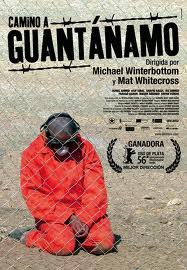
Democracy Now on Guantanamo

Guantánamo Detainees Launch Hunger Strike to Protest Prison’s 10th Anniversary (CLICK on image)

See the other two chapters on same site

Guantánamo Exclusive: Former Chief Prosecutor, Ex-Prisoner Call on Obama to Close Prison

NDAA: Obama Signs Law Restricting Transfer of Guantánamo Prisoners and Expands Indefinite Detention

Syria’s Assad vows ‘iron hand’ against opponents

Associated PressBy ZEINA KARAM | AP – 4 hrs ago

  • In this image made from video, Syrian President Bashar Assad delivers a speech in Damascus, Syria, Tuesday, Jan. 10, 2012. Assad gave his first speech Tuesday since he agreed last month to an Arab League plan to halt the government's crackdown on dissent. (AP Photo/Syrian State Television via APTN) SYRIA OUT

    In this image made from video, Syrian President Bashar Assad delivers a speech in …

  • In this image made from video, Syrian President Bashar Assad delivers a speech in …

BEIRUT (AP) — In his first speech since June, Syrian President Bashar Assad vowed Tuesday to respond to threats against him with an “iron hand” and refused to step down, insisting he still has his people’s support despite a 10-month-old revolt.

Assad repeated claims that a foreign conspiracy is behind the unrest — not true reform-seekers — and he blamed the news media for fabrications.

“Our priority now is to regain security in which we basked for decades, and this can only be achieved by hitting the terrorists with an iron hand,” Assad said in a nearly two-hour speech to a cheering crowd packed with well-dressed supporters at Damascus University. “We will not be lenient with those who work with outsiders against the country.”

By turns defiant and threatening, Assad has refused to give in to the most serious threat to his family’s 40-year dynasty in Syria. He showed a steely confidence in his speech even as opposition forces said he was dangerously out of touch.

Assad, 46, also lashed out at the Arab League, saying the Cairo-based bloc failed to protect Arab interests. The League has suspended Syria and sent a team of monitors to assess whether the regime is abiding by an Arab-brokered peace plan that Assad agreed to on Dec. 19. The moves were humiliating for Syria, which considers itself a powerhouse of Arab nationalism.

“The Arab League failed for six decades to protect Arab interests,” Assad said. “We shouldn’t be surprised it’s failed today.”

Kuwait’s official news agency KUNA reported that a group of Arab League observers was attacked by “unknown protesters” in the northern city of Latakia on Monday and two Kuwaiti army officers were lightly injured.

Online footage posted by activists showed what appears to be a white Arab League vehicle swarmed by Assad supporters in Latakia, some of them dancing on top of the car. Another video shows an Arab League vehicle, battered and with deflated tires, struggling to drive as demonstrators surround it, shouting Assad’s nickname “Abu Hafez,” meaning father of Hafez.

Arab League Secretary General Nabil Elaraby held the Syrian government responsible for ensuring the safety of its observers. But in a statement the League blamed both the government and the opposition forces for the attacks.

The violence is “an attempt to foil its mission, which is to solve the Syrian crisis,” he said.

Also Tuesday, activists said Syrian security forces shot dead at least 10 people in the eastern city of Deir el-Zour despite the presence of an Arab observer mission in the area.

The president has made only four public speeches since the anti-government uprising began in March, inspired by the revolutions sweeping the Arab world. The regime’s crackdown on dissent has killed thousands and led to international isolation and sanctions.

Tuesday’s speech differed little from his previous appearances, in that Assad struck a more defiant tone and reiterated claims of conspiracy and promises of reform.

Rime Allaf, an associate fellow at London’s Chatham House, said the speech was “a pretense of strength” while distributing blame for Syria’s problems on everyone else.

“His excessive discussion of details on so-called reforms, followed by details on the so-called conspiracy, is a desperate attempt to convince Syrians that the regime will survive what it describes as a crisis,” she said. “He hopes revolutionaries — who he equated with terrorists during the entire speech — will simply give up and go home.”

Assad inherited power 11 years ago from his father and has adopted tactics similar to those of other autocratic leaders in the region who scrambled to put down popular uprisings by offering claims of conspiracy while unleashing crackdowns on their people.

The formula failed in Tunisia and Egypt, where popular demands increased almost daily until people accepted nothing less than the ouster of the regime. But Syria’s conflict has gone on far longer, and the death toll is mounting.

“We will declare victory soon,” Assad said. “When I leave this post, it will be also based upon the people’s wishes,” he added.

Regime opponents denounced the speech.

“The speech didn’t bring anything new that could end the crisis and its repercussions,” said Hassan Abdul-Azim, a prominent opposition figure in Syria.

“Assad talked once again about foreign conspiracy and claimed the Arab League is a cover for a foreign intervention without pointing out that the Arab League wants, through its plan, to protect the Syrian people,” he said.

Another Syria-based activist was dismayed at what he said was a rambling speech.

“Bashar is completely removed from reality, as if he is talking about a country other than Syria,” said the man who identified himself by his nickname, Abu Hamza, because of fear of reprisals.

Also Tuesday, Assad accused hundreds of media outlets of working against Syria and claimed an interview he gave to Barbara Walters last month was altered. He was widely criticized for the interview, in which denied he ordered the deadly crackdown.

Assad accused the ABC network of “professional fabrication.”

Since the start of the uprising, Assad has blamed a conspiracy and media fabrications for the unrest — allegations that the opposition and most observers dismiss. The regime has banned most foreign news outlets and prevented independent reporting.

“They failed, but they have not given up,” he said of the media outlets.

In recent months, Syria’s conflict has turned increasingly violent as army defectors turn their weapons on the regime and some protesters take up arms to protect themselves.

Syria agreed in December to an Arab League-brokered plan that calls for an end to the military crackdown on protesters, but killings have continued.

About 165 Arab League monitors are in Syria to determine whether the regime is abiding by the plan to stop violence and pull heavy weapons out of the cities.

The U.N. estimated several weeks ago that more than 5,000 people have been killed since March. Since that report, opposition activists say hundreds more have died.

Adnan al-Khudeir, head of the Cairo operations room that the monitors report to, said more observers will head to Syria in the coming days and the delegation should reach 200. He said the mission then will expand its work in Syria to reach the eastern province of Deir el-Zour and predominantly Kurdish areas to the northeast.

Assad also said he was implementing reforms and that a referendum on a new constitution should be held in March. As it stands now, the constitution enshrines his Baath party as the leader of the state.

But Assad emphasized the measures are not coming because of pressure from the crisis.

“If reform is forced, it will fail,” he said. “Reform for us is the natural path.”

___

Associated Press reporter Albert Aji contributed to this report from Damascus, Syria.

Blog at WordPress.com.

Up ↑