Search

band annie's Weblog

I have a parallel blog in French at http://anniebannie.net

Tag

Syria

Obama On Syria – What Should The U.S. Do?

Regime “chemical strikes” in preparation for Damascus offensive

Jobar smoke. (YouTube)

    The Bashar al-Assad regime conducted its reported chemical weapon strikes Wednesday on rebel-held suburbs of Damascus in preparation for a military campaign on the embattled areas, an activist told NOW amid reports of heavy shelling outside the Syrian capital.


    “The regime was unable to get into [Damascus’] eastern Ghouta [areas] for ten months, so it resorted to using chemical weapons as an introduction to a surge in the area,” Mohammad Salaheddine—an activist media figure in the Damascus suburbs—told NOW hours after reports emerged that over 700 civilians had been killed in sarin gas strikes outside Damascus.


    As the death toll for the attacks continued to mount, heavy artillery and missile fire rained downed on the eastern suburbs of Damascus, with Hezbollah’s Al-Manar television reporting that regime forces had begun a campaign outside the capital.


    The activist Shaam News Network said in the early afternoon that surface-to-surface missiles were striking the Jobar area of the Syrian capital, while Salaheddine warned that regime “convoys are mobilizing in Zabaltani and [Damascus’ nearby] Abbasid Square [area] to surround Jobar.”


    “Air Force Intelligence units are coming from Harasta to hit Zamalka and Ain Tarma and inner [areas of the eastern] Ghouta [suburbs],” the activist also said.


    However, Salaheddine added that “[regime] tanks have not been able to come into [rebel-held eastern Ghouta] yet. The Free Syrian Army destroyed one of them, and there are very strong clashes now.”


    “Now, Zamalka and Ain Tarma are almost completely empty. The residents have left to Ghouta proper, to Al-Basateen and other [areas]” in order to escape the affected areas, he also said.


    Meanwhile, an activist told NOW via Skype that regime forces were also pressing a military campaign in the Moadamiyeh area southwest of Damascus where he is based, but added that the outcome of the clashes remained unclear as heavy fighting continued to rage.


    Moadamiyeh had also reportedly been hit by chemical strike in the series of alleged pre-dawn regime chemical strikes, with the activist Local Coordination Committees saying over 76 civilians had died from exposure to poison gases in the area.


    According to the LCC, “over 755 martyrs fell due to poison gas [strikes] in the Ain Tarma and Zamalka areas [of the Eastern Ghouta suburbs of Damascus] as well as in Moadamiyeh.”


    The Syrian Support Group, a Washington-based organization that advocates for increased support for the Supreme Military Command of the FSA, told NOW that the women and children were sleeping when the attack occurred, and that most of the victims therefore suffocated to death.


    SSG also reported that the concentrated sarin gas was delivered to the suburbs via four Grad missiles.


    Saleheddine told NOW that the series of pre-dawn strikes in eastern Damascus occurred at 2:20 a.m. in the Jobar, Zamalka and Ain Tarma suburbs.


    Read this article in Arabic

    source

    First Lebanese Battalion in FSA After Hezbollah’s Call

    15SaturdayJun 2013

    Posted by  in

    ≈ 1 Comment

    20130615-124120.jpg

    Lebanese individuals might have been involved in Syria’s war from early days. Sheikh Ahmad Al-Aseer declared Jihad and went himself there couple of months ago with his fighters too for a show-off exercise, but permanent or independent Lebanese fighting battalion are not known to be present as of yet.

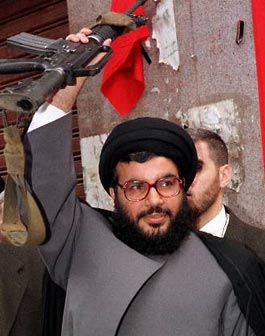
    Hezbollah has institutionalised the Lebanese involvement in Syria with his recent public involvement in the battle of Qusair. Hassan Nasrallah has publicly called his Lebanese opponents “to meet them in Syria to fight”. Hezbollah is part of the Lebanese state and government and obviously has a regional weight – which means Iran.

    The lebanese government, which is supposed to be adopting a dissociation policy, is in coma status with no comment whatsoever. Even more, “sovereign” Michel Aoun has defended Hezbollah’s intervention on the basis they are fighting the takfirees (beyond our borders.)

    Sadly, some Lebanese will meet Hezbollah’s divisive call and go to Syria. This will expand Syria’s war into a sectarian regional one, and allow the war to spread to Lebanon too without a shadow of a doubt.

    Below is the video of the 29 years old Lebanese Fadi AbdulKader declaring the formation of the Free Battalion of “Ikleem el Kharoub” under the Free Syrian Army command to fight Hezbollah. If you don’t know it, Ikleem el Kharoub is a Sunni area in the mostly mixed Druze and Christian Chouf district.

    In what could be the first video of its kind for a Lebanese, Fadi AbdulKader shows a copy of his Lebanese passport (which expired last month) confirming his ID and date of birth. The video is done on the style of previous videos for defections from the Syrian army. He declares he wants to defend his religion and land in both Syria and Lebanon. Funnily enough, he gives The Lebanese Republic a new name by calling it the Arab Republic of Lebanon.

    Hezbollah, which always prided itself not be part of the Lebanese civil war, is now creating a Lebanese civil war on Syrian land and contributing to the Syrian civil war. Hezbollah has officially turned into a militia, and seeking other Lebanese militias on the opposite side. This can only get worse for everyone.

    20130615-124149.jpg

    source

    Syria: Hezbullah’s Quagmire?

    Nasrallah’s speech earlier today was, rhetoric not withstanding, a declaration of war on Syria. Syria, as some people would like us all to forget, is not the Assad regime, it is the Syrian people. And it is the Syrian people that are revolting against Assad, a fact that Nasrallah conveniently ignores in his discourse. His talk today was couched in the same kind of vague language that the Syrian regime uses to refer to the “crisis”, with veiled references to “outside actors” without mentioning names, and with promises that details may perhaps be revealed “in future”. That is all fluff, and observers will notice that the rhetoric Nasrallah uses to explain Hezbullah’s sometimes controversial (to his followers) behaviour is intended to filter down the cult of resistance pyramid – to politicians, journalists, and social media – and shape the discourse. In this way he creates the epistemic grounds for legitimizing what his party does. But that is another blog post for another day.

    Most interesting to me was Nasrallah’s statement regarding Damascus. He promised that Damascus would never fall militarily and I believe he means what he says. It is one thing when all of us feel that a sustained push against the regime in Damascus is long overdue, but another thing when Nasrallah confirms this view because that means that somebody is in a position to try and take the city soon.

    The statement that the city will “never fall” can mean two things, and neither bode well for the Damascenes and other Syrians who have fled there. The first is that Hezbullah (and Iran) may be heavily invested in the capital and will emerge in full force to support Assad when the campaign begins, and secondly that there will be such a rain of destruction on the city that Aleppo will look like a walk in the park in comparison. Assad’s artillery and bases on Mount Qasiyoon, overlooking Damascus, have been raining destruction on the city suburbs for almost a year, and can easily level the old city if it looks like the regime will lose it. But this is not yet the case, and here it looks like Nasrallah’s warning is intended to point to an alternative that he desires, negotiations. But these are not the negotiations that most people would understand.

    I’ve said previously that when Assad’s allies speak of “negotiations”, they use a different meaning. Assad will use “negotiations” to refer to discussions with a loyal opposition, whilst his allies really mean negotiations between the United States and Russia on one level, and perhaps an uneasy understanding between the Gulf states and Iran on the other. The elephant in the room is the Syrian opposition in all its flavours, from the Muslim Brotherhood to the Muaz al Khatib current. This is because they are the only party that Assad and his allies cannot allow to operate freely within Syria. To allow any of these currents will mean genuine political plurality and a real challenge to the regime, therefore its downfall.

    The recent, and controversial, statement addressed to him by Muaz al Khatib appears to have not even registered with Nasrallah. Instead he chose to focus, as an ally of Assad, purely on the narrative that there is an international conspiracy against the Syrian regime and that negotiations should really be with the “foreign backers” of these armed gangs. This is unfortunate and he may come to regret this olive branch later, especially when the fighting reaches Lebanon – and it will at some point.

    Between Assad negotiating with his loyal opposition, and his foreign allies pushing for the world to abandon Syria’s revolution, the real Syrian opposition in all its spectrums, is to be starved to death, and the Syrian people will be returned back to their fifty year induced coma. In summary, Nasrallah has dug in his heels over Assad’s regime and declared war on Syria. His party will fight on under the pretence of protecting Lebanese in the country, and on the pretence of protecting the shrine of a woman who is revered by Sunnis as well as Shiites.

    Hezbullah is now fully embroiled in the Syrian quagmire, and has committed itself to supporting the Assad regime. This is a grave error of judgement for while Hezbullah might be strong in Lebanon, it is not strong in Syria. One need only recall the dreadful blow it received through the assassination of Imad Mughniyeh in Damascus a few years ago, right in the heart of Assad’s security district. Furthermore, Hezbullah’s soldiers are not familiar with the territory they are fighting in, and they are far from their supply lines and support base.

    It is clear they have been having an extremely difficult time in the Qusayr, which may be part of the reason why he chose to address his followers about it and also to justify the involvement. Finally, whilst the situation in Lebanon is still not serious enough to concern him, politics in Lebanon can escalate very quickly. By underestimating his domestic opponents and involving himself with a costly fight in Syria, Nasrallah will compound his errors and find himself biting off more than he can chew.

    Nasrallah told us tonight that it is not important how “you” understand the situation (regarding Shiite interests in Syria), but how other people (his people) see it. But with his fighters trickling back to Lebanon in boxes, Mr Nasrallah seems to be misreading the situation. The only people who’s understanding he needs to consider carefully is that of the Syrians, and they have already made their views of his involvement very clear. It was not long ago that Israel slipped away during the night after its failed and costly involvement in Lebanon. Today Hezbullah appear to be making the same mistake.

    Posted by Maysaloon at 8:50 pm  

    source

    Assad Guided by Russian Lessons from Chechnya.

    When asked how long the war would take, the soon-to-be assassinated independence leader of the Chechen people, Dzhokhar Dudayev famously responded, “it will be a war of 50 years”.

    This week’s focus on Chechnya reminds me how Assad’s strategy to suppress the revolution is influenced and informed by his Russian allies. Some would go as far as suggesting that the similarities point to the Russians actually managing the operation – from SCUD launches to international “diplomacy”.

    One can find many similarities with how Russia crushed the independence aspirations of Chechnya over past twenty years and Assad’s action today. Of course, it is not an identical situation by any means, but is insightful to dissect to further understand how Assad’s main advisors are guiding him to survive.

    In 1994, in response to the Chechen Republic of Ichkeria secession a few years earlier, Russia, under the leadership of Boris Yeltsin launched a brutal war to recapture the breakaway republic. However, the Russian Federation was unprepared, relying on conscripts and machines to fight a popular Chechen resistance. The result was a bloody two-year war, marked by massive war crimes committed by the poorly organized & undisciplined Russian forces against the population of Chechnya (both Chechen and Russian civilians alike). Indiscriminate shelling, targeted assassinations, mass executions, massacres and rape.

    Literally, the population was decimated.

    A ceasefire was signed in 1996 followed by a treaty a year later. The unpopular war was a “loss” for the Russian Federation and resulted in the deaths of 100,000 dead civilians in Chechnya, over 300,000 displaced – out of prewar population of ~1.2 million. The Chechen capital, Grozny was practically razed to the ground, invoking memories of the World War 2 allied bombing campaign of Dresden…the cruelty was maddening.

    Chechnya's Destroyed Presidential Palace in Grozny.

    Is this Grozny 1995 or Aleppo 2013? (Chechnya’s Presidential Palace, a symbol of independence destroyed by the Russians)

    But the Chechens won something close to independence, albeit temporarily.

    Russian designs for the republic were temporarily halted and left behind a devastated Chechnya along with a shocked and impotent international community – actually, an interesting question to ponder is whether the “West”, with a loud bark and consistent lack of tangible action, is treating Syria as an internal Russian affair, just as they did with Chechnya.

    The subsequent dialogue and treaty, allowed for Russia to regroup while the Chechen Republic fragmented under the burden of its devastation. A ravaged economy, displaced and homeless populace, international isolation and the pain and trauma of the war resulted in radicalization, fragmentation and the weakening of Chechnya’s government.

    Russia reentered Chechnya again in 1999 with the goal of destroying the de facto independence and establishing a pro-Moscow government. This second war was as devastating as the first. The Russians revised their tactics, led with a “victory by bombardment” strategy, followed by overwhelming ground support. Within a year, they succeeded in establishing direct rule over Chechnya and drove all resistance to the mountains to launch a low-level guerilla campaign that has outlived Yeltsin, who bequeathed power (appointed) to the KGB man, Vladimir Putin, in 2000.

    Chechen Refugee 1994

    Is she from Chechnya 1994, or Homs 2012? Both victims of Russian strategy.

    Two Russian wars on Chechnya cannot be adequately detailed in a few paragraphs. However, an approach to suppress uprising starts to emerge and illustrate how Russian lessons in Chechnya inform Assad response to revolution over the past 15 months and his anticipated action in the near future.

    Specifically, similar to his Russian sponsors, Assad has responded through the use of overwhelming and sustained violence – led by aerial bombardment and shelling, resulting in the destruction of society and civilian infrastructure. This has had a four-fold effect of 1) destroying the “enemy”, 2) spreading collective fear across all liberated areas, and 3) annihilating key leaders of the revolution 4) limiting the ability of rebels to effectively rule (i.e. provide security, safety, health & economic opportunity). The Russian experience in Chechnya has also taught Assad how to best utilize time and dialogue to attempt to reassert control over the situation.

    Over the past year, as we’ve seen Assad’s control over territory shrink the Russian advisor influence has become very apparent. Syria’s infrastructure has been effectively destroyed and the revolution continues to be starved, both politically and militarily. Collective punishment via the air and shelling has been the regime’s strategy, followed by “boots on the ground” of the regime’s army and sectarian militias (“shabeeha”/ National Defense Forces) to control and retake territory.

    Assad also hides behind the “dialogue” card, part of the bigger game played by powerful allies and the so-called friends of the revolution. Even this past weekend, we heard of a “Geneva approach” consensus by “Friends of Syria” which calls for transition. It, however, excludes any mention of removing Assad. Immediately following this call for dialogue, Assad’s forces massacred over 550 Syrians, most of them slaughtered in Jdaidet Artouz, a Damascus suburb, as a stark message to all involved, both within and outside Syria.

    With all this said, we can see how Assad’s survival strategy is influenced, maybe even directed by his Russian allies – the blueprint for his survival may just have been written with the blood of Chechens. All those supporting Syria’s revolution must take note, and strap in for the long haul.

    source

    I almost died in Syria


    I’ve covered wars for years, but nothing prepared me for the conflict on the ground – or in my head

    By

    I almost died in Syria A photo of the author

    There’s a private bar in London whose members are nearly all war correspondents. The men and women standing at the bar could easily convince you that war reporting is one of the most exhilarating experiences that life has to offer, a gateway to the outer limits of human experience. This, of course, is absolute nonsense, and they all know it. I can tell you that because I’m frequently one of those people drinking there, and I’ve spun that line on more occasions than I care to remember.

    I’ve been making documentaries in war zones on and off for the last 10 years, and I can assure you that working in a conflict zone is absolutely the most horrible, lonely and uncomfortable experience you’re ever likely to have.

    But that’s easy to forget.  Within days or even hours of getting home, the bitter and complex reality of seeing a conflict close-up quickly melts into a series of increasingly honed anecdotes whose veracity I can’t quite guarantee.

    The only true and abiding memory I have of the weeks and months spent in places like Helmand province in Afghanistan or a field hospital in Iraq is a vague and intangible sense of my split personality.  One part of me becomes the journalist thief, prowling in search of people and stories to turn into a film. And at the same time I’m something quite different but also connected:  a profoundly moved and thin-skinned witness to the awful extremes of human behavior.  Both sides need the other, but they pull in very different directions.

    For five weeks last fall, I embarked on a new project, living on both sides of a sectarian front line in rural Syria to make a documentary for the PBS series “Frontline,” and for Channel 4 in the U.K. I filmed with Sunni rebels on one side and regime loyalists on the other as they descended into an increasingly hateful feud.

    Nothing could have prepared me for the imperial-scale level of violence that I witnessed there. It was totally unprecedented in my experience. And it’s only now, reading journals and looking back at footage, that some of it is even becoming real.

    A family reacts in shock after a government airstrike on the Sunni village of Al-Bara on Oct. 28, 2012.

    Six months ago, I was on a bed in a Turkish hotel, a few miles from the Syrian border. I was waiting for my fixer Abdulqader to come back to the room we shared.  He has a hell of a reputation for helping journalists “get inside” (the euphemism of choice among correspondents operating in Syria).

    Before that day, I’d only met him once, for just a few hours, in a hushed and somewhat secretive meeting in the corner of a hotel foyer in Istanbul.  Two hours into our second meeting, I was sat in my boxer shorts in our shared room, our beds only inches apart, and the next day we were going to try to sneak into Syria for an extended stay in possibly the world’s most dangerous war zone.  In friendship terms, it was “in at the deep end.”

    I kept wondering if I should be more scared. The smugglers who were helping us cross the border were full of horror stories about their friends being killed in airstrikes, or so-and-so “disappearing near Homs.” Then there was the casual warning I’d been given:  ”There’s been a lot of shelling on the road you want to take …” It alarmed me at first, but then I caught myself wondering how much danger this last line really indicated — the road we wanted to take stretched for miles, and people were vague about when it was actually shelled.  It sounded to me then like I was being advised not to drive on a highway because there’d been a car crash there the previous week.

    We crossed into Syria the next day, and it took two more to reach our filming destination: the Orontes River valley in Idlib province. It’s a beautiful stretch of Syria’s rural heartland, peaceful for generations, but now a sectarian fault line: On one side of the river, Sunni fighters of the rebel Free Syrian Army hold sway. On the other side, less than a mile away, Alawite villagers remain fiercely loyal to the government, and were protected by a line of well-armed regime checkpoints.

    On our second day on the rebel side, the army positions shelled the village we were living in.  The sound was almost innocuous at first — a distant pop, a pause of about 20 seconds, and then a vicious crunch as the shell landed nearby.

    After the fourth explosion, we headed to the makeshift field hospital to see what had happened. As I got out of the car, someone grabbed my hand and pulled me into a rudimentary emergency room.

    There on a metal gurney was an elderly man, probably mid-60s, lying on his back, his face covered in dust, and his right leg blown off at the knee, a shredded flap of skin dangling from his bloodied stump.  The medical team looked resigned, and gave me vague shrugs that I took to indicate their impotence, or their familiarity with a scene like this. I looked at the old man lying on the table in front of them. He was semi-conscious and shivering. He died a few minutes later.

    The man who had brought me in pulled at my sleeve and took me into the room next door. It was completely dark.  He flicked a switch on his cigarette lighter to produce a tiny torch light, and shone its weak beam into the room to reveal two badly injured men lying in the darkness. The nearest man was making a strange, hoarse, stuttering sound that I realized was his faltering breath. The second man was reaching out to the man lying next to him, his cousin it turned out, and was saying, in Arabic, “I bear witness that there is no god but Allah.” He wanted these to be his last words.

    The quiet, dark horror of the scene froze me for a moment.  I asked myself, quite deliberately, if I realized what I was looking at. I found myself slipping into that weirdly safe mental space, a kind of filming autopilot. I took the lighter from my guide’s hand, and shone the torch beam onto the men in the dark. I concentrated on keeping the camera steady. I asked the people behind me to be quiet so I could get good, clean sound of the dying man’s last words.  I told myself I could think about it later.

    Outside the hospital, a truck had pulled up with three mangled corpses in the back.  A crowd had gathered around it, but a path quickly opened up and I was pushed through to film the bodies. ”Film, film,” people around me urged. It was a horrendous sight, and I flicked the camera to automatic — I didn’t trust my reactions to this.

    A man was standing in the truck, holding something up for me to film. The sun was in my eyes, and I couldn’t see. Then the man slipped into silhouette, to reveal the awful outline of a severed foot, dangling there in his hand, displayed as evidence. For a few seconds, I forgot to breathe.

    A rainbow forms over the Orontes River valley.

    I wanted to find stories away from the violence, and three days later went to visit a group of young peace activists down in the valley. But when I arrived, a man appeared in the doorway and asked if I’d come to “film the bodies.” I was confused, and was led to the mosque next door. There on the blood-stained carpet were three shrouded corpses: a mother, I was told, and her two children. One of the bodies was painfully small. I lowered my camera to take this in, but someone tugged my arm. “Film, film!” he said.

    I asked to be driven to where they’d been killed, and by the look of the crater it had probably been a mortar strike. It had landed about 3 meters from the garden patio of a small house whose walls were spattered with blood. A small boy was frantically digging in the crater to pull out bits of shrapnel.  I was told the mother and her kids had been sitting outside shelling corn, and were killed instantly. Two others were also killed nearby.

    At the funeral procession, the body of a small boy was carried aloft on a piece of cardboard. I realized I was standing in a grave as men lowered in the bodies of two women. Blood trickled from the stretcher as they lifted it over the heads of the crowd. I worried that it would get on the camera.

    Jamal Maarouf, seconds before being targeted in an airstrike.

    By the second week, I could hardly sleep.  I lost all confidence in what I was doing. There was no privacy. I got the shits. I was bitten to pieces by mosquitoes. And I became increasingly aware of my split perspective on what I was seeing:  I’d experience total sensory and emotional overload, and then find myself thinking solely about framing or continuity, or about how this story would “work in the edit.”

    It got worse.  One day, we heard we’d finally been granted an interview with Jamal Maarouf, the leader of the Martyrs of Syria Brigade, the most powerful rebel faction in the region.

    We were summoned to  meet him in an anonymous house in the small village of Al-Bara, and I’d only just started filming when the house shook as a regime jet flew overhead, dropping the most almighty bomb on the village.  I was standing in the doorway trying to see the plane when the blast knocked me to the ground.  It had landed 300 meters away.  Even Jamal looked shocked.

    I knew immediately that filming Jamal in the aftermath of an airstrike was “a good scene,” and was scampering around thinking about exposure and focus. But at the same time, the most awful, visceral reaction was taking place. Beside the huge crater, an old sheikh urged me to film something on the ground, and then he started wobbling something in front of him, some sort of sack of jelly or meat.  And suddenly I realized what I was looking at: the remains of someone who was alive just minutes ago, killed in the most brutal and sudden of ways, lying there debased in the dust. The body was not recognizable as human.

    I felt a terrible expression contort my face: I was pulling back my lower jaw and cheeks, my top teeth were bared, and my eyes were wide. I was still filming, but was aware that my face had contorted into a look of horror. The weirdest part was that I was relieved to be horrified, to be human among all this inhumanity, and not just some robot with a video camera.

    While I stood there in the rubble, shouts started going up that the jet was returning to bomb a second time. I ever so slightly pissed myself. Where does one stand in a situation like this? Would the jet strike an area it had just hit, to kill rescuers and survivors? Or would it regard that as a “waste” of a bomb, and drop it somewhere else? Was that crater, in fact, the safest place for miles?

    I’m sure there’s a training course somewhere that teaches what to do in that situation. Actually, I’ve probably done that course.  But right then, all I could do was run for it like everyone else.

    A young boy is consoled after his grandparents appear to have been killed in a government airstrike on the Sunni village of Al-Bara on Oct. 28, 2012.

    That night, I walked down to our little supermarket to buy cigarettes. The men at the counter pointed at my jeans and asked why I was so dirty. I said “al-Bara,” and pointed vaguely towards the north. I think they understood.

    An old man pulled up a chair and sat right next to me while we smoked in silence. His sleeve was touching mine.  The shopkeeper came out and handed me a little bottle of orange juice. He’d opened it for me and had put in a straw. There was something about this gesture that broke me. I just looked at the ground and started crying. I didn’t try to hide it. It was the first time in a while I’d felt normal.


    Olly Lambert has a decade of experience documenting life in conflict zones. His latest film, “Syria Behind the Lines,” airs on the PBS investigative documentary series FRONTLINE on Tuesday, April 9 at 10 p.m. It will also be broadcast as “Syria: Across the Lines” in the UK on Channel 4 on April 17 at 10 p.m. More Olly Lambert.             

    source

    He Provided Them with Bananas

    Karl Sharro  –  February 21, 2013

    14

    Karl Sharro is a Syria Deeply columnist,  London-based architect and Middle East commentator. He blogs at the wildly popular karlremarks.com and Tweets @KarlreMarks.

    In the early 90s I was in a taxi heading from Lebanon to Damascus with several other passengers. The trips were always educational. This prime mode of transport between the two countries allowed one to meet people from various backgrounds and walks of life.

    Listening to the coded way in which Syrians spoke was quite revealing. Nuggets of truth lay under layers of innuendo and seemingly apolitical language, decipherable only by the trained ear.

    On that particular trip, we had an estaz on board, the generic description for an intellectual, usually a university professor or teacher. This particular estaz sported an audacious comb-over, which bestowed an added sense of respectability to his appearance.

    In those days imports to Syria were still highly restricted and travellers took the opportunity of being in Lebanon to purchase products that were not available in Syria. Lebanese bread was particularly sought after, as well as fruits and other foods.

    Before we were about to depart, the driver asked the estaz if he wanted to buy some bananas. The estaz declined.  Bananas weren’t in shortage in Syria any longer, he said.

    Then he added, “God protect the president. [At the time, Hafez al-Assad, Bashar’s father.] He knows what the Syrian people want. He saw that the Syrian people wanted bananas, so he provided them with bananas.”

    The pronouncement hung in the air for a while, before dissipating among the sea of mundane chatter that one was used to hearing in those days.

    As it happened, that was the most profound political thought the estaz would make for the rest of the trip. To thank the ruler for his magnanimity in allowing the Syrian people access to bananas.

    The words had come out un-selfconsciously, like the recitation of a familiar prayer. But for a learned man in particular, they must have been accompanied by a sense of shame at having to engage in this daily ritual of submission.

    Those who don’t understand why Syria revolted two years ago are entirely oblivious to this deep sense of shame that its people lived with for decades.

    It wasn’t the deprivation or lack of consumer goods. Rather, it was the incessant demand to submit to an all-knowing authority, one that cannot be questioned.

    It was the lack of possibility, the closed doors of the future. It was the bureaucratic machine that reduced every citizen to a robot and then treated him or her accordingly.

    In the 1980s, I remember going with a relative to an ice cream shop in one of Syria’s northeastern cities. I naively inquired about the flavors when the vendor was about to fill my scoop.

    “Flavors? They’re all the same flavor, they’re just a different colour,” he said.

    It was a perfect metaphor for the officially-sanctioned parties, available in various political shades but all subsumed by the ruling Ba’ath.

    The illusion was elaborately constructed to remind you that you didn’t really have any choice.

    Damascus in the 1960s was a thriving cultural center that had hundreds of media publications. By the ‘80s, just a handful was left. The two party-sponsored newspapers were completely interchangeable with little variation from day to day.

    They provided sterile, mass-produced ‘opinions’ that were the journalistic equivalent of the estaz’s polyester suit. They belonged to a pacified intellectual class.

    But they carried their shame with them. Everybody knew about the thousands in the regime’s prisons, those who refused to submit. Poets, writers, activists and workers who spent decades facing incarceration and torture but refused to sign a piece of paper denouncing their political aspirations.

    Those on the outside felt that shame but thought they were helpless to do anything about it. They publicly sang the praises of the regime and the heroic role it played.

    Syria’s rich and long history only increased the sense of shame. The feeling of being marginalized from the world’s consciousness was exacerbated by the ancient monuments that mocked your impotence.

    What purpose does dwelling on past achievements serve other than to remind you of your helplessness and the squandered legacy you have not lived up to?

    As Syria gradually opened to the Western world in the 1990s, the regime thought that it could pacify people by turning a blind eye to the satellite dishes that were sprouting like mushrooms on buildings, and later by allowing the internet.

    But the feelings of inadequacy only increased. People could now compare between their lives and what was happening in the rest of the world. They had access to the internet, shopping malls and lots of bananas.

    But they still had only one choice in presidential “elections.”

    The sudden openness violently confronted Syrians with their helpless self-image. When the uprisings in Tunisia and Egypt succeeded in removing aging dictators, the response in Syria, more than any other Arab country, was visceral.

    Organised attempts at staging demonstrations never materialized. When the eruption came, it was brought about by the regime’s heavy-handedness and the instinctive reaction to it. The time for living with the shame was over.

    Syria’s was the least well-articulated or organised of all the Arab uprisings. It was raw and abrasive.

    The people who had the responsibility to lead the uprising failed it. Perhaps this was unavoidable, the accumulation of anger and shame got in the way of cold thinking and the decades of oppression meant that Syrians were starting from scratch.

    What we’re seeing today isn’t what Syrians wanted. The situation got out of control, but the regime bears the main responsibility for that. What is clear is that there will be no return to the old ways. After all the sacrifices, the people of Syria won’t go back to living with their shame.

    About the Author

    Karl Sharro
    @KarlreMarks.Karl Sharro is a Syria Deeply columnist, London-based architect and Middle East commentator. He blogs at the wildly popular karlremarks.com and Tweets @KarlreMarks.

    Does Anyone Give a Damn About Syria?

    Rabbi Shmuley Boteach

    Rabbi and Writer

    Posted: 01/16/2013 10:51 pm

    It’s hard to believe that every day the news reports have Syrians dying like flies and noone seems to give much of a damn. The report yesterday that 80 students were blown to smithereens was particularly galling. They were studying at their University in Aleppo when, apparently, death rained down from the sky, either through a missile or a bomb. One image had a female hand with a pen still in it, dismembered from the rest of her body. She apparently died while doing school work.

    I was a Rabbi at a University. If 80 students had died in a military attack it would have shaken the foundations of the academic world. Professors everywhere would have condemned this violation of the sacred halls of academia. But in Syria it’s just another day of indiscriminate slaughter.

    The United States is the world’s strongest nation with the loudest voice. Can’t President Obama speak out? I know we’re not ready to invade Syria or impose a no-fly zone. Americans don’t have the stomach for another war, or an invasion. But does that absolve us from simply condemning the slaughter in the strongest possible terms? What would it cost, in blood and treasure, for President Obama to fly up to New York and address the United Nations with a simple declaration: “President Assad, I’m here today to tell you that the long arm of international justice will catch up with you. Today you’re a brutal dictator killing men, women, and children in order to stay in power. But one day, in the not too distant future, we will catch up with you. You will be arrested for crimes against humanity and tried for your butchery and mass murder. It may not happen today or tomorrow. But I assure that you one day, in the not too distance future, in the dead of night when you least expect it, it will happen. Soldiers of civilized nations will apprehend you and take you to the International Court of Justice at The Hague where you will stand trial before the world for your cruelty. And you will be held accountable for your appalling crimes.”

    Isn’t that what the UN is for? It’s bad enough that China, and especially Russia, are protecting Assad and refusing to allow international action against him. But the American president is the very symbol of democratic freedoms and human rights to the entire world. He dare not remain silent.

    Atlantic columnist Jeffrey Goldberg recently reported that President Obama said that Israelis don’t know what’s good for them. Bibi wants to build in Jerusalem but doesn’t realize that he is isolating Israel further in the international community.

    I appreciate the president’s concerns. No doubt Israelis are especially grateful for the American president’s ability to divine Israel’s security needs even better than their chosen leaders. But perhaps our president should focus less on construction of apartments and homes and do something instead about the bombs and rockets that are killings tens of thousands of innocent Arabs. Syria is arguably the greatest humanitarian crisis that President Obama has had on his watch and he is, respectfully, failing miserably in doing anything about it.

    The Arab leaders have proven even less reliable. While President Morsi of Egypt decries Jews as descendants of apes and pigs, he seems fairly oblivious to the indiscriminate slaughter of his Arab brothers in Syria. But it’s become fairly obvious that it’s not the Jews who are the enemy but brutal Arab dictators who will kill as many Arabs as is necessary to stay in office.

    The Emir of Qatar, Sheikh Hamad bin Khalifa, seems much more interested in forking over to Al Gore half a billion dollars to buy Current TV for Al Jazeera than taking out full page ads in the worlds’ leading publications alerting them to the Arab children who are dying in Damascus.

    In the book of Genesis God asks Cain where his brother Abel is. Cain has just killed him and in effort to protect himself famously asks, “Am I brother’s keeper?” God’s response is ferocious. “What have you done? Your brother’s blood cries out to me from the ground.”

    We who witnessed the repeated genocides of the 20th century — from Armenia and the Holocaust to Cambodia and Rwanda — will one day be called to account for our silence in the face of dead students and children.

    Shmuley Boteach, “America’s Rabbi” whom The Washington Post calls “the most famous Rabbi in America,” has just published his newest best-seller, “The Fed-up Man of Faith: Challenging God in the Face of Tragedy and Suffering.” Follow him on Twitter @RabbiShmuley.

    source

    Damascus- Omar Offendum.mp4

    [youtube http://youtu.be/o0cvl4O9pbE?]

    Blog at WordPress.com.

    Up ↑