[youtube http://www.youtube.com/watch?v=Fp5iKwQJj8c&feature=share&list=UUNye-wNBqNL5ZzHSJj3l8Bg?]q

Jan 7, 2013
The world still blinks every time that Bashar Al Assad speaks, as if it has not learnt anything from 21 months of violence.
 After all this misery, how can Syrians live together again?
In his speech yesterday – his ninth since the uprising began – the dictator offered a plan that would include a lengthy, complicated process of gradual change and “truth and reconciliation”. That would, in theory, lead to a new coalition government and a new constitution.
The speech was preceded by an aggressive two-week diplomatic campaign by the regime’s allies and the UN envoy Lakhdar Brahimi. That renewed push for diplomacy followed 140 countries’ recognition of the National Coalition as the sole representative of the Syrian people, Nato Patriot missiles and military personnel that were dispatched to Turkey’s border, and pledges of increased support for the opposition.
The diplomatic overture by the regime is part of a Russian-backed plan that would keep Al Assad in power until presidential elections in the summer of 2014. And the diplomacy appears to have succeeded in slowing down aid to the rebels, with reports that arms supplies are drying up. But the speech yesterday should remind the world that this dictator has no place in a future Syria and that support for the rebels is the only way forward.
Russia probably pressured on Al Assad to announce a plan of reconciliation. But the speech sounded more vindictive, dismissive and exclusivist than even his previous bombast. For example, he said the plan was directed at only segments of the opposition, and that “those who reject the offer, I say to them: why would you reject an offer that was not meant for you in the first place?” In other points, he emphasised vengeance rather than reconciliation. He also blamed the rebels for the destruction of infrastructure and for cutting off electricity and communications.
“Syria accepts advice but never accepts orders,” he said. “All of what you heard in the past in terms of plans and initiatives were soap bubbles, just like the [Arab] Spring.”
It was clear that he tried to sound steadfast, but his voice betrayed him several times. And before his departure from the room, the crowds chanted “may God protect you” – a chant that is used when someone is threatened. The usual party line is “with our soul and blood, we sacrifice ourselves for you”.
Why would the regime offer a plan now, when it has not made a single meaningful concession since the beginning of the uprising? The violence would never have reached such staggering levels had Al Assad offered reasonable reforms from the beginning. Any hope that he can engineer an end to the violence is an illusion, which will only prolong and worsen the crisis. If anything, the speech showed that the regime will not change its policies except under duress.
The aim seemed to be threefold: to create the impression that the rebels refuse political settlements; to add to the world’s reluctance about arming the rebels; and to question the legitimacy of the National Coalition as the sole representative of the Syrian people.
The proposal of a new constitution is merely a red herring. Syrians did not rise up against the constitution, nor have they demanded constitutional change. People rose up against brutality, and the fact that the existing constitution was never honoured – the mukhabarat apparatus has dominated almost every aspect of Syrian life. The immediate cause of the uprising in Deraa was the mukhabarat, who arrested and tortured school boys for writing anti-regime graffiti and then humiliated their families.
Nor did Syrians rise up to be included in a coalition government. Any government that includes these same criminals will be no different.

Seven people have died in Homs after they inhaled a “poisonous gas” used by government forces in a rebel-held neighbourhood, activists said.Activists also told Al Jazeera on Sunday night that scores of others were affected in al-Bayyada neighbourhood. Side effects reported include nausea, relaxed muscles, blurred vision, and breathing difficulties.Residents said they did not know the nature of the gas used.”The situation is very difficult. We do not have enough facemasks. We don’t know what this gas is but medics are saying it’s something similar to Sarin gas,” Raji Rahmet Rabbou, an activist in Homs, told Al Jazeera.
A doctor treating patients subsequently said the gas seemed to be a concentrated form of tear gas that has not been used in Homs before. Inhaling large amounts can lead to suffocation and death, he said.
The gas appears to have been used during a battle with rebel fighters.

………….
It is for lack of love that Bashar is exterminating his people. 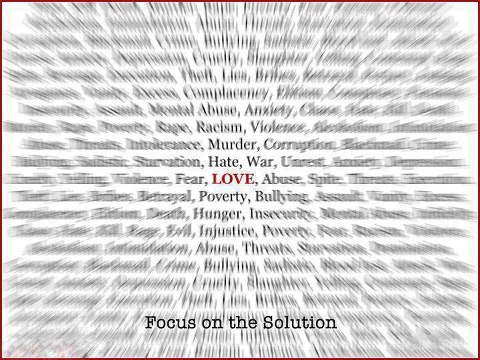
- By Spencer Ackerman
- 12.11.12
- 5:42 PM

That would be a heavenly Bashar Assad, dictator of Syria, arm-wrestling the demonic Uncle Sam. Is that Mount Doom in the background? Photo: Instagram/Bashar4Ever
You might think it’s hard to defend Bashar Assad, the Syrian dictator responsible for the murder of 40,000 human beings. You must be new to the internet.
Assad doesn’t have many allies IRL — Iran and Russia are about the only ones remaining. But as the Syrian rebellion stretches into its 20th month, he’s found (and paid for) a whole heap of friends online, who warn of an impending NATO invasion to dominate Syria; secret CIA shipments of weapons to terrorist groups; and, of course, that Assad’s enemies are all really Jews. Welcome to the Assadosphere — on Twitter, YouTube, Instagram and the web.
Assad has maintained a robust propaganda presence for years: Remember the infamous Vogue profile of his wife Asma, which praised the “wildly democratic” Assad family right as it began its wave of bloodshed. Assad’s online buddies are the next wave of that propaganda: They’ve taken a defense of his regime viral, to the point where they don’t need to take their marching orders from Damascus. They’re contesting the web and social-media space that would otherwise be filled with recitations of Assad’s war crimes — and flooding the zone.
We’ve seen these characters show up occasionally in our comment threads and Facebook pages. But the most efficient portal into online Assad apologias comes from the Twitter hashtag #RealSyria. There, you’ll learn that the Free Syrian Army, “aka al Qaeda” is “preparing suits etc. for chemical weapons false flag.” You’ll see links to YouTube clips from the “Eretz Zen Channel” to learn how the rebels torture citizens with “flesh burning materials.” (Not that said rebels are in said video.) And you’ll find people skeptical of the “HUUURR DURRRR” that that nice Mr. Assad would ever use his “supposed” chemical weapons. It’s not like an Assad spokesman warned the world last July that “these types of weapons are [under] the direct supervision of the Syrian armed forces and will never be used unless Syria is exposed to external aggression.”

According to Bashar Assad’s defenders on Instagram, the U.S. media hides from you how the Jews control the Syrian rebellion, or something. Image: Instagram/Laith Belal
Then there’s the News About Syria-English blog, Facebook page and Google+ account. It invariably describes the Syrian rebels as “terrorists”; takes at face value Assad’s declarations that he’ll “not use chemical weapons, if it possesses any, whatever the circumstances“; and warns that last year’s war in Libya has yet to satisfy NATO’s “thirst for blood.”
And on like that. SyriaTribune maintains a YouTube channel stocked with clips from — surprise — Vladimir Putin’s Russia Today portraying Assad as the victim of a bloody-minded western conspiracy. A self-described French intellectual named Thierry Meyssan — author of 9/11 The Big Lie — reveals that TV images purporting to show Assad’s massacres of civilians were prepared by the CIA, along with White House deputy national security advisor Ben Rhodes, and “aims at demoralizing the Syrians in order to pave the way for a coup d’etat.” The #FakeRevolution hashtag on Instagram provides pictorial, meme-filled boosterism for Bashar, like a screengrab from Time’ app kindly telling user mybubb1e to stop voting for Assad for Person of the Year or Hillary Clinton with flames shooting out of her eyes and ear, courtesy of Bashar4Ever.
Now, the Syrian rebellion is eclectic, and it includes some rather extreme elements –including al-Qaida-aligned terrorists. Human Rights Watch has borne witness to its willingness to execute and torture detainees. But human rights abuses can’t be the real issue for these web and social-media accounts: if so, they’d be turning on Assad, who drops cluster bombs on Syrian cities and has killed more civilians over the last 20 months than perhaps any other despot in power. And anyone defending Assad because they hate the idea of another U.S. invasion might consider that the Obama administration evidently wants to stay out of Syria at all costs. Yes, the Syrian rebels might actually acquire chemical weapons in the wake of Assad’s downfall, and that’s legitimately worrisome, but perhaps some ire might be spared for the regime that, you know, created that chemical stockpile.
Of course, the Syrian rebels use Twitter, Facebook and YouTube for everything from propaganda to weapons training, so perhaps it’s unsurprising that Assad’s defenders seek to contest that online space. It’s the internet; people say terrible things on it. But the Assadosphere is the sort of thing that Block and Unfollow functions were created for.
Exclusive Telegraph article
The most senior politician to defect from the Bashar al-Assad’s regime has revealed that the President repeatedly rejected calls by his own government for a political compromise, in favour of all-out war.

Syrian President Bashar al-Assad (left) and former Prime Minister Riyad Hijab Photo: AFP/Getty Images
By Ruth Sherlock, Amman,04 Nov 2012
By Ruth Sherlock, Amman,04 Nov 2012
In his first full interview with a Western newspaper since he fled to Jordan in August, Riyad Hijab, the former prime minister, told The Daily Telegraph that he and other senior regime figures pleaded with Mr Assad to negotiate with the Syrian opposition.
One week before his defection, Mr Hijab, the vice-president, the parliamentary speaker and the deputy head of the Baath party together held a private meeting with Mr Assad.
“We told Bashar he needed to find a political solution to the crisis,” he said. “We said, ‘These are our people that we are killing.’
“We suggested that we work with Friends of Syria group, but he categorically refused to stop the operations or to negotiate.”
Mr Hijab referred to the war waged against the Muslim Brotherhood by Mr Assad’s father, Hafez, which led to the deaths of up to 10,000 people in an assault on the city of Hama.
“Bashar really thinks that he can settle this militarily,” he said.
“He is trying to replicate his father’s fight in the 1980s.” Mr Hijab was speaking as key anti-regime figures gathered in the Qatari capital Doha to replace the fractured opposition Syrian National Council with a new government-in-exile. Once formed, the new Council would seek to gain formal international recognition, and, crucially, better weapons.
Mr Hijab said he rejected an offer to be part of the US-backed proposal, promising to be a “soldier in this revolution without taking a political position”.
He said the lack of serious action by the West had consolidated President Assad’s confidence.
“Bashar used to be scared of the international community – he was really worried that they would impose a no-fly zone over Syria,” he said. “But then he tested the waters, and pushed and pushed and nothing happened. Now he can run air strikes and drop cluster bombs on his own population.”
Mr Assad’s acceptance of ceasefire proposals by the United Nations envoys Kofi Annan and Lakhdar Brahimi during the 19-month crisis was “just a manoeuvre to buy time for more destruction and killings”, he said.
Indeed in a speech to his cabinet Mr Assad extolled only the dictums of warfare, Mr Hijab said.
It was as he watched his leader speak – coldly, confidently and gripped by the blind conviction that only military force would crush his enemies, he said – that Mr Hijab knew he had no choice but to break away.
“My brief was to lead a national reconciliation government,” Mr Hijab said. “But in our first meeting Bashar made it clear that this was a cover. He called us his ‘War Cabinet’.” The explosion at the Damascus national security building that killed the country’s defence minister and the president’s brother-in-law marked a turning point, Mr Hijab said. After that, no holds were barred.
“The new minister of defence sent out a communiqué telling all heads in the military that they should do ‘whatever is necessary’ to win,” he said. “He gave them a carte blanche for the use of force.” In recent months the formal government had become redundant, Mr Hijab said. Real power was concentrated in the hands of a clique comprising Mr Assad, his security chiefs, relatives and friends.
Certain that he had lost all influence, and watching the tendrils of smoke rising from his home town of Deir al-Zour near the Iraqi-Syrian border after another wave of air strikes, Mr Hijab plotted his escape: “A brother spoke with one of the Free Syrian Army brigades in Damascus,” he said. “We had expected to be at the border in three hours, but it took us three days.”
Since then, the violence has worsened and new fronts have opened across the country. On Sunday a bomb exploded in the centre of Damascus, wounding 11 civilians, state television and activists reported. The blast was detonated close to the Dama Rose hotel, which hosted Mr Brahimi during his recent visit to Damascus.
Rebels also claimed to have seized an oilfield near Deir Al-Zour, while fighting continued around army and airbases west of Aleppo, which the regime have used to strike rebel-held areas in recent weeks.
Mr Hijab said the violence would continue and the regime would stay in power for as long as Russia and Iran continued to provide support. But even if they cut their allegiance, he said Mr Assad would most probably still refuse to quit.
“I am shocked to see Bashar do what he has doing,” he said. “He used to seem like a good human being, but he is worse than his father.
Hafez is a criminal for what he did in Hama, but Bashar is a criminal for what he is doing everywhere.”
 band annie's Weblog