Search

band annie's Weblog

I have a parallel blog in French at http://anniebannie.net

Rape and ransoms: Hilal al-Assad’s ‘thug’ legacy


Some accuse the regime of orchestrating the death of Assad’s cousin, Hilal al-Assad (L), to diffuse the Alawite sect’s growing resentment. (Photos courtesy: Facebook and Reuters)

Tuesday, 25 March 2014
“The lout and lowlife‪,‬ Suleiman al-Assad‪,‬ the son of Hilal‪,‬ the head of Military Housing in Latakia‪,‬ was arrested on Monday from the Meridian of Latakia after receiving a beating from the good boys ‪….‬ they said he cried and screamed‪. Among his entourage, was an official’s son called Amjad Aslan, also a friend of the Latakia Military Security Chief…‬ they are all a group of louts and low lives who have wreaked havoc and infested corruption in the city‪ …”‬‬‬‬‬‬‬‬‬‬‬‬‬‬‬

Such statements, critical of the practices of Syrian President Bashar al-Assad’s clan, appeared on regime loyalist Facebook pages to the surprise of many Syrians. With loyalist calls for their arrest, Suleiman and his father Hilal al-Assad were perceived as a liability in the coastal region.


Hilal al-Assad. (Photo courtesy: Facebook)

SANA, Syria’s official news agency, announced the death of Hilal, the 47-year-old second cousin of Syria’s president on Monday, with some already accusing the regime of orchestrating his death to diffuse the Alawite sect’s growing resentment.

Certain reports claimed his death in the newly launched Alanfal campaign, a joint Islamist military operation against Syria’s coastal region. An Islamist group declared that Hilal, among other Allawite figures, died in a rocket attack on the city of Latakia.

Hilal is the grandchild of Ahmad al-Assad, the older half-brother of Hafez al-Assad, the late Syrian president. Following the revolution, he and his son were known for their thuggish practices, namely ransom kidnapping and rape, surpassing the reputation of his two notorious brothers, Haroun and Hail.


Suleiman with Shabiha at a Latakia, according to loyalist Facebook pages.

“Suleiman was dubbed ‘the President of the Syrian Coast’s republic; he acts in that capacity, a thug since his teenage years,’” according to an Alawite Latakia resident, who asked to remain anonymous for fear of reprisals. “They are notorious for rape and ransom kidnappings, and their headquarters at sports city is a Bermuda Triangle for their detainees.”

The rise of Shabiha

The Shabiha is a term originally used to describe the Assad clan’s smugglers and racketeers and their Allawite henchmen in the late 1970s. They exploited the high demand for foreign goods, especially cars and cigarettes, following newly imposed government restrictions on imports. Malek al-Assad, the son of Ibrahim, Hafez’s half-brother, was a pioneer in smuggling; he became a liability for his involvement in weapons’ smuggling, according to this detailed account of the rise of Shabiha by Syria Comment. Hafez imprisoned his nephew for days. Years after losing his lucrative business, he ended up a taxi driver on the Latakia–Damascus route, dying in car accident.


Suleiman sometimes drove Syrian army tanks to ‘show off’. (Photo courtesy: Facebook)

Fawwaz al-Assad, being Hafez’s full nephew, enjoyed better immunity than Malek. He led a successful career in smuggling cars and cigarettes, gaining increasing notoriety for rape, driving in a multi-car convoy, and ransom kidnappings.

Hafez reportedly intervened occasionally to curtail his excesses. As the other nephews and cousins grew older, they competed for power and wealth, often parading their brand new cars, with tinted windows and bodyguards brandishing their Kalashnikovs. The Shabiha were notorious for their gangster looks, tattoos, funky haircuts, massive biceps and beards.

Orwa Nyrabia, a Syrian filmmaker and former Latakia resident, believes that Hafez, a cunning leader often praised for his Machiavellian tactics, intentionally left his extended family uneducated, paving the way for their thuggish behavior.

“There was an interest in repressing the coastal region through the clan. Hafez’s eldest son, Bassel Assad, periodically curtailed and unleashed their activities in a semi-organized manner,” said Nyrabia.

The Assads, originally peasants from the Latakia Mountains, mostly took the easy illicit road to fortune and power, the Tashbeeh. They moved to the city of Latakia, a mostly Sunni coastal city with a few hundred thousand residents. Sectarian tensions hid some class hatred, according to residents from both communities, as Allawites often cited their history as discriminated against peasants and servants of urban Sunnis.

The Shabiha instilled fear among the population, while amassing fortunes from smuggling; the regime kept them at bay to fulfill the regime’s two pillars of control: demoralization and fear. After the revolution, and as the regime’s dependency on local militias grew, their power was unleashed. They repressed demonstrators in the coastal region, tortured and humiliated them, like in this infamous video from Bayada, a town in the Banyas province.

After Hilal’s death

Syrian activists recently reported that Suleiman, Hilal’s son, harassed a girl at a DVD store in Latakia; when the owner confronted him, he was forced to lick his shoes, then get naked, and dash around the many squared meters of his shop.

Following news of his father’s death, Suleiman and his Shabiha indiscriminately shot at Sunni neighborhoods. “Young Sunni men were left with little choices in Latakia,” according to a half Alawite, half Sunni city resident.

“Either they stay in the city and risk arrest, conscription and harassment, or join the rebels in the mountains”, he said. “Most chose the latter.”
source

Last Update: Tuesday, 25 March 2014 KSA 12:24 – GMT 09:24

Dear White People: Film Tackles Racial Stereotypes on Campus & Being a “Black Face in a White Space”

click on image
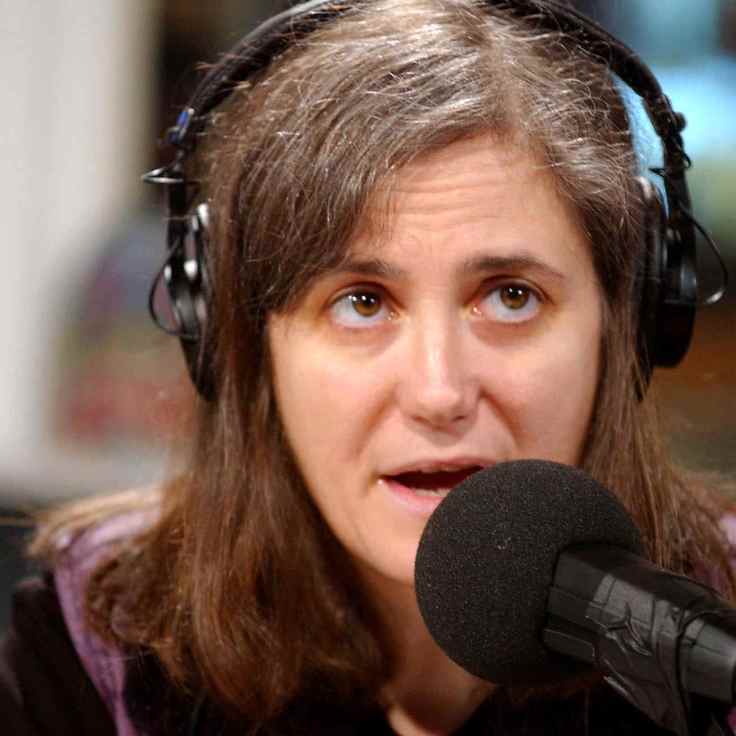
amy_goodmanMonday, March 24, 2014 FULL SHOW | HEADLINES

2014-03-24

As colleges across the country, from Harvard to University of Mississippi, continue to witness racism on campus, we look at a new film that tackles the issue through comedy and satire. “Dear White People” follows a group of black students at a fictional, predominantly white, Ivy League school. One of the main characters, Sam, hosts the campus radio show “Dear White People,” where she confronts the racist stereotypes and dilemmas faced by students of color. Racial tensions on campus come to a head when a group of mostly white students throw an African-American-themed party, wearing blackface and using watermelons and fake guns as props. We speak to actor Marque Richardson and award-winning, first-time director Justin Simien.

‘Nobody knew where I was, nobody… I was simply disappeared’: An Italian tourist’s Ben Gurion nightmare

My name is Andrea Pesce, I am 44 years old and I’m an Italian citizen.

For 15 years I had the chance to visit Israel and Palestine, thanks to my former job (I used to be a travel agent) and also because I’m interested in the political situation over there. I travelled as a normal person, without any official role or mission.

Last December I have been in Israel and Palestine for one week. I always stayed in a hotel in the Old city of Jerusalem and I went for one day visit to Bethlehem (twice), Ramallah and Nablus, always as a tourist. During my visit in Bethlehem I had the chance to learn about a non-profit organization, named Tent of Nations, which follows a non-violent approach to the conflict.

Between January and February I contacted Tent of Nations staff, and planned a visit in March to volunteer over there. Then I bought an El Al air ticket, from Venice to Tel Aviv and back, departure 18th March, return 16th April.

This is the background to my story and I want to say also that I have never participated in any event, manifestation or whatever against Israel, or have written something or declared something against Israel. On the contrary, in 1999 I wrote a book issued by a Italian publisher, specialized in Jewish Literature and subjects, (Casa editrice La Giuntina) with an afterword by Amos Luzzatto, who at that time was President of the Union of Italian Jewish Communities.

Last 18th March, my day of departure, I arrived at Venice airport at 11 am, 3 hours before scheduled take off. For this kind of flight, there is an Israeli security staff interviewing passengers, according to an agreement between the Italian and Israeli governments. I waited around one hour, as Israeli staff are always allowed to pass Israeli passengers before me and other Italians waiting. Then one woman interviewed me, quite softly, but with some incredible questions like:

“You are going to stay one month away from home, isn’t your daughter sad because of this?”

There is no security reason behind this kind of question, not even to check if you get nervous because you have something to hide: it’s pure harassment, nothing more, nothing less.

I asked, “Why are you asking questions like this ? It’s too personal!”

She seemed to understand, and started to apologize.

Then I was told that my backpack had to be searched and that I cannot bring my camera (old fashioned) with me, it had to go in the hold. They checked everything, which included doing a body search on me.

Eventually they told me that maybe my baggage cannot arrive with me in Tel Aviv on the same flight: I complained a lot, saying that I had been waiting for two hours and I couldn’t understand why they waited so long. At the end they let me leave, I have to say, including my backpack.

During the flight I was tired but also happy: eventually everything was ok, and I was on the way to start my holiday and a wonderful life experience for one month in Israel and Palestine.

I couldn’t imagine what was waiting for me at Ben Gurion Airport.

Once I arrived, at passport control, I was told to wait in a corner of the hall, beside the “passport control office”. Several people were there already. I waited around one hour and then I had the first dialogue. It focused on what I was going to do during this month, I said “nothing special, I will go around”, ok, then wait again other half an hour, and then a second person interviewed me about my job, and what I was going to do it in Israel for one month, and I repeated the same answers again.

Then wait again around half an hour, and then the third interview with other people asking same questions, but in harder way, intimidating me and trying to scare me.

They argued that I was a liar because I didn’t say that somebody was waiting for me in Bethlehem, and that those who lie at the border will be not allowed to enter the country.

At that point I had been traveling for almost twelve hours, I was confused, tired and a little bit scared. But I had nothing to hide and I said, “check whatever you want, I’m a normal person, do what you have to do”. At that point it was pretty clear to me that they had read my emails and knew everything in advance.

Finally around 11.30 pm, I was interviewed by other people (they said they were from the Ministry of Internal Affairs) and after some minutes they told me that my entry was denied because I was a liar: I started to cry, more because of the stress itself, than for the final decision to reject me, even though it has been hard to me to accept the “destruction” of my travel, planned for months.

They started to laugh a little bit, saying that if only I said at the beginning I was going to volunteer they would let me in without any problem. But since I lied about it, I have to be rejected.

Until now, it was hard but not terrifying. But I  still couldn’t expect what I was in for.

Around 1 am they brought me in another airport room where my baggage has been searched again and I had a second body search. Then they took away my backpack, empty, because they said that it was detained for security reason. They gave me a big plastic bag to put all my belongings in.

Funny detail: the bag has a broken zipper.

They brought me back to the same hall, where I was told to not go around. I had to stay near their office.

Please note that I could only drink some water because another tourist gave me some coins to buy a bottle water from a machine. And security staff gave me a sandwich only because I asked for it. In the meantime every request I made — to have some water or to make a phone call to my embassy or simply to alert my hotel in Jerusalem that I couldn’t go there — was refused. And refused is not the right word: I was not a normal person anymore, I started already to be seen like a second class person. I want to say that for the very first time I really felt what racism is.

As they decided to send me back to Italy, the problem was how and when: flights to and from Venice are only once per week. So I was told that I was going to stay in a separate facility, waiting for the flight back to Italy.

This is the beginning of the nightmare.

The separate facility is a “migration facility”, as they call it, which is actually a sort of prison. Around five minutes by car outside of Ben Gurion Airport, I was transferred to this “house” surrounded by iron net, with bars on windows. I was told to leave everything in a room, including my mobile. Strange, but I definitely realised I was under arrest when I was told I could not bring a ballpoint pen with me to my “room”. But actually it was not a room, it was a jail. So around 3 am on the 19th March started my new life experience: being detained in a prison.

I cannot express my feelings exactly: maybe I can say that, having fallen deeply into a total irrational system, the only way to avoid becoming crazy, was to start to think in a completely different way. But it wasn’t easy.

The jail has soundproof doors, so you cannot ask for anything, not even scream. You can only beat the door until somebody, maybe, is willing to listen to you. But you already feel completely unsafe and you are scared even to ask, because you know that they can do everything with you, about you. I cannot say what I thought and felt during that night.

By 7:00 am I was destroyed, I was imploring them to send me home. One man, never seen before just opened the door and screamed to me: “so you go tonight at 06.30 pm, okay or not ?!” I said “Okay, okay, please let me go, I didn’t do anything, I don’t even know why I’m here”. They say “Okay, you will go tonight”.

At that stage nobody knew where I was, nobody. I was simply disappeared.

At 9:00 am I was allowed to call the Italian embassy: an Italian official told me “once you are in that place we cannot do anything, you simply don’t exist for us if you are in that place”. She also expressed sympathy for what I was going through, but the fact I was leaving in the afternoon was decisive. She also called my wife in Italy, as I was not allowed to do it directly.

Then the wait for departure started: I was in another jail, alone, with the door open. But I couldn’t go out, and it’s hard to explain, but I was afraid to ask anything. When around noon they gave me some food (to consume it in the room, without any table, only sitting on the bed) I did ask for some water, they said “We will bring it to you.” They didn’t and I didn’t ask again.

All and all, during my 14 hours in the “migration facility” I had the chance to stay outside in the open courtyard for a total of around 40-45 minutes (in two visits during the morning, none in the afternoon).

Again: I cannot explain my feelings during the time between 4:30 pm and 5:30 pm, knowing that my flight was scheduled for 6:20 pm. I was scared to death that they wouldn’t let me go….

It the end, at 5:35 pm they did open the door, let me take my belongings (always in their plastic bag), transferred me to the airplane and let me go. My passport was delivered to me by an Italian officer at Milan airport, after it was handled to him by the El Al staff.

I won’t share anything about the fact that being flown to Milan cost me more fatigue, finding a hotel that night and then catching a train to Venice the next day (20th March).

Nobody, never, in those 24 hours, declared their identity or role to me (they all have a badge, but it’s not easy to read and you don’t’ have the courage to show that you want to know their name). In the end there is no written proof of what they did to me, not even the reason for my rejection and detention. Nothing, nothing at all. I only have a stamp on my passport saying “entry denied”.

The lessons for me at this moment are two questions:

  1. Why do you want me to hate you ?!
  2. If you can do this to me, what you can do to the Palestinians ?!

source

MISERABLE FAT BELGIAN BASTARDS


Do you want to know more about Belgium ?

George Carlin: How language is used to mask truth

Blood ties: the shadowy member of the Assad clan who ignited the Syrian conflict

March 20, 2014 Updated: March 20, 2014 13:03:00

BEIRUT and AMMAN//On a summer evening five months into the Syrian uprising, a well-dressed man, a little heavy-set but younger looking than his 50 years, sat quietly at the bar of the Four Seasons Hotel in Damascus, having a drink and smoking a cigar.

He was appropriately turned out for the only authentically five-star venue in the city. Handmade Italian shoes, an expensive suit and shirt, no tie, a gold chain around his neck. There was a Rolex watch on his wrist and lying alongside the ashtray on the tabletop were the de rigueur prayer beads, smartphone and sunglasses.

An unremarkable looking figure, similar to any other member of the narrow elite grown rich in Syria’s vigorous, family-run kleptocracy. But this man was set apart by a particular hardness on his face, framed by dark, neatly trimmed stubble along the jawline, and an intense hostility in his eyes.

Most Syrians wouldn’t have known him by sight but they all know his name: Atef Najib, the man who ignited the revolution.

And they would not have been surprised to find him lounging in the dimly lit opulence of the Four Seasons that summer. He was supposedly under investigation by a special committee, headed by an independent judge, over involvement in torture and several killings. But, as a cousin of President Bashar Al Assad, he could enjoy his night out with complete impunity.

Even if the investigating committee was more than a hollow fiction and even if there was such a thing as an independent judge in Syria, neither would dare touch him.

===

Despite his pivotal role in sparking the Syrian revolt, the public record on Najib is threadbare. He is a first cousin of Assad and was the head of political security in Deraa, a low-rise city of industrious farmers and traders on the border with Jordan, where simmering disaffection burst into the open on March 18, 2011.

There were small protests elsewhere in Syria that Friday, and there had been isolated outbreaks of public dissent over the previous week, but they were handled with a certain deft, constrained ruthlessness. Beatings, arrests and threats but not murder. In Deraa under Najib, it was different – and it exploded.

He had, with characteristic arrogance, already laid the groundwork to set Syria aflame, most notably by insulting a group of local men who had gone to ask that he set free 18 boys, detained for writing “Doctor, your turn next” on a school wall.

The teenagers were tortured for daring to suggest that Assad – an ophthalmologist – was heading the way of other, recently deposed regional dictators.

Najib told the boys’ worried fathers to “forget about them”. There are two versions of what he said after that. One, told by regime sympathisers willing to discuss the incident, grudgingly admits that “two or three” of the young prisoners were physically abused, but holds that Najib told the men their failure to teach their children manners meant the job had fallen to him.

The other account, the one that has entered into Deraa lore, is that Najib told the men go home and have new children and, if they lacked the virility to do so, that they should send their wives to his office and he would ensure they left pregnant. It was all too much for a proud people to take.

In response came the fateful March 18 protests demanding Najib be sacked and punished. His security forces answered by shooting into the crowd of unarmed civilians, killing three people. That day was the start of a grassroots revolution and a bloodletting that, now entering its fourth year and with more than 140,000 dead, shows no sign of abating.

“When it started, you could say it was a revolution against Atef Najib. There were lots of other issues, but he was the reason people went out, he pushed them past the point of no return,” said a member of an influential Deraa family with close ties to the regime. “It became a revolution against Bashar but right at the beginning they just wanted Najib gone. Everyone hated him”.

For his role in those opening acts of violence, Najib was placed on the economic sanctions lists by the EU and US, documents that are notable for their dearth of information. The brief US entry is the most detailed: NAJIB, Atif (aka NAJEEB, Atef; aka NAJIB, Atef); Place of Birth, Jablah, Syria; Brigadier General; Position: Former head of the Syrian Political Security Directorate for Deraa Province.

Some of the most infamous members of the Assad cabal have more or less well-known biographies, their pictures posted online, without their consent perhaps, but they are there, exposed: Rami Makhlouf, Maher Al Assad, Rostom Ghazali, Asef Shawkat, Ali Mamluk.

Najib, like other powerful officers in the secret police fraternity, preferred the shadows. Away from the facade of Syria’s government ministries, courtrooms and state-run television, he was part of the opaque world of the mukhabarat (secret police), Assad family members and ultra-loyalists who really run the country but who, for the sake of a certain decorum, pretend not to. He didn’t like to have his photo taken.

===

By 1965, Hafez Al Assad, the son of a peasant from Syria’s impoverished Alawite community in the mountain region on the Mediterranean coast, had already moved far beyond his humble origins to lead the country’s air force and hold a place in the Baath party’s ruling National Command.

That year, his second son, Bashar Al Assad, was born. Around the same time – most likely in 1964 or 1965 – Hafez and his wife Anisa, another Alawite from similarly inauspicious origins, had also gained a nephew, Atef Najib.

Anisa’s sister, Fatima Makhlouf, had married Najib Ala’a, a small-time businessman from Jablah, a coastal town 14km from Qurdaha, the Assad family’s ancestral home. He sold petrol by the side of the road, less a garage than a couple of fuel storage drums to serve the few passing motorists.

Najib Ala’a was a Sunni; intermarriage between the sects was common, although not always viewed kindly (“We don’t like our women marrying Sunnis because they bring up the children according to the father’s religion and they’re all extremists in the end,” as an Alawite mukhabarat officer would later put it). Fatima Makhlouf and Najib Ala’a would go on to have five children, two daughters, three sons. All would benefit from the coup d’etat of 1970 that brought their uncle, Hafez Al Assad, “the eternal leader”, to power.

Fatima’s and Anisa’s brother, Mohammad Makhlouf, was the most successful at exploiting the link to his brother-in-law the president, becoming his personal financial adviser and building a vast business empire that would, under his son, Rami Makhlouf, blossom into monopolies worth billions of dollars.

Najib Ala’a, the former petrol seller, also a brother-in law to Hafez, cashed in on the connection as well but not to the same degree and, according to accounts from friends of the family and Syrians familiar with the workings of the regime, his clumsy moneymaking ventures became something of an annoyance and embarrassment to Hafez.

“He would use his family connections to make money in corrupt ways, but not cleverly, and he ended up making trouble for Hafez, there was some friction there, he fell out of favour and may have been put in prison for a month or so, just as a warning,” said a former friend of one of Najib Ala’a’s sons.

The path of Atef Najib, a volatile, aggressive man prone to outbursts of anger, had distinct echoes of that previously trodden by his father.

As a teenager, Atef Najib went to military college and was closer to Bacel Al Assad, Hafez’s eldest son and the man then being groomed to replace him as president, than he was to Bashar, a shy, gawky teenager. Bacel and Atef had similar characters: brash, fearless and feared – they both loved to drive recklessly in fast cars; a crash would kill Bacel in 1994.

Atef Najib joined the intelligence services but ended up at odds with his superiors, and, as his father had, annoying his powerful cousin and uncle. In the early 1990s, he was suspended from his duties.

“Bacel kicked him out of the intelligence services around 1992. He was insulting to people, using very bad words, kidnapping girls, firing off guns. He was so arrogant they couldn’t handle him. Hafez was also angry at Najib’s behaviour,” said a former friend of the Assad family.

For about six years, with his career in the mukhabarat apparently over, Najib languished, “sitting in the house”, according to the former friend, until, with Bashar on the brink of taking over the presidency from his ailing father, Fatima Makhlouf, Atef’s mother, managed to talk the Assads into taking him back. Her errant son, now 34 years old, had matured and was fit for duty, she said. He was reinstated at his old rank, and reassigned to political intelligence in Damascus, working out of their foreboding cement block office in Mezzeh.

The responsibilities of Syria’s myriad intelligence agencies are vague and overlapping, with officers spying on each other as well as the public. At political intelligence in the capital, Atef Najib specialised in monitoring the police and making sure that political parties – all were illegal except those supporting the regime – stayed in line.

Najib would drive around the capital in an invariably new car from his growing collection of BMWs and Jaguars, sometimes meeting the people he sought to control over lunch in expensive restaurants, if they were being cooperative, or summoning them to his office if they needed to be brought into line.

“Sometimes he’d be nice and the next minute terrible, he was up and down, just a very volatile man,” said a Syrian businessman who was questioned by Atef Najib more than once during the period. He also described him as “filthy rich”.

“There are some people in the regime it pays you to meet and have a close relationship with. There is a reasonableness to them, you can work with them. And then there are others who you don’t want to go near because nothing good will come of it – Atef Najib was one of those,” the businessman said.

Najib’s family connections ensured he had power and wealth but his reputation for violent instability meant some regime insiders saw him as more of a liability than an asset.

In 2002, Ghazi Kanaan, a distant relative of Atef Najib, was summoned back from his 20-year stint as Syria’s feared intelligence chief in Lebanon and put in charge of political security in Damascus. He had little time for Najib and sidelined him within the bureau, where his opponents had nicknamed him “the animal”.

“Atef was nothing special, he was conceited, he thought a great deal of himself, more than anyone else did. He was related to the Assads, that was his talent,” said a former mukhabarat officer who knew the Najib family.

“He wasn’t particularly violent or corrupt, just the normal levels for someone in his position.”

Only after Kanaan’s death in 2005 – a self-inflicted gunshot, according to the Syrian authorities – did Najib’s career regain momentum. Within three years he was sent to Deraa to head the governorate’s political security branch.

===

In Deraa, Najib quickly set about establishing his own fiefdom. “His reputation preceded him. We were told: ‘You’re getting a man there is no talking to, you’re getting a real criminal.’ But the big families in Deraa had good connections to the regime and plenty of money, so they thought they’d be able to bribe him as they bribed any other officer,” said a Deraa resident from one of those influential families.

But instead of simply taking those bribes and an easy living, Najib insisted on control. He muscled in on the territory of other security chiefs in the area, built his own network of spies and spread personnel loyal to him throughout the province.

“He had informants everywhere, there was an atmosphere that his soldiers were listening in on everything, even in the elementary schools. He insisted on being the first to know about any problem that might be developing. Teachers were sending weekly reports up to him about the political convictions of even their young students,” the well-connected Deraa resident said.

“There were security officers in Deraa who were afraid even in their homes,” explained another Deraa resident who was close to the city’s security apparatus and business elite. “One senior officer I was close to told me he was convinced Najib had put cameras in his house so he could spy on him even there. ‘Walls have ears, he’s listening,’ they’d say.”

In the guise of fighting corruption, Najib moved to block established networks for transporting goods, both legal and illegal, replacing them with his own monopoly on the movement of goods across the border, flows of money and information, and exploitation of water rights – crucial in a farming community – according to yet another Deraa resident involved in business in the province.

“It didn’t stop the corruption, it just concentrated it in his hands,” said the relative of a powerful smuggler operating in Deraa at the time. “Smuggling and money-laundering all still happened, it was just all through certain big merchants and that is where Atef Najib got his money from.”

Paranoia infected Najib himself. Even before the revolution, he was rarely seen in public and would move in a high-security motorcade, convinced his enemies wanted to assassinate him. His food was shipped from Damascus because he feared poisoning.

“Things hadn’t been as bad in Deraa since the 1980s, he reintroduced that mentality, we thought that was all in the past but he brought it back – he brought back the iron fist,” said the well-connected Deraa resident, who once met Najib. “He was considered the absolute power in the province, he was in charge of the fate of 1.2 million people,” he said. “Atef Najib used to tell us, ‘In Deraa, I am God’.”

Deraa had long had a reputation as being solidly pro-Assad, with many regime figures recruited from the area. Najib’s imperious reign was instrumental in turning it against the ruling family.

===

After the killings of March 18, Assad followed a double strategy of mild conciliation and brutal crackdown that would quickly ignite a full-blown rebellion in the country his family had ruled since 1970. He refused to travel to Deraa personally and instead sought to defuse anger there with delegations, which were invariably told that Najib must be punished for the torture of the schoolboys and held responsible for the shootings.

The regime also moved to crush the growing dissent before it could build momentum. On March 23, Faisal Kalthoum, the governor of Deraa, was sacked, supposedly a gesture at reform. The same day, soldiers raided the Omari Mosque in Deraa’s old city, killing nine people. They said it had become a den of plotters involved in a foreign conspiracy against the homeland.

Four days later in parliament, Yousef Abu Rumiah, a Syrian MP from Deraa, took the unprecedented step of demanding that Assad ensure Najib be punished, saying his security forces had “killed people indiscriminately”. Those remarks were edited out of parliamentary footage shown on state TV.

On April 9, with 170 people killed in just 23 days, an unnamed regime “security source” told the media that Najib and Kalthoum had been referred to court for investigation. In June, Judge Mohammed Deeb Al Muqatran, the head of a special judicial committee set up to investigate allegations against security officers, banned Najib from travelling abroad. “No one has immunity, whoever he is,” state media quoted the judge as saying.

In the months after those first Deraa shootings, Assad received visiting delegations, including a group of clerics who pleaded that he take action against Najib, telling the president that transparent justice against a member of his family would send a powerful message and restore confidence in the regime. According to accounts of that meeting, Assad told them he couldn’t arrest his cousin because no formal complaint had ever been made to the police and, therefore, no case had been opened. “I cannot just punish a person,” Assad told them.

“Atef was moved to a different position, but there was no punishment. He was in Deraa as Bashar’s envoy, he was doing exactly the work Bashar sent him there to do. Why would he be punished for that?” said a former senior mukhabarat officer.

Much of Deraa city has been destroyed. In April last year, the stone minaret of the Omari mosque, which dates to the 7th century, was felled in what appears to have been a deliberate act of demolition by regime forces. A video shows it collapsing into rubble as a tank passes. Large parts of the city and surrounding province are now in the hands of rebels but regime forces remain strong in the southern region. Neither side appears close to victory.

“The regime doesn’t regret what he did, regime people don’t think he made mistakes or anything of the sort. They look at him, many people in the regime, and believe he is a hero for what he did,” said a Syrian who knew Najib and who remains in touch with Assad loyalists.

He cited a “very high-level official in Damascus” as saying that they should erect a statue of Najib: “The man is a hero. He really was the first one to discover the conspiracy against Syria, he saw it before the rest of us,” the official said.

In the summer of 2011, supposedly under investigation, Najib was glimpsed in expensive restaurants and the Four Seasons in Damascus. He is believed to still work for the security services in some capacity.

A Syrian who met Najib numerous times may have been speaking of the whole regime when he said: “A mistake people make is to think people like Atef Najib are just ignorant, violent thugs but that underestimates them.

“Atef Najib was smart, he was clever like the devil is clever. When it comes to their business, they get right down to the hard edge of things, when it comes to survival they have amazing instincts. A big mistake people made is to think they are all stupid. They’re not.”

Phil Sands reported from Beirut, Suha Ma’ayeh from Amman and Justin Vela from the UAE.

psands@thenational.ae

Read more: http://www.thenational.ae/world/middle-east/blood-ties-the-shadowy-member-of-the-assad-clan-who-ignited-the-syrian-conflict#full#ixzz2wdN82ssr  Follow us: @TheNationalUAE on Twitter | thenational.ae on Facebook

#WithSyria

see also What happened in Syria when the world was not watching

With the eyes of the world on Ukraine, an escalated campaign of barrel
bombings by the regime of Bashar al-Assad has led to the indiscriminate
killing of men, women and children in Syria.

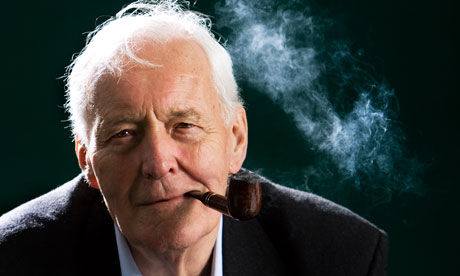
Remembering British MP Tony Benn, a Lifelong Critic of War and Capitalism

CLICK ON IMAGE

Tony-Benn-003

Tony Benn, the former British Cabinet minister, longtime Parliament member and antiwar activist, has died at the age of 88. He was the longest-serving member of Parliament in the history of Britain’s Labour Party, serving more than half a century. He left Parliament in 2001, saying he planned to “spend more time on politics.” In 2009 he appeared on Democracy Now! to talk about the war in Afghanistan and Britain’s fight for a nationalized healthcare system. “You’ve got to judge a country by whether its needs are met and not just by whether some people make a profit,” Benn said. “I’ve never met Mr. Dow Jones, and I’m sure he works very, very hard with his averages — we get them every hour — but I don’t think the happiness of a nation is decided by the share values in Wall Street.”
Transcript

This is a rush transcript. Copy may not be in its final form.

AMY GOODMAN: We wrap up now with this latest news that just came in hours ago, and this is the death of Tony Benn. Today we remember Tony Benn. The former British Cabinet minister, longtime member of Parliament, antiwar activist has died at the age of 88, the longest-serving member of Parliament in the history of Britain’s Labour Party, serving more than half a century. He left Parliament in 2001, saying he planned to “spend more time on politics.”

Sharif Abdel Kouddous and I interviewed Tony Benn in 2009, one day after he led a protest against the war in Afghanistan in London. At the rally, Benn and others read the names of British soldiers and Afghan civilians who died in the war. I began by asking Tony Benn about the protest and Afghanistan.

TONY BENN: Well, it was a solemn occasion, and the names were read.

But, you see, I think you have to understand the history of this. Britain invaded Afghanistan in 1839, captured Kabul, and was defeated the following year, and 15,000 British troops were killed in the retreat. Britain invaded Afghanistan in 1879. Britain was in Afghanistan in 1919. The Russians were in Afghanistan. I led a delegation to the Russian ambassador in London to protest that. The United States government, President Bush, the first one, funded Osama bin Laden to fight the Russians to get them out of Afghanistan.

And the situation we’re in now is very straightforward. The United States and NATO, 40 countries with 64,000 troops, in eight years have been unable to defeat the Taliban. And this is a Vietnam War for America and for the rest of the—well, for the people involved, soldiers and civilians on both sides, it’s an absolute tragedy.

SHARIF ABDEL KOUDDOUS: And Obama defended the war yesterday, calling it “a war of necessity.” Your response to that?

TONY BENN: Well, I think you just have to ask yourself the question: Is it a war on terror, or is it a war on Afghanistan? It’s a war on Afghanistan. And to call it a war on terror just entitles you to do what you like. And I don’t think it’s going to succeed.

The other thing I have in mind is very simple. A few years ago, London was bombed by terrorists. And how did it end—from northern Ireland. How did it end? It ended when we talked to Gerry Adams, who was the IRA leader in prison. Nelson Mandela was denounced as a terrorist by Mrs. Thatcher, and peace came in South Africa when the South African government talked to Mandela, and he came out and became president. I mean, history tells you, and Churchill put it very clearly: Jaw-jaw, talking, is better than war-war. And there will have to be negotiations with al-Qaeda and Taliban to secure the end of this conflict. Of that, I have no doubt whatsoever.

SHARIF ABDEL KOUDDOUS: Well, Tony Benn, we also wanted to talk to you about the issue of healthcare.

AMY GOODMAN: Tony Benn, you’re a former Cabinet minister, longest-serving MP in the history of the British Labour Party. Explain your system in Britain and what the battle looks like to you across the Atlantic in the United States.

TONY BENN: Well, I mean, for me—and I love, know America. I’m married to an American, known America for 70 years. It’s amazing. I think most people in Britain just regard it as being uncivilized for a great, rich country to ignore the health of 47 million people. And I don’t say that as an insult; we just don’t understand it.

It was set up in Britain in 1948, 61 years ago. And I have with me the statement made by the government at the time. “Your new National Health Service begins on the 5th of July. […] How do you get it?

“It will provide you with all medical, dental, and nursing care. Everyone—rich or poor, man, woman or child—can use it or any part of it. There are no charges, except for a few special items. There are no insurance qualifications. But it is not a ‘charity’. You are all paying for it, […] as taxpayers, and it will relieve your money worries in time of illness.”

And, I mean, my family has benefited enormously. I had an operation a few days ago in London. I’ve got a pacemaker put in under the Health Service. My wife died of cancer and for four years had the most brilliant healthcare.

And I suppose one way of looking at it is this: There’s a lot unemployment in the United States, as there is in Britain, and one way of creating jobs would be to build hospitals, recruit nurses, train doctors, and then meet the health needs of the country, as well.

I just don’t understand what’s being said. Well, I do understand, because I know the people who are saying it. But it’s absolutely no relation to the Health Service in Britain or the needs of the United States.

AMY GOODMAN: Finally, any thoughts on the comparison of the debate you’re seeing today with what happened before the British—the National Health Service was ushered in in Britain? Are you seeing an echo of it?

TONY BENN: Yes, in a way. I mean, some of the doctors were opposed to it, but they all came around. Some of the consultants said, “We don’t want to be civil servants.” But they’re not civil servants. You had a little bit of it.

But I’ll tell you what really changed it, and it takes you back to the 1930s. We had mass unemployment, as you did in the United States. And I was a pilot in the Royal Air Force in the war, and we were discussing on a troop ship coming home once how we would deal with the problems of unemployment. And one lad got up, and he said something I’ve never forgotten. He said, “In the 1930s we had mass unemployment, but we don’t have unemployment when we’re killing Germans.” He said, “If you can have full employment by killing Germans, why can’t you have full employment by building hospitals, building schools, recruiting teachers, recruiting nurses, recruiting doctors?” And that’s how we got it.

We took the view that a government had a responsibility to focus on the needs of a nation in peacetime in the way in which it does in wartime. And if that principle is followed, then all the ideological language can be set aside. You’ve got to judge a country by whether its needs are met, and not just by whether some people make a profit. I’ve never met Mr. Dow Jones, and I’m sure he works very, very hard with his averages—we get them every hour—but I don’t think the happiness of a nation is decided by the share values in Wall Street.

AMY GOODMAN: That’s Tony Benn appearing on Democracy Now! in 2009. He has died at the age of 88.

On anti-Semitism, BDS, Palestine and justice

essay by Antony Loewenstein in New Matilda is here:

As the BDS cam­paign starts to gain trac­tion, ac­cu­sa­tions of anti-semi­tism should be treated gravely – whether from pro-Pales­tine ad­vo­cates or Is­rael’s de­fend­ers, writes Antony Loewen­stein

The charges of racism were se­ri­ous. Uni­ver­sity ori­en­ta­tion weeks, re­ported Ru­pert Mur­doch’s news­pa­per, The Aus­tralian, in early March, “have been marred by a se­ries of al­leged anti-se­mitic in­ci­dents”.

So­cial­ist Al­ter­na­tive stood ac­cused, ac­cord­ing to the Aus­tralian Union of Jew­ish Stu­dents, of ex­press­ing hate­ful com­ments to­wards Jew­ish stu­dents, prais­ing Hamas and call­ing for “death to the Zion­ist en­tity” at the Aus­tralian Na­tional Uni­ver­sity and the Uni­ver­sity of New South Wales.

The re­li­a­bil­ity of the al­le­ga­tions of anti-semi­tism has not yet been as­sessed but, if they are found to be true, those re­spon­si­ble must be op­posed. A spokesper­son from So­cial­ist Al­ter­na­tive tells me that his or­gan­i­sa­tion cat­e­gor­i­cally de­nies all of the al­le­ga­tions.

Fed­eral Ed­u­ca­tion Min­is­ter Christo­pher Pyne, a man who never misses an op­por­tu­nity to fight a cul­ture war he can’t win, ac­cused back­ers of the boy­cott, di­vest­ment and sanc­tions (BDS) move­ment against Is­rael of mak­ing anti-semi­tism “a fash­ion­abil­ity among highly ig­no­rant sec­tions of the far Left”. He wanted uni­ver­si­ties to “step in and take a very firm line” against racism on cam­pus. “Free speech does not ex­tend to ugly threats and phys­i­cal ha­rass­ment,” he ar­gued.

It’s time to call this co-or­di­nated cam­paign of the local Zion­ist lobby and the Mur­doch press for what it is; a cheap­en­ing of real anti-semi­tism and a clear at­tempt to brand all crit­ics of Is­rael as Jew haters. It’s a tac­tic im­ported from Amer­ica and Eu­rope, ar­tic­u­lated from Is­raeli Prime Min­is­ter Ben­jamin Ne­tanyahu down, that aims to neuter op­po­nents of the Jew­ish state’s bru­tal, mil­i­tary oc­cu­pa­tion as de­luded and anti-se­mitic.

The rhetoric is in­creas­ing as BDS scores im­pres­sive wins glob­ally — count­less Eu­ro­pean firms are chang­ing their busi­ness prac­tices to­wards Is­rael in re­ject­ing the oc­cu­pa­tion — and has en­tered the main­stream as a le­git­i­mate tool to op­pose Is­raeli poli­cies.

Is­rael sup­port­ers have long be­lieved that bet­ter PR will solve its prob­lems, as if, for ex­am­ple, there’s any way to pos­i­tively spin dozens of Is­raeli teens an­nounc­ing their re­fusal to serve in the IDF due to its dele­te­ri­ous ef­fect on Is­raeli so­ci­ety and Pales­tin­ian lives.

It’s a small but deeply coura­geous step in a so­ci­ety that still idolises a human rights abus­ing army (Amnesty’s new re­port de­tails count­less ex­am­ples of the IDF killing Pales­tin­ian civil­ians in cold blood).

None of these pro­found shifts should es­cape the de­bate in Aus­tralian, where the Fed­eral Gov­ern­ment re­fuses to con­demn il­le­gal Is­raeli colonies in the West Bank.

The es­tab­lish­ment Zion­ist lobby has tried for decades, with a de­gree of suc­cess, to in­su­late the Jew­ish com­mu­nity from the re­al­i­ties of oc­cu­py­ing Pales­tine.

The ad­vent of the in­ter­net and so­cial media, along with a more crit­i­cal young pop­u­la­tion who won’t be eas­ily bul­lied into sup­port for Is­rael be­cause of the Holo­caust, are chang­ing the land­scape. Hence the need to use old, tired tac­tics. Par­rot­ing Ne­tanyahu’s fear-mon­ger­ing over Iran and Arabs is in­creas­ingly treated world­wide with the con­tempt it de­serves.

The old men who run the Jew­ish com­mu­nity may catch on one day that it isn’t enough to run an hack­neyed style en­e­mies list against op­po­nents; count­less jour­nal­ists and ed­i­tors will tell you of the bul­ly­ing calls, let­ters and emails em­ployed by the Zion­ist com­mu­nity against crit­i­cal cov­er­age. It only some­times now works.

It’s a fail­ing style even called out by The Aus­tralian’s Mid­dle East cor­re­spon­dent John Lyons in a re­cent, ro­bust de­fence of his stun­ning ABC TV 4 Cor­ners story on Pales­tine, ac­cus­ing dis­tant, self-ap­pointed Zion­ist lead­ers of being lit­tle more than blind de­fend­ers of Is­raeli gov­ern­ment pol­icy. Pun­dits take note: when­ever quot­ing such peo­ple re­mem­ber to whom they pledge par­tial al­le­giance and ask about their fund­ing sources.

Any form of racism must be com­pletely con­demned, whether it’s di­rected at Jews, Mus­lims, Chris­tians or other mi­nori­ties. But the way in which a state and com­mu­nity deals with racism is a more press­ing the ques­tion. After years of falsely ac­cus­ing crit­ics of Is­rael of anti-semi­tism — Syd­ney Uni­ver­sity’s Jake Lynch is the lat­est per­son to face the pre­dictable and costly wrath of an Is­raeli-gov­ern­ment en­dorsed legal case against his eth­i­cally jus­ti­fied back­ing of BDS — the or­gan­ised Zion­ist es­tab­lish­ment lacks cred­i­bil­ity in cry­ing about op­pos­ing racism, when it so fla­grantly en­cour­ages de­mon­i­sa­tion of Is­rael’s crit­ics along racial lines.

They have a morally com­pro­mised voice by being oc­cu­pa­tion back­ers them­selves. How dare they claim to cry over an al­leged rise in real anti-semi­tism (mostly on­line) while at the same time shed­ding croc­o­dile tears against the grow­ing BDS move­ment? Per­haps they should learn some hu­mil­ity and recog­nise what their beloved state has be­come known for glob­ally: re­press­ing Pales­tini­ans.

Po­lit­i­cally, the Ab­bott gov­ern­ment has pledged to re­move sec­tion 18C of the Racial Dis­crim­i­na­tion Act in an at­tempt, in their words, to in­crease free speech (a po­si­tion loudly backed by The Aus­tralian).

Fed­eral At­tor­ney George Bran­dis said on ABC TV’s Q&A this week, de­fend­ing his ad­min­is­tra­tion’s pro­posed changes that are op­posed by the Jew­ish com­mu­nity and many other eth­nic groups, that the cur­rent draft­ing in sec­tion 18C re­stricts the rights of all peo­ples to speak and be of­fen­sive. Now that there are signs that Bran­dis may be back-track­ing on a com­plete re­peal of the sec­tion, it’s re­ally only the Mur­doch press that bangs on about “free speech” while deny­ing the same rights to many of its crit­ics.

De­spite all this, I’ve ar­gued else­where, in op­po­si­tion to many on the Left who be­lieve the leg­is­la­tion should re­main un­changed, that al­though all speech has lim­its, a ro­bust democ­racy should legally tol­er­ate in­sults over race. But the vast bulk of “dis­cus­sion” over 18C has been at a desul­tory level.

Take the re­cent Aus­tralian Jew­ish News ar­ti­cle by Fer­gal Davis, a se­nior lec­turer in law at the Uni­ver­sity of NSW. He backed main­tain­ing the cur­rent 18C leg­is­la­tion and then wist­fully ar­gued that the Ab­bott gov­ern­ment could be the cham­pi­ons of human rights be­cause “we must con­vince Aus­tralians that human rights are not ‘left wing’; they are at the heart of the fair go.” Nice sen­ti­ments, but ut­terly re­moved from re­al­ity. Davis ig­nores the new gov­ern­ment’s shock­ing treat­ment of asy­lum seek­ers and re­fusal to se­ri­ously con­demn abuses at the UN by al­lies Sri Lanka, Is­rael and Egypt.

The real ques­tions for the Mur­doch press, Zion­ist es­tab­lish­ment, Ab­bott min­is­ters and other sup­posed de­fend­ers of open speech are as fol­lows: will you fol­low the path of many politi­cians in the US, both De­mo­c­rat and Re­pub­li­can, who are in­creas­ingly try­ing to crim­i­nalise civil­ian back­ing for BDS? How se­ri­ous is your com­mit­ment to free speech? How will­ing are you to preach tol­er­ance and ac­cep­tance while be­liev­ing that cer­tain is­sues, such as le­git­i­mate crit­i­cisms of Is­rael (de­fined by whom will al­ways be the ques­tion?) are be­yond the pale and anti-se­mitic?

Away from the huff­ing and puff­ing of self-de­scribed friends of Is­rael lies the real lim­its of in­su­lat­ing Is­rael from crit­i­cism. Try­ing to stop BDS, through the courts, laws, par­lia­ment or defam­a­tory at­tacks, will change noth­ing on the ground for Pales­tini­ans, and count­less peo­ple around the world now know it. Is­rael and its dwin­dling band of Zion­ist back­ers in Aus­tralia and world­wide are des­per­ately hang­ing onto 20th cen­tury tac­tics to fight mod­ern op­po­si­tion to a racially based state.

source

Blog at WordPress.com.

Up ↑