Search

band annie's Weblog

I have a parallel blog in French at http://anniebannie.net

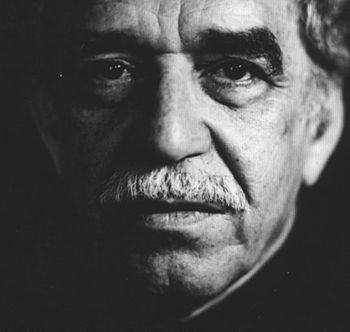
Gabriel Garcí­a Márquez

gab

“If I knew that today would be the last time I’d see you, I would hug you tight and pray the Lord be the keeper of your soul. If I knew that this would be the last time you pass through this door, I’d embrace you, kiss you, and call you back for one more. If I knew that this would be the last time I would hear your voice, I’d take hold of each word to be able to hear it over and over again. If I knew this is the last time I see you, I’d tell you I love you, and would not just assume foolishly you know it already.” 
 Gabriel Garcí­a Márquez


“Tell him yes. Even if you are dying of fear, even if you are sorry later, because whatever you do, you will be sorry all the rest of your life if you say no.” 
 Gabriel Garcí­a Márquez, Love in the Time of Cholera

On the Myth that is “Assad is here to stay”

WEDNESDAY, APRIL 16, 2014


Jim Muir recently wrote that “Bashar al Assad and his leadership are there to stay” and explained why. Hassan Nasrallah also declared triumphantly that the danger facing Assad’s regime in Syria has now passed, and Assad himself said that the war has reached a “turning point“. What most people forget as they get carried away by headlines like this is that the number of “turning points” we have had since the start of the revolution leave us all exactly where we started.

A little bit of perspective would not go amiss here. What kind of turning point is it for Assad when he had said exactly the same thing as he “toured” the Baba Amr district in Homs two years ago. That was supposed to be a big deal. And remember that three months into the conflict the popular regime slogan was “it’s over” and yet here we are three years later. The world lampooned President Bush for his “Mission Accomplished” slogan on an aircraft carrier and yet they still take Bashar al Assad seriously. With hindsight we know now that the Syrian revolution was always going to be a near impossible task. It should not have succeeded, and by all rights Assad’s fearsome intelligence services and the cast-iron support of his international allies should have stamped out the Syrian people from the very first days of protest. And they tried, very hard.

The fact is, and I agree with Muir on this, the war of attrition is the only reality we have in Syria. But we shouldn’t confuse the ebbs and flows of the war with turning points, the reality is far more fluid, and it shows us that the water has been creeping closer and closer to Assad’s power base with each successive new tide. He pushes back constantly, and sometimes he pushes back harder when an influx of arms and troops from his allies helps him, but where his soldiers patrol during the day, the rebels come back at night. The old adage, “the situation is critical but not serious” sums up everything about the “Assad is here to stay” mantra.

The Syria rebels continue to consolidate their positions in the north of the country, his stronghold in Western Aleppo came under serious attack only recently, and in spite of their war against the Assad regime the Syrian rebels have also managed to push back the much hated extremist group “The Islamic State of Iraq and Syria” ISIS. They spent the first months of the year fighting ISIS, then a few weeks ago they took over Kassab and the last stretch of Syrian territory under Assad’s control that borders with Turkey. They are constantly assassinating and killing his commanders. A few days ago they assassinated Major General Salim al Sheikh, and earlier they had killed yet another of his cousins, Hilal al Assad, as they pushed closer into his hinterland.

Assad’s posturing and the buttressing of his image abroad as “here to stay” is really all a matter of timing. As is the case with his Iranian tutors, Assad pays very close attention to the political calendar. Whether it was his forces shelling Hama on the eve of Ramadan in 2011 or today as he “campaigns” in Damascus by visiting Syrians displaced because of the fighting, what Assad is doing is trying to shape perceptions. He wants the world to believe he is there to stay. But if that were true he wouldn’t have to do that. He would simply just crush his opponents and take a walk down the streets of his capital, something that he cannot do. After all the strongest kid on the block does not need to keep telling people what he is. He simply does what he needs to do.

Then there is the matter of the help he’s been getting. It’s true that he has maintained his grip mainly with Hezbullah and Iran’s aid, but to say he is here to stay misses a crucial fact. He is there only as long as there are Iranian and Hezbullah fighters propping him up. When they leave, he leaves. Machiavelli once said that only an invader who has come to live in a country can ever maintain his grip on it. I don’t see the families of Shiite fighters from Hezbullah, Iraq or Iran bringing their families to live in Syria any time soon. In fact recent tensions over coverage by the Hezbullah propaganda channel (Al Manar) and the pro-Assad channel al Mayadeen have highlighted what could be cracks in the alliance with Assad. He is still under immense pressure, domestically and abroad, and he is haemorrhaging soldiers and equipment while his economy is losing billions of dollars a year. He also has to pay at some point for all the support that Iran and Russia are giving him. There comes a time when the tab gets too big for you to get another drink and you must pay the bartender.

What is really holding back real change in Syria hasn’t been Assad’s tenacity or the resolve of his allies, but the weakness and division in the opposition against him. This too has changed in leaps and bounds. People noticed the professionalism of the Syrian National Coalition in Geneva 2 in contrast to the demagoguery and hysteria of the Syrian regime’s entourage. The current head of the coalition, Mr Ahmad al Jarba, has been constantly engaged in quiet diplomacy since then and the Syrian opposition today is certainly not the same confused, disjointed opposition that blinked its eyes into the light three years ago. It is a completely different beast and it has formed, stormed and normed itself into something that is proving far more agile at playing the diplomatic game whilst also strengthening connections with units on the ground. Only recently Jarba toured the front in Lattakia – always a big publicity boost for the Syrian revolution and a matter of hysterics for regime apparatchiks. This is because such visits by heads of the opposition inside Syria, and in areas that Assad only recently controlled, are direct snubs to his power and authority and the Stalin-esque nature of his regime is pathologically incapable of accepting such new realities. So really the slogan “Assad is here to stay” should be read “Assad is here for now” and he’s only keeping the seat warm in Damascus

Who Goes to Jail? Matt Taibbi on American Injustice Gap from Wall Street to Main Street

CLICK ON IMAGE

220px-Matt_Taibbi

Forced confessions in Syrian state Tv

The Heinrich Böll foundation has published this article on the forced confessions in Syrian state Tv.

Forced confessions on TV: A Syrian Drama
by Haid Haid

“The Syrian state television began several years before the Revolution to broadcast “confessions” convicted criminal on television.

Most Syrians can still remember “The police in the service of the people,” a television program that turned out the performance of the police in the arrest of criminals and thieves. Once aired the week, the show gave the audience the Syrian public, ​​is merely not to go into difficulties since the Syrian security forces would come to them on the ropes anyway.

Not to mention how the multi-talented moderator, Alaa al-Din al-Ayoubi, would be drawn on national television. In general, the program began with the moderator a brief overview of the case provided, according to which, or the criminals went into the details of the committed act. The day ended with a short interview with the chief of police or prosecutor, to thank him for his work and the opportunity to offer him to advise viewers how they could protect themselves. The show served as a rich source for Syrians scorn: The mustache of the moderator and his demeanor showed clearly to his unfulfilled career aspirations as a police officer.

Spectators mocked the fact that criminals formally appealed to him as “sir,” as if he were really one. In addition, all confessions followed the same script: What did you spend your loot? For my own pleasure, sir. And did you have to steal? Not at all, sir. Why so you’ve done it? The Devil and bad friends, good sir. Do you regret it now? In any case, my dear sir, I am very sorry. What do you want to say to the audience? I would advise them to stay away from the path that I have chosen, my dear sir. It was so predictable that parts of the interview were quoted in everyday conversations, to provide laughter or amusement.”

http://translate.google.de/translate?sl=de&tl=en&js=y&prev=_t&hl=de&ie=UTF-8&u=https%3A%2F%2Fwww.boell.de%2Fde%2F2014%2F04%2F11%2Ferzwungene-gestaendnisse-fernsehen-ein-syrisches-drama&edit-text=


April 14th, 2014, 5:38 am from Syria Comment

fr

UK worker abuse red-flagged

 
New report highlights plight of domestic helpers in the United Kingdom, with critics comparing it to kefala system.Simon Hooper Last updated: 14 Apr 2014 13:06
London, United Kingdom – British politicians have backed calls for the government to reverse controversial changes to visa rules for thousands of migrant workers, which anti-slavery campaigners say have made the UK a “significant facilitator of forced labour”.In a report published earlier this month, members of a parliamentary committee examining government proposals to tackle what it has called “the scourge of modern slavery” warned that changes to the visa regime had “strengthened the hand of the slave master” and said: “The moral case for revisiting this issue is urgent and overwhelming.”Frank Field, the opposition Labour MP who chaired the committee, said that the government’s modern slavery bill needed to be redrafted to provide better protection for victims of trafficking and slavery.

“For parts of this bill, amendments will not be sufficient to make good, workable, effective legislation. Some parts need a rewrite,” he said. “This is ground-breaking legislation that will influence law and the fight against modern slavery around the globe. The world is watching: We have to get this right.”

The plight of domestic workers in the UK was highlighted earlier this month in a report by Human Rights Watch which included testimonies from dozens of women who said they were mistreated while working as servants in wealthy households.

About 15,000 domestic workers travel to the UK with their employers each year, with many accompanying Gulf Arab families. Some complained of having had their passports confiscated, of working long hours without breaks or days off for little or no pay, of being locked up and subjected to physical abuse and verbal threats.

One woman from the Philippines said: “I had a room with a bed. But at 5am I woke up and made tea for my madam. She told me not to go to my room again until midnight… I sat with them in restaurants, looking at them eating.”

Campaigners told Al Jazeera that tougher visa rules introduced in 2012 had left domestic workers with no escape route and tied the hands of those trying to help them.

‘Massive backward step’

Izza Leghtas, a researcher at Human Rights Watch, said the new “tied visa” rules, which prevent domestic workers from leaving their employer while in the UK, meant they remained trapped by the kefala sponsorship system common in the Gulf, which has been widely condemned as exploitative byhuman rights groups and labour organisations.

“This sends a message to employers who are used to the kefala system, that it is acceptable to treat their workers in the same way,” Leghtas told Al Jazeera. “I have spoken to many domestic workers who worked in the Gulf who would come to the UK with their employers and they would continue to treat them in the same way – and sometimes even worse.”

The UK’s right-wing government justified changes to the domestic worker visa system in 2012 as a means of curbing the number of unskilled migrants entering the country. But it is now steering legislation through parliament to impose tougher sentences on traffickers and create the post of an anti-slavery commissioner.

Kate Roberts, community advocate for Kalayaan, a charity campaigning on behalf of migrant domestic workers, said the revised visa system represented a “massive backward step” for those attempting to reach abused employees.

Under the old system, Kalayaan had been approached by about 300 people a year. But she said just 120 people who had entered the country under the tied visa scheme had come forward to report abuse in the past two years.

They had typically described worse working conditions than those employed under the previous visa scheme, with most saying they were paid less than £50 ($83) a week and were not allowed out unsupervised.

‘Hands are tied’

Roberts said the numbers reflect concerns that those who come forward, severing ties with their employer, would be treated as undocumented migrants and face deportation.

“It affects the support we can give them because we have to inform them that they’ve breached immigration laws,” Roberts told Al Jazeera. “Usually they have paid quite a lot of money to an agent or indebted themselves to get the first job and they can’t go home.

“They are not going to come to us to be referred as victims of trafficking and left in legal limbo for years. They will just disappear, presumably to be abused further. They have pulled everything out from under the feet of domestic workers, and in terms of supporting them our hands are tied now.”

Some campaigners are concerned that the government may not accept the committee’s recommendations, because of continuing fears about immigration.

“I’m hopeful that the government will take some recommendations on board, but I think that the recommendation on the domestic worker visa is unlikely to get government support in the current climate,” Claire Falconer, legal director of the campaign group Focus on Labour Exploitation (FLEX), told Al Jazeera. “The government is protecting the lifestyles of people who want to have domestic workers in their home and not protecting the workers themselves. It says it is trying to eradicate modern slavery but at the same time they are creating conditions that create vulnerability to slavery.”

Falconer said necessary steps include reversing changes to the visa system, implementing a monitoring system and ensuring employment rights are respected regardless of immigration status.

“Immigration law currently trumps employment law and human rights law. It is extremely difficult for workers to enforce their rights even if they are a victim of trafficking or forced labour because employers know workers will just be deported if they complain.”

‘Same side as Sudan’

Aidan McQuade, director of the charity Anti-Slavery International, urged government to focus on the welfare of victims. “We have always argued that a comprehensive victim protection system needs to be at the heart of the bill if it is to be effective in tackling slavery,” he said.

McQuade also called on the UK to address the issue of forced labour at a global level by adopting development policies in countries where poverty and a lack of opportunities force people abroad in search of work.

He pointed out that remittances sent home significantly outweigh the economic contribution of Western aid programmes.

“There is a disjoint between broad development and anti-poverty policy and safe migration and anti-slavery policy,” McQuade told Al Jazeera. “Those elements need to be harmonised in a way that increases the capacity of poor vulnerable workers to access safe decent work and contribute back to their home countries.”

The Home Office, the UK’s interior ministry, told Al Jazeera a range of options are available to domestic workers in need of protection after arriving in the UK. It said rules requiring applicants to have been employed for 12 months prior to being issued a visa and to have appropriate employment contracts act as further safeguards.

“Abuse of overseas domestic workers is unacceptable and we believe the best way to prevent it is by testing the validity of the working relationship before a visa is issued,” a spokesperson said anonymously, as is government policy in the UK.

But McQuade said the UK’s refusal – along with eight other countries including Sudan – to support an International Labour Organisationconvention pressing for better rights for domestic workers in 2011 had undermined its credibility in the fight against slavery, and thrown into question its commitment to tackling forced labour within its own borders.

“Whenever you are on the same side as Sudan on a human rights issue, you are probably on the wrong side,” said McQuade. “They have been deaf to this and I would be interested to see whether now, seeing the suffering of human beings being reported in the media, they will be deaf to that as well, and try and ignore the troubling fact that a significant facilitator of forced labour within the UK is British government policy.”

Follow Simon Hooper on Twitter: @simonbhooper

source


World is rocking and rolling

Is India on a Totalitarian Path? Arundhati Roy on Corporatism, Nationalism and World’s Largest Vote

A painful eye-opener on Democracy Now CLICK ON IMAGE
?????????????

AMY GOODMAN: Before we end, and before you come out with this next novel that we’ll ask you to read next time when you come to the United States, I was wondering if you could read from an earlier essay. It’s an excerpt that you read at the New School, when hundreds of people came out to see you here recently.
ARUNDHATI ROY: Well, it was—it was really the first—in a way, the first political essay I wrote, anyway, after The God of Small Things, and it was an essay called “The End of Imagination,” when the Indian government conducted a series of nuclear tests in 1998.
“In early May (before the bomb), I left home for three weeks. I thought I would return. I had every intention of returning. Of course, things haven’t worked out quite the way I planned.” Of course, by which I meant that India just wasn’t the same anymore.
“While I was away, I met a friend of mine whom I have always loved for, among other things, her ability to combine deep affection with a frankness that borders on savagery.
“’I’ve been thinking about you,’ she said, ‘about The God of Small Things — what’s in it, what’s over it, under it, around it, above it…’
“She fell silent for a while. I was uneasy and not at all sure that I wanted to hear the rest of what she had to say. She, however, was sure that she was going to say it. ‘In this last year,’ she said, ‘less than a year actually—you’ve had too much of everything—fame, money, prizes, adulation, criticism, condemnation, ridicule, love, hate, anger, envy, generosity—everything. In some ways it’s a perfect story. Perfectly baroque in its excess. The trouble is that it has, or can have, only one perfect ending.’ Her eyes were on me, bright with a slanting, probing brilliance. She knew that I knew what she was going to say. She was insane.
” She was going to say that nothing that happened to me in the future could ever match the buzz of this. That the whole of the rest of my life was going to be vaguely unsatisfying. And, therefore, the only perfect ending to the story would be death. My death.
“The thought had occurred to me too. Of course it had. The fact that all this, this global dazzle—these lights in my eyes, the applause, the flowers, the photographers, the journalists feigning a deep interest in my life (yet struggling to get a single fact straight), the men in suits fawning over me, the shiny hotel bathrooms with endless towels—none of it was likely to happen again. Would I miss it? Had I grown to need it? Was I a fame-junkie? Would I have withdrawal symptoms?
“I told my friend there was no such thing as a perfect story. I said in any case hers was an external view of things, this assumption that the trajectory of a person’s happiness, or let’s say fulfillment, had peaked (and now must trough) because she had accidentally stumbled upon ‘success.’ It was premised on the unimaginative belief that wealth and fame were the mandatory stuff of everybody’s dreams.
“You’ve lived too long in New York, I told her. There are other worlds. Other kinds of dreams. Dreams in which failure is feasible. Honorable. And sometimes even worth striving for. Worlds in which recognition is not the only barometer of brilliance or human worth. There are plenty of warriors that I know and love, people far more valuable than myself, who go to war each day, knowing in advance that they will fail. True, they are less ‘successful’ in the most vulgar sense of the word, but by no means less fulfilled.
“The only dream worth having, I told her, is to dream that you will live while you’re alive and die only when you’re dead.
“’Which means exactly what?’
“I tried to explain, but didn’t do a very good job of it. Sometimes I need to write to think. So I wrote it down for her on a paper napkin. And this is what I wrote: To love. To be loved. To never forget your own insignificance. To never get used to the unspeakable violence and the vulgar disparity of life around you. To seek joy in the saddest places. To pursue beauty to its lair. To never simplify what is complicated or complicate what is simple. To respect strength, never power. Above all, to watch. To try and understand. To never look away. And never, never to forget.”

MEKOROT: AN APARTHEID ADVENTURE

Rémi GAILLARD vs POLICE

Blog at WordPress.com.

Up ↑