Search

band annie's Weblog

I have a parallel blog in French at http://anniebannie.net

A unique insight into the world of Israeli arms dealers selling weapons and experience around the world.

Israel has been one of the world’s largest arms exporters and has spent millions of dollars on developing state-of-the-art weapons.Armies and police around the world are interested in the latest Israeli weapons and their military tactics, which have been refined by fighting in the occupied territories.

With unique access, Witness follows private Israeli arms dealers in their day-to-day work; making deals, attending arms fairs, shipping weapons, and inspecting armed forces overseas.

This film reveals how the Israeli arms industry is making vast profits worldwide, and partly thanks to their activities in the occupied territories.
By Yotam Feldman

“The Lab” is a cinematic investigation into the lure of Israeli weapons in the international arms trade. Why are countries all over the world lining up to buy Israeli arms? And how did such a small country become one of the biggest military exporters in the world? Israeli salesmen and executives in huge arms corporations seem eager to promote their products and pride themselves on their booming business. Profits have never been better — sales are doubling every year, and the potential seems unlimited.

But the product they are selling is unique. Rather than rifles, rockets or bombs, the Israeli companies sell their experience. The long-running conflict with the Palestinians has created a unique and unrivalled laboratory for testing technologies and ideas relating to “asymmetric warfare” — a conflict between a state and civil or irregular resistance. In this manner the Israeli conflict with the Palestinians may be seen as a national asset — rather than a burden. 

Following the 9/11 attacks, the Afghanistan war and the second Iraq war, countries all over the world have become increasingly interested in the way the Israeli army controls civilian populations, how it fights in urban areas, and how it deals with terror and guerrilla tactics.

Moreover, Israel had become a leading exporter of theory for this “asymmetric warfare”. Israel has created a science out of targeted killings and of close combat fighting. In fact, Israel’s produced some of the world’s leading advisors and lecturers specialising in armed combat. 

Despite the general openness of salesmen and executives within the arms corporations, an unknown truth seems to underlie the public facade. Certain questions are treated with discretion and suspicion, and instances where cameras dive too far provoke immediate actions, limiting the filmmakers’ access. But what is the big secret?

Two private businessmen, Amos Golan and Leo Glaser, allowed us to accompany them in their dealings. The first is a producer of a gun model specialised for urban fighting, widely sold to European and Latin American countries. The second is an advisor and training expert, specialised in asymmetric fighting against drug traffickers in Brazilian favelas.

As we accompanied them in their day-to-day work, less obvious truths were exposed. 

While making the film, I witnessed the relationship between a network of military generals, politicians and private business; the use of current military operations as a promotional device for private business; the brutal employment of the Israeli experience, and the blurred lines between what is legitimate and forbidden in this line of business.

The agents I spoke to were honest about their dealings, their personal understandings of what’s good versus bad, and why they take pride in the business of global weapons proliferation. 

The effects of Israeli theory and technology on other countries can hardly be overestimated.

Forces choosing to employ Israeli-cultivated military techniques ultimately begin to alter their political and social circumstances. Therefore, countries all over the world are increasingly “Palestinizing” (or “Israelizing”) their conditions. Both sides — seller and buyer — become partners in the development of a form of future war between the state and civil resistance groups.

see video here


The Lab can be seen from Wednesday, May 7 at the following times GMT: Wednesday: 2000; Thursday: 1200; Friday: 0100; Saturday: 0600.

Click here  for more  Witness  films.

elec

Remembering the Nakba: Israeli group puts 1948 Palestine back on the map

Zochrot aims to educate Israeli Jews – through tours and a new phone app – about a history obscured by enmity and denial

iNakba

By Ian Black from TheGuardian.com

In a run-down office in the busy centre of Tel Aviv, a group of Israelis are finalising preparations for this year’s independence day holiday. But their conversation – switching between Arabic and Hebrew – centres not on celebrating the historic realisation of the Zionist dream in May 1948, but on the other side of the coin: the flight, expulsion and dispossession that Palestinians call their – the .

Maps, leaflets and posters explain the work of Zochrot – Hebrew for “Remembering”. The organisation’s mission is to educate Israeli Jews about a history that has been obscured by enmity, propaganda and denial for much of the last 66 years.

Next week, Zochrot, whose activists include Jews and Palestinians, will connect the bitterly contested past with the hi-tech present. Its iNakba phone app will allow users to locate any Arab village that was abandoned during the 1948 war on an interactive map, learn about its history (including, in many cases, the Jewish presence that replaced it), and add photos, comments and data.

It is all part of a highly political and inevitably controversial effort to undo the decades-long erasure of landscape and memory – and, so the hope goes, to build a better future for the two peoples who share a divided land.

“There is an app for everything these days, and this one will show all the places that have been wiped off the map,” explains Raneen Jeries, Zochrot’s media director. “It means that Palestinians in Ein Hilweh camp in Lebanon, say, can follow what happened to the village in that their family came from – and they will get a notification every time there’s an update. Its amazing.”

In a conflict famous for its irreconcilable national narratives, the basic facts are not disputed, though the figures are. Between November 1947, when the UN voted to partition British-ruled into separate Arab and Jewish states, and mid-1949, when  emerged victorious against its enemies, 400-500 Arab villages and towns were depopulated and destroyed or occupied and renamed. Most of them were left in ruins.

Understanding has deepened since the late 1980s, when Israeli historians used newly opened state archives to revisit that fateful period. Key elements of this new history contradicted the old, official version and partially confirmed what Palestinians had always claimed – that many were expelled by Israeli forces rather than fled at the urging of Arab leaders.

Fierce debate still rages over whether this was done on an ad hoc basis by local military commanders or according to a masterplan for . The result either way was disastrous.

palestine-before-after-1948-mapZochrot’s focus on the hyper-sensitive question of the 750,000 Palestinians who became refugees has earned it the hostility of the vast majority of Israeli Jews who flatly reject any Palestinian right of return. Allowing these refugees – now, with their descendants, numbering seven million people – to return to , or Acre, the argument goes, would destroy the Jewish majority, the raison d’etre of the Zionist project. (Israelis often also suggest an equivalence with the hundreds of thousands of Jewish refugees who lost homes and property after 1948 in Arab countries such as Iraq and Morocco – although their departure was encouraged and facilitated by the young state in the 1950s.)

“There are a lot of Israeli organisations that deal with the occupation of 1967, but Zochrot is the only one that is dealing with 1948,” said Liat Rosenberg, the NGO’s director. “It’s true that our influence is more or less negligible but nowadays there is no Israeli who does not at least know the word Nakba. It’s entered the Hebrew language, and that’s progress.”

Rosenberg and colleagues hold courses and prepare learning resources for teachers, skirting around attempts to outlaw any kind of Nakba commemoration. But the heart of Zochrot’s work is regular guided tours that are designed, like the gimmicky app, to put Palestine back on the map and to prepare the ground for the refugees’ return.

On a recent Saturday morning, a couple of dozen Jews and Arabs met at a petrol station on the southern outskirts of Jerusalem and followed a dirt track to al-Walaja, a village of 2,000 inhabitants that was attacked and depopulated in 1948. Zochrot’s Omar al-Ghubari pointed out the concrete foundations – all that remains – of a school and marked the spot with a metal sign in Arabic, Hebrew and English, before posing for photographs.

Among those following him was Shireen al-Araj, whose father was born in al-Walaja and fled to Beit Jallah across what until 1967 was the armistice line with Jordan. “I have never given up the idea of going back to al-Walaja,” she said. Araj is campaigning against the extension of the West Bank separation wall, part of what she and many Palestinians call a continuing Nakba.

Advertisment:

Another participant was Tarik Ramahi, an American surgeon raised in Saudi Arabia by Palestinian refugee parents. Marina, a Jewish social worker, came with her boyfriend Tomer, an IT student. Wandering among the ruins, these unconventional daytrippers attracted some curious glances from Israelis picnicking on the terraces or bathing in the village spring – now named for a Jewish teenager murdered by Palestinians in the 1990s. Claire Oren, a teacher, had a heated argument with two off-duty soldiers who were unaware of al-Walaja’s past – or even of the extent of Israel’s continuing control of the West Bank.

Nearby Ein Karem – Zochrot’s most popular tour – is a different story. Abandoned by the Palestinians in July 1948 (it is near Deir Yassin, the scene of the period’s most notorious ), it boasts churches, a mosque and fine stone houses clustered around a valley that is choked with wild flowers in the spring. Its first post-war residents were poor Moroccan Jewish immigrants, but it was intensively gentrified in the 1970s and is now one of west Jerusalem’s most desirable neighbourhoods.

ain-karem

In 1967, Shlomo Abulafia, now a retired agronomist, moved into a two-room hovel that he and his wife, Meira, have transformed beyond recognition into a gracious Arab-style home set in a charming garden. Relatives of the original owners once visited from Jordan. Like other Israeli Jews who yearn for coexistence with the Palestinians, Abulafia believes it is vital to understand how the other side feels. He worries desperately about the future of his fractured homeland and about his children and grandchildren.

“The Nakba is history for us but a catastrophe for them,” he says. “What have we got to lose from recognising the Palestinians’ suffering? The two sides are moving further and further away from each other. People live in fear. There is a lot of denial here.”

Many other Arab villages disappeared without trace under kibbutz fields and orchards, city suburbs or forests planted by the Jewish National Fund. Arab Isdud became Israeli Ashdod. Saffuriya in Galilee is now Zippori, the town’s Hebrew name before the Arab conquest in the seventh century.

Zochrot’s bilingual guide book identifies traces of Arab Palestine all over the country – fragments of stone wall, clumps of prickly pears that served as fences, or the neglected tombs of Muslim holy men. The faculty club of Tel Aviv University used to be the finest house in Sheikh Muwannis, once on the northern edge of the expanding Jewish city. Nothing else is left. Manshiyeh, a suburb of Jaffa, lies beneath the seaside Charles Clore promenade.

Palestinians have long mourned their lost land, eulogising it – and in recent years documenting it – with obsessive care. Politically, the right of return remains a totemic demand even if PLO leaders have often said privately that they do not expect it to be implemented – except for symbolic numbers – if an independent Palestinian state is created alongside Israel and Jewish uprooted from its territory. , the Palestinian president, provoked uproar in 2012 when he said he would not expect to be able to return to his home town of Safed.

Older Israeli Jews like Meron Benvenisti, raised in British-ruled Palestine during the 1930s, have written nostalgically about the forgotten landscapes of their childhood.

“I also identify with the images of the destroyed villages,” said Danny Rubinstein, a Jerusalem-born author and journalist.

“I do understand the Palestinians’ longing and I empathise with it. But I think that Zochrot is a mistake. The Palestinians know, or their leadership knows, that they have to forget Ramle and Lod and Jaffa. Abbas says he can’t go back to Safed. They have to give up the return as a national goal. If I was a Palestinian politician I would say that you don’t have to remember. You have to forget.”

Hopes for a negotiated two-state solution to the conflict between Israelis and Palestinians are fading after the collapse of the latest US-brokered effort, and mutual empathy and understanding are in short supply. But Claire Oren, resting in a shady grove in what was once the centre of al-Walaja, thinks more knowledge might help. “Even if only one Israeli becomes a bit more aware of the Nakba and the Palestinian refugees, it is important,” she reflected. “The more Israelis who understand, the more likely we are to be able to prevent another catastrophe in this land.”

Sabbah Report § http://sabbah.biz/mt/?p=24126 § Sign up for our FREE newsletter §

Meet the Four Americans who defected to North Korea in the 1960s

51347198-cropped

Earlier this month, a 24-year-old American named Matthew Todd Miller tore up his tourist visa while attempting to enter North Korea and shouted that that he had gone to the country “after choosing it as a shelter” and “would seek asylum,” according to the country’s state-run news agency, KCNA. He was subsequently arrested by a “relevant organ” of the country’s security services, which KCNA reports is investigating the case.

For now, very little is known about the man. According to the New York Times, Miller traveled to North Korea alone and, so far, no family members have contacted the travel agency that handled his trip. But if it turns out that he is a defector, he’ll join a colorful cast of expatriate Americans who have sought Pyongyang’s cold embrace.

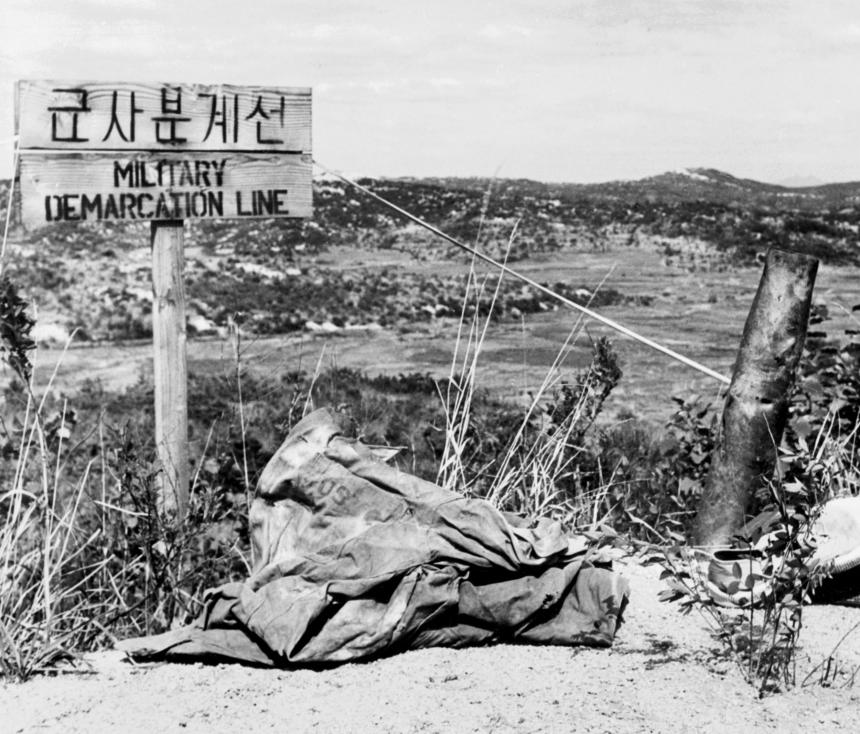
Between 1962 and 1965, four American soldiers defected to North Korea in an attempt to escape their military responsibilities. James Dresnok, 21, Charles Jenkins, 24, Larry Abshier, 19, and Jerry Wayne Parrish, 19, did not know one another before they fled north, but once they arrived in the country, the authorities brought them together, forcing them to live in a house where they were under constant surveillance and subjected to “re-education,” which involved memorizing the political philosophy and writings of Kim Il-sung, then the country’s paramount leader, as well as studying the Korean language.

Eventually, they were forced to play Western villains in North Korean propaganda films — notably the late 1970s picture Unsung Heroes, which is about a North Korean spy working in Seoul during the Korean War. At various points, North Korea assigned the men wives, many of whom turned out to be foreigners kidnapped as part of a DPRK intelligence campaign to recruit spies.

A 2006 documentary, Crossing the Line, revealed the stark reality of the men’s lives under North Korean rule. Produced with the permission of the state, the film largely profiles Dresnok, who still lives in Pyongang with his family — and seems to enjoy it. “I don’t have any intentions of leaving,” Dresnok tells the filmmakers, “I don’t give a shit if you put a billion damn dollars of gold on the table.”

Dresnok has two sons from his late wife, a Romanian woman believed to have been kidnapped by DPRK agents, and one child from his second wife, who is reportedly the daughter of a North Korean woman and a Togolese diplomat. Dresnok paints a complicated but sentimental picture of contemporary North Korea. Here’s a preview from the documentary:


But Jenkins conjures a harsher version of life in North Korea — and a crueler portrait of Dresnok. Jenkins managed to leave North Korea in 2003 thanks to his wife, a Japanese abductee named Hitomi Soga who was curiously repatriated to Japan in 2002. Jenkins and their two daughters were allowed to follow her out of the country  18 months later. The couple’s story is laid out in Jenkins’s 2008 memoir, The Reluctant Communist. (Foreign Policy reviewed an earlier, Korean-language version of the book in 2006). In it, he writes of his defection: “I did not understand that the country I was seeking temporary refuge in was literally a giant, demented prison; once someone goes there, they almost never get out.”

Jenkins later appeared on CBS’s 60 Minutes and challenged Dresnok’s cheery representation of North Korea. He said that when his North Korean minder wanted to punish him, he tied Jenkins’ hands behind his back and let Dresnok beat him, turning one American against another. “Dresnok is a man who likes to hurt someone,” he said on television. “He feels good after he does it.”

Here’s the segment:
 see here

Today, little is known about Abshier and Parrish, who both dies from health complications years ago, and never had the chance to tell their own stories.

Whether Miller has in fact joined the ranks of American defectors remains unknown, but he is not the sole American detained in North Korea. Kenneth Bae, a Korean-American tour operator, is currently in North Korean custody after being arrested in November 2012 and sentenced to 15 years of hard labor. In March, North Korea freed an Australian missionary it had detained for allegedly trying to spread Christianity in the isolated nation.

AFP/Getty Images

Dole’s Corporate Greed with Fredrik Gertten of Big Boys Gone Bananas

Miko Peled

Yarmouk refugees tell of brutal treatment at hands of Syrians


Palestinian families who have managed to escape the Syrian camp are now arriving in Lebanon with terrible stories of their suffering


Martin Chulov in Beirut

The Observer, Sunday 27 April 2014

 Volunteers distribute free meals to residents at the Palestinian refugee camp of Yarmouk. Photograph: Reuters

Volunteers distribute free meals to residents at the Palestinian refugee camp of Yarmouk. Photograph: Reuters

Lugging a plastic bag carrying the clothes and food scraps she could salvage, Umm Samir set out from her ruined home and crawled through the pre-dawn gloom on her second journey into exile in 68 years.

In the difficult days since, she has made her way from the YarmoukPalestinian refugee camp in Damascus to Beirut, where she now confronts the bitter reality of again becoming a refugee, the lifelong dream of returning to her birthplace now further away than ever.

“I always thought that the only time I would move from Yarmouk would be back to Palestine,” she said from a tiny, airless basement in the Sabra-Shatila Palestinian camp in the heart of the Lebanese capital, where the family sought sanctuary three days ago. “Now I find myself here.”

Across the room, Umm Samir’s daughter, son-in-law, and five of their 10 children, were squatting silently on the floor. The children’s father, Abu Sameer, had a hunched and defeated air, while their mother, Umm Sameer, shifted quickly between anger and sorrow.

“I didn’t expect this at all,” said Umm Sameer of the unrelenting siege of the Yarmouk camp that had seen many of those who remain starved to the point of death. “I didn’t think the [Syrian] regime would do this to our people. The veil has dropped. We can see clearly how we were used.”

Over the past fortnight, the siege of Yarmouk, the camp held up by Syriaover four decades as a symbol of its commitment to the Palestinian cause, has reached a nadir. Many of those who remain have been unable to eat, or leave. Others, like Abu Sameer and his family, decided that a suicide run for the camp’s closely guarded borders was a better bet than fossicking for scraps in abandoned buildings and pillaged orchards.

“We made it in small groups, but five of our children were left behind,” said Abu Sameer. “It was just too dangerous to bring them. “We were going to die,” he said of his decision to leave. “We had no choice.”

The desperate plight of those who left behind was showcased last week through pleas by the United Nations Relief Works Agency (UNRWA) and stories in the Observer. Both revealed the scale of an unfolding catastrophe starkly at odds with a recent UN security council resolution demanding that humanitarian aid be delivered to all those caught up in Syria’s unrelenting war.

Last week, after a demand from UN secretary general Ban Ki-moon, things changed in Yarmouk, with food parcels reaching some of those who needed them for the first time in 15 days.

The UNRWA reported that Syrian officials had allowed close to 700 parcels, each capable of feeding between five and eight people, into the camp. The delivery eases an immediate crisis, but fails to address a profound stockpile deficit caused by months of delayed deliveries earlier in the year.

And the new supplies have not reached all those who need them. One Yarmouk resident, who asked not to be named, was almost too exhausted to make himself heard down the phone line on Friday. “It is a nightmare,” he said. “For four months we have been eating rice and grass, radishes and greens.”

Asked why he had not tried to leave, he said: “If we are caught, it is straight to the Palestine Branch (an intelligence division). Anyone who goes in there does not come out. If they do manage to, they have been reborn. So many people have been disappeared.”

Many of the Yarmouk exiles say the name of their former home will soon be etched into infamy in the same way that Sabra-Shatila was 32 years ago, when more than 1,000 Palestinians were massacred by Lebanese Christian militias who at the time were allied to the occupying Israeli army.

The ghosts of 1982 remain deeply synonymous with Palestinian suffering. But some of the new arrivals say the scale of the current horrors in Yarmouk and other Syrian camps may soon eclipse even such a painful episode.

Iran and Syria “pretend to be against Israel”, but that is just a ploy, according to Umm Ibrahim, the matriarch of a another Yarmouk family which had arrived in Sabra-Shatila in recent weeks. “The Golan Heights have been silent for how long?” she asked rhetorically. “The Palestinian resistance used to come through Lebanon to fight Israel. They weren’t allowed through Syrian land. Not even a bird was allowed to fly across the border fence.”

Resentment seethed among both families of new refugees. “The Arabs are bigger enemies than the Israelis,” said Umm Sameer. “They don’t behave like this to their worst enemies.”

Unwanted in Syria, those fleeing Yarmouk are hardly made to feel at home in Lebanon either. New arrivals are given a one-week visa, which requires them to report to authorities or face a $200 fine, which few among them can afford. While UNRWA and other aid organisations offer some food assistance and living space, conditions are far worse here than in pre-war Syria.

“They didn’t care about us at all,” said Umm Samir, who was too young to remember her first journey to exile in 1948 from the Palestinian town of Safed, in what is now Israel, and too anguished to want to recall her second journey last week. “I thought that if I ever leave my home again before I die, it would be to go back to Palestine.”

Outside Sabra-Shatila, in the Palestinian embassy nearby, senior official Qassem Abbas, who is responsible for Yarmouk arrivals, tried to play down the scale of the crisis. “Things have actually improved in recent weeks,” he said. “They haven’t worsened. The Palestinian leadership has decided to take a position of neutrality. This brought us closer to the Syrian regime, despite everything that has happened. It was a difficult decision, but it made us less biased.

“This is a chess game being played by all those in the region,” he said of the Syrian war. “But there is only one real mastermind, America. It serves their interests so they can stay in the region.”

Back in the camp, the new arrivals were having none of that. “Our so-called leaders have their own reasons for their closeness to the Syrian regime,” said Umm Sameer. “And it has nothing to do with us. “Shame on them and their silence.”

source


Zionist lobby helps growth BDS profile

Antony Loewenstein


Thank you Zionist lobby for helping grow BDS profile

Posted: 26 Apr 2014 09:51 PM PDT

Interesting article in yesterday’s Australian explaining how typically ham-fisted, bullying and clueless media attacks by the Israel lobby is helping to draw public attention to the rise of boycotts against Israel. No kidding:

A Jewish association has branded the racial discrimination case against University of Sydney’s Jake Lynch counter-productive, saying it has only raised the profile of his support for the Boycott, Divestment, Sanctions campaign against Israel.

Since the Israeli legal activist group Shurat HaDin launched the lawsuit in the Federal Court, Professor Lynch’s stand has become a cause celebre in sections of the academic community, claiming the right to freedom of speech and academic expression is under attack.

In the Federal Court in Sydney on Thursday, judge Alan Robertson rejected allegations Professor Lynch was a leader of the global boycott campaign in Australia.

Two new groups have been established to support him and the global BDS movement, including one among university staff. One of the organisers of the Sydney Staff for BDS group, lecturer Nick Riemer, said he and other staff decided to create it “because of what’s happened to Jake’’.

The groups have helped raise about $20,000 towards Professor Lynch’s legal defence, he has been invited to address BDS public meetings around the country, and one recent BDS event in Sydney in his support drew about 200 people.

One of the pro-Lynch speakers at the Sydney fundraiser, Jewish Israeli academic Marcelo Svirsky who is a lecturer at the University of Wollongong, says he will walk from Sydney to Canberra later this year to raise awareness of the BDS campaign.

Dr Svirsky said he would stop in towns along the way to deliver public addresses and then lodge a submission in parliament calling on the government to back BDS.

Executive Council of Australian Jewry executive director Peter Wertheim said Shurat HaDin’s legal action against Professor Lynch was “the wrong way to oppose BDS”.

“Regardless of the outcome, the Shurat HaDin court case would give a very marginal BDS campaign in Australia undeserved exposure and a shot in the arm,” Mr Wertheim said. “Our organisation’s strategy has been to expose the aims and methods of the BDS campaign in the marketplace of ideas.”

Shurat HaDin launched the lawsuit against Professor Lynch after he declined to support an application from Israeli academic Dan Avnon for a visiting fellowship at the university.

It claims his action and BDS generally breach the Racial Discrimination Act and the Human Rights Act because they discriminate against a class of people — Jewish Israelis.

Dr Svirsky, a political scientist who grew up in Argentina but moved to Israel after being conscripted during the Falklands War, said “there is increasing support for Lynch because of this particular case in court”.

“For me the BDS is about not just ending the Israeli occupation of the West Bank, but also the rules of the apartheid in Israel,” he said.

Cliven Bundy Blames His Racism On Martin Luther King Jr.

Blog at WordPress.com.

Up ↑