Search

band annie's Weblog

I have a parallel blog in French at http://anniebannie.net

Sayed Kashua: why I have to leave Israel

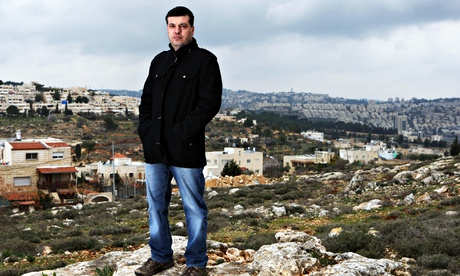
 Sayed Kashua in Jerusalem. ‘I wanted to tell the Israelis a story, the Palestinian story. Surely when they read it they will understand.’ Photograph: Ziv Koren/Polaris /eyevine

Sayed Kashua in Jerusalem. ‘I wanted to tell the Israelis a story, the Palestinian story. Surely when they read it they will understand.’ Photograph: Ziv Koren/Polaris /eyevine


The Arab-Israeli author moved to Jerusalem as a child and has devoted his life to telling Israelis the Palestinian story. But last week he decided to emigrate with his family to the US


Quite soon I am going away from here. In a few days we’ll be leaving Jerusalem, leaving the country. Yesterday we bought little suitcases for the kids. No need to take a lot of clothes, we’ll leave our winter clothes; in any event they won’t be warm enough given the cold of southern Illinois, USA. We’ll just need a few things until we get settled. Perhaps the kids should take some books, two or three in Arabic, and another few in Hebrew, so they don’t forget the languages. But I’m already not sure what I want my kids to remember of this place, so beloved and so cursed.

The original plan was to leave in a month for a year’s sabbatical. But last week I understood that I can’t stay here any longer, and I asked the travel agent to get us out of here as fast as possible, “and please make them one-way tickets”. In a few days we’ll land in Chicago, and I don’t even know where we’ll be for the first month, but we’ll figure it out.

I have three children, a daughter who is already 14 years old, and two sons, aged nine and three. We live in West Jerusalem. We are the only Arab family living in our neighbourhood, to which we moved six years ago. “You can choose two toys,” we said this week in Hebrew to our little boy who stood in his room gazing at boxes of his toys, and he started to cry despite our promises that we will buy him anything he wants when we get there.

I also have to decide what to take. I can choose only two books, I said to myself standing in front of shelves of books in my study. Other than a book of poetry by Mahmoud Darwish and another story collection by Jubran Khalil, all of my books are in Hebrew. Since the age of 14 I have barely read a book in Arabic.

When I was 14 I saw a library for the first time. Twenty-five years ago my maths teacher in the village of Tira, where I was born, came to my parents’ home and told them that next year the Jews would be opening a school for gifted students in Jerusalem. He said to my father that he thought I should apply. “It will be better for him there,” I remember the teacher telling my parents. I got in, and when I was the age of my daughter I left my home to go to a Jewish boarding school in Jerusalem. It was so difficult, almost cruel. I cried when my father hugged me and left me at the entrance of the grand new school, nothing like I had ever seen in Tira.

I once wrote that the first week in Jerusalem was the hardest week of my life. I was different, other; my clothes were different, as was my language. All of the classes were in Hebrew – science, bible, literature. I sat there not understanding one word. When I tried to speak everyone would laugh at me. I so much wanted to run back home, to my family, to the village and friends, to the Arabic language. I cried on the phone to my father that he should come and get me, and he said that only the beginnings are hard, that in a few months I would speak Hebrew better than they do.

I remember the first week, our literature teacher asked us to read The Catcher in the Rye by Salinger. It was the first novel I ever read. It took me several weeks to read it, and when I finished I understood two things that changed my life. The first was that I could read a book in Hebrew, and the second was the deep understanding that I loved books.

Very quickly my Hebrew became nearly perfect. The boarding school library only had books in Hebrew, so I began to read Israeli authors. I read Agnon, Meir Shalev, Amos Oz and I started to read about Zionism, about Judaism and the building of the homeland.

During these years I also began to understand my own story, and without planning to do so I began to write about Arabs who live in an Israeli boarding school, in the western city, in a Jewish country. I began to write, believing that all I had to do to change things would be to write the other side, to tell the stories that I heard from my grandmother. To write how my grandfather was killed in the battle over Tira in 1948, how my grandmother lost all of our land, how she raised my father while she supported them as a fruit picker paid by the Jews.

I wanted to tell, in Hebrew, about my father who sat in jail for long years, with no trial, for his political ideas. I wanted to tell the Israelis a story, the Palestinian story. Surely when they read it they will understand, when they read it they will change, all I have to do is write and the Occupation will end. I just have to be a good writer and I will free my people from the ghettos they live in, tell good stories in Hebrew and I will be safe, another book, another movie, another newspaper column and another script for television and my children will have a better future. Thanks to my stories one day we will turn into equal citizens, almost like the Jews.

Twenty-five years of writing in Hebrew, and nothing has changed. Twenty-five years clutching at the hope, believing it is not possible that people can be so blind. Twenty-five years during which I had few reasons to be optimistic but continued to believe that one day this place in which both Jews and Arabs live together would be the one story where the story of the other is not denied. That one day the Israelis would stop denying the Nakba, the Occupation, and the suffering of the Palestinian people. That one day the Palestinians would be willing to forgive and together we would build a place that was worth living in.

Twenty-five years that I am writing and knowing bitter criticism from both sides, but last week I gave up. Last week something inside of me broke. When Jewish youth parade through the city shouting “Death to the Arabs,” and attack Arabs only because they are Arabs, I understood that I had lost my little war.

I listened to the politicians and the media and I know that they are differentiating between blood and blood, between peoples. Those who have become the powers that be say expressly what most Israelis think, “We are a better people than the Arabs.” On panels that I participated in, it was said that Jews are a superior people, more entitled to life. I despair to know that an absolute majority in the country does not recognise the rights of an Arab to live.

After my last columns some readers beseeched that I be exiled to Gaza, threatened to break my legs, to kidnap my children. I live in Jerusalem, and I have some wonderful Jewish neighbours, and friends, but I still cannot take my children to day camps or to parks with their Jewish friends. My daughter protested furiously and said no one would know she is an Arab because of her perfect Hebrew but I would not listen. She shut herself in her room and wept.

Now I am standing in front of my bookshelves, Salinger in hand, the one I read 14 years ago. I don’t want to take any books, I decided, I have to concentrate on my new language. I know how hard it is, almost impossible, but I must find another language to write in, my children will have to find another language to live in.

“Don’t come in,” my daughter shouted angrily when I knocked on her door. I went in anyway. I sat down next to her on the bed and despite her back turned to me I knew she was listening. You hear, I said, before I repeated to her exactly the same sentence my father said to me 25 years ago. “Remember, whatever you do in life, for them you will always, but always, be an Arab. Do you understand?”

“I understand,” my daughter said, hugging me tightly. “Dad, I knew that a long time ago.”

“Quite soon we’ll be leaving here,” as I messed up her hair, just as she hates. “Meanwhile, read this,” I said and gave her The Catcher in the Rye.

Sayed Kashua is a Palestinian writer whose novels have been translated into 15 languages. The film Dancing Arabs, based on his first novel, opened the 2014 Jerusalem international film festival. His most recent novel, Exposure, was published by Chatto & Windus. Translated by Deborah Harris

source

History Repeating Itself? U.S. Bombing Iraq While Jockeying to Oust Leader It Once Favored

Maliki
Maliki


Go to Gaza, see for yourself


Palestinians search destroyed cars in Rafah's district of Shawkah in the southern Gaza Strip. August 5, 2014. Photo by AP
Palestinians search destroyed cars in Rafah’s district of Shawkah in the southern Gaza Strip. August 5, 2014. Photo by AP

In the absence of hatred, one can understand the Palestinians. Without it, even some of Hamas’ demands might sound reasonable and justified.

By Gideon Levy | Aug. 10, 2014 | 6:28 AM |  1


Can we possibly conduct a discussion, however brief, that is not saturated with venomous hatred? Can we let go for a moment of the dehumanization and demonization of the Palestinians and speak dispassionately of justice, leaving racism aside? It’s crucial that we give it a try.

In the absence of hatred, one can understand the Palestinians. Without it, even some of Hamas’ demands might sound reasonable and justified. Such a rational discourse would lead any decent person to clear-cut conclusions. Such a revolutionary dialogue might even advance the cause of peace, if one may still dare say such things. What are we facing? A people without rights that in 1948 was dispossessed of its land and its territory, in part by its own fault. In 1967 it was again stripped of its rights and lands. Ever since it has lived under conditions experienced by few nations. The West Bank is occupied and the Gaza Strip is besieged. This nation tries to resist, with its meager powers and with methods that are sometimes murderous, as every conquered nation throughout history, including Israel, has done. It has a right to resist, it must be said.

Let’s talk about Gaza. The Gaza strip is not a nest of murderers; it’s not even a nest of wasps. It is not home to incessant rampage and murder. Most of its children were not born to kill, nor do most of its mothers raise martyrs — what they want for their children is exactly what most Israeli mothers want for their own children. Its leaders are not so different from Israel’s, not in the extent of their corruption, their penchant for “luxury hotels” nor even in their allocating most of the budget to defense.

Gaza is a stricken enclave, a permanent disaster zone, from 1948 to 2014, and most of its inhabitants are third- and fourth-time refugees. Most of the people who revile and who destroy the Gaza Strip have never been there, certainly not as civilians. For eight years I have been prevented from going there; during the preceding 20 years I visited often. I liked the Gaza Strip, as much as one can like an afflicted region. I liked its people, if I may be permitted to make a generalization. There was a spirit of almost unimaginable determination, along with an admirable resignation to its woes.

In recent years Gaza has become a cage, a roofless prison surrounded by fences. Before that it was also bisected. Whether or not they are responsible for their situation, these are ill-fated people, a great many people and a great deal of misery.

Despairing of the Palestinian Authority, Gazans chose Hamas in a democratic election. It’s their right to err. Afterward, when the Palestine Liberation Organization refused to hand over the reins of power, Hamas took control by force.

Hamas is a national-religious movement. Anyone who champions hatred-free dialogue will notice that Hamas has changed. Anyone who manages to ignore all the adjectives that have been applied will also discern its reasonable aspirations, such as having a seaport and an airport. We must also listen to scholars who are free of hatred, such as Bar-Ilan University Mideast expert Prof. Menachem Klein, whose reading of Hamas goes against the conventional wisdom in Israel. In an interview to the business daily Calcalist last week, Klein said Hamas was founded not as a terror organization but rather as a social movement, and should be viewed as such even now. It has long since “betrayed” its charter, and conducts a lively political debate, but in the dialogue of hatred there is no one to hear it.

From the perspective of the dialogue of hate, Gaza and Hamas, Palestinians and Arabs, are all the same. They all live on the shore of the same sea, and share the single goal of throwing the Jews into it. A less primitive, less brainwashed discussion would lead to different conclusions. For example, that an internationally supervised port is a legitimate and reasonable goal; that lifting the blockade on the Strip would also serve Israel; that there is no other way to stop the violent resistance; that bringing Hamas into the peace process could result in a surprising change; that the Gaza strip is populated by human beings, who want to live as human beings.

But in Hebrew, “Gaza,” pronounced ‘Aza, is short for Azazel, which is associated with hell. Of the multitude of curses hurled at me these days from every street corner, “Go to hell/Gaza” is among the gentler ones. Sometimes I want to say in response, “I wish I could go to Gaza, in order to fulfill my journalistic mission.” And sometimes I even want to say: “I wish you could all go to Gaza. If only you knew what Gaza is, and what is really there.”

source

A Letter To The Arabs

According to TV sources, the child was killed shortly after the video was uploaded.


We are doing fine in Gaza,
Tell us how are YOU doing?
We are doing fine in Gaza,
What about you?
Our martyrs under the rubble
Our children in tents
Asking about you
Where are you?
We are doing fine in Gaza
Tell us how are YOU doing?
The sea is behind us
But we are fighting.
Our enemy is before us
We are still fighting. 
We have enough arms
Food, and peace initiatives
We thank you for your support
Our souls, our wounds, our homes, 
our faces, our blood, our eyes, our coffins
protect us 
from your promises
from your talk.
We are doing fine in Gaza
Tell us how are YOU doing?

source

VIOLENT, GENOCIDAL ANTI-PALESTINIAN RHETORIC MOVING TO US?

Earlier this week the Times of Israel published a post, written by American Yochanan Gordon, titled “When Genocide is Permissible,” which concludes with the following question:

If political leaders and military experts determine that the only way to achieve its goal of sustaining quiet is through genocide is it then permissible to achieve those responsible goals?

Last week, the man gunning for the top spot at the Anti-Defamation League, New York University senior fellow Thane Rosenbaum, authored an op-ed in the Wall Street Journal legitimizing Israel’s killing of civilians, telling Palestinians in Gaza that, because a plurality of their voting-age population voted for the political wing of Hamas in national elections eight years ago, “you forfeit your right to be called civilians… you have wittingly made yourself targets.”

On Monday, the president of the New York Board of Rabbis, David-Seth Kirshner made this same assertion at a pro-Israel rally of 10,000 people a few blocks from the UN (which had just issued astatement expressing concern over “the deteriorating situation). In a video posted to Youtube, he is heard saying: “When you are part of an election process that asks for [Hamas]… you are complicit and you are not a civilian casualty.” Kirshner then proclaimed that the Israeli army is “the most moral army in the history of civilization.”

It goes without saying that apart from being cruel, such logic is, as many others have noted, identical to the justification used by Osama Bin Laden for the morality of killing civilians on 9/11. That is, Americans (or Israelis) elected a government that acted unjustly or criminally, therefore Americans (or Israelis) as a whole are fair game. As Daniel Larison succinctly put it, such logic: “unintentionally endorses the logic of every terrorist group in history.”

For decades, most mainstream Jewish leaders outside of Israel have publicly supported the military adventures of the Israeli government, regardless of the Palestinian death toll. But they have at least paid lip-service to the sanctity of human life and expressed regret for the souls lost on both sides. As Israel’s latest assault on Gaza enters its fourth week, however, we are witnessing a significant rhetorical departure.

Yet as reprehensible as remarks from American Jewish leaders have been, the dehumanizing discourse among political and religious leaders in Israel—where I live and work—has for years been moving toward the grotesque.

The images that have emerged from the Gaza Strip over the past three weeks of Israel’s assault, and the fact that the vast majority of those killed have been Palestinian civilians–including three hundred children—should fill any decent human being with revulsion, regardless of which side they support.

But Israeli leaders have begun to speak openly of their disdain for the lives of Palestinian civilians, damning them to death along with the militants in their midst.

Anti-Arab racist rhetoric is common in Israeli politics. Recent comments by a Member of Knesset and whip of the religious Jewish Home party – key members of Prime Minister Netanyahu’s governing coalition – were especially heinous. In a Facebook post published a month ago, Ayelet Shakedadvocated for the killing of “the entire Palestinian people… including its elderly and its women… otherwise, more little snakes will be raised.”

This week Israel’s most popular online news source, Ynetnews, published an op-ed by a rabbi citingBiblical passages as a rationale for extending the bloodshed in Gaza.

The statements of Ovadia Yosef, whose recent passing was met with flattering memorials both in Israel and the US, are legendary. The former Chief Rabbi of Israel and spiritual leader of many Middle Eastern Jews, said, among other things, that Palestinians “should perish from the world” and that “it is forbidden to be merciful to them”; of non-Jews in general, he declared that “Goyim were born only to serve us.” Despite comments like these, his funeral last October was the largest in the country’s history, with 800,000 Israelis attending.

In the past month, Rabbi Noam Perel, head of Bnei Akiva, the largest Jewish religious youth group in the world, called for the mass-murder of Palestinians and for their foreskins to be scalped and brought back as trophies, alluding to an episode in the Book of Samuel; and a Jerusalem city councillor, in charge of security, encouraged a crowd to mimic the Biblical character of Phineas (Pinchas in Hebrew), who murdered a fellow Israelite and his Midianite lover for the “crime” of miscegenation:

I am calling out to all the Pinchases that are here … Moses didn’t act, Pinchas acted … every one of us has a mission … The Rebbe, who is here with us, expects us to commit acts of Pinchas.

Mere hours after these incidents of incitement, a group of Israeli Jews, including the grandson of thechief of the Jerusalem rabbinical court, kidnapped a Palestinian teen, beat him and forced him to drink gasoline, before burning him to death from the inside out. When Israeli security forces finally caught and interrogated them, the group referenced the story of Phineas. They also mentioned the Biblical injunction to kill all Amalekites, an ancient people who no longer exist, but whose legacy is often attributed to Israel’s enemy de jure.

None of these leaders were dismissed from their posts or censured in any way for making these harsh, cruel statement. No surprise then that other Israeli religious officials joined the genocidal chorus. One local chief rabbi ruled that bombing Palestinian civilians is permissible, while another, considered a “liberal” by Israeli standards, declared the assault on Gaza to be a holy war mandated by the Torah–one which must be merciless.

These blood-curdling statements, while anathema to many, are made with impunity in Israel because there is widespread support–or at least toleration–among the Jewish population. The statements are not confined to religious sectors of society, but are also flourishing on social media platforms, where average Israelis call for Palestinians to be ethnically-cleansed. In the streets of Jerusalem, Tel Aviv, Haifa, Beersheba, groups of Israeli Jews led by anti-miscegenationist activists march through town chanting “Death to Arabs!” and “Death to leftists!,” assaulting anyone who fits the bill.

Until Israel’s most recent assault on Gaza, Jewish leaders who publicly advocated meting out death to Palestinian civilians were forced to confine their remarks to Hebrew. With Operation Protective Edge, however, a watershed has been breached, with both Israelis and American Jews now permitting themselves to call for the killing of defenseless Palestinians without shame.

Describing this week’s pro-Israel rally at which Rabbi David-Seth Kirshner declared open season on Gazans for voting for Hamas, the Forward’s Hody Nemes wrote:

The pro-Israel rally was organized by UJA-Federation of New York, the Jewish Community Relations Council of New York and other groups, and had the backing of nearly the entire organized Jewish community, including the Reform, Conservative and Orthodox movements. A crowd estimated at close to 10,000 people, including numerous politicians, attended the rally, dwarfing the protests against Israel’s operation.

With the mainstream American Jewish leadership firmly in support of the current military operation there is little pressure for the Israeli government to end the carnage–or for the U.S. government to pressure it to do so.

source

Contradictions of the Post-Revolution Assad Regime in Syria’s Protracted Anti-Fascist War

1AUG

The Leviathan built by Hafez al-Assad, a fascist state stretching from Daraa in the west of Syria to Deir Ezzor in the east, has been shattered irrevocably by thepopular upsurge of the March 15 revolution. Born as a peaceful protest movement for dignity and political reform, the Syrian uprising painfully and organically developed into a revolutionary war to liberate the country from the misrule of Bashar al-Assad’s fascist clique and dismantle his regime’s barbaricinstitutions.

dentists

Like all wars, this war in the final analysis is a class war. Suburban and rural (mostly Sunni) farmers, laborers, small merchants, and elements of big businessfight to overthrow their enemies, the urban-based Alawite-dominated state apparatus, that apparat‘s junior partners — the Alawite, Sunni, and Christian bourgeoisies — as well as its Iranian, Iraqi, and Hezbollah enablers. Unfortunately, these enemies do not fight alone: educated professional urban Sunnis constitute the backbone of the civil service bureaucracy that keeps the regime running and some 15%-20% of the adult male Alawite population servein the military-security services. Those who have nothing to lose find themselves in combat fighting those who have nothing to lose but their chains. The have-nots fight for freedom while the have-littles fight for fascism.


“Who do you feel best represents the interests and aspirations of the Syrian people?”

full article here

pr

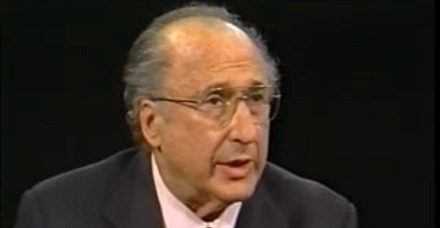
Henry Siegman, Leading Voice of U.S. Jewry, on Gaza: “A Slaughter of Innocents”

CLICK ON IMAGE
t-siegman-100312

Henry Siegman, president of the U.S./Middle East Project. He is the former executive director of the American Jewish Congress from 1978 to 1994 and former executive vice president of the Synagogue Council of America.

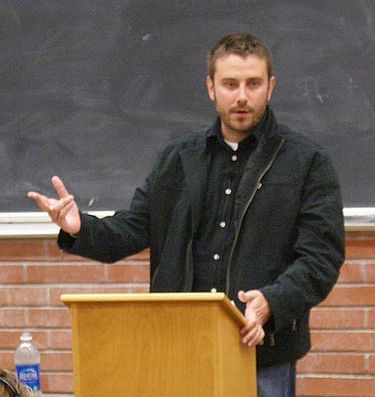
Jeremy Scahill: Leaked U.S. Terrorist Watchlist Rulebook Reveals “Global Stop and Frisk Program”

Click on image

Jeremy Scahill
Jeremy Scahill

Blog at WordPress.com.

Up ↑