Search

band annie's Weblog

I have a parallel blog in French at http://anniebannie.net

John Coltrane Blue Train Full Album

The salt of the earth – trailer

During the last forty years, the photographer Sebastião Salgado has been travelling through the continents, in the footsteps of an ever changing humanity. He has witnessed the major events of our recent history ; international conflicts, starvations and exodus… He is now embarking on the discovery of pristine territories, of the wild fauna and flora, of grandiose landscapes : a huge photographic project which is a tribute to the planet’s beauty. Sebastião’s Salgado’s life and work are revealed to us by his son, Juliano, who went with him during his last journeys, and by Wim Wenders, a photographer himself.

Ilan Pappe (relay)

Prof. Dr. Ilan Pappe speaks at IPMN Annual Conference in Chicago, Illinois. October 23, 2014, Church of Our Savior in Lincoln Park.

Belal Fadl on Egypt becoming “A Nation of Snitches”

Belal Fadl, an Egyptian screenwriter and columnist who has continued to speak his mind on the brutality and hypocrisy of the country’s military regime, has published a five-part series with the news site Mada Masr on the history of domestic espionage in Egypt. Our good friends at the professional translation service Industry Arabic have translated the final installment in the series; the earlier ones are available in Arabic on the Mada site. 


When a ruler depends solely on the power of oppression and completely impedes rational thinking, he no longer concerns himself with ensuring that there is an informant for every citizen.  Rather, he seeks to drive each and every citizen to become an informant of his or her own volition.

Some weeks ago, Abdel Rahman Zaidan, coordinator of the Revolutionaries Front in East Cairo, published a testimony on his Facebook page that soon became widely shared.  In this testimony, Abdel Rahman states that as he was riding a microbus [shared taxi-van] home, he was surprised to hear a middle-aged woman begin to fiercely criticize Sisi, the current government, and the Interior Ministry, much to the shock of those riding in the microbus with her.  One of the other passengers, encouraged by what the woman was saying, joined her in openly attacking Sisi, the government, and the Interior Ministry.

Before Abdel Rahman could join the discussion, the woman suddenly asked the driver to pull over next to a church along the way.  As soon as the microbus stopped, the woman stuck her head out the window and called to the church guards, shouting, “Save me! There’s a Muslim Brotherhood terrorist in the microbus!”

The guards rushed over, began beating the young man who had criticized Sisi, and pulled him from the microbus. The woman also got out of the microbus in order to accompany them and to testify to the heinous act that the young man had committed. She shot a sharp glance back at the other passengers, as if defying them to intervene, and stated proudly, “We’re cleaning up this country!” The remaining passengers, shocked at what had happened, sat frozen in their seats as the microbus drove away.

Abdel Rahman concludes his testimony by advising his colleagues – who are busy defending their comrades who are among the students who have been detained, providing for their needs, and publicizing their cases – to refrain from talking about politics on public transportation in order to focus their efforts on what is most important. He urges them to avoid falling into this new security trap, set to ensnare anyone who expresses opposition to what is happening in Egypt.

read full article here

——-

Albert Einstein – God bless him – defined insanity as “doing the same thing over and over again and expecting different results.”  And I think if you asked him to define filth, he would say that it is repression: a repression that labels as traitors all those who warn the people of the danger of repeating the same actions that have led to their defeat in the past, expecting that these actions will somehow lead them to victory now. It’s like expecting milk from an ant’s…well, let’s just say from an ant. [The expression “getting milk from an ant’s c#nt” means attempting the impossible]. 

97 Years Ago: Balfour and British Imperialism in Palestine

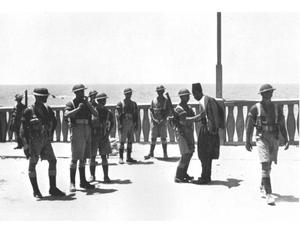
p.200 #244_1


“The four Great Powers are committed to Zionism. And Zionism, be it right or wrong, good or bad, is rooted in age-long traditions, in present needs, in future hopes, of far greater import than the desires and prejudices of the 700,000 Arabs who now inhabit that ancient land.” – Arthur James Balfour


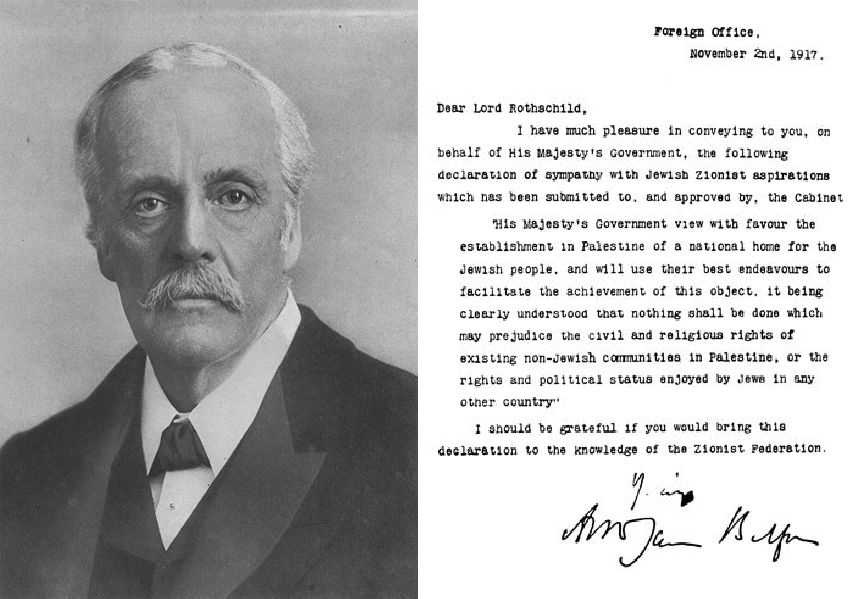
November 2nd marked the 97th anniversary of the 1917 Balfour Declaration declaring “His Majesty’s Government view with favour the establishment in Palestine of a national home for the Jewish people” in a letter from U.K. Foreign Secretary Arthur James Balfour to British Zionist partisan Lionel Walter Rothschild. Although the Zionist movement had an active leadership, which had inaugurated a series of congresses and established modest settlements in Palestine, it is the endorsement of Zionism by the leading imperial power of the day that would elevate the nationalist crusade into a genuine European colonial project à la the Afrikaners’ South Africa.
p.102 #96

For Lord Balfour, Zionism stirred Protestant aspirations for a Jewish “return” to the Holy Land and appeared to settle the so-called “Jewish Question” by guiding the waves of eastern European and Russians Jews fleeing anti-Semitic pogroms to Palestine rather than Western Europe and North America.


At the 1919 Paris Peace Conference, the victorious leaders of the United States, France, Italy, and Great Britain awarded the latter dominion over Palestine in the framework of a League of Nations mandate that entrusted London with carrying out the task of establishing representative institutions and recognition of the Jewish people’s “right to reconstitute their National Home [in Palestine].”


The unavoidable contradiction between supporting a Jewish homeland and self-determination in an overwhelmingly Arab country was not missed by Balfour, who attended the conference and wrote in a memo, “the contradiction between the letter of the Covenant [of the League of Nations] and the policy of the Allies is even more flagrant in the case of the ‘independent nation’ of Palestine… For in Palestine,” we do not propose even to go through the form of consulting the wishes of the present inhabitants of the country.” That contradiction was easily settled by Balfour as the epigraph above concludes the memo.
p.246 #294

British sovereignty over Palestine and sponsorship of a now confident colonial venture furthered Zionist settlement growth and, more crucially, suppressed inevitable Palestinian resistance to Zionism, particularly the 1936-1939 revolt. The success of the Zionist project in the birth of the State of Israel, and its corollary of Palestinian expulsion, dispossession and military occupation, would have been inconceivable without British imperial aid and support.


“Everything that has followed in that conflict-riven land has flowed inevitably from this decision” to endorse a Jewish state in an Arab country by “the greatest power of the age,” Journal for Palestine Studieseditor Rashid I. Khalidi wrote in Resurrecting Empire. Whatever one may think of Israel and the Palestinians, it would be hard to argue against the judgment that Palestinians and Israelis continue to residue in the shadow of the Balfour Declaration and all its attendant consequences.


Portrait of Lord Balfour and the original declaration:
Balfour_portrait_and_declaration


Featured Articles from the Journal of Palestine Studies:


Colonialism, Nationalism, and the Politics of Teaching History in Mandate Palestine

Author: Elizabeth Brownson

Source: Journal of Palestine Studies, Vol. 43, No. 3 (Spring 2014), pp. 9-25


Dividing Jerusalem: British Urban Planning in the Holy City

Author: Nicholas E. Roberts

Source: Journal of Palestine Studies, Vol. 42, No. 4 (Summer 2013), pp. 7-26


War-Time Contingency and the Balfour Declaration of 1917: An Improbable Regression

Author: William M. Mathew

Source: Journal of Palestine Studies, Vol. 40, No. 2 (Winter 2011), pp. 26-42


From Law and Order to Pacification: Britain’s Suppression of the Arab Revolt in Palestine, 1936–39

Author: Matthew Hughes

Source: Journal of Palestine Studies, Vol. 39, No. 2 (Winter 2010), pp. 6-22


The Hebrew Reconquista of Palestine: From the 1947 United Nations Partition Resolution to the First Zionist Congress of 1897

Author: Walid Khalidi

Source: Journal of Palestine Studies, Vol. 39, No. 1 (Autumn 2009), pp. 24-42


Was Balfour Policy Reversible? The Colonial Office and Palestine, 1921-23

Author: Sahar Huneidi

Source: Journal of Palestine Studies, Vol. 27, No. 2 (Winter, 1998), pp. 23-41


 The Unregarded Prophet: Lord Curzon and the Palestine Question

Author: David Gilmour

Source: Journal of Palestine Studies, Vol. 25, No. 3 (Spring, 1996), pp. 60-68
source

Asking Assad to stay is asking Syrians to be party to a charade

Article is one year old but still valid

&MaxW=640&imageVersion=default&AR-131129704


In Ambiguities of Domination, political science professor Lisa Wedeen examined the Syrian regime’s rule of domination under then-president Hafez Al Assad.

She noted a dual role for Syrians: both propping up the regime’s propaganda and at the same time subverting its power via the symbols and rhetoric of everyday life and popular culture. This seminal work, published in 1999, a year before Al Assad junior took power, explained to outsiders the inner mechanisms of an authoritative regime. Its relevance is significant today under the shadow of Hafez’s son Bashar and with the fate of a blood-soaked Syria, now in ruins.

In a particularly powerful chapter entitled Acting As If, Wedeen writes: “Power manifests itself in the regime’s ability to impose its fictions upon the world.” The complicity of the people within this imposition enforces the regime’s power of domination. In other words, the regime’s power is mainly constructed by the people’s enacted participation in that very construction.

According to Wedeen: “The politics of acting ‘as if’ carries important political consequences: it enforces obedience, induces complicity, identifies and ferrets out some disobedient citizens …”

Indeed, one of the fundamental ways the Syrian people functioned in the police state was by “acting as if”. Acting as if nothing was going on as Hama was pummeled in 1982. Acting as if they loved the leader even though they were terrified of him.

The tragedy of Bashar Al Assad’s rule is that his father’s construct of complicity has, over the past 32 months, bled far beyond Syria’s borders to encompass the entire region and international community.

As world leaders discuss the merits of the Syrian opposition attending Geneva 2 peace talks without preconditions, they flip the narrative of the revolution. A narrative in which Mr Al Assad is upgraded from a brutal dictator that deserves no more than a cell at The Hague to a potential “partner” in the transitional peace process.

The latest demeaning analysis offered to Syrians is to act “as if” Mr Al Assad maintaining power would end the brutal war that was unleashed by Mr Al Assad himself. Governments act as if dragging the Syrian opposition to the negotiation table without any preconditions will result in a political solution to a raging war. World leaders act as if Mr Al Assad’s cooperation in dismantling his chemical weapon stockpiles is reducing the amount of bloodshed, even as the cluster bombs and scud missiles continue to fall onto civilian populations.

As the slated 2014 Syrian presidential election approaches, “Syrians will have their voices heard at the ballot box” is the current refrain of Assad loyalists. As if presidential elections can even be a possibility in a country where over seven million people are displaced. And Mr Al Assad himself acts as if his nomination is not even problematic, to say the least.

For what purpose is all of this acting “as if”? To save Syria from the very regime that created this catastrophe in the first place?

The act of “acting as if”, like the fable about the emperor and his non-existent clothes, twists lies into elaborate truths to the point where even well-intentioned people, including Syrians themselves, are left to wonder: “Should Assad stay?”

Faisal Al Yafai, writing in these pages, approaches the “unthinkable question” of Mr Al Assad remaining in power to save Syria, arguing “all of that could be worthwhile if it ends the conflict”. True, but the most important word in that sentence is “if”.

While Al Yafai rightly points out that no one has any good ideas to end the protracted bloody war, the idea of Mr Al Assad staying in power may just be the worst one.

Most Syrians are worn out by the gruelling violence that has taken a toll on all aspects of life. Most Syrians want peace and stability. If faced with a sincere choice – Mr Al Assad remaining in power in exchange for a ceasefire, the release of all political prisoners, opening humanitarian and medical aid corridors into Syria, and beginning the long process of refugee return – most Syrians would swallow the bitter pill and choose Mr Al Assad. This choice is the result of being left alone to fight two enemies armed by foreign forces with virtually no support. It is a choice of despair.

It is also an unfairly framed choice for one simple reason: Mr Al Assad will never uphold his end of the bargain. Syrian history, old and new, is a reminder of how the Assad regime deals with the people’s dissent. Both father and son have displayed their relentless tactics of retribution. (See Hama, 1982. Or Syria, 2011-2013.)

Making a judgement call based on the grim Syrian present – well over 100,000 dead, thousands in torture cells, millions of displaced and refugees, foreign fighters and extremists battling for foreign ideologies and agendas, mass destruction of cities, towns and villages, an out-of-touch political opposition that is corrupt and impotent, and millions of exhausted Syrians who just want it all to end now – is simply a convenient and careless cop-out.

It’s easy to look at this list of tragedies and claim that saving what’s left of Syria should be the only priority and argue that preconditions to the negotiations will only ensure more stalemate and bloodshed.

Merely glancing at the present is not only naive, it’s immoral. History tells a different story. Stories of mass murder and destruction 31 years ago in Hama, stories of thousands of torture and rape cases, stories of boys whose fingernails where ripped out because they wrote “freedom” on their school walls, stories of enforced policies of “Assad or we scorch the country”, and more recently “Kneel or starve”. Those stories document the despicable and undeniable truth of this regime.

We live in dark times when tyrants are hailed as saviours and martyrs are called terrorists.

History repeats itself – as Hama did before Daraa, and Hafez before Bashar. History also bears witness to the simple fact that sooner or later, every tyrant’s rule ends. In fact, tyrants have fallen over the centuries of our collective civilisation, on this very land called Syria.

Perhaps we will not be able to rejoice soon (or not even for decades) that the Assad regime is finally finished. That will not change one fact: asking for him or his regime to stay will not save lives. Instead, this decision will take more Syrian lives. Thousands more lives.

Deceptive options and skewed choices can be framed as powerful persuasions, as the “last hope” and the “moral choice”. These “solutions for the Syrian conflict” mock the Syrian people’s heavy sacrifices, bloody history, and desire for a peaceful future of freedom and dignity.

If the world has now decided to act “as if”, this complicit world should know that the Syrian people ended that charade 30 months ago. That was their unambiguous choice.

Beyond the dead, tortured, and displaced people; beyond the destroyed cities and scorched landscapes; beyond all what we have lost; does the world really expect Syrians to go back to acting “as if”? As if they loved the illegitimate leader in Damascus? As if the tyrant’s clothes were not soaked with the people’s blood? As if the lies had become the truth? As if history had never unfolded in the terrible ways it did?

As if nothing had happened at all?

Amal Hanano is the pseudonym of a Syrian-American writer

On Twitter: @AmalHanano
Read more:http://www.thenational.ae/thenationalconversation/comment/asking-assad-to-stay-is-asking-syrians-to-be-party-to-a-charade#full#ixzz3I57fqX44 
Follow us: @TheNationalUAE on Twitter | thenational.ae on Facebook

في دمشق

Why did Netanyahu respond to chickenshit with ‘grassy knoll’ remark?

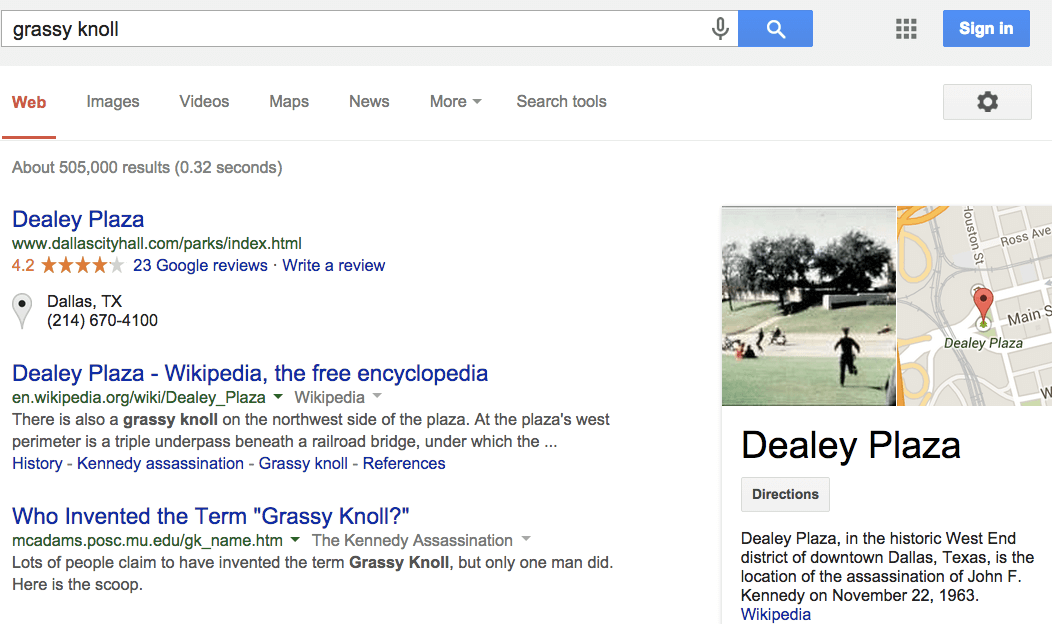
Wading through all the chickensh*t over the last few days Netanyahu’s “grassy knoll” comeback somehow missed out on all the action, but what the hoot guys? Where I come from that terminology only means one thing, as far as I know, that applies to the lexicon anywhere in America, if not the world. Hey, even Google agrees with me. And what are the chances Netanyahu and/or his speechwriters don’t know this? Nada. Impossible.

Why would Netanyahu make a reference to one of the most alarming chapters in American history, the assassination of a beloved American president? And for many, an assassination still shrouded in mystery and deceit? I just thought it was very weird. Where is our press?

Winding down after scrutinizing, dissecting and eviscerating Goldberg’s now infamous Chickensh*t article, Justin Raimondo, in The Chickenshit Lobby Is Mad As Hell– but just how mad are they? makes the argument had a leader of Iran slipped “grassy knoll” into a message to an American president the press would have gone bonkers. I agree.

What’s surprising is how Netanyahu, in a speech to the Knesset, took the opportunity toanswer his critics in the Obama administration: “Netanyahu angrily insisted he was ‘under attack simply for defending Israel,’ adding that he ‘cherished’ Israel’s relationship with the US.”

The famously combative Israeli Prime Minister went on to say:

“When there are pressures on Israel to concede its security, the easiest thing to do is to concede. You get a round of applause, ceremonies on grassy knolls, and then come the missiles and the tunnels.”

Bibi, who spent many years in the United States, is surely cognizant of what his “grassy knoll” reference connotes. You can argue it was just an infelicitous phrase, or that Bibi was referring to himself, not Obama. Maybe so. But what if, say, an Iranian official, even a low-ranking one, had said such a thing? The uproar would be deafening. And so the question must be asked: was Bibi threatening the President of the United States?

If we take seriously Goldberg’s depiction of the poisoned relationship between Bibi and Obama, the possibility can’t be completely dismissed.

Do you think anyone at the White House noticed Netanyahu’s phraseology? Me too. So why the silence from the press? Grassy knoll, it only means one thing here in America:

Screehshot of Google "grassy knoll"

Netanyahu is widely faulted for helping to incite Rabin assassination, marching in a rally where guys were holding up a coffin for Rabin.

(H/t David Doppler)

About Annie Robbins

Annie Robbins is Editor at Large for Mondoweiss, a mother, a human rights activist and a ceramic artist. She lives in the SF bay area. Follow her on Twitter @anniefofani


  1. And don’t forget all the indications that Israel and its supporters were involved in the conspiracy to assassinate JFK. The evidence is discussed quite fully in Col. John Hugh-Wilson’s JFK: An American Coup D’etat: The Truth Behind the Kennedy Assassination

Defense Confirms: Rasmea Odeh Targeted for Palestine Activism

2 Comments

Photo by Bill Chambers

By Bill Chambers

The defense team for Chicago Palestinian community leader, Rasmea Odeh, have uncovered new evidence that confirms her alleged immigration fraud case is based on her being targeted for Palestine activism. Yesterday, they filled a motion to dismiss the indictment against her.

Rasmea Odeh was arrested on October 22, 2013 by agents of the Department of Homeland Security and charged with immigration fraud. Allegedly, in her application for citizenship made 20 years ago, she didn’t mention that she was arrested in Palestine 45 years ago by an Israeli military court that had tortured her to confess to bombings in Jerusalem. (For additional background on Odeh’s case, see Rasmea Odeh: Repression of a Palestinian Community Leader.)

In the Chicago courtroom on the day of her arrest, Assistant U.S. Attorney Barry Jonas was seen conferring with the prosecutors. At the time, that was the first clue Odeh’s indictment was related to the case of the well-known Palestinian and anti-war Midwest activists whose homes were raided by the FBI when the U.S. attorney alleged that they had provided material support to foreign terrorist organizations in Palestine.  Eventually a total of 23 activists were subpoenaed, but all refused to testify and were never charged assuming because of a lack of evidence.  Members of multiple organizations were also targeted including the Anti-War Committee in Minneapolis, Freedom Road Socialist Organization, Arab American Action Network (AAAN), Palestine Solidarity Group – Chicago, and others. Assistant U.S. Attorney Barry Jonas continues to lead this ongoing investigation. Odeh’s supporters could easily presume that Odeh and the case of the 23 were related. Hatem Abudayyeh, Executive Director of the AAAN and one of the activists whose home was raided by the FBI, is also a colleague of Odeh, Assistant Director of the AAAN.

It’s important to note that this ongoing investigation involves activists from multiple struggles including the anti-war movement, Colombia, Cuba, and immigration rights, but it’s primary focus is support for Palestine. Echoing what’s happening to Odeh now, Carlos Montez, a veteran Chicano, anti-war, and immigrant rights activist, whose name appeared on a search warrant of the Anti-War Committee office in Minneapolis, was indicted in May of 2011 on unrelated charges related to a protest 45 years ago. The charges were eventually thrown out of court. This multi-year investigation that involves targeting social justice movements, in this case Palestine activism, by criminalizing their activity and suppressing any coalition building among different groups has been a trend throughout U.S. Justice Department and FBI history. More on this trend later.

On Wednesday, the Rasmea Odeh defense team confirmed a direct relationship between the investigation targeting Palestine activists in 2010 and the records that led to the indictment of Odeh in 2013. The press release states “Attorneys representing Chicago’s long-time Palestinian community leader, Rasmea Odeh, have filed a motion and brief in Detroit’s U.S. District Court to dismiss the indictment against her. They are doing so on the grounds that the charges are the product of an illegal investigation targeting both Palestine solidarity efforts and organizing in the Palestinian community.”

In the motion to dismiss, Odeh’s attorneys describe the indictment as “the product of an illegal investigation into the First Amendment activities of the Arab-American Action Network (AAAN) and intended to suppress the work of the defendant in support of the Arab community of Chicago.” The motion goes on to describe how in January of 2010 the Assistant U.S. Attorney Brandon Fox “initiated a request through the office of International Affairs Criminal Division of the U.S. Department of Justice from the State of Israel for records of the defendant.” In July 2011, the Israelis sent a set of documents to Assistant U.S. Attorney Fox, supporting the claim that Odeh “had been arrested, convicted and imprisoned by the military legal system imposed by Israeli in the West Bank…Over two years later, with nothing to show for its raids in 2010, Ms. Odeh was indicted for falsely answering questions in 2004 in her naturalization application.”  The defense attorneys also speculate, not without reason, that “the United States Attorney in Illinois, which was the office that initiated the request for the Israeli documents and was carrying out the investigation, apparently passed the case to the office in Michigan, to divert attention from its failed efforts to criminaliize the work of the AAAN in Chicago.”

These are dots that are not difficult to connect. The initial investigation in 2010 broadly targeted activists throughout the Midwest, but primarily focused on Palestinians and Palestine activists in Chicago. During the last four years, the Palestine solidarity movement has grown in numbers and impact particularly through the growth of the Boycott Divestment Sanctions (BDS) movement directed at Israel and the proliferation of Students for Justice in Palestine groups on college campuses. With the growth of the movement came the attention of the FBI.

As mentioned above, the FBI has a history of targeting growing social justice movements in the U.S., criminalizing those movements, and preventing coalitions they might form with other communities or organizations. Examples from Church Senate Committee Report on FBI Counterintelligence (COINTELPRO) Programs and other studies of  FBI history include Dr. Martin Luther King, Jr. and the Southern Christian Leadership Conference (SCLC) accused of being communists and the undermining of attempted coalition building with unions and anti-Vietnam war groups; the Black Panther Party prevented from building coalitions with the Students for a Democratic Society (SDS) and politicized gangs like the Blackstone Rangers in Chicago; and the targeting of the Sanctuary Movement that supported Central American refugees in the 1980s accusing activists of supporting terrorists as a way of undermining the movement’s broad support of faith-based, human rights, and socialist groups.

Several hundred statements of support from unions, human rights, civil rights, and faith-based groups and thousands of supporters from across the country  for the 23 anti-war and Palestine activists seem to have prevented indictments in that case so far. It is not hard to imagine the prosecutors reviewing the evidence they had collected that had failed to convince a grand jury for an indictment, finding Odeh’s file from the Israelis, and deciding to build a case for indicting another leader of Chicago’s Palestinian community. There are few other reasonable explanations for why Odeh would be charged for an alleged offense that occurred 20 years ago on the basis of a prison term resulting from a confession obtained through torture 45 years ago.

“Rasmea is facing up to ten years in jail and deportation. She is a Palestinian who has stood up for the Palestinian, Arab and Muslim community in Chicago, and to end the occupation of Palestine as well. Rasmea suffered vicious torture and sexual abuse in Israeli prisons, and the U.S. government is trying to victimize her again,” states Hatem Abudayyeh of the national Rasmea Defense Committee.

Odeh’s defense team will be discussing this motion to dismiss at her next court hearing on September 2 in the United States District Court for the Eastern District of Michigan, at 231 W Lafayette Boulevard, in Detroit, Michigan. The Rasmea Defense Committee and the Committee to Stop FBI Repression (CSFR) – CAIR-Chicago is a member of both coalitions – are organizing a picket line outside the court building at 2:00 p.m. and filling the courtroom for the hearing beginning at 3:00 p.m.

The views expressed in this article are the author’s own and do not necessarily reflect Chicago Monitor’s editorial policy.

2 Responses to Defense Confirms: Rasmea Odeh Targeted for Palestine Activism

  1. sudhama says:

    This article reminds me of something. Jewish American scholar, Norman Finkelstein, made a comment during the recent conflict. He said, “As to how we got to where we are, the general context is perfectly obvious for anyone who wants to see it. A unity government was formed between the PA and Hamas. Netanyahu was enraged at this unity government. (Israel) called on the (U.S. And the EU), to break relations with the Palestinian Authority. Surprisingly, the United States said, ‘No, we’re going to give this unity government time. We’ll see whether it works or not.’ Then the EU came in and said it will also give the unity government time. […]
    At this point, Netanyahu virtually went berserk, and he was determined to break up the unity government. When there was the abduction of the three Israeli teenagers, he found his pretext. […] This is what Israel always does. Anybody who knows the history, it’s what the Israeli political scientist, […] Avner Yaniv (said,) it’s these Palestinian ‘peace offensives.’ Whenever the Palestinians seem like they are trying to reach a settlement of the conflict, […] Israel does everything it can to provoke a violent reaction […] break up the unity government, and Israel has its pretext. ‘We can’t negotiate with the Palestinian Authority because they only represent some of the Palestinian people; they don’t represent all of the Palestinian people.’ And so Netanyahu does what […] Israeli governments always do: You keep pounding the Palestinians, […] trying to evoke a reaction, and when the reaction comes[…] he said, ‘We can’t deal with these people. They’re terrorists.’”
    You’re not anti-Semitic, racist or a self-hating Jew for disagreeing with Israel, just a person of conscience, morals and a good heart.

  2. Jan Boudart says:

    Bill, thank you so much for working on this story, following it and especially for educating all interested people. This is valuable and I hope you feel appreciated. Jan Boudart

Blog at WordPress.com.

Up ↑