Search

band annie's Weblog

I have a parallel blog in French at http://anniebannie.net

A Day in Pompeii – Full-length animation

Watch in full screen

www.zerooneanimation.com

A Day in Pompeii, a Melbourne Winter Masterpieces exhibition, was held at Melbourne Museum from 26 June to 25 October 2009. Over 330,000 people visited the exhibition — an average of more than 2,700 per day — making it the most popular travelling exhibition ever staged by an Australian museum.

Zeroone created the animation for an immersive 3D theatre installation which gave visitors a chance to feel the same drama and terror of the town’s citizens long ago, and witness how a series of eruptions wiped out Pompeii over 48 hours.

Bashar as helpless plumber

Ukraine: From Propaganda to Reality

November 25, 2014 § Leave a comment

Timothy Snyder explains the crisis in Ukraine.

Since February, the world’s eyes have been on Ukraine as Ukrainians rebelled against rising authoritarianism in their own country and were met in return with a Russian invasion of Ukraine’s southern and eastern provinces. Yale University’s Timothy Snyder is the world’s leading historian of Eastern Europe. His series of articles in the New York Review of Books has been hailed as the definitive analysis of this crisis. Join him as he clarifies the stakes.

source

Abiding by international law — when it’s convenient

Israeli institutions seek to obtain the benefits of the international legal order while refusing to accept the corresponding burdens and obligations.

By Gerard Horton

For some time now the Israeli army’s Military Courts’ Unit has distributed a five-page briefing paper to foreign delegations visiting military courts in the West Bank. The briefing paper is intended to persuade the reader that the military courts — which have been used to prosecute approximately 755,000 Palestinian men, women and children since 1967 — were established, and are currently operating, in accordance with international law. The document commences with the following statement:


The Military Courts in Judea and Samaria (hereinafter: ‘The Military Courts’) were established in accordance with international law, and have jurisdiction to hear ordinary criminal cases and cases involving security offenses.

This statement is significant because the only provision of international law that authorizes the prosecution of civilians in military courts is the Fourth Geneva Convention (the Convention). Under Article 64 of the Convention the penal laws of the occupied territory should remain in force, but may be temporarily suspended and replaced with military law in cases of security or in order to facilitate the application of the Convention.

In circumstances where military law has been imposed, Article 66 of the Convention provides that persons accused of violating the temporary measures can be prosecuted in “properly constituted, non-political military courts.” These are the legal provisions the Military Courts Unit is referring to when it asserts that Israeli military courts “were established in accordance with international law.”

However, in circumstances that can only serve to undermine the rule of law, the political, military and judicial authorities in Israel refuse to apply the same Convention, for example, in relation to settlement construction or the transfer of Palestinian detainees to prisons inside Israel.

Article 49 of the Convention provides that Israel is not permitted to transfer parts of its own civilian population into the territory it occupies, thus making all settlement activity in East Jerusalem and the West Bank illegal – a conclusion confirmed by the UN Security Council and the International Court of Justice.

Article 76 of the Convention prohibits the transfer and detention of Palestinian detainees outside occupied territory – a legal conclusion confirmed by the U.K.’s Foreign Office and senior government ministers. Be that as it may, approximately 90 percent of Palestinian prisoners continue to be transferred and detained inside Israel.

This gives rise to the untenable situation whereby Israeli institutions seek to obtain the benefits of the international legal order while refusing to accept the corresponding burdens and obligations. It may be that this inconsistency is of little concern in the region today, but no one should later express surprise if one day Israel finds that it has stumbled into pariah status.

Gerard Horton is a lawyer and co-founder of Military Court Watch. Gerard has worked on the issue of children prosecuted in the Israeli military courts for the past seven years and is the author of a number of leading reports on the subject.

Related:
The consequences of a culture of lies
Conviction rate for Palestinians in Israel’s military courts: 99.74%
Testimonies: Eyes on Israeli military courts

For additional original analysis and breaking news, visit +972 Magazine’sFacebook page or follow us on Twitter. Our newsletter features a comprehensive round-up of the week’s events. Sign up here.

Shock and Awe versus Dentists, Farmers and Students

Robin Yassin-Kassab's avatarQunfuz

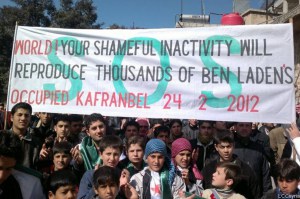
binladensWhatever the hearts-and-minds rhetoric at the United Nations, in Syria the Obama administration is feeding the flames of Sunni extremism, and proving once again the truism that the American state is an enemy of the Syrian people (as it’s an enemy, like all states, of all peoples, including the American).

We expected strikes on ISIS. Some of the strongest strikes (and the strikes are far stronger than in Iraq), however, have been aimed at Jabhat al-Nusra (the Victory Front), the organisation from which ISIS split. Nusra is certainly an extremist Salafist group, and is openly linked to al-Qa’ida. Because its ideology terrifies not only minorities but also huge swathes of the Sunni population, it’s also a strategic obstruction in the way of the Syrian revolution. In August 2013 it participated (with ISIS) in the only documented large-scale massacre of Alawi civilians in the conflict. On the other hand, Nusra (unlike…

View original post 1,315 more words

In Syria, Doctors Become the Victims


By LEONARD S. RUBENSTEIN and M. ZAHER SAHLOULNOV. 19, 2014

Aleppo, Syria, Nov. 6. CreditFadi Al-Halabi/Agence France-Presse — Getty Image


Continue reading the main story

“Working in a field hospital is like death,” a surgeon told us two weeks ago in Turkey, where more than two dozen Syrian doctors and other health workers had come for training. As if treating victims of the Syrian Army’s weapon of choice, the barrel bomb, wasn’t enough, they themselves were often victims of those same terrible devices.

International law is supposed to protect health workers treating anyone who is sick or wounded. Not in Syria: There, along with bakeries and schools, one of the most dangerous places to be is in a hospital or an ambulance. According to Physicians for Human Rights, more than 560 medical personnel have been killed and 155 medical facilities have been attacked since the conflict began, though based on our interviews these numbers are understated.

From the start of the war, the regime of Bashar al-Assad has attacked civilians and obstructed humanitarian relief, including vaccinations for children. It has cut off electricity and clean water to areas controlled by the opposition, punished health workers treating protesters and opposition fighters, and deployed chemical weapons against defenseless fellow Syrians.

But things have gotten worse over the past year. The Assad regime has descended to an unprecedented level of barbarism, escalating its use of air power against enormous numbers of civilians. The number of injured, according to the World Health Organization, has risen to 25,000 people per month.

The centerpiece of the new strategy has been the barrel bomb, an oil drum filled with explosives, bolts, hardware and scrap metal, usually dropped from a helicopter. The bombs explode with terrific force and breadth, amputating limbs and driving shrapnel throughout the body. One doctor we interviewed was still horrified by the indelible image of a mother and daughter whose bodies were blown apart while their hands remained clasped together.

In response to such barbarism, and in defiance of the new strategy, local doctors, supported by a few daring nongovernmental organizations, have set up field hospitals in factories, farms, houses, cultural centers, caves and even chicken coops to provide surgery and other care to the injured. Humanitarian organizations are providing supplies and supporting salaries.

The regime has in turn embarked on a brutal campaign to destroy the hospitals and kill their medical staffs. It is using those same barrel bombs and missiles against field hospitals and dozens of other medical outposts, as well as ambulances, in order to deter people from seeking care. On some occasions, when rescue crews arrive at the scene of an attack on a crowded location like a bakery or school, more barrel bombs are dropped to maximize the carnage.

When the conflict began, the regime decreed that medical care to any area controlled by the opposition, which included demonstrators as well as armed opponents, was a criminal offense — a position that violated the Geneva Conventions’ declaration that medical personnel and facilities are off-limits. Of the 25 medical staff members we interviewed, six had been arrested and jailed for allegedly providing such care. Now the regime is targeting anyone giving medical care in opposition-run areas.

The attacks have driven most physicians out of Syria. In Aleppo, the largest city in the country, only 13 surgeons remain. And despite efforts of humanitarian groups to supply them with essential supplies and equipment, medical personnel must cope with severe shortages.

Doctors and nurses also suffer profoundly, strained by long working days, the horror of the injuries, the impossibly difficult triage decisions forced by lack of resources, and constant danger. One doctor told us that if everyone survived a barrel bombing they did the Dabke, an Arabic dance, in celebration.

When we asked the doctors what kind of support they needed, though, they didn’t cite the need for more staff, equipment, rest or psychological support. They asked for one thing: Stop the bombs from raining down so they can treat their patients without fear of death.

The United States has the capacity to do that. It can impose a humanitarian buffer zone in northern and southern Syria to allow health care workers to save lives, children to get vaccinated and go to school, refugees to resettle, and relief organizations to do their work. A buffer zone would be enforced by a no-fly zone that would protect the hospitals and civilian areas from aerial attacks.

The Obama administration made a great moral and political case for saving the Yazidi people in Iraq and other minorities threatened by the Islamic State, and mobilized an international coalition to do so. How can it now ignore the carnage being inflicted on a far larger group of people in the same region, including caregivers who seek to attend to the complex injuries they have suffered?

The brutality of the Assad regime’s tactics at least equals that of the Islamic State. Aleppo itself may soon be under complete siege by regime forces. The Obama administration must affirm America’s leadership role and act to save people under such relentless attack. When work in a field hospital becomes like death, it is difficult to imagine how life has any chance at all.

Leonard S. Rubenstein is the director of the Program on Human Rights, Health and Conflict at the Center for Public Health and Human Rights at the Bloomberg School of Public Health, and member of the core faculty at the Berman Institute of Bioethics, both at Johns Hopkins University. M. Zaher Sahloul is a critical care specialist in Chicago and the president of the Syrian American Medical Society.

A version of this op-ed appears in print on November 20, 2014, on page A29 of the New York edition with the headline: In Syria, Doctors Are the Next Victims.

Subscribe

source


3 Million Reasons Why Your Heart Will Break In One Video

I’ve been plunged into despair but I’ve been healed by looking around and seeing what we do for each other to bring each other back up from the depths.” Neil Gaiman

“We watch the news about Syria and the situation is bleak. In May when I travelled to Jordan with the UN Refugee Agency (UNHCR) and visited Zaatari and Azraq refugee camps with fashion designer Georgina Chapman and her husband, film producer, Harvey Weinstein, the scale of the refugee situation was extraordinary to us. Conflict was forcing innocent people in love with their country to abandon their homes and bleed, in their thousands, across its borders. How are they able to cope with losing everything? How are the neighbouring countries expected to cope with the flood of human beings overwhelming their infrastructure and their already scarce resources?

6 months on and the numbers of refugees and internally displaced have climbed, not inch by inch, but in dizzying numbers: over 6.4 million people displaced inside Syria, over 3 million refugees outside Syria. Spirits have been broken, homes wrecked, lives destroyed, and a generation of children traumatized.

But somehow, still, in amongst the horror and the nightmares, there are still many small and glorious stories of survival and hope, resilience and dignity. I have already shared many of them with you, but there are more to tell. I’m sharing them in order to build a connection between the people I have met – Ayman, Ibrahim, Um Murad and the rest – and with you. Yes, you. I’m asking, on their behalf and UNHCR’s, for help, because if you could have the conversations that we had, if only you could sit and speak to the refugees, face to face, you would see that we really are the same, that we really are part of one family. And, at its best, a family does all it can to support each other.” – Neil Gaiman

Please visit http://rfg.ee/D98RY to help now. If you’re in the UK, you can also text NEED2510 to 70070 to donate £10 now.

Original piano music was composed & recorded for this film by Amanda Palmer.

Information for media:
If you would like to use this video to communicate refugee stories or require B-Roll, transcripts, stills or much more information, please contact us at drozditb@unhcr.org or tibaw@unhcr.org.

Keep up to date with our latest videos: https://www.youtube.com/user/unhcr?su…

SYRIA ON FILM


How to support the Syrian democrats in their daily resistance? What can cinema do to help people who try to make their voice heard at the risk of their own lives? The war in Syria has been raging since March 2011: bloody dictatorship on one side, jihadists and terrorists on the other. Despite the horror suffered by the civilian population, the word and artistic creation seem to have liberated themselves. Films and debates try to shed a light on one of the darkest pages in the Middle East’s recent history.

Programme:

BOZAR CINEMA
07.12.2014
14:30 PREMIERE Silvered Water, Syria Self-Portrait – Ossama Mohammed 
Preceded by the shortfilm: Under the Tank – Eyas Al Mokdad
17:00 > 17:15 –The Celebration – Ghayath Almadhoun (Reading & projection)
17:15 > 18:45 – Debate
19:00 – PREMIERE Our Terrible Country – Ali Atasi 
In the presence of Ali Altasi

FESTIVAL CINEMA MÉDITERANÉEN 
08.12.2014 
19:00 Io sto con la sposa –  Antonio Augugliaro, Gabriele Del Grande, Khaled Soliman Al Nassiry  
In the presence of the Directors
Followed by a debate with: Antonio Augugliaro, Gabriele Del Grande, Khaled Soliman & Caroline Intrand (CIRÉ – Coordination et initiatives pour réfugiés et étrangers)

10.12.2014
21:15 Return to Homs –  Talal Derki 

More info: http://www.cinemamed.be 

CINEMA AVENTURE
10.12.2014 
19:30 – The Immortal Sergeant – Ziad Kalthoum 

RELEASE @ AVENTURE > 11.12.2014 
Silvered Water, Syria Self-Portrait – Ossama Mohammed
Return to Holms – Talal Derki
Our Terrible Country – 
Ali Altasi

More info: http://www.cinemamed.be 

Dates
Sunday 07.12.2014 – 11:00 > 22:30
Place
Access
Rue Ravenstein

Note

:: PROGRAMME ::
UPCOMING

The Mystery of Abdul-Rahman, or Peter Kassig

NOVEMBER 17, 2014


BY AMY DAVIDSON
Davidson-Kassig-Family-320

CREDITCOURTESY THE KASSIG FAMILY

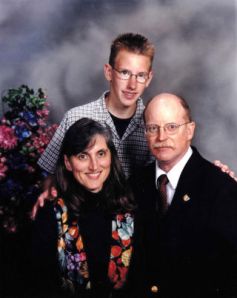
“They tell us you have abandoned us and/or don’t care but of course we know you are doing everything you can and more,” Abdul-Rahman Kassig, born Peter Kassig, wrote to his parents, Ed and Paula, when he had been held by the Islamic State in Iraq and al-Sham for several months. He knew that his captors might kill him—“it may very well be coming down to the wire here”—and in the end they did: over the weekend, ISIS released a video of a member of the group displaying Kassig’s severed head. He was twenty-six years old, and from Indiana. In the letter, he’d sought to prepare his parents for that end, and, perhaps, to forestall the visions they might have of his last moments: “Don’t worry Dad, if I do go down, I won’t go thinking anything but what I know to be true. That you and mom love me more than the moon & the stars.”

Kassig was kidnapped delivering medical aid to people affected by the civil war in Syria. He had been a soldier, a Ranger in Iraq, then a college student, and, very briefly, a husband. (The marriage ended in divorce.) Along the way, the Army trained him as a medic, and he took classes to learn to be an emergency medical technician. On a vacation to Lebanon, where he encountered Syrian refugees, he realized that his medical knowledge was an asset, a gift he could hand to desperate people. Just before he was supposed to go home, he had, as he wrote in an e-mail to family and friends, “the best conversation that I have ever had with my mom. From 4,000 miles away in a shelled out parking lot in Beirut I told her about what I had been involved in over the last week.” He had found his “calling”:

Yesterday my life was laid out on a table in front of me. With only hours left before my scheduled flight back to the United States, I watched people dying right in front of me. I had seen it before and I had walked away before.… I’m just not going to turn my back this time, it’s as simple as that.

“My whole life has led me to this point in time,” he wrote. He stayed, and bandaged wounds, cared for people in clinics, and, just generally, helped. He was drawn across the Syrian border into a zone of both war and jihadi kidnapping. Joshua Hersh, who encountered Kassig when he was working there, wrote that he “didn’t try to convince me that going back was safe, or even wise. But his commitment to the relief project he had embarked on was untempered, and it was clear to me that he would soon go back.” In a wrenching statement posted to Facebook on Sunday, his parents said, “We are incredibly proud of our son for living his life according to his humanitarian calling,” and asked that people donate to a Syrian relief group in lieu of flowers.

Altruism is a mystery, in the best sense of the word, in the same way that love is. It’s not one we always need to solve; often, it leaves us most puzzled about ourselves, about our own lives spread on a table. (Larissa MacFarquhar has written about this.) But there are also two other, more specific mysteries associated with Kassig’s death. One has to do with his conversion to Islam. The other is why this ISIS beheading video did not resemble others.

At some point in his captivity, Peter Kassig, who was raised Methodist, converted to Islam and took the name Abdul-Rahman.* That is what his parents called him publicly when, after a period in which they were trying to quietly work for his release, they began to speak out; they referred to him as Abdul-Rahman Peter Kassig in the statement after his death was confirmed, when it would no longer have been useful; President Obama also used the name Abdul-Rahman, in calling the murder “an act of pure evil.” Kidnappings often include forced conversions—the men who abducted more than two hundred girls from their school in Nigeria claimed that the girls had converted, but no one would hold those children (or adults in similar situations) to religious declarations made under duress. Kassig’s parents have said, through their family Twitter account and other statements, that they believed he was sincere—and he was, by nature, sincere and searching. They were also, as Kassig rightly said in his letter to them, doing everything they could think of to save him. His mother appeared in hijab in video appeals to his captors, and also at a prayer vigil at an Islamic center in Plainfield, Indiana, where the Muslim community rallied around him. Indeed, the Muslim voices advocating for his release were as many and varied as one could get. They included college students in America, refugees in Syria, and even members of the Islamist Al Qaeda affiliate Al Nusra Front, who remembered him as someone who treated wounded rebels, among others. (This may also hint at the mixture of rebel forces.) It didn’t work. Conversion was never protection. It was not ISIS’s goal to make Kassig a Muslim, nor was it in its interest to acknowledge him as one. They wanted to murder an American, and they did.

This is what Kassig wrote, obliquely, about the questions he must have known his parents had about his conversion, in that letter from captivity:

In terms of my faith, I pray everyday and I am not angry about my situation in that sense. I am in a dogmatically complicated situation here, but I am at peace with my belief.

Kassig’s parents knew him best, and what “dogmatically complicated” and “peace” might mean to him. In the same letter, he said, “I cried a lot in the first few months but a little less now.” The choice for the rest of us, going forward—when deciding, for example, what name to call him, or to entertain the idea that the conversion was part of where Kassig’s life was leading—seems clear: follow Ed and Paula Kassig’s lead, and give them room to think about what God meant to their son.

Then there is the mystery of the video. The others each involved a hostage kneeling in an almost art-directed outdoor setting, reciting a confession, and then having his head cut off with a knife. This one did not. Instead, the ISISmember who stands there with his head calls him Peter Edward Kassig and states that he “doesn’t have much to say. His previous cellmates have already spoken on his behalf.” Before that, as if to make the point that they do, still, film themselves in the act of decapitation, there is footage of ISIS members killing captured Syrian soldiers this way. Perhaps there is footage of Kassig that the group has in reserve. But its absence so far has led to speculation that, as the Times put it, “something may have gone wrong” from ISIS’s perspective during the filming of his murder.

What could that be? There are immediate romantic fantasies: a defiant speech, a brave silence. Maybe—but keep in mind that Kassig, who was dying, didn’t owe anyone a gesture like that. It might just have been that a bomb went off nearby, or that, as the Times suggested, drones drove the executioners inside, or crossed the sky in the middle of the shot, or something prosaic, like a cameraman’s fumble. Or there could have been something that particularly spoiled its propaganda value among Muslims: for example, a profession of faith. He didn’t owe that to anyone, of any faith, either.

When he wrote to his parents as a hostage, Kassig thanked them for raising him, and for the things and the scenes that they had shown him. “I wish this paper would go on forever and never run out and I could just keep talking to you. Just know I’m with you. Every stream, every lake, every field and river. In the woods and in the hills, in all the places you showed me. I love you.” That was the end of the letter.

Update: At a press conference Monday afternoon, Ed Kassig said, “Please pray for Abdul-Rahman, or Pete if that is how you knew him, at sunset this evening.… Lastly, please allow our family the time and privacy to mourn, cry—and yes, forgive—and begin to heal.”

*Correction: A previous version of this post said that Kassig was raised Catholic.

source


Blog at WordPress.com.

Up ↑