Search

band annie's Weblog

I have a parallel blog in French at http://anniebannie.net

Maysaloon – ميسلون It’s All “Unfortunate”

Posted: 18 Apr 2015 01:48 PM PDT
Welcome to the Middle East, where the only monsters are the ones you bring with you. In the primordial past, in a time before writing became prevalent, maybe our ancestors were trying to make sense of the world and so they created stories that had a beginning, a middle, and an end. They told their children that existence was a phenomenal struggle between good and evil, and ever since then we have been cursed to live that same story over and over. It’s like we have something ingrained within us, and we want to believe. The dictators know that we want to believe, and they feed that story continuously. They give us stories about foreigners coming to kill us, stories about Jews dominating the world, stories about other tribes that can never be trusted no matter how long you have dealt with them. But the dictators are above these stories of good and evil. They stoke the fires, and the region burns long after they are gone.

When I talk to a liar – a person who supports the dictators – they tell me that we should stop looking at the dictator’s actions as good and evil. They tell me that this is not a useful way of understanding things and that we should try to see things from their perspective. The question that begs itself, today as well as four years ago, is why? Why do we need to see things from the perspective of an Assad or a Mubarak or a Saddam or a Gaddafi? Is it so that we can understand that they are just acting out of fear? That they are forced to behave this way? Or maybe it is that they believe they are locked in a never ending struggle with the great enemy abroad? With imperialism or the Great Satan? If so, how is that different to just explaining things as a battle of good versus evil?

When I read through my list of news articles each day (reading is a strong word, I mostly skim through them nowadays), I group the stories into positive and negative: ISIS lose – good; regime loses – good; civilian casualties – bad. It’s unconscious, because there are things that I care for more than others. I feel, internally, a great anger at the site of barrel bombs being dropped on Syrian towns and cities, as is the case when I watch the victims of the regime’s chemical attacks. I want it to stop, I hope it’ll stop. A part of me can’t accept that something like this can go on without a judgment being called, without a punishment being meted out to the responsible party. I want there to be a hell for the dictators and their followers. I hope that a “good” side will win. I want the side that waves the green, white and black flag to win. I still believe they represent the best – albeit imperfect- hope for this wretched country and whatever is left of it. Does that mean I am locked into a narrative of good versus evil?

Fine, maybe I am. The dictator’s apologist tells me, “Look, there you go again! You’re talking in terms of good versus evil! We’ll never get anywhere that way”. And again I’m puzzled. What on earth does he want? What is it that the dictator’s apologist is really asking of me? Does he want me to stop using the words, “Good” and “Evil”? Or does he want me to stop labelling the actions as good and evil? That’s it, the latter. I think he wants me to stop judging the actions. Perhaps, and here I am thinking for them, they would like me to label these events that we hear trickling out of Syria as “unfortunate”. The word unfortunate takes the sting out of describing the action. They want me to say unfortunate because fortune is a concept that is beholden to no man. That popular saying, “Fortune is a fickle mistress” and all that. It’s basically that there are these winds of fortune that blow in the world, and sometimes they are what we desire, and other times they are not. And when they are not, the dictator’s apologist reasons, then we should label them as unfortunate.

Therefore, it is “unfortunate’ that the dictator had to listen to the advisors who told him that a firm hand was needed, and unfortunate that the dictator’s men were told to fire at unarmed civilians or else they themselves would be shot. It is “unfortunate” that when shooting and tanks and artillery and aerial bombardment didn’t work as effectively as they liked that somebody decided to load chemicals into a bomb and to fire these at civilian areas that had “unfortunately” decided they didn’t want a dictator to rule them anymore. This is the neutral ground that the dictator’s apologist wants us to meet on. The sting has to go, the victim’s condition is “unfortunate” and perhaps something can be done about that later, much later. But for now, we don’t need to point fingers. After all, one series of unfortunate events let to another series of unfortunate events, and since everybody has blood on their hands, then nobody must pass judgment.

This is the same logic a ten year old uses when they’ve been told off about something. The child will try to remove the blame by pointing the finger elsewhere, “Everybody else is doing it”, or “he told me to do it”. And that kind of argument has been used over and over, but not by children, but by dictators and by the people who follow them. These were grown men and women who did, what did you like to call it Mr Dictator apologist? “Unfortunate” things. They did unfortunate things over and over until somebody stopped them and put them in front of everybody and asked them why they did what they did. And over and over, they used the same arguments as guilty children. Isn’t that curious? That dictators and the people who follow them cannot give a grown up, reasonable and rational answer to why they caused these “unfortunate” incidents to occur?

They could argue that if they did not do what they did, that others would have, that this is the way of the world. And I would say you are right, it is the way of the world. We cannot hope to change and eliminate all war, all greed, and all murder from our world. You could say that there is something in the human being, innate, that calls for this. That it has been this way since the time that Cain killed Abel. But then, I would ask of you, aren’t you taking us back to the stories of good and evil? You have told me not to use the words good and evil, and yet you come back and tell me that all these bad things I spoke of are in our nature as humans. And would that not mean that all the good things in the world, like honesty, charity, and love, are also parts of human nature, and that the mixtures of these things are such that some people have more of one part and less of the other, and others the opposite? And if so, I ask of you, apologist to dictators, what do you think you are doing when you support a man who does the things that he does to stay in power? You’ve taken us around in a big circle and we are back to where we began, although we do have a clearer understanding of good and evil.

Evil is not something that exists abstract from human actions, it is our judgment on the actions of other human beings. We call earthquakes, diseases, and floods “unfortunate”, we call the Holocaust, the Armenian Genocide, and the Cambodian Genocide, “evil”. They are evil because these things were thought up and acted upon by men and women – normal, average, even likeable, but they were men and women nonetheless, not monsters. Other people, not saints, not angels, pronounced judgment on the actions of these men and women to hold them accountable. The battle of good versus evil is not something metaphysical, it is not some abstract superstition that is being battled out in the heavens, but of this earth – of our flesh and blood. The “battle” of good versus evil is our struggle with what it means to be human, and the harder you try to escape it, the more embroiled in it you become.

You don’t want me to use the word “evil” for certain actions because you won’t be able to face yourself in the mirror. If you’re going to be ugly you want the whole world to be ugly. If you can’t have something you’ll burn it before anybody else does. That is what it all boils down to, and that is why you’re not a man, but a spoilt child that needs a good smacking. You and your dictator.
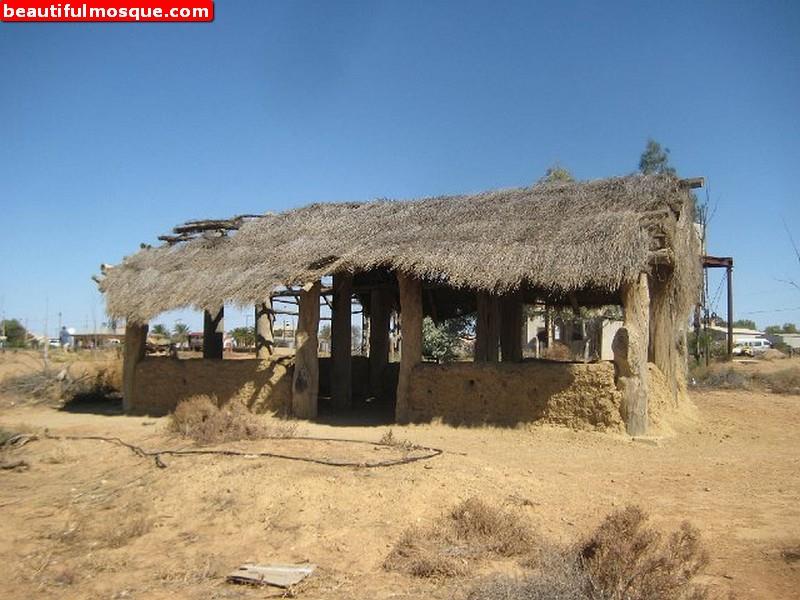
Fascinating story of Afghan cameleers in Australia

The town was home to Australia's first mosque, which was made of mud brick and built by the Afghan cameleers employed at Marree's inception.
The town was home to Australia’s first mosque, which was made of mud brick and built by the Afghan cameleers employed at Marree’s inception.

http://downloads.bbc.co.uk/podcasts/worldservice/docarchive/docarchive_20150331-0300a.mp3
http://downloads.bbc.co.uk/podcasts/worldservice/docarchive/docarchive_20150407-0232a.mp3

and wiki : http://en.wikipedia.org/wiki/Afghan_(Australia)

http://www.australia.gov.au/about-australia/australian-story/afghan-cameleers

On Ghassan Kanafani’s 79th Birthday

The great Palestinian author Ghassan Kanafani was born on this day in 1936:

poster

Kanafani was born in Akka to a prominent lawyer and started his studies at Les Frères, a French missionary school in Jaffa.

His life changed significantly when he was twelve: After his family’s displacement to Beirut and then Syria in 1948, he continued his studies in Syria’s public schools, where he got a UNRWA teaching certificate. He attended Damascus University, where he studied in the Arabic literature department until, according to a profile that ran in As-Safir, he was expelled for political reasons.

Initially, Kanafani worked as a teacher, leaving Damascus to work in Kuwait for five years as an Arts and PE teacher. Then, according to translator and scholar Roger Allen, the Popular Front for the Liberation of Palestine (PFLP)’s George Habash helped persuade Kanafani to move to Beirut, where the author worked on the al-Horria newspaper, and later al-Moharrer and al-Anwar, before becoming the well-known editor-in-chief of the PFLP’s weekly newspaper, al-Hadaf.

Even before he left to teach in Kuwait, Kanafani was writing and publishing stories. According to Kuwaiti writer Mai al-Nakib, Kanafani’s “The Stolen Shirt” won the Kuwait Literary Prize in 1958, when Kanafani was just twenty-two. His Men in the Sun, one of his most popular and acclaimed works, was originally published in 1956, followed by All That’s Left to You, Return to Haifa, and a number of other important works, including four collections of short stories.  

When Kanafani was assassinated in Beirut on July 8, 1972, he was just 36.

“While it is true that his life was brief,” Rasem al-Madhoon wrote in an essay translated by Nehad Khader, “it was also rich in the literature that he offered. A significant landmark of his literary, journalistic, and political journey was his preoccupation with the broader Palestinian national struggle and all of its demands; as was his persistence in penning short texts regularly. Ghassan’s friends remember his regular visits to Farouq Cafe in central Damascus.”

Kanafani’s texts are still read, staged, discussed, debated, and incorporated into new works, as in Susan Abulhawa’s Mornings in Jenin and the short film Qarar Mujazor A Brief Conclusion.

Online

“The Stolen Shirt,” trans. Michael Fares

Jaffa: Land of Oranges,” trans. Mona Anis and Hala Halim

Excerpts from Return to Haifa,  trans. Barbara Harlow and Karen E. Riley

Letter from Gaza,” translator not listed.

Books in translation

Men in the Sun and Other Palestinian Storiestranslated by Kilpatrick

Palestine’s Children: Returning to Haifa & Other Stories, translated by Harlow and Riley

All That’s Left to You, translated by May Jayyusi and Jeremy Reed

About Kanafani:

“Ghassan Kanafani: The Symbol of the Palestinian Tragedy,” by Rasem al-Madhoon, trans. Khader

“Remembering Ghassan Kanafani,” by Elias Khoury, trans. Maia Tabet

Returning to Haifa,” Arab Arts Blog

source

FEELING GOOD ABOUT APARTHEID

APRIL is FEELING GOOD ABOUT APARTHEID Month!
SUBSCRIBE to APARTHEID ADVENTURES: http://tinyurl.com/ApartheidAdventures
https://FACEBOOK.com/ApartheidAdventures
https://TWITTER.com/ApartheidAds
WATCH:
APARTHEID? IN ISRAEL?
http://tinyurl.com/apartheidinisrael
APARTHEID: NEW AND IMPROVED
http://tinyurl.com/ApartheidNewImproved
PALESTINE FOR BEGINNERS:
http://tinyurl.com/PalestineForBeginners

http://www.apartheidadventures.com

Noam Chomsky “On Palestine”

 7 apr. 2015

Prof Noam Chomsky talks to Frank Barat about US-Israel relations and “On Palestine” his book with Prof Ilan Pappe.

More info about the book here: http://www.haymarketbooks.org/pb/On-P…

Follow news on facebook here: https://www.facebook.com/conversation…

Belated April fools prank

Ajoutée le 2 avr. 2015

I played a trick on my math class for April Fool’s Day. In this one, I’m showing a “homework help” video that gets some trigonometry wrong. How embarrassing!

24 hours in a fuel tank


Three refugees from the war in Syria met in Turkey and crossed into Greece – but they wanted to go further. With money running out and their families in Turkey relying on them to find a new home, they made a last-ditch attempt to get into Italy. Said tells their story.

We knew the fuel tank was a bad way to go. There were Syrian guys who had tried it before and they all said, “Don’t do it!”

But we were desperate to get out of Greece. I’d been stuck there for two months, living in a flat in Athens with Anas and Badi. There was no work, no help, no way to survive. The police were hassling us every day, aggressive as hell. “Where are your papers? Where are your papers?”

The traffickers sat around in the cafes, Kurdish and Arab guys mainly, talking quite openly about the ways they could get people into other Western European countries. By plane. By boat. In the fuel tank of a lorry.

The fuel tank was the worst, but it was a surefire way to get in. “You might be a corpse by the time you arrive,” they said, “but you’ll get there.”

Fuel tank of a lorry
Many lorries have two fuel tanks, but may only need one

The guy who told us about the lorry was an Egyptian who ran an internet cafe near Omonia Square. The cafe was just a front for the smuggling operation, really. A lot of Arab kids would be in there talking to their parents on Skype, and he would listen in to find out who was trying to get into France or Italy. He told us he knew a Greek driver going to Milan. For 5,000 euros (£3,630, $5,386) each, he could take four of us in the second fuel tank.

We left Athens in a taxi, me and Badi and Anas and an Iraqi guy who we didn’t really know. The driver took us to a warehouse in an industrial zone outside Thessaloniki, not far from the sea. The lorry was hidden inside and the driver shut the warehouse doors so no-one could see what was going on.

He told us all to go to the toilet before we got in. The other guys all took a leak, but I just couldn’t go. I was too tense.

We had to get into the tank by crawling under the axle of the lorry and squeezing through this tiny door. As soon as I saw it I thought, “We’re going to die in there.”

Crawling under the lorry

When we’d taken a look we scrambled back out from under the lorry and prayed, there on the floor of the warehouse. We prayed for our children, all four of us together. Then we crammed ourselves into the tank and the driver started the engines.

As soon as the lorry started to move we knew we wouldn’t last an hour. It was burning hot and filled with diesel fumes. Anas was frantic, banging on the tank and screaming this weird scream. The driver heard him and the lorry stopped before it had left the warehouse. We scrambled out. Anas said, “I have kids, I don’t want to die.”

There was no way all four of us could go in that tank, so we agreed that the Iraqi guy would go back to Athens. The rest of us had been together for months. We were like brothers. We trusted each other.

The driver was going to lose 5,000 euros, but he didn’t want to arrive with a bunch of dead bodies in the tank. So he squeezed an extra 500 euros out of the three of us and we got back in.

Within an hour, I needed to pee so badly it hurt. We were squished together like dough. There was a rubber sheet on the floor of the tank and it just melted in the heat. I mean it turned to liquid. We were covered in this black stuff. It was like an oven, pitch black. It stank of melting plastic and diesel fumes. I was 100% certain that we were going to die.

We had a small plastic Pepsi bottle with us, and Badi and Anas managed to pee in it. Well, half of it went in the bottle and half of it went everywhere, all over their clothes and on to the floor of the tank with the melted rubber. Badi emptied the bottle outside the tank, but the lorry was going fast and the wind blew the spray back inside.

line

Where are Syrian migrants trying to go?

Said
Said en route

Syrian refugees often enter the EU in Italy or Greece, but most would prefer to get to a country with more jobs and better social welfare. Police harassment can also be a problem.

The most popular countries are in northern Europe. The UK, the Netherlands, Germany, and the Scandinavian states are all seen as places that offer a degree of support to asylum seekers and provide migrants with a chance of finding work.

Professional migrant smugglers operate all over Europe, the Middle East, and North Africa. Some advertise their services and answer enquiries on Facebook.

Desperate migrants often pass huge sums of money, saved over years of work or borrowed from families, into the hands of criminal smuggling gangs.

line

By then I was really in agony, but I just couldn’t pee in that bottle with my friends there. Towards the end of the journey the pain was so bad that I was actually blacking out. I tried to keep quiet for their sakes, but all the way I was screaming inside.

After a while the lorry drove on to a ferry. Without the engine noise we were scared they’d hear us, so we never said a word except when the lorry was going fast. We just stayed there silently, listening to the boat’s engines and struggling to breathe.

None of us thought we’d make it. I had my mobile in my hand and I kept looking at the screen in the darkness, looking at photos of my wife and my girls. I have twin girls, Deema and Reema. They’re four years old. I did this whole journey just for them. I left Syria to get my girls out of this war. I just kept thinking, “How are they going to survive if I don’t make it?”

Said's daughters, Deema and Reema

We had another girl on the way, too. I’d already seen the ultrasound in Turkey, so we knew it was a girl. I just lay there looking at my family on the phone and wondering if God would give me life to see that baby.

In the end the battery died.

Finally the engines started again and we started to move, slowly slowly slowly. When we stopped we could hear men talking loudly outside – “Buongiorno! Grazie! Prego! Grazie!” – and we knew we were in Italy. We were relieved, because whatever happened we would not be sent back to Greece.

The driver was supposed to take us to Milan but after a few more hours we just couldn’t stand it any more. We started banging on the side of the tank, yelling, but he didn’t hear us or he didn’t want to stop.

Badi still had some juice in his phone, so he called the trafficker in Athens from inside the tank and said, “Call the driver and tell him to let us out or we’re going to die in here.” Not long after that the driver turned off the big road and after a while he stopped.

We collapsed out of the tank on to the floor. We couldn’t unfold our legs, couldn’t even feel them, so we had to drag ourselves out from under the lorry with our hands. It was the middle of the day. We were in a wood somewhere in Italy.

The driver made it clear that he no longer knew us, that we were on our own. After he drove off we rolled down a slope and crawled into a concrete storm tunnel under the road. We just lay in there trying to move our limbs and to breathe. After 10 minutes, lying there on my side, I managed to take a pee.

When we got our breath back we sat up and looked at each other. And then we really laughed, because we were covered in black melted rubber and we stank. We stripped of our shirts and turned them inside out and used them to clean off the worst of it. We’d each brought a small bag with a change of clothes, so we got into clean shirts and left the old ones in the tunnel.

We had no idea where we were. Badi used the GPS on his phone to find a village, and we started walking towards it. There were vineyards everywhere, and after a while we saw farms. When cars came past we were scared that the villagers would report us to the police as they had in Greece, so we turned our backs on the cars and pointed at the scenery, acting as though were tourists out for a stroll in the hills.

When we got into the village we had to ask for help. We hadn’t eaten or drunk anything for 24 hours. The other guys pushed me to the front, because I was the whitest and the most educated. I have a degree in economics, and a bit of English, and I’d learned a few Italian words before we set off. So I had to do the talking.

The Italians were so kind to us. They actually took us by the hand, physically took our hands, and led us to the restaurant. It was closed, so we went to a cafe instead.

There was nothing to eat in there. The waiter brought us coffee and water. The water was fizzy. I had never had fizzy water before, and I just couldn’t drink it. So we drank the coffee. It was espresso. Black. Bitter. That was the next time we laughed. We survived the fuel tank, we said, but this coffee’s going to kill us.

line

Said split up with Anas and Badi (the narrator of the video, above) in Italy. He took a train over the Alps and arrived in Vienna. Anas bought a fake passport from smugglers in Italy and used it to fly to Sweden. His cousin, Badi, was eventually able to join a cousin in Leeds. All three have been granted asylum.

As soon as he was settled, Said sent for his family. Almost a year earlier he’d left a wife and twin daughters in Turkey. They arrived in Austria carrying a new member of the family – Mais, the baby that Said feared he’d never see.

He told his story to Daniel Silas Adamson and Mamdouh Akbiek of the BBC World Service. Animation by Osamah Al-Rasbi, video editing by Shayma Alissi. Exploremore stories from Syrian refugees.

Said with all three of his daughters
Said with all three of his daughters, in Vienna

Find out more

Syrian family

Explore more stories from refugees who have fled Syria’s civil war

Choose your own escape route

I nearly drowned in chocolate

Syrian Journey: What would you take with you?

The special shoes

source

Modern times

22

21

19

18

17

16

15

13

11

10

9

8

7

6

5

4

3

2

1

I am a Christian business owner in Indiana

Not really. But If I were, this is the sign I would put in my door.

“Dear Valued Patrons.Due to my sincerely held religious beliefs, and in light of the RFRA, recently signed by our Dear Leader Pence, I will no longerbe doing business with the following persons; nor permitting them in my establishment:

1.  Divorcees.  Matthew 19:9: “And I say to you: whoever divorces his wife, except for unchastity, and marries another, commits adultery.”

2.  Anyone who has ever read their horoscope or called a psychic hotline.  Leviticus 20:6: “As for the person who turns to mediums and to spiritists, to play the harlot after them, I will also set My face against that person and will cut him off from among his people.”

3.  Anyone with a tattoo.   Leviticus 19:28 “You shall not make any cuts in your body for the dead nor make any tattoo marks on yourselves: I am the Lord.”

4.  Anyone born illegitimately.  Also, anyone who, back to ten generations, is descended from someone born illegitimately.  If you can not PROVE, using appropriate church sources, that ten generations of your family were born in wedlock, I will have to err on the side of caution and not serve you. Deuteronomy 23:2 “No one of illegitimate birth shall enter the assembly of the LORD; none of his descendants, even to the tenth generation, shall enter the assembly of the LORD.”

5.  Anyone who makes a practice of praying aloud, or in public.  Matthew 6:5-6  “When you pray, you are not to be like the hypocrites; for they love to stand and pray in the synagogues and on the street corners so that they may be seen by men. Truly I say to you, they have their reward in full. But you, when you pray, go into your inner room, close your door and pray to your Father who is in secret, and your Father who sees what is done in secret will reward you.”

6.  Any woman with braided hair or gold jewelry.  Just to be on the safe side, NO jewelry at all.  1 Timothy 2:9 “Likewise, I want women to adorn themselves with proper clothing, modestly and discreetly, not with braided hair and gold or pearls or costly garments.”

7.  Any man who has ever, by accident or not, had his genitals damaged.  (Current interpretation of this scripture is under debate, so just to be safe, if you’ve had a vesectomy, or testicular cancer, I can’t serve you.  I apologize for the inconvenience but I am worried for my soul.)  Deuteronomy 23:1 “A man whose testicles are crushed or whose penis is cut off may never join the assembly of the Lord.”

8.  Please don’t bring your kids in if they have a bowl cut.  Leviticus 19:27 reads “You shall not round off the side-growth of your heads nor harm the edges of your beard.”

For those of you complaining that some of these scriptures are from the Old Testament, and that Jesus came to redeem us from these laws, I refer you to Matthew 5:17-19, where Our Savior himself says:  “Do not think that I came to abolish the Law or the Prophets; I did not come to abolish but to fulfill. 18″For truly I say to you, until heaven and earth pass away, not the smallest letter or stroke shall pass from the Law until all is accomplished. 19″Whoever then annuls one of the least of these commandments, and teaches others to do the same, shall be called least in the kingdom of heaven; but whoever keeps and teaches them, he shall be called great in the kingdom of heaven”

Again, I am sorry for the inconvenience.  It’s nothing personal, “love the sinner but hate the sin,” and all, but I simply can’t serve anyone who would blatantly disregard God’s sacred law in such a fashion.

Of course this would never happen.  People don’t not serve gays because they find it against God’s Law.  They do it, by and large, because “teh gays are icky.”  Jesus had dinner with prostitutes and tax collectors.  Get over yourselves.*******EDITED********

Never made it to the Rec list before guys…. Thanks for honouring my snark with your appreciation 🙂

source

Blog at WordPress.com.

Up ↑