Search

band annie's Weblog

I have a parallel blog in French at http://anniebannie.net

The daily trauma of a Sudanese man locked up in Israel

Posted: 04 Jul 2015 05:32 AM PDT

African migrants face countless struggles in Israel, from racism to discrimination to outright hatred. I’ve been reporting (for the Guardian and The National) on some of their lives when they leave the Jewish state and end up in South Sudan and across Africa.

Israel houses many African migrants in the Holot detention centre in the Negev Desert. A recent Haaretz editorial outlined the inhumanity of the situation:

The Population and Immigration Authority has begun over the past few days to inform asylum seekers held at the Holot detention facility that if they refuse to leave the country within two weeks for Uganda or Rwanda, they will be incarcerated at Saharonim Prison for an indeterminate period. This step marks the beginning of the Interior Ministry’s new deportation program, which brings to new heights the ongoing cruelty to asylum seekers, while breaking international law and principles set down by High Court of Justice rulings.

According to the new deportation policy, Israel forces asylum seekers – to whom group protection applies and therefore they may not be deported, based on the principle of non-refoulement – to leave to third countries (Rwanda or Uganda), in which their basic rights, including guarantees of their safety and liberty, are not insured.

A report by human rights organisations published in March revealed that there is real concern for the welfare and safety of the approximately 9,000 asylum seekers who have left Israel so far under the “voluntary departure” program. According to the report, some of those who have “left voluntarily” have had to return to the lawless regions they had fled, where they have been imprisoned and tortured.

In one of the hearings of the High Court – which twice struck down amendments to the law on illegal entry to Israel, rejecting the principle that a person can be incarcerated without due process – the state denied the claim that the intent behind the detention facilities was to break the spirit of the asylum seekers so they would leave the country.

The new deportation plan lets the cat out of the bag. The state intends to exert unlimited pressure on the asylum seekers to send them on their way, without caring what happens to them and flouting international law, Israel’s Basic Law on Human Dignity and Liberty, and refugee treaties to which Israel is a signatory.

The threat to lock up asylum seekers who Israel wants to deport at Saharonim Prison for an undetermined period not only constitutes abuse, both morally and legally, of a helpless population; it also spits in the face of the High Court and callously ignores its rulings.

About six weeks ago, the Be’er Sheva District Court denied a petition by human rights groups against the deportation and incarceration of asylum seekers who refuse to leave the country. Judge Eliahu Bitan ruled that the petition was premature because no one had yet been incarcerated. In light of the increasing pressure on asylum seekers and the state’s determination to adhere to its illegal policy, the courts could be the last barrier to a fundamental breach of the rule of law, human rights and democracy.

But even before it comes to that, Interior Minister Silvan Shalom and Attorney General Yehuda Weinstein can stop the persecution and abuse of the asylum seekers.

I recently interviewed an African migrant, via email, and the full transcript of our conversation appears below. His story is repeated thousands of times across Israel:

– Please tell me briefly your personal story and how you ended up in Holot, how long you’ve been there etc?

My name is Adil Aldao, I am from Sudan, Darfur. I have been in Israel since 2010. I came to Israel through Sinai. It took me three weeks to get into Israel. Upon my arrival into Israel through the Egyptian border, an Israeli soldier caught me and held me in Saharonim prison (a place where newcomers or newly interned are held for different period of time from one month up to two years). After a month in Saharonim I was dumped into a poor neighbourhood, in Tel Aviv, like the rest of asylum seeker here with no proper documents. I got a visa but wasn’t allowed to work and had no help from the government. I used to sleep at Levinski Park in South Tel Aviv in the middle of winter for four months, where I had to work black jobs to afford some money for renting. During this time I bear the hardship of finding food for survival and work for money for rental.

Years I was living in Tel Aviv before I got summoned to the concentration camp Holot where I am staying now and it’s been the hardest time in my life experience. In those years some Knesset members alongside South Tel Aviv citizens revolt against us (African refugees) in massive, racist demonstrations. During this year African asylum seeker have faced so many verbal and physical attacks. One of the common verbal insults was from the MP Miri Regev which refer to African refugees as a cancer and infiltrators from the former minister of interior. There are so many discriminatory attacks we have heard such as black nasty, murderers, work immigrations, or even physical attack on the streets.

In the beginning of 2014 I was sent to Holot for indefinite period of time and I am staying in Holot for over a year.

– Why did you leave Sudan? 

I left Sudan because of the genocide in Darfur which left over 4,000 dead and millions including me fleeing the tragedy to save their lives.

In 2003, my village, Golo, was destroyed by the government supported Janjaweed militia because it was a Fur Tribe village (it has since been attacked many more times. Whenever people move back to the village it is attacked. The last attack was January 2015, here is what I wrote about the situation of my family). I had to move to the neighbouring villages to save my life. A few times after they attacked the village where I was I had to move to Nyala city to try to save my life from the new attacks. A few months after, the militia attacked the Nyala city and I had to move to Khartoum to escape the violence against my tribe. When I was in Khartoum, I was studying and working in the market at the same time. Darfuri in Khartoum were the target of the government and they arrested me in 2008 because of my ethnicity. They brought me to an unknown place and they tied me up and then hit me in a really violent way. They beat me for three days and they asked me over and over why I helped the anti-government rebels in the Justice and Equality Movement. I told my attackers truthfully that I was not helping the JEM. They took everything I had on me. After 3 days, my cousin paid 3000 Sudanese Pounds for my release. But I knew I was susceptible to get arrested again because of my ethnicity. In 2010, the government ordered me to join the army of Sudanese forces to fight in Darfur, Nubba Mountain or the Blue Nile against my own peole; I refused to do. Because of this, I was not able to continue to study anymore, I couldn’t find work, and I was suscepted. The government considered me as a rebel so my life was in danger and that’s the reasons why I fled my own country in 2010.

– What are the conditions like inside Holot? How do you interact with other African refugees and guards?

The conditions are intolerable because the main reason they built it is to kill people spiritually and torture us mentally. Many have mental disorder as a result of it.

In term of food we have a big problem. What they provide lacks basic nutrition and does not suffice. Furthermore we are not allowed to bring anything from the outside. As a matter of fact we smuggle food in order to survive and if they find out anything that was smuggled in, immediately they confiscate it, and who was caught smuggling or have smuggled staff will meet punishment by transferring him to another prison which is more closed.

There is no medical service. Imagine over 2,000 inmate are now held in Holot but we don’t have even an ambulance for emergency. At 10.00 pm we all locked up in our sections. So if there is any accident we just have to wait till the morning. And the new law says if anyone is in difficult condition of sickness the authorities have the right to release them to avoid their responsibility. However, even if the patient in critical condition gets released he ain’t got money for the treatment and this sounds to me like they are sending people to die away from Holot. Holot is just a ghetto, the only different is that they don’t kill us directly; they kill us spiritually or send people to die anywhere by so called “voluntary return”.

Education; no education in Holot, we have imagery classes without teachers. There are no programs that could benefit us in the future.

Holot was built to make our life miserable to leave, but there is one fact they don’t understand; my life and my family’s lives are in danger, the thing is that if I return back to Sudan our family is endangered and will face indefinite jail. We don’t have so much interaction with authority of Holot, because they are here to make your life hard or unbearable so that you can leave the country. One example I experienced one day was when I went to the immigration offices to take permission to go out, they refused to give permission even for one day. I told them ‘this is my right’ you set it yourself; their response was you have no right here in Israel but to leave where you came from. This is a kind of humiliation.

– Why do you think Israel locks up so many African refugees in Holot?

Israel is using Holot as a method to force people to leave while they can’t be deported to their home country such as people from Darfur.

– How do you think the Israeli population views African refugees and why?

The government has created a bad image of African refugees as bad, murder, thieves, diseases, nasty and so on. Most Israelis are brain washed by what they hear from the media. Few of them understand the issue of refugees but they are powerless to help.

– What is your ideal situation, would you like to live in Israel? If so, what would kind of work would you be doing?

I came to Israel asking for help but Israel didn’t help me. Instead of treading me as human being with dignity and basic rights I have been treated as a criminal. If it depends on me I wouldn’t stay in Israel, not even for one day. The only reason I am here is the current humanitarian situation in Darfur and risk of being killed or tortured if I return. My ideal situation is I am buried in Holot, my future is buried in Holot, my freedom is buried in Holot, and my dignity has been taken away from me in my own country and where I find myself today. My brain is frozen from the mental torture, the uncertainty of my future, when and how the situation would favour me. From imprisonment in Israel or death in Darfur. My legs are paralysed in researching life and dignity. I have no idea what to do.

– Do you fear being sent back to Sudan or somewhere else in Africa?

If there is country in Africa or anywhere else to safeguard me with legal documents, a country that guarantees not to deport me, a country that would protect me with no fear at all, I will go. I fear of being sent to where my life is in danger like Rwanda/Uganda where there is no clear agreement of accepting refugees.

– What do you think of Israel itself due to your situation? 

From the history of Jews and in the honour of hHolocaust survivors, Israel shouldn’t treat refugees this way. Migrants, refugees and a different culture are not a threat to any nation. Israel is morally obligated to welcome strangers; Israel is morally obligated to show compassion to genocide survivors. According to my current situation and the international convention, Israel is not following the Refugee Convention and it is brutally violating refugees’ rights.

– Do you know Africans who have been in Israel and now live in South Sudan? 

I know some people have left but I am not in contact with them as they are not in stable situations in Rwanda Uganda, or South Sudan and most of them made their ways to other countries.

source

The Colombine massacre

The full Michael Moore Film:

Two Stages of the Syrian Ba’ath

Robin Yassin-Kassab's avatarQunfuz

Again inspired by Hanna Batatu’s excellent book, here are some notes on the first two of the three stages of the Ba’ath Party in Syria. I haven’t mentioned the party’s development in Iraq.

The first Ba’ath was the old Ba’ath, and it was led by ideals. The party’s founders, Michel Aflaq (a Christian) and the two Bitars (Sunnis) were the sons of grain merchants from the Damascus suburb of Maydan, and were genuinely motivated by the desire for a unified Arab state. They were of the commercial class that felt most immediately the loss of the natural Arab marketplace entailed by the Sykes-Picot partition and the actions of the French Mandate. The French had ceded Arab-majority areas north of Aleppo to Turkey, and in 1939 handed over the entire Iskenderoon governorate (which had an Arab and Alawi majority) in return for Turkish neutrality in the approaching European war…

View original post 1,000 more words

Arabs Without God

Robin Yassin-Kassab's avatarQunfuz

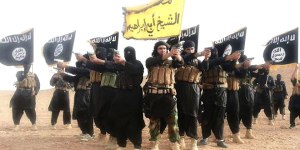
isis-flagThis was first published at NOW.

In the Arab world, the public declaration of religious disbelief is as taboo as the open profession of homosexuality. Publically-declared atheists and agnostics can wave goodbye to social respect, marriage prospects, even legal recognition. Yet a 2012 poll in Saudi Arabia – a state whose legal system equates atheism with terrorism, and which potentially applies the death penalty to apostates – found that 19% described themselves as ‘not religious’ and a further 5% as atheists.

In his new book “Arabs Without God: Atheism and Freedom of Belief in the Middle East” (soon to be translated into Arabic as ‘Arab bala Rab’) journalist Brian Whitaker interviews activist and quietist unbelievers from around the region, and investigates the pressures ranged against them. Most usefully, the book provokes a question – how can a revived Arab secularism (freed from the taint of the so-called ‘secular’ dictatorships)…

View original post 1,028 more words

Paralyzed Iraq War Veteran Tomas Young Has Died – Here’s His Final Letter to George W. Bush and Dick Cheney

Screen Shot 2014-11-13 at 11.18.25 AMLast March, I came across a letter written to George W. Bush and Dick Cheney from a paralyzed and dying Iraq war vet named Tomas Young. It touched me to such an extent, that I highlighted it on Liberty Blitzkrieg at the time. He died on Monday, the day before Veterans Day. If you really want to honor our nation’s soldiers, you should read the following and share it.

RIP Tomas Young.

Full letter below, from Counterpunch.

My Last Words to George W. Bush and Dick Cheney

by TOMAS YOUNG

I write this letter on the 10th anniversary of the Iraq War on behalf of my fellow Iraq War veterans. I write this letter on behalf of the 4,488 soldiers and Marines who died in Iraq. I write this letter on behalf of the hundreds of thousands of veterans who have been wounded and on behalf of those whose wounds, physical and psychological, have destroyed their lives. I am one of those gravely wounded. I was paralyzed in an insurgent ambush in 2004 in Sadr City. My life is coming to an end. I am living under hospice care.

I write this letter on behalf of husbands and wives who have lost spouses, on behalf of children who have lost a parent, on behalf of the fathers and mothers who have lost sons and daughters and on behalf of those who care for the many thousands of my fellow veterans who have brain injuries. I write this letter on behalf of those veterans whose trauma and self-revulsion for what they have witnessed, endured and done in Iraq have led to suicide and on behalf of the active-duty soldiers and Marines who commit, on average, a suicide a day. I write this letter on behalf of the some 1 million Iraqi dead and on behalf of the countless Iraqi wounded. I write this letter on behalf of us all—the human detritus your war has left behind, those who will spend their lives in unending pain and grief.

I write this letter, my last letter, to you, Mr. Bush and Mr. Cheney. I write not because I think you grasp the terrible human and moral consequences of your lies, manipulation and thirst for wealth and power. I write this letter because, before my own death, I want to make it clear that I, and hundreds of thousands of my fellow veterans, along with millions of my fellow citizens, along with hundreds of millions more in Iraq and the Middle East, know fully who you are and what you have done. You may evade justice but in our eyes you are each guilty of egregious war crimes, of plunder and, finally, of murder, including the murder of thousands of young Americans—my fellow veterans—whose future you stole.

Your positions of authority, your millions of dollars of personal wealth, your public relations consultants, your privilege and your power cannot mask the hollowness of your character. You sent us to fight and die in Iraq after you, Mr. Cheney, dodged the draft in Vietnam, and you, Mr. Bush, went AWOL from your National Guard unit. Your cowardice and selfishness were established decades ago. You were not willing to risk yourselves for our nation but you sent hundreds of thousands of young men and women to be sacrificed in a senseless war with no more thought than it takes to put out the garbage.

I joined the Army two days after the 9/11 attacks. I joined the Army because our country had been attacked. I wanted to strike back at those who had killed some 3,000 of my fellow citizens. I did not join the Army to go to Iraq, a country that had no part in the September 2001 attacks and did not pose a threat to its neighbors, much less to the United States. I did not join the Army to “liberate” Iraqis or to shut down mythical weapons-of-mass-destruction facilities or to implant what you cynically called “democracy” in Baghdad and the Middle East. I did not join the Army to rebuild Iraq, which at the time you told us could be paid for by Iraq’s oil revenues. Instead, this war has cost the United States over $3 trillion. I especially did not join the Army to carry out pre-emptive war. Pre-emptive war is illegal under international law. And as a soldier in Iraq I was, I now know, abetting your idiocy and your crimes. The Iraq War is the largest strategic blunder in U.S. history. It obliterated the balance of power in the Middle East. It installed a corrupt and brutal pro-Iranian government in Baghdad, one cemented in power through the use of torture, death squads and terror. And it has left Iran as the dominant force in the region. On every level—moral, strategic, military and economic—Iraq was a failure. And it was you, Mr. Bush and Mr. Cheney, who started this war. It is you who should pay the consequences.

I would not be writing this letter if I had been wounded fighting in Afghanistan against those forces that carried out the attacks of 9/11. Had I been wounded there I would still be miserable because of my physical deterioration and imminent death, but I would at least have the comfort of knowing that my injuries were a consequence of my own decision to defend the country I love. I would not have to lie in my bed, my body filled with painkillers, my life ebbing away, and deal with the fact that hundreds of thousands of human beings, including children, including myself, were sacrificed by you for little more than the greed of oil companies, for your alliance with the oil sheiks in Saudi Arabia, and your insane visions of empire.

I have, like many other disabled veterans, suffered from the inadequate and often inept care provided by the Veterans Administration. I have, like many other disabled veterans, come to realize that our mental and physical wounds are of no interest to you, perhaps of no interest to any politician. We were used. We were betrayed. And we have been abandoned. You, Mr. Bush, make much pretense of being a Christian. But isn’t lying a sin? Isn’t murder a sin? Aren’t theft and selfish ambition sins? I am not a Christian. But I believe in the Christian ideal. I believe that what you do to the least of your brothers you finally do to yourself, to your own soul.

My day of reckoning is upon me. Yours will come. I hope you will be put on trial. But mostly I hope, for your sakes, that you find the moral courage to face what you have done to me and to many, many others who deserved to live. I hope that before your time on earth ends, as mine is now ending, you will find the strength of character to stand before the American public and the world, and in particular the Iraqi people, and beg for forgiveness.

-Tomas Young

What’s so impressive about this letter, beyond the incredible emotion and pain behind it, is the fact that Mr. Young was so prescient about so many issues. He highlighted the debacle that became the Veterans Administration scandal before it broke, and he also pointed to the dangerous power vacuum created in Baghdad before the emergence of ISIS. We lost a special soul on Monday.

Screen-Shot-2014-11-13-at-11.41.38-AM-1024x476
source

Read the darn thing

see also Verdict: balanced report, unbalanced reaction


Rear Admiral John Kirby, taking questions, 2014. Photo from US Defense Department

US says UN Security Council should disregard ‘biased’ Gaza report

State Department says report, which accused Israel of possible war crimes, is intrinsically unfair

By i24 news
June 24, 2015

The United Nations Human Rights Council report on last summer’s war in Gaza should not be brought to the Security Council for a vote or used by the UN for other work, the United States said Tuesday.

Dismissing the report as having a “clear bias” against Israel, State Department spokesman John Kirby said Washington viewed the report, which accused both Israel and the Islamist group of possible war crimes, as intrinsically unfair.

“[W]e challenge the very foundation upon which this report was written, and we don’t believe that there’s a call or a need for any further Security Council work on this,” Kirby said during a press conference. “We reject the basis under which this particular commission of inquiry was established because of the very clear bias against Israel in it.”

The UNHCR is slated to examine the findings of the report on June 29 and may vote in favor of sending it to the Security Council for further action. Kirby had already iterated on Monday that the US would not take part in that endeavor.

The US does not “support any further UN work on this report,” Kirby said regarding whether it should be forwarded to the International Criminal Court in the Hague.

“We’ve made very clear what our issues were at the time about the use of force and we made very clear to the Israeli government our concerns about what was happening in that conflict,” he added. “We have an ongoing dialogue with the government of Israel on all these sorts of matters; that dialogue continued and continues.”

Israeli Prime Minister Benjamin Netanyahu on Sunday rejected the report’s finding and slammed the UN Human Rights Council for spending “more time condemning Israel than Iran, Syria and North Korea put together.”

“Israel does not commit war crimes, but rather defends itself from a terrorist organization that calls for Israel’s destruction,” the PM said.

American jurist Mary McGowan Davis, who headed the independent United Nations probe into the events of last summer’s war in Gaza, has said that the investigation’s report would have looked different if Israel would have cooperated with it.

In an interview with Israeli daily Haaretz, McGowan Davis said that if Israel would have co-operated with the investigation, “we could have met with Israeli victims and seen where rockets landed, talked with commanders, watched videos and visited Gaza. We talked to a lot of witnesses but of course an investigation needs to be as close to the scene as possible and it would have looked different.”

Israel refused to co-operate with the United Nations Human Rights Council (UNHRC) probe, harbouring grave misgivings about the commission’s impartiality.


Think U.N. Gaza ‘War Crimes’ Report Is Biased? Read It First.

By J.J. Goldberg, Jewish Forward
June 23, 2015

When the shouting dies down and folks take the time to read the actual content of the United Nations report on last summer’s Gaza war — all 183 pages plus side documents — you might see some very red faces in the world of pro-Israel activism.

Well, maybe you won’t. The leaders and friends of Israel’s current governing coalition aren’t in the habit of admitting mistakes, especially where Palestinians are involved. But this one will be hard to dodge.

Israeli officialdom and its boosters greeted the report’s June 22 release with a chorus of outrage. They claim it “accuses Israel of deliberately killing civilians,” denies Israel’s right to defend itself, “barely mentioned” Hamas and even “has blood on its hands for allowing the murder of Jews.” None of that is in the report.

What it does contain is a host of questions about the Israeli military actions that led to the deaths of around 2,200 Palestinians, a large proportion of them civilians. It questions whether Israel’s military goals of stopping rocket and mortar fire and tunnel infiltration, goals it admits were legitimate, necessitated all of the actions that caused the massive civilian suffering.

It reads harshly at times, but the events it describes actually happened. Given the numbers killed and left homeless, it’s appropriate to recall. The finger-pointing is actually rather mild, relative to the magnitude of the suffering. And make no mistake: the finger points in both directions.

The report notes that “the threats to the security of Israel remained all too real.” It describes at length the rocket and mortar fire from Gaza, as well as Hamas’s terrifying tunnels into Israeli territory. It describes Israel’s casualties, including children killed, wounded and emotionally scarred. And it charges that the firing of rockets without guidance systems in the direction of civilian residential areas by “Palestinian armed groups” was a blatant violation of international law.

But it cites dozens of cases where Israel’s response might not have been “proportional” to the threat. International laws of war dictate that a military action should be proportional, not to the harm suffered, but to the achievement of a “legitimate military goal.” The investigators studied 15 specific residential buildings out of the thousands that Israel shelled. It found evidence of a military target in nine of them. In the other six it couldn’t find evidence of a military target, raising the suspicion that the building was a purely civilian facility, suggesting that the attack violated international law. Since Israel didn’t cooperate with the investigators, and didn’t allow them entry to Israel or Gaza, the report urges Israel to answer the question of what it was aiming at in each case.

The report praises Israel’s efforts to warn residents by leaflet and telephone to flee before buildings were attacked, even at the cost of losing the element of surprise. However, it claims Israel’s practice of “roof-knocking,” dropping light munitions to warn residents before bombing, was ineffective.

It also raises an explosive question of whether Israel’s top leaders should be culpable for failing to change tactics in midsummer once the high civilian toll of its bombings became clear.

What will evoke the most discomfort and even outrage for many is the report’s lengthy series of grim eyewitness accounts of civilian deaths (“I found the decapitated bodies of my uncle and daughter…”) and destroyed homes. A handful of killings are documented that the report flatly says violated international law, notably a civilian shot twice after falling down wounded, caught on video.

But the report’s most direct, unequivocal allegation of illegality — stripped of “may,” “could” or “should” — involves “executions” of suspected collaborators by “Palestinian armed groups” (its collective term for the military wings of Hamas, Islamic Jihad and several smaller groups). The report describes in detail the arrest, torture and summary execution, often in public, of several dozen suspects, “with the apparent knowledge of the local authorities in Gaza,” the report’s term for the Hamas government. These flatly violated “both international humanitarian law and international human rights law,” along with “Article 6 of the International Covenant on Civil and Political Rights” and “article 3 common to the 1949 Geneva Conventions,” the laws of war.
The report quotes the West Bank-based Palestinian Authority — or, as it terms it, the Ministry of Interior of the State of Palestine — as condemning the executions as “illegal.” In what’s either wry humor or clueless diplo-speak, it says the State of Palestine intends to investigate Palestinian violations and impose justice as soon as it regains control of Gaza.

The report also notes allegations by witnesses that Israeli troops used Palestinians as human shields, forcing them to enter buildings before the soldiers in case of booby traps. One specific case is cited. On the other hand, it notes that Palestinian armed groups made an apparent practice of using human shields by sending civilians to the roof of targeted buildings “to ‘protect’ the house” — one specific case is cited, but others are suspected — “in violation of the customary law prohibition to use human shields.”

Israel condemned the report as biased from the moment it was first commissioned by the U.N.’s human rights council last July, during the heat of the war. The council has a long history of obsessively focusing on Israel and ignoring far more glaring human rights violators. It’s been responsible in the past for such miscarriages of justice as the 2009 Goldstone Report, which baselessly accused Israel of intentionally targeting civilians in the three-week Gaza incursion known as Operation Cast Lead. Israel refused to cooperate with that inquiry, whose chair, South African judge Richard Goldstone, eventually repudiated many of his own commission’s findings.

The council’s initial choice to head the latest inquiry was Canadian academic William Schabas, a longstanding, vehement critic of Israeli behavior. But Schabas quit the inquiry last February following revelations that he’d done paid consulting work for the Palestine Liberation Organization, a conflict of interest. His replacement was a retired New York state judge and onetime Brooklyn federal prosecutor with a reputation for fairness, Mary McGowan Davis.

The report produced by McGowan Davis and her fellow commissioner, veteran U.N. human rights expert Doudou Diene of Senegal, seems to have caught some Israelis off-guard. Where the Goldstone Report was dismissed out of hand, the Foreign Ministry says it will “study” the new one, despite the bias of the council that commissioned it. Some officials are quietly telling reporters it may have been a mistake to continue snubbing the investigation after Schabas resigned, rather than cooperating so McGowan Davis could hear Israel’s side. Indeed, some warn the report’s relative balance will make it harder to ignore the harsher allegations as they move through international bodies and tribunals.

Israel released its own report on the war a week before the U.N. document came out, on June 14, in an apparent attempt to preempt and blunt the expected the U.N. attack. Simultaneously, a pro-Israel organization in Europe released a report by a so-called High-Level International Military Group, comprising 11 retired generals and diplomats from around the world, headed by a former German chief of staff and head of NATO command. They visited Israel for several days in May and concluded that Israel “not only met a reasonable international standard of the laws of armed combat, but in many cases significantly exceeded that standard.”

Neither of those reports, however, addressed the specific incidents and patterns that McGowan Davis questioned.

It remains to be seen whether and how Israel will address her questions regarding the military necessity of its actions.

The Palestinians have initiated action against Israel at the International Criminal Court in The Hague, and McGowan Davis urges Israel to co-operate. But the court doesn’t have jurisdiction over a country that properly investigates and punishes its own crimes. The ball is in Israel’s court. For the rest of us, step one would be to read the darn thing.

Print Friendly

Body and soul, a race film by Oscar Micheaux with Paul Robeson

Black Cinema Part I — Race Movies – The Silent Era

POSTED BY ERIC BRIGHTWELL, JANUARY 31, 2010 10:11AM | POST A COMMENT

This is the first installment in a three part history of early Black Cinema. To read Part II, covering the Hollywood Studio years of the 1930s and ’40s, click here To read Part III, covering the TV Age of the 1950s and ’60s, click here The Lincoln Motion Picture Company

LincolnMotionPictureCompany (2)


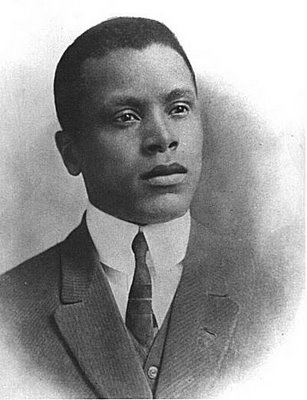
In most American silent films, minorities were generally played by white actors in make-up. When actual minorities were cast, roles were generally limited. Latinos in silent films usually played greasers and bandits; Asian-Americans played waiters, tongs and laundrymen; and blacks usually played bellboys, stable hands, maids or simple buffoons. Early film depictions of black characters were highly offensive, including those in the films Nigger in the WoodpileRastusSambo and The Wooing and Wedding of a Coon. Not surprisingly, both Asian-Americans and blacks responded by launching their own alternative cinemas. But whilst Asian-American Silent Cinema quickly faltered, black cinema (blessed with a much larger audience) flourished and soon many so-called race movies were being made by both black and white filmmakers for black filmgoers.

OscarMicheaux

see full article here

President Obama warns against ‘a comfortable silence’

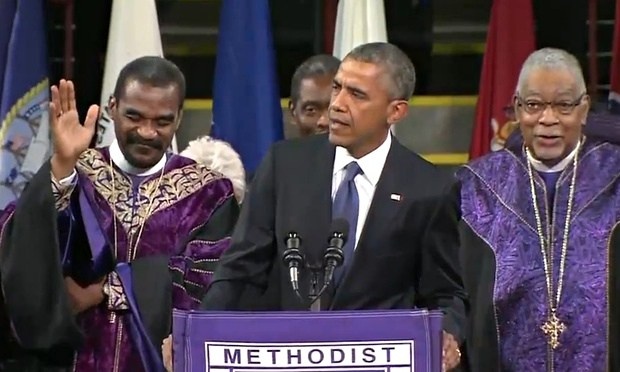
Click on image for President Obama’s speech at funeral of Charleston victim Clementa Pinckney

President-Obama-sings-Ama-011

Blog at WordPress.com.

Up ↑