Search

band annie's Weblog

I have a parallel blog in French at http://anniebannie.net

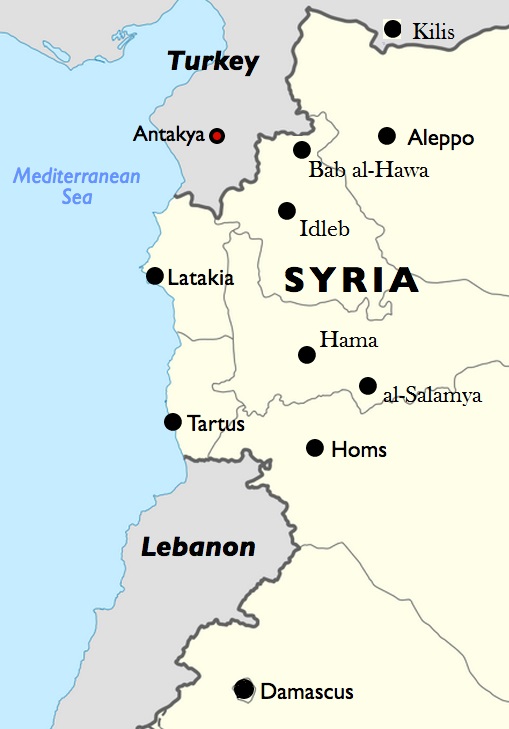
SYRIA – The long journey of a Syrian refugee (part 1/3): on the “Road of Death”, from Homs to Antakya*

 SOURCE

The Redaction of The Maghreb and Orient Courier publishes the story of Nori, a 21-years-old Syrian refugee, in three parts (in its issues of September, October and December)*. Nori told our correspondent the story of a journey towards life. He was a citizen of Homs and after his family had fled the war and his brother had died, nothing kept him in his city. He decided to leave his city behind, and the violence, war and misery that went with it. Here is his story, how he fled the regime and arrived in Turkey, just to find himself in a similar uncertainty about his future as back home – although less lethal.

* ALL DONATIONS TO THE MAGHREB AND ORIENT COURIER WITH THE MENTION “SYRIAN REFUGEE” WILL ENTIRELY BE TRANSFERED TO NORI, THIS STORY’S PROTAGONIST – THANKS A LOT TO OUR READERS FOR SUPPORTING HIM.


SYRIA - September 2015 - Amhed SAYED'“On the 16th of January 2014, my brother died and left me to live alone after my family had already fled to Jordan. Life became very hard for me in Homs. The position in the city became increasingly harder to maintain…

The bombardments increased after the leader of the biggest brigade of the Free Syrian Army (FSA) fighting in Homs received new weapons… The regime provoked the city in order to deplete the rebels’ weapons and to get a better morale amongst the troops so as to recruit further soldiers. Many massacres happened until an air strike killed the main leader of the FSA.

At that time, I decided to fill my loneliness by teaching in the poor schools, but the following massacres and murders caused by the rockets and the air strikes of the regime further demoralised me because I could not do anything to protect the children and even to save my life. The bombardments continued to destroy houses; the schools which I was teaching in and my house were destroyed… Six children died together… They were my students…

The only thing I could do was either to get out of the country or to die myself…

READ ON HERE

Theo Jansen Strandbeest

12087094_10154219106913942_6422777178336335415_o

Clase Magistral Ilan Pappé Universidad de Chile – INGLÉS

first minutes are difficult but the sounds gets better at 5′

Ali Mohammed al-Nimr : ‘If I die I’ve had a happy life’

‘If I die I’ve had a happy life’: Astonishing bravery of the boy who faces being beheaded then crucified in Saudi Arabia for taking part in protest when he was 17

  • Ali Mohammed al-Nimr arrested for participating in protest in Qatif in 2012
  • He will be beheaded and his body will be crucified in public for three days 
  • Source close to family said Ali, 21, remains optimistic in the face of death
  • They say government is making an example of Ali in wake of social unrest 

Ali Mohammed al-Nimr was, by all accounts, a regular 17-year-old boy who loved cars and hanging out with his friends when he was sentenced to death simply for protesting against Saudi Arabia’s government.

Any day now, he will be publicly beheaded and his body will be crucified and left to fester out in the open for three days despite worldwide condemnation.

Even in the face of certain death, a source close to his family told MailOnline he ‘has not lost hope’ of surviving this dreadful situation.

From inside his prison cell, the courageous activist told them: ‘I will get out. And if I die, I’ve lived a happy life.’

MailOnline’s source claimed the government is ‘making an example’ of Ali because of the actions of his uncle Sheikh Nimr al-Nimr, a Shi’ite cleric who was also sentenced to death for speaking out against them.

Capital punishment: Ali Mohammed al-Nimr (pictured) was arrested for taking part in an anti-government protest and sentenced to death in May 2014

Capital punishment: Ali Mohammed al-Nimr (pictured) was arrested for taking part in an anti-government protest and sentenced to death in May 2014

Courageous: Ali (pictured) will be beheaded and crucified any day now, but a source close to his family says the activist has 'not lost hope' that he will survive this ordeal

Courageous: Ali (pictured) will be beheaded and crucified any day now, but a source close to his family says the activist has ‘not lost hope’ that he will survive this ordeal

Missing him: Ali's father, who MailOnline's source has described as a 'broken man', tweeted this picture of Ali's brother and sister hugging a painting of him

Missing him: Ali’s father, who MailOnline’s source has described as a ‘broken man’, tweeted this picture of Ali’s brother and sister hugging a painting of him

Activist: The source believes the government is taking revenge on Ali because his uncle Sheikh Nimr al-Nimr (pictured wounded in the back of a police car after his arrest in 2012) who spoke out against them

Activist: The source believes the government is taking revenge on Ali because his uncle Sheikh Nimr al-Nimr (pictured wounded in the back of a police car after his arrest in 2012) who spoke out against them

Ali, now 21, was a high school student when he was arrested for taking part in a pro-democracy rally in the eastern governate of Qatif, where police brutally clamped down on demonstrators in 2012.

He was charged with attending the protest, teaching first aid to demonstrators, using his Blackberry phone to urge more people to join and possessing a gun – the only accusation his family strongly denies.

The country’s Specialised Criminal Court – which tries suspected terrorists and human rights activists – sentenced him to death in May 2014.

The decision was condemned by activists and human rights groups around the world, who argued he was being put to death for a crime he committed as a child and he was tortured into giving a false confession.

Despite facing an agonising wait to be yanked from his cell and beheaded by a state-sanctioned executioner, he remains incredibly stoic.

The source close to his family, who spoke to Ali over the phone, said: ‘He was so optimistic. He wasn’t scared. Even after he was given the death penalty, he never showed any fear.’

The lives of his family members, who live in constant fear that he will be executed at a moment’s notice, have been ripped apart by what they deem an act of vengeance.

‘They feel sad, they feel hopeless – helpless. They lie awake at night thinking about how he’s doing in prison, wondering if he is thinking about the death penalty,’ MailOnline’s source said.

‘His father is a very strong man but I can feel that he’s not acting normal any more – he is broken.

‘And his mother loves him so much. She says forget about it, don’t worry, but I can see that she is worried a lot. They are going to kill their child – nobody can handle that.’

Cruelty: MailOnline's source said Ali (pictured) was a regular 17-year-old boy who liked cars and hanging out with his friends when he was arrested and detained without trial in 2012

Cruelty: MailOnline's source said Ali (pictured) was a regular 17-year-old boy who liked cars and hanging out with his friends when he was arrested and detained without trial in 2012

Cruelty: MailOnline’s source said Ali (pictured) was a regular 17-year-old boy who liked cars and hanging out with his friends when he was arrested and detained without trial in 2012

Fearless: MailOnline's source said Ali (pictured) remains 'optimistic' even in the face of death, adding: 'Even after he was given the death penalty, he never showed any fear'

Fearless: MailOnline’s source said Ali (pictured) remains ‘optimistic’ even in the face of death, adding: ‘Even after he was given the death penalty, he never showed any fear’

Death penalty: A human rights group told MailOnline that the crucifixion sentence in Saudi Arabia entails beheading, then a public display of the body

Death penalty: A human rights group told MailOnline that the crucifixion sentence in Saudi Arabia entails beheading, then a public display of the body

Some family members cannot sleep at night because their thoughts are plagued by his impending death.

The source said: ‘They can’t stop thinking about Ali’s case. I think about what his mother and father must be feeling reading news articles that he’s going to be executed. This is their life – it’s ruined now.’

Ali once had a passion for photography and dreams of studying psychology when he finished high school.

He now only dreams of getting out of prison, the family source told MailOnline, adding: ‘The last time I spoke to him, he told me he was going to get out and continue his studies.

‘He doesn’t think about the death penalty or prison or the miserable life he has now – he just tries to get through to the next day.

‘Otherwise he said he’d be broken all day, just thinking about death. But if he thinks about the future, he’s going to live a happy life and he knows that.

There are fears that the Saudi government  ordered Ali’s arrest and killing because they wanted to take revenge on his activist uncle, Sheikh Nimr al-Nimr.

He was sentenced to death last year for disobeying the ruler, inciting sectarian strife and ‘encouraging, leading and participating in demonstrations’.

Policemen shot and wounded Sheikh al-Nimr, a vocal critic of the ‘harassment’ of Shi’ite Muslims, during his arrest in July 2012.

The evidence of the charges against him came from religious sermons and interviews attributed to the cleric but Amnesty International claimed he was ‘exercising his right to free expression and was not inciting violence’.

Renowned: ASaudi anti-government protester carries a poster with the image of jailed Shiite cleric, and Ali’s uncle, Sheikh Nimr al-Nimr

Revenge: There are fears that the Saudi government ordered Ali's (pictured) arrest and killing because they wanted to take revenge on his activist uncle, Sheikh Nimr al-Nimr

Revenge: There are fears that the Saudi government ordered Ali’s (pictured) arrest and killing because they wanted to take revenge on his activist uncle, Sheikh Nimr al-Nimr

MailOnline’s source said: He [Sheikh al-Nimr] didn’t kill anyone, he didn’t hurt anyone, he just did and said what all the other Saudis were thinking. We were all afraid, but he said it.

‘He would tell people, you should not be scared of the government, they should be scared of us.

‘If you say anything about freedom, say anything against them [Saudi government], they want revenge. This is not the way governments should treat people.’

Ali’s impending execution has been met with global outrage. France and the United Nations have ordered Saudi Arabia not to kill him and Labour party leader Jeremy Corbyn has urged Prime Minister David Cameron to intervene.

Many argued that he should not be executed for an alleged crime he committed when he was just 17, and legally considered a child.

Human rights groups also argued that his lawyers were denied access to evidence and that the final appeal against his execution took place in secret and without his knowledge.

A Change.org petition calling for a stop to the crucifixion has gained 12,000 signatures, another one started by human rights group Reprieve has nearly 14,000 and one urging UK’s government to put pressure on the Saudis has around 3,500.

United Nations experts on arbitrary executions, torture and child rights have urged Saudi Arabia to halt the execution – saying ‘confessions obtained under torture cannot be used as evidence’.

They said Saudi Arabia has executed 134 people this year, which is already 44 more than the total for the whole of 2014.

Anger: A Bahraini protester carries a lit palm branch during clashes with riot police following a protest against the death sentence of Sheikh Nimr al-Nimr in October 2014

Anger: A Bahraini protester carries a lit palm branch during clashes with riot police following a protest against the death sentence of Sheikh Nimr al-Nimr in October 2014

In a joint statement, the experts said: ‘Such a surge in executions in the country makes Saudi Arabia a sad exception in a world where States are increasingly moving away from the death penalty.’

The experts also said imposing the death penalty on children violates the UN Convention on the Rights of the Child, which Saudi Arabia signed up to.

Finally, they said: ‘Al-Nimr did not receive a fair trial and his lawyer was not allowed to properly assist him and was prevented from accessing the case file.

‘We call upon the Saudi authorities to ensure a fair retrial of Ali Mohammed al-Nimr, and to immediately halt the scheduled execution.’

Maya Foa, head of the death penalty team at Reprieve, told MailOnline: ‘The Saudi government’s plans to “crucify” Ali al-Nimr are nothing short of an outrage.

‘He was imprisoned, tortured into a bogus “confession”, denied access to a lawyer and sentenced to death by crucifixion.

She called on countries like the UK and United States, who are allies of Saudi Arabia, to intervene to ‘save his life’ and urged Britain’s Ministry of Justice to withdraw its bid to provide ‘services’ to the Saudi prison system.

Reprieve told MailOnline that the crucifixion sentence in modern Saudi Arabia entails beheading and then publicly displaying the body.

A spokesman said: ‘The sentence is actually quite unusual, even for Saudi Arabia, particularly given the lack of any real evidence against Ali.’

Read more: http://www.dailymail.co.uk/news/article-3253285/If-die-ve-happy-life-Astonishing-bravery-boy-faces-beheaded-crucified-Saudi-Arabia-taking-protest-17.html#ixzz3nIDiD98g 
Follow us: @MailOnline on Twitter | DailyMail on Facebook

Meet James Salter

“I decided to write, or perish. It was like starting life from scratch.”

James Salter is a novelist, short story writer, and screenwriter. He grew up in New York City and was a career officer and air force pilot until his mid-thirties, when the success of his first novel (The Hunters) led to a fulltime writing career. Salter’s potent, lyrical prose has earned him acclaim from critics, readers, and fellow novelists. His novel A Sport and a Pastime was hailed by the New York Times as “nearly perfect as any American fiction.”

In this video, Salter speaks about his unforgettable experience of taking off alone in the pursuit of writing: “You suddenly feel a pair of wings on you. . . .”

Iyad el-Baghdadi – إياد البغدادي – The Arab Spring Manifesto

 29 oct. 2014

Iyad el-Baghdadi’s speech at the 2014 Oslo Freedom Forum. See more talks like this at www.oslofreedomforum.com and follow @OsloFF for updates.

Ghaib Tu`ma Farman: The Old Man’s Word

From 

[Ghaib Tuma Farman. Image from unknown source][Ghaib Tuma Farman. Image from unknown source]

The Old Man’s Word

Ghaib Tu`ma Farman

Translated by Khaled Al-Hilli

[As a pioneer of contemporary Iraqi fiction, Ghaib Tu`ma Farman (1927-1990) may have been too geographically removed from the literary center to enjoy the critical acclaim offered to authors of his stature. Born in Baghdad 1927, he came of literary age in the 1950’s with the publication of his first short story collection in 1954 and formed friendships with other literary figures of his time such as Fuad al-Takarli and Abd al-Wahhab al-Bayyati. He studied Arabic literature in Cairo and worked for several newspapers and publishing houses in Iraq and Egypt. After a number of perilous encounters with the state and its censorship, leading to his citizenship being revoked temporarily in 1957, Farman left to Moscow in 1960 where he spent the remainder of his life in exile until his death in 1990. While in Moscow, Farman supported himself by translating to Arabic the works of European writers such as Silone, Gorky, Dostoevsky, Chekhov and Pushkin.

Farman’s fiction is characterized by its brilliant artistic treatment of the turbulent and transformative years of the 1940’s and 1950’s. In their variegated portrayal of Iraqi society, his novels often feature the exiled, the downtrodden, and the poor, whose lives have been tragically and irretrievable shaped by social and political upheavals.

Very little of Farman’s work has been translated to English. The following is a short story from his collection, Ālām al-Sayyid Maʻrūf. This book, published in 1982, includes an eponymous novella and a number of other short stories written over a span of a few decades. Many thanks to Chris Stone, Beth Baron and Nova Robinson for their valuable feedback on earlier versions.]

The Old Man’s Word

He woke up at dawn; he was ready for them. He sneaked out of his bed leaving the twilight breeze behind him, and walked down the stairs leaning on the wall. As he crossed the bottom step, he raised his eyes to make sure he did not wake his wife. He walked across the rectangular courtyard, now under a waning cloak of darkness blending with old scents, and he brought a chair to the passageway and sat down to wait for them. Yesterday he stayed up and waited for them until midnight … but they never came. He did not hear their movement outside the door, nor their voices whispering. Today he was determined to be ready for them at dawn. He sat with his cheek resting on his palm. He listened attentively and waited. He would stay until he heard the rustle of their footsteps outside the door, and then he would pounce and clutch at their necks, and shout until he woke up all the neighbors. He’d show them who he really is; I’ll make them cry uncle

The air in the house was stifling and sultry, unlike the rooftop’s twilight breeze. He wrestled with sleep and dragged himself out of bed, and now drowsiness came back as he sat behind the door. He opened his heavy eyelids and raised his eyebrows defiantly. He placed his ears against the wood of the door and examined, under a canopy of darkness, the lower level of the courtyard, the narrow windows of the cellar, part of the clay water pot, the last three steps of the staircase, the lower part of the bathroom door, the kitchen, and the bottom part of the sink. Silence enveloped everything. Darkness was starting to dissipate gradually before his eyes. Inside his chest something was itching him, an unrelenting urge to cough, which he suppressed lest he might alert them to his presence. When he dozed off again and his eyes grew heavy, he shook off this unexpected drowsiness with a jolt of his head, and he coughed in spite of himself. He scratched his graying chest as if to pluck out something scraping inside of him.

A few minutes later, he heard the bellowing of a cow. He knew it was Sakina, the milk woman, leading her cow to the end of the alley where she sold her milk. But he hasn’t heard their voices yet; he hasn’t heard their hands scratching the door. Everything went silent except for his heart, which sounded like a pendulum of an old clock. Once again, the unshakeable urge to cough came back. He clenched his teeth and smacked his thigh. A moment later, the night-guard’s whistle broke through the silence. Then he heard the rustle of the sweeper’s broom and realized that morning had arrived and that they will not show up. 

The darkness in the passageway was like smoke with a smoldering glow. As he stood up, he clutched at his left knee, which was afflicted by rheumatism, and he noticed that light was starting to filter through from above. The green of the shanasheel on the upper floor appeared faded. He said to himself, “They’re not coming today. It is as if they knew I’d be here waiting for them. They know who I am. They know better than to mess with Abu Haidar.” Then he pondered to himself, “It was around this time that I heard the scratching yesterday,” and he imagined that he was hearing it now, but he could only hear his heart thumping in his chest like a broken drum. Then he heard the sound of heavy footsteps coming down the stairs. He knew it was his wife. As he turned around, he saw her heavy feet, then her black gown and plump body. When she came close she whispered, in a tone of gentle reproach, “You thought I didn’t notice when you woke up, did you?”

He coughed and said in a low voice, “I have to find out who they are.”

“But what’s the point? Who are you going to complain to?”

“I’m not going to complain to anyone. I have my own hands. An Imam who doesn’t deliver will never be revered. Fattouma, an Imam who doesn’t deliver will never be revered.”

Then he had a coughing fit. When he looked up at his wife again, he caught a glimpse of tenderness in her eyes. A broken old man? Never, Fattouma. He stifled another urge to cough and it burst through his throat. Then he was clam. He heard a car’s engine, then another one, and he knew for certain that they were not coming. He raised his head to the rectangular sky, which the rooftop balusters seemed to penetrate. It was a glowing blue, and this added to his certainty. Behind his door all was silent, while outside, beyond the little bend where his house was located, life was returning to its daytime pace.

He could hear the footsteps of passersby, the intermittent coughing, and even the softly whispered, “Allah Kareem,” God is Most Kind, which he had heard uttered everyday by the kubbah vendor. The courtyard lit up with morning light, and things returned to their former state. He grew tired of waiting. 

“So they’re not coming. All right, then. Tomorrow Allah Kareem, as Hassani, the kubbah vendor would say.” He came close to the door and glared at it with resentment. Its back with its geometrical concavities looked shaded now, with sharply defined lines. He lifted the latch with a squeak, stepped across its threshold and stared vacantly at it. With the light from the corner, he saw something occupying the upper part of the door. He moved closer and peered at it. It was a reddish smudge, the color of crimson blood. He dug his finger into it. It was still sticky. 

He yelled from his spot, “Fattouma, come see this!”

She came strutting, like an old woman brought back to a younger age. She said from the passageway:

“What is it? Did they put another cat?”

“Even worse. Look at the red scribble.”

The old woman stepped cautiously over the threshold. She stood next to him and saw the writing.

“What is written there?”

“How would I know? I’m as good as blind.”

The smudge stood before him like a curved tail. He stood there with his wife staring at it, as if with some long reflection they could decipher its meaning. It was puzzling and abrupt, reddish black, wavering between an incantation and a transgression. The old man regretted that his mother and father never taught him how to read and write. He regretted this now more than any other time in his life. And as his eyes grew tired of staring blindly and pleading to the walls around him in the alley, he walked out to the street, turning left and right, pleading like a confused supplicant while people walked by untroubled by the smudge, as if they had no knowledge of its existence. One young man looked at the old man’s long underwear and smiled kindly. He started to ask him, raised his hand a little, and then dropped it on his thigh. Words of entreaty died on his lips.What on Earth does this unsightly scribble mean? It was also written in red paint, which by itself is reason enough for much anguish. The old man headed left, to Hussein al Attar’s shop. He alone could read this ominous writing, and if there were something offensive in it, he would not embarrass him in front of other people. But the metal shutters were pulled down and the old man went back to his corner. He stood before the door and the red writing appeared in all its intensity.

“How did they write it?” He asked his wife, who was sitting on the chair now.

“They just did. You can’t wait for them all night.”

“Are they going to keep messing with us like that? 

“I hope they get what they deserve.”

“No, Fattouma, an Imam who doesn’t deliver will never be revered.”

Then he coughed as he labored to breathe. She said with anguish, “Water is boiling. Come inside and drink some hot water.” But he declined, preferring to wait for Hussein al Attar to open his shop so he could learn the meaning of this writing, before which he stood flustered, helpless and agitated. One time before they had hung a dead black cat, and then a mouse. Another time they smeared his door with something putrid. They did all of that and he understood the insult and was determined to catch them and take his revenge. But now he didn’t know what they meant by this writing, which they scribbled in brazen red paint that covered the upper part of the door. How did they write it, much less in the dark? His tiny eyes kept squinting at this wretched writing. 

His wife came with a glass of hot water. He sat to drink it. 

Then the old woman suggested, “Should I get you a cloth and hot water to wipe it off?”

“How can I wipe it off? I need to know what it says.”

“God Knows,” the old woman rolled up her sleeves, “it could be something obscene”

“No, I need to know,” he said with determination, “but al-Attar is late today.” “Where are you, Abu Ali?” he pleaded. 

His wife answered, “If our sons were here, they would have read it for us. They wouldn’t leave us in such confusion.”

The old man said with irritation, “They drove them all away, left a big empty void.”

He sank into a deep melancholy; he awoke from it at the sound of shop shutters wailing from around the corner. He stood up promptly and said with the eagerness of a child, “Hussein is here!” as he ran off leaving behind the water glass on the chair.

Two minutes later, he came back with a man of medium height, an oval-shaped face and grey hair. He bid the old woman good morning and inquired about her health, but was soon interrupted by the old man, “Let’s leave health aside for now. First, tell me what it says here.”

The man raised his head at the door and peered at the writing.

“So, what does it say?”

He moved closer to the door and pointed his finger at the writing, as if trying to spell it out.

“What does it say, Hussein?”

“What does it say? It says, ‘sheel,’ leave.”

“What … What?”

“It says ‘leave.’”

“That’s it? Just like that, leave?”

“Yes, that’s right. Leave.”

The old man fell silent, pondering to himself. Then, with a different tone, he said, “I knew it all along. They want me to leave.” 

Hussein’s eyes were still fixed on the door, as if trying to confirm one more time what he had just seen. The old man observed his face with eagerness and anticipation. Perhaps he would change his mind in the end. That’s it? “Leave,” just like that! It is inconceivable that one word could take up so much space on the door. Leave!

“Leave, that’s all?”

“Yes, ‘leave.’ It’s right there, clear as daylight. L E A V E.”

“Are they in their right mind? Leave the house where I got married? The house where my father and mother drew their last breath? Leave? Just like that? It’s absurd!”

No longer staring at the door, Hussein, whose aging face betrayed visible signs of distress now, answered, “It’s best to steer away from evil.”

The old man became irritated and said, “This is not steering away from evil. This is bowing to the devil and … and … and kissing his hand. What if someone came up to you tomorrow and asked you to leave your shop that you’ve had for twenty years. Would you leave it?”

“Yes, I would.”

“Why don’t you just go back to your work? What is this, the rule of Qaraqosh, or Hulagu?”*

“Alright.”

Sensing that he might have offended him, the old man turned to Hussein. He had already started moving, his head sunk low, “If you excuse me now … I left the shop … It will all pass …” The old man did not say anything; he stood fixed in front of the door. He saw the red word mocking him, scoffing at his old age. I’ll teach them how to mess with Abu Haidar.

“Come inside, dear.”

“If I could just find out who wrote it,” he said through clenched teeth. 

“Come inside, dear. Your chest will act up.”

He entered the house following his wife. The sunlight shone with all its intensity on the courtyard, and through the green latticed windows of the upper floor. The old man and his wife climbed up the two stairs to the living room and he sat on a wooden daybed, while his wife chose to sit on the floor behind the tea heater, her same spot for almost thirty years. Back then, the living room was covered with carpets, and Hadi used to sit next to her. Then the kids came. They went to school, to college, and got jobs. Then chairs were brought into the living room, but the old woman had gotten used to sitting on the floor. She would sit cross-legged on the carpet for hours without her legs going numb. She would never think about sitting on a chair.

And it suddenly occurred to the old man to ask, “Fattouma, do you remember how many times we’ve painted the living room?” 

“I don’t remember.”

“More than four times. When we got married, that was the first time. When we circumcised the boys, that was the second time. When Haidar got married, that was the third time. When Shakir got married, that was the fourth time. And right before the boys left, that was the fifth.”

The old woman did not respond. She was busy pouring a cup of tea, which she then offered to him, and brought close to him a small bowl of walnuts soaked in water. The old man glanced around the walls as if trying to decipher them. One summer he built this wall from nothing. He brought a builder and for two days was at his heels observing how every brick was laid in its place. He would tell the builder, “I want this to endure for the children of my children … I want it to be sturdy.” And the ceiling? He looked at it mournfully. It was not covered with boards before Haidar got married. When Haidar got married he covered it with wooden boards of particular shapes and patterns and painted it light green. When sunlight filtered through in the morning, the entire living room would appear soaked in emerald green. Oh, and the wedding bed used to be here, the clothes cabinet there, and the toilet table with its big mirror. That night he was too shy to enter the room. Then, after a short period, otherwise known as the honeymoon, the bride and groom moved up to the second floor.

“I don’t want your tea to get cold.”

He left the daybed and walked down the two steps to the courtyard. The sun had descended on the latticed windows of the upper floor and touched the bannisters of the hallway leading to the room where Haidar and his wife once slept. This is where he once stood as he called out to Haidar on his wedding day, “When it was my wedding night, I didn’t take that long. Oh, young people today!” And he chortled in his joy. The earth itself could not contain his happiness. Then his second son got married, and he swore to marry off his third son before he would die. He swore on his grey hair. I would even cut off this rheumatic leg of mine, the root of all my affliction and misery. Then Haidar’s wife became pregnant, and when one morning his second son’s bride kissed him on his forehead asking for his blessings, he was about to say something inappropriate but felt embarrassed. His son was watching him. He wanted him to make a mistake. But I am your father, how dare you. It was the summer season and he was sitting on the chair in the very spot he is contemplating now, between the water pot and the stairs. Sunlight had also filled the courtyard, and he shouted at him, “Get up, your bride is coming down!” Now his old bride was coming down, with her hand leaning on her knee. 

As she came close to him and asked, “Is your chest going to act up on you again today?”

The water pot was still in the same place, green on both sides, and the stairs from which the bride descended were dusty, the wooden planks at the edge of each step corroded. On the other side was the bathroom.

“Fattouma, do you remember how hard I worked to build the bathroom?”

“Yes, very hard.”

“I didn’t want them to leave. The house is big enough to shelter an entire clan. They wanted a bathroom and I built them a bathroom fit for kings. I built it with these scruffy hands. I did it all with my hands. I did it all for them.”

Next to the bathroom, the kitchen was covered with floor tiles. At its center, there was the table where Haidar used to eat his lunch. Now it was deserted. For the old woman food always tasted better on the floor and the kitchen felt stifling. Here are the kitchen floor tiles, and the traces of smoke on the wall. There, on the west side of the house, where the traces were even stronger, he, Hadi al Hajj Rashid, used to cook harissa for the poor in a big cauldron that occupied the entire west segment of the rectangular yard. The house was always heaving, always bustling with its own people, and visitors would come in and out. He would stand like a chief of a clan, looming larger than life. He would say, God bless this house … I will make the smoke rise to the Seventh Sky… Astaghfirullah, God forgive me! They made me curse and it is not even morning yet. 

“Fattouma, it is one more month before it’s time to cook harissa, if God keeps us alive. And why wouldn’t He? What have we done to Him? Have we stolen people’s money? Fattouma, get it out of your mind – I’ll never leave this house. I will stay here, and this year’s harissa will be legendary, and everyone will swear by my name.”

“And they will.”

“Of course they will. Who’s not going to let me stay? What nonsense is this to leave my own home? Fattouma: one’s home is one’s country.” 

* In popular culture, these two names are associated with arbitrary judgement and despotic rule. The former was one of Saladin’s palace administrators who was later appointed as minster of Egypt at the end of the 12th century. He became a popular figure parodied in Arab folklore for his bizarre rulings and capricious behavior. As for Hulagu Khan, the destruction of Baghdad in 1257 earned the Mongol ruler his reputation for unbridled brutality.


[From GhaibTu`ma Farman, Ālām al-Sayyid Maʻrūf: Qiṣaṣ (Beirut: Dār al-Fārābī, 1982. Translated from the Arabic by Khled Al-Hilli]

source
Assad’s Strategy Is To Create Refugees

“They want to empty the country.”

Refugees wait at a bus terminal in Istanbul. Ahmet Sik / Getty Images

ISTANBUL — The 53-year-old father of two was convinced that Bashar al-Assad wanted him to flee Syria.

More than two years after he buried the bodies from a massacre in his village near Damascus by forces loyal to the Syrian president, he sat in an Istanbul park alongside dozens of other refugees, waiting with their life jackets to make the journey to Europe by sea.

“They want to empty the country,” he said, sitting with his wife and two children as he described how government soldiers had bombed the village of Jdeidet al-Fadel and then executed residents in their homes, suspecting them of rebel sympathies. Some, he said, were “beheaded like chickens.” After helping with the burials, he snuck his family into Turkey.

The refugee crisis isn’t just a by-product of the brutal civil war in Syria, according to many of those fleeing, as well as Western officials and analysts tracking the conflict. It’s part of a concerted effort by the Syrian government, which has killed the vast majority of civilians in a war that has left more than 200,000 people dead.

Assad has lost control over more than three-quarters of the country, and targeting civilians in those areas has been part of his strategy from the start of the four-year-old civil war. His forces work to make opposition-held areas unlivable for rebels and civilians alike — a tactic guaranteed to create masses of refugees. “The rationale behind [the government’s military] strategies is to leave no other choice to the populations: Either you come back to us and recognize our authority, or you will die,” said Pierre Desbareau, the emergency coordinator for Syria at Doctors Without Borders. “In many besieged zones, you really can see the level of brutality rising year after year. So, at the end there is no choice for the population in opposition areas. They have to leave the country.”

A city block in Aleppo destroyed by government bombings. Provided by Melad Shehabi

International attention on the conflict has focused on ISIS ever since it surged to prominence last summer, overrunning cities in Iraq and Syria and beheading Western journalists. ISIS is also the priority for the U.S., which is fighting the militants with airstrikes. Yet as refugees, most of them Syrian, pour into Europe in a growing humanitarian crisis, it’s Assad’s forces who have done the most to fuel the exodus. Refugees heading to Europe and the smugglers who send them — as well as Western officials and analysts — say the human tide promises to persist as long as the Syrian government continues attacking civilians.

“This is about the only reason for the refugees,” said a smuggler in Istanbul, who spoke on condition of anonymity because his work is illegal. Based in the refugee-crowded neighborhood of Aksaray, he guessed that 90% of the thousands of Syrians he’d sent to Europe were fleeing Assad. He’d arranged the journey for many of those huddled in the park on Tuesday night. Some were recent arrivals in Turkey, which hosts 2 million Syrians. Others were long-term refugees who had lost hope in the idea of returning home. Buses idled nearby. They are packed nightly with refugees before driving to the port city of Izmir, where the refugees board boats bound for Greece. “It will never end,” the smuggler said, his three cell phones ringing relentlessly with business calls. “People will keep trying to get out.”

“As long as Assad is in power and he continues to use these tactics, more and more refugees will be created.”

The Obama administration recognizes that Assad’s war efforts are driving the refugee crisis. “It’s fair to say that the regime is likely using indiscriminate attacks to make it very difficult for people to live in opposition-controlled areas,” said an official with the U.S. State Department, who declined to be named discussing the subject. “As long as Assad is in power and he continues to use these tactics, more and more refugees will be created.”

Yet the refugee issue is unlikely to change U.S. policy toward Assad, which has centered from the start on modest support for carefully selected rebel groups and strongly worded critiques. “The way it’s been teed up for the American public is that we’re not supposed to care and it doesn’t concern us,” said Andrew Tabler, a Syria expert at the Washington Institute for Near East Policy.

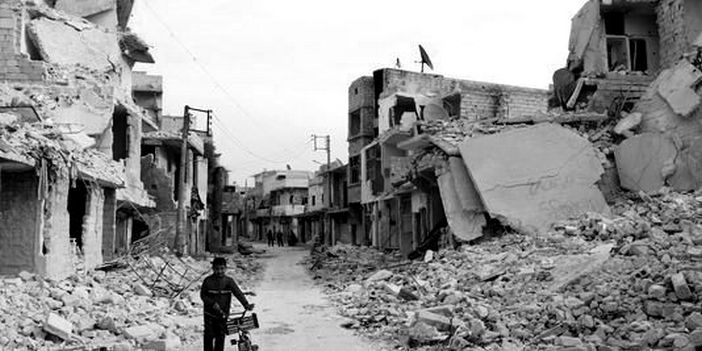
The attacks on civilians continue: airstrikes against schools and markets, barrel bombs dropped from helicopters onto hospitals and homes, artillery barrages, sieges that choke off access and food to opposition-held areas, massacres like the one witnessed by the man on the park bench.

Destruction from government attacks in the province of Idlib. Provided by a resident, Abdulkader al-Husain

Assad’s attacks on civilians play into the sectarian war raging in Syria and across the Middle East, Tabler added. Assad’s government is dominated by the country’s Alawite religious minority, which is an offshoot of Shiite Islam. It is propped up today by its Shiite ally in Iran, as well as Russia.

Most Syrian refugees are from the country’s Sunni majority, often hailing from areas that have slipped out of Assad’s control. “That’s his intention: to move Sunnis from those areas and fortify his state,” Tabler said. “The more Assad holds on, the more he strikes civilian areas, and the more refugees we have.”

In a recent interview with Russian media, Assad blamed the West for the refugee crisis, citing its support for the opposition.

According to the U.N., there are now more than 4 million Syrian refugees, the bulk of them based in Jordan, Lebanon, and Turkey. Desbareau, of Doctors Without Borders, said that many are giving up on going home — and leaving their overburdened host countries in hopes of starting fresh in Europe. “It’s endless violence inside and no sign of a peace agreement, so they’re saying there is no way they will come back to the country,” he said. “And they’re in these camps for sometimes three or four years, with tensions around them from hosting populations that are saturated, and [they’re seeing] no future for their kids.”

In February 2014, the U.N. Security Council adopted a new resolution to increase humanitarian access in Syria and stop indiscriminate attacks. The government has ramped up its sieges on opposition-held areas since then, Despareau said, and its attacks on besieged zones have become “even worse.” Doctors Without Borders estimates that there are about 2 million people living under siege in Syria, he added, “and the level of intensity of bombing they are facing is just incredible.”

A video showing the destruction of Aleppo, mostly from government attacks, filmed by Syrian photographer Melad Shehabi. Via YouTube

In interviews from Syria — speaking by cell phone, Facebook, and Skype — civilian residents described Syrian government attacks.

In the northern province of Idlib, Abdulkader al-Husain, 28, said he was visiting his sister on Sept. 1 when he heard a helicopter hovering overhead. Then the ground shook under his feet as he heard an explosion “like the sound of the god of death.” The chopper had dropped a barrel bomb, a crude and indiscriminate explosive. Husain ran outside to see blood and bodies in the street.

There were five civilians killed and 20 wounded, he said, adding that more than two-thirds of the village had already fled as refugees due to constant government attacks. “The regime is trying to take revenge on the cities and villages that came out against him,” he said. “The strikes are almost daily.”

Yamma al-Sayed, 21, a journalist with an opposition TV station based in the Damascus suburb of Douma, said he had seen three massacres in just the last month. The first was a notorious incident on Aug. 16, in which the government bombed a marketplace, killing more than 100 people, according to Human Rights Watch. “Most of them were women, children and the elderly, trying to secure food for their families,” he said. “I saw people turned into pieces.” Six days later the government attacked an apartment building, Sayed said, and two days after that airstrikes killed another 10 civilians in their homes.

The aftermath of a government bombing in the coastal province of Latakia, provided to BuzzFeed News by a local photographer.

In the southern city of Daraa, a young mother said her home had been destroyed this summer over the course of “daily” government attacks; a freelance photographer from the coastal province of Latakia recounted pulling bodies from the rubble of a market bombing last month. Melad Shehabi, 26, said the last bombing he witnessed in Aleppo came on Tuesday, when the government fired a rocket into an apartment building, killing four people and wounding 15. “It’s a scorched-earth policy,” he said.

The director of a hospital in the central province of Hama, Hassan al-Araj, said the latest attack on his village came on Wednesday, when four barrel bombs destroyed three homes. “The goal of the regime is displacement,” he said. “People are waiting for death.”

Mike Giglio is a correspondent for BuzzFeed News based in Istanbul. He has reported on the wars in Syria and Ukraine and unrest around the Middle East. His secure PGP fingerprint is 13F2 AD33 403F E72E 7C4E 5584 3E3B 2497 EEE9 DF7A
Contact Mike Giglio at mike.giglio@buzzfeed.com.
Munther al-Awad is a journalist based in Istanbul.
Contact Munzer al-Awad at munther.alzoubi@hotmail.com.

Blog at WordPress.com.

Up ↑