Search

band annie's Weblog

I have a parallel blog in French at http://anniebannie.net

Five hours with Edward Snowden

sn

6 november, 2015

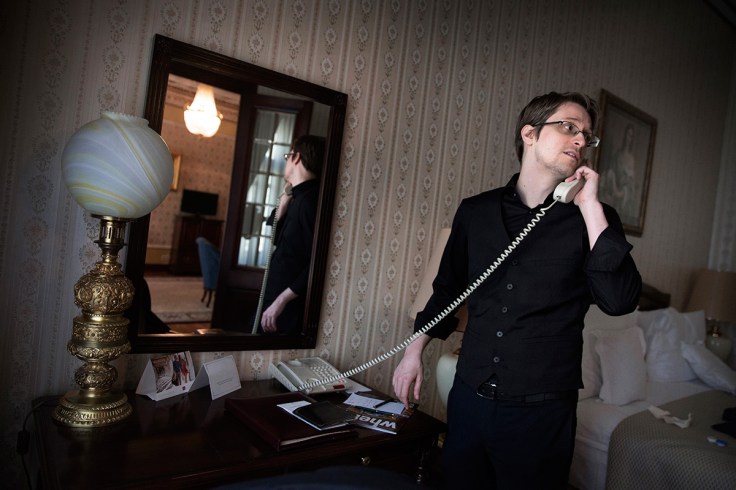
Suddenly he opens the door. DN’s Lena Sundström and Lotta Härdelin had a unique meeting with the whistleblower who has fans all over the world but risks lifetime imprisonment in the home country he once tried to save.

Read full text here

Dave Allen – religious jokes

[youtube  https://youtu.be/mYXenjpefNU?%5D

Irish comedian Dave Allen tells a series of religious jokes.

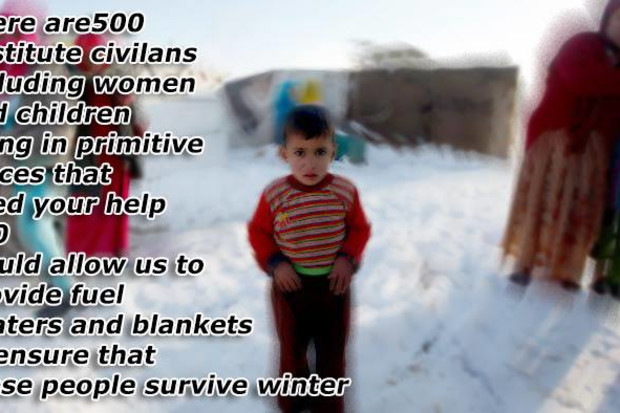
Helping Syrians survive winter

Ndnat3p66ylglftxl6nr
$** would allow us to provide fuel, heaters and blankets to ensure that these people survive winter.
Thumbnail
Mzahem Alsaloum

Contact  Voir plus d’informations

Very soon, there will be a volunteering campaign to be launched in the Northern of Syria for IDPs` families of over 500 people from the city of Deir Ezzor, due to the march of ISIL forces towards the Northern of Syria. In fact, those families live under extremely harsh circumstances, where they have no shelter, no resources, and no food (they are dwelling in the open areas and abandoned ruined houses, with no windows, doors, or even any piece of furniture).

Therefore, the campaign is designed to provide heating devices, blankets, and diesel. Also,it will be providing all necessary items to fight the up- coming freezing winter, that is estimated to last for over six months( with possible harsh snow storms-that could last for over 20 days-, according to the weather reports)

There will also be a fully-documented process for the entire campaign( formal receipts, videos of distribution, etc).

Speaking the language of figures, it is worth mentioning that only ($50) can provide full coverage for one person of those families. So, with only ($50) you can save somebody`s life throughout this campaign. No limitations on the number of people you want to sponsor, so, you can protect as many people as you can, with only($50).

All the above-mentioned cases( including the elderly, women and children) cannot provide themselves with the minimum living standards, so in providing assistance to them, you are actually saving their lives, for warmth means life in the midst of the freezing winter.

All documentation papers and videos will be available on the following link:

https://drive.google.com/open?id=0B2lbjhz45dweREdWQXM3Ym80dFU

Attention point: The minimum amount of the donation does not include the taxes imposed by the assurance companies, therefore, providing the minimum amount of donation does not mean providing the required amount of warmth for the families.

سيكون هنالك حملة تطوعية في ريف حلب الشمالي لـ 500 شخص من عوائل نازحين من ريف ديرالزور بسبب تنظيم داعش نحو ارياف الشمال السوري، هؤلاء النازحين لا يوجد اي أحد يدير لهم بالاً لذلك يعيشون ظروفاً سيئة للغاية حيث أنهم لا يمتلكون قوت يومهم ويعيشون في العراء او منازل بدائية لا يوجد لها حتى شبابيك او نصف مكتملة او ينامون في ابنية مكشوفة على صفائح توتياء.

ستتضمن الحملة شراء مدافئ وديزل وبطانيات وكل مستلزمات تحمّل الشتاء كاملة عن 5 أشهر من الشتاء والبرد القارس، يمر خلالها 3 عواصف شديدة سيكون 2 منها طولها 15-20 يوماً، وستكون من اقسى العواصف التي مرت على المنطقة.

وسيكون هنالك عمليات توثيق من خلال فواتير رسمية بالاضافة الى فيديوهات وصور عن كامل الحملة وعمليات الشراء والتوزيع.

تستطيع أن تكفل شخص بـ 50$ تشمل تدفئته خلال الشتاء كاملة، حيث أنه بعد وضع خطة ودراسة للأمر ستكفل الـ 50$ هذه تدفئة كل شخص من هؤلاء لفترة الشتاء كاملة وستبقيهم على قيد الحياة بمعدل الحد الأدنى من المتطلبات الإنسانية للشخص الواحد كي يستطيع تحمّل أعباء الشتاء القاسي.

كل 50$ تكفي شخص واحد، دون تحديد لعدد الاشخاص الذي تستطيع كفالتهم.

ان جميع الحالات المشمولة في الحملة لا يستطيعون تأمين ما يأكلونه في يومهم لذلك تأمين هذا الحد الادنى من التدفئة لهم يعني انقاذ حياة الكثيرين منهم وبينهم أطفال ونساء وشيوخ، وتعني بالتأكيد انقاذ صحتهم وكرامتهم الانسانية جميعاً من ناحية التدفئة خلال فترة الشتاء كاملة.

سيتم اتاحة كافة الوثائق والصور والفيديو للحملة وصرف المبالغ على الرابط التالي:

https://drive.google.com/open?id=0B2lbjhz45dweREdWQXM3Ym80dFU

تنويه : الحد الأدنى لا يشمل الضرائب المفروضة من الموقع ومن ادارة شركات الائتمان والتحويلات الخارجية، لذلك الوصول للحد الأدنى لا يعني الحصول على القدر الكافي لاتمام عملية التدفئة.

SYRIA – The long journey of a Syrian refugee (part 2/3): Turkey’s bad guys*

 0

The Redaction of The Maghreb and Orient Courier publishes the story of Nori, a 21-years-old Syrian refugee, in three parts (in its issues of September, October and December)*. Nori told our correspondent the story of a journey towards life. He was a citizen of Homs and after his family had fled the war and his brother had died, nothing kept him in his city. He decided to leave his city behind, and the violence, war and misery that went with it. Here is his story.

* ALL DONATIONS TO THE MAGHREB AND ORIENT COURIER WITH THE MENTION “SYRIAN REFUGEE” WILL ENTIRELY BE TRANSFERED TO NORI, THIS STORY’S PROTAGONIST – THANKS A LOT TO OUR READERS FOR SUPPORTING HIM.


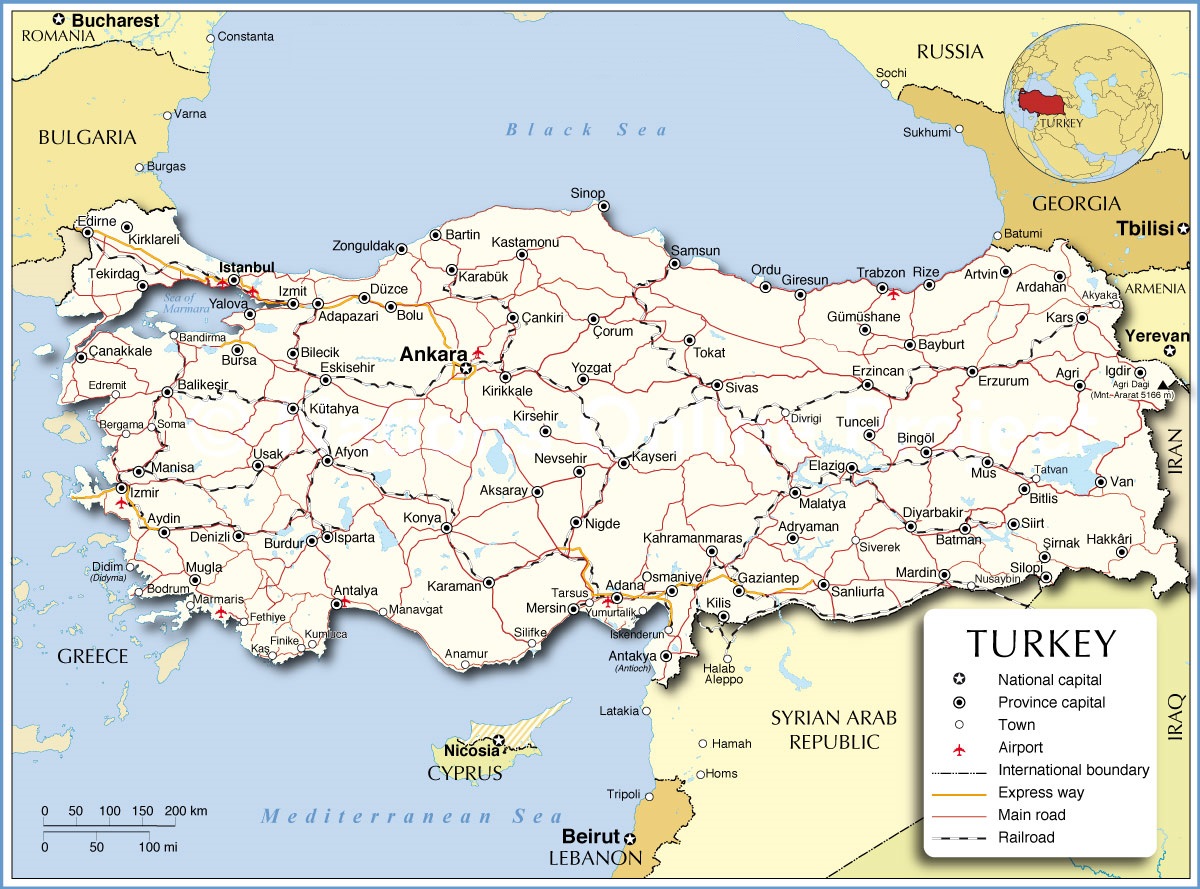
On Friday, 17th of October (2015) I met my friend in Antakya, he rented a house for his family, that was coming from Syria… I had not seen him in five years. We had one good week together. I felt free and safe. We spoke a lot and went for walks outside. After one week, I moved to Reyhanli city, which is about 30 kilometers East of Antakya, to meet another of our friends; he was in an hospital. There, I spent ten days among their sufferings… I saw unexpected situations, and how badly the responsible men treated the wounded. I decided to stay.

SYRIA - October 2015 - Amhed SAYED'

After a while, the patients organised a small ‘revolution’ and got rid of the head of the service and his assistants, kicking them out of the house with their crutches and walking sticks… They chose my wounded friend to become the new bearer of responsibility. They wanted to depend on themselves -my friend told me I could help them and would even receive a salary. But I declined and said that I had come to Turkey to be free and not to stay in a place of suffering. Very soon they obtained new supporters and more money every month… Their lives changed for the better, they had fun every day, money was distributed a few times a week …

But I thought, I must get to work, so I called a friend in Adana to find me a job; there are a lot of Syrian refugees in Turkey… He told me to visit him and then he could find a job for me. I did not really have any trouble with the Turkish language, because I had taken some lessons in my village, near Homs. At my friend’s house, his family inquired about every thing concerning their house, neighbours, relatives and the position in the city…. They were so happy to see a man from our city… After three days, their neighbour found me a job in the Imam Oğlo village in a wheat grinding mill, about 40 kilometres West of Adana, and I agreed. He gave me the address and told me that I could just go to the place.

At the beginning, I felt happy about the good treatment by the boss. There was a twenty-year old guy working with me; his name was Musa. And a fifty-year old man called Mevlud (he used to tell me about his five fantastic years in Germany, as an illegal resident).

Day after day, the boss depended on me concerning everything in the place; I was student in engineering, in Homs University, and I began to be very helpful in managing his business… He taught me how all things work; everything about wheat and corn, dealing with the customers and how I scale the full cars when they came… There was also an old man; his name was Recep. His father was Bulgarian and every night I used to sit with him for about two hours. He only knew Turkish, but I could understand. His job was to guard the place at night; he became expendable because I would sleep in the office, so there was no need for him.

Although the boss was drinking with him every night, he got rid of him to save money…

The owner of the place is my boss’ brother who has a big factory in Ankara. After about twenty days he told Musa that he was not needed anymore. I told Musa that I would find another job for him to do, so that the boss would need him again…

At the end of the month, the boss did not give me the whole salary of 800 Turkish Liras he promised. He said he did not have enough money! After a while, three guys from Homs came to work at the same place but they had a hard job with corn; the boss brought Kurdish workers to do this job for a lot of money, but he became happy to exploit the Syrians for less money…

When we have a day off on Sunday, the boss drove with us to Adana and stayed with us, watching us… I don’t know why!

One day, he asked my friend to work all the night, but in fact, he couldn’t… I was translating for my friends and advising them what to do…  He had no problem for them to give up the work, but he needed me… So, he gave them all their money and only a little to me, because he thought that maybe I would go with my friends… Something he wished to avoid.

So, he planned a game for me, with his local police friends…

One afternoon, two policemen came and asked me for the Turkish ID card, and I showed them my Syrian card… They arrested me.

They told me on our way to the police station that I had stolen 15 Liras from the market, at five o’clock this day, and showed me a picture of the bicycle standing in front of the grind mill place – I did not know what they meant to communicate with it… We arrived at the station and four policemen wanted me to say that I stole the 15 Lira from the market, in a bakery. But I insisted that I did not understand them and that I needed a translator; when you are refugee, it is better to communicate with a translator than with bad policemen…

After a moment, one of them started beating me. But I did not fight back… because they are policemen… We know that very well in Syria.

They brought the poor baker in and asked him whether I was the one who stole the money and he said yes … I think they had simply asked a poor man to say so for some coins.

Finally, after two hours of waiting and investigations, the translator came; he told me just to tell them that I stole the money and they would let me free. But I told him that I have never stolen anything, so why would I steal 15 Liras? I also used to give poor people more money when I was in Adana. The translator told them that I refused to admit. Then they told him to convince me that I was dealing with security and they could put me into prison for long time. I answered him that I prefer to be in prison for ever and die there than to steal…

My boss then entered, perfectly times – I think he was preparing for his role next to the door – he said that on Sunday morning at five I was with him, he was driving me and my friends to Adana… He continued, that the robbery was on Sunday in Imam Oğlu and that I was in Adana…. Then he told the policemen to leave me … and that I was innocent.

We came back for work and I understood why he had planned all this story…

First, he would get my freedom – anytime I would decide to go, he would make problems for me, threatening about the robbery. Second, I must always work and do not receive all my money… So, I planned my game to change things, I told the boss that my brother would be in Turkey soon and I must bring him here. I asked him if my brother could work here and he gladly accepted.

But on the next Sunday I couldn’t go to Adana because the police said that I must not leave the village until eight days after the incident…

So, I decided to leave my job not on Saturday or Sunday but I simply left without getting my whole pay… I prepared myself at seven in the morning, and when Mevlut came to open the office, I told him that my brother was waiting for me in Reyhanli, and I had to go, so he should give me my money. But he said that he had to ask the boss – he called the boss, but the boss did not answer… Because every night the boss drinks too much and then talks with girls on the phone… Mevlut told me that I should go to his house, but I refused and insisted to have my money. Eventually he gave me half of it, leaving about 100 euros with them. I then took another way, a shortcut to Reyhanli where I had contacts that could help me further.

After few months, I became a bit mad… Where was my life?

I contacted a Belgian friend… He is journalist; I met him in Tal-Biseh, my village, near Homs, at the beginning of the revolution. He came to us; he was the first European journalist I saw.

I told him that I was thinking to go back to Syria; impossible for me to continue this life in Turkey… I thought to go to the governorate of Idleb, to find a job; Sarmada was still a lively city, but maybe not for a long time… I didn’t know what to do… He helped me to find a job in Istanbul: he gave me contacts, and one of his Syrian friends in Istanbul welcomed me… I told the guys of Reyhanli that I must leave and they gave me some money, but I refused.

I got to Istanbul and I started working as a painter, earning good money… My new boss and the workers were Kurdish; they were very good people and they became friends. I remain in contact with them until now – I even learned a little bit of Kurdish language with them.

About three months later, our job was done and there were no more jobs for us to find… The three Kurdish workers were refugees too… So, we decided to go to Europe, to rebuild our life.

With my three new friends, we travelled to Greece; from Aderna, by foot. When we got there, we understood that we were not the only refugees wanting a better life in Europe: we met a lot of Syrians who had tried many times to cross the border, but in vain… To tell the true, I knew it: I had a friend in Lebanon, a refugee too; he also wanted to come to Turkey. His plan was to travel through the sea, on one of these “boats of death”. This trip was our last solution to find our life again and a future…

So, we decided to sail to Greece. But we did not have enough money for that… Turkish guys who organize the refugees business with the boats ask a lot of money…

source
Novelist Ahmed Naje Faces Criminal Charges for Published Novel Excerpt

by mlynxqualey

Journalist and novelist Ahmed Naje was referred to criminal court Saturday for Akhbar al-Adab’s publication of an excerpt of his novel The Use of Life (استخدام الحياة), which passed through the censor’s office in 2014 and has been on sale at major bookshops for a year:

Naje's book.

Ahmed Naje’s most recent novel, The Use of Life.

Naje and Akhbar al-Adab editor-in-chief Tarek al-Taher were referred to a criminal court because of the chapter’s “obscene sexual content.” The chapter does indeed contain a description of sex and drug use, as do many contemporary Egyptian novels. The offending chapter six can be read online.

According to Mada Masr, the lawyer acting for Naje and al-Taher has said he will be allowed to access the case file at some point on Monday. “This will clarify when the case was filed and the court date, which the prosecutor verbally informed [the attorney] has been set for November 14,” Mada Masr reported.

Mada reported that Naje’s case falls under Law 59, Article 187, which covers defaming public morals. Naje’s attorney told the Associated Press that the author faces up to two years in jail or a fine up to 10,000 Egyptian pounds ($1250) if found guilty.

During investigations, lawyers were apparently told that the lawsuit was filed by a citizen who said his heartbeat fluctuated, blood pressure dropped, and he became severely ill upon reading the chapter in the magazine. The public prosecutor then decided the case was worth taking up.

Joe Rizk of Dar al-Tanweer, which published the novel, said this attack follows a common pattern: A book is available for some time, and then a conservative notices “offensive” content within and files a complaint. Novelist Youssef Rakha also pointed out that the novel exerpt is being positioned as an “article”: “the idea is, these laws apply to ‘articles’ published in newspapers, not books.”

Naje, meanwhile, wrote in a Facebook statement on Sunday that the text is a work of fiction, not an article.

Naje’s novel, which was published last year, is a hybrid work: part prose fiction, part graphic novel. The visuals were done by Ayman El-Zorkany, and have been displayed in art spaces in Alexandria and Cairo without any apparent fuss.

The Use of Life had already met a standard different from novels published inside Egypt. Because it was printed in Lebanon by Dar al-Tanweer, it had to be imported into Egypt, and thus has already received a pass from the Egyptian censor. However, Naje said on Twitter that this “doesn’t protect the book or any book from going to the court.”

The Use of Life is set in Cairo and shifts between the past, present, and future as it tells the story of Bassam, a man lost inside a “spiderweb of emotional frustration and failure.” Sex and sexuality is one of its core themes.

Akhbar al-Adab’s chief editor Tarek al-Taher apparently told prosecutors during questioning “that he only reviewed the title of the story, without reviewing the whole text,”Egypt Independent reported. Al-Taher reportedly added “that he would not have published it had he read it.” Al-Taher was additionally charged with not meeting his duties as an editor-in-chief.

This is hardly the first such case. The first graphic novel to be published in Egypt, Magdy al-Shafee’s Metro (2008), was banned on the grounds that it “offended public morals”: the police raided the Malameh publishing house, confiscated all copies of the book, and banned Malameh from printing further copies. Al-Shafee and publisher Mohammed al-Sharkawi were both charged under article 178 and each fined 5,000 LE. It took five years before the graphic novel was republished and made available in Egypt once again.

Dar al-Tanweer has additionally seen several books it tried to bring in held up by the censors’ office, including Walls of Freedom

Many Arab writers posted notes of solidarity, including Emirati journalist Sultan Sooud al-Qassemi. On Twitter, Egyptian novelist Muhammad Aladdin sardonically congratulated Naje, while popular Egyptian cartoonist Andeel drew a single-panel cartoon in support of Naje, and the artist Ganzeer tweeted drolly that “Ahmed Naje’s writing is apparently okay in novel but too sexually explicit for newspaper.” Youssef Rakha was the most sober, suggesting that it “feels like a war on Arabic literature, which is very frustrating.”

mlynxqualey | novembre 2, 2015 à 12:01 | Catégories: censorship, Egypt | URL:http://wp.me/pHopc-5Jg

REPRESSION AND SUSPICION FOR SCHOLARS IN THE MIDDLE EAST

I have a piece on the Al Fanar site looking at the problems scholars face conducting research on sensitive topics (which can be almost any topic) in the middle east. After hopes were raised of greater access to and circulation of information after the Arab Spring, academics seem to be facing more repression than ever now. Foreign scholars are worried about getting in trouble or losing access to the countries they study. But I came across some cases of young scholars persevering in their work under extreme circumstances.

Lynch says he knows many scholars working “under the radar” and respects their decision to do so. Some have gone to extraordinary lengths. A European Ph.D. student who requested anonymity has been working in Egypt since 2010, researching labor relations. In 2012 he was questioned by the security services and told to “choose another country.”

The young researcher went on visiting a factory town, hiding in the back seat of a rented car when it passed police roadblocks on the way there. But “It’s been tricky to make new contacts,” he says. “People are extremely afraid of talking.” He also suffers from “the mental part of all this—the stress and anxiety and the feeling you’re a criminal when you’re not.”

“I’ve wondered every day if it was worth it,” he says. But “you don’t want to risk being excluded from the one place where you’ve invested so much time and effort, the geographical focus of all your academic endeavors.”

It’s hard to measure the extent to which Middle East specialists face intimidation because many prefer not to draw attention to any difficulties they have. “When a scholar gets into trouble, he or she thinks: if I can cast it differently, if I do it in a different country etc,” says Brown.

source

Humans of the Refuge

“I had to pick and choose whom I would save, that mother who is drowning, or the children who cannot swim, or the father who is drowning because the whole family is grabbing him. Yesterday we managed to save 242 people in total, but more than 50 had died. I saw them die. It was terrible. We are shattered physically and psychologically. And I am ashamed of Europe,” says Oscar Camps.

Oscar Camps is a volunteer lifeguard from Proactiva Open Arms, a Spanish NGO formed by professional lifeguards who moved to Lesbos Island, Greece to rescue and help the refugees who make a dangerous voyage through the Aegean Sea from the Turkish Coast to Greece.

On Wednesday (October 28, 2015), 242 refugees have been rescued from a capsizing of a boat carrying nearly 300 people through the stormy Aegean Sea, which sparked a huge search involving patrol vessels, fishing boats and a helicopter. At least 11 refugees died in the eastern Aegean Sea among them 7 children. More than 30 people are still listed as missing from this accident.

“The Turkish and Greece Fishermen rushed to the boat and started rescuing people. It was shocking. We climbed into the boat to take the children because they [the refugees] said they had no strength to lift them. The Frontex boat did nothing, All they did is to throw ropes to the drowning, like in the movies, and they stayed there their ship deck watching people die. I wonder if they would do if their relatives were drowning in the sea. It was gruesome. Those who witnessed this tragedy must bear responsibility,” say Oscar referencing to the Frontex ship, an EU coastguard vessel with a Norwegian flag.

Proactiva Open Arms announced via twitter that they will stay in Greece till mid-January 2016 since the surge – and the death toll – at the Aegean Sea are set to rise as Russian airstrikes push more refugees to flee to Europe before borders shut and the sea gets rougher.

Proactiva Open Arms was formed after their members saw the images of drowned refugees washing up on the Greek beaches, including that of three-year-old Syrian boy Aylan Kurdi.

“Those images made us think, ‘we are professionals in lifesaving and we could do something to help the refugees in Lesbos’. We have the skills and we have the equipment to do it so we took a decision and just went,” says Oriol Canals another volunteer from Proactiva Open Arms.

The group of lifeguards raised €15,000 ($17,000) between them, enough to stay for their first month, and since then they relied on raising money to remain longer in Lesbos.

Photos: Santi Palacios/AP, Jeanne Carstensen and Proactiva Open Arms.
Source: El Mundo (in Spanish): http://bit.ly/1PUmZHs
Background information: The Local (ES): http://bit.ly/1jsxNjS
Proactiva Open Arms facebook page: Proactiva Open Arms

Oscar Camps, a volunteer lifeguard from Proactiva Open Arms, carries a young boy after a boat carrying nearly 300 refugees capsized near the Greek Island of Lesbos after crossing a part of the Aegean Sea from the Turkish Coast. On Wednesday (October 28, 2015), 242 refugees have been rescued from a capsizing of a boat carrying nearly 300 people through the stormy Aegean Sea, which sparked a huge search involving patrol vessels, fishing boats and a helicopter. At least 11 refugees died in the eastern Aegean Sea among them 7 children. More than 30 people are still listed as missing from this accident. Photo: Santi Palacios/AP
Volunteer lifeguards from Proactiva Open Arms, scramble ski jets to rescue drowning people after a boat carrying nearly 300 refugees capsized near the Greek Island of Lesbos after crossing a part of the Aegean Sea from the Turkish Coast. On Wednesday (October 28, 2015), 242 refugees have been rescued from a capsizing of a boat carrying nearly 300 people through the stormy Aegean Sea, which sparked a huge search involving patrol vessels, fishing boats and a helicopter. At least 11 refugees died in the eastern Aegean Sea among them 7 children. More than 30 people are still listed as missing from this accident. Photo: Jeanne Carstensen
A volunteer lifeguard from Proactiva Open Arms, rescues a refugee after a boat carrying nearly 300 refugees capsized near the Greek Island of Lesbos after crossing a part of the Aegean Sea from the Turkish Coast. On Wednesday (October 28, 2015), 242 refugees have been rescued from a capsizing of a boat carrying nearly 300 people through the stormy Aegean Sea, which sparked a huge search involving patrol vessels, fishing boats and a helicopter. At least 11 refugees died in the eastern Aegean Sea among them 7 children. More than 30 people are still listed as missing from this accident. Photo: Proactiva Open Arms (File Photo)
A volunteer lifeguard from Proactiva Open Arms, carries a young girl after a boat carrying nearly 300 refugees capsized near the Greek Island of Lesbos after crossing a part of the Aegean Sea from the Turkish Coast. On Wednesday (October 28, 2015), 242 refugees have been rescued from a capsizing of a boat carrying nearly 300 people through the stormy Aegean Sea, which sparked a huge search involving patrol vessels, fishing boats and a helicopter. At least 11 refugees died in the eastern Aegean Sea among them 7 children. More than 30 people are still listed as missing from this accident. Photo: Proactiva Open Arms (File Photo).
source Facebook

Sacla’ Stage a Surprise Opera in a School Lunch Hall

Sacla’ the Pesto Pioneers and Italian foodies favourite, served up a great surprise at a Buckinghamshire primary school and staged an impromptu Opera in the canteen one lunch time.

Four secret opera singers, disguised as canteen staff, broke into song bringing the room to a standstill with a rousing medley of the Italian classics by Verdi, Puccini and Rossini.

From soaring soprano to booming baritone, the singers’ stunning performance thrilled the unsuspecting school children whose shocked and surprised reactions were captured on camera by a six strong film crew behind the scenes.

Join the conversation #SchoolOpera

http://www.sacla.co.uk 

Twitter:
https://twitter.com/SaclaUK | 

Facebook:
https://www.facebook.com/SaclaItalian…


We are lifelong Zionists. Here’s why we’ve chosen to boycott Israel

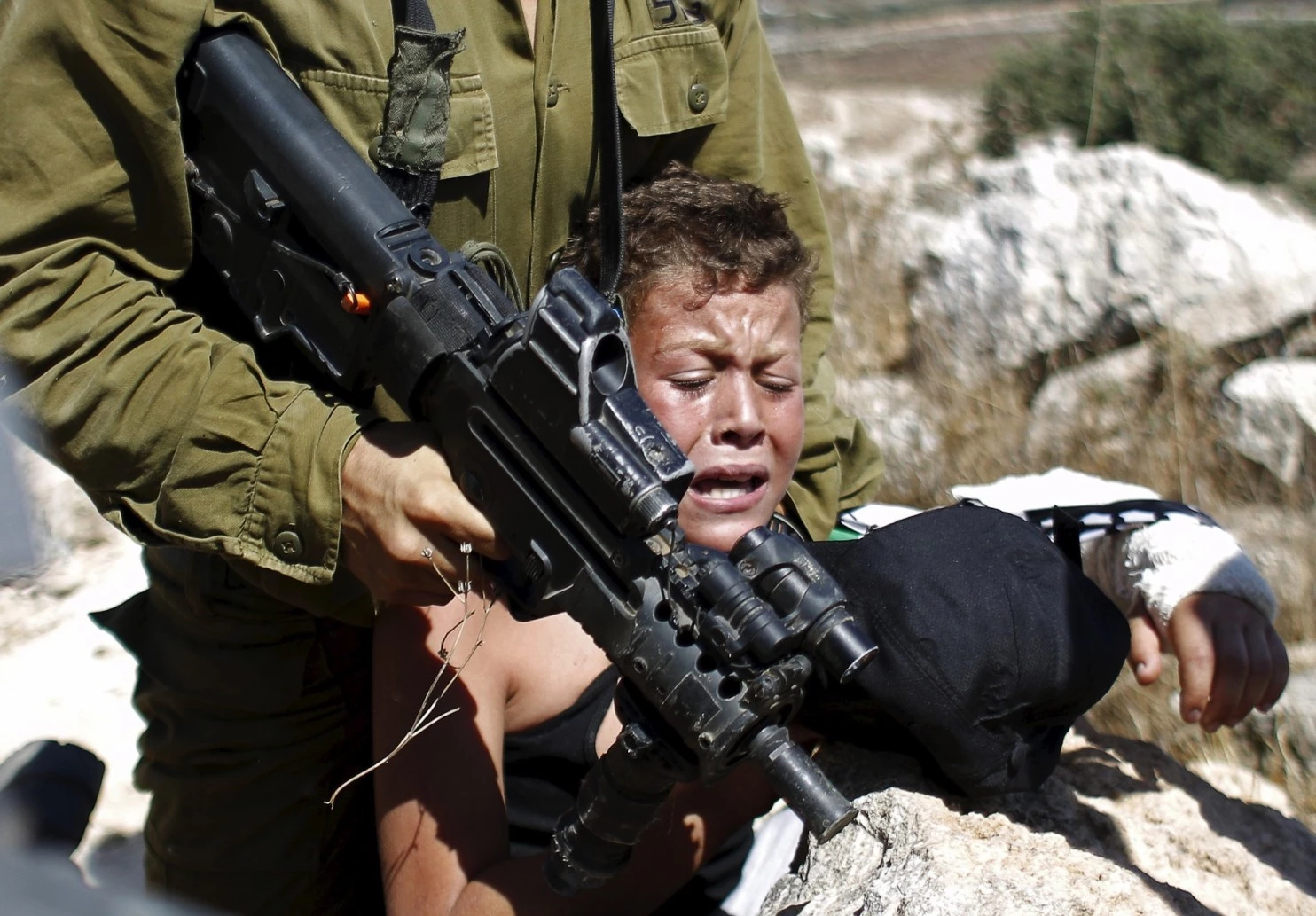
An Israeli soldier detains a Palestinian boy during a protest in the West Bank village of Nabi Saleh in August. (Mohamad Torokman/Reuters)


By Steven Levitsky and Glen Weyl October 23

Steven Levitsky is a professor of government at Harvard University. Glen Weyl is an assistant professor of economics and law at the University of Chicago.

We are lifelong Zionists. Like other progressive Jews, our support for Israel has been founded on two convictions: first, that a state was necessary to protect our people from future disaster; and second, that any Jewish state would be democratic, embracing the values of universal human rights that many took as a lesson of the Holocaust. Undemocratic measures undertaken in pursuit of Israel’s survival, such as the occupation of the West Bank and Gaza and the denial of basic rights to Palestinians living there, were understood to be temporary.

But we must face reality: The occupation has become permanent. Nearly half a century after the Six-Day War, Israel is settling into the apartheid-like regime against which many of its former leaders warned. The settler population in the West Bank has grown 30-fold, from about 12,000 in 1980 to389,000 today. The West Bank is increasingly treated as part of Israel, with the green line demarcating the occupied territories erased from many maps. Israeli President Reuven Rivlin declared recently that control over the West Bank is “not a matter of political debate. It is a basic fact of modern Zionism.”

This “basic fact” poses an ethical dilemma for American Jews: Can we continue to embrace a state that permanently denies basic rights to another people? Yet it also poses a problem from a Zionist perspective: Israel has embarked on a path that threatens its very existence.


As happened in the cases of Rhodesia and South Africa, Israel’s permanent subjugation of Palestinians will inevitably isolate it from Western democracies. Not only is European support for Israel waning, but also U.S. public opinion — once seemingly rock solid — has begun to shift as well, especially among millennials. International pariah status is hardly a recipe for Israel’s survival.

At home, the occupation is exacerbating demographic pressures that threaten to tear Israeli society apart. The growth of the settler and ultra-orthodox populations has stoked Jewish chauvinism and further alienated the growing Arab population. Divided into increasingly irreconcilable communities, Israel risks losing the minimum of mutual tolerance that is necessary for any democratic society. In such a context, violence like the recent wave of attacksin Jerusalem and the West Bank is virtually bound to become normal.

Finally, occupation threatens the security it was meant to ensure. Israel’s security situation has changed dramatically since the 1967 and 1973 wars. Peace with Egypt and Jordan, the weakening of Iraq and Syria, and Israel’s now-overwhelming military superiority — including its (undeclared) nuclear deterrent — have ended any existential threat posed by its Arab neighbors. Even a Hamas-led Palestinian state could not destroy Israel. As six former directors of Israel’s internal security service, Shin Bet, argued in the 2012 documentary “The Gatekeepers,” it is the occupation itself that truly threatens Israel’s long-term security: Occupation forces Israel into asymmetric warfare that erodes its international standing, limits its ability to forge regional alliances against sectarian extremists and, crucially, remains the principal motive behind Palestinian violence.

In making the occupation permanent, Israel’s leaders are undermining their state’s viability. Unfortunately, domestic movements to avert that fate have withered. Thanks to an economic boom and the temporary security provided by the West Bank barrier and the Iron Dome missile defense system, much of Israel’s secular Zionist majority feels no need to take the difficult steps required for a durable peace, such as evicting their countrymen from West Bank settlements and acknowledging the moral stain of the suffering Israel has caused to so many Palestinians.

We are at a critical juncture. Settlement growth and demographic trends will soon overwhelm Israel’s ability to change course. For years, we have supported Israeli governments — even those we strongly disagreed with — in the belief that a secure Israel would act to defend its own long-term interests. That strategy has failed. Israel’s supporters have, tragically, become its enablers. Today, there is no realistic prospect of Israel making the hard choices necessary to ensure its survival as a democratic state in the absence of outside pressure.

For supporters of Israel like us, all viable forms of pressure are painful. The only tools that could plausibly shape Israeli strategic calculations are a withdrawal of U.S. aid and diplomatic support, and boycotts of and divestitures from the Israeli economy. Boycotting only goods produced in settlements would not have sufficient impact to induce Israelis to rethink the status quo.

It is thus, reluctantly but resolutely, that we are refusing to travel to Israel, boycotting products produced there and calling on our universities to divest and our elected representatives to withdraw aid to Israel. Until Israel seriously engages with a peace process that either establishes a sovereign Palestinian state or grants full democratic citizenship to Palestinians living in a single state, we cannot continue to subsidize governments whose actions threaten Israel’s long-term survival.

Israel, of course, is hardly the world’s worst human rights violator. Doesn’t boycotting Israel but not other rights-violating states constitute a double standard? It does. We love Israel, and we are deeply concerned for its survival. We do not feel equally invested in the fate of other states.

Unlike internationally isolated states such as North Korea and Syria, Israel could be significantly affected by a boycott. The Israeli government could not sustain its foolish course without massive U.S. aid, investment, commerce, and moral and diplomatic support.

We recognize that some boycott advocates are driven by opposition to (and even hatred of) Israel. Our motivation is precisely the opposite: love for Israel and a desire to save it.

Repulsed by the Afrikaners’ ethno-religious fanaticism in South Africa, Zionism founder Theodore Herzl wrote, “We don’t want a Boer state, but a Venice.” American Zionists must act to pressure Israel to preserve Herzl’s vision — and to save itself.

Read more on this issue:

Elliott Abrams: If you love Israel, don’t boycott it

Eugene Robinson: Israel is acting as if it is free of moral responsibilities.

Nureddin Amro: Israel wrecked my home. Now it wants my land.

Israel gets no credit from Obama for a year of moderate settlement construction

source

Blog at WordPress.com.

Up ↑