Search

band annie's Weblog

I have a parallel blog in French at http://anniebannie.net

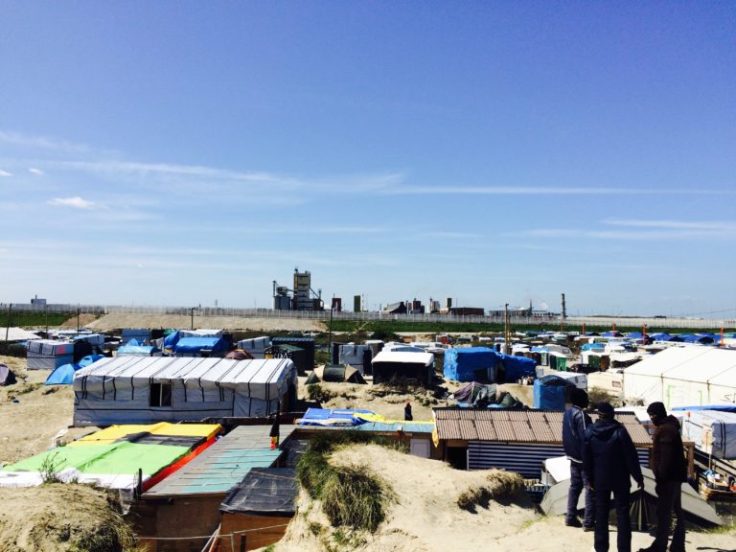
A Day in The Life of The Jungle: Syrians Camped out in Calais


IRELAND IS NOW OFFICIALLY ACCEPTING TRUMP REFUGEES FROM AMERICA

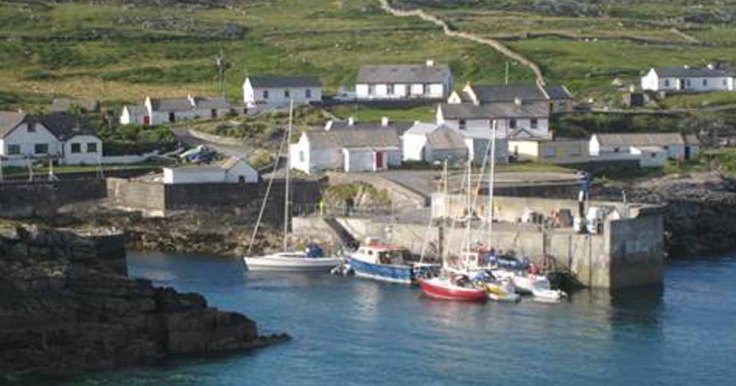
Inishturk, an island off the main coast of Ireland, has now joined Canada in officially accepting Americans requesting political asylum from a Donald Trump presidency.

 inishturk

The island has been experiencing a population decline in recent years, and they decided to try to reach out to Americans seeking to flee our current political dystopia by offering a new place to live if the idea of Donald Trump and the Republicans following his lead are just too much.

Mary Heanue, Inishturk’s development officer, was quoted as saying:

I’ve heard there are quite a few people in America looking to move to Ireland and other countries if Donald Trump becomes president. I’d like them to know that we’d love to see them consider moving over here.

Our big concern is employment and trying to encourage families to move over here because the population is declining. The island featured on an Irish TV documentary last year which gave us great publicity and a good few extra bookings. But we ended up having a terrible summer and a lot of people canceled.

They’d be given a huge welcome and they’d find this is a fantastic place to live and to bring up children. Their kids would probably get the best education anywhere in the country too, because the teacher to pupil ratio is nearly one-on-one.

Although winters can be hard and it’s the kind of life that wouldn’t necessarily suit everyone, they’d find it very peaceful here and they’d soon find out there’s nowhere as nice in the world on a summer’s day than here.”

The website IrishCentral.com also got in on the action recently, by publishing their own guide on moving to Ireland in case Donald Trump is elected.

The website describes the details, and realities, of moving to Ireland. It isn’t particularly cheap and the financial restrictions on it might preclude some people from being able to take advantage of it.

However, there are some big things on the plus side. The gun laws are restrictive and you won’t see wannabe cowboys carrying handguns openly in Ireland – a huge plus. They have strong social welfare and services, plus did I mention universal heathcare? Not exactly a terrible idea…  They also do take some well-placed digs at our Republican problem, by making a few short jabs at the likes of Bill O’Reilly and Donald Trump in particular, by stressing that you request an absentee ballot so you can still vote against Donald Trump for a nice middle finger from across the pond.

More than likely, Trump will not get elected. However, it never hurts to have a backup plan, especially if you don’t fit into one of the new state-approved ethnic groups (whites only) that will be one of the features of a possible Donald in the White House.


Featured image via Coastal Boating

Christian is from a small town, surrounded by other small towns, in Pennsylvania. He nearly slipped into the conservative K-hole after high school, but was redeemed by Liberal politics and 8 years of Bush. After spending far too long working for corporate America, he has settled back into life as an unapologetic progressive and general caller-out of conservative fallacy and nonsense.

Mohammed’s Story

“I will certainly return to my country, whether it is rebuilt or not.”

After his father as taken by Isis, 14-year-old Mohammed became the man of the house. Now, he’s starting a new life in Germany but is keen to cling onto his past.

Filmmaker Marcel Mettelsiefen followed one family for three years as they struggled to survive in besieged Aleppo, eventually becoming refugees and fleeing to Germany. 

Watch part 1, Children on the Frontline on All 4: http://bit.ly/1eoNelB 

Watch part 2, Children on the Frontline: The Escape on All 4: http://bit.ly/1NqkH48

#AleppoIsBurning: Calls to boycott Facebook over Aleppo

Users vow to deactivate accounts or turn profile photos red to draw attention to hundreds of deaths in Syria’s Aleppo.

Megan O’Toole | 01 May 2016 09:37 GMT | Middle East, Syria’s Civil War, Aleppo Bombing

Smoke rises after air strikes on the rebel-held al-Sakhour neighbourhood of Aleppo on the weekend [Abdalrhman Ismail/Reuters]

Thousands of social media users have pledged to deactivate their Facebook accounts, or to turn their profile photos red, in an effort to draw attention to the Syrian government’s air offensive in Aleppo.

The hashtags #MakeFacebookRed and #AleppoIsBurning were being used to highlight the ongoing offensive, which has killed more than 240 people over the past week and forced many families to flee.

source

Officially deactivated @facebook 
Hopefully many did too & we are not as ignored anymore


DARAYA STARVING TO DEATH


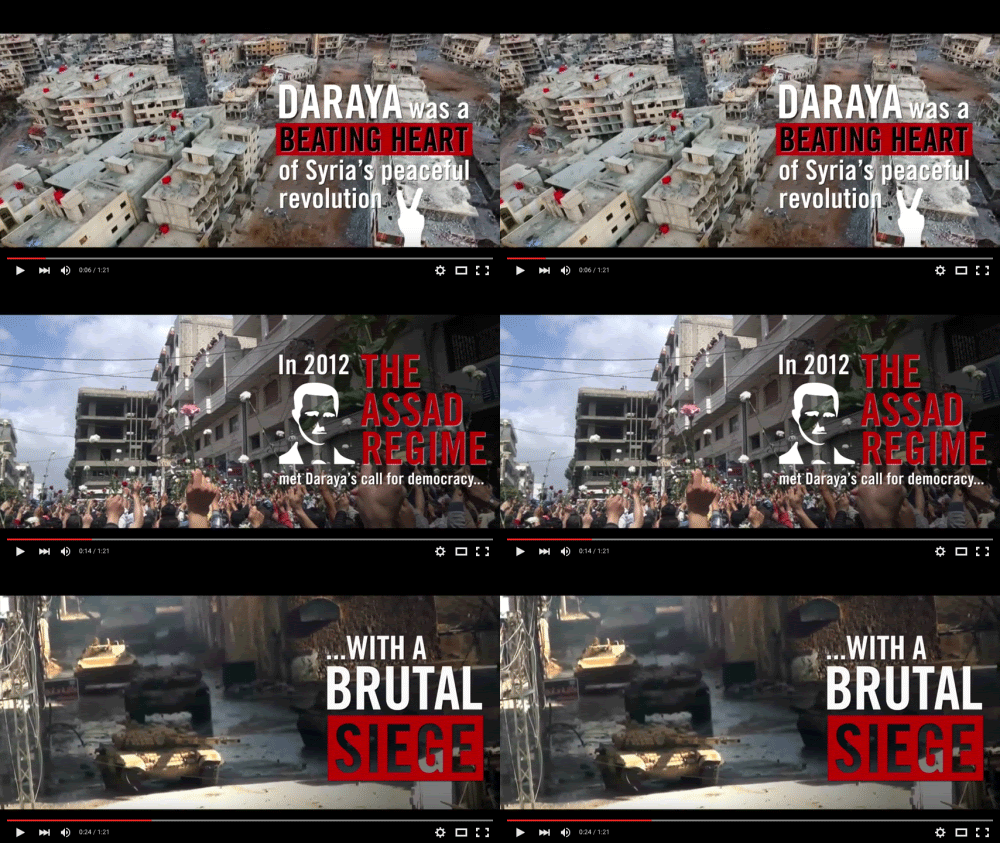
One thousand, two hundred and eighty five. That’s how many days the regime of Bashar al-Assad has denied the UN access to deliver food and medicine to starving people in the besieged town of Daraya. Some have been forced to eat grass to survive.[1]

Please take 90 seconds to watch drone footage of the town to understand why breaking the siege there – and across Syria – really matters:

The brave women of Daraya asked for our solidarity with their demands and we responded.[2] Our collective pressure is starting to pay off: Daraya is climbing up the news agenda and we know that at a key international meeting in Geneva last week, the idea of airdropping aid to the town was raised for the first time – something we’ve been pushing for in thousands of messages to decision-makers and media work.[3]

We also saw the first UN vehicles enter Daraya in over three years. Astonishingly this wasn’t to deliver aid, but just to have a look around and make an assessment.[4] The UN would defend these empty cars by arguing that if they had taken any aid on that convoy, the regime of Bashar al-Assad wouldn’t have let them in.

Which is precisely the problem.

We’re letting the leading perpetrator of the killing in Syria deny the world’s aid to the most vulnerable. Bashar al-Assad’s regime is responsible for a staggering 95% of civilian deaths in Syria and he is being allowed to dictate where this life-saving food and medicine goes.[5]

It shouldn’t be happening.

This international aid that has been generously donated by people around the world must be delivered to those in most need. If the trucks can’t go in we must look for others ways – and we have them.

Airdrops are a proven method of last resort that humanitarians can use once all other routes have been exhausted. After more than a thousand days of blocked aid to Daraya nobody can credibly claim that we haven’t reached that point.

Many of the key governments arguing for aid access to Daraya are already flying in Syrian airspace. The US, UK, France, Germany and the Netherlands are but a few.

These countries are ready to drop bombs, but none so far are prepared to drop bread.

To these governments we must say loud and clear: you have the power to get food and medicine to the starving people of Daraya and other besieged areas in Syria. No more finger pointing, no more blaming others, no more excuses:

https://act.thesyriacampaign.org/sign/airdrop-aid-syria-now/

In solidarity,

James

NOTES

[1] Reuters: UN says Syrians eating grass in government-besieged Daraya http://www.reuters.com/article/us-mideast-crisis-syria-daraya-idUSKCN0WK1V2

[2] Daraya Women: We are on the verge of witnessing deaths from starvation https://diary.thesyriacampaign.org/an-urgent-call-from-the-women-of-the-besieged-town-of-daraya/

[3] Airdrops to Daraya in Humanitarian Task Force meeting: http://www.un.org/sg/offthecuff/index.asp?nid=4476

[4] UN visit reported by Daraya Local Council: https://www.facebook.com/daraya.council/photos/490307034497203/

[5] Who’s Killing Civilians in Syria? http://whoiskillingciviliansinsyria.org


The Syria Campaign is building an open, global movement working for a peaceful future for Syria. We are people from all over the world who are coming together to tackle what the UN has described as “the greatest humanitarian tragedy of our time”.

Follow us on Facebook and Twitter.


Last Week Tonight with John Oliver: Translators (HBO)

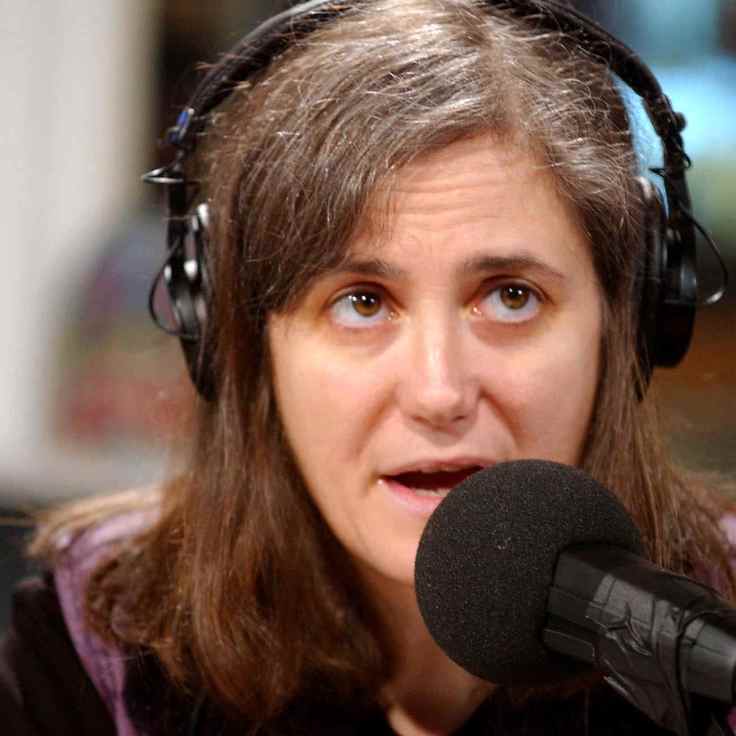
Democracy Now! Turns 20: A Freewheeling Look Back at Two Decades of Independent, Unembedded News

CLICK ON IMAGE
amy_goodman

and listen also to this interview

http://www.tinyurl.com/z4r4wv9

Palestinians forever changed by Israeli torture

Former detainees who suffered abuse while in Israeli custody say they are struggling to regain a sense of normality.

Jonathan Brown | 05 Apr 2016 11:48 GMT |

Nour Alyan, 27, who says he was held in stress positions for hours while in Israeli detention, displays the paperwork from his five separate arrests [Edmee Van Rijn/Al Jazeera]

Jalazone refugee camp, occupied West Bank – Abed Abu Sharefa’s hand was on the front door of his home in Jalazone refugee camp as Israeli soldiers worked to break through from the other side and arrest him.

The scar under his left eyebrow, where the metal door blew inwards, is still visible seven years on. Abu Sharefa, 25, told Al Jazeera that his right ear still hurts from the beatings he received at the hands of Israeli interrogators early in the 14-month detention that followed his violent arrest.

Abed Abu Sharefa, 25, says he suffers from post-traumatic stress disorder after being arrested, detained and tortured by Israeli security forces [Edmee Van Rijn/Al Jazeera]

Abu Sharefa, who has a tattoo of an M16 rifle on his chest, is among dozens of residents of Jalazone refugee camp near Ramallah who say they are suffering from post-traumatic stress disorder after being arrested, detained and tortured by Israeli security forces.

Residents of Jalazone, which is near the Israeli settlement of Beit El, are often targeted for arrest amid frequent clashes with Israeli soldiers.

Sitting in front of a rusted electric heater, Abu Sharefa takes long draws from a cigarette as he describes being beaten by Israeli interrogators. He reenacts the stress positions he says he was forced into for long hours while detained in the basement of a compound in Jerusalem.

“Even before I was interrogated, I knew detention would be violent; I’d heard about other Jalazone detainees’ experiences,” Abu Sharefa said. “In one way or another, there is always violence in Israeli detention. I’m afraid to be arrested again.”


READ MORE: Report details ‘inhuman’ treatment in Israeli jail


Abu Sharefa, who was detained twice after his first arrest, says he now has difficulty sleeping. He lifts his hands, palms facing out, to show his chewed nails, which he says he bites incessantly and nervously. He says he frequently considers suicide.

“Abed changed completely,” said Tahani, Abu Sharefa’s older sister. “Sometimes when we tried to speak to him, he didn’t respond, like he had experienced some trauma. He’s still nervous and agitated.”

Mohammad Absi, a psychologist with the Ramallah-based Treatment and Rehabilitation Centre (TRC) who has worked in Jalazone refugee camp since 2009, says he has treated around 100 former detainees who experienced torture, abuse or mistreatment while in Israeli detention.

Someone who has experienced trauma is usually helped and supported by their community, but everyone here is psychologically tired.

Nour Alyan, former detainee

Abu Sharefa’s experience was severe, Absi said, but such anxiety upon release is not uncommon. “Individuals who experience psychological torture or severe stressors manifest symptoms like Abed’s,” he said.

According to Addameer, a Palestinian human rights group, there are currently 7,000 Palestinians in Israeli-administered prisons. There have been hundreds of cases of alleged torture over the past 15 years.

Nour Alyan, 27, has been arrested five times and spent a total of eight years in Israeli prison. He recently replaced the front door of his home in the Jalazone camp for a fourth time, after Israeli soldiers broke it down to arrest him in mid-2014. Alyan was most recently released in February.

Alyan said he was held in stress positions for hours, and in solitary confinement for more than two weeks. Many in the camp – including eight of his cousins – who say they were mistreated while in Israeli custody are now struggling with depression and sleeping problems, he said.

“Someone who has experienced trauma is usually helped and supported by their community, but everyone here is psychologically tired,” Alyan told Al Jazeera.

Psychiatrist Mahmud Sehwail, who founded the TRC, said the consequences of this type of torture are “devastating” for communities.

“Torture does not aim to kill an individual; it aims to kill an individual’s spirit. It aims to alter their mentality and character,” Sehwail said. “In reality, though, torture alters not just a victim, but a victim’s family, their community, and their society.”

With limited rehabilitative resources available and dwindling donor funds to organisations like the TRC, some former detainees have turned instead to “smoking drugs, or alcohol”, Alyan said.


READ MORE: Youngest prisoner in Israeli jail is a 12-year-old girl


Israeli human rights groups B’Tselem and HaMoked recently released a reportdetailing abuses against Palestinian detainees at the Shikma facility in southern Israel. Based on affidavits and witness accounts of 116 Palestinians, the report found they were subjected to a variety of abuses, some of which were “tantamount to torture”.

The report found that that such abuse was facilitated by a “broad network of partners” as Israeli justice officials turned “a blind eye”.

Inside Story: Is force-feeding a form of torture?

Israel’s Ministry of Justice maintains that Israeli interrogations “are conducted within the confines of the law and with the aim of pre-emptively foiling and preventing illegal activities aimed at harming state security, its democratic regimes or its institutions”, noting that detention facilities “are under constant and continuous inspection of several internal and external reviewing bodies”.

Since 2001, the Public Committee Against Torture in Israel, working in concert with Palestinian and Israeli rights groups, has submitted at least 950 complaints of torture to the Israeli Security Agency, at least 95 percent of which were on behalf of Palestinians.

None have resulted in criminal investigations. “The Israeli system protects torture in Shabak interrogations,” the committee’s CEO, Rachel Stroumsa, told Al Jazeera.

“It legalises these interrogations [and] it exempts interrogators from the rule of law … At stake is whether Israel sees itself as a military society, living in fear, acting out of fear, acting in ways it will not be able to countenance later – or whether we see ourselves as a law-abiding society.”

Follow Jonathan Brown on Twitter: @jonathaneebrown

Source: Al Jazeera
A Syrian Refugee’s Message to the European Union

IDOMENI, Greece — WHEN we first got here we had money to buy a little food. Now it’s gone. We stand in line for hours for a sandwich. My husband told a journalist recently: “People are fed up. Maybe tomorrow they will break down the gate and flood across the border.” The journalist said, “How many weapons do you have?” If we knew how to carry weapons or wanted to carry weapons we would not have fled Syria. We want peace. We are sick of Killing.

We fled a war, and now the European Union is making war against us, a psychological war. When we hear rumors that we’ll be let into Europe, we celebrate. These leaders give us new hope, then they extinguish it. Why did you open the door to refugees? Why did you welcome people? If they had stopped it before, we would not have come. We would not have risked death, me and my children, and thousands of others, to make the crossing.

I’m 39 and Kurdish, from the city of Hasakah. I knew from watching the news that Hasakah was under threat from the Islamic State. Every day last spring, the government would shell the city’s outskirts. Sometimes a stray shell would land near us.

Photo

Laila’s tent, right, at the refugee camp.CreditEirini Vourloumis for The New York Times

One day, at 5 in the morning, we heard the shelling and we knew that the Islamic State had arrived. I took my children and two bags and fled. In those days, everyone had two bags ready at all times: one containing important documents and the other clothes and other essentials. We ran through a dry riverbed. It was still muddy and we sank in up to our ankles.

Even before the Islamic State came, life under the Kurdish forces was very hard. There was no wood to burn. Once I asked my husband, “If we took out one of the roof beams to put on the stove, and left one, do you think the roof would fall?” He laughed. “Yes,” he said. “It would fall, and we’d be living in the street on top of everything.”

If you have a son in Hasakah today he has to go to war. It doesn’t matter if he’s your only son or if he’s studying. If there’s no boy, a girl has to go. Someone from every house has to fight if you want to stay in the area. The Kurdish forces tried to conscript my daughter. I had to smuggle her out to Turkey.

رسالة من مهاجرة سورية إلى الاتحاد الاوروبي

هربنا من الحرب طلبا للأمان مع عوائلنا. لماذا يجعل الاتحاد الأوروبي حياتنا أكثر بؤسا؟

Most of my family is in Germany, and so we decided to go there. We spent two months in a border area before fleeing to Turkey, where my husband was working. We found a smuggler through Facebook — a relative by marriage — and flew to Izmir. Two days later, we stood in the dark with 35 others somewhere on the Turkish coast.

We were the last people on the beach, my daughter, her husband, their baby and me. My daughter was sobbing. She said she didn’t want to go and that if she died, the guilt was around my neck. I didn’t know what to do. Then, like a dream, a young man came and lifted her and the baby into the boat. It was just me on the shore. I waded out to the boat. The smugglers lifted me from below, and my nephew pulled me up.

The day we arrived here in Idomeni people were still crossing the border into Macedonia. We thought we had arrived. We thought the hard part was the sea.

There is a saying in Arabic: “Even heaven, without people, is unbearable.”

I have three sisters and three brothers in Germany. The European Union wants to keep us divided between countries. If we sign up for the relocation program and the European Union assigns us a European country and we get that citizenship, will we be able to go to our family in Germany? I’m afraid they will change the laws and we won’t be able to go even then.

In our own country we refused to be separated. Are we going to agree here? Everyone in Idomeni just wants to go to their families; otherwise they would not have undertaken this dangerous journey to be reunited with them. In the next tent, there are two women who haven’t seen their husbands in two years. The men are in Germany and haven’t been able to bring their wives and children.

Photo

Laila hopes to leave Idomeni to join her family in Germany. CreditEirini Vourloumis for The New York Times

I want all the leaders in Europe to hear me: If any one of them agrees to be separated from his son, I agree to do the same. Or his brother, or his sister, or his cousin.

If they want to do this to us, let them give us back what we lost to come here, and send us back to Syria. If I wanted to live among strangers I would have applied to go to Canada. If you’re sick, who will help you? You need your brother, your sister, your mother, your father.

Blog at WordPress.com.

Up ↑