Search

band annie's Weblog

I have a parallel blog in French at http://anniebannie.net

EU Day Against Impunity For Genocide, Crimes Against Humanity and Genocide

Press Statement

May 23rd marks the EU Day Against Impunity For Genocide, Crimes Against Humanity and Genocide (the EU Day Against Impunity). For the sixth time, the European Commission, along with the EU Genocide Network, Eurojust and the Portguese Presidency of the EU Council, raises awareness to the issue of impunity for these most atrocious crimes. This time with a special focus on the EU and member states efforts to tackle the impunity gap. 

https://www.eurojust.europa.eu/increase-actions-against-impunity-war-crimes-syrian-regimehttps://www.youtube.com/watch?v=dHXNQXNPjsU

On this important day, the Syrian Center for Media and Freedom of Expression (SCM) wishes to express its gratitude for the work accomplished by a great variety of actors working towards justice and accountability for international crimes committed in Syria. A number of significant signals have been sent in recent times that provide a silver lining for those who seek justice. However, it is more clear than ever, ten years after the start of the Syrian revolution and with the illegitimate presidential elections in Damascus around the corner, that there is much work to be done and action to be taken for justice to become a real perspective.

After long years of impunity, the past year has provided victims of the Syrian regime with the first tangible result of a quest for justice that was set in motion years ago. In February 2021, the Higher Regional Court in Koblenz, Germany, handed down the worldwide first verdict by a criminal court. In the case against a former security service officer, the court found that the Syrian regime committed crimes against humanity in the  framework of its state-run torture program. Another trial is underway at the same court against a higher-ranking officer and additional investigations are conducted and trials prepared in EU member states such as France and the Netherlands.  

Thanks to the efforts of Syrian victims and witnesses willing to provide their testimony to bolster investigations and help bring along cases, criminal complaints regarding the Syrian regime’s use of chemical weapons against its own people were filed in the EU member states Germany, France and Sweden. On this EU Day Against Impunity, it is the SCM’s hope that these jurisdictions join forces to investigate these most heinous crimes of employing toxic gases against women, children and the elderly with the aim of terrorizing and forcibly displacing innocent civilians.

Next to these hopeful developments in national jurisdictions, the SCM compliments the recent and continuously crucial work that international organizations such as the Organisation for the Prohibition of ChemicalWeapons (OPCW) in The Hague and the International, Impartial and Independent Mechanism for Syria (IIIM) in Geneva perform. The OPCW Conference of States Parties in April expectedly condemned the Syrian government for its repeated violation of the Chemical Weapons Convention. The organizations’ Investigation and Identification Team (IIT) responsible for identifying the perpetrators of the use of chemical weapons used in Syria recently published its second report finding units of the Syrian Arab Air Force responsible for a chemical attack on Saraqib on 4 February 2018. Often in the background but indispensable, the IIIM is continuing to collect and analyze information, and provide national prosecutors with dossiers of evidence used in investigations and trials. The SCM is glad to see the intensive and fruitful cooperation between the EU and its agencies with both the OPCW and the IIIM and hopes that the mutual support and cooperation will only increase and yield even more fruit.  

Meanwhile, the government of the Netherlands last September announced it would hold the Syrian regime to account, including for human rights violations and torture in particular. In this effort, it was recently joined by the government of Canada. The SCM welcomes this concrete legal step by a EU member state and encourages other EU countries to join the Netherlands in this effort. This encouragement for more action is reflected in a resolution passed by the European Parliament (EP) on the occasion of the 10 year anniversary in March this year. The resolution includes many valuable recommendations for further steps to tackle impunity for atrocity crimes committed in Syria. These were reiterated just now in a letter from members of the EP to Justice Commissioner Reynders and High Representative/Vice-President Borrell demanding a concrete EU Action Plan against impunity with concrete measures for victims and war criminals in the EU. 

The SCM wishes to emphasize that while the aforementioned variety of steps, efforts and tools towards this goal are important and more than welcome, they do not represent wholesome justice. For this to become a reality, there must be transitional justice based on a political transition in accordance with United Nations Resolution 2245. Without sustainable peace, there will not be justice in Syria and, in extension, also in the region and Europe. The achievements of the past year are important signals and give hope in this regard, especially after the long period of impunity. 

On the occasion of this year’s EU Day Against Impunity, to tie words to action and strengthen the praiseworthy developments in the EU and beyond further, the SCM calls for the following recommendations to be implemented as soon as possible:

  • EU member states and other jurisdictions should amend their judicial legislation. These amendments should result in an inclusion or expansion of existing provisions on universal or extraterritorial jurisdiction and related criminal procedure. 
  • These amendments should also enable local and regional courts hearing universal jurisdiction cases to have the competence, resources and capacities to properly conduct these complex trials, invest in multilingual outreach to and accessibility for the affected Syrian community, and effectively protect witnesses when needed.
  • In parallel, national war crimes units investigating cases and analyzing evidence should be fitted with the necessary support and capacity to enable their expedient and complete handling of the increasing number of complaints and cases.
  • Meanwhile, the EU and its agencies as well as other relevant authorities should ensure that victims, witnesses, and defectors have access to the war crimes units and courts to enable real participation in the justice process.
  • To build on the positive results of national courts, member states and other interested jurisdictions should be encouraged to consider pooling their jurisdictions for the possibility of a treaty-based tribunal for atrocity crimes committed in Syria. Including as a response to some of the recommendations above, this effort could be complementary to and strengthen national universal jurisdiction efforts.
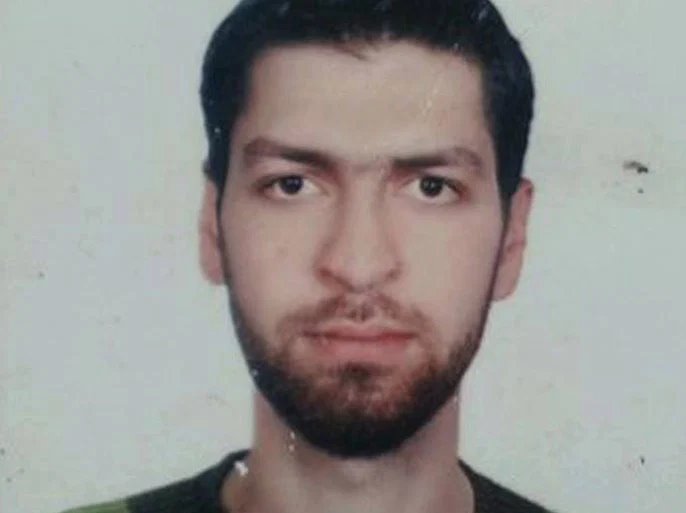
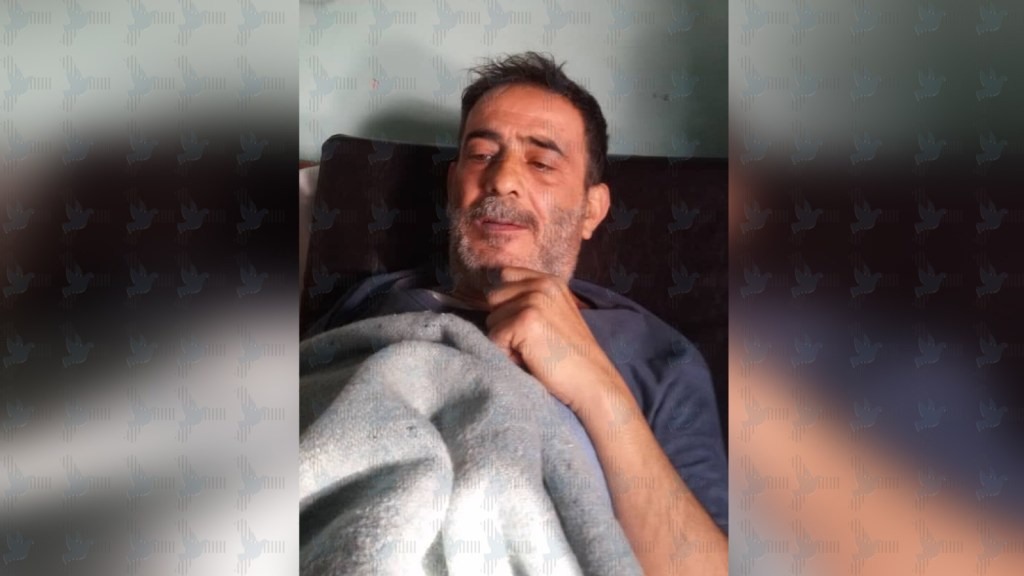
Syria, trial of Anwar Raslan

Wissam

Fayez SARAH must testify today at the trial of Anwar Raslan officer of the Syrian regime accused of crimes against humanity, trial held in Koblenz in Germany . Fayez is a Syrian journalist who has been in prison several times, the first in 2008 for writing an article calling for the release of political prisoners, especially those who had signed the text of the Damascus Declaration, a text that called for a peaceful change of governance in Syria and a political opening of the country.
After the beginning of the revolution, two of Fayez’s children were arrested in 2012 by Assad’s henchmen for demonstrating against the regime; they were released a few months later but his son Wissam (photo) was arrested again in January 2013. Being actively sought by the Assad regime, Fayez is forced to leave Syria.

On January 14, 2014 he learns from his exile in Istanbul the death of his son under torture via a cable sent by the military police asking his daughter who remained in Damascus to go to the military police detention center to retrieve the body of Wissam. But to recover the body of the deceased, the family is forced to sign a document that indicates that Wissam was killed by “terrorists”…

When I think that Fabrice Balanche during a debate I had with him on France Culture dared to call the “opponents of the outside” opposition of Hotel and Palace while the vast majority have fled forced and forced the barbarity of the regime and have left everything behind, I say to myself that the place of Balanche as that of Thierri Mariani or Regis le Sommier is in the same cage as Anwar Raslan in Koblenz for complicity in crimes against humanity.

Assad released the Islamists from his prisons in 2011 to replace them with intellectuals, students, doctors, activists… all of them pacifists. Many have died and others are dying in prison, and some continue to claim that the one who has fed terrorism is a bulwark against barbarism.

Firas Kontar on FB

Nabil Ghaleb Khair by Firas Kontar on FB

The cruelty, inhumanity and monstrosity of the Syrian regime

Yesterday, Friday 23 April 2021, Nabil Ghaleb Khair (photo) died at the age of 54 in Assad’s prisons after more than thirty years of detention, twenty of which were spent in the hell of Saidnaya prison. Nabil was born in 1967 in the town of Al-Qanawat, north of the city of Sweida, my home region.

Like many young people in the region, Nabil worked in Lebanon to help his family, and it was in Lebanon that he was arrested by the Syrian regime’s intelligence services on 4 June 1991. He was quickly transferred to one of the worst detention centres known as the Palestine Branch in Damascus, where he stayed for about six months, during which time he was tortured, lost several teeth and had his jaw broken.

Nabil was never charged, no clear accusation was made, he was arrested on the basis of a report written by an agent of Assad, the sinister moukhabarate equivalent of the Stasi. He was sentenced to death by a military court without a lawyer present, and then the sentence was commuted to life imprisonment.

Nabil was not given the opportunity to defend himself or to hire a lawyer, and he was not able to contact his family during the “investigation and trial” period. Following the trial he was transferred to Saidnaya prison where he spent fourteen years without visits until 2005.

With the start of the Syrian revolution, the regime emptied Saidnaya prison of former detainees to send protesters, Nabil was then transferred to Sweida central prison on 25 June 2011, where he remained until his death yesterday.This is what the Assad’s anti-imperialist paradise has always been like, young people without a future are forced to go and work as labourers abroad and even leaving their country and abandoning it to the Assads, they are not safe from its tyranny.

Nabil has spent more years in prison than Mandela for no apparent reason. His only experience of life was poverty, which forced him to go and work in Lebanon, as a result of the takeover of the state by a mafia clan whose only objective is to enrich itself, and then torture until his death in Assad’s dungeons. May he rest in peace.

The Syria music map

https://www.syriamusicmap.org/ar/home

I know, this is not much of a presentation but explore the above map; some music is with video

Try this for instance : https://www.syriamusicmap.org/ar/Damascus/media/1?fbclid=IwAR3RcyBA2a9hXuyprBHCZfDhrYvBvSxQUjQGbNA0vyCTNOZWeemxmB50Ifg

Rime Allaf recaps 20 years of Bashar’s rule


I wrote this thread of 30 tweets on the occasion of Bashar Assad’s ascent to the Syrian throne 20 years ago. Thank you for reading. (For retweets, Twitter link Rime Allaf @rallaf)

20 years ago today, I was at a Damascus hair salon when an assistant rushed to tell us Hafez Assad had died. What I saw and lived in the next days and years is set in stone in my memory. This thread is but a glimpse of life in #Syria then and the slow descent into implosion. /1

Hafez started preparing the ground for 2nd son Bashar in 1994 when original heir Bassel was killed in a car crash. While Bashar’s meteoric rise in army ranks and early public appearances in late 90s prepared people, Hafez was busy clearing regime ranks of potential contenders. /2

Big names Syrians had grown up fearing, from Hekmat Shehabi to dreaded head of intelligence Ali Douba, were officially retired to ensure only the most loyal and least ambitious men stayed. Bashar never had to fight an “old guard” in later years as some clueless media claimed. /3

Within an hour of Hafez’s death, parliament held a special televised session to amend the constitution. In 5 minutes, the required age for the presidency was lowered from 40 to 34, Bashar’s age. We all watched in stunned silence: we expected it, but it was still humiliating. /4

When Bassel died, Hafez Assad forced the entire country to shut down & mourn for 40 days. So when Hafez died, Syrians went into self-preservation mode: within a couple of hours, streets emptied & shops closed, with people at home glued to TVs, trying to interpret developments. /5

Turns out Bashar couldn’t care less if people grieved “the eternal leader” as long as they cheered “the hope” – the cute moniker his folks spread for us to repeat. Bashar was devoid of emotion, even flippant at the funeral, a bit ungrateful considering his hefty inheritance. /6

The formalities of Bashar’s “election” took place the following month, and many would have wanted the story to end with “and we all lived happily ever after” … but we didn’t. To begin with, the personality cult imposed under Hafez paled in comparison to what Bashar demanded. /7

Hafez liked being feared but Bashar was desperate to be admired. Over the years, he sidelined any Syrian personality who came even close to being popular or, God forbid, to outshine the king. Old wooden Baathist dinosaurs are still his core ministers & advisors for a reason. /8

To be admired, Bashar strived to be cool. The rumors about work ethics, love of technology and humble demeanor, the wife, the living quarters, the interviews, the cafes, the modernity, the posters magically appearing “against his will” – all meant to drip with coolness. /9

Before Hafez died, I was one of the first few thousand Syrians to buy a mobile phone. For that privilege, in addition to the cost of the phone (illegal to bring one from abroad) + various fees, I paid $1,200 to Syriatel just to have a number. That’s how Rami became cool too. /10

As portfolio manager of the Assad and Makhlouf clans, Rami was the most visible and most powerful “businessman.” But all the children of the Hafez buddies became the new business people of the Bashar era – not that it’s a feat of entrepreneurship with no competition allowed. /11

The so-called economic opening was merely an erratic crony capitalist economy so a few could live it up. As they watched mounting obscene wealth around them, Syrians were beginning to face rising prices, diminishing means, a dismal housing situation and a transport nightmare. /12

From the start, Bashar claimed the economy would be reformed; if this was reform, imagine the rest. There were a couple of private banks, some media, a few private schools – none of which had an effect on the lives of ordinary Syrians. On the political front, empty words. /13

Some dared to call Bashar’s bluff. In September 2000, 99 brave Syrian intellectuals signed a statement asking him to lift the state of emergency (in place since 1963), free political prisoners, allow freedom of speech … if you know Syria, you know where this is going. /14

Syrians waited for these basic freedoms and rights for an entire decade, and paid dearly for it. While Rami scooped up every possible penny made in or coming into Syria, Bashar was scooping up Syrians who dared to speak out and populating jails with prisoners of conscience. /15

The Damascus Spring, as we call it, turned rapidly into a Damascus Winter. Many old opposition figures who the world discovered in 2011 had been prisoners of conscience for years – under father and then son – for “weakening national sentiment.” Defying Bashar was verboten. /16

Abroad, Bashar played statesman with disastrous effect, giving absurd interviews pontificating on world affairs. A mansplainer of the first order, he tediously denied claims about any action by saying “it’s not logical.” He riled up the US by sending fighters to Iraq … /17

… even though he voted for Resolution 1441 on his Security Council stint, giving the US the unanimity it had sought and the justification it needed to invade Iraq a few months later (Bashar always wants to be wanted, and if that doesn’t work he makes trouble to be noticed). /18

And then there was Lebanon, which he had been messing up since the day he inherited his realm. In 2004, he forced the Lebanese parliament to extend then-president Emile Lahoud for 3 years (unconstitutionally), and in February 2005, with his ever stronger ally Hezbollah, … /19

… he killed Rafic Hariri, setting in motion a sequence of further assassinations and upheaval, and the forced retreat of Syrian soldiers who had been there since the 1970s. When brave Syrians dared to stand with their Lebanese counterparts, he threw them in jail, again. /20

Syrians watched Lebanese protesters publicly insult Bashar, shaking the regime for the first time. That is when the “menhebak” (we love you) posters started appearing, and when the regime began peddling Syrianism (basically, Syria First) to replace Baathist Arabism. /21

After the hasty Lebanon retreat, Bashar promised Syrians big changes were coming. We were not holding our breath, but when he then convened a Baath Party Congress (the first since 2000), some again dared to hope the regime had finally learned its lesson. Silly them. /22

The Congress declared that the economy (officially socialist for people, capitalist for ruling elite) would henceforth be known as a “social market economy,” whatever that means. Poverty continued to rise, the velvet society continued to sip frappuccinos at the Four Seasons. /23

Ostracized by the entire region and the world, Bashar was saved by Hezbollah’s infamous May 2008 assault on Beirut which led to a reconciliation agreement sponsored by Qatar, leading itself to his reintegration into the international community and an invitation to Paris. /24

The bigger Bashar’s head got on a regional level, the more his actions increased Syrian despair and disparity. And when he declared in early 2011 to WSJ that Syria was immune to the Arab spring, the children of Deraa pointed to the naked emperor and wrote: it’s your turn. /25

Syrians endured suffocating hardship over decades of Assad tyranny before they started the revolution – a revolution in every sense of the word. To understand this seemingly sudden unleashing of the free Syrian spirit, you need to know about the decade that preceded it. /26

This thread merely scratches the surface of the trajectory of Bashar Assad and Syria, which I researched for years at Chatham House, and wrote and spoke about in hundreds of articles, talks and interviews. Expertise on Syrian affairs is needed, above all from Syrians. /27

Hafez Assad bequeathed him a hereditary republic; Bashar took this massive trust fund and destroyed it over the course of 20 years, little by little at first through reckless abandon, and then with every weapon of mass terror and destruction. /28

This gluttonous, incompetent, barbaric regime is unreformable, proving repeatedly it will use all means at its disposal to maintain its violent power, 50 years on and counting. Since March 2011, most Syrians have sacrificed everything to liberate themselves, with little help. /29

As the world rethinks its selective commitment to fighting injustice and upholding human rights, after the exposure of horrific crimes on unarmed civilians, it should help Syrians get justice too. For that to happen, Bashar Assad’s 20th anniversary in power must be his last. /30


Economic crisis looms as the Syrian pound plummets to an all-time low

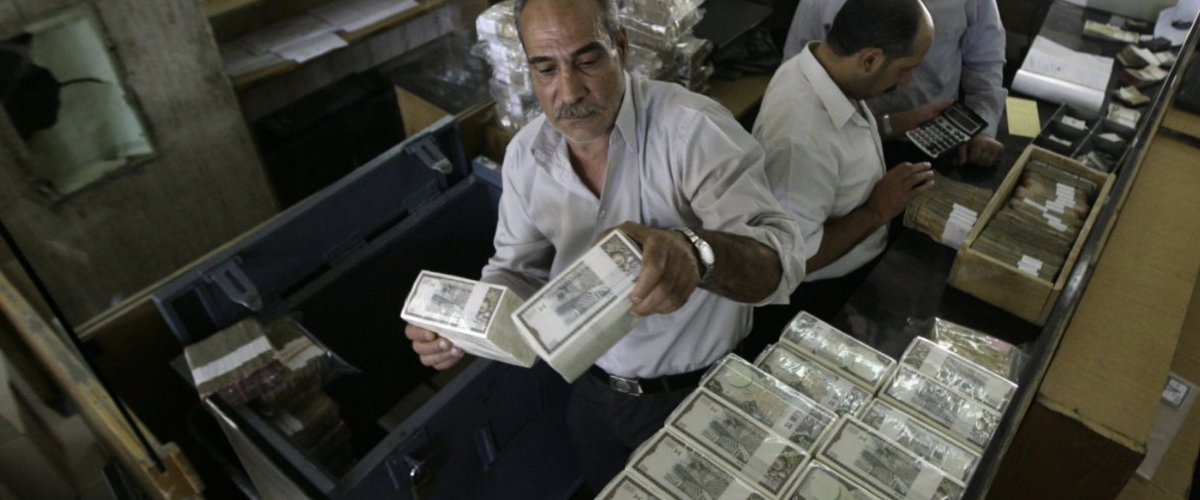
An employee of the Central Bank of Syria packages banknotes at its headquarters in Damascus, 25/8/2011 (AFP).


By Rohan Advani, Walid Al Nofal


November 26, 2019
المقال باللغة العربية

AMMAN — Since the outbreak of the revolution in 2011, the value of the Syrian pound (SYP) has plummeted, weakening confidence in the country’s economy. The Syrian pound, which traded at 47 SYP to the dollar at the beginning of 2011 has now exceeded 700 SYP on the black market.

The pound’s collapse has resulted in rising import costs for basic commodities, widespread currency speculation and hoarding of dollars, a foreign exchange crisis at the Syrian Central Bank, and most concerning, a deterioration in the living conditions for the country’s poorest sections of society.

At a parliamentary session in September, members of the Syrian People’s Assembly explicitly criticized the government for not doing enough to boost the economy, counter corruption and improve living conditions for Syria’s poorest. MP Bassim al-Naaemeh directed his criticism at Syrian Prime Minister, Imad Khamis, saying that the performance of the government has been weak and that economic confusion has led to an unstable exchange rate. Similarly, MP Muhammad Khair al-Akkam said the government was doing little to ensure proper tax collection in the country.

In contrast, the governor of the Central Bank of Syria, Hazem Qarfoul, described the fall in the value of the Syrian pound as part of a “systematic campaign to weaken the lira [pound] and the economy, undermine confidence in the Central Bank, and incite fear among citizens to abandon their national currency.” In a telephone conversation with the state-run Syrian News Channel, he regarded the recent depreciation of the Syrian pound as “illusory,” adding that it has “no economic rationale and basis on the ground.”

This justification, however, was roundly criticized by parliamentary members. Al-Naameh, for example, characterized the governor’s response as “inconsistent with reality.”

What’s behind the recent depreciation of the Syrian pound?

Although the value of the Syrian pound has undergone a steady decrease since 2011, the black market exchange rate plummeted this year in particular, such that government attempts to remedy the situation have largely failed.
According to David Butter, a political and economic analyst at London-based Chatham House institute, the recent depreciation in the Syria pound may have been triggered by “problems in meeting fuel imports earlier in the year,” which forced “government and private traders to look around for dollars.”

In April 2019, fuel shortages in government areas paralyzed economic activity; donkeys and horse-drawn carriages roamed the streets of Damascus while people formed day-long lines outside gas stations. This prompted private and government importers to finance fuel imports through other methods, putting further pressure on the Syrian pound.
The inability to meet fuel demand is intimately linked to Iran’s dwindling capacity to provide energy to Syria. Earlier this year, Iran stopped selling oil to the Syrian government on its “credit line” – a form of financial aid provided by Iran to Syria to purchase basic commodities – and the weight of US sanctions on Iranian oil exports has aggravated the situation. Moreover, following US pressure on countries delivering oil to Syria, importers have had to rely on more expensive smuggling routes.

Another possible explanation behind the recent depreciation of the Syrian pound is the Turkish invasion of northeast Syria in October. Dubbed “Operation Peace Spring,” the Syrian National Army (SNA) with the support of Turkish forces moved into largely Kurdish-held areas in northeast Syria, east of the Euphrates. Though not as significant as fuel shortages, Butter added that the changes in the black market exchange rate “is some kind of indication that maybe the Turkish incursion is having an effect.” However, the US decision to retain Syrian oil fields – even as the Syrian government reasserts control in certain areas – has undercut hopes of generating hard currency from future oil sales.

Another important reason for the rapid decline in the value of the Syrian pound may lie outside Syria’s borders. In neighboring Lebanon, a financial crisis is continuing to unfold, with drastic pressure mounting on the country’s currency peg with the US dollar. Following the outbreak of popular protests in mid-October in response to decades of corruption and financial plunder, Lebanese banks closed for almost two weeks with many fearing a potential run on the banks.

After opening and then closing again for a week, banks reopened on November 19 to large lines of customers seeking withdrawals. However, to avoid capital flight, the Association of Banks in Lebanon (ABL) announced that cash withdrawals would be limited to $1,000 a week.

For Syrian importers, this spells disaster. Beirut continues to be the main dollar market for Syrian importers who use the Lebanese banking system. As Lebanon’s financial health deteriorates and confronts a nation-wide dollar shortage, Syrian importers are finding it increasingly more expensive to buy dollars to finance their imports. As Butter noted, “the fact that you have foreign currency shortages in Lebanon is likely to have a knock-on effect in Syrian markets.”

read full article here

Mystery identity of asylum seeker who died trying to swim the Channel unveiled by ITV

News

Full article and video here

Investigation by ITV News Correspondent Dan Rivers and Foreign News Editor Jonathan Wald
This report contains images and descriptions some people may find upsetting.
His death made few headlines in Britain in August – another migrant who died trying to cross the Channel.
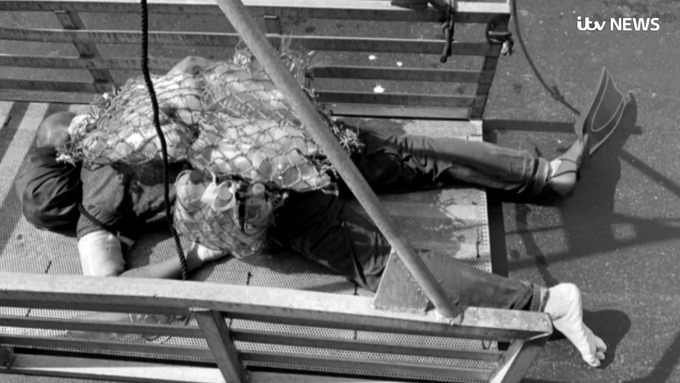
A photo emerged in the Belgian media, starkly showing the body lying face down having been pulled from the sea.
It was black and white but still harrowing in its portrayal of the man who was wearing a flipper and a homemade buoyancy aid; made from 12 plastic bottles and some crude netting.
He was found in a wind farm 28km off the Beligan coast – but authorities had little else information to work with. Papers he carried suggested his name was Masoud Niknam.

His body was found off the Belgian coast – wrapped in netting and plastic bottles. Credit: ITV News

That led police to think perhaps he was from Iraq.
Weeks later, we filmed his lonely burial near Bruges.
A handful of strangers watched a coffin being lowered into the ground. We were determined to investigate this tragedy, but there was little to go on.
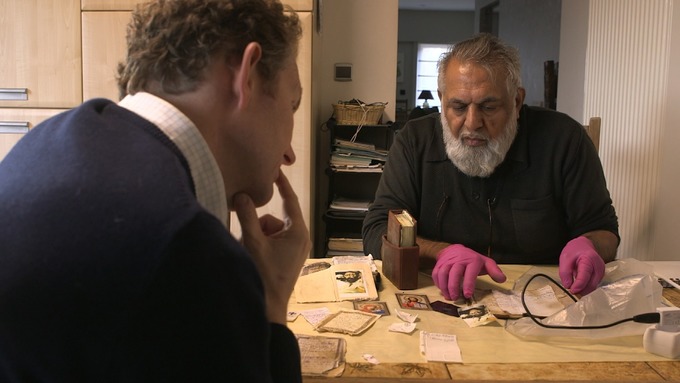
This week all that changed when the man who presided over the funeral told us the police had handed back Masoud’s few possessions.
He entrusted them to ITV News in the hope we could find out more about the man who drowned trying to swim to these shores.
The books Masoud carried were still wet from the sea.


His possessions were few, but led to clues about his life. Credit: ITV News

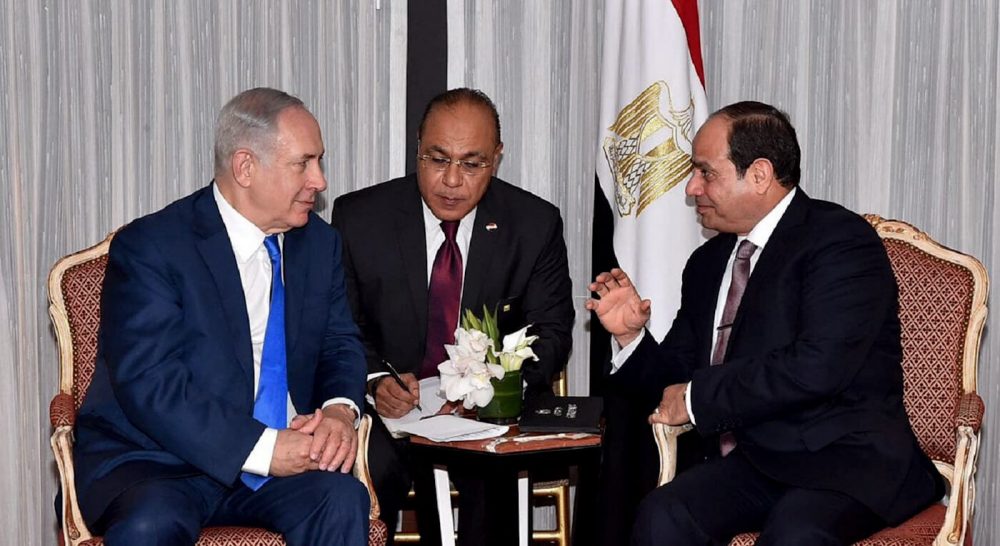
IDF General: Israel Behind Coup That Installed Al-Sisi Dictatorship in Egypt

Al-Sisi’s government, widely considered a military dictatorship despite a pale sheen of democracy, has forged increasingly close ties with Israel ever since he came to power in the 2013 coup.

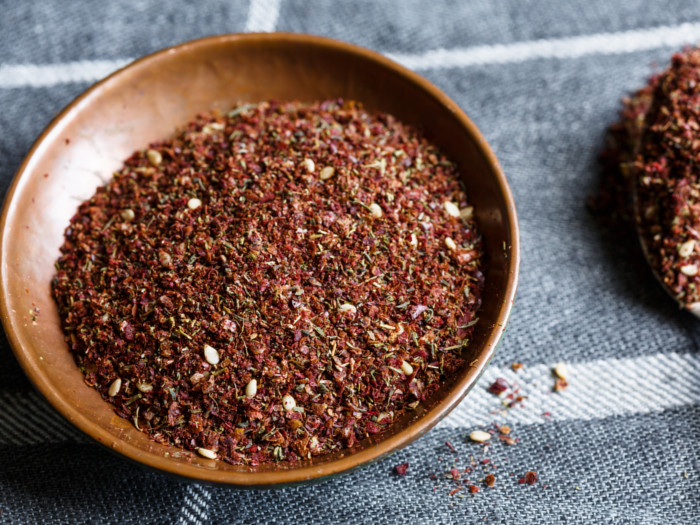
Health Benefits of Za’atar

Za’atar has some truly impressive health benefits, including its ability to improve the immune system, boost skin health, build strong bones, increase circulation, clear out the respiratory tracts, soothe inflammation, boost energy, improve mood, aid memory, and potential to treat chronic diseases.
Za’atar

While many spices are delicious and beneficial for your overall health by themselves, powerful flavor and health conditions can sometimes be maximized when combined. Za’atar is one of the best examples, and this Middle Eastern mix consists of thyme, sesame seeds, sumac, and salt. There are a number of different varieties, occasionally including marjoram or oregano, rather than thyme. These herbs and spices contain a wealth of powerful nutrients and organic compounds, including thymol, gallic acid, carvacrol, and quercetin. By taking in the best of numerous healthy herbs, this spice mix has been popularized throughout the Middle East and is beginning to spread to other parts of the world.

While zaatar is another name for thyme in some cultures, the spice blend with a slightly different name is used in a number of other ways. It is a popular addition to salads, as well as seasonings for meat and vegetables. The flavor, depending on the particular combination, is often described as toasty, tangy, or nutty. You particularly see it with olive oil and bread, and in dips for vegetables. By combining flavonoids, minerals, and other key nutrients, this spicy seed mixture can do wonders for your overall health. Let’s take a closer look at some of the many health benefits of za’atar.


Health benefits of za’atar include:
Relief from Symptoms of Chronic Diseases

Sumac, with its healthy supply of quercetin, acts as an antioxidant protecting the body against free radicals that cause various health issues. Numerous studies have shown this benefit of sumac’s organic components, and as a key ingredient in za’atar, this spice mix can significantly boost your protection from chronic diseases caused by free radicals (Mehmet Hakki Alma et al., 2003).
Clear Respiratory Tracts

There are certain expectorant properties of thyme, particularly when it is brewed in a tea. Thyme can help to clear out the respiratory tracts, causing you to expectorate (a cough) out phlegm and mucus, so this potent spice mix can be added to food when you’re feeling a cold coming on. The immune-boosting abilities of the herbs involved also help to ward off illnesses.
Boost Cognition

There are strong traditional beliefs about the cognitive impact of za’atar, including its possibility of improving memory. People used to sleep with za’atar beneath their pillow, but in reality, it could be due to the circulation-boosting powers of za’atar, as well as the rich mineral content that can boost brain power and stimulate neural activity.
Soothe Inflammation

You can make za’atar into a paste or a salve, much as you would to spread on bread, but instead put it on inflamed areas of the skin, such as bug bites and aching joints. When the spice is consumed, it can have a similar anti-inflammatory effect on other parts of the body, particularly if you suffer from arthritis, gout, or other inflammatory conditions in the stomach or respiratory system.
Increase Energy

The high concentration of polyphenols and flavonoids found in this spice mix make it a powerful energy booster that can get your metabolism moving. Furthermore, it can help you get more restful sleep, due to the magnesium found in the mix, helping you feel more energized and ready to face your day each morning.
Improve Mood

Studies and traditional evidence have linked za’atar with improved mood and decreased rates of depression. This use has been popular for generations in the Middle East. The phenol that comes from thyme and oregano may have direct mood-boosting effects by impacting the hormones being released and regulated throughout the body. Carvacrol has been directly linked to increased energy and cognitive function as well.
Strengthen Bones

One thing that these herbs all have in common is minerals, and between the high concentration of iron, calcium, copper, and magnesium, za’atar can have a major impact on bone mineral density. Adding this spice mix to your regular diet can help you ward off osteoporosis and other degenerative bone conditions as you age.
Circulatory Effects

As mentioned earlier, za’atar can help improve the circulation of oxygenated blood throughout the body thanks to its impressive iron content. Iron is a key component of hemoglobin, which transports red blood cells throughout the body, ensuring that all organ systems get the oxygen they need.
Immune System Aid

Certain organic compounds found in za’atar spice mix have anti-fungal, anti-microbial, and antiseptic properties, making this an all-around powerhouse for your immune system. This includes internal and external applications, keeping your gut, skin, respiratory, and nervous systems functioning at a high, healthy level.

source

Blog at WordPress.com.

Up ↑