Search

band annie's Weblog

I have a parallel blog in French at http://anniebannie.net

Category

wikileaks

White House Petition: Free Bradley Manning—Give Him a Full and Complete Pardon

In Bradley Manning, News on March 10, 2013 at 2:51 PM

Free Bradley Manning

WE PETITION THE OBAMA ADMINISTRATION TO:

Free Bradley Manning—Give him a full and complete pardon

Concerning Nobel Peace Prize nominee PFC Bradley Manning : Please President Obama grant a full pardon and have him released immediately. His 1000 days locked up display the worst of U.S. flagrant disregard for human rights. Show that we as a nation can accept a critical examination of our behavior and rise to the occasion of correcting it to reflect ethics and international law. PFC Manning should be lauded for exposing the truth .

SIGN PETITION HERE

Confirmed: Assange Will Run for Australian Senate in 2013

 January 31, 2013 at 12:13 PM

01/30/2013WikiLeaks founder Julian Assange plans to run for a seat in the Australian Senate in 2013, it has been confirmed on Wednesday. It is not yet clear how he will escape from London’s Ecuadorean embassy.

WikiLeaks representative Kristinn Hrafnsson confirmed to RT that Julian Assange will run for a seat in the Australian Senate.

A native of Australia’s Queensland state, Assange said in March last year that he wanted to “bring liberty back to the center of Australian politics.” His Senate candidacy will help him defend free speech and the “right of citizens… to live their lives free from state interference,” he explained.

After taking political asylum in Ecuador’s embassy in London in June, Assange expressed interest in the senate seat in December, when he said that he would run as a candidate as part of a yet-to-be-formed WikiLeaks party. He also called on to his supporters to stand with him.

Assange is expected to run on a WikiLeaks party ticket; If he cannot physically make it to the Senate, his seat will be taken by his running mate, the WikiLeaks wrote on Twitter on Wednesday.
Assange’s mother Christine has confirmed her son’s senate candidacy: “He will be awesome,” she told AAP News. She added that currently, Australians can only choose between the two major parties in the country’s legislature, which she called “US lackey party number one and US lackey party number two.”

“It will be great to ‘Assange’ the senate for some Aussie oversight,” Christine Assange said.

Australian Prime Minister Julia Gillard announced earlier in the day that the country’s national elections will be held on September 14.

Assange may not be able to be physically present at the Australian senate as he remains holed up in London’s Ecuadorean embassy in order to avoid extradition to Sweden. Stockholm has called for Assange to be questioned in the presence of those who made the sex crime allegations. This has raised concerns from Assange’s lawyers that the WikiLeaks found could then be extradited again to the US upon arriving in Sweden.

If extradited to the US, Assange will likely face trial for the release of thousands of classified US diplomatic cables. It was revealed in September last year that US authorities had declared Assange and WikiLeaks to be enemies of the state.

source

Right-Wing US Politicians Pressured Banks to Blockade WikiLeaks

See also : Accused WikiLeaks Whistleblower Bradley Manning Testifies He Thought He Would “Die in Custody”


Sen. Joe Lieberman and Rep. Peter King muscled US corporations to isolate WikiLeaks

by John Glaser, November 27, 2012

(WIKILEAKS PRESS RELEASE) – Hard-right U.S. politicians were directly behind the extrajudicial banking blockade against WikiLeaks, according to documents released by the anti-secrecy organization.

In the heavily redacted documents leaked from the European Commission, MasterCard Europe admits that Senator Joseph Lieberman and Congressman Peter T. King both “had conversations” with MasterCard in the United States over cooperating on the blockade.

Lieberman, the chair of the Senate Committee on Homeland Security and Government Affairs, is revealed boasting of instigating Amazon’s cutting of service to WikiLeaks.

Senator Lieberman tried to introduce the SHIELD Act into the Senate and advocated for prosecuting the New York Times for espionage in connection with WikiLeaks’ releases.

Rep. Peter King, current chair of the House Committee on Homeland Security, tried to formally designate WikiLeaks as a foreign terrorist organization, have its staff listed as ‘enemy combatants’, and have WikiLeaks put on a U.S. Treasury blacklist. On 13 January 2011 the U.S. Treasury announced it would not do so because there was no evidence that WikiLeaks should be on such a list.

While Lieberman and King were unsuccessful in these methods of legally cutting WikiLeaks from its popular donor base, they were successful in doing so extra-legally via VISA and MasterCard, which together hold a monopoly of 97 per cent of the market of EU card payments.

VISA Europe is registered in London and is owned by a consortium of European banks. MasterCard Europe is registered in Belgium and has similar ownership, but the Commission papers show that European control of VISA Europe and MasterCard Europe is a fiction. The papers reveal that the instructions to blockade WikiLeaks’ operations in Europe came directly from VISA and MasterCard in the United States. Ownership would normally imply control, but VISA and MasterCard Europe are essentially controlled by confidential contracts with their U.S. counterparts, a hidden organizational structure that the Commission calls an “association of undertakings.”

Julian Assange said: “There is no sovereignty without economic sovereignty. It is concerning that hard-right elements in the United States have been able to pressure VISA and MasterCard, who together hold monopoly over the European market, into introducing a blockade that the U.S. Treasury has rightly rejected. These unaccountable elements are directly interfering in the political and economic freedoms of EU consumers and are setting a precedent for political censorship of the world’s media.”

WikiLeaks releases 2.4 million Syria e-mails

wikileaks comment on fb : Lip Biting Coverage on Syria Files from CNN – 2 Paragraphs devoted to new Leaks, rest about “sex allegations “

see also this article in The Guardian

and here is the press conference

[youtube http://youtu.be/9rICDiQTE7I?]
By the CNN Wire Staff
July 5, 2012 — Updated 1155 GMT (1955 HKT)
Julian Assange, pictured here on October 8, 2011, is the founder of WikiLeaks, which facilitates the anonymous leaking of secret information.

STORY HIGHLIGHTS
  • NEW: The WikiLeaks founder has been fighting extradition
  • The e-mails are in a range of languages including Arabic and Russian
  • WikiLeaks says the e-mails come from different government ministries

London (CNN) — WikiLeaks said Thursday it has begun publishing some 2.4 million e-mails from Syrian politicians, government ministries and companies dating back to 2006.

The e-mails, which are in a range of languages including Arabic and Russian, come from the ministries of presidential affairs, finance, information and foreign affairs, among others.

According to WikiLeaks, the e-mails “shine a light on the inner workings of the Syrian government and economy, but they also reveal how the West and Western companies say one thing and do another.”

WikiLeaks, which facilitates the anonymous leaking of secret information, has published about 250,000 confidential U.S. diplomatic cables, causing embarrassment to the government and others. It has also published hundreds of thousands of classified U.S. documents relating to the conflicts in Iraq and Afghanistan.

Its founder, Julian Assange, was arrested in Britain in 2010 over allegations of rape and sex crime charges in Sweden.

Assange resisting extradition

Rights group: Thousands killed in Syria

Diplomacy for Syria

Will Russia finally turn on Assad?

Two women have accused Assange of sexually assaulting them in August 2010 when he was visiting Sweden in connection with a WikiLeaks release of internal U.S. military documents.

Opinion: Australia to Assange’s rescue? Don’t hold your breath

He has been arrested in absentia, Swedish prosecutors have said. Swedish authorities want to question him about the allegations, which he denies.

Assange has been fighting extradition ever since, saying the allegations are retribution for his organization’s disclosure of American secrets. His bail conditions included staying every night at the home of a supporter outside London.

Assange applied for asylum to Ecuador on June 19 and has been inside the Ecuadorian Embassy in London since then. It is unclear when Ecuador will make a decision on the asylum request.

He sought refuge at the embassy five days after the Supreme Court of the United Kingdom dismissed a bid to reopen his appeal of the decision to send him to Sweden — his last option in British courts.

A representative for the WikiLeaks founder said Assange will not honor a notice that British police served him requiring him to turn himself to authorities.

“This should not be considered any sign of disrespect,” said Susan Benn of the Julian Assange defense fund, who read the statement.

Benn said the United States had empaneled a grand jury in its goal to press charges against Assange. Turning himself in would have started a process that would end with Assange being extradited to the United States, she said.

“It is clear that there is a plan to bring Julian Assange to the United States,” she said.

Citing what she called cruel, inhumane and degrading treatment of the alleged source of leaked documents, Pfc. Bradley Manning, Benn said that sending Assange to the United States “would be a violation of his rights.”

Police said Assange is in violation of his bail by staying at the embassy, and that ignoring the notice to turn himself in is a further violation.

See yourself as the next Assange? Good luck

Wikileaks : Secrets and lies

CNBC broadcast this documentary on the 1st of March.

…………….

……………….

…………………………

…………….

Wikileaks : RE-ENGAGING SYRIA: DEALING WITH SARG DIPLOMACY

Viewing cable 09DAMASCUS384,

If you are new to these pages, please read an introduction on the structure of a cable as well as how to discuss them with others. See also the FAQs
Reference ID Created Released Classification Origin
09DAMASCUS384 2009-06-03 13:23 2011-08-30 01:44 SECRET//NOFORN Embassy Damascus
Appears in these articles:
http://www.mcclatchydc.com/2011/08/03/119333/wikileaks-bush-obama-passed-on.html
VZCZCXRO9472
OO RUEHBC RUEHDE RUEHDH RUEHKUK RUEHROV
DE RUEHDM #0384/01 1541323
ZNY SSSSS ZZH
O 031323Z JUN 09
FM AMEMBASSY DAMASCUS
TO RUEHC/SECSTATE WASHDC IMMEDIATE 6431
INFO RUEHEE/ARAB LEAGUE COLLECTIVE PRIORITY
RHEHNSC/NSC WASHDC PRIORITY
RUEAIIA/CIA WASHINGTON DC PRIORITY
RHMFISS/HQ USCENTCOM MACDILL AFB FL PRIORITY
RUMICEA/USCENTCOM INTEL CEN MACDILL AFB FL PRIORITY
S E C R E T SECTION 01 OF 03 DAMASCUS 000384 

NOFORN
SIPDIS 

E.O. 12958: DECL: 12/07/2018
TAGS: PREL SY
SUBJECT: RE-ENGAGING SYRIA:  DEALING WITH SARG DIPLOMACY 

Classified By: CDA Maura Connelly for reasons 1.4 (b) and (d) 

1.  (S/NF) Summary:  As the U.S. continues its re-engagement
with Syria, it may help us achieve our goals if we understand
how SARG officials pursue diplomatic goals. Syrian President
Bashar al-Asad is neither as shrewd nor as long-winded as his
father but he, too, prefers to engage diplomatically on a
level of abstraction that seems designed to frustrate any
direct challenge to Syria's behavior and, by extension, his
judgment.  Bashar's vanity represents another Achilles heel:
the degree to which USG visitors add to his consequence to
some degree affects the prospects for a successful meeting.
The SARG foreign policy apparatus suffers from apparent
dysfunctionality and weaknesses in terms of depth and
resources but the SARG punches above its weight because of
the talents of key individuals.  SARG officials generally
have clear, if tactical, guidance from Bashar and they are
sufficiently professional to translate those instructions
into recognizable diplomatic practice.  But in a diplomatic
world that is generally oiled by courtesy and euphemism, the
Syrians don't hesitate to be nasty in order to achieve their
objectives.  The behaviors they employ as diplomatic
"force-multipliers" are the hallmarks of a Syrian diplomatic
style that is at best abrasive and, at its worst, brutal.
End Summary. 

-------------------
Gaming Out the SARG
------------------- 

2.  (S/NF) As the U.S. moves forward to re-engage Syria, we
are well aware that Syrian officials have long been famous
for their abilities as tough negotiators.  The late President
Hafiz al-Asad could wear down his interlocutors through sheer
staying power in 10-hour meetings without breaks; the wealth
of detail and historical perspective he brought to those
discussions also tested the mettle of those who were
attempting to persuade him to a course of action he
questioned.  His son Bashar is neither as shrewd nor as
long-winded as his father but he, too, prefers to engage
diplomatically on a level of abstraction that seems designed
to frustrate any direct challenge to Syria's behavior and, by
extension, his judgment.  Bashar's presentations on world
affairs suggest that he would prefer to see himself as a sort
of philosopher-king, the Pericles of Damascus.  Playing to
Bashar's intellectual pretentions is one stratagem for
gaining his confidence and acquiescence; it may be
time-consuming but could well produce results.  Bashar's
vanity represents another Achilles heel:  the degree to which
USG visitors add to his consequence to some degree affects
the prospects for achieving our goals.  Every interaction we
have with the SARG is, in fact, a transaction and the better
equipped we are to understand the dynamics of our
negotiations the better able we will be to achieve our
objectives.  Post has assembled the compendium below in an
attempt to reflect our experience in dealing with the SARG in
the hope that Washington-based interlocutors will find it
useful. 

------------------------------------
A Compendium of Diplomatic Behaviors
------------------------------------ 

3. (S/NF) Capacity:  SARG scope of action is limited the
President's span of control.  He is generally able to monitor
 the activities of his foreign minister, political/media
advisor, intelligence chiefs, and brother Maher.  At various
times, his vice president and national security advisor are
also active and therefore under his direct supervision.
While communication flows between him and his subordinates,
it appears not to be formalized and information is highly
compartmented.  Subordinates' portfolios are not clearly
delineated; overlapping areas create tension and competition.
 There is no "interagency" policy development process that
lays out advantages and disadvantages of policy choices.
There are, as far as we know, no briefing or decision memos.
The bench is not deep; beyond the principals lie only a few
trusted staffers.  Bashar and his team also find it difficult
to juggle more than one major foreign policy issue at a time. 

4. (S/NF) Protocol:  SARG officials are sticklers for
diplomatic protocol, although they are not experts on the
international conventions from which it is derived.   The
SARG places a high value on protocolary forms that ensure
respectful treatment of state officials (despite bilateral
differences) because such forms guarantee that the President
and his representatives are shown proper courtesies by a
world that is often at odds with Syria.  (This focus on
protocol underlies the continuing Syrian unhappiness over the
absence of a U.S. ambassador.)  Protocol conventions also
reinforce the notion of equal relations between sovereign
states and the SARG insists that communications between it
and foreign embassies comply with traditional diplomatic
practice.  The MFA receives a flood of diplomatic notes from
Damascus-based foreign missions daily which are apportioned
out to various offices for action.  The diplomatic notes,
translated into Arabic by the senders, become the paper trail
for SARG decisions.  The MFA bureaucracy does not appear to
generate cover memoranda that provide background to requests
or recommendations for decisions.  Many such notes, possibly
all notes from the U.S. Embassy, are sent to the Minister
himself for review.  The MFA does not have internal email,
only fax and phone.  Instructions to Syrian missions abroad
are often sent by fax; sometimes the MFA fails to provide
instructions at all. 

5. (S/NF) The Suq:  In dealing with the U.S., the Syrians see
every encounter as a transaction.  The level and composition
of the Syrian side of any meeting is carefully calculated in
terms of protocol and the political message being sent; a
lunch invitation must be interpreted as more than just the
Arab compulsion to hospitality ) who hosts the lunch is as
important as who attends the meetings.  When it comes to
content, the Syrians seek to gain the highest value
deliverable for the lowest price or no price at all.  During
the re-engagement process, the SARG has attempted to extract
high profile USG gestures in exchange for relief of
operational constraints on the Embassy.  The SARG has been
uncharacteristically forward-leaning in allowing discussions
on a New Embassy Compound site to develop as far as they
have; actual closure on a land deal, however, is probably
contingent on U.S. delivery of a SARG desirable, e.g., the
announcement that a U.S. ambassador will be sent to Damascus.
 The SARG's focus on embassy operations is in part rooted in
their paranoia over USG intelligence collection and
penetration of Syrian society but the imposition of
constraints on mission activities has also conveniently
created an embassy list of desiderata that the SARG seeks to
use as cost-free concessions.  FM Muallim candidly
acknowledged this approach when he commented in February to
Charge that he had not yet decided what he needed in exchange
for permission to reopen the American School in Damascus. 

6.  (S/NF) Vanity and Self-preservation:  The President's
self-image plays a disproportionate role in policy
formulation and diplomatic activity.   Meetings, visits,
trips abroad that enhance his respectability and prestige are
pursued; encounters that may involve negotiations or
difficult debate are declined or delegated to subordinates.
The President responds with anger if he finds himself
challenged by visitors, but not until after the meeting.  He
seems to avoid direct confrontation.  When engaged in summit
diplomacy, he often seeks to include allies to bolster his
confidence (e.g., Quadripartite Summit in September 2008,
Riyadh Summit in April 2009).   His foreign policy
subordinates are all "employees" without constituencies or
influence independent of the President's favor.  Their
overriding concern when engaging foreigners is to avoid the
appearance of overstepping or violating their instructions.
They are particularly cautious in the presence of other
Syrians; requests to meet one-on-one often yield more
expansive and candid responses.

7. (S/NF) Deceit:  SARG officials at every level lie.  They
persist in a lie even in the face of evidence to the
contrary.  They are not embarrassed to be caught in a lie.
While lower level officials often lie to avoid potential
punitive action from their own government, senior level
officials generally lie when they deem a topic too
"dangerous" to discuss (e.g., Al-Kibar, IAEA) or when they
have not yet determined whether or how to respond (FFN,
Hezbollah arms supplies, etc).  When a senior SARG official
is lying, the key challenge is not demonstrating  the lack of
veracity but discovering the true reasons for it.
8. (S/NF) Passivity:  SARG foreign policy is formulated in
response to external developments (changes in regional
leadership, initiatives from the West, etc).  The SARG does
not launch initiatives and generally seeks cover from allies
when exploring new courses of action.  The SARG is much more
confident on the Arab level than on the international level.
SARG policy responses are generally tactical and operational,
exploratory rather than decisive, oblique instead of direct.
Strategy, to the extent it exists, emerges from a series of
tactical choices.  The lack of initiative appears rooted in
an underlying sense of diplomatic powerlessness.  Every
foreign policy embarrassment in Syria's history lies under
the surface of a generally false projection of assertiveness.
 That assertiveness is sometimes read as arrogance. 

9.  (S/NF) Antagonism:  Every Syrian diplomatic relationship
contains an element of friction.  There is some current
friction, for example, in the Syrians' relations with the
Turks and the French.  The Syrians are not troubled by
discord; they seek an upper hand in any relationship by
relying on foreign diplomats' instinctive desire to resolve
problems. By withholding a solution, the SARG seeks to
control the pace and temperature of the relationship.  SARG
officials artificially restrict their availability  and can
engage in harsh verbal attacks to intimidate and rattle
foreign diplomats.  SARG officials delight in disparaging
their interlocutors behind their backs for allowing
themselves to be cowed.  On the international level, the
President has indulged in personal criticisms of foreign
leaders; unlike his father, he deliberately makes enemies
when he doesn't necessarily have to.  FM Muallim can behave
similarly but he probably does so on the President's
instructions. 

10. (S/NF) Complacency:  SARG leadership genuinely believes
that SARG foreign policy has been, is being, and will be
vindicated by events.  They also genuinely believe their
foreign policy is based on morally defensible and
intellectually solid principles, although it is usually
reactive and opportunistic.  Existing policy choices are
immutable unless the President decides to change them, in
which case, his new policies, despite any appearances to the
contrary, are consistent with "traditional" principles.
Baathism infuses foreign policy principles (Pan-Arabism) but
pragmatism is more important.  More recently, Bashar's like
or dislike of other leaders plays a role in policy
formulation. 

11. (S/NF) The Non Sequitur:  When Syrian officials don't
like a point that has been made to them, they frequently
resort to an awkward changes in subject to deflect perceived
criticism.  Syrian officials seem to think they've scored a
verbal hit by employing a facile non sequitur, usually in the
form of a counter-accusation.  When the SARG's human rights
record is raised with Muallim, for example, he often raises
Israel's December-January Gaza operation or, more recently,
asks if the U.S. will accept the 1300 Al Qaeda sympathizers
in Syrian jails.   The non sequitur is intended to stop
discussion of the unwelcome topic while subtly intimidating
the interlocutor with the threat of raising a subject that is
putatively embarrassing to him or her.  When the non sequitur
is deployed, it is clear that the SARG official is on the
defensive. 

12.  (S/NF) Comment:  Given the apparent dysfunctionality of
the SARG foreign policy apparatus and its weaknesses in terms
of depth and resources, the SARG's ability to punch above its
weight internationally is noteworthy.  Much of its strength
appears to lie in the talents of key individuals and their
ability to collaborate with each other, despite tensions and
rivalries.  SARG officials generally have clear, if tactical,
guidance from Bashar and they are sufficiently professional
to translate those instructions into recognizable diplomatic
practice.  But the behaviors they employ as diplomatic
"force-multipliers" are the hallmarks of a Syrian diplomatic
style that is at best abrasive and, at its worst, brutal.  At
the end of the day, there are few who really like to deal
with the Syrians.  The SARG, well aware of its reputation,
however,  spends much of its energy ensuring that we have to. 

CONNELLY

Bradley Manning hearing

From the Majority Report, live M-F 11:30am EST and via daily podcast at http://Majority.FM:
A rundown of today’s Bradley Manning hearing. NOTE: Since the end of our show today, the judge has said he will NOT be stepping down from the case.

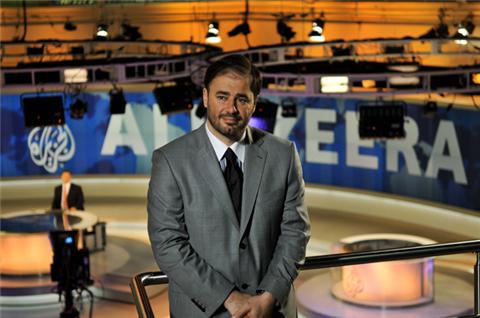
Listening Post : Al Jazeera’s change of guard

click on image

RT’s Interview with Julian Assange (May 2011) COMPLETE

[youtube http://youtu.be/3WwPnBcLyEc?]

Blog at WordPress.com.

Up ↑