INTRODUCTION HERE
CLICK ON IMAGE FOR PART TWO
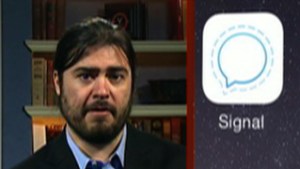
On the other hand, there are now a number of apps and Internet-based services that you can run on your smartphone that will give you much, much more secure communications. So, Apple has built iMessage into its iPhone product for several years. If you have an iPhone and you’re sending a text message to someone else who has an iPhone, this is used by default. Those messages are encrypted in a strong way. They’re sent via Apple’s system, and it’s very, very difficult for governments to intercept those. If you’re using WhatsApp, which is a service now owned by Facebook and used by hundreds of millions of people around the world, if you’re using WhatsApp on Android, it’s encrypted, again, in a very strong way. And if you have an Android or iPhone, you can download third-party apps, the best of which are called Signal for iOS and TextSecure, T-E-X-T Secure, from Android. These are best-of-breed free applications made by top security researchers, and actually subsidized by the State Department and by the U.S. taxpayer. You can download these tools today. You can make encrypted telephone calls. You can send encrypted text messages. You can really up your game and protect your communications.
To be clear, if you are a target of a law enforcement or intelligence agency and they really care about you, they can hack into your phone, and these tools won’t stop that. But you can make it much more difficult. You can make it so that they have to work really hard. And, you know, it’s unfortunate that the phone companies, that AT&T and Verizon haven’t warned their customers. They should be telling the public. They haven’t. But we can do things right now to make wiretapping much more difficult and much more expensive.
…..
CHRISTOPHER SOGHOIAN: So, if you have an Apple device, you could download—so FaceTime is already installed in your iPhone. It’s built by Apple. It’s built into the iPhone. If you make a FaceTime audio or video call from your iPhone to someone else’s iPhone or iPad, it’s encrypted with very strong technology, and it will be very, very difficult for a government to intercept. If you have an—if you don’t want to use an Apple encryption product, there’s a fantastic app in the app store called Signal, S-I-G-N-A-L. It’s free. It’s open source. It’s very, very good. That makes encrypted telephone calls anywhere in the world for free. Even if you’re not worried about security, it’s actually a way of saving money on your phone bill. And then if you’re using Android, there’s a great app by the same people who do Signal called RedPhone, R-E-D-P-H-O-N-E. Again, it’s free. It’s supported by the U.S. government. So you’re paying for it anyway; you might as well use it. And that will also let you make free encrypted telephone calls. These tools work, and they make—they make wiretapping much more expensive, which is what we want. We want governments to have to focus their resources on the people that really matter, the real threats, but they shouldn’t be able to spy on everyone at low cost.





 band annie's Weblog