There can be no doubt, at least as far as Middle East Policy is concerned, that AIPAC is the Voice of America.
Although I have heard AIPAC pronounced in two distinct ways, one of which is A-PAC, I have chosen to pronounce the acronym with the same initial sound as in the word ‘aisle’. To me, this pronunciation is more appropriate, because the use of the A for America sound is subtly misleading. The organization has nothing to do with A for America, it is all about I for Israel.
In the graphic illustration near the end of this video, had the mathematical relationships been absolutely accurate, either the Orange would have filled the screen or the pea would have been invisible. The discrepancy between the power AIPAC wields, compared to the rest of the American population, is immense, and that power benefits one nation: Israel.
Posted on June 10 2010 by Cecilie Surasky under Gaza , IDF.
The Israeli government, with the aid of its many proxies- especially in the Jewish institutional world, is working overtime after the Mavi Mavera massacre to paint the Gaza flotilla participants as terrorists.
Apparently–jamming satellite communications, absconding with tens of thousands of dollars of equipment, confiscating every photo and video they could find, and releasing pathetically doctored “evidence” (thank you Ali Abunimah and Max Blumenthal and others) is not enough. Now groups are working to keep flotilla human rights activists out of the country.
Here’s the stunning petition the NY Jewish Community Relations Council has put together to keep activists out. Mondoweiss has audio of retired US Colonel Ann Wright, who was just in NYC, speaking about what happened. She must be the person they’re trying to keep out of the country. Good luck with that. So much for America-first.
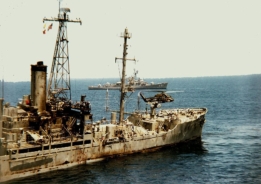
The following is my keynote address to the annual re-union dinner of the Liberty Veterans’ Association – Long Island, 12 June 2010.
I want to begin by saying that though I covered wars wherever they were taking place on Planet Earth in my television reporting days – it was in Vietnam as a very young correspondent that I first started to ask myself questions about why things are as they are in the world – I am an Englishman and one who didn’t serve in his country’s armed forces. (Not because I was a draft dodger. Conscription had ended). So it is both an honour and a privilege for me to be with you this evening. And please believe me, I really mean it. I’m not a politician just saying it.
We do, of course, have something in common, OUTRAGE that can’t be expressed adequately in polite words at the continued suppression here in America of the truth about a war crime – Israel’s attack on the U.S.S Liberty; an attack which, if it had gone completely according to plan, would have seen the sinking of the ship with the loss, the murder, of all hands on board. (Which means that some of you here tonight would not be here).
In my latest book, Zionism: The Real Enemy of the Jews, an epic journey in three volumes through the lies and truth of history as it relates to the making and sustaining of the conflict in and over Palestine that became Israel, I have a chapter titled The Liberty Affair, “Pure Murder” on a “Great Day”. (I’ll source those quoted comments later).
In that chapter I say the attack ought to have been a sensational, headline-grabbing news story, but beyond the fact that an “accident” had happened and that Israel had apologized, it did not get reported by America’s news organisations. It was too hot an issue for them to handle and pursue. If it had been an Arab or other Muslim attack on an American vessel it would have been an entirely different matter, of course. In that event there would have been saturation coverage with demands for retaliation including war, with columnists and commentators who are pro-Israel right or wrong setting the pace and tone.
I know that one of the prices Liberty survivors pay for telling the truth is vilification by supporters of Israel right or wrong. The message sent to James Ennes was no doubt typical of many. “You are an anti-Semitic, Nazi bastard. Drop dead.”
Those and similar other false and filthy charges come out of the mouths of people who have been brainwashed by Zionist propaganda and are beyond reason. I mean that they are not open to informed, honest and rational debate. And that, simply stated, is the reason why peace has not yet been possible in the Middle East and probably never will be.
JUAN GONZALEZ: We go now to Afghanistan, where the Ministry of Mines has announced Thursday it is taking the first steps toward opening the country’s vast mineral resources to international investors. News of Afghans’ mineral reserves made headlines earlier this week when the New York Times detailed findings of the Pentagon and US Geological Survey that Afghanistan has at least $1 trillion in untapped mineral wealth. Afghan officials suggested the reserves could be worth as much as $3 trillion.
Meanwhile, back on Capitol Hill, debate over the US war effort continues. Senior Pentagon and military officials spoke to lawmakers Wednesday to urge patience and support for their operations. The head of US Central Command, General Petraeus, told the Senate Armed Services Committee that the war was moving in the right direction, and they were on track to begin withdrawing forces from Afghanistan by next summer.
GEN. DAVID PETRAEUS: The conduct of a counterinsurgency operation is a roller coaster experience. There are setbacks, as well as areas of progress or successes. It is truly an up and down, when you’re living it, when you’re doing it, even from from afar, frankly. But the trajectory, in my view, has generally been upward, despite the tough losses, despite the setbacks.
AMY GOODMAN: For more on the ongoing US war in Afghanistan, the longest-running war in American history, we’re joined now here in New York by author Tom Engelhardt. He is the creator and editor of the website TomDispatch.com. His latest book is called The American Way of War: How Bush’s Wars Became Obama’s. His latest post on TomDispatch “Call the Politburo, We’re in Trouble: Entering the Soviet Era in America.”
What do you mean? Welcome to Democracy Now!, Tom.
TOM ENGELHARDT: What I mean is that in the Cold War, which we’ve largely forgotten at this point, the Soviet leaders made a kind of a basic miscalculation. They mistook military power for global power. They poured all their money functionally into their military. They got stuck in Afghanistan, very much like us, for ten years. In the meantime, their budget deficits were going up. They were growing—their indebtedness to other countries was growing. Their infrastructure was beginning to crumble. The very society they had built was beginning to crumble. And when the Red Army came out of Afghanistan—it limped out in 1989, after a decade—it basically returned to a country that didn’t exist, because within two years the Soviet Union collapsed.
In Washington, this caught everybody by surprise. Everybody expected the Cold War to go on and on. When American leaders saw this happen, they declared victory. The world was without an enemy at this point. And they—in one of the more striking decisions, I think, that’s been made in many, many years, they decided then to follow the Soviet path. And they began—and they put the so-called peace dividend in a ditch, and they began to pour money, successive administrations, as we know, up through the Bush administration into today, into the American military, while budget deficits rose, indebtedness rose, infrastructure crumbled, and the society began to—you know, began to weaken. Now, the United States is not the Soviet Union. It was always by far the more powerful country. And it isn’t today the Soviet Union in 1989 or 1991. But it is striking that our leaders, in declaring victory, decided to go down, in essence, the Soviet path, which was the path to implosion.
JUAN GONZALEZ: You spend quite a bit of time on the book in one chapter talking about the language of war and how the American media portrayed Muslim resistance fighters in other wars, initially in the first war in Afghanistan against the Soviets—
TOM ENGELHARDT: Yes, yes, yes.
JUAN GONZALEZ: —and in Chechnya, as well. Could you talk about the language of war?
TOM ENGELHARDT: Well, you know, if you go back, in the 1980s, of course, we were supporting many of the very people we’re now fighting. And at that point, they were not Muslim extremist whatevers. They weren’t Islamic totalitarians. They were—well, the President said it at the time. That was President Reagan. He called them “freedom fighters.” And when you look at the language in the press for these very same people doing many of the very same things, they were—it just happened to be against the Soviets—car bombs, camel bombs, bike bombs, suicide attacks, so on and so forth. I mean, and this included Osama bin Laden and so on and so forth. They were portrayed as resistance fighters. You no longer—you would never say the word “resistance” fighter with—put with the Taliban, nor, to give you an example in the Iraq war—it was very interesting. The phrase that the military often used for those they were fighting in Iraq and Afghanistan is they referred to them as “anti-Iraqi forces” or “anti-Afghan forces,” as if they were foreigners. And, of course, nobody would refer to us as anti-Iraqi forces or foreign forces or anything of the sort.
I mean, there’s a whole language that goes with American-style war. To give you just a simple example, and you hear it relatively often, when things start to go badly, American officials—Robert Gate said it relatively recently—say, let’s put an Afghan mask—an Afghan face on the war. And that’s just a commonplace thing. And it means, let’s get an Afghan out front. But if you think about that phrase for a minute, an Afghan face is, of course, a mask over really an American war. And often the words that they use, the images that they use, are very telling, if you just look barely under them, about what they think about who’s actually running what war. I mean, you can really see in our language that we feel this is ours, it should be ours, you know, it’s our war. I mean, this has—the Afghans are ancillary to the war we’re fighting.
AMY GOODMAN: How do you propose pulling out? How do you propose Obama get out?
TOM ENGELHARDT: Well, let me say, as a start, that one of the problems with answering a question like this is, you know, basically, we’ve never tried it. I mean, in other words, it’s like talking about peace. All the money goes into war. So, you know, and in addition, as you try to get out, as was true in Vietnam for years, future fantasies are put forward: you know, there’s going to be a bloodbath, terrible things will happen. We don’t know what actually will happen in Afghanistan, if we were to pull out. We know what’s happening now, and it’s quite terrible, and it’s actually devolving. I mean, I think it’s perfectly reasonable, whether you—I mean, you could simply announce a withdrawal, a reasonable withdrawal schedule, and pull out American troops. You could offer—you could offer money. We really don’t know. I think it’s very unlikely, for instance, that the Taliban would simply take over the country. They didn’t the last time. They might get part of the country, but not all of it. We really don’t know what would happen. We just know that this will otherwise be a trillion-dollar war, which, like the Soviet war, will go on forever and ever. I mean, the Soviets, from about 1986 on, for about the last three or four years, they wanted to get out. The Soviet leadership, you look at their documents, they want to get out, but they can’t muster the will. They keep worrying, will Afghanistan be stable?, etc., etc. It goes on for years. And the problem isn’t how will we get out of Afghanistan, but when Obama decides he wants to, it’s going to be difficult.
JUAN GONZALEZ: And this most recent announcement about the vast mineral wealth—
TOM ENGELHARDT: Yes.
JUAN GONZALEZ: —in Afghanistan, especially coming, the timing of it, as the war is actually not progressing as well as the Obama administration had hoped, is it your sense that this was more sort of rallying the corporate and financial elites of the world to take more renewed interest in supporting the US effort?
TOM ENGELHARDT: I’m want convinced it’s going to have that effect, actually. First of all, as you can see from the Times today—the Times had a piece on it today—and as was true with Iraq, it’s very hard to get Western, these big Western mining companies, to come into a situation where, you know, the lithium that they’re talking about is basically under lands that basically are Taliban-controlled right now. They don’t want to send their people in there. The people who might come in are the Chinese, maybe, who would be willing to take more risks, or various state mining interests that we wouldn’t be interested in. So I’m not sure this is a great benefit in that sense.
Secondly, you know, to get—in a country with almost no infrastructure and no mining infrastructure to get anything out of the ground there, I mean, I’m sure you’re talking a—you’re not talking about now, you’re not talking about something striking that’s going to happen now. I think—yeah, I mean, it was a kind of a good news story at a bad news time, and it is significant that there’s all this stuff under Afghanistan, which was known—
AMY GOODMAN: It’s not as if it wasn’t known.
TOM ENGELHARDT: No.
AMY GOODMAN: And the question is why it’s being raised as a story now, if not to justify the US’s continued presence, that maybe the US can get these natural resources.
TOM ENGELHARDT: Let’s point out that it was known by the Russians. You know, in the Russian war, the Russians knew this. I mean, I’m struck by one small thing. Mikhail Gorbachev, the Russian leader who did finally get them out, his term for Afghanistan was “the bleeding wound.” Our Afghan war commander recently referred to his kind of pet offensive in the small southern area of Marjah, where they threw in 15,000 troops in the spring, declared it a victory, and now find out that things are not going well, he’s called it a “bleeding ulcer.” There is kind of an eerie parallel there, and it reminds us that both countries will now have been in a war in Afghanistan, a place known as the graveyard of empires, for a decade.
AMY GOODMAN: You talk about, finally, garrisoning of the planet.
TOM ENGELHARDT: Yes. Well, the American way of war, which is the title of my book, is based on something that, in the United States, we have basically no interest in. Unless a base closes in the United States, and then there’s an enormous uproar, a military base, we really don’t think about much our basing policy around the world. And yet—
AMY GOODMAN: Ten seconds, then we go to a web special after.
TOM ENGELHARDT: And yet, we have maybe up to 1,200 bases, depending on what you’re counting, maybe even more, around the world. We basically garrison the planet. Washington is a war capital. We are in a state of war. We don’t know it.
AMY GOODMAN: Tom Engelhardt, congratulations on your new book, The American Way of War: How Bush’s Wars Became Obama’s. We’re going to continue this after the show and put it up at democracynow.org.
Egypt opposition angered at government for allowing the fleet of more than 12 ships to cross Egyptian manned waterway, Al-Quds Al-Arabi reports.
By Jack Khoury
A U.S. warship. Photo by: Reuters
More than twelve United States Naval warships and at least one Israeli ship crossed the Suez Canal towards the Red Sea on Friday, British Arabic Language newspaper Al-Quds Al-Arabi reported Saturday.
A U.S. warship.
According to the report, thousands of Egyptian soldiers were deployed along the Suez Canal guarding the ships’ passage, which included a U.S. aircraft carrier.
The Suez Canal is a strategic Egyptian waterway which connects between the Mediterranean Sea and the Red Sea.
According to eyewitnesses, the U.S. battleships were the largest to have crossed the Canal in many years, Al-Quds reported.
Egyptian opposition members have criticized the government for cooperating with the U.S. and Israeli forces and allowing the ships’ passage through Egyptian territorial waters.
They said they viewed the event as Egyptian participation in an international scandal, and added that the opposition would not sit with its arms crossed while the country allowed a fleet of U.S. and Israeli military ships to cross.
Posted By Stephen M. Walt Tuesday, June 15, 2010 – 5:33 PM
It couldn’t be more predictable. Back when Israel and Turkey were strategic allies with extensive military-to-military ties, prominent neoconservatives were vocal defenders of the Turkish government and groups like the Anti-Defamation League (ADL) and AIPAC encouraged Congress not to pass resolutions that would have labeled what happened to the Armenians at the hands of the Turks during World War I a “genocide.” (The “Armenian lobby” is no slouch, but it’s no match for AIPAC and its allies in the Israel lobby). The fact that the ADL was in effect protecting another country against the charge of genocide is more than a little ironic, but who ever said that political organizations had to be ethically consistent? Once relations between Israel and Turkey began to fray, however — fueled primarily by Turkish anger over Israel’s treatment of the Palestinians — the ADL and AIPAC withdrew their protection and Congressional defenders of Israel began switching sides, too.
The Palestinian president reportedly told Obama that lifting the naval blockade of Gaza would bolster Hamas, a move that shouldn’t be done at this stage.
By Barak Ravid
Palestinian Authority President Mahmoud Abbas is opposed to lifting the naval blockade of the Gaza Strip because this would bolster Hamas, according to what he told United States President Barack Obama during their meeting at the White House Wednesday. Egypt also supports this position.
Meanwhile, Prime Minister Benjamin Netanyahu once more put off announcing the creation of a committee of inquiry into the naval commando raid on the Gaza Strip flotilla, and the matter will not be brought before the cabinet for a vote this morning.
Palestinian President Mahmoud Abbas and U.S. President Barack Obama
Palestinian President Mahmoud Abbas and U.S. President Barack Obama
Photo by: Archive
Netanyahu and his advisers had hoped to announce the establishment of a committee of inquiry as early as yesterday evening for a vote in the cabinet today. Nonetheless, the Prime Minister’s Bureau said yesterday evening that the conditions have not matured for such an announcement “due to political reasons.”
Talks have been held with the U.S. administration and several European countries to rally support for the mandate of the committee of inquiry and approval of its makeup. The Americans have rejected – a number of times – Israel’s proposals and asked that a retired Supreme Court justice head the probe. The issue was resolved when Justice Yaakov Tirkel was proposed for the post.
The Americans have also been busy with the issue of sanctions against Iran at the United Nations Security Council and also with the visit to the U.S. capital by Abbas and so exchanges with Netanyahu’s bureau on the committee of inquiry were delayed.
Apparently, there is another cause for delay involving exchanges between the Americans, Israel and European countries concerning the proposed foreign observers on the committee of inquiry and their authority. One of the foreign observers on the committee will be a senior American jurist. Washington has made it clear that the administration would like at least two European observers to be involved in order to strengthen the legitimacy of the Israeli panel.
The issue of the Gaza flotilla and lifting the Israeli blockade of the Gaza Strip was the main topic of discussion between Obama and Abbas last Wednesday night.
European diplomats updated by the White House on the talks said that Abbas had stressed to Obama the need of opening the border crossings into the Gaza Strip and the easing of the siege, but only in ways that do not bolster Hamas.
One of the points that Abbas raised is that the naval blockade imposed by Israel on the Strip should not be lifted at this stage. The European diplomats said Egypt has made it clear to Israel, the U.S and the European Union that it is also opposes the lifting of the naval blockade because of the difficulty in inspecting the ships that would enter and leave the Gaza port.
Abbas told Obama that actions easing the blockage should be done with care and undertaken gradually so it will not be construed as a victory for Hamas. The Palestinian leader also stressed that the population in the Gaza Strip must be supported, and that pressure should be brought to bear on Israel to allow more goods, humanitarian assistance and building materials for reconstruction. Abbas, however, said this added aid can be done by opening land crossings and other steps that do not include the lifting of the naval blockade.
On Friday, Netanyahu met with Quartet representative Tony Blair in his office. This was the third meeting between the two during the last eight days, and centered on ways of easing the blockade on the Strip.
Senior Israeli officials and European diplomats say there is agreement that policy on the blockade should be altered, but this should be done carefully and discretely.
“There is agreement that no major declarations should be made so Hamas will not to be allowed to score points,” a source familiar with the talks with Blair said.