Search

band annie's Weblog

I have a parallel blog in French at http://anniebannie.net

Category

USA

Backer of NY ads exposing Palestinian land-loss says response has been ‘astounding’ and news ‘coverage is pouring in’

by on July 13, 2012 27

bilde
Henry Clifford’s advertisement at the Chappaqua Metro-North train station July 10, 2012.
(Photo: Seth Harrison / The Journal News )

Last night I talked to Henry Clifford, the 83-year-old Connecticut man who paid for the smashing ads on New York commuter train platforms that describe the dispossession of Palestinian lands over the last century.

“I’ve been plowing this field for many years and I am absolutely astounded by the response I’ve received, and the news coverage,” the former financier said. “We’ve been begging for coverage for years. Now it’s pouring in.”

He said he had been interviewed by CBS, Fox News, NBC and many radio stations, and the questions were fair ones.

“I have received nothing but positive responses with two exceptions [by email],” said Clifford, whose email address hcliffordws@aol.com, is on the ads. “This has produced an overwhelming response.”

Over the years Clifford and his group Committee for Peace and Palestine have run ads and written countless letters to newspapers with nothing like this impact, he said. It never got covered. Last year he put up billboards in New Haven and Old Saybrook, CT, asking Americans about the $30 billion in aid pledged to Israel over ten years, “Can we afford this?”

“The response was really pitiful,” he said.

The commuter platform ads seem to have struck a nerve, he said, because they are in the heart of New York’s media zone, viewed by movers and shakers, the affluent and the educated.

There have already been threats to take the ads down, he said. A Brooklyn religious Jewish group went to the MTA to demand that the ads be pulled. “To their everlasting credit, they said, These ads were brought to us by CBS Outdoor, a reputable company. They screened them, they approved them. It is not our job to censor them.”

But CBS Outdoor folded on less-provocative billboards put up around Los Angeles a month back, and tore them down. What’s to stop these ads from being ripped down?

“They can’t. I have a contract. The ads are there and have been paid for. I can take legal action if they fail to abide by the contract.”

I said the success of the ads indicates a shift in public opinion. Clifford said he wasn’t sure about that. “I really don’t see that the American people are any better informed than they were a year ago about this matter. There is a great amount of lack of knowledge, misinformation and even lack of interest. They think, ‘Oh it’s a mess over there,’ and then they yawn. We are trying to spread the word.”

Clifford’s Committee for Peace and Palestine has tried to stir a change in US policy for over ten years.

I asked him about the charge that the ads are anti-Semitic.

“My response is that maps are historically and geographically the truth. You cannot make a map anti-Semitic. Either it’s accurate or inaccurate. Those who disapprove of these ads, if they want to show they’re inaccurate, they should bring that proof forward.”

About Philip Weiss

Philip Weiss is Founder and Co-Editor of Mondoweiss.net.

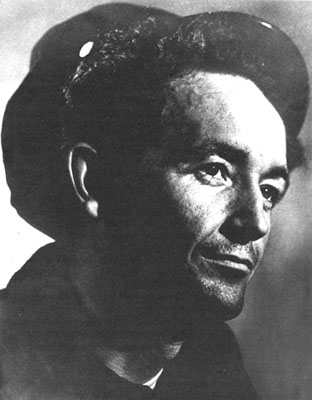
On Woody Guthrie’s Centennial, Celebrating the Life, Politics & Music of the “Dust Bowl Troubadour”

This Democracy Now show is a fascinating must for anyone interested in US history and this whole section of American society which made me like that country so much when I lived there; click on image.

Iceland’s Economy Recovers by Going After the Banksters, while Europe’s Malaise Continues and the US Barrels Toward Collapse

Sarah Lyall
The New York Times
Sat, 07 Jul 2012 00:00 CDT

© Andrew Testa for The New York Times
A ship docked at an aluminum plant near Reykjavik last month.
Reykjavik, Iceland – For a country that four years ago plunged into a financial abyss so deepit all but shut down overnight, Iceland seems to be doing surprisingly well.It has repaid, early, many of the international loans that kept it afloat. Unemployment is hovering around 6 percent, and falling. And while much of Europe is struggling to pull itself out of the recessionary swamp, Iceland’s economy is expected to grow by 2.8 percent this year.”Everything has turned around,” said Adalheidur Hedinsdottir, who owns and runs the coffee chain Kaffitar, the Starbucks of Iceland, and has plans to open a new cafe and start a bakery business. “When we told the bank we wanted to make a new company, they said, ‘Do you want to borrow money?’ ” she went on. “We haven’t been hearing that for a while.”

Analysts attribute the surprising turn of events to a combination of fortuitous decisions and good luck, and caution that the lessons of Iceland’s turnaround are not readily applicable to the larger and more complex economies of Europe.

But during the crisis, the country did many things different from its European counterparts. It let its three largest banks fail, instead of bailing them out. It ensured that domestic depositors got their money back and gave debt relief to struggling homeowners and to businesses facing bankruptcy.

“Taking down a company with positive cash flow but negative equity would in the given circumstances have a domino effect, causing otherwise sound companies to collapse,” said Thorolfur Matthiasson, an economics professor at the University of Iceland. “Forgiving debt under those circumstances can be profitable for the financial institutions and help the economy and reduce unemployment as well.”

Iceland also had some advantages when it entered the crisis: relatively few government debts, a strong social safety net and a fluctuating currency whose rapid devaluation in 2008 caused pain for consumers but helped buoy the all-important export market. Government officials, who at the height of the crisis were reduced to begging for help from places like the Faroe Islands, are now cautiously bullish.

“We’re in a very comfortable place because the government has been very stable in fiscal terms and is making good progress in balancing its books,” said Gudmundur Arnason, the Finance Ministry’s permanent secretary. “We are self-reliant and can borrow on our own without having to rely on the good will of our Nordic neighbors” or lenders like the International Monetary Fund.

But not even Mr. Arnason says he believes that all is perfect. Inflation, which reached nearly 20 percent during the crisis, is still running at 5.4 percent, and even with the government’s relief programs, most of the country’s homeowners remain awash in debt, weighed down by inflation-indexed mortgages in which the principal, disastrously, rises with the inflation rate. Taxes are high. And with the country’s currency, the krona, worth between about 40 and 75 percent of its pre-2008 value, imports are punishingly expensive.

Strict currency controls, imposed during the crisis, mean that Icelandic companies are forbidden to invest abroad. At the same time, foreigners are forbidden to take their money out of the country – a situation that has tied up foreign investments worth, according to various estimates, between $3.4 billion and $8 billion.

“The capital controls are worse and worse for companies, but the fear is that if we lift them, the value of the krona will collapse,” Professor Matthiasson said.

He said the only solution would be for Iceland to dispense with the krona and join a larger, more stable currency. The choices at the moment seem to be the euro, which is having its own difficulties, and the Canadian dollar.

Not everyone buys into the rosy picture presented by officialdom. Jon Danielsson, an Icelander who teaches global finance at the London School of Economics, said that both the I.M.F., which bailed Iceland out during the crisis, and the government had a vested interest in painting a positive picture of the situation.

“When I hear people say that everything is fine, it’s colored by P.R.,” Mr. Danielsson said. “They have clearly stabilized the economy and gotten out of the deep crisis, but they have not yet found a way to build a prosperous country for the future.”

A visit to Iceland late last month revealed a far different place from the shellshocked nation of 2008. Stores and hotels were full. The Harpa, a glass-and-steel concert hall and conference center designed in part by the artist Olafur Eliasson and opened in 2011, soared over the Reykjavik skyline, next to a huge construction site that is to house a luxury waterside hotel. Employers said that instead of having to lay off workers, they were in some cases having trouble finding people to hire.

Icelanders said that they had stopped feeling ashamed and isolated, the way that they did during the worst of the crisis, when their country was portrayed as a greedy and foolish pariah state and its British assets were frozen by the British government using the blunt and humiliating instrument of antiterror legislation. Enlarge This Image Andrew Testa for The New York Times

The Harpa, a glass-and-steel concert hall and conference center designed in part by the artist Olafur Eliasson, opened in 2011 in Reykjavik.

“We went through this complicated and terrible experience and were in the center of world events,” said Kristrun Heimisdottir, a lecturer in law and jurisprudence at the University of Akureyri in northern Iceland.

She compared Iceland’s shame to that of a private person thrust onto the front pages by a lurid scandal. “It might take 20 years to recover from the stress and humiliation of having their personal life paraded before the world,” she said. “But it turned out that what happened to us was a microcosm of the whole crisis.”

Some Icelanders say they have been soothed, too, by the country’s bold decision to initiate an extensive criminal investigation into the financial debacle. Many members of the old banking elite have been identified as possible suspects, and some of their cases are beginning to come to trial; several people were convicted of financial crimes last month.

People in Reykjavik say that while things are hardly perfect, they are certainly better.

“Everyone was scared, and we didn’t know what was going to happen,” said Kristjan Kristjansson, 49, manager of the store Bad Taste Records downtown. But Icelanders are adaptable people, he said, and many never really believed the economic boom was real, anyway.

“Of course, what happened has affected everybody – our loans are higher, and it’s more expensive to live,” Mr. Kristjansson said. But there have been other financial crises before. “I remember when they cut two zeros off the Krona,” he said. “I’m old enough to have seen it go up and down.”

DRONE WARS : THE DRONE LANDSCAPE

PART ONE:

Drone warfare has increased dramatically since 2008 and there are over 60 bases across the globe engaging in a US drone missions. US drones are currently deployed in the skies of over 14 different countries, some for surveillance and others for attacking ground targets. The area of Pakistan, bordering Afghanistan, known as Waziristan is the locus of much of the drone operations. But are these weapons keeping us safe, or do they just incite further terrorist attacks? And is their use a violation of the Geneva Conventions?

[youtube http://youtu.be/SwE-b6RxhHI?]

PART TWO

The forerunners of drones that are currently targeting people on the ground were once themselves targets. They have since evolved into reconnaissance vehicles, and more recently as weapons platforms. Predator drones are manufactured in Poway, near San Diego, where over 4,000 people are employed at General Atomics at the taxpayers’ expense. We examine the implications of this kind of warfare, and the loop of finance that rewards contractors and the politicians they support.

[youtube http://youtu.be/biYFFGWDMFA?]

PART THREE

Who bears responsibly for lethal action when weapons are fully automated? Can a machine have a code of ethics? While their accuracy might, in theory, minimize innocent deaths, drones also enable illegal political assassinations, and by keeping US troops out of harm’s way they also make war easier. A serious debate on these topics is long overdue.

[youtube http://youtu.be/7GAlQHbB0XM?]

Source

The Seven Guantánamo Prisoners Whose Appeals Were Turned Down by the Supreme Court

Adnan Farhan Abdul LatifAdnan Farhan Abdul Latif, one of seven Guantánamo prisoners whose appeals were turned down this week by the Supreme Court.

By Andy Worthington

This week, the Supreme Court took a decision not to accept appeals by seven Guantánamo prisoners who, over the last few years, either had their habeas petitions denied, or had their successful petitions overturned on appeal. The ruling came the day before the 4th anniversary of Boumediene v. Bush, the 2008 case in which the Supreme Court granted the prisoners constitutionally guaranteed habeas corpus rights.

That led to a number of stunning court victories for the prisoners between 2008 and 2010, but in the last two years no prisoners have had their habeas petitions granted, because judges in the D.C. Circuit Court, a bastion of Bush-era paranoia about the “war on terror,” where the deeply Conservative Senior Judge A. Raymond Randolph holds sway, have unfairly rewritten the rules in the government’s favor, so that it is now almost impossible for a habeas petition to be granted.

This is a particularly low point in Guantánamo’s bleak history, because, with the Supreme Court’s refusal to rescue habeas corpus, and its death as a remedy for the Guantánamo prisoners, the remaining 169 men — and especially the 87 already cleared for release but still held — are now trapped, possibly forever, because all three branches of the U.S. government have failed them.

In addition to the Supreme Court, the Obama administration has failed the remaining prisoners, not only through the President’s failure to close Guantánamo within a year, as he promised, but also through his refusal, ever since, to show any interest in belatedly fulfilling his promise. Blame also lies with Congress, where lawmakers have cynically imposed onerous restrictions on the ability of the administration to release or transfer any of the remaining prisoners, with the intention of making it impossible for the administration to close the prison — and almost impossible for anyone to be released.

As Tom Wilner (attorney and “Close Guantánamo” steering committee member) noted back in January, a waiver exists in the latest legislation, the National Defense Authorization Act (NDAA), allowing the President to bypass Congress when it comes to releasing prisoners, but President Obama has not yet chosen to use it.

Last week, we secured some good coverage for our exclusive report, “Guantánamo Scandal: The 40 Prisoners Still Held But Cleared for Release At Least Five Years Ago,” with the report’s author, Andy Worthington, being interviewed on RT andDemocracy Now! to discuss not only the report, revealing the identities of 40 prisoners cleared for release between 2004 and 2007, but also the Supreme Court’s shameful abdication of its responsibilities.

Some of the coverage focused on the story of one of the men whose appeals were turned down, Adnan Farhan Abdul Latif, a Yemeni. Noticeably, he is one of the prisoners featured in our report, and in fact he had his release approved on three separate occasions before the D.C. Circuit Court intervened to trap him at Guantánamo, possibly for the rest of his life.

Latif was cleared by a military review board under President Bush in December 2006, by the interagency Guantánamo Review Task Force established by President Obama in 2009, and by Judge Anthony Kennedy Jr., of the District Court in Washington D.C., who granted his habeas corpus petition in July 2010.

When the D.C. Circuit Court intervened to prevent his release,overturning his successful habeas petition in November last year, two of the three judges ordered that “a presumption of regularity” should be given to an intelligence report that was central to the government’s case against Latif, who has always maintained that he traveled to Pakistan to secure treatment for a head injury sustained in a car crash in Yemen, and was then advised to seek help in Afghanistan.

In a dissenting opinion, the third judge, David Tatel, took exception to his colleagues’s demands, noting that an intelligence report was “produced in the fog of war, by a clandestine method that we know almost nothing about,” and could not, therefore, be regarded as necessarily reliable. He also — unlike the Supreme Court — noted that it was “hard to see what is left of the Supreme Court’s command” that the habeas review process be “meaningful,” in light of his colleagues’ ruling, and warned that, in future, if the ruling stood, it would be impossible for any prisoner to have their habeas petition granted.

In reflecting on this dreadful state of affairs, it is impossible not to notice the gulf between the courage of Judge Tatel compared to the justices of the Supreme Court, who refused — unanimously, but without elaboration — to accept Latif’s appeal, even though Latif had a compelling case, in which, as Lyle Denniston noted for SCOTUSblog, he challenged “the presumption of accuracy of US intelligence reports,” challenged the Circuit Court’s “power to find facts on its own,” and also challenged the Circuit Court’s “refusal to uphold any release order.”

In considering Latif’s case, it occurred to me that the other six prisoners had also, to varying degrees, been failed disgracefully by the Supreme Court — and, in some cases at least, by the Obama administration, which had proceeded with cases through the Justice Department, even when there were sometimes clear reasons for officials not to do so.

Hussein Almerfedi

Latif’s case — with his repeated history of being cleared — was one example, but another was that of Hussein Almerfedi, another Yemeni, who, as noted in the “Guantánamo Scandal” report, was approved for transfer, probably in 2008, by an unidentified “Designated Civilian Official,” and then had his habeas petition granted by Judge Paul Friedman in July 2010, only for that ruling to be reversed on appeal in July 2011.

Almerfedi, seized in Iran, and held in secret prisons in Afghanistan before his transfer to Guantánamo, had challenged the government’s detention authority if, as he claimed in his case, it was “based on non-incriminating facts.” He, like Latif, also challenged the Circuit Court’s “refusal to uphold any release order,” as well as asking about the validity of a detainee being required to “rebut government evidence found to be credible,” when he had — and has — no means of doing so.

Fayiz al-Kandari

The point about the inability to refute evidence, as with Latif’s challenge to the requirement that the government’s evidence should be automatically regarded as accurate, found an echo in a challenge by a third prisoner, Fayiz al-Kandari, a Kuwaiti who lost his habeas petition in September 2010, after the Circuit Court rewrote the rules. Al-Kandari has always insisted that he traveled to Afghanistan to provide humanitarian aid, and the case against him is desperately weak, as it relies almost entirely on statements made by unreliable witnesses. However, the Circuit Court’s rewriting of the rules trapped al-Kandari, who, as a result, was calling on the Supreme Court to to allow him the right to restrict the government’s use of hearsay evidence.

Despite the lack of evidence against him, al-Kandari has never been cleared for release — either by military officials, or by a judge — but another of the seven, Uthman Abdul Rahman Mohammed Uthman, another Yemeni, had. Uthman’s habeas corpus petition was granted in February 2010, but the government appealed, and his successful opinion was reversed on appeal in March 2011. He took a different approach, challenging the government’s right to detain someone who, as he claimed in his case, “did not actually fight against U.S. or allied forces and provided no direct support to terrorists.” He also claimed that it was a “violation of the habeas Suspension Clause if habeas review is not meaningful.”

These, too, were valid points, which, like all the others, were turned down by the Supreme Court without explanation.

The last three men had less reason for hoping that the Supreme Court would look favorably on their cases, as they all had their habeas petitions denied by the District Court for low-level or peripheral involvement with the Taliban, and it is apparently outside anyone’s remit to ask why it is that the justification for all the prisoners’ detention — the Authorization for Use of Military Force, passed by Congress the week after the 9/11 attacks — fails to distinguish between those allegedly involved with the international terrorist activities of al-Qaeda, and those involved with the Taliban’s military conflict with the Northern Alliance, which had nothing to do with terrorism, and predated the 9/11 attacks.

Musa'ab al-Madhwani

Of these men, Musa’ab al-Madhwani, one of six men seized in house raids in Pakistan in September 2002, who lost his habeas petition in December 2009, when Judge Thomas Hogan made a point of stating that he did not consider him to be a threat to the U.S., challenged his detention “based on ‘guilt by association’ with suspected terrorists,” which was “based on visits to guesthouses and training facilities,” as SCOTUSblog described it, and also called for a “right to constitutional due process protection.”

Muaz al-Alawi (described as al-Alwi), who lost his habeas petition in January 2009 for being a lowly Talban foot soldier, challenged his detention “based on ties to the Taliban after hostilities had ended,” and also claimed there was “inadequate time” for his attorney to prepare a defense.

The last of the seven, Tawfiq al-Bihani, who lost his habeas petition in October 2010 — also for being a lowly Taliban foot soldier, seized in Iran, like Hussein Almerfedi, and also held in secret prisons in Afghanistan before his transfer to Guantánamo — sought “a basic definition of detention power, limited by the laws of war,” but like all the other claims, it was apparently regarded as irrelevant by the Supreme Court.

I hope this provides some additional context for the Supreme Court’s decision, on Monday, to accept that Judge Randolph and his colleagues are now in charge of the legal legacy of George W. Bush’s “war on terror” detainee policy. If you wish to know more, SCOTUSblog has links to all the court submissions, by both the prisoners and the government.

From our point of view, here at “Close Guantánamo,” it only confirms our resolve to keep pushing for the closure of Guantánamo, and the release of the 87 men held hostage for political reasons, and we will be working hard to build our campaign in preparation for putting pressure on whoever will be inaugurated as the next President of the United States in January 2013. If you haven’t already signed up, please do so here (just an email address required), and please also ask your friends and family to join up as well. It is time to bring this monstrous miscarriage of justice to an end.

Andy Worthington is the author of The Guantánamo Files: The Stories of the 774 Detainees in America’s Illegal Prison (published by Pluto Press, distributed by Macmillan in the US, and available from Amazon — click on the following for the US and the UK) and of two other books: Stonehenge: Celebration and Subversion and The Battle of the Beanfield. To receive new articles in your inbox, please subscribe to my RSS feed (and I can also be found on FacebookTwitterDigg and YouTube). Also see my definitive Guantánamo prisoner list, updated in April 2012, “The Complete Guantánamo Files,” a 70-part, million-word series drawing on files released by WikiLeaks in April 2011, and details about the documentary film, “Outside the Law: Stories from Guantánamo” (co-directed by Polly Nash and Andy Worthington, and available on DVD here — or here for the US). Also see my definitive Guantánamo habeas list and the chronological list of all my articles, and please also consider joining the new “Close Guantánamo campaign,” and, if you appreciate my work, feel free to make a donation.


source

The Emperor’s New Language

June 10, 2012

Yale’s David Bromwich once again brings his extraordinary powers of observation to bear on the man whom he had once described as ‘The Establishment President’. Christopher Lydon’s Radio Open Source(listen to the audio)  is a thinking man’s discussion forum, and Bromwich is always intellectually stimulating.

David Bromwich is locating our 2012 distress in our language — or lack of it. It is reunion season at Yale, 50 years after President Kennedy addressed my graduating class of 1962 with his tax cut speech and the famous crack about having “the best of both worlds — a Harvard education and a Yale degree.” Four months later, human civilization hung by a thread in the Cuban Missile Crisis. I am trying to count the watersheds crossed in American life.

David Bromwich, the Sterling Professor of English at Yale and for me by now an indispensable public commentator, confirms my sense that the country is starving for want of words. On the brink of post-imperial panic, we don’t know what to call this worse-than-recession, this Euro-charged breakdown of politics and finance. What we do know is that “we are the 99 percent” is the left’s most effective line since the 2008 meltdown, but that the right and the Tea Party have commandeered the public conversation with street language of salt and savor, with vehemence and conviction that the liberal-left seems to scorn.

Professor Bromwich faults President Obama for ducking a direct confrontation with the Tea Party’s nihilism about government — for trying even to coopt the Tea Party with the thought that anti-taxism is in our DNA, as if we had a common stake in crushing the public sector. Do we call this an excess of prudence? a failure of imagination? moral timidity? Political correctness, in the Bromwich diagnosis, has a lot to do with scrubbing the Democrats’ script and emasculating their language — as incorrect as it would be to say such a thing. The strongest language that Mr. Obama and Mrs. Clinton can summon is to dismiss attacks as “not helpful.” They speak in a “schoolmarm” voice (another “incorrect” formulation) against rough-and-ready reactionaries who fling words like “corrupt,” “depraved” and “poisonous” with abandon. Democratic rhetoric in our day is “academically trained, scrupulous, conscientious,” Bromwich observes, and free of the popular touch.

We can do better than that, Bromwich says, or at least we once did. From a vast acquaintance with the best in political speech, he is reciting Vachel Lindsay’s poem “Bryan, Bryan, Bryan, Bryan,” refiring the frenzy in the heart of a 16-year-old boy on the day in 1896 when William Jennings Bryan, running against William McKinley, roared into Springfield, Illinois and the young bucks of the town “joined the wild parade against the power of gold.” And then Bromwich is reading back Martin Luther King Jr.‘s response in 1967 to a reporter who wondered why the civil rights leader had strayed into the protest against war in Vietnam. “Justice is indivisible,” Dr. King answered, “and injustice anywhere is a threat to justice everywhere; and whenever I see injustice I am going to take a stand against it whether it’s in Mississippi or in Vietnam.”

You can hear just what a clear and simple statement of conscience is there; and it draws the world toward it. It draws whole worlds toward it when people see that sense of a man planting himself on his convictions… I think that belief that war is wrong, that war was is a leading evil, could also rally people. But we don’t see war being talked down… This is new in my experience. I’m 60 years old now, and I’ve never heard so many Americans talk so acceptingly about wars, in the plural. You feel that we are Rome or something, and that people have resigned themselves to it. It’s a very strange situation we’re in — that under Obama, after Bush, the number of wars has increased. And his chief innovation in language is to speak of war more generally, more allusively, more vaguely and in a softer tone; and now to publicize his own actions as a decider on the killing of individuals, including Americans if need be. It’s a terrible sinking back into the lethargy of… It’s just where we are.

David Bromwich with Chris Lydon at Yale, June 1, 2012

Source

Absent Justice – (Predator Drones)

[youtube http://youtu.be/HMd_ltDaHyY?]

Absent Justice is a fortnightly television series which looks at case studies from around the world relating to human rights and civil liberties violations. Join the presenter as he speaks to some inspiring and courageous individuals as they recount their struggle for justice. This week, presenter Moazzam Begg discusses America’s increasing use of drones. Leading human rights lawyer and Director of Reprieve, Clive Stafford Smith, joins Moazzam in the studio. Every first and third Friday at 9.30pm, only on the Islam Channel (Sky channel 813).

Will Americans challenge Obama’s drone war?

May 30th, 2012

by Medea Benjamin

Shakira, 4, was disfigured in one of Obama’s drone attacks.

On May 29, The New York Times published an extraordinarily in-depth look at the intimate role President Obama has played in authorizing US drone attacks overseas, particularly in Pakistan, Yemen and Somalia. It is chilling to read the cold, macabre ease with which the President and his staff decide who will live or die. The fate of people living thousands of miles away is decided by a group of Americans, elected and unelected, who don’t speak their language, don’t know their culture, don’t understand their motives or values. While purporting to represent the world’s greatest democracy, US leaders are putting people on a hit list who are as young as 17, people who are given no chance to surrender, and certainly no chance to be tried in a court of law.

Who is furnishing the President and his aides with this list of terrorist suspects to choose from, like baseball cards? The kind of intelligence used to put people on drone hit lists is the same kind of intelligence that put people in Guantanamo. Remember how the American public was assured that the prisoners locked up in Guantanamo were the “worst of the worst,” only to find out that hundreds were innocent people who had been sold to the US military by bounty hunters?

Why should the public believe what the Obama administration says about the people being assassinated by drones? Especially since, as we learn in the New York Times, the administration came up with a semantic solution to keep the civilian death toll to a minimum: simply count all military-age males in a strike zone as combatants. The rationale, reminiscent of George Zimmerman’s justification for shooting Trayvon Martin, is that “people in an area of known terrorist activity, or found with a top Qaeda operative, are probably up to no good.” Talk about profiling! At least when George Bush threw suspected militants into Guantanamo their lives were spared.

Referring to the killing of Anwar al-Awlaki, the article reveals that for Obama, even ordering an American citizen to be assassinated by drone was “easy.” Not so easy was twisting the Constitution to assert that while the Fifth Amendment’s guarantees American citizens due process, this can simply consist of “internal deliberations in the executive branch.” No need for the irksome interference of checks and balances.

Al-Awlaki might have been guilty of defecting to the enemy, but the Constitution requires that even traitors be convicted on the “testimony of two witnesses” or a “confession in open court,” not the say-so of the executive branch.

In addition to hit lists, Obama has granted the CIA the authority to kill with even greater ease using “signature strikes,” i.e. strikes based solely on suspicious behavior. The article reports State Department officials complained that the CIA’s criteria for identifying a terrorist “signature” were too lax. “The joke was that when the C.I.A. sees ‘three guys doing jumping jacks,’ the agency thinks it is a terrorist training camp, said one senior official. Men loading a truck with fertilizer could be bombmakers — but they might also be farmers, skeptics argued.”

Obama’s top legal adviser Harold Koh insists that this killing spree is legal under international law because the US has the inherent right to self-defense. It’s true that all nations possess the right to defend themselves, but the defense must be against an imminent attack that is overwhelming and leaves no moment of deliberation. When a nation is not in an armed conflict, the rules are even stricter. The killing must be necessary to protect life and there must be no other means, such as capture or nonlethal incapacitation, to prevent that threat to life. Outside of an active war zone, then, it is illegal to use weaponized drones, which are weapons of war incapable of taking a suspect alive.

Just think of the precedent the US is setting with its kill-don’t-capture doctrine. Were the US rationale to be applied by other countries, China might declare an ethnic Uighur activist living in New York City as an “enemy combatant” and send a missile into Manhattan; Russia could assert that it was legal to launch a drone attack against someone living in London whom they claim is linked to Chechen militants. Or consider the case of Luis Posada Carrilles, a Cuban-American living in Miami who is a known terrorist convicted of masterminding a 1976 bombing of a Cuban airliner that killed 73 people. Given the failure of the US legal system to bring Posada to justice, the Cuban government could claim that it has the right to send a drone into downtown Miami to kill an admitted terrorist and sworn enemy.

Dennis Blair, former director of national intelligence, called the drone strike campaign “dangerously seductive” because it was low cost, entailed no casualties and gives the appearance of toughness. “It plays well domestically,” he said, “and it is unpopular only in other countries. Any damage it does to the national interest only shows up over the long term.”

But an article in the Washington Post the following day, May 30, entitled “Drone strikes spur backlash in Yemen,” shows that the damage is not just long term but immediate. After interviewing more than 20 tribal leaders, victims’ relatives, human rights activists and officials from southern Yemen, journalist Sudarsan Raghavan concluded that the escalating U.S. strikes are radicalizing the local population and stirring increasing sympathy for al-Qaeda-linked militants. “The drones are killing al-Qaeda leaders,” said legal coordinator of a local human rights group Mohammed al-Ahmadi, “but they are also turning them into heroes.”

Even the New York Times article acknowledges that Pakistan and Yemen are less stable and more hostile to the United States since Mr. Obama became president, that drones have become a provocative symbol of American power running roughshod over national sovereignty and killing innocents.

One frightening aspect of the Times piece is what it says about the American public. After all, this is an election-time piece about Obama’s leadership style, told from the point of view of mostly Obama insiders bragging about how the president is no shrinking violent when it comes to killing.  Implicit is the notion that Americans like tough leaders who don’t agonize over civilian deaths—over there, of course.

Shahzad Akbar, a Pakistani lawyer suing the CIA on behalf of drone victims, thinks its time for the American people to speak out. “Can you trust a program that has existed for eight years, picks its targets in secret, faces zero accountability and has killed almost 3,000 people in Pakistan alone whose identities are not known to their killers?,” he asks. “When women and children in Waziristan are killed with Hellfire missiles, Pakistanis believe this is what the American people want. I would like to ask Americans, ‘Do you?’”

Medea Benjamin (medea@globalexchange.org), cofounder of Global Exchange and CODEPINK: Women for Peace, is the author of Drone Warfare: Killing by Remote Control.

Source

Hymns to the Violence: The NYT’s Love Letter to Obama’s Murder Racket

PDF Print E-mail
WRITTEN BY CHRIS FLOYD
TUESDAY, 29 MAY 2012 14:21
I must, at last, admit defeat. I simply have no words, no rhetorical ammunition, no conceptual frameworks that could adequately address the total moral nullity exposed in Monday’s New York Times article on the death squad that Barack Obama is personally directing from the White House.  (“Secret ‘Kill List’ Proves a Test of Obama’s Principles and Will.”)It is not so much a newspaper story as a love letter — a love letter to death, to the awe-inspiring and fear-inducing power of death, as personified by Barack Obama in his temporary role as the manager of a ruthless, lawless imperial state. In the cringing obsequiousness of the multitude of insiders and sycophants who march in goose-step through the story, we can see the awe and fear — indeed, the worship — of death-dealing power. This enthrallment permeates the story, both in the words of the cringers and in the giddy thrill the writers display in gaining such delicious access to the inner sanctum.

In any other age — including the last administration — this story would have been presented as a scandalous exposé. The genuinely creepy scenes of the “nominating process” alone would have been seen as horrific revelations. Imagine the revulsion at the sight of George W. Bush and Dick Cheney and Don Rumsfeld sifting through PowerPoint slides on “suspected terrorists” all over the world, and giving their Neronic thumbs up or down as each swarthy face pops up on a screen in front of them. Imagine the tidal wave of moral outrage from the “Netroots Nation” and other progressive champions directed at Bush not only for operating a death squad (which he did), but then trotting out Condi and Colin and Bob Gates to brag about it openly, and to paint Bush as some kind of moral avatar for the careful consideration and philosophical rigor he applied to blowing human beings to bits in sneak attacks on faraway villages.

But the NYT piece is billed as just another “process story” about an interesting aspect of Obama’s presidency, part of an election-year series assessing his record. It is based entirely on the viewpoints of Beltway insiders.  The very few dollops of mild criticism of the murder program are voiced by figures from deep within the imperial machine. And even these caveats are mostly tactical in nature, based on one question: “Does the program work, is it effective?” There is not a single line that ever suggests, even slightly, that the program might be morally wrong. There is not a single line in the story suggesting that such a program should up for debate or even examination by Congress. Nor is there even a perfunctory quote from mainstream organizations such as the ACLU or Amnesty International or Human Rights Watch — or from anyone in Pakistan or Yemen or the other main targets of Obama’s proudly proclaimed and personally approved death squad.

In other words, this portrait of an American president signing off — week after week after week after week — on the extrajudicial murder of people all over the world is presented as something completely uncontroversial. Indeed, the main thrust of the story is not the fact that human beings — including many women, children and men who have no connection whatsoever to “terrorism,” alleged or otherwise — are being regularly killed by the United States government; no, the main focus is how this program illustrates Barack Obama’s “evolving” style of leadership during the course of his presidency. That’s what’s really important. The murders — the eviscerated bodies, the children with their skulls bashed in, the pregnant women burned alive in their own homes — are just background. Unimportant. Non-controversial.

II.
Here’s how it works:

“Every week or so, more than 100 members of the government’s sprawling national security apparatus gather, by secure video teleconference, to pore over terrorist suspects’ biographies and recommend to the president who should be the next to die.

“This secret “nominations” process is an invention of the Obama administration, a grim debating society that vets the PowerPoint slides bearing the names, aliases and life stories of suspected members of Al Qaeda’s branch in Yemen or its allies in Somalia’s Shabab militia. … A parallel, more cloistered selection process at the C.I.A. focuses largely on Pakistan, where that agency conducts strikes.

“The nominations go to the White House, where by his own insistence and guided by Mr. Brennan, Mr. Obama must approve any name. He signs off on every strike in Yemen and Somalia and also on the more complex and risky strikes in Pakistan — about a third of the total.

“Aides say Mr. Obama has several reasons for becoming so immersed in lethal counterterrorism operations. A student of writings on war by Augustine and Thomas Aquinas, he believes that he should take moral responsibility for such actions.

“He realizes this isn’t science, this is judgments made off of, most of the time, human intelligence,” said Mr. Daley, the former chief of staff. “The president accepts as a fact that a certain amount of screw-ups are going to happen, and to him, that calls for a more judicious process.”

Again, words fail. Aides pumping reporters with stories about the wise, judicious philosopher-king consulting Aquinas and Augustine before sending a drone missile on a “signature strike” on a group of picnickers in Yemen or farmers in Pakistan. The philosopher-king himself nobly taking on the “moral responsibility” for mass murder. And the cavalier assertion that “a certain amount of screw-ups are going to happen” — a bland, blithe acceptance that you are in fact going to slaughter innocent human beings on a regular basis — precisely as if you walked up to an innocent man on the street, put a gun to his head and blew his brains out all over the sidewalk …. then walked away, absolved, unconcerned, and free to kill again. And again. And again. This psychopathic serial killing is, evidently, what Augustine meant by “moral responsibility.” Who knew?

Obama’s deep concern for “moral responsibility” is also reflected in his decision to kill according to “signature strikes” — that is, to kill people you don’t know, who haven’t even popped up on your PowerPoint slides, if you think they might possibly look or act like alleged potential “terrorists.” (Or if you receive some “human intelligence” from an agent or an informer or someone with a grudge or someone seeking payment that a group of people doing something somewhere might be terrorists.) This “moral responsibility” is also seen in Obama’s decision to count “all military-age males in a strike zone as combatants … unless there is explicit intelligence posthumously proving them innocent.”

Guilty until proven posthumously innocent! How’s that for “moral responsibility”? Here Obama has surpassed Augustine and Aquinas — yea, even great Aristotle himself — in this bold extension of the parameters of moral responsibility.

It is, I confess, beyond all my imagining that a national leader so deeply immersed in murdering people would trumpet his atrocity so openly, so gleefully — and so deliberately, sending his top aides out to collude in a major story in the nation’s leading newspaper, to ensure maximum exposure of his killing spree. Although many leaders have wielded such powers, they almost always seek to hide or obscure the reality of the operation. Even the Nazis took enormous pains to hide the true nature of their murder programs from the public. And one can scarcely conceive of Stalin inviting reporters from Pravda into the Politburo meetings where he and Molotov and Beria debated the lists of counterrevolutionary “terrorists” given to them by the KGB and ticked off those who would live and those who would die. Of course, those lists too were based on “intelligence reports,” often gathered through “strenuous interrogation techniques” or the reports of informers. No doubt these reports were every bit as credible as the PowerPoint presentations reviewed each week by Obama and his team.

And no doubt Stalin and his team were just as sincerely concerned about “national security” as the Aquinas acolyte in the White House today — and just as determined to do “whatever it takes” to preserve that security. As Stalin liked to say of the innocent people caught up in his national security efforts: “When wood is chopped, chips fly.”

Of course, he was an evil man without any sense of moral responsibility at all. In our much more enlightened times, under the guidance of a Nobel Peace Prize Laureate in the White House, we are so much wiser, so much better. We say: “A certain amount of screw-ups are going to happen.” Isn’t that much more nuanced? Isn’t that much more moral?

There is more, much more of this nullity — and rotting hypocrisy and vapid sycophancy — in the story. But I don’t have the strength or the stomach to wade any further through this swamp. It stinks of death. It taints and stains us all.

Blog at WordPress.com.

Up ↑