Exclusive: More than any recent U.S. president, Ronald Reagan has been lavished with honors, including his name attached to Washington’s National Airport. But the conviction of Reagan’s old ally, ex-Guatemalan dictator Rios Montt, for genocide means “Ronnie” must face history’s judgment as an accessory to the crime, reports Robert Parry.
By Robert Parry
The conviction of former Guatemalan dictator Efrain Rios Montt on charges of genocide against Mayan villagers in the 1980s has a special meaning for Americans who idolize Ronald Reagan. It means that their hero was an accessory to one of the most grievous crimes that can be committed against humanity.
The courage of the Guatemalan people and the integrity of their legal system to exact some accountability on a still-influential political figure also put U.S. democracy to shame. For decades now, Americans have tolerated human rights crimes by U.S. presidents who face little or no accountability. Usually, the history isn’t even compiled honestly.

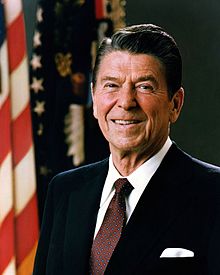
President Ronald Reagan.
By contrast, a Guatemalan court on Friday found Rios Montt guilty of genocide and crimes against humanity and sentenced the 86-year-old ex-dictator to 80 years in prison. After the ruling, when Rios Montt rose and tried to walk out of the courtroom, Judge Yasmin Barrios shouted at him to stay put and then had security officers take him into custody.
Yet, while Guatemalans demonstrate the strength to face a dark chapter of their history, the American people remain mostly oblivious to Reagan’s central role in tens of thousands of political murders across Central America in the 1980s, including some 100,000 dead in Guatemala slaughtered by Rios Montt and other military dictators.
Indeed, Ronald Reagan – by aiding, abetting, encouraging and covering up widespread human rights crimes in El Salvador, Honduras and Nicaragua as well as Guatemala – bears greater responsibility for Central America’s horrors than does Rios Montt in his bloody 17-month rule. Reagan supported Guatemala’s brutal repression both before and after Rios Montt held power, as well as during.
Despite that history, more honors have been bestowed on Reagan than any recent president. Americans have allowed the naming of scores of government facilities in Reagan’s honor, including Washington National Airport where Reagan’s name elbowed aside that of George Washington, who led the War of Independence, oversaw the drafting of the U.S. Constitution and served as the nation’s first president.
So, as America’s former reputation as a beacon for human rights becomes a bad joke to the rest of the world, it is unthinkable within the U.S. political/media structure that Reagan would get posthumously criticized for the barbarity that he promoted. No one of importance would dare suggest that his name be stripped from National Airport and his statue removed from near the airport entrance.
But the evidence is overwhelming that the 40th president of the United States was guilty as an accessory to genocide and a wide range of other war crimes, including torture, rape, terrorism and narcotics trafficking. [See Robert Parry’s Lost History.]
Green Light to Genocide
Regarding Guatemala, the documentary evidence is clear that Reagan and his top aides gave a green light to the extermination campaign against the Mayan Ixil population in the highlands even before Rios Montt came to power. Despite receiving U.S. intelligence reports revealing these atrocities, the Reagan administration also pressed ahead in an extraordinary effort to arrange military equipment, including helicopters, to make the slaughter more efficient.
“In the tortured logic of military planning documents conceived under Mr. Ríos Montt’s 17-month rule during 1982 and 1983, the entire Mayan Ixil population was a military target, children included,” the New York Times reported from Rios Montt’s trial last month. “Officers wrote that the leftist guerrillas fighting the government had succeeded in indoctrinating the impoverished Ixils and reached ‘100 percent support.’”
So, everyone was targeted in these scorched-earth campaigns that eradicated more than 600 Indian villages in the Guatemalan highlands. But documents from this period indicate that these counterinsurgency strategies predated Rios Montt. And, they received the blessing of the Reagan administration shortly after Reagan took power in 1981.
A document that I discovered in the archives of the Reagan Library in Simi Valley, California, revealed that Reagan and his national security team in 1981 agreed to supply military aid to Guatemala’s dictators so they could pursue the goal of exterminating not only “Marxist guerrillas” but people associated with their “civilian support mechanisms.”
This supportive attitude took shape in spring 1981 as President Reagan sought to relax human-rights restrictions on military aid to Guatemala that had been imposed by President Jimmy Carter and the Democratic-controlled Congress in the late 1970s. As part of that easing, Reagan’s State Department “advised our Central American embassies that it has been studying ways to restore a closer, cooperative relationship with Guatemala,” said a White House “Situation Room Checklist” dated April 8, 1981.
The document added: “State believes a number of changes have occurred which could make Guatemalan leaders more receptive to a new U.S. initiative: the Guatemalans view the new administration as more sympathetic to their problems [and] they are less suspect of the U.S. role in El Salvador,” where the Reagan administration was expanding military aid to another right-wing regime infamous for slaughtering its political opponents, including Catholic clergy.
“State has concluded that any attempt to reestablish a dialogue [with Guatemala] would require some initial, condition-free demonstration of our goodwill. However, this could not include military sales which would provoke serious U.S. public and congressional criticism. State will undertake a series of confidence building measures, free of preconditions, which minimize potential conflict with existing legislation.”
In other words, the Reagan administration was hoping that the U.S. government could get back in the good graces of the Guatemalan dictators, not that the dictators should change their ways to qualify for U.S. government help.
Soliciting the Generals
The “checklist” added that the State Department “has also decided that the administration should engage the Guatemalan government at the highest level in a dialogue on our bilateral relations and the initiatives we can take together to improve them. Secretary [of State Alexander] Haig has designated [retired] General Vernon Walters as his personal emissary to initiate this process with President [Fernando Romeo] Lucas [Garcia].
“If Lucas is prepared to give assurances that he will take steps to halt government involvement in the indiscriminate killing of political opponents and to foster a climate conducive to a viable electoral process, the U.S. will be prepared to approve some military sales immediately.”
But the operative word in that paragraph was “indiscriminate.” The Reagan administration expressed no problem with killing civilians if they were considered supporters of the guerrillas who had been fighting against the country’s ruling oligarchs and generals since the 1950s when the CIA organized the overthrow of Guatemala’s reformist President Jacobo Arbenz.
The distinction was spelled out in “Talking Points” for Walters to deliver in a face-to-face meeting with General Lucas. As edited inside the White House in April 1981, the “Talking Points” read: “The President and Secretary Haig have designated me [Walters] as [their] personal emissary to discuss bilateral relations on an urgent basis.
“Both the President and the Secretary recognize that your country is engaged in a war with Marxist guerrillas. We are deeply concerned about externally supported Marxist subversion in Guatemala and other countries in the region. As you are aware, we have already taken steps to assist Honduras and El Salvador resist this aggression.
“The Secretary has sent me here to see if we can work out a way to provide material assistance to your government. … We have minimized negative public statements by US officials on the situation in Guatemala. … We have arranged for the Commerce Department to take steps that will permit the sale of $3 million worth of military trucks and Jeeps to the Guatemalan army. …
“With your concurrence, we propose to provide you and any officers you might designate an intelligence briefing on regional developments from our perspective. Our desire, however, is to go substantially beyond the steps I have just outlined. We wish to reestablish our traditional military supply and training relationship as soon as possible.
“As we are both aware, this has not yet been feasible because of our internal political and legal constraints relating to the use by some elements of your security forces of deliberate and indiscriminate killing of persons not involved with the guerrilla forces or their civilian support mechanisms. I am not referring here to the regrettable but inevitable death of innocents though error in combat situations, but to what appears to us a calculated use of terror to immobilize non politicized people or potential opponents. …
“If you could give me your assurance that you will take steps to halt official involvement in the killing of persons not involved with the guerrilla forces or their civilian support mechanism … we would be in a much stronger position to defend successfully with the Congress a decision to begin to resume our military supply relationship with your government.”
In other words, though the “talking points” were framed as an appeal to reduce the “indiscriminate” slaughter of “non politicized people,” they embraced scorched-earth tactics against people involved with the guerrillas and “their civilian support mechanisms.” The way that played out in Guatemala – as in nearby El Salvador – was the massacring of peasants in regions considered sympathetic to leftist insurgents.
Reporting the Truth
U.S. intelligence officers in the region also kept the Reagan administration abreast of the expanding slaughter. For instance, according to one “secret” cable from April 1981 — and declassified in the 1990s — the CIA was confirming Guatemalan government massacres even as Reagan was moving to loosen the military aid ban.
On April 17, 1981, a CIA cable described an army massacre at Cocob, near Nebaj in the Ixil Indian territory, because the population was believed to support leftist guerrillas. A CIA source reported that “the social population appeared to fully support the guerrillas” and “the soldiers were forced to fire at anything that moved.”
The CIA cable added that “the Guatemalan authorities admitted that ‘many civilians’ were killed in Cocob, many of whom undoubtedly were non-combatants.” [Many of the Guatemalan documents declassified in the 1990s can be found at the National Security Archive’s Web site.]
Despite these atrocities, Reagan dispatched Walters in May 1981 to tell the Guatemalan leaders that the new U.S. administration wanted to lift the human rights embargoes on military equipment that Carter and Congress had imposed.
According to a State Department cable on Oct. 5, 1981, when Guatemalan leaders met again with Walters, they left no doubt about their plans. The cable said Gen. Lucas “made clear that his government will continue as before — that the repression will continue. He reiterated his belief that the repression is working and that the guerrilla threat will be successfully routed.”
Human rights groups saw the same picture, albeit from a less sympathetic angle. The Inter-American Human Rights Commission released a report on Oct. 15, 1981, blaming the Guatemalan government for “thousands of illegal executions.” [Washington Post, Oct. 16, 1981]
But the Reagan administration was set on whitewashing the horrific scene. A State Department “white paper,” released in December 1981, blamed the violence on leftist “extremist groups” and their “terrorist methods” prompted and supported by Cuba’s Fidel Castro.
Fully Onboard
What the documents from the Reagan Library make clear is that the administration was not simply struggling ineffectively to rein in these massacres – as the U.S. press corps typically reported – but was fully onboard with the slaughter of people who were part of the guerrillas’ “civilian support mechanisms.”
U.S. intelligence agencies continued to pick up evidence of these government-sponsored massacres. One CIA report in February 1982 described an army sweep through the so-called Ixil Triangle in central El Quiche province.
“The commanding officers of the units involved have been instructed to destroy all towns and villages which are cooperating with the Guerrilla Army of the Poor [the EGP] and eliminate all sources of resistance,” the report said. “Since the operation began, several villages have been burned to the ground, and a large number of guerrillas and collaborators have been killed.”
The CIA report explained the army’s modus operandi: “When an army patrol meets resistance and takes fire from a town or village, it is assumed that the entire town is hostile and it is subsequently destroyed.” When the army encountered an empty village, it was “assumed to have been supporting the EGP, and it is destroyed. There are hundreds, possibly thousands of refugees in the hills with no homes to return to. …
“The army high command is highly pleased with the initial results of the sweep operation, and believes that it will be successful in destroying the major EGP support area and will be able to drive the EGP out of the Ixil Triangle. … The well documented belief by the army that the entire Ixil Indian population is pro-EGP has created a situation in which the army can be expected to give no quarter to combatants and non-combatants alike.”
The reality was so grotesque that it prompted protests even from some staunch anticommunists inside the Reagan administration. On Feb. 2, 1982, Richard Childress, one of Reagan’s national security aides, wrote a “secret” memo to his colleagues summing up this reality on the ground:
“As we move ahead on our approach to Latin America, we need to consciously address the unique problems posed by Guatemala. Possessed of some of the worst human rights records in the region, … it presents a policy dilemma for us. The abysmal human rights record makes it, in its present form, unworthy of USG [U.S. government] support. …
“Beset by a continuous insurgency for at least 15 years, the current leadership is completely committed to a ruthless and unyielding program of suppression. Hardly a soldier could be found that has not killed a ‘guerrilla.’”
Rios Montt’s Arrival
But Reagan was unmoved. He continued to insist on expanding U.S. support for these brutal campaigns, while his administration sought to cover up the facts and deflect criticism. Reagan’s team insisted that Gen. Efrain Rios Montt’s overthrow of Gen. Lucas in March 1982 represented a sunny new day in Guatemala.
An avowed fundamentalist Christian, Rios Montt impressed Official Washington where the Reagan administration immediately revved up its propaganda machinery to hype the new dictator’s “born-again” status as proof of his deep respect for human life. Reagan hailed Rios Montt as “a man of great personal integrity.”
By July 1982, however, Rios Montt had begun a new scorched-earth campaign called his “rifles and beans” policy. The slogan meant that pacified Indians would get “beans,” while all others could expect to be the target of army “rifles.” In October, Rios Montt secretly gave carte blanche to the feared “Archivos” intelligence unit to expand “death squad” operations in the cities. Based at the Presidential Palace, the “Archivos” masterminded many of Guatemala’s most notorious assassinations.
The U.S. embassy was soon hearing more accounts of the army conducting Indian massacres, but ideologically driven U.S. diplomats fed the Reagan administration the propaganda spin that would be best for their careers. On Oct. 22, 1982, embassy staff dismissed the massacre reports as a communist-inspired “disinformation campaign.”
Reagan personally joined this P.R. spin seeking to discredit human rights investigators and others who were reporting accurately about massacres that the administration knew were true. On Dec. 4, 1982, after meeting with Rios Montt, Reagan hailed the general as “totally dedicated to democracy” and added that Rios Montt’s government had been “getting a bum rap” on human rights. Reagan discounted the mounting reports of hundreds of Mayan villages being eradicated.
In February 1983, however, a secret CIA cable noted a rise in “suspect right-wing violence” with kidnappings of students and teachers. Bodies of victims were appearing in ditches and gullies. CIA sources traced these political murders to Rios Montt’s order to the “Archivos” in October to “apprehend, hold, interrogate and dispose of suspected guerrillas as they saw fit.”
Despite these facts on the ground, the annual State Department human rights survey praised the supposedly improved human rights situation in Guatemala. “The overall conduct of the armed forces had improved by late in the year” 1982, the report stated.
Indiscriminate Murder
A different picture — far closer to the secret information held by the U.S. government — was coming from independent human rights investigators. On March 17, 1983, Americas Watch condemned the Guatemalan army for human rights atrocities against the Indian population.
New York attorney Stephen L. Kass said these findings included proof that the government carried out “virtually indiscriminate murder of men, women and children of any farm regarded by the army as possibly supportive of guerrilla insurgents.”
Rural women suspected of guerrilla sympathies were raped before execution, Kass said, adding that children were “thrown into burning homes. They are thrown in the air and speared with bayonets. We heard many, many stories of children being picked up by the ankles and swung against poles so their heads are destroyed.” [AP, March 17, 1983]
Publicly, senior Reagan officials continued to put on a happy face. In June 1983, special envoy Richard B. Stone praised “positive changes” in Rios Montt’s government, and Rios Montt pressed the United States for 10 UH-1H helicopters and six naval patrol boats, all the better to hunt guerrillas and their sympathizers.
Since Guatemala lacked the U.S. Foreign Military Sales credits or the cash to buy the helicopters, Reagan’s national security team looked for unconventional ways to arrange the delivery of the equipment that would give the Guatemalan army greater access to mountainous areas where guerrillas and their civilian supporters were hiding.
On Aug. 1, 1983, National Security Council aides Oliver North and Alfonso Sapia-Bosch reported to National Security Advisor William P. Clark that his deputy Robert “Bud” McFarlane was planning to exploit his Israeli channels to secure the helicopters for Guatemala. [For more on McFarlanes’s Israeli channels, see Consortiumnews.com’s “How Neocons Messed Up the Mideast.”]
“With regard to the loan of ten helicopters, it is [our] understanding that Bud will take this up with the Israelis,” wrote North and Sapia-Bosch. “There are expectations that they would be forthcoming. Another possibility is to have an exercise with the Guatemalans. We would then use US mechanics and Guatemalan parts to bring their helicopters up to snuff.”
Hunting Children
What it meant to provide these upgrades to the Guatemalan killing machine was clarified during the trial of Rios Montt with much of the testimony coming from survivors who, as children, escaped to mountain forests as their families and other Mayan villagers were butchered.
As the New York Times reported, “Pedro Chávez Brito told the court that he was only six or seven years old when soldiers killed his mother. He hid in the chicken coop with his older sister, her newborn and his younger brother, but soldiers found them and dragged them out, forcing them back into their house and setting it on fire.
“Mr. Chávez says he was the only one to escape. ‘I got under a tree trunk and I was like an animal,’ Mr. Chávez told the court. ‘After eight days I went to live in the mountains. In the mountain we ate only roots and grass.’”
The Times reported that “prosecution witnesses said the military considered Ixil civilians, including children, as legitimate targets. … Jacinto Lupamac Gómez said he was eight when soldiers killed his parents and older siblings and hustled him and his two younger brothers into a helicopter. Like some of the children whose lives were spared, they were adopted by Spanish-speaking families and forgot how to speak Ixil.”
Elena de Paz Santiago, now 42, “testified that she was 12 when she and her mother were taken by soldiers to an army base and raped. The soldiers let her go, but she never saw her mother again,” the Times reported.
Even by Guatemalan standards, Rios Montt’s vengeful Christian fundamentalism had hurtled out of control. On Aug. 8, 1983, another coup overthrew Rios Montt and brought Gen. Oscar Mejia Victores to power.
Despite the power shift, Guatemalan security forces continued to murder with impunity, finally going so far that even the U.S. Embassy objected. When three Guatemalans working for the U.S. Agency for International Development were slain in November 1983, U.S. Ambassador Frederic Chapin suspected that “Archivos” hit squads were sending a message to the United States to back off even mild pressure for human rights.
In late November, in a brief show of displeasure, the administration postponed the sale of $2 million in helicopter spare parts. The next month, however, Reagan sent the spare parts anyway. In 1984, Reagan succeeded, too, in pressuring Congress to approve $300,000 in military training for the Guatemalan army.
By mid-1984, Chapin, who had grown bitter about the army’s stubborn brutality, was gone, replaced by a far-right political appointee named Alberto Piedra, who favored increased military assistance to Guatemala. In January 1985, Americas Watch issued a report observing that Reagan’s State Department “is apparently more concerned with improving Guatemala’s image than in improving its human rights.”
Reagan’s Dark Side
Despite his outwardly congenial style, Reagan – as revealed in the documentary record – was a cold and ruthless anticommunist who endorsed whatever “death squad” strategies were deployed against leftists in Central America. As Walters’s “Talking Points” demonstrate, Reagan and his team accepted the idea of liquidating not only armed guerrillas but civilians who were judged sympathetic to left-wing causes – people who were deemed part of the guerrillas’ “civilian support mechanisms.”
Across Central America in the 1980s, the death toll was staggering — an estimated 70,000 or more political killings in El Salvador, possibly 20,000 slain from the Contra war in Nicaragua, about 200 political “disappearances” in Honduras and some 100,000 people eliminated during the resurgence of political violence in Guatemala. The one consistent element in these slaughters was the overarching Cold War rationalization emanating from Ronald Reagan’s White House.
It was not until 1999, a decade after Ronald Reagan left office, that the shocking scope of the atrocities in Guatemala was comprehensively detailed by a truth commission that drew heavily on U.S. government documents declassified by President Bill Clinton. On Feb. 25, 1999, the Historical Clarification Commission estimated that the 34-year civil war had claimed the lives of some 200,000 people with the most savage bloodletting occurring in the 1980s. The panel estimated that the army was responsible for 93 percent of the killings and leftist guerrillas for three percent. Four percent were listed as unresolved.
The report documented that in the 1980s, the army committed 626 massacres against Mayan villages. “The massacres that eliminated entire Mayan villages … are neither perfidious allegations nor figments of the imagination, but an authentic chapter in Guatemala’s history,” the commission concluded. The army “completely exterminated Mayan communities, destroyed their livestock and crops,” the report said. In the northern highlands, the report termed the slaughter “genocide.” [Washington Post, Feb. 26, 1999]
Besides carrying out murder and “disappearances,” the army routinely engaged in torture and rape. “The rape of women, during torture or before being murdered, was a common practice” by the military and paramilitary forces, the report found. The report added that the “government of the United States, through various agencies including the CIA, provided direct and indirect support for some [of these] state operations.” The report concluded that the U.S. government also gave money and training to a Guatemalan military that committed “acts of genocide” against the Mayans. [NYT, Feb. 26, 1999]
During a visit to Central America, on March 10, 1999, President Clinton apologized for the past U.S. support of right-wing regimes in Guatemala dating back to 1954. “For the United States, it is important that I state clearly that support for military forces and intelligence units which engaged in violence and widespread repression was wrong, and the United States must not repeat that mistake,” Clinton said.
Despite the damning documentary evidence and now the shocking judgment of genocide against Rios Montt, there has been no interest in Washington to hold any U.S. official accountable, not even a thought that the cornucopia of honors bestowed on Ronald Reagan should cease or be rescinded.
It remains unlikely that the genocide conviction of Rios Montt will change the warm and fuzzy glow that surrounds Ronald Reagan in the eyes of many Americans. The story of the Guatemalan butchery and the Reagan administration’s complicity has long since been relegated to the great American memory hole.
But Americans of conscience will have to reconcile what it means when a country sees nothing wrong in honoring a man who made genocide happen.
Investigative reporter Robert Parry broke many of the Iran-Contra stories for The Associated Press and Newsweek in the 1980s. You can buy his new book, America’s Stolen Narrative, either in print here or as an e-book (from Amazon and barnesandnoble.com).
copied here


 band annie's Weblog