CLICK ON IMAGE
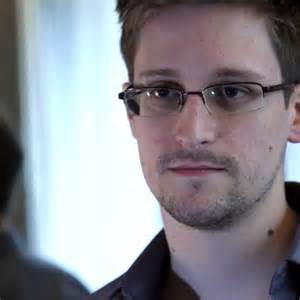
The agency was authorized to conduct “large-scale graph analysis on very large sets of communications metadata without having to check foreignness” of every e-mail address, phone number or other identifier, the document said. Because of concerns about infringing on the privacy of American citizens, the computer analysis of such data had previously been permitted only for foreigners.
The agency can augment the communications data with material from public, commercial and other sources, including bank codes, insurance information, Facebook profiles, passenger manifests, voter registration rolls and GPS location information, as well as property records and unspecified tax data, according to the documents. They do not indicate any restrictions on the use of such “enrichment” data, and several former senior Obama administration officials said the agency drew on it for both Americans and foreigners.
There were apparently two policy changes that allowed this to happen, and both occurred in the past three years. First, in November of 2010, the NSA was allowed to start looking at phone call and email logs of Americans to try to help figure out associations for “foreign intelligence purposes.” Note that phrase. We’ll come back to it. For years, the NSA had been barred from viewing any content on US persons, and the NSA, President Obama and others have continued to insist to this day that there are minimization procedures that prevent spying on Americans. Except, this latest revelation shows that, yet again, this isn’t actually true.
The second policy change came in January of 2011, when the NSA was told it could start creating this massive “social graph” on Americans without having to make sure they weren’t Americans any more, as indicated above.
Somewhat amazingly, the new report notes that in 2006, the NSA asked the Justice Department for permission to do exactly this sort of thing, and was rejected, saying that a “misuse” of that kind of data “could raise serious concerns.” Indeed, it could, and does raise serious concerns, but apparently the current administration just doesn’t give a crap. If all of this sounds familiar, it’s almost exactly what the feds tried to setup in 2002 with the Orwellian name Total Information Awareness. Except that time (right after 9/11, when you’d think the public would be at its most receptive to such programs), as word got out about the program, the public rightly flipped out, and we were told the program was shuttered. Except, as some have been arguing for years, it was never shuttered, it was just rebuilt in secret.
And, of course, the NSA is still willing to defend this massive breach on Americans’ privacy:
An agency spokeswoman, asked about the analyses of Americans’ data, said, “All data queries must include a foreign intelligence justification, period.”
“All of N.S.A.’s work has a foreign intelligence purpose,” the spokeswoman added. “Our activities are centered on counterterrorism, counterproliferation and cybersecurity.”
Note the continued shift in language. For a while, they kept saying that the NSA does no surveillance on Americans at all. At all! They insisted that would be illegal. Then, later, people started to note that they would use the phrase “targeting foreign intelligence” which had just enough (barely) wiggle room to get people to think that they were only looking at non-US person data and content, but really meant as long as the overall investigation “targeted” foreign intelligence, it was fine. Now they’re even walking back from that, and saying that apparently it’s fine to spy on Americans without a warrant so long as there’s “a foreign intelligence justification.” In short: if you can come up with some excuse for how it might impact something foreign, the NSA can spy on Americans without a warrant.
That’s no limitation at all. In fact, such a rule is meaningless. We already know that the NSA gets every telephone record handed over because they claim it’s “necessary” to “connect the dots” on foreign terror plots. And, similarly, now they’re arguing that they can look at anything else so long as they claim that there’s a “foreign intelligence justification.” That means they have no limits. They just have to come up with some wacky reason to claim that so-and-so might have foreign connections that are important to know about, and voila, their life is open for the NSA to dig in, all without any oversight or a warrant.
Somewhat surprisingly, the already disclosed phone metadata dragnet is actually not used for this social network effort, but that doesn’t mean the NSA is lacking in data with which to create this shadow spying social network. It uses the NSA’s taps on fiber optic networks, the ones that collect a ton of internet data, as Dianne Feinstein confirmed last week.
The N.S.A. documents show that one of the main tools used for chaining phone numbers and e-mail addresses has the code name Mainway. It is a repository into which vast amounts of data flow daily from the agency’s fiber-optic cables, corporate partners and foreign computer networks that have been hacked.
The documents show that significant amounts of information from the United States go into Mainway. An internal N.S.A. bulletin, for example, noted that in 2011 Mainway was taking in 700 million phone records per day. In August 2011, it began receiving an additional 1.1 billion cellphone records daily from an unnamed American service provider under Section 702 of the 2008 FISA Amendments Act, which allows for the collection of the data of Americans if at least one end of the communication is believed to be foreign.
Um. That’s an awful lot of records on Americans. And yet, we’re still being told that the NSA doesn’t spy on Americans? Yeah, right.
Anyway, it appears that the GETPRSM social network has been in existence for quite some time now, and don’t worry if you haven’t received your invite. You’ve already joined.
There is a world of intelligence gathering that staggers in terms of size and depth.Here’s James Bamford in Wired on a future over which citizens have no say:
Physically, the NSA has always been well protected by miles of high fences and electrified wire, thousands of cameras, and gun-toting guards. But that was to protect the agency from those on the outside trying to get in to steal secrets. Now it is confronting a new challenge: those on the inside going out and giving the secrets away.
While the agency has had its share of spies, employees who have sold top-secret documents to foreign governments for cash, until the last few years it has never had to deal with whistleblowers passing top-secret information and documents to the press because their conscience demanded it. This in a place where no employee has ever written a book about the agency (unlike the prolific CIA, where it seems that a book contract is included in every exit package).
As someone who has written many books and articles about the agency, I have seldom seen the NSA in such a state. Like a night prowler with a bag of stolen goods suddenly caught in a powerful Klieg light, it now finds itself under the glare of nonstop press coverage, accused of robbing the public of its right to privacy. Despite the standard denials from the agency’s public relations office, the documents outline a massive operation to secretly keep track of everyone’s phone calls on a daily basis – billions upon billions of private records; and another to reroute the pipes going in and out of Google, Apple, Yahoo, and the other Internet giants through Fort Meade – figuratively if not literally.
But long before Edward Snowden walked out of the NSA with his trove of documents, whistleblowers there had been trying for years to bring attention to the massive turn toward domestic spying that the agency was making. Last year in my Wired cover story on the enormous new NSA data center in Utah, Bill Binney, the man who largely designed the agency’s worldwide eavesdropping system, warned of the secret, nationwide surveillance. He told how the NSA had gained access to billions of billing records not only from AT&T but also from Verizon. “That multiplies the call rate by at least a factor of five,” he said. “So you’re over a billion and a half calls a day.” Among the top-secret documents Snowden released was a Foreign Intelligence Surveillance Court order proving the truth to Binney’s claim and indicating that the operation was still going on.
I also wrote about Adrienne J. Kinne, an NSA intercept operator who attempted to blow the whistle on the NSA’s illegal eavesdropping on Americans following the 9/11 attacks. “Basically all rules were thrown out the window,” she said, “and they would use any excuse to justify a waiver to spy on Americans.” Even journalists calling home from overseas were included. “A lot of time you could tell they were calling their families,” she says, “incredibly intimate, personal conversations.” She only told her story to me after attempting, and failing, to end the illegal activity with appeals all the way up the chain of command to Major General Keith Alexander, head of the Army’s Intelligence and Security Command at the time.
Without documents to prove their claims, the agency simply dismissed them as falsehoods and much of the mainstream press simply accepted that. “We don’t hold data on U.S. citizens,” Alexander said in a talk at the American Enterprise Institute last summer, by which time he had been serving as the head of the NSA for six years. Director of National Intelligence James Clapper made similar claims. At a hearing of the Senate Intelligence Committee last March, he was asked, “Does the NSA collect any type of data at all on millions or hundreds of millions of Americans?” To which Clapper responded, “No, sir.” The documents released by Snowden, pointing to the nationwide collection of telephone data records and not denied by government officials, prove the responses untrue.
The deception by General Alexander is especially troubling. In my new cover story for Wired’s July issue, which will be published online Thursday, I show how he has become the most powerful intelligence chief in the nation’s history. Never before has anyone in America’s intelligence sphere come close to his degree of power, the number of people under his command, the expanse of his rule, the length of his reign, or the depth of his secrecy. A four-star Army general, his authority extends across three domains: He is director of the world’s largest intelligence service, the National Security Agency; chief of the Central Security Service; and commander of the U.S. Cyber Command. As such, he has his own secret military, presiding over the Navy’s 10th Fleet, the 24th Air Force, and the Second Army.
The article also sheds light on the enormous privatization not only of the intelligence agencies but now also of Cyber Command, with thousands of people working for little-known companies hired to develop the weapons of cyber war, cyber targeting, and cyber exploitation. The Snowden case demonstrates the potential risks involved when the nation turns its spying and eavesdropping over to companies with lax security and inadequate personnel policies. The risks increase exponentially when those same people must make critical decisions involving choices that may lead to war, cyber or otherwise.
At a time when the NSA has lost its way and is increasingly infringing on the privacy of ordinary Americans, it shouldn’t come as much of a surprise that NSA employees — whether working for the agency or for one of its contractors — would feel the obligation to alert the public to the secret acts being carried out in its name. The only surprise is that we haven’t seen more such disclosures. General Alexander will surely use all his considerable power to prevent them. Don’t be surprised if he fails.
click on image

National Security Agency whistleblower Thomas Drake faces 35 years in prison on espionage charges for alleged unauthorized “willful retention” of five classified documents. “Espionage is the last thing my whistleblowing and First Amendment activities and actions were all about,” Drake said recently in a public speech. “This has become the specter of a truly Orwellian world where whistleblowing has become espionage.” According to The New Yorker, the Obama administration has used the Espionage Act of 1917 to press criminal charges in five alleged instances of national security leaks—more such prosecutions than have occurred in all previous administrations combined. We play excerpts of Thomas Drake’s first public comments and talk to former Justice Department whistleblower, Jesselyn Radack.
 Photo: Name Withheld; Digital Manipulation: Jesse Lenz
The spring air in the small, sand-dusted town has a soft haze to it, and clumps of green-gray sagebrush rustle in the breeze. Bluffdale sits in a bowl-shaped valley in the shadow of Utah’s Wasatch Range to the east and the Oquirrh Mountains to the west. It’s the heart of Mormon country, where religious pioneers first arrived more than 160 years ago. They came to escape the rest of the world, to understand the mysterious words sent down from their god as revealed on buried golden plates, and to practice what has become known as “the principle,” marriage to multiple wives.

Today Bluffdale is home to one of the nation’s largest sects of polygamists, the Apostolic United Brethren, with upwards of 9,000 members. The brethren’s complex includes a chapel, a school, a sports field, and an archive. Membership has doubled since 1978—and the number of plural marriages has tripled—so the sect has recently been looking for ways to purchase more land and expand throughout the town.
But new pioneers have quietly begun moving into the area, secretive outsiders who say little and keep to themselves. Like the pious polygamists, they are focused on deciphering cryptic messages that only they have the power to understand. Just off Beef Hollow Road, less than a mile from brethren headquarters, thousands of hard-hatted construction workers in sweat-soaked T-shirts are laying the groundwork for the newcomers’ own temple and archive, a massive complex so large that it necessitated expanding the town’s boundaries. Once built, it will be more than five times the size of the US Capitol.
Rather than Bibles, prophets, and worshippers, this temple will be filled with servers, computer intelligence experts, and armed guards. And instead of listening for words flowing down from heaven, these newcomers will be secretly capturing, storing, and analyzing vast quantities of words and images hurtling through the world’s telecommunications networks. In the little town of Bluffdale, Big Love and Big Brother have become uneasy neighbors.
Under construction by contractors with top-secret clearances, the blandly named Utah Data Center is being built for the National Security Agency. A project of immense secrecy, it is the final piece in a complex puzzle assembled over the past decade. Its purpose: to intercept, decipher, analyze, and store vast swaths of the world’s communications as they zap down from satellites and zip through the underground and undersea cables of international, foreign, and domestic networks. The heavily fortified $2 billion center should be up and running in September 2013. Flowing through its servers and routers and stored in near-bottomless databases will be all forms of communication, including the complete contents of private emails, cell phone calls, and Google searches, as well as all sorts of personal data trails—parking receipts, travel itineraries, bookstore purchases, and other digital “pocket litter.” It is, in some measure, the realization of the “total information awareness” program created during the first term of the Bush administration—an effort that was killed by Congress in 2003 after it caused an outcry over its potential for invading Americans’ privacy.
But “this is more than just a data center,” says one senior intelligence official who until recently was involved with the program. The mammoth Bluffdale center will have another important and far more secret role that until now has gone unrevealed. It is also critical, he says, for breaking codes. And code-breaking is crucial, because much of the data that the center will handle—financial information, stock transactions, business deals, foreign military and diplomatic secrets, legal documents, confidential personal communications—will be heavily encrypted. According to another top official also involved with the program, the NSA made an enormous breakthrough several years ago in its ability to cryptanalyze, or break, unfathomably complex encryption systems employed by not only governments around the world but also many average computer users in the US. The upshot, according to this official: “Everybody’s a target; everybody with communication is a target.
 band annie's Weblog