Search

band annie's Weblog

I have a parallel blog in French at http://anniebannie.net

Category

Uncategorized

Israel’s Armed Quadcopters in Gaza Mark a Dangerous New Era in Drone Warfare

Correction : https://www.snopes.com/news/2024/04/30/idf-sniper-drones-crying/?cb_rec=djRfMl8xXzBfMTgwXzBfMF8wXw

“The Bottom Line

There are very few independent accounts that corroborate allegations that the IDF used drones to lure people into their sights with the sounds of infants in distress. The claim is similar to common urban legends and rumors, including one lodged by the IDF against Hamas in December 2023.

These facts alone are not enough to disprove the reality of these events, however, and claims that the IDF does not have technology capable of performing these tasks are misguided.”

Israel is pioneering yet another deadly innovation in drone warfare. What happens in Gaza won’t stay there.

(An Israeli quadcopter seen near the Israel-Gaza border in 2018. AFP via GETTY IMAGES / Said Khatib)

The besieged people of Gaza’s Nuseirat refugee camp got a terrifying glimpse this month of the shape of war to come. 

Disturbing sounds of crying infants and women were audible throughout the camp. When they went out to investigate, “Israeli quadcopters reportedly opened fire directly at them,” the award-winning Palestinian journalist Maha Hussaini reported for Middle East Eye. The quadcopters – small, cheap, and disposable drones usually used for civilian photography and, more recently, military reconnaissance – had been blasting the sorrowful recordings as a lure. 

Once the lure worked, it created a self-fulfilling prophecy: those who ran to help the fake victims became real ones. Residents struggled to help those real victims as the “quadcopters were firing at anything that moved,” eyewitness Samira Abu al-Leil, a 49-year-old Nuseirat resident, told Middle East Eye. 

ajplus

A post shared by @ajplus

Gaza is the scene of Israeli carnage so pitiless that the International Court of Justice in January found it to be plausibly genocidal. Palestinian journalists and health workers on the ground are documenting that it’s also something else: a laboratory for the wars of the future. Playing a recording of a crying baby to kill those who seek to save children is a risible cruelty but hardly an innovative one. Arming a quadcopter, however, is an inevitable idea that Israel now appears to have been the first to bring into battlefield usage. And Gaza will by no means be the last conflict where armed quadcopters kill. 

Foreign journalists cannot enter Gaza to see these drones for themselves. Asked for comment on the reports of armed quadcopters, an Israeli military spokesperson told Zeteo, “We do not comment on operational tools.”

Israel’s armed quadcopter innovation is not the only harbinger of future wars at work in or emanating from Gaza. Yuval Abraham, reporting for the Israeli outlets +972 and Local Call, revealed a terrifying targeting artificial intelligence, Lavender, that purports to sift through the accumulated data Israel gathers through surveillance on Gazans and predict who matches the profile of a vaguely defined “militant.” Particularly at the beginning of its onslaught through Gaza, Abraham reported, the Israeli military “almost completely relied on Lavender, which clocked as many as 37,000 Palestinians as suspected militants.” 

Much of the recent focus on emerging Middle Eastern military capabilities – especially where drones are concerned – has been on Iran, not Israel. Iran’s contributions to the changing face of drone warfare have come on a larger scale. The Iranian drone air fleet launched against Israel this month – retaliation for the deadly April 1 attack on an Iranian diplomatic facility in Damascus, presumed to be the work of Israel – neither killed anyone nor survived the combined air defenses of Israel, the U.S., UK, France, and Jordan, though shrapnel seriously wounded 7-year-old Amina Hassouna. But a fleet estimated at 170 mid-sized armed drones capable of making a flight more than 620 miles from Iran to Israel is a grim advance in drone history. 

National militaries will have to spend significant portions of their budgets if they wish to purchase or develop a fleet of combat-capable drones, even though those drones are far cheaper than piloted combat aircraft. But tricking a quadcopter out with a gun is something that everyone from sophisticated defense establishments to insurgent, terrorist, militia, and rebel groups will find irresistibly affordable and technologically feasible. Drone experts consider the quadcopter’s weaponization to have been a matter of time, following as it does the trends in drone development toward miniaturization and affordability. 

The battlefield emergence of the armed quadcopter is an uncomfortable reminder that the scale of destruction that has prompted observers of Gaza to compare it to 20th-century warfare is being accomplished with the weapons of the 21st – weapons often purported to make warfare more precise, or even more “humane.” Instead, the Israeli assault on Gaza is showing us a glimpse of wars simultaneously fought at the scale of AI-generated target selection and, as with the armed quadcopter, with terrifying intimacy. 

“Heavy Gunfire Coming From Above” 

Accounts of quadcopter attacks in Gaza began circulating on social media from Palestinians early in the war. The British-Palestinian surgeon Ghassan Abu-Sittah posted in mid-November that he and his colleagues at al-Ahli hospital had seen “over 20 chest and neck [gunshot] wounds fired from Israeli Quadcopter drones… When it comes to killing they are so innovative.”

Hussaini, in January, contributed a thorough report for Middle East Eye about the emergence of quadcopters as an Israeli military tool. She described their contributions to a horrific scene on Jan. 11, on the coastal al-Rashid Street in northern Gaza, in which the Israeli military opened fire on a crowd of hungry people who massed after hearing a truck packed with food was on the way. 

“We were taken by surprise by the heavy gunfire coming from above, there were quadcopters shooting directly at the crowd,” eyewitness Qassem Ahmed, 42, told Hussaini, who wrote that the current war is “the first time in the Palestinian territories, remote-controlled quadcopters have been deployed on a large scale against suspected Palestinian fighters and civilians.” A similar account, reported from Gaza the next month by Tareq S. Hajjaj in Mondoweiss, quoted 39-year-old Abdallah Shaqqura, whose wife Ulfat was shot multiple times by a quadcopter in front of their 5-year-old son. Ulfat told the boy to run before bleeding out in the street. 

In February, Euro-Med Monitor compiled a study of what they said was “systemati[c]” Israeli usage of the armed quadcopters in Gaza and corroborated accounts of quadcopters opening fire during the Jan. 11 bloodbath on al-Rashid Street. Euro-Med Monitor said it had confirmed “dozens of civilians” targeted and shot by quadcopters “fitted with machine guns and missiles from the Matrice 600 and LANIUS categories, which are highly mobile and versatile, i.e., ideal for short-term operations.” Citing the Palestinian Health Ministry, the study reported that health workers in Gaza noticed corpses with “evidence of unusual gunshots,” which, according to Euro-Med Monitor, indicated “not bullets fired from rifle-type weapons, but from quadcopter drones.” Hussaini’s Middle East Eye colleague in Gaza, Mohammed al-Hajjar, said the quadcopter’s rounds resembled nails. 

Among the attacks Euro-Med Monitor documented were a quadcopter shooting into a tent at the al-Shaboura refugee camp in Rafah, killing 17-year-old Elyas Osama Ezz El-Din Abu Jama, “who was mentally and physically disabled,” and his 19-year-old brother Muhib. The father of 13-year-old Amir Odeh described seeing his son “suddenly hit by a gunshot from a quadcopter through the window of the room” while the boy was playing with his cousins on the eighth floor of the Palestinian Red Crescent Society’s headquarters in Khan Younis. He carried Amir to al-Amal hospital, “where he was proclaimed dead.” 

Thaer Ahmad, a Chicago doctor who volunteered at Gaza’s Nasser Hospital, recently told The Guardian‘s Chris McGreal that a drone shot one of his colleagues in the head. The doctor was reported to have survived.

The exact make and model of the quadcopters over Gaza is unknown. But the Matrice 600 referenced by the Euro-Med Monitor is a six-rotor, nine-plus kilogram (19-plus Ib.) drone intended for photography. According to manufacturer DJI’s specs, the Matrice 600 has a maximum flight time of 18 minutes when carrying a payload. 

Lanius, made by Israeli drone heavyweight Elbit, is a smaller, loitering robot that can be launched from, apparently, a Matrice-like quadcopter. It’s capable of sending a 3-D map of what its camera scans back to its operator. Looking like a Viewfinder of doom, the Lanius flies autonomously – until an operator sends it a command to detonate. After Elbit released a Lanius promotional video in November 2022, tech journalist David Hambling wrote that “the most impressive feature of Lanius is that [it] exists here and now, and may already be in use with Israeli forces.” 

DJI and Elbit did not respond to Zeteo’s requests for comment. 

An Aura of Inevitability

“Quadcopter” can be a bit of a misnomer. Some of the drones identified in Palestinian reporting and the Euro-Med Monitor report have appeared to have six rotors, and my experience as a defense reporter for WIRED magazine taught me that some people are very pedantic about these things. But the term “quadcopter” is a catch-all for a small, rotary-winged drone, distinguished from large fixed-wing, missile-armed robotic airframes like the U.S. Predator. 

The quadcopter’s battlefield use has usually been to perform reconnaissance. And when it comes to payload, small drones have been rigged for self-detonation for years. The U.S. military has experimented with so-called “loitering munitions” for at least 13 years. Israel deployed loitering munitions in its attack on the Iranian city of Isfahan earlier this month, according to Iranian officials – and has deployed them since at least 2019 in operations in Iran and Lebanon. 

Quadcopters strapped with guns, however, are a newer innovation. Turkey, a recent heavyweight entry into the drone market, unveiled a gun-strapped quadcopter at least five years ago. The U.S. Army? Same

The point here is not that armed quadcopters like those the Israeli military reportedly uses in Gaza are unprecedented. It’s that they are very, very precedented, to the degree that they have the aura of inevitability. 

Russia’s assault on Ukraine is another merciless conflict that is yielding drone creativity from military necessity. There, Russian forces have used small “first-person-view” drones, rigged to explode, to cripple U.S. and German-supplied tanks. As Lara Jakes of the New York Times recently observed, that means a $500 robotic munition is defeating a $10 million armored vehicle. 

Still, Sam Bendett, a defense analyst at the influential CNA think tank who pays close attention to battlefield developments in the Ukraine war, considers the armed quadcopter an “emerging technology,” not yet one that various governments or militias actively employ in combat. “There are experiments and examples of larger, heavier Ukrainian drones equipped with machine guns. It’s not clear yet how widespread this tactic is across the front,” he told me. Considering his area of focus, Bendett wasn’t familiar with the reported use of armed quadcopters by Israel in Gaza. But he commented that “Israel’s UAV [unmanned aerial vehicle] capabilities are very advanced, so it’s not surprising.” 

Among the problems with arming a small drone with a gun is recoil, which will affect accuracy. Larger and heavier drones are better equipped to deal with that than small quadcopters, Bendett said. “You want to make sure that whatever you do, you fire precisely,” he noted. 

Gaza as a Proving Ground

Drone warfare began in the Middle East. With a November 2002 strike in Yemen from a flimsy robotic airframe carrying an anti-tank missile, the U.S. inaugurated a new method of assassination from a distance. Israel, another drone pioneer, first used drones in the 1973 Yom Kippur War and its 1982 invasion of Lebanon as decoys to confuse air defenses in Syrian-controlled parts of the country. The Israeli military added strikes into its drone repertoire during the Second Palestinian Intifada in the early 2000s. 

Twenty years later, armed drone usage is unremarkable, if no less terrifying. Militaries looking to add aerial capability but without the money or the industrial resources for piloted fighter aircraft instead pay hundreds of thousands or low millions of dollars for an Iranian Shahed or Turkey’s wildly popular Bayraktar-TB2. Across the African continent, 149 civilians died from drone strikes in 2020. Last year, that figure rose to 1,418 people, Bloomberg recently reported, citing the Armed Conflict Location and Event Data Project.

The subjugation of Palestine rendered it a military proving ground long before Oct. 7. Israel’s “occupation, in the West Bank and Gaza, is the perfect place to develop and test new weapons systems including surveillance drones, intelligence gathering tools and artificial intelligence weapons,” Antony Loewenstein, author of the 2023 book The Palestine Laboratory, said in a Q&A with the book’s publisher last October. “Once they’ve been used against Palestinians, the relevant companies market them at global weapons fairs” as “battle-tested.” 

Elbit, maker of the Lanius, manufactured the first drones that the U.S. Department of Homeland Security tested over the U.S.-Mexico border. Israel has become the ninth-biggest arms dealer in the world, according to the Stockholm International Peace Research Institute. Its clientele includes some of the “most repressive regimes on the planet, including Myanmar and Saudi Arabia, [which] have purchased Israeli tech and weapons in the last decade with the authority and encouragement” of the Israelis, according to Loewenstein. 

As the drones miniaturize alongside their options for carrying lethal payloads, militias will follow the same economic logic as national militaries, just on a different scale, like a Moore’s Law of death. Only this time, drone warfare may be a ground-up development, as modifications on commercially available quadcopters prove a viable, cheap workaround to export controls surrounding larger lethal drones. And the devolution and normalization of drone use don’t stop with rebel groups. The War on Terror demonstrated how battlefield innovations for well-funded militaries find their way to local law enforcement. 

On April 11, Ghassan Abu-Sittah became rector of the University of Glasgow. In his address, he reflected on the solidarity he had seen so many of the peoples of the world extend to Palestine. He attributed some of it to an understanding that what happens in Gaza will not stay there. 

“[T]hey understood that the weapons that Benjamin Netanyahu uses today are the weapons that Narendra Modi will use tomorrow,” Abu-Sittah said. “The quadcopters and drones fitted with sniper guns…used today in Gaza will be used tomorrow in Mumbai, in Nairobi and in Sao Paulo. Eventually, like the facial recognition software developed by the Israelis, they will come to Easterhouse and Springburn.” 

The next day, the German government refused Abu-Sittah entry at Berlin Brandenburg Airport, preventing him from attending the Palestine Congress conference. 

Spencer Ackerman is a Pulitzer Prize and National Magazine Award-winning reporter and the author of Reign of Terror: How The 9/11 Era Destabilized America and Produced Trump. He has reported from Iraq, Afghanistan, Guantanamo Bay, and many U.S. bases, ships, and submarines.

Thank you for being a paid subscriber to Zeteo.

When Israel Tried to Starve me in Gaza, Palestine.


This is Palestine, in your Inbox, Making Sense of the Madness
Audio text

By Asem al-Jerjawi, a Palestinian writer, activist, and journalist with We Are Not Numbers and the 16th October Media Group.

It was 4am on Friday, October 13, 2023 and I was asleep together with my mom and three brothers in our home in Al-Rimal, Gaza City. We had gathered in one room to sleep because the sound of warplanes buzzing overhead had become relentless, too petrifying for any of us to bear on our own.
An unfamiliar number flashed on my mother’s phone. It was a pre-recorded warning from the Israeli military. Our home was in the danger zone and we were ordered to move south. We awoke in horror and ran outside, only to see Israeli army leaflets everywhere. We had no other choice but to flee. 
We decided to go to a friend’s home in Deir al-Balah. We were only able to bring a few pieces of clothes, blankets and some bedding. We waited for nearly an hour but couldn’t find any means of transportation as everyone was rushing to leave. Finally, our neighbor, Robin Al Mazlom, approached us and said he could take us south in his truck. Alhamdulillah

Robin dropped us off at Wadi Gaza Street. We continued on foot for another 2 kilometers, carrying our bags, blankets and bedding on our backs. Thousands of displaced people were walking with their families south, everyone carrying their life’s possessions on their backs. 
This must have been what it was like during the Nakba of 1948, with one key difference: we have no illusions anymore about Israel’s ultimate aim: our annihilation.  

Dozens of friends, uncles, aunts, cousins and my little old grandmother were already sheltering at our friend’s house in al-Zawaida by the time we arrived. 47 of us in a single apartment. For 2 months, I slept on the floor, catching a cold and waking up every day with back pain. Oh, the good old days, when it was a common cold and common back pain that afflicted me. 
The house was right near Salah ad-Din street, a major traffic artery now completely empty. At least we had easy access to an escape route, if necessary.

The day was January 5, 2024 and we were sitting at home. As the afternoon hours passed, the sounds of whistling snipers and gunshots grew louder. Then came the artillery shells and bombs. I don’t know whether it was a 1,000lb bomb or a 2,000lb bomb that Israel dropped near us, but it shattered all of the windows of the house. It felt as if the fighting was outside our front door for three straight days, the most miserable three days of my life. 

The Israeli army soon declared this area a military zone as well, forcing us all to flee. Again.
We packed our clothes, blankets and bedding, and together with our cats, we were off. My grandmother is old and frail and could not keep up, but we had no choice but to move south. I told my family to move ahead to Deir al-Balah, and I would help my grandmother, holding her hand tight, helping her walk, as sniper shots, artillery fire and missiles landed around us in every direction. 
As we walked south, I saw the body of a toddler girl. Her eyes were missing and all I could see was dried blood flowing from her empty sockets. There were bodies without limbs and human bones strewn around. Animals had clearly devoured their corpses. I felt horror. Anger. 

We reached our new home in Deir al-Balah, an 8-person tent. There were hardly any provisions nearby, just thousands and thousands of people in every direction. As I ventured out to buy provisions for my family, I noticed a large crowd outside the Green Cafe in Deir al-Balah. So many desperate people, so little food. 
We were five people, and for two days, we shared a small amount of tainted water and a single loaf of bread. We were weak and hungry. This was my first experience with starvation. 
Then we received word that Robin, our neighbor who had generously given us a ride south in his truck, had been martyred along with his two sons. Allah Yarhamhum.

All I hoped for at that moment was to return to normal life. But life was anything but normal. In addition to the weakness and hunger, we were also exhausted from the sleepless nights. At night I am awoken seven times, sometimes more. It is impossible to sleep amidst the deafening sounds of rockets, bombs, tanks, bulldozers and heavy-arms fire. 

The rain and the cold are also unbearable. Rain drips through the gaps in our tent’s nylon roof. I go days at a time without getting any sleep at all. Not because I’m not tired, but because our tent was soaking wet. How can one sleep in a pool of freezing water in the freezing cold? 
Meanwhile, whenever I try to think, to take my mind away from our plight, Palestinian souls flash before my eyes in the shape of a long beard that has lost its head, limbs, legs and eyeballs.
I’ve never felt as hopeless as I feel now. My life consists of a constant search for water, bread and firewood, just to have a single meal. 

I’ve already survived five wars in 2008-9, 2012, 2014, 2018-19 and 2021, but I’m not sure if I’ll survive this one. I was raised in Gaza, I’ve planted all my memories here in Gaza. This is where I belong, in Gaza. Whatever happens to me, my memories will live on here in Gaza.
 

Opinion | Israeli Leftists: Shake Off the Shock of October 7 and Open Your Eyes to Gaza

Jabaliya refugee camp in Gaza.

Jabaliya refugee camp in Gaza.Credit: Mahmoud Essa / AP Gideon Levy

Mar 13, 2024 11:40 pm IST

Dear friends and former friends: It’s time to sober up from the sobering up.

It was baseless to begin with, but now, nearly half a year after your “eyes were opened,” it’s time to return to reality. It’s time to go back to seeing the whole picture, to reactivate the conscience and the moral compass that were shut off and stored away on October 7, and to see what has happened since then to us and, yes, to the Palestinians.

It’s time to remove the blindfolds you put on, not wanting to see and not wanting to know what we’re doing to Gaza, because you said that Gaza deserves it and its catastrophes no longer interest you.

You were angry, you felt humiliated, you were stunned, you were terrified, you were shocked, and you grieved on October 7. This was fully justified. It was a huge shock for everyone.

But the conclusions you derived from this shock were not just mistaken, they were the opposite of the conclusions that should have been drawn from the disaster.

You don’t come after people in their sorrow, certainly not Zionist leftists whose sorrow is their art, but it’s time to shake off the shock and wake up. You thought that what happened on October 7 justifies anything? Well, it doesn’t. You thought that now Hamas must be destroyed at all costs? Well, no. It’s not just about justice, but about recognizing the limits of force.

It’s not that you are evil and sadistic, or racist and messianic, like the right. You only thought that October 7 suddenly proved what the right always said: that there is no partner because the Palestinians are savages.

Five months should be enough for you to get over not only your gut reaction, but also your conclusions. October 7 needn’t have changed any of your moral principles or your humanity. But it turned them inside out, which is a serious cause for concern about the steadfastness of your moral principles.

Hamas’s vicious, barbaric attack on Israel does not change the basic situation in which we live: of a people that has been harassing and tyrannizing another people in different ways and at varying intensities for over a century now.

Gaza didn’t change on October 7. It was one of the most miserable places on the planet before October 7 and became even more miserable after it.

Israel’s responsibility for the fate of Gaza and its guilt did not change on that terrible day. It is not the only guilty party and does not bear full responsibility, but it has a decisive role in Gaza’s fate.

The left cannot evade this responsibility and guilt. After the shock and anger and sorrow, it’s time now to sober up from the sobering up and to look not only at what was done to us, as the Israeli media commands us to do day and night, but also at what we are doing to Gaza, and to the West Bank, since October 7.

No, our catastrophe does not make up for that, nothing in the world can make up for that. The right is celebrating Palestinian suffering, reveling in it and wanting more, while the left looks away and keeps dreadfully silent. It is still “sobering up.” It’s time to stop that.

What the whole world sees and understands should also be understood by at least part of what was once the camp of conscience and humanity. We won’t go into the Zionist left’s part in the occupation and apartheid, or dwell on its hypocrisy.

But how can an entire people avert its eyes from the horrors it is committing in its backyard, with no camp remaining that will cry out against them? How can such a brutal war go on and on without any opposition within Israeli society?

The Zionist left, which always wants to feel good about itself and consider itself enlightened, democratic and liberal, needs to remember that one day it will ask itself, or be asked by others: Where were you when it all happened? Where? You were still sobering up? It’s time for that to end, because it’s already getting late. Very late.

Opinion | 11,500 Children Have Been Killed in Gaza. Horror of This Scale Has No Explanation

A displaced Palestinian child sheltering in a UNRWA school in Rafah in the southern Gaza Strip, Thursday.

A displaced Palestinian child sheltering in a UNRWA school in Rafah in the southern Gaza Strip, Thursday Photo: Ibraheem Abu Mustafa/Reuters

Feb 4, 2024 4:17 am IST Gideon Levy

Two hundred and sixty names of babies whose age was 0; names of babies who didn’t get to celebrate their first birthday, nor will they ever celebrate anything else. Here are some of their names: Abdul Jawad Hussu, Abdul Khaleq Baba, Abdul Rahim Awad, Abdul Rauf al-Fara, Murad Abu Saifan, Nabil al-Eidi, Najwa Radwan, Nisreen al-Najar, Oday al-Sultan, Zayd al-Bahbani, Zeyn al-Jarusha, Zayne Shatat. What dreams did their parents have for them? Then there are hundreds of names of one- and two-year old children; toddlers three or four years of age; children who were five, six, seven or eight, up to the youths who were 17 when they died.

Thousands of names, one after the other, out of the 11,500 children killed by the Israel Defense Forces in Gaza over the last four months. The list flows like credits at the end of a long movie, a mournful tune in the background. The Al-Jazeera network posted the list of names known to it over the weekend, a total of half the 11,500 who were killed, according to Hamas’ health ministry. A child killed every 15 minutes, one out of every 100 children in Gaza.

Around them remained the children who witnessed the deaths of their loved ones, the parents who buried their babies, the people who had extricated their bodies from the fire and rubble, thousands of crippled children and tens of thousands forever in shock. According to UN figures, 10,000 children lost both parents in this war, a war in which two mothers die every hour.

No explanation, no justification or excuse could ever cover up this horror. It would be best if Israel’s propaganda machine didn’t even try to. No stories of “Hamas is responsible for it all,” and no excuses pointing to Hamas hiding among civilians. Horror of this scope has no explanation other than the existence of an army and government lacking any boundaries set by law or morality.

Think of these babies, who died in their cribs and their diapers, of the children who tried to run for their lives to no avail. Close your eyes for a moment and imagine the 10,000 tiny bodies lying side by side; open them and see the mass graves, the overcrowded emergency rooms, with ambulances spewing out more and more children who are rushed in, unclear if dead or alive.

It’s happening, even now, just over a one-hour drive from Tel Aviv. It’s happening without being reported in Israel, without any public debate over the violent rampage Israel has allowed itself to wage in Gaza this time, more than ever before. This is also happening without anyone in Israel reflecting on what will come of this mass killing, on what Israel might gain from it and what price it will pay for it. Don’t bother us, we are killing children.

A girl uses a baby stroller to ferry drinking water in rainy weather at a makeshift tent camp in Rafah in the southern Gaza Strip, on Friday.

The clichés are hackneyed and pathetic: “They started,” “there is no choice,” “what would you have us do?” “The IDF is doing everything it can to avoid the killing of innocent people.” The truth is that Israel doesn’t care, it doesn’t even take any interest. After all, Palestinians don’t love their children, and in any case, they would have only grown up to become terrorists.

In the meantime, Israel is erasing generations in Gaza, and its soldiers are killing children in numbers competing with the cruellest of wars. This will not and cannot be forgotten. How can a people ever forget those who killed its children in such a manner? How can people of conscience around the world remain silent over such mass killing of children? The fact that Israel is not deliberating this issue internally, with no tears or conscience in evidence, only desiring more of this war, until a “final victory” is achieved, does not bind the world. The world sees and is shocked.

The truth is, it’s impossible to remain silent. Even Israel, so absorbed in its grief and its concern for the fate of the hostages; Israel, which itself sustained horrors on October 7, cannot ignore what is happening in Gaza. It takes seven minutes to display the list of thousands of dead children, passing at the same speed as their miserable lives did. By the end, one cannot remain silent; these are seven minutes that leave you choked up, distressed and deeply ashamed.

Source

We have a tool to stop Israel’s war crimes: BDS

Naomi Klein

Naomi Klein

In 2005, Palestinians called on the world to boycott Israel until it complied with international law. What if we had listened?Wed 10 Jan 2024 12.00 CET

Exactly 15 years ago this week, I published an article in the Guardian. It began like this:

It’s time. Long past time. The best strategy to end the increasingly bloody occupation is for Israel to become the target of the kind of global movement that put an end to apartheid in South Africa. In July 2005 a huge coalition of Palestinian groups laid out plans to do just that. They called on ‘people of conscience all over the world to impose broad boycotts and implement divestment initiatives against Israel similar to those applied to South Africa in the apartheid era’. The campaign Boycott, Divestment and Sanctions was born.

Back in January 2009, Israel had unleashed a shocking new stage of mass killing in the Gaza Strip, calling its ferocious bombing campaign Operation Cast Lead. It killed 1,400 Palestinians in 22 days; the number of casualties on the Israeli side was 13. That was the last straw for me, and after years of reticence I came out publicly in support of the Palestinian-led call for boycott, divestment and sanctions against Israel until it complies with international law and universal principles of human rights, known as BDS.

Though BDS had broad support from more than 170 Palestinian civil society organizations, internationally the movement remained small. During Operation Cast Lead, that began to shift, and a growing number of student groups and trade unions outside Palestine were signing on.

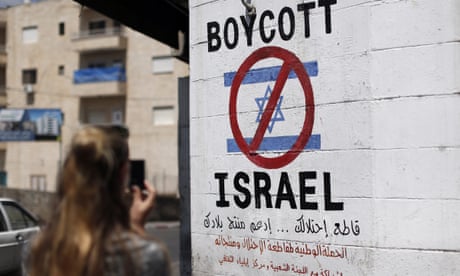
a 'boycott israel' mural in Bethlehem, June 2015.

Still, many wouldn’t go there. I understood why the tactic felt fraught. There is a long and painful history of Jewish businesses and institutions being targeted by antisemites. The communications experts who lobby on Israel’s behalf know how to weaponize this trauma, so they invariably cast campaigns designed to challenge Israel’s discriminatory and violent policies as hateful attacks on Jews as an identity group.

For two decades, widespread fear stemming from that false equation has shielded Israel from facing the full potential of a BDS movement – and now, as the international court of justice hears South Africa’s devastating compendium of evidence of Israel committing the crime of genocide in Gaza, it truly is enough.

From bus boycotts to fossil fuel divestment, BDS tactics have a well-documented history as the most potent weapons in the nonviolent arsenal. Picking them up and using them at this turning point for humanity is a moral obligation.

The responsibility is particularly acute for those of us whose governments continue to actively aid Israel with deadly weapons, lucrative trade deals and vetoes at the United Nations. As BDS reminds us, we do not have to let those bankrupt agreements speak for us unchallenged.

Groups of organized consumers have the power to boycott companies that invest in illegal settlements, or power Israeli weapons. Trade unions can push their pension funds to divest from those firms. Municipal governments can select contractors based on ethical criteria that forbid these relationships. As Omar Barghouti, one of the founders and leaders of the BDS movement, reminds us: “The most profound ethical obligation in these times is to act to end complicity. Only thus can we truly hope to end oppression and violence.”

In these ways, BDS deserves to be seen as a people’s foreign policy, or diplomacy from below – and if it gets strong enough, it will eventually force governments to impose sanctions from above, as South Africa is attempting to do. Which is clearly the only force that can get Israel off its current path.

Barghouti stresses that, just as some white South Africans supported the anti-apartheid campaigns during that long struggle, Jewish Israelis who oppose their country’s systemic violations of international law are welcome to join BDS. During Operation Cast Lead, a group of roughly 500 Israelis, many of them prominent artists and scholars, did just that, eventually naming their group Boycott from Within.

In my 2009 article, I quoted their first lobbying letter, which called for “the adoption of immediate restrictive measures and sanctions” against their own country and drew direct parallels with the South African anti-apartheid struggle. “The boycott on South Africa was effective,” they pointed out, saying it helped end the legalization of discrimination and ghettoization in that country, adding: “But Israel is handled with kid gloves … This international backing must stop.”

That was true 15 years ago; it is calamitously so today.

The price of impunity

READ ON here FOR THE IMAGES. WITHOUT IMAGES SEE BELOW

2009
An explosion from an Israeli airstrike in Rafah, Gaza

2023
A plume erupts during an Israeli bombardment in Rafah

2009
A Palestinian trapped under rubble in Gaza City

2023
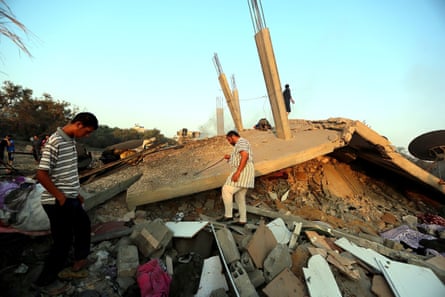
Palestinians after an airstrike on a house in Rafah, Gaza

Reading BDS documents from the mid- and late 2000s, I am most struck by the extent to which the political and human terrain has deteriorated. In the intervening years, Israel has built more walls, erected more checkpoints, unleashed more illegal settlers and launched far deadlier wars. Everything has gotten worse: the vitriol, the rage, the righteousness. Clearly, impunity – the sense of imperviousness and untouchability that underpins Israel’s treatment of Palestinians – is not a static force. It behaves more like an oil spill: once released, it seeps outwards, poisoning everything and everyone in its path. It spreads wide and sinks in deep.

Since the original call for BDS was made in July 2005, the number of settlers living illegally in the West Bank, including East Jerusalem, has exploded, reaching an estimated 700,000 – close to the number of Palestinians expelled in the 1948 Nakba. As settler outposts have expanded, so has the violence of settler attacks on Palestinians, all while the ideology of Jewish supremacy and even overt fascism have moved to the center of the political culture in Israel.

When I wrote my original BDS column, the overwhelming mainstream consensus was that the South African analogy was inappropriate and that the word “apartheid”, which was being used by Palestinian legal scholars, activists and human rights organizations, was needlessly inflammatory. Now, everyone from Human Rights Watch to Amnesty International to the leading Israeli human rights organization B’Tselem have done their own careful studies and come to the inescapable conclusion that apartheid is indeed the correct legal term to describe the conditions under which Israelis and Palestinians lead starkly unequal and segregated lives. Even Tamir Pardo, the former head of the Mossad intelligence agency, conceded the point: “There is an apartheid state here,” he said in September. “In a territory where two people are judged under two legal systems, that is an apartheid state.”

Moreover, many also now understand that apartheid exists not only in the occupied territories, but inside Israel’s 1948 borders, a case laid out in a major 2022 report from a coalition of Palestinian human rights groups convened by Al-Haq. It’s hard to argue otherwise when Israel’s current far-right government came to power under a coalition agreement that states: “The Jewish people have an exclusive and unquestionable right to all areas of the Land of Israel … the Galilee, the Negev, the Golan, Judea and Samaria.”

When impunity reigns, everything shifts and moves, including the colonial frontier. Nothing stays static.

Then there is Gaza. The numbers of Palestinians killed in Operation Cast Lead felt unfathomable at the time. We soon learned that it was not a one-off. Instead, it ushered in a murderous new policy that Israeli military officials casually referred to as “mowing the grass”: every couple of years brought a fresh bombing campaign, killing hundreds of Palestinians or, in the case of 2014’s Operation Protective Edge, more than 2,000, including 526 children.

Those numbers shocked again, and sparked a new wave of protests. It still wasn’t enough to strip Israel of its impunity, which continued to be protected by the US’s reliable UN veto, plus the steady flow of arms. More corrosive than the lack of international sanctions have been the rewards: in recent years, alongside all of this lawlessness, Washington has recognized Jerusalem as Israel’s capital and then moved its embassy there. It also brokered the so-called Abraham accords, which ushered in lucrative normalization agreements between Israel and the United Arab Emirates, Bahrain, Sudan and Morocco.

Under a clear blue sky, men walk on the top of the rubble of buildings.
Palestinians inspect ruins in Khan Younis after Israeli airstrikes in Gaza on 8 July 2014. Photograph: Anadolu/Getty Images

It was Donald Trump who began showering Israel with these latest, long-sought-after gifts, but the process carried on seamlessly under Joe Biden. So, on the eve of 7 October, Israel and Saudi Arabia were on the verge of signing what had been giddily hailed as the “deal of the century”.

Where were Palestinian rights and aspirations in all these deals? Absolutely nowhere. Because the other thing that had shifted during these years of impunity was any pretext that Israel intended to return to the negotiating table. The clear goal was crushing the Palestinian movement for self-determination through force, alongside physical and political isolation and fragmentation.

We know how the next chapters of this story go. Hamas’s horrific 7 October attack. Israel’s furious determination to exploit those crimes to do what some of the government’s senior leaders had long wanted to do anyway: depopulate Gaza of Palestinians, which they currently appear to be attempting through the combination of direct killing; mass home demolition (“domicide”); the spread of starvation, thirst and infectious disease; and eventually mass expulsion.

Make no mistake: this is what it means to allow a state to go rogue, to let impunity reign unchecked for decades, using the real collective traumas suffered by the Jewish people as the bottomless excuse and cover story. Impunity like that will swallow not only one country but every country with which it is allied. It will swallow the entire international architecture of humanitarian law forged in the flames of the Nazi holocaust. If we let it.

Which raises something else that has not stayed stable over the past two decades: Israel’s escalating obsession with crushing BDS, no matter the cost to hard-won political rights. Back in 2009, there were many arguments being made by BDS’s critics about why it was a bad idea. Some worried that cultural and academic boycotts would shut down much-needed engagement with progressive Israelis, and feared it would veer into censorship. Others maintained that punitive measures would create a backlash and move Israel further to the right.

So it is striking, looking back now, that those early debates have pretty much disappeared from the public sphere, and not because one side won the argument. They disappeared because the entire idea of having a debate was displaced by one all-consuming strategy: using legal and institutional intimidation to put BDS tactics out of reach and shut the movement down.

To date in the United States, a total of 293 anti-BDS bills have been introduced across the country, and they have been enacted in 38 states, according to Palestine Legal, which has closely tracked this surge. It explains that some legislation targets university funding, some requires that anyone receiving a contract with a state or working for a state sign a contract pledging they will not boycott Israel, and “some call on the state to compile public blacklists of entities that boycott for Palestinian rights or support BDS”. In Germany, meanwhile, support for any form of BDS is enough to get awards revoked, funding pulled, and shows and lectures cancelled (something I have experienced first-hand).

This strategy is, unsurprisingly, most aggressive inside Israel itself. In 2011, the country enacted the Law for Prevention of Damage to the State of Israel through Boycott, effectively nipping the nascent Boycott from Within movement in the bud. The Adalah legal center, an organization working for Arab minority rights in Israel, explains that the law “prohibits the public promotion of academic, economic or cultural boycott by Israeli citizens and organizations against Israeli institutions or illegal Israeli settlements in the West Bank. It enables the filing of civil lawsuits against anyone who calls for boycott.” Like the state-level laws in the US, “it also prohibits a person who calls for boycott from participating in any public tender”. In 2017, Israel began openly barring pro-BDS activists from entering Israel; 20 international groups were placed on the so-called BDS blacklist, including the anti-war stalwart Jewish Voice for Peace.

Meanwhile, across the US, lobbyists for oil and gas companies and gun manufacturers are taking a page from the anti-BDS legal offensive and pushing copycat legislation to restrict divestment campaigns that take aim at their clients. “It points to why it’s so dangerous to permit this kind of Palestine exception to speech,” Meera Shah, a senior staff attorney at Palestine Legal, told the magazine Jewish Currents. “Because not only is it harmful to the Palestinian rights movement – it eventually comes to harm other social movements.” Once again, nothing stays static, impunity expands, and when the rights to boycott and divest are stripped away for Palestinian solidarity, the right to use these same tools to push for climate action, gun control and LGBTQ+ rights are stripped away as well.

In a way, this is an advantage, because it presents an opportunity to deepen alliances across movements. Every major progressive organization and union has a stake in protecting the right to boycott and divest as core tenets of free expression and critical tools of social transformation. The small team at Palestine Legal has been leading the pushback in the US in extraordinary ways – filing court cases that challenge anti-BDS laws as unconstitutional and supporting the cases of others. They deserve far more backup.

Is it finally the BDS moment?

South Africa, 2015

Germany, 2020

United States, 2023

Ireland, 2023

There is another reason to take heart: the reason Israel goes after BDS with such ferocity is the very same reason that so many activists have continued to believe in it despite these multipronged attacks. Because it can work.

We saw it when global companies started pulling out of South Africa in the 1980s. It wasn’t because they were suddenly struck by anti-racist moral epiphanies. Rather, as the movement became international, and boycott-and-divestment campaigns started to affect car sales and bank customers outside the country, these companies calculated that it would cost them more to stay in South Africa than to leave. Western governments began belatedly imposing sanctions for similar reasons.

That hurt the South African business sector, parts of which put pressure on the apartheid government to make concessions to the Black liberation movements that had been rebelling against apartheid for decades through uprisings, mass strikes and armed resistance. The costs of maintaining the cruel and violent status quo were growing higher, including for South Africa’s elite.

Finally, by the end of the 80s, the pincer of pressure from the outside and inside grew so intense that President FW de Klerk was forced to release Nelson Mandela from prison after 27 years, and then to hold one-person-one-vote elections, which carried Mandela to the presidency.

The Palestinian organizations that have kept the flame of BDS alive through some very dark years still place their hope in the South African model of outside pressure. Indeed, as Israel perfects the architecture and engineering of ghettoization and expulsion, it may be the only hope.

That’s because Israel is markedly more insulated from internal pressure from Palestinians than white South Africans were under apartheid, who depended on Black labor for everything from domestic work to diamond mining. When Black South Africans withdrew their labor, or engaged in other kinds of economic disruption, it could not be ignored.

Israel has learned from South Africa’s vulnerability: since the 90s, its reliance on Palestinian labor has been steadily decreasing, largely thanks to so-called guest workers and to the influx of roughly a million Jews from the former Soviet Union. This helped make it possible for Israel to move from the oppression model of occupation to today’s ghettoization model, which attempts to disappear Palestinians behind hulking walls with hi-tech sensors and Israel’s much vaunted Iron Dome air defense.

But this model – let’s call it the fortressed bubble – carries vulnerabilities of its own, and not only to Hamas attacks. The more systemic vulnerability comes from Israel’s extreme dependence on trade with Europe and North America, for everything from its tourism sector to its AI-powered surveillance-tech sector. The brand Israel has fashioned for itself is that of a scrappy, hip, western outpost in the desert, a little bubble of San Francisco or Berlin that just happens to find itself in the Arab world.

That makes it uniquely susceptible to the tactics of BDS, including cultural and academic boycotts. Because when pop stars wanting to avoid controversy cancel their Tel Aviv stops, and prestigious US universities cut their official partnerships with Israeli universities after witnessing the detonation of multiple Palestinian schools and universities, and when beautiful people no longer choose Eilat for their holidays because their Instagram followers won’t be impressed, it undermines Israel’s entire economic model, and its sense of itself.

That will introduce pressure where Israel’s leaders clearly feel little today. If global tech and engineering firms stop selling products and services to the Israeli military, that ups the pressure still further, perhaps enough to shift the political dynamics. Israelis badly want to be part of the world community, and if they find themselves suddenly isolated, many more voters could start demanding some of the very actions that Israel’s current leaders dismiss out of hand – like negotiating with Palestinians for a lasting peace rooted in justice and equality as defined under international law, rather than trying to secure its fortressed bubble with white phosphorus and ethnic cleansing.

The hitch, of course, is that for BDS’s nonviolent tactics to work, the wins cannot be sporadic or marginal. They need to be sustained and mainstream – at least as mainstream as the South African campaign, which saw major corporations like General Motors and Barclays Bank pull their investments, while massive artists like Bruce Springsteen and Ringo Starr joined a quintessentially 80s supergroup to belt out “ain’t gonna play Sun City” (a reference to South Africa’s iconic luxury resort).

The BDS movement targeting Israel’s injustice has certainly grown over the past 15 years; Barghouti estimates that the “labor and farmers unions, as well as racial, social, gender and climate justice movements” that support it “collectively represent tens of millions worldwide”. But the movement has yet to reach a South Africa-level tipping point.

That has come at a cost. You don’t need to be a historian of liberation struggles to know that when morally guided tactics are ignored, sidelined, smeared and banned, then other tactics – unbound by those ethical concerns – become far more appealing to people desperate for any hope of change.

We will never know how the present could have been different if more individuals, organizations and governments had heeded the BDS call made by Palestinian civil society when it came in 2005. When I reached out to Barghouti a few days ago, he was not looking back at two decades of impunity, but on 75 years. Israel, he said, “would not have been able to perpetrate its ongoing televised genocide in Gaza without the complicity of states, corporations and institutions with its system of oppression”. Complicity, he stressed, is something we all have the power to reject.

One thing is certain: the current atrocities in Gaza dramatically strengthen the case for boycott, divestment and sanctions. Nonviolent tactics that many wrote off as extreme or feared would get them labelled antisemitic look very different through the dim light of two decades of carnage, with new rubble piled upon old, new grief and trauma etched in the psyches of new generations, and new depths of depravity reached in both word and deed.

This past Sunday, for his final show on MSNBC, Mehdi Hasan interviewed the Gaza-based Palestinian photojournalist Motaz Azaiza, who risks his own life, day after day, to bring images of Israel’s mass killing to the world. His message to US viewers was stark: “Don’t call yourself a free person if you can’t make changes, if you can’t stop a genocide that is still ongoing.”

In a moment such as ours, we are what we do. So many people have been doing more than ever before: blocking arms shipments, occupying seats of government demanding a ceasefire, joining mass protests, telling the truth, however difficult. The combination of these actions may well have contributed to the most significant development in the history of BDS: South Africa’s application to the international court of justice (ICJ) in The Hague accusing Israel of committing genocide and calling for provisional measures to stop its attack on Gaza.

A recent analysis by the Israeli newspaper Haaretz notes that if the ICJ rules in South Africa’s favor, even if the US vetoes military intervention at the United Nations, “an injunction could result in Israel and Israeli companies being ostracized and subject to sanctions imposed by individual countries or blocs”.

Grassroots boycotts, meanwhile, are already beginning to bite. In December, Puma – one of BDS’s top targets – let it be known that it will terminate its controversial sponsorship of Israel’s national football team. Before that, there was an exodus of artists from a major comics festival in Italy, after it emerged that the Israeli embassy was among the sponsors. And this month, the McDonald’s chief executive, Chris Kempczinski, wrote that what he called “misinformation” was having “a meaningful business impact” on some of its sales in “several markets in the Middle East and some outside the region”. This was a reference to a wave of outrage sparked by news that McDonald’s Israel had donated thousands of meals to Israeli soldiers. Kempczinski has sought to separate the global brand from “local owner operators”, but few people in the BDS movement are persuaded by the distinction.

It will also be critical, as momentum for BDS continues to pick up steam, to be acutely aware that we are in the midst of an alarming and real surge of hate crimes, many of them directed at Palestinians and Muslims, but also at Jewish businesses and institutions simply because they are Jewish. That is antisemitism, not political activism.

BDS is a serious, nonviolent movement with an established governing model. While giving local organizers autonomy to determine which campaigns will work in their areas, the BDS national committee (BNC) sets the movement’s guiding principles and carefully selects a small group of high-impact corporate targets, chosen “due to their proven complicity in Israel’s violations of Palestinian human rights”.

The BNC is also very clear that it is not calling for individual Israelis to be boycotted because they are Israeli, stating that it “rejects, on principle, boycotts of individuals based on their opinion or identity (such as citizenship, race, gender or religion)”. The targets, in other words, are institutions complicit in systems of oppression, not people.

No movement is perfect. Every movement will make missteps. The most pressing question now, however, has little to do with perfection. It is simply this: what has the best chance of changing a morally intolerable status quo, while stopping further bloodshed? The indomitable Haaretz journalist Gideon Levy has no illusions about what it will take. He recently told Owen Jones: “The key is in the international community – I mean, Israel will not change by itself … The formula is very simple: as long as Israelis don’t pay and are not punished for the occupation and not taken accountable for it and don’t feel it on a daily basis, nothing will change.”

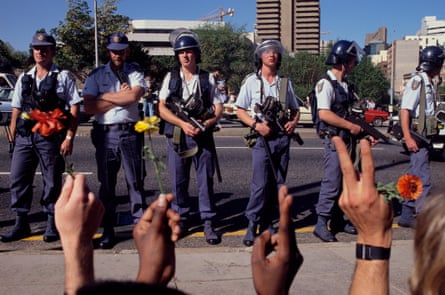
A row of white police officers wearing helmets and carrying automatic weapons faces what we see only as Black and brown hands raised holding flowers and showing the peace sign.
Riot police threaten anti-apartheid student protesters in Johannesburg, South Africa, on 20 August 1989. Photograph: Louise Gubb/Corbis/Getty Images

It’s late

In July 2009, a few months after my original BDS article was published, I traveled to Gaza and the West Bank. In Ramallah, I gave a lecture on my decision to support BDS. It included an apology for failing to add my voice sooner, which I confessed had come from a place of fear – fear that the tactic was too extreme when directed at a state forged in Jewish trauma; fear that I would be accused of betraying my people. Fears that I still have.

“Better late than never,” a kind audience member said to me after the talk.

It was late then; it’s later still now. But it’s not too late. Not too late for all of us to create our own foreign policy from below, one that intervenes in the culture and economy in intelligent and strategic ways – ways that offer tangible hope that Israel’s decades of unchecked impunity will finally come to an end.

As the BDS national committee asked last week: “If not now, when? The South African anti-apartheid movement organized for decades to gain broad international support leading up to the fall of apartheid; and apartheid did fall. Freedom is inevitable. The time is now to take action to join the movement for freedom, justice and equality in Palestine.”

Enough. It’s time for a boycott.

Israeli Settlers Have Found a New Way to Abuse Palestinian Shepherds: Bankrupting Them

This week police impounded 700 sheep, claiming they had passed through a forbidden zone. To retrieve the animals the shepherds paid 150,000 shekels to the settlers’ regional council

פותחת

Sheep being freed this week after their owners, shepherds in the Jordan Valley, were forced to pay an exorbitant sum. It’s the latest settler method to embitter Palestinian lives.

Gideon LevyAlex Levac

Jan 27, 2024

2:21 am IST

Seven-hundred sheep are scampering to freedom. A few pause to gobble weeds, some are actually limping. The dash for freedom evokes the galloping of antelopes in Africa when they ford rivers. Equal measures of unbounded joy and great turmoil. The sheep have just been liberated from the pen that was built specially to hold them after they were impounded by Israel’s security forces. The animals were ambushed when they passed through what has been declared a forbidden zone. Their owners, Palestinian shepherds who reside on the other side of the highway, had to pay the inconceivable, draconian sum of 150,000 shekels (almost $40,000) in cash to the Jordan Valley Regional Council, run by the settlers, in order to get the animals back.

For hours, Border Police troops kept watch over the sheep and the shepherds, until representatives of the latter were able to round up the ransom. It’s not the first time that such gargantuan fines have been levied on Palestinian shepherds here. No such fines, it’s safe to assume, have ever been levied on settlers who own flocks.

This new measure – disproportional punishment aimed at bankrupting the shepherds – fits well with the other methods that have been wielded lately against the pastoral communities in the northern Jordan Valley, with the aim of making their lives miserable and ultimately cleansing the region of their presence. Settler violence, arrests, fences, land expropriations, home demolitions, prevention of pasturing of animals, and all the other means have now been supplemented by this new method. We’ll leave them penniless and maybe then they will leave their lands. The money, it goes without saying, goes straight into the settlers’ coffers, with police backing.

Early in the morning of Monday of this week, Aiman Ada’is and some of his brothers headed out to pasture with the family’s sheep. That’s the custom in this season, when the Jordan Valley is spectacularly carpeted in vivid green. The extended family’s home – a collection of huts, tin shacks, tents and animal pens, lacking electricity or running water – lies opposite the settlement of Masua in the northern part of the valley. The Ha’oved Hatzioni (Zionist Worker) movement established this settlement in 1974, after it had been an outpost of the Nahal brigade of the Israel Defense Forces, and named it for the ancient Jewish custom of lighting torches (masu’ot) on nearby Mount Sartava.

Shepherds and Border Police near the Masua settlement. The money goes straight into the settlers' coffers, with police backing.

Since then, the shepherd community across from the settlement has been fighting to cling to the land it still has, whatever hasn’t already been seized from it by force. Since the formation of the present government, a little over a year ago, the shepherds’ living conditions have worsened, and since the war began, things have only been more difficult. The violent settlers have donned uniforms to serve in the local emergency squads and as volunteers in the police force, and their behavior has become even more tyrannical. But what happened on Monday this week tops everything.

At around 8:30 A.M., the shepherds passed through the rocky land south of Masua on their way to the grazing lands in the mountains, west of the Jordan Valley highway. A Border Police force, which was already waiting for them, ordered them to stop and escorted the large flock of some 700 sheep to a pen erected by the regional council that morning. The animals were herded into the crowded pen, the shepherds were ordered to retreat eastward a few hundred meters to the edge of the highway, and the festivities began. The shepherds’ families arrived, along with a Palestinian television crew. The latter weren’t allowed to approach the sheep – they had to stand on a distant mound to film them. We too were not permitted to get close to the sheep. The animal pen was now a closed military zone.

The penalty was clear-cut and painful: immediate payment of 150,000 shekels to the regional council, or the sheep would be taken to an unknown destination in the two large trucks that had been brought to the site earlier. The shepherds were fearful for the fate of their sheep. Some of them had left lambs behind at home, waiting for their mothers, and as it was, the sheep were left without water and food for hours, pressed up against each other and probably frightened. The shepherds were no less frightened. The Border Police had arrived in at least five large vehicles, together with a number of local settlers in uniforms who strutted around with the usual lordliness. War or no war in Gaza, here the sheep shall not pass without a proper Zionist response.

The summonses were issued quickly: two demands for payment to the Jordan Valley council, each to the tune of 75,000 shekels, to be paid by Ada’is Shehadeh and Ada’is A’id, the shepherd brothers. “Details of the charge: capture and transporting of animals. Capture of 150 sheep [although the shepherds claim 700]. After Jan. 22, 2024, an additional sum will be added for moving, guarding, feeding. Executed by Roman Pasternak. To be paid by Jan. 22, 2024.”

Cows on the Darajma brother's farm in Ein Hilwa. During the past year they lost 200 head of cattle, they relate.

Not a word about the reason for the seizure of the sheep, if there actually was one, or about the dubious legality of the action. Members of the community knew that if they did not pay the fine immediately, the future of their sheep would be at stake and the amount of the fine would only rise. A crowdfunding operation was immediately launched among the pastoralist communities in the area, and within a few hours, a large black envelope was brought to the site containing 150,000 shekels in cash. But the Jordan Valley Regional Council, headed by David Alhayani, declined to accept a payment of that size in cash.

Time was beginning to run out. Some of the shepherds spread prayer mats on the ground and began to recite prayers. Despair was written on everyone’s face. Volunteers from the Israeli organization Looking the Occupation in the Eye were at the site, among them Rachel Abramovich – wife of the veteran television news commentator Amnon Abramovich – who with the other women in the group is doing inspiring work on behalf of the shepherds. Another arrival was Rabbi Arik Ascherman, from the Torah of Justice organization, who is active here with infinite dedication on behalf of the shepherds’ rights – and he came up with a solution. The NGO would pay the fine with a check and the shepherds would reimburse it with the cash.

After the passage of quite some time, in which phone calls were made and bank transfers executed, the matter was settled. When 150,000 shekels entered the account of the regional council, the Border Police allowed the shepherds to reclaim the sheep. The pen was opened, the sheep stampeded toward freedom. “We are here to separate the sides,” one of the police officers said, without explaining which two sides he meant. “We are the Border Police.”

The Israel Police did not respond to a request for comment from Haaretz.

A few dozen kilometers to the north, close to the Green Line and Beit She’an, is the pastoral community of Ein Hilwa. Alongside each of the concrete slabs that the IDF installed a few years ago at the entrance to it and every other every shepherd community throughout the entire Jordan Valley, bearing the message, “Firing zone, entry prohibited,” someone has also recently stuck Israeli flags in the ground. The lands of these communities were long since annexed to Israel in the eyes of these settlers, who don’t like to be called settlers – some of them are, after all, good kibbutzniks and moshavniks, people of the Labor movement.

Palestinian shepherds near Masua.

The brothers Adel and Kadri Darajma, aged 61 and 57, respectively, live at Ein Hilwa together with their families and their animals. During the past year they lost 200 head of cattle, they relate. Some were impounded, some were stolen, some were killed by settlers. Outside their tents a few cows are grazing – the boniest, thinnest cows I have ever seen, other than in film clips about drought in Africa. As cows are impounded every time they take them out for grazing, the owners are fearful of leaving their compound, and the cattle are dying of hunger. In one case, the brothers relate, and Rabbi Ascherman joins them in the telling, cows were taken by a mysterious hand in the dead of night from the grazing areas and transported far away to land of the Hemdat settlement, where they were impounded by regional council inspectors as strays.

Here, too, the cattlemen were forced to make huge payments to the regional council to redeem their livestock. On January 1, they paid 49,000 shekels, and on January 15, another 143,910 shekels as payment for the “capturing and transporting of cattle.” Attorney Michael Sfard, who represents Hilwa, last week sent a sharply worded letter to council head Alhayani, asserting that the council’s acts of seizing the cattle were illegal, were executed without even minimal explanation, stem from a policy of grave discrimination toward the Palestinian herders who have lived in the area for generations, are accompanied by extraneous considerations that are intended to displace the communities from the region, and are part of systematic and deliberate harassment on the part of the local council and other governmental authorities.

If the money and the animals are not returned immediately, Sfard is threatening, he will instigate legal proceedings against the regional council. Sfard too relates that in at least the case mentioned above, the cows were stolen by settlers and taken to other areas, where they were seized by inspectors from the regional council as strays. In another case, a trap was laid for the Palestinian herders, Sfard says. A settler called them the evening before and told them that their animals could graze in a certain area the next day. When the herders arrived there the next day, inspectors were waiting for them there and seized the cattle.

Council head Alhayani made do this week with a curt response to Haaretz’s query: “The inspectors operated according to the council’s bylaws.” To the question of what justified the draconian punishment, Alhayani didn’t bother to reply.

source

Anti-Zionism as Decolonisation

Leila Shomali and Lara Kilani

15-12-2023

As horrifying scenes from Gaza have been recorded, published, and replayed around the world, people have been jolted into action and have thrown themselves into solidarity work. This surge of activism is fuelled by visceral reactions to the harrowing realities of Israel’s ongoing genocide unfolding on the global stage. People are realising, by the thousands, that zionism is a political program of indigenous erasure and primitive resource accumulation. 

Many new activists and reactivated organisers seek to translate their emotional responses into tangible support. They are also searching for community hubs, often in the form of organisations, that confront zionism and colonialism – the root cause of this genocide. Whether activists know it or not, they are looking for an anti-zionist home for their organising efforts. It is exactly the moment, therefore, to provide an honest discussion on some of the essential characteristics of this organising, firmly rooted in the principles of Palestinian liberation and decolonisation, peeling away any remaining layers of confusion or mystery. This essay aims to open the overdue conversation with some suggestions for individuals to consider as they search for their anti-zionist organising home. 

If we accept, as those with even the most rudimentary understanding of history do, that zionism is an ongoing process of settler-colonialism, then the undoing of zionism requires anti-zionism, which should be understood as a process of decolonisation. Anti-zionism as a decolonial ideology then becomes rightly situated as an indigenous liberation movement. The resulting implication is two-fold. First, decolonial organising requires that we extract ourselves from the limitations of existing structures of power and knowledge and imagine a new, just world. Second, this understanding clarifies that the caretakers of anti-zionist thought are indigenous communities resisting colonial erasure, and it is from this analysis that the strategies, modes, and goals of decolonial praxis should flow. In simpler terms: Palestinians committed to decolonisation, not Western-based NGOs, are the primary authors of anti-zionist thought. We write this as a Palestinian and a Palestinian-American who live and work in Palestine, and have seen the impact of so-called ‘Western values’ and how the centring of the ‘human rights’ paradigm disrupts real decolonial efforts in Palestine and abroad. This is carried out in favour of maintaining the status quo and gaining proximity to power, using our slogans emptied of Palestinian historical analysis. 

Anti-zionist organising is not a new notion, but until now the use of the term in organising circles has been mired with misunderstandings, vague definitions, or minimised outright. Some have incorrectly described anti-zionism as amounting to activities or thought limited to critiques of the present Israeli government – this is a dangerous misrepresentation. Understanding anti-zionism as decolonisation requires the articulation of a political movement with material, articulated goals: the restitution of ancestral territories and upholding the inviolable principle of indigenous repatriation and through the right of return, coupled with the deconstruction of zionist structures and the reconstitution of governing frameworks that are conceived, directed, and implemented by Palestinians. 

Anti-zionism illuminates the necessity to return power to the indigenous community and the need for frameworks of justice and accountability for the settler communities that have waged a bloody, unrelenting hundred-year war on the people of Palestine. It means that anti-zionism is much more than a slogan. 

A liberation movement

Given the implications of defining anti-zionism, we must reorient ourselves around it within the framework of a liberation movement. This emphasises the strategic importance of control over the narrative and principles of anti-zionism in the context of global decolonial efforts. As Steven Salaita points out in ‘Hamas is a Figment of Your Imagination’, zionism and liberal zionism continue to influence the shape of Palestinian resistance: 

Zionists [have] a type of rhetorical control in the public sphere: they get to determine the culture of the native; they get to prescribe (and proscribe) the contours of resistance; they get to adjudicate the work of national liberation. Palestinians are entrapped by the crude and self-serving imagination of the oppressor.

We have to wrestle back our right to narration, and can use anti-zionist thought as a guide for liberation. We must reclaim anti-zionist praxis from those who would only use it as a headline in a fundraising email. 

While our collective imaginations have not fully articulated what a liberated and decolonised Palestine looks like, the rough contours have been laid out repeatedly. Ask any Palestinian refugee displaced from Haifa, the lands of Sheikh Muwannis, or Deir Yassin – they will tell that a decolonised Palestine is, at a minimum, the right of Palestinians’ return to an autonomous political unit from the river to the sea.

When self-proclaimed ‘anti-zionists’ use rhetoric like ‘Israel-Palestine’ – or worse, ‘Palestine-Israel’ – we wonder: where do you think ‘Israel’ exists? On which land does it lay, if not Palestine? This is nothing more than an attempt to legitimise a colonial state; the name you are looking for is Palestine – no hyphen required. At a minimum, anti-zionist formations should cut out language that forces upon Palestinians and non-Palestinian allies the violence of colonial theft. 

The settler/native relationship 

Understanding the settler/native relationship is essential in anti-zionist organising. It means confronting the ‘settler’ designation in zionist settler-colonialism – a class status indicating one’s place in the larger settler-colonial systems of power. Anti-zionist discourse should critically challenge the zionist (re)framing of history through colonial instruments, such as the Oslo Accords and an over-reliance on international law frameworks, through which they differentiate Israeli settlers in Tel Aviv and those in West Bank settlements.

Suggesting that some Israeli cities are settlements while others are not perpetuates zionist framing, granting legitimacy to colonial control according to arbitrary geographical divisions in Palestine, and further dividing the land into disparate zones. Anti-zionist analysis understands that ‘settlers’ are not only residents of ‘illegal’ West Bank settlements like Kiryat Arba and Efrat, but also those in Safad and Petah Tikvah. Ask any Palestinian who is living in exile from Haifa; they will tell you the Israelis living in their homes are also settlers.

The common choice to centre the Oslo Accords, international humanitarian law, and the human rights paradigm over socio-historical Palestinian realities not only limits our analysis and political interventions; it restricts our imagination of what kind of future Palestinians deserve, sidelining questions of decolonization to convince us that it is the new, bad settlers in the West Bank who are the source of violence. Legitimate settlers, who reside within the bounds of Palestinian geographies stolen in 1948 like Tel Aviv and West Jerusalem, are different within this narrative. Like Breaking the Silence, they can be enlightened by learning the error of colonial violence carried out in service of the bad settlers. They can supposedly even be our solidarity partners – all without having to sacrifice a crumb of colonial privilege or denounce pre-1967 zionist violence in any of its cruel manifestations.

As a result of this course of thought, solidarity organisations often showcase particular Israelis – those who renounce state violence in service of the bad settlers and their ongoing colonisation of the West Bank – in roles as professionals and peacemakers, positioning them on an equal intellectual, moral, or class footing with Palestinians. There is no recognition of the inherent imbalance of power between these Israelis and the Palestinians they purport to be in solidarity with – stripping away their settler status. The settler is taken out of the historical-political context which afforded them privileged status on stolen land, and is given the power to delineate the Palestinian experience. This is part of the historical occlusion of the zionist narrative, overlooking the context of settler-colonialism to read the settler as an individual, and omitting their class status as a settler. 

Misreading ‘decolonisation’

It is essential to note that Palestinians have never rejected Jewish indigeneity in Palestine. However, the liberation movement has differentiated between zionist settlers and Jewish natives. Palestinians have established a clear and rational framework for this distinction, like in the Thawabet, the National Charter of Palestine from 1968. Article 6 states, ‘The Jews who had normally resided in Palestine until the beginning of the Zionist invasion will be considered Palestinians.’

When individuals misread ‘decolonisation’ as ‘the mass killing or expulsion of Jews,’ it is often a reflection of their own entanglement in colonialism or a result of zionist propaganda. Perpetuating this rhetoric is a deliberate misinterpretation of Palestinian thought, which has maintained this position over a century of indigenous organising. 

Even after 100 years of enduring ethnic cleansing, whole communities bombed and entire family lines erased, Palestinians have never, as a collective, called for the mass killing of Jews or Israelis. Anti-zionism cannot shy away from employing the historical-political definitions of ‘settler’ and ‘indigenous’ in their discourse to confront ahistorical readings of Palestinian decolonial thought and zionist propaganda. 

The zionist version of ‘all lives matter’ 

As we see, settler-colonialism secures the position of the settler, imbuing them with rights, in this case, a divine right of conquest. As such, zionism ensures that settlers’ rights supersede those of indigenous people at the latter’s expense. Knowing this, the liberal slogan ‘equal rights for all people’ requires deeper consideration. Rather than placing the emphasis on the deconstruction of the settler state and the violence inherent to it, which eternally serves the settler to the direct detriment of indigenous communities, the slogan suggests that Palestinians simply need to secure more rights within the violent system. But ‘equal rights’, in the sense that those chanting this phrase mean them, will not come from attempts to rehabilitate a settler state. They can only be ensured through the decolonization of Palestine, through the material restitution of land and resources. Without further discussion, the slogan simply serves as another mechanism of zionism, one that maintains the rights of the settler rather than emphasising the need to restore rights to indigenous communities, who have long been the victims of settlers’ rights.

Anti-zionists cannot both denounce settler-colonialism and zionism, and centre advocacy on the claim that settlers should have equal, immutable rights. Zionists would have you believe that their state has always existed, that Israelis have always lived on the land. But a brief reference to recent history reminds us that anti-zionism must confront the ongoing mechanisms materially advancing the development of colonies in Palestine.  

In 2022 alone, zionist institutions invested almost $100 million, transferring some 60,000 new settlers from Russia, Eastern Europe, the United States, and France to help secure a demographic majority and ensure a physical presence on indigenous lands. This only happens by maintaining the forced displacement of Palestinians, and by violently displacing them anew as we see on a daily basis, particularly across the rural West Bank. 

There is no moral legitimacy in the suggestion that these settlers have a ‘right’ to live on stolen Palestinian land, the theft maintained by force, as long as there has been no restoration of Palestinians’ rights. No theories of justice exist in mainstream ethical or philosophical discourse that advocate for a person who has stolen something to rightfully keep what they have taken. The act of theft, by definition, violates the basic principles of theories of justice, which emphasise fairness, equitable distribution of resources, and respect for individual rights and property.

Reminding people that decolonisation is not a metaphor, some activists with Israeli citizenship, including Nadav Gazit and Yuula Benivolsky, have taken the initiative to tangibly support Palestinian liberation and renounced their claim to settler citizenship. When liberal NGOs champion ‘equal rights for all people’ with no further discussion of what this means, it is the zionist version of ‘all lives matter’, perpetuating – or at best, failing to question – the maintenance of systems of violence against Palestinians. 

Having laid out some of the foundational concepts and definitions pertaining to zionism and anti-zionism, we can explore some essential strategies and tactics of anti-zionist organising. 

Structural changes to support liberation

As anti-zionism necessitates the systematic dismantling of zionist structures, this process may include educational programs and protests, which serve as foundational activities. However, it is essential to be cautious of organising spaces and activities that become comfort zones for activists, lacking the necessary risk and meaningful challenges to existing structures of zionist violence. Anti-zionist organising must involve strategic policy and legal reform that support decolonisation from afar, such as targeting laws that enable international charities to fund Israeli settler militias and settlement expansion. After all, our aim from abroad should be to make structural changes to advance decolonisation, not simply shift public sentiment about Palestine.

Decolonial approaches abroad include changing the internal structures of institutions that support colonisation: charities, churches, synagogues, social clubs, and other donor institutions. This includes entities that many international activists are personally, professionally, and financially linked to, such as the nonprofits we coordinate with and large granting institutions like the Open Society Foundation and Carnegie Corporation of New York.

In the context of the United States, the most threatening zionist institutions are the entrenched political parties which function to maintain the status quo of the American empire, not Hillel groups on university campuses or even Christian zionist churches. While the Anti-Defamation League (ADL) and the American Israel Public Affairs Committee (AIPAC) engage in forms of violence that suppress Palestinian liberation and must not be minimised, it is crucial to recognise that the most consequential institutions in the context of settler-colonialism are not exclusively Jewish in their orientation or representation: the Republican and Democratic Party in the United States do arguably more to manufacture public consent for the slaughtering of Palestinians than the ADL and AIPAC combined. Even the Progressive Caucus and the majority of ‘The Squad’ are guilty of this. 

These internal challenges to the institutions and communities we belong to are, by definition, risky and sacrificial – but essential and liberatory. They require confrontation, and likely the withholding of support and material resources, in order to usher in change. As we have seen over the last months, merely organising protests to pressure politicians without the explicit intent to withdraw electoral and financial support from political parties and institutions is fundamentally flawed. It also does not secure the desired result: on November 28, 2023, in the midst of Israel’s genocide of the Palestinians in Gaza, members of the US House of Representatives voted 421 to 1 (with the 1 unaligned to any decolonisation movement) to support a bill that equates anti-zionism to antisemitism. Members of ‘The Squad’ who did not vote for the bill did not vote against it.

Politicians, organisational leaders, and funding institutions must see the real political consequences of their decisions to support genocide. Reluctance within the executive leadership of international solidarity organisations to hold elected officials accountable is a red flag, as we cannot balance our loyalties between liberation and temporary political convenience. Anti-zionism requires more than political organising that is targeted at those intentionally maintaining white supremacy through zionism; it requires that we wager our access to power to dismantle mechanisms of oppression. We must stop betting on the longevity of zionism.

When we properly decouple zionism from Judaism and understand it as a process of indigenous erasure and primitive resource accumulation, the dominant political formations, the armaments industry, and the high-tech security sector are easily understood as indispensable institutions in the broader zionist project. These bodies also materially benefit from the status quo of zionist colonisation, and therefore wield their power to maintain it. This is part of a larger function of these formations to uphold white supremacy, imperialism, and colonialism globally – systems that harm all communities, albeit unequally. This helps us recognise that zionism does not serve to benefit Jewish people, even if this is not the primary reason we should abolish it. Equating global Jewish communities’ safety and prosperity with the safeguarding of colonial violence is an antisemitic and fallacious argument. It contends that in order to thrive, Jewish communities must displace, dominate, incarcerate, oppress, and murder Palestinians.

This relates to the earlier discussion of understanding Palestinians as the authors and caretakers of anti-zionist decolonial thought. We must be cautious not to portray anti-zionism as belonging in any exclusive way to Jewish activists, or requiring Jewish organisations’ initiative. Characterising anti-zionism as a practice necessarily spearheaded by Jewish activists, rather than acknowledging it as a decolonial praxis aimed at deconstructing the institutions maintaining the colonisation of Palestine, displaces Palestinian decolonial leadership. By placing undue emphasis on the role of Jewish organisations, we de-centre Palestinian knowledge, experience, and decolonial efforts in favour of non-Palestinian agencies. This is a grave error. Such a conflation not only misrepresents the objectives of anti-zionism but also inadvertently contributes to the continuation of antisemitic sentiments by equating Judaism and colonialism. 

Bold solidarity 

In summary, anti-zionism is not a slogan, but a process of decolonisation and liberation. Palestinians committed to resisting zionism and erasure are the caretakers of this political movement. Cities such as Tel Aviv and Modi’in are settlements, just like Itamar or Tel Rumeida in the West Bank. Decolonisation does not imply the displacement of all Jewish communities in Palestine; however, it is crucial to recognise that not every individual identifying as Jewish is indigenous to Palestine. This basic framework must be unabashedly articulated by anti-zionist organisations and allies in their advocacy. Anti-zionist organising should move towards dismantling the colonial structures through the changing of laws and policies of the institutions and formations most essential to the Israeli state project. 

This essay is not an exhaustive manual; instead, it begins a much-needed conversation and presents central principles of anti-zionist praxis. These principles are non-negotiable and represent some of the markers of anti-zionist organising. These anti-zionist indicators should not be sprinkled about through emails or social media posts that one has to dig for, but should be glaringly evident in our work and analysis.

An organisation’s commitment to solidarity and conceptualisation of resistance should be transparent. Its ideals should be clear to potential newcomers as well as its donors. We have seen, too many times, organisations intentionally obfuscate what they stand for so they relate to a broad mass of people while at the same time being palatable to liberal donors. They use vague language about the future they envision, describing ‘equality, justice, and a thriving future for all Palestinians and Israelis’ without a thoughtful discussion of what Palestinians will need to reach this prosperity. The dual discourse phenomenon, where contradictory messages are conveyed to grassroots supporters and financial donors, is a manipulative tactic for institutional or personal gain. It should be clear from the onset that a group’s efforts have one ultimate goal: from the river to the sea, Palestine will be free. Anti-zionism and solidarity should be bold. Palestinians deserve nothing less. 

Acknowledgements: We would like to thank Em Cohen and Omar Zahzah for their meticulous editing and thoughtful suggestions.

Leila Shomali is a Palestinian PhD candidate in International Law at Maynooth University Ireland and a member of the Good Shepherd Collective.

Lara Kilani is a Palestinian-American researcher, PhD student, and member of the Good Shepherd Collective.

Misreading Palestine

Misreading Palestine

Max Ajl

‘An unyielding will to continue’: An Interview with Abdaljawad Omar on October 7th and the Palestinian Resistance

‘An unyielding will to continue’: An Interview with Abdaljawad Omar on October 7th and the Palestinian Resistance

Abdaljawad Omar and Louis Allday

Ebb Publishing |
Oxford, United Kingdom

Words without Action

The West’s Role in Israel’s Illegal Settlement Expansion
By: Ramzy Baroud    
The international uproar in response to Israel’s approval of a massive expansion of its illegal settlement enterprise in the occupied Palestinian West Bank may give the impression that such a reaction could, in theory, force Israel to abandon its plans.

Alas, it will not, because the statements of ‘concern,’ ‘regrets’, ‘disappointment’ and even outright condemnation are rarely followed by meaningful action.True, the international community has a political, and even legal, frame of reference regarding its position on the Israeli occupation of Palestine.

Unfortunately, however, it has no genuine political mandate, or the inclination to act individually or collectively, to bring this occupation to an end.This is precisely why the announcement on October 27 by Israel that it has given a ‘final approval’ for the building of 1,800 housing units and initial approval for another 1,344 will unlikely be reversed anytime soon.

One ought to keep in mind that this decision came only two days after an earlier announcement that the Israeli government had advanced construction tenders for 1,355 housing units in the occupied West Bank.Israel has rarely, if ever, reversed such decisions since its establishment on the ruins of historic Palestine.

Moreover, since Israel’s occupation of Palestinian East Jerusalem, the West Bank and Gaza in 1967, Israel’s colonial project has remained in constant and unhindered expansion. 54 years should have been enough for the international community to realize that Israel has no intentions whatsoever to end its military occupation on its own accord, to respect international law and to cease construction of its illegal settlements.

Yet, despite this obvious fact, the international community continues to issue statements, moderate in their language, at times, even angry at others, but without ever taking a single action to punish Israel.A quick examination of the US government’s reaction to the news of settlement expansion tells of the lack of seriousness from Washington towards Israel’s continued disregard of international law, peace and security in the Middle East.“We strongly oppose the expansion of settlements,” said US State Department spokesman, Ned Price, adding that the Israeli decision is “completely inconsistent with efforts to lower tension and ensure calm.”Since when was Israel concerned about ‘lowering tensions’ and ‘ensuring calm’?

If these were truly important US demands and expectations, why then, does the US keep funneling billions of dollars a year in military aid to Israel, knowing fully that such armaments will be used to sustain the illegal Israeli occupation of Palestine and other Arab lands?


If, for the sake of argument, we assume that Washington is finally shifting its policies on Israel and Palestine, how does it intend to pressure Israel to cease settlement construction? Mr. Price has the answer: The Biden Administration would “raise our views on this issue directly with senior Israeli officials in our private discussions”, he said on October 26. “Raise our views”, as opposed to demanding accountability, threatening retaliation, or, God forbid, withholding funds.While it is true that the US government is Israel’s main western benefactor, Washington is not the only hypocritical administration in this regard. The Europeans are not fundamentally different, despite the fact that their statements might be a tad stronger in terms of language.“Settlements are illegal under international law and constitute a major obstacle to the achievement of the two-state solution and a just, lasting and comprehensive peace between the parties,” read a statement issued by the office of EU foreign policy chief, Josep Borrell, on October 29.

The statement mirrors the exact sentiments and language of numerous statements issued in the past, ones that “strongly reject” the Israeli action, and “urge” the Israeli government to “revoke” its recent decisions for the sake of “sustainable peace”, and so on. One may even muse to claim that the task of preparing these statements must be the easiest of all clerical work at the EU offices, as it is largely a matter of a simple ‘cut and paste’.

Yet, again, when it comes to action, Brussels, like Washington, refrains from taking any. Worse, these entities often bankroll the very action they protest, while insisting that they are standing at the exact same distance between Israelis and Palestinians, assigning themselves such roles as “honest peace brokers”, “peace mediators” and the like.One should not be in the least surprised by Israel’s recent announcement.

In fact, we should expect more settlement expansion and even the construction of new settlements, because that is what colonial Israel does best.Within a matter of a few days, Israel has announced its intentions to build, or start bids for, nearly 4,500 settlement units. Compare this number with the settlement expansion during Donald Trump’s term in office. “Israel promoted plans for more than 30,000 settler homes in the West Bank during the four years (Trump) was in power,” the BBC reported, citing an Israeli group, Peace Now, as saying in its recent findings.

Those figures in mind, if the Israeli government under Naftali Bennett continues with this hurried pace of illegal housing construction, it could potentially match – and even overtake – the expansion that took place during the terrible years of the Trump era. With no accountability, this catastrophic political paradigm will remain in place, irrespective of who rules Israel and who resides in the White House.Israel is doing what any colonial power does.

It expands at the expense of the native population. The onus is not on colonial powers to behave themselves, but on the rest of the world to hold them accountable. This was true in the case of the South African Apartheid and numerous other examples throughout the Global South. It is equally true in the case of Israeli Apartheid in Palestine.The truth is that a thousand or a million more statements by western governments will not end the Israeli occupation, or even slow down the pace of Israeli military bulldozers as they uproot Palestinian trees, destroy homes and construct yet more illegal colonies. If words are not backed by action – which is very much possible, considering the massive military, political and economic leverage the West wields over Israel – then the West remains a party in this conflict, not as a ‘peace broker’, but as a direct supporter of the Israeli occupation and apartheid.
* Ramzy Baroud is an author and editor of Palestine Chronicle. His latest book is The Second Palestinian Intifada: A Chronicle of a People’s Struggle (Pluto Press, London). – ramzybaroud@gmail.com
source : http://www.amin.org/articles.php?t=ENews&id=5921

July in Damascus

July 2004

There, Damascus blossoms in a terrible heat and a no less important influx of people from the Gulf. At certain hours, it becomes difficult to find a free cab. Among these rich tourists, some are quite arrogant: in the old city, I saw one whose large frame, swollen with pride and wallet, occupied the width of the alley.

I continue to study

In the morning, the newspaper for an hour with R., and texts in the afternoon with my teacher. As it is the vacations I give up grammar until the beginning of the school year.

There are invitations given or received
A meal in the ghota with Magida and the children
 
Evening walks in the old Damascus
Meeting a beloved face
 
This beautiful French T-shirt worn by a Syrian
 
This young man on a terrace writing his diary or even a book
 
The foul (beans) eaten at Bouz El Djedi in Chalan
There is also the fresh fruit juice drunk at Abou Shaker’s in Salihya where people crowd in the evening.

I took this picture especially for you last nightand this made me be hailed by a suspicious young man:

why are you taking this picture? he asks me. I explain to him internet and so on. But why this juice stand? he insists.

I answer that I am trying to give an idea of what Damascus is like in July; besides, Abu Shaker is quite famous here.

And you don’t have that at home? No. And you wouldn’t photograph a frittekot? I should have retorted.

Let’s move on to a sinister encounter, probably a member of some jihad

Don’t worry, it’s my

In summer, it is difficult to get an appointment with him because he is overwhelmed with work. From all over the world people are flocking to have their pianos professionally restored for a price that will allow them to make up for the trip plus everything else (buying a car, he says, but I think he’s putting it off a bit; still… I remember the American prices and they were very expensive indeed).

I’m also trying to catch up on my “posts” as there are a plethora of photos in my archives. Expect to be overwhelmed with chapters.

I have started to lose a few pounds, because although I still wear galabyas at home or at our place, I don’t know anymore, I would like to put on my European clothes from time to time that I don’t fit into anymore.

I think of my return to Belgium, of the reunion with my dishwasher (a year of washing dishes by hand!), with my vast apartment, with the people I love and miss (more than my dishwasher), with Pascal and Dominique, my hosts.

However, in cha Allah, I’m coming back in September to join the Mahad (the school).

Maybe I’ll go to Yemen before school starts. Reading Travels with a Tangerine by Tim Mackintosh made me want to, as he seems to like it there. In this book, he follows in the footsteps of the great Arab traveler Ibn Battutah.

I am green with envy when he tells me that he picks up Ibn Battutah’s travels from a shelf in the bookstore and is immediately captivated by his story, but he reads in Arabic! I am still struggling to decipher – with a lot of help – stories for children! I calm down when I learn that he has been living in Yemen for 17 years (that was 2 or 3 years ago)! Something to look forward to.

Blog at WordPress.com.

Up ↑