Search

band annie's Weblog

I have a parallel blog in French at http://anniebannie.net

Category

Turkey

Turkish PM announces boycott of Athens Conference if Netanyahu attends

Tuesday, 19 October 2010 12:25
E-mail Print


Turkey's Prime Minister has announced that he will not attend the climate conference in Athens next Friday if his Israeli counterpart Benjamin Netanyahu takes part.Israeli-Turkish relations have deteriorated drastically since Operation Cast Lead

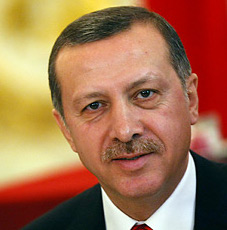
Turkey’s Prime Minister has announced that he will not attend the climate conference in Athens next Friday if his Israeli counterpart Benjamin Netanyahu takes part. In an interview with Greek television on Monday evening, Recep Tayyip Erdogan also stated that Israel was on the brink of losing a very important ally in the region, namely Turkey.

Israeli-Turkish relations have deteriorated drastically since Operation Cast Lead in December 2008 and January 2009 and the subsequent Israeli attack on the Marvi Marmara as it attempted to sail to Gaza and break the Israeli siege. During the deadly assault, nine unarmed Turkish humanitarian activists were killed by Israeli commandos. source


The details of those killed on the Mavi Marmara

Sep 27, 2010 11:01 pm | Adam Horowitz

The following appears on pages 30 and 31 of the UN report into the Israeli attack on the Gaza Freedom Flotilla:

Furkan Dogan, a nineteen-year old with dual Turkish and United States citizenship, was on the central area of the top deck filming with a small video camera when he was first hit with live fire. It appears that he was lying on the deck in a conscious, or semi-conscious, state for some time. In total Furkan received five bullet wounds, to the face, head, back thorax, left leg and foot. All of the entry wounds were on the back of his body, except for the face wound which entered to the right of his nose. According to forensic analysis, tattooing around the wound in his face indicates that the shot was delivered at point blank range. Furthermore, the trajectory of the wound, from bottom to top, together with a vital abrasion to the left shoulder that could be consistent with the bullet exit point, is compatible with the shot being received while he was lying on the ground on his back. The other wounds were not the result of firing in contact, near contact or close range, but it is not otherwise possible to determine the exact firing range. The wounds to the leg and foot were
most likely received in a standing position.

Ibrahim Bilgen, a 60 year old Turkish citizen, from Siirt in Turkey, was on the top deck and was one of the first passengers to be shot. He received a bullet wound to the chest, the trajectory of which was from above and not at close range. He had a further two bullet wounds to the right side of the back and right buttock, both back to front. These wounds would not have caused instant death, but he would have bled to death within a short time without medical attention. Forensic evidence shows that he was shot in the side of the head with a soft baton round at such close proximity and that an entire bean bag and its wadding penetrated the skull and lodged in the brain. He had a further bruise on the right flank consistent with another beanbag wound. The wounds are consistent with the deceased initially being shot from soldiers on board the helicopter above and receiving a further wound to the head while lying on the ground, already wounded.

Fahri Yaldiz, a 42 year old Turkish citizen from Adiyaman, received five bullet wounds, one to the chest, one to the left leg and three to the right leg. The chest wound was caused by a bullet that entered near the left nipple and hit the heart and lungs before exiting from the shoulder. This injury would have caused rapid death.

According to the pathology report, Ali Heyder Bengi, a 38 year old Turkish citizen from Diyarbakir, received six bullet wounds (one in the chest, one in the abdomen, one in the right arm, one in the right thigh and two in the left hand). One bullet lodged in the chest area. None of the wounds would have been instantly fatal, but damage to the liver caused bleeding which would have been fatal if not stemmed. There are several witness accounts which suggest that Israeli soldiers shot the deceased in the back and chest at close range while he was lying on the deck as a consequence of initial bullet wounds.

Cevdet Kiliçlar, a 38 year old Turkish citizen from Istanbul, was on the Mavi Marmara, in his capacity as a photographer employed by IHH. At the moment he was shot he was standing on the bridge deck on the port side of the ship near to the door leading to the main stairwell and was attempting to photograph Israeli soldiers on the top deck. According to the pathology reports, he received a single bullet to his forehead between the eyes. The bullet followed a horizontal trajectory which crossed the middle of the brain from front to back. He would have died instantly.

41 year old Cengiz Akyüz from Hatay and 46 year old Cengiz Songür from Izmir, both Turkish citizens, were injured on the bridge deck in close succession by live fire from above. They had been sheltering and were shot as they attempted to move inside the door leading to the stairwell. Cengiz Akyüz received a shot to the head and it is probable that he died instantly.

The pathology report shows four wounds: to the neck, face, chest and thigh. Cengiz Songür received a single bullet to the upper central thorax below the neck, shot from a high angle, which lodged in the right thoracic cavity injuring the heart and aorta. Unsuccessful efforts were made by doctors inside the ship to resuscitate him through heart massage.

Çetin Topçuoglu, a 54 year old Turkish citizen from Adana had been involved in helping to bring injured passengers inside the ship to be treated. He was also shot close to the door on the bridge deck. He did not die instantly and his wife, who was also on board the ship, was with him when he died. He was shot by three bullets. One bullet entered from the top the soft tissues of the right side of the back of the head, exited from the neck and then re-entered into the thorax. Another bullet entered the left buttock and lodged in the right pelvis. The third entered the right groin and exited from the lower back. There are indications that the victim may have been in a crouching or bending position when this wound was sustained.

The location and circumstances of the shooting and death of Necdet Yildirim, a 31 year old Turkish citizen from Istanbul, remain unclear. He was shot twice in the thorax, once from the front and once from the back. The trajectory of both bullets was from top to bottom. He also received bruises consistent with plastic bullet impact

“SYRIA’S IMPROVED RELATIONS WITH TURKEY IS THE CENTER-PIECE TO BASHAR ASSAD’S NEW FOREIGN POLICY”

SYRIA EXPERT JOSHUA M. LANDIS:

Joshua M. Landis, Director of the Center for Middle East Studies and Associate Professor of Middle Eastern Studies at the University of Oklahoma and writer of the a daily newsletter blog Syria Comment on Syrian politics answered ORSAM’s questions on Syrian foreign policy, regional politics, peace process and relations of Syria with Israel, Lebanon and Turkey.

ORSAM: To start with Syrian foreign policy in general, it is usually analyzed with neo-realist considerations, omnibalancing approach rests on regime survival concerns, historical sociology pays attention to the levels of state formation or political economy. What do you think are the main determinants of Syrian foreign policy?
Joshua M. Landis: All regimes and countries defend themselves. This is not shocking and shouldn’t be a revelation in explaining the behavior of Syria’s leadership.
For example, Tony Blair has revealed in his recently published memoirs that Vice President Cheney was deadly serious in his ambition to bring down the Syrian state following Washington’s successful destruction of the Iraqi state. It is in this light that we can understand Syria’s determination to assist the emergence of an Iraqi resistance that could frustrate Washington’s further designs of regime destruction in the region.

Love Boat or Hate Boat? An Interview with IHH

Love Boat or Hate Boat? An Interview with IHH from Cultures of Resistance on Vimeo.

July 16, 2010 By The Gaza Flotilla archive Leave a Comment
Slandering the Good Guys: Some Basic Facts About IHH

IARA LEE/CULTURES OF RESISTANCE—In the immediate aftermath of the massacre aboard the Mavi Marmara on May 31st, 2010, while journalists and activists were detained and isolated from the world, the Israeli government was quick to unleash their own version of events.

Like the physical assault on the boat, the Israeli media assault was also reckless, clumsy, malicious, and dangerous. They were cynical enough to understand that first impressions in the mainstream American media are what count, and with this in mind they began to frantically hurl the word “terrorist” in reference to both the victims of their attack, as well as one of the main organizers of the Gaza Freedom Flotilla, the Turkish NGO IHH.

It is a curious thing that few people asked the Israeli government why they would release “terrorists” that they had in their custody, and even fewer asked for (or received) solid evidence to support this claim. Despite the fact that several courageous journalists both in the US and abroad thoroughly debunked the Israeli account of what happened (this includes deliberately doctored footage along with the libelous accusations of links to terrorism), the damage was done.

Before speakers from the Mavi Marmara were scheduled to speak in New York about what happened on May 31st, local politicians began to put forth the rhetoric of their Israeli handlers, using slanderous language to demonize the victims of Israel’s illegal act of war. And most recently, 87 US senators have urged President Obama to launch an investigation of whether or not IHH should be added to the US list of foreign terrorist organizations.

I am a firm believer that actions speak louder than words, and in this spirit I thought it might help to take a closer look at IHH, and judge this group based on their actions, rather than empty words.

IHH began in 1992 as a humanitarian mission to offer relief to victims injured and displaced during the Bosnian war. They have held Special Consultative Status with the United Nations Economic and Social Council since 2004, and since becoming a fully-registered NGO in 1995, IHH — The Foundation for Human Rights and Freedoms and Humanitarian Relief — has accumulated more than 60,000 volunteers for their grassroots humanitarian efforts in 120 countries all over the world. Since May 31st, the number of volunteers has skyrocketed.

After the attack on the Mavi Marmara, I had an opportunity to ask the vice president of IHH, Huseyin Oruc, about accusations of IHH terror links. While he was not interested in dignifying such claims, he was very emphatic about the transparency of IHH’s work over the years, and hoped people would look at their large-scale sanitation and medical missions around the African continent — including 40,000 cataract surgeries in Sudan alone, clean water projects in Ethiopia- and IHH’s extensive work dealing with orphans in Iraq, Afghanistan, Pakistan, Bangladesh, and Gaza. While they are an Islamic organization, Oruc told me that IHH refuses to differentiate who receives attention based on religion, race, or political affiliation, and has noted their various projects in South America where Muslim populations are slight.

Their modus operandi is simple and direct. Given the neutrality of their humanitarian mission, IHH has been able to access some of the most inaccessible and dangerous regions of the world to help those most in need. Like most NGOs, this means they must coordinate with local governments in order to reach these populations. So while they must communicate with the Hamas government of Gaza to help civilians there, they must likewise do so with Fatah in the West Bank, Al Shabab in Somalia, the military junta in Myanmar and so on. Oruc was adamant that this did not mean IHH endorses any of those governments, and said that anyone who cared to investigate their work would find nothing other than great successes in helping ordinary people in situations of war, poverty, and natural disasters in places such as Haiti, Indonesia, and even the US in the aftermath of Hurricane Katrina. He also told me people were free to investigate their funding, most of which comes from lower and middle class donors, while the rest is raised through food fairs, auctions for Turkish artifacts, and other cultural events. By its own mandate, IHH is not beholden to any government or business interests.

We must remember that an attack on IHH is an attack on all humanitarian groups around the world. Given that IHH is among the most courageous humanitarian NGOs in the world — risking their lives to work in places like Somalia, cleaning up American messes in Iraq and Afghanistan — our politicians should perhaps be thanking them, rather than trying to tarnish their stellar reputation. Thankfully, IHH’s track record speaks for itself, as do the actions of their accusers — a comparison which does not calculate favorably for the Israeli government when asking just who, exactly, the terrorists are.

Press TV-News Analysis-Israel-Turkey Talks-07-03-2010

Turkey and the Neocons

Posted By Stephen M. Walt Tuesday, June 15, 2010 – 5:33 PM

It couldn’t be more predictable. Back when Israel and Turkey were strategic allies with extensive military-to-military ties, prominent neoconservatives were vocal defenders of the Turkish government and groups like the Anti-Defamation League (ADL) and AIPAC encouraged Congress not to pass resolutions that would have labeled what happened to the Armenians at the hands of the Turks during World War I a “genocide.” (The “Armenian lobby” is no slouch, but it’s no match for AIPAC and its allies in the Israel lobby). The fact that the ADL was in effect protecting another country against the charge of genocide is more than a little ironic, but who ever said that political organizations had to be ethically consistent? Once relations between Israel and Turkey began to fray, however — fueled primarily by Turkish anger over Israel’s treatment of the Palestinians — the ADL and AIPAC withdrew their protection and Congressional defenders of Israel began switching sides, too.

read on

Turkish Doctor Describes Treating Israeli Commandos During Raid

By ROBERT MACKEY AND SEBNEM ARSU

A photograph from the Flickr page of I.H.H. a Turkish aid organization which helped organize the flotilla of ships raided last week on its way to Gaza. According to Dr. Hasan Huseyin Uysal, a Turkish doctor, the image shows him treating a wounded Israeli commando who was taken prisoner during the raid.I.H.H./Flickr A photograph from the Flickr page of I.H.H., a Turkish aid organization that helped organize the flotilla of ships raided last week on its way to Gaza. Dr. Hasan Huseyin Uysal, a Turkish doctor, said the image was taken as he tended to an Israeli commando captured during the raid.

Updated | 2:53 p.m. In an interview with The New York Times, Dr. Hasan Huseyin Uysal, a Turkish doctor, said that he treated Israeli commandos who were captured and briefly detained during the initial stages of a raid on a ship challenging Israel’s naval blockade of Gaza last week.

Dr. Uysal’s account seems to be supported by two photographs that show him treating one of the three bloodied commandos whom passengers said they subdued and disarmed at the start of the predawn raid on the main ship in the flotilla on May 31. Both of the images were published by the Turkish newspaper HaberTurk, in a gallery on its Web site showing photographs smuggled off the ship and out of Israel by one of its reporters, Sefik Dinc. One photograph was also posted on Flickr by the Turkish aid organization that helped to organize the flotilla.
A screen shot of an image published on a Turkish newspaper Web site.HaberTurk A screen shot of an image published on a Turkish newspaper’s Web site.

The capture of the commandos moments after they rappelled down onto the Mavi Marmara from helicopters to meet fierce resistance from the passengers on the top deck led several Israeli military and civilian officials — including Prime Minister Benjamin Netanyahu — to suggest that the subsequent use of deadly force was justified because otherwise the soldiers would have been “lynched” by the passengers who seized them.

Several of the passengers involved in the confrontation have disputed that interpretation of the chaotic start of the raid. As The Lede noted on Tuesday, Ken O’Keefe, a former United States Marine who told Turkish and Israeli newspapers that he had helped disarm the commandos said, “The lives of the three commandos were at our mercy — we could have done with them whatever we wanted.”

Ali Abunimah, a founder of the Electronic Intifada, argued in a post on his blog that images of the commando being treated by Dr. Uysal, along with other photographs apparently taken during the raid that show bloodied and disarmed commandos in the custody of passengers inside the ship, contradict Israeli suggestions that the aim of the passengers was to kill the soldiers.

In a telephone interview conducted in Turkish, Dr. Uysal said that he had treated three Israeli commandos and argued that this proved that the passengers had no intention of killing them:

First of all it’s against logic that these soldiers would not be killed but instead be taken to the medical center if the intention of the activists was to kill them. If people on board were so eager to hurt them, why would they not just shoot them to death once they had taken their guns? Why bother carting them inside for treatment? It just doesn’t add up.

I am a doctor, and the Israeli soldiers were brought to me to check their medical situation and treat them properly. I had our dead bodies and injured people lying in front of me and I was treating the soldiers that actually killed and wounded them. None of our friends in the center approached to harm or hurt them. Our injured people were lying on the ground, but I rested the soldiers on our chairs.

Asked about the wounds the commandos suffered, the doctor said:

None of the soldiers had any fatal wounds that would cause organ loss or defects. There were scratches on their faces, but since facial skin is sensitive and very likely to bleed in any trauma, there was blood on their faces — which I cleaned carefully to see what kind of injuries they had. In the end, they happened to be only scratches.

The third soldier, however, suffered a cut in his stomach that reached his stomach membrane but not the organ itself. It was nothing fatal. As a doctor, I wouldn’t want to guess the nature of this injury but it could have been caused by either landing on a sharp pole from the helicopter or a blow from a pipe with a sharp edge. I couldn’t tell.

In either case, it was not fatal but it had to be stitched. However, since we did not ever expect such a confrontation, we had not brought any stitching equipment on board. All we had was simple medical material to dress simple wounds, or drops to ease burning in case tear gas was used. If I had stitching material with me, although I am an eye doctor, I would have treated the boy properly in accordance with my general medical knowledge. I couldn’t.

Dr. Uysal said the commandos “were very startled and very scared.” He added:

With my broken English I tried to tell them that I was a doctor and there was no need to be afraid and that nobody was going to hurt them. They relaxed after a while and watched us running around, jumping from one patient to another in tears, faced with our friends bathed in blood. I also asked our assistants to keep an eye on them so that they would not be threatened.

We could have as well left them to their fate, but this is not the humanity that we act with. We asked photographers not to film in the medical center and I have no idea how and when that picture was taken but God never leaves good deeds unheard. That picture shows the difference between the Israelis and us.

Asked if he could tell how long after sound grenades were thrown at the ship, at the start of the raid, that the gunshots were fired, Dr. Uysal said: “I was in the lower deck, but could hear all the explosions and gunfire. There was no way I can differentiate the gunshots or other sounds — I am only a doctor, after all.”

After the Israeli military took control of the ship, the doctor said that he was treated no differently from the other passengers:

They handcuffed all of us with plastic bands so tightly that they could easily cause irreversible damage to our shoulder tissues. They made us kneel on our knees with hands handcuffed as the helicopters caused sea water to splash on us for three hours. I was shouting that I was a doctor and that my shoulder hurt in a very serious way. They pretended not to hear me. I wanted to go to the toilet; they didn’t let me. After I kept yelling about my shoulder they let my hands loose but not those of my friends.

On Tuesday, the Turkish newspaper Hurriyet published an interview with Murat Akinan, the man seen standing next to Dr. Uysal in the photographs of him treating a commando, and bringing the Israeli inside the ship in another photograph.

Mr. Akinan said that the captured soldier had been entrusted to him by Bulent Yildirim, the director of the Turkish aid organization I.H.H., who said: “Murat, take him and make sure that he’ll be safe. Be careful, don’t allow anyone to touch him.”

So, Mr. Akinan said, “I took him downstairs yelling, ‘Stop! No one will touch this man entrusted to me.’ ”

He added: “I called the doctor on board and asked him for treatment. Two more soldiers came. People were reacting. I had all three treated. I said to two to three wise people around me that we would not allow anyone to touch them.”

According to Mr. Akinan, during his subsequent interrogation in Israeli custody, he was shown a photograph in which the soldier he was leading inside the ship was hit despite his efforts.

“I told them that I couldn’t stop everyone,” he said. He also claimed that the interrogator admitted that photographs showed that he had acted “with goodwill” toward the Israeli captive in his care.

Update: A Turkish-speaking friend of The Lede has kindly translated the extensive eyewitness account of the raid from Sefik Dinc, the Turkish journalist who shot the images used in the Turkish newspaper’s slide show we referred to above. In the interest of completeness, here is an English translation of that text which was published by HaberTurk alongside Mr. Dinc’s photographs:

In the context of the “Our Road is Palestine, Our Route is Gaza” campaign, the Mavi Marmara ship, bringing aid to Palestine, had 16 Turkish journalists on board. Haberturk newspaper reporter Şefik Dinc took his place among them. Dinc’s photographs succeeded in being smuggled out.

**
Şefik Dinc lived every second the pressure of the Israeli commandos. He explained what he saw this way:

**
“Departing for Gaza on May 22, the Mavi Marmara, the flagship of the fleet, set out from Sarayburnu with 16 journalists aboard. I was among them, representing HaberTurk.

**
I was on the second floor deck of the ship talking to my journalist friends when we suddenly saw Zodiac boats coming. I called to friends on the other side of the ship that the Israeli soldiers had arrived. Their response was ‘The Zodiacs are on the other side.’ Approximately 10 to 15 soldiers were on each of the Zodiacs, blockading both the sides and rear of the ship, with two frigates about two miles off.

**
From the Zodiac boats, gas, noise and smoke bombs were being thrown on board. Some of the bombs dropped and fell into the sea when they struck the ship and some came on deck on the starboard side. Among those who sat on the deck with gas bombs, there was panic.

One group was spraying water from fire hoses onto the Zodiacs, while others were lighting them with lamps.

Shortly after the attacks of the Zodiacs, the Sikorsky helicopter began to approach the ship. Coming over the ship, the helicopter began to descend slowly, and I moved to a place where I’d be better able to take better pictures.

I had no bulletproof vest, gas mask, or life jacket. And the helicopter was descending toward the pilothouse. When it was about three meters away, commandos began to descend on ropes.

**
The three Israeli commandos who descended via rope to the pilothouse began to brawl with the volunteers waiting here on the ship. In the melee, one soldier was almost cast into the sea, but some members of the group were opposed to it. The neutralized soldiers were later taken down to the hall on the second floor.

**
Volunteers helped a volunteer injured as a result of the shots fired, bringing him downstairs on a stretcher.

With the Israeli troops disarmed, the sound of the gunfire from the helicopters began to change. The rubber bullets fired by Israeli commandos were now real bullets.

**
Most of the volunteers that died died as a result of this firefight. I was trying to both capture what was happening in photographs but at the same time trying to protect myself by hiding somewhere. When I saw two wounded passengers on the ship lying on the ground, I understood that the bullets could reach the deck I was on. Most of those shot were on the top deck of the ship. However, on the lower deck there were also those who were injured and killed. The doctors and some activists who had seen the dead said that two people were killed by bullets that hit their heads.

source

Erdogan’s speech

video of speech subtitled in English

Call to the Israeli people
Today I do not only want to speak to my dear people but to all of humanity.

I want to call to the conscience and hearts and minds of the whole of humanity, I would like to share courageously my feelings.

Yesterday, in the darkest moment of the night two bloody attacks occurred.

The first of them was the terrorist attack against our military troop at the Iskenderun Naval Base. In this malicious, vicious attack six of our soldiers died, and they have become martyrs. Seven of our soldiers have been injured.

The second, at dawn in the waters of the Mediterranean Sea, the heart of humanity has taken one of her heaviest wounds in history. The aid ships, from the humanitarian heart, these flowing aid ships have been hindered with guns, by violence, despotism.

read on

Big Brother Erdogan

Erdogan
By Sami Moubayed* | Sabbah Report | www.sabbah.biz
After the Justice and Development Party (AKP) came to power in Ankara, many in the West referred to a new Turkish foreign policy called “neo-Ottomanism”, suggesting a revival of the intellectual, political and social influence of the Ottoman Empire, which departed the scene 92 years ago.

That policy was attributed to Prime Minister Recep Tayyip Erdogan and his advisor, now foreign minister, Ahmet Davutoglu. Quickly, however, the term “Ottomanism” began to fade, given that it was difficult to market in countries formerly controlled by the Ottoman Empire, due to continued indoctrination against Ottomanism by the Arabs over nince decades.

Some, however, continued to stand by the term, including Cuneyt Zapsu, an advisor to the Turkish prime minister, who said: “A new, positive role for Turkey in the world requires a reconciliation with its own past, the overcoming of societal taboos, and a positive new concept of Turkish identity. We are the Ottomans’ successors and should not be ashamed of this.”

read on

Blog at WordPress.com.

Up ↑