Search

band annie's Weblog

I have a parallel blog in French at http://anniebannie.net

Category

Syria

Syria’s Houla massacre: Q&A

What is known about last week’s violence in which more than 100 people, many of them children, were killed?

People gather at a mass burial for victims killed in Houla

People gather at a mass burial for the victims of last Friday’s violence in Houla. Photograph: REUTERS

Where did the massacre occur?

It took place in the town of Houla, which is in the western province of Homs in central Syria. Most of the dead were in the village of Taldou, which is 1km south-east of Houla. Homs is the most restive of Syria’s 10 provinces and has become one of two main hubs of the nationwide uprising. It has a large Sunni majority as well as numerous Allawite areas, which have remained staunchly loyal to the Syrian regime. Both sides live in close proximity in many areas.

Numerous battles have been fought in the province between the regime army and the Free Syria Army, which is comprised mostly of Sunni defectors from the military. The rebel army is thought to be stronger here than anywhere else in Syria

How did it start?

Shelling of Houla and Taldou started around 3pm on Friday afternoon, several hours after regular weekly anti-regime demonstrations, according to the accounts of numerous locals. Several residents started sending out appeals for help over Skype around that time.

The UN monitoring team was contacted late on Friday afternoon. There are credible reports that members of the Free Syria Army attacked a regime checkpoint around the same time that firing started on Houla. The reports come from two local men, one of whom is the head of the Syrian Revolutionary Council in Houla.

The situation quickly escalated, with artillery and tank shells used to barrage the town for close to three hours. Houla and Taldou are both home to large numbers of defectors and their families.

From the early evening, militias entered both areas from outlying villages. Several witnesses and survivors of the ensuing massacre say the militias arrived first on foot, then later in tanks. An 11-year-old boy interviewed by the Guardian said he saw men get out of an armoured vehicle in front of his house. He says the men entered his home and killed his family. The attack on the towns continued until dawn.

What are the competing theories?

The residents of Houla are emphatic that the killers were members of the pro-regime militia, al-Shabiha (which is Arabic for ghosts), who are drawn almost exclusively from the Allawite sect. The Shabiha have been at the vanguard of the regime crackdown and are valued by the Syrian military for their unwavering loyalty. The UN has said that up to 49 of the 100-plus victims were children and a further 20 were women. The toll of non-fighters is unusually high, something that locals say points to a particular hatred towards them.

Locals say it’s insulting to them for people to blame residents of the town for killing their own families, as some supporters of the Assad regime have done. Abu Jaffour, a town elder said: “There are no such people here. There never have been and will not be in future. It is a big lie.” They insist that there are no outsiders among them and that the attackers came from the direction of the loyalist villages, especially Foulah and Qabou.

The regime has instead blamed “armed terrorists,” a refrain it has stuck to throughout the 15-month uprising. It suggests jihadists from Libya, Iraq and Afghanistan have entered Syria and overtaken the uprising. Damascus has said it would display foreign fighters captured in Syria, including at least one Briton, but it has not yet done so.

What is the significance of the surrounding villages?

Houla is surrounded on three fronts by Allawite villages, Foulah, al-Qabou, Shenya and Sharqliah. Assad is an Allawite and so are almost all of the core of the Syrian regime. Locals say that Foulah and al-Qabou have long been hostile to Houla. They claim the hostility has increased as the uprising has raged. Survivors have testified that the militiamen spoke with an Allawite dialect.

What does the available evidence say about the perpetrators?

Witnesses say some of the men were wearing at least partial military uniform. Some were in civilian clothes. Only the regime army has the ability to shell areas for a long period. There is strong evidence that shelling did take place in the late afternoon of Friday. This is supported by videos believed to have been taken during the attack and by pleas for help from locals sent as shells were falling.

Locals scorn the idea that jihadists from al-Qaida are among them. They say that none have come to them, and nor would they be welcome. They say that it would be culturally impossible for al-Qaida to be among them without them knowing. They say that just is unlikely is the regime line that the al-Qaida attackers approached from the town’s outskirts – areas that regime forces fully control.

Survivors say that the men who killed their families were Allawites, some of them from nearby villages, especially Foulah and Qabou. They claim that several openly acknowledged where they were from and why they had come.

WARNING TO ALL HOULA:HOMS RESIDENTS…. PLEASE ALERT WORLD:

Activist Baybars Talawi : we have received info from a credible source in the security force’s branch that the regime is now planning to arrest young men from Al Houla and present them to the nation as if they are the ones who committed the massacre, to try and prove the regime’s cover story…. please warn everyone.

Syria Houla massacre: they moved from family to family, killing them one by one

The flat, once peaceful town of Houla is an unforgiving place in which to try and investigate what could well be a major war crime and is certainly a significant massacre of civilians.

Shrouded dead bodies after a Syrian government assault on Houla

Shrouded dead bodies after a Syrian government assault on Houla, Syria Photo: AP

By Alex Thomson, Houla

10:26PM BST 27 May 2012

Martin Griffiths, the deputy commander of the UN’s observer mission toSyria, on Sunday attempted to lead a small team of peace monitors and aid workers into the area where at least 90 people died on Friday, despite the firefights that continued to rage all the time they were there.

“It is difficult, very difficult,” Mr Griffiths said. “We found one family – a mother and her four children – all of them were dead, the bodies still left there.”

As his UN team went about the business of monitoring a ceasefire, which in Houla does not really exist, the continuing violence hampered their work and clearly put them in danger,

“The Syrian army sent up an armoured personnel carrier. It was armed with a large cannon and it passed our vehicles and fired off two rounds,” Mr Griffiths said.

“That of course caused another firefight which obviously delayed our work and held us up a bit.”

Something of a typical understatement from this quiet but determined Englishman, but the UN team did manage enough time in Houla to assess just what happened during Friday’s atrocity.

Mr Griffiths said both the Free Syrian Army (FSA) command in Rastan and civilian eyewitnesses in Houla itself had said the same thing.

Shelling of the town began at about 12.30pm after prayers and lasted about two hours.

Then, from around 3pm, groups of armed civilian militias — known as the Shabiha — began moving house to house and the killings, using knives and firearms, began.

According to both sources speaking independently, it went on for hours, family by family. Both groups say the killings continued until about 2am on Saturday.

The Syrian army on the ground in Houla and their political masters in Damascus say it was the work of “terrorists”, by which they mean the FSA. Soldier after soldier insisted to us that the FSA was a mixture of Afghan, Libyan, Iraq and Moroccan mercenaries. They offered no evidence to support this.

Yet all around you in Houla, there is compelling evidence to suggest it is Syria’s government and Syria’s army who are telling the lies about the massacre on Friday.

The evidence is simply this: the fact that in Houla right now you still find civilians where the FSA control the ground. Yet there are none (except corpses) where the Syrian army is in control.

So you ask yourself this: why do people remain in one area and not the other? Why do civilians apparently feel safe with the rebels? Why have they fled the area controlled by their own government’s army?

We cannot be sure as yet. But since civilians do not feel safe under the protection of their own army it suggests they perceive a link between that army’s shelling and the murderous Shabiha who came afterwards on Friday in Houla and will surely come again.

*Alex Thomson is Chief Correspondent for Channel 4 News. He is the first British journalist to enter Houla since Friday’s massacre.

Source

A child narrates about Al-Hola massacre by Assad in Homs, Syria 26th May,2012.mp4

[youtube http://youtu.be/qcS4Pp1lXVs]

Malek Jandali, musician and Syrian revolutionary

[youtube http://youtu.be/Qh4ubOsEHKs]

Don’t get your sources in Syria killed

– by Eva Galperin

21 mai 2012

By

Because foreign journalists have been virtually banned from Syria during the uprising against Bashar al-Assad’s regime, news coverage has relied heavily on citizen journalists and international reporters working with sources inside the country. Syrians who communicate with foreign news media run the risk of being threatened, detained, tortured, or even killed.

This month, a Syrian court sentenced citizen journalist Mohammed Abdel Mawla al-Hariri to death for the crime of “high treason and contacts with foreign parties.” He was arrested in April immediately after giving an interview with Al-Jazeera about conditions in his hometown of Daraa, in the southern part of the country. According to a report by the Skeyes Center for Media and Cultural Freedom, al-Hariri was tortured after his arrest. In the wake of the verdict and sentencing, he was transferred to Saidnaya military prison north of Damascus.

Al-Hariri is not alone. Press freedom groups such as CPJ and Reporters Without Borders have documented the detention of dozens of journalists; Syrian reporters, bloggers, and activists are regularly followed, arrested, and tortured.

Ordinary citizens who come into contact with international journalists are also targeted. Last fall, British journalist and filmmaker Sean McAllister met with a 25-year-old dissident and computer expert in Damascus who goes by the pseudonym “Kardokh.” Columbia Journalism Review reports that Kardokh had agreed to be interviewed on camera, with the understanding that McAllister would blur his face before publishing the footage. But in October 2011, Syrian security agents arrested McAllister, seizing his laptop, cell phone, camera, and the footage for his documentary–including images and contact information that could be used to identify the activists he interviewed. When Kardokh heard that McAllister had been arrested, he immediately packed his bags and fled to Lebanon. Kardokh reports that several of the activists he had put in touch with McAllister had been arrested and at least one had disappeared. Channel 4, McAllister’s news outlet, told CJRthat the journalist had taken steps to protect his material but Syria proved unusually difficult.

The al-Assad regime’s surveillance of telecommunications–cell phones, text messages, email, and Internet traffic–is remarkably extensive. Using equipment built in the West by companies such as BlueCoat, the Syrian government censors the Internet, blocks websites, and snoops on traffic using Deep Packet Inspection (DPI). As if that was not enough, the Syrian government has sought to expand its surveillance capabilities. Late last year, Bloomberg News reported that the Italian company Area SpA was seeking to pull out of a contract to build an Internet surveillance system in Syria that would give the government the power to “intercept, scan, and catalog virtually every email that flows through the country.” The report went on to say that all work on the system had been suspended, but the scope of the project gives a glimpse into the regime’s Orwellian vision.

In addition to its surveillance apparatus, the Syrian government may also benefit from intelligence gathered by pro-Syrian government hackers, who package malware that can capture webcam activity, disable the notification setting for certain antivirus programs, record key strokes, and steal passwords. The malware is specifically targeted at Syrian activists, including journalists and their sources, and spread through websites offering fake software downloads, fake PDFs purporting to relate to the formation of a new government after the revolution, links sent through email, Skype, and Facebook messages, and links left in the comment section of Facebook pages and YouTube videos that support the uprising.

In light of this exceptionally tricky landscape, here are some suggested best practices for international journalists communicating with sources and journalists inside of Syria.

Check for malware on your computer and have your sources check for malware on theirs. All of the security precautions in the world are useless if the Syrian government has keylogger files full of your passwords and full access to your most sensitive communications. This blog post describes how to detect and remove DarkComet RAT, the most common Trojan installed by pro-Syrian government malware, which is not detectable by most antivirus scans.

Beware of fake websites, strange downloads, and suspicious links. Pro-Syrian government hackers have used fake Facebook and YouTube websites to covertly install malware and gather login credentials. Always check the URL bar at the top of your browser when you are entering your login credentials to make sure you are not visiting a fake website. Be cautious about downloading documents or software over the Internet, even if it is purportedly coming from a friend.

Beware of phones. Do not communicate over landlines or cell phones. Do not send text messages. If your source is concerned about giving away their location, they should refrain from using satellite phones as well.

Always use encryption. Do not use Skype. Skype purports to provide encrypted video chat, but a number of security weaknesses make it inadvisable for use when lives are at stake. If you are using a Web-based mail client, make sure that you are connecting using https–it helps to install the HTTPS Everywhere browser extension. Use PGP encryption for email. Use Adium and OTR (Off the Record) for encrypted messaging.

Syrian sources may be tempted to engage in insufficient security practices if they do not fully understand the regime’s surveillance capabilities. It’s incumbent on journalists to insist on secure communications when dealing with this exceptionally high-risk population. It’s important to get the story out, but it’s even more important to keep your sources safe.

Source : http://www.cpj.org/security/2012/05/dont-get-your-sources-in-syria-killed.php

Journalists covering the Syrian uprising have been targeted with government surveillance,
To night in Damascus

CITIZEN JOURNALIST SENTENCED TO DEATH FOR AL-JAZEERA INTERVIEW

Reporters Without Borders FRIDAY 18 MAY 2012. 

Reporters Without Borders is shocked to learn of the death sentence passed today on the citizen journalist Mohammed Abdelmawla al-Hariri for “high treason and contacts with foreign parties”. He was arrested on 16 April just after giving an interview to the television station Al-Jazeera about the situation in his hometown of Deraa.

“Such a verdict is unacceptable and out of all proportion to Mohamed al-Hariri’s so-called crime of giving an interview to Al-Jazeera,” the press freedom organization said.

“The government of Bashar al-Assad has thus shown the extent of its brutality and cruelty. Reporters Without Borders calls for this contemptible verdict to be overturned and for this citizen journalist to be released immediately.”

According to the SKeyes Center for Media and Cultural Freedom, Hariri was subjected to horrific torture after his arrest, to the point of being partially paralysed. After the verdict was pronounced, he was transferred to Saidnaya military prison north of Damascus.

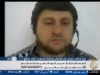
Hariri gave regular interviews to Al-Jazeera about the situation on the ground in Deraa in southern Syria, such as this one on 15 April. The Syrian government has accused the Qatari-based station and other foreign media outlets of being part of a global plot to cause chaos in Syria.

Reporters Without Borders lists Assad among 41 predators of freedom of information. Several media workers, citizen journalists and cyber-activists have been killed by the government since the start of the year and dozens more are currently languishing in Syria’s prisons.

SIGN THE PETITION HERE

Inside Syria: An opposition divided

[youtube http://youtu.be/ERfLh16uKaI?]

Blog at WordPress.com.

Up ↑