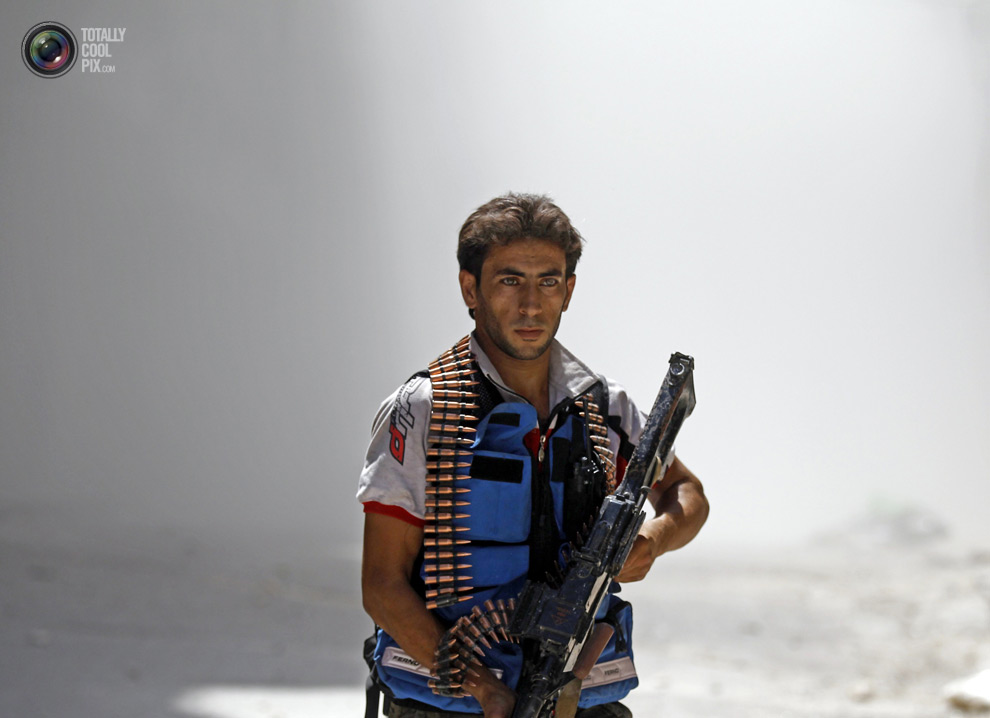
…..
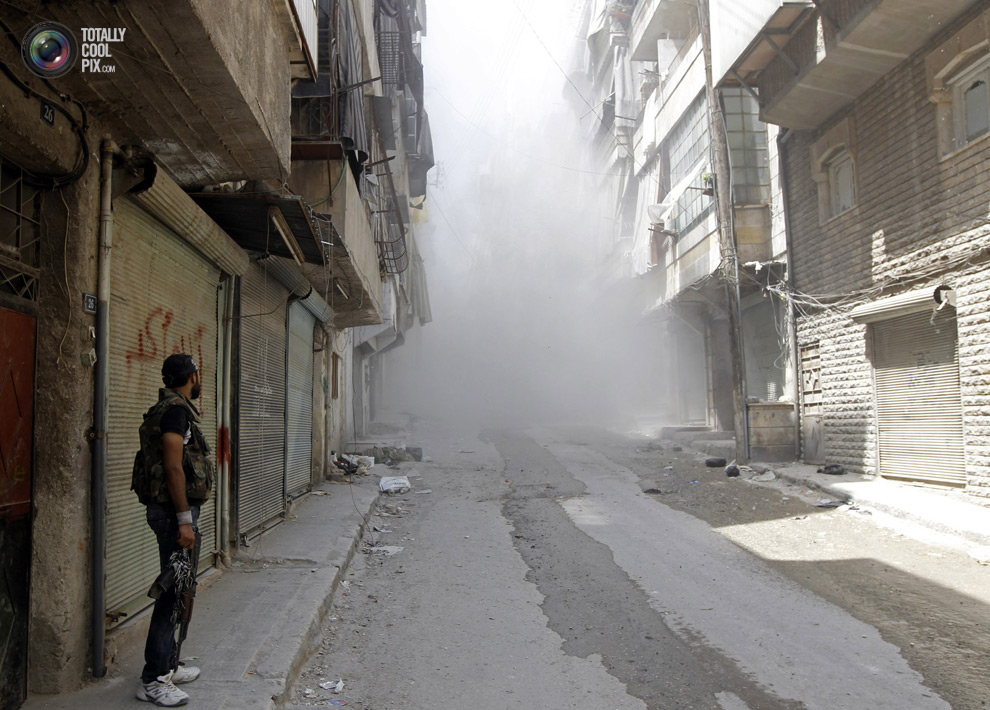
…
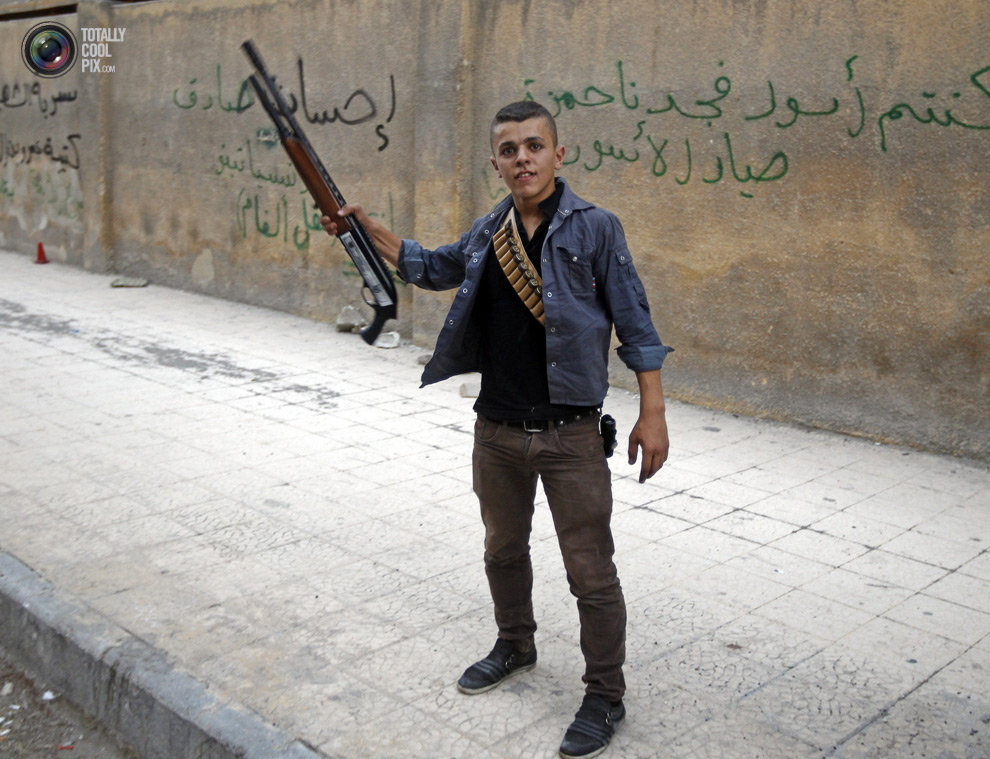
1530 GMT: Syria. The towns around Daraa have been fiercely attacked today. Yesterday, intense fighting and shelling occurred in the town of Busr al Harir. Today more shelling has occurred there, but the towns of El Taebeh and Dael have also been heavily shelled (map). A terrible video from Dael shows a severely wounded man, and yet another shows a severely injured teenager. There are videos of smoke rising above Dael, and another shows smoke rising near the border with Jordan. The video below claims to show people trying to rescue the injured after a shell hits in Dael. It is also disturbing:
1456 GMT: Syria. Not all the news is about insurgents and armies and death – the protest movement is still strong in many places, away from the heaviest fighting. What’s interesting is that now that the heaviest fighting in Damascus is over, we may be seeing a resurgence of protests there, protests that were growing larger and more bold before the fighting erupted several weeks ago.
An activist shares this video:
Hijaz square (map) is at the very center of the city – the railway station is clearly visible in the video.
1445 GMT: Syria. With reports of anti-aircraft weapons and heavy machine guns in the hands of Syrian insurgents, videos like this add explanation for why the Syrian helicopters and fighters have been flying higher today than in the past:
1408 GMT: Syria. We’ve been reporting about the worsening conditions in Zabadani, northwest of Damascus (map). Today, as shelling renewed, the Local Coordination Committees have declared the city a disaster area:
For the past 60 days, the regime has continued its brutal siege and bombardment of the town. This has resulted in the destruction of more than half the area neighborhoods and infrastructure…
In addition, the remaining neighborhoods have sustained partial destruction, and approximatly 22,000 residents have fled to neighboring districts and towns. The regime’s shelling has continued into these areas, and therefore is threatening the lives of those who had fled. Thus far… 22 people have been martyred during the daily shelling…
In addition, hundreds of wounded have been reported, and they cannot be rescued due to the daily nonstop shelling and the increasingly choking siege on the town. The area is now surrounded by more than 56 military points, including Lebanse Hezbollah soldiers.
There is a total power outage and all humanitarian relief and basic supplies have been cut off.
In light of these dire humanitarian conditions, and given the extent of Assad crimes against civilians, we request that the international community and humanitarian organizations implement and secure humanitarian corridors to provide direct relief to save the lives of the more than 8,000 remaining civilians who are living under continuous, direct bombing.
1358 GMT: Syria. Global Post News has had a camera inside Aleppo, and has posted a collection of raw footage taken in the city between July 30th and August 6th. It is a must see, but many images are disturbing:

1352 GMT: Syria. The Local Coordinating Committees have published a “Code of Conduct” for Free Syrian Army fighters to follow. What’s striking is that some of the most important members of the FSA have already signed it.
We’ve published the complete text, as well as our snap analysis, in a separate feature.
See also Syria Analysis: The Local Coordination Committees Issue a “Code of Conduct” for Free Syrian Army
1334 GMT: Syria. It’s hard to get a feeling for how the fighting in Aleppo is going, but there are reports that the FSA has withdrawn from Saleh el Dine. Other reports suggest that this is not true. Hala Jaber suggests that the FSA has withdrawn, but that Saleh el Dine is not fully under regime control. Kurt Pelda suggests that FSA fighters are still moving to the front.
All we do know is that fighting there has been extremely intense – this video was reportedly taken earlier today:
1256 GMT: Syria. A colonel with the Free Syrian Army describes the significance of the Saleh el Dine district of Aleppo (map):
All the weapons we have to combat this onslaught are guns, Kalashnikovs, anti-tanks, RPGs and some anti-aircraft rockets.
Salahedin district is the western gateway for Aleppo and one of the first districts liberated in the city. It is close to the college of artillery and armament – all the regime’s forces are piled nearby in al-Hamadaniah district. That is why it is so important for the regime to get it back from the hands of the FSA.
The Saleh el Dine district is exposed to direct fire and Assad reinforcements from two major bases, an artillery college to the west (map) and a major military base to the south (map). Furthermore, Saleh el Dine is west of the Citadel, a massive fortress that still has many Assad soldiers inside it, the focus of the last few days of fighting (map). If Saleh el Dine does not fall to the Assad military, it would be a major blow, because the regime’s tactical advantage is much smaller in some of the other areas, and some of the narrow streets, to the west of Saleh el Dine.
1206 GMT: Syria. Another dramatic video from Kafranbel (map, see previous update) – a shell falls in the town, and the cameraman and fighters from the Free syrian Army rush to the scene. The result – devastation:
1152 GMT: Syria. The little Idlib town of Kafranbel (map) is well known to many of our readers, and to many across the globe. The town is known for its defiant protests and its witty signs, usually written in English, a clear demonstration of the Syrian opposition’s understanding of the power of new media.
But Kafranbel has been under sustained and intense attack for more than two days. This video shows some of the artillery, reportedly stations about 14 kilometers from the town, that is attacking the area. Another disturbing video shows the aftermath of some of the attacks:
1134 GMT: Syria. According to the Local Coordinating Committees, 65 people have been killed so far today,
“…including 11 women and 10 children: 22 martyrs in Hama most of whom were killed in Jerjisa, 17 martyrs in Aleppo, 9 martyrs in Deir Ezzor, 5 martyrs in Idlib, 4 martyrs in Homs, 4 martyrs in Damascus and its suburbs, 3 martyrs in Daraa and 1 martyr in Lattakia.”
Jarjeezah is nestled near a lake near al Rastan, between Hama and Homs (map). The LCC has released a list of 20 names – including children – of the people reportedly killed so far in that small town today.
We haven’t seen other information on JarJeezah, but Al Rastan has been absolutely pounded by shelling and air strikes today. The videos tell the tale, and here is one example:
Another video shows a group of well armed men, reportedly a fresh defection from the military.
1128 GMT: Syria. Yesterday’s video claiming to show Riad Hijab in Daraa (see previous update):
1122 GMT: Syria. One of the most curious claims yesterday were reports from the anti-Assad activists that Riad Hijab, the Syrian Prime Minister who defected this week, was not in Jordan, as had been reported, but was actually still in Syria – meeting with opposition activists and Free Syrian Army leaders in Daraa.
We didn’t cover those reports. They seemed too weird to be true.
Well, according to a Jordanian official, Riad Hijab and other members of his family have just arrived in Jordan today, adding credence to the original activist reports:
Sameeh Maaytah said Hijab “entered Jordan in the early hours of dawn today along with several members of his family.” Maaytah spoke to the state Petra News Agency. He did not elaborate.
Maaytah did not answer repeated calls by The Associated Press to comment on conflicting reports that Hijab was already in Jordan, having come there after he defected to the opposition on Monday.
On Monday, Maaytah denied that Hijab was in the country. But another Jordanian official and the rebel Free Syrian Army said he fled to Jordan that day along with his seven brothers, two sisters and their families. They said he was planning to travel onward to Qatar, but did not specify when.
1115 GMT: Syria. Two videos, both dated yesterday, show what this conflict looks like. The first shows one of the roads into Aleppo, littered with the results of an FSA attack on a military convoy:
The second, a MIG performing a strafing run over Saleh el Dine.
1055 GMT: Syria. The long anticipated military assault on Aleppo appears to have started. The Syrian army moved into the Saleh el Dine district of Aleppo (map) with force today. The Telegraph reports that the regime may have had some success, though there is confusion as to how much:
“The regime forces advanced into Al-Malaab Street with tanks and armoured vehicles and fierce fighting is now taking place in the area,” said Wassel Ayub, a commander in the rebel Free Syrian Army.
Syrian government security sources have said that the army is poised to take control of the Salaheddin district.
“The army is advancing from west to east to cut Salaheddin in half horizontally. It will not take a long time to control the district, even if there are some pockets of resistance remaining,” an official told AFP.
But Abu Firas, a member of the rebel Free Syrian Army, said the insurgents had left only one building in Salaheddin.
“We did not withdraw, our guys are still there and the situation is in our favour. We just left a building that we had in one of the streets, but it’s not like we are retreating”.
The Guardian’s Martin Chulov reports that there is also fighting is the suburbs. He also reports that the Free Syrian Army is holding ground in Saleh el Dine, though it has withdrawn from some buildings:
They say they have made a tactical withdrawal from a couple of streets … but they say the regime hasn’t yet advanced into those areas, but they are expecting that advance very soon. They insist they hold the vast majority of the district, and that the withdrawal they have made is only a matter of 15 or so metres and is tactical.
Salahedin was always going to be ground zero for the battle for Aleppo, and the only way to dislodge rebels was going to be a ground invasion. It is being led by tanks, from what we understand there are not too many infantry. But they could follow later in the day. There are no ground forces in the rest of the city, but in Salahedin some kind of a push in under way.
Rebels claimed to have hit some tanks in Salahedin, Martin said. “The way this battle is going to play out is more of a war of attrition rather than a quick decisive battle,” he said.
According to Chulov, the loss of tanks and the lack of infantry is the key point. The Free Syrian Army is fairing better than expected because of the last minute defections of generals that tipped them off about the attack. The lack of infantry guardian the tanks is a sign, according to Chulov who is inside Aleppo, that the regime is worried that too many forces would defect. But dead tanks in roads block advances, and jeopardize the other tanks in the line, so despite having a massive advantage in shear strength, the regime’s advance, thus far, has been slow.
James Miller takes over today’s live coverage. Thanks to Scott Lucas for getting us started.
0845 GMT: Syria. Iranian Foreign Minister Ali Akbar Salehi has acknowledged that some of the 48 Iranians abducted near Damascus on Saturday are retired members of the Revolutionary Guards and Army and others “were from other ministries”; however, he denied any still had a military or official role and said they were on pilgrimage.
New Battalions Sign the Code of Conduct
As the ranks of the Free Syrian Army expand and its brave fighters fight a national, multi-front battle, there has become a need for rules to govern their work. These rules must combine the spirit of the national duty they carry out today in facing the aggressor, Bashar Al-Assad and his regime, and moving towards the regime’s ouster and the interests of justice and military discipline.
The Local Coordination Committees presents this brief code of conduct to the fighters and to the public, so as to draw attention to and highlight the moral and political ethics of military action. These ethics are, in essence, the same as positions the Free Syrian Army has taken in recent days, as well as the principles they have announced. These ethics and principles represent the essence of our revolution and its moral and national foundation.
=======================
The Syrian Revolution erupted in Mid-March 2011 against a corrupt and despotic regime that weakened a country and humiliated its people, raising a small group of elites above the Syrian general public. From the very beginning, the regime responded to popular protests with violence and hatred, and pitted the national army against the revolutionary citizens to protect the oppressive regime.
The Free Syrian Army was formed by honorable officers, junior officers, and soldiers who defected from the regime because they refused to kill their fellow citizens. They were joined by brave civilians whose families and homes were destroyed by Assad’s aggression.
Today, the Free Syrian Army plays a genuine military role in the glorious Syrian revolution. Therefore, the values and goals of the revolution (freedom, dignity, and justice for Syria and the Syrian people, and the protection and unity of the country), must serve as the military doctrine and governing principles for the Army’s actions and the behavior of its members.
The Free Syrian Army looks forward to the day when Syria will be free, so that it might be at the core of a new national army that protects the country’s independence, sovereignty, constitution, and democratic institutions. The Free Syrian Army is sacrificing its blood in order for that day to come.
Article I
In the Free Syrian Army, as an independent, defected soldier, or civilian volunteer, my first responsibilities are to:
Defend Syrian revolutionaries in the face of tyranny and ensure the continuation of the revolution to oust the regime. I will direct my weapons exclusively against Assad aggressors. I will serve my nation, Syria, and the freedom of the Syrian people. I am a fighter in the battle to defend my people.
I will use my weapons to overthrow the criminal regime that has been imposed upon us.
Article II
I pledge to my people and my revolution that I will refrain from any behavior or practice that would undermine the principles of our revolution: the principles of freedom, citizenship, and dignity. I will respect human rights in accordance with our legal principles, our tolerant religious principles, and the international laws governing human rights – the very human rights for which we struggle today and which we intend to implement in the future Syria.
Article III
Any person who takes up arms in the name of the regime, regardless of their rank, should be arrested and remain in the custody of the Free Syrian Army. In the event that an individual is arrested, and it is determined that the individual was working for the regime, voluntarily or for payment, to supply information about revolutionary activists, that individual shall be considered a prisoner and treated in accordance with laws governing prisoners of war.
Article IV
I pledge not to practice any form of torture, rape, mutilation, or degradation. I will preserve prisoners’ rights and will not exercise any of the above practices in order to obtain confessions.
Article V
I will not issue any executive orders, particularly with regard to death or corporal punishment. Only an appropriate legal authority, with relevant expertise, may conduct trials and find perpetrators guilty.
Article VI
I will not engage in any practice that leads to the physical torture or murder of prisoners or informants, and I will not participate in any public execution.
Article VII
I pledge not to engage in any form of theft or looting on the pretext that I am helping to finance the armed struggle. I pledge not to take any person hostage for ransom.
Article VIII
I pledge not to use my weapon against activists or civilians, whether or not I agree with them; and I pledge to not use my weapon against any other Syrian citizen. I pledge to limit my use of weapons to the defense of our people and myself in facing the criminal regime.
Article IX
I pledge not to exercise reprisals on the basis of ethnicity, sect, religion, or any other basis, and to refrain from any abusive practices, in word or in deed, against any component of the Syrian people.
Article X
I pledge to surrender my weapons to the Transitional Authority, which will manage the country’s affairs during the transitional period after the fall of the regime.
Article XI
If found guilty of violating any of these articles, I agree to submit to a fair trial undertaken by specialized committees formed under the supervision of the Free Syrian Army’s leadership and monitored by an independent judiciary body.
Initial Signatories:
Lieutenant Colonel Muhannad Ahmad Al-Talaa, Commander of the Military Council of Deir Ezzor
Colonel Qassim Saad Eddin, Commander of the Military Council in Homs
Sergeant Ismail Sheikh Saleh, Jisr Al-Shoghour, Idlib
Lieutenant Colonel Zahid Hourani, head of the Military Office in Homs
Major Ibrahim Moutawaa, Commander of the Al-Nour Battalion in Qosair
Colonel Radwan Ayyoush, Commander of the Military Office in Homs
Lieutenant Colonel Jamil Ra’adoun, Commander of the League of Battalions in the Hama Countryside
Colonel Khaled Alqatini of Khan Sheihoun and its countryside
First Lieutenant Hamza Qaziz, Al-Baraa Brigade in Douma
The Al-Baraa Brigade in Douma
Major Abou Mohammad Al-Homsi, the Soldiers of God Brigade in Damascus
The Falcons of the Land Brigade in Hama
The Martyrs of Latamna Battalion
The Martyrs of Asi Battalion in Hama
The Abi Al-Fidaa Battalion in Hama
The Special Operations Battalion in Hama
The Sunna Lions Battalion in Mayadeen
The Omar Al-Mukhtar Battalion in Deir Baalba, Homs
Abdul Baset Sarout
New Signatures
Lieutenant Colonel Mohammad al-Aboud Commander of the Revolutionary Military Council in Deir Ezzor
Captain Mostafa Shawardi/ Ansar Mohammad Battalion in Mawrak
Lieutenant Colonel Hafez Jad AlKaeem Faraj Commander of the Military Council in the Governorate of Sweida
Lieutenant Maher al-Tamer Commander of Shuhada al-Hurriya (Martyrs of Freedom) Battalion in Mawrak
Al-Haq (The Truth) Battalion in Mqeilbiya
Burkan al-Sham (Damascus Volcano) Battalion
New Signatures
Major Qassem Najem/ Tahrir alJanoob Battalion in Daraa
Captain Khaled Fatehallah Commander of the Free Syrian Army in Daeel
Captain Ali Shakerdi/ al-Amjad Battalion in Aleppo
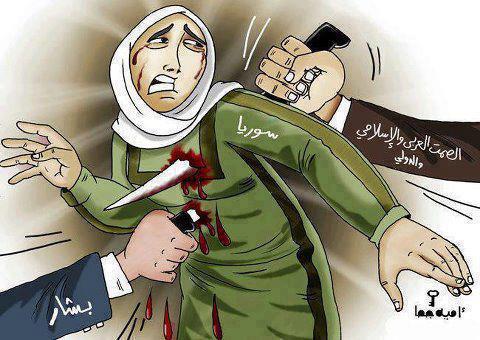
Right Hand: Bashar (Al-Assad)
Source

 War has come to Aleppo on full scale. In the southwestern neighborhoods of Bustan al-Qasr, Sikari and Salaheddine, explosions rock buildings on a daily basis, and on almost every street you look, glass, debris and rubble litter the place. It is a far cry from the Aleppo I visited almost three weeks ago, when nightly demonstrations filled the air with defiance and protesters slipped into the pink, blue and fluorescent lights of these working-class neighborhoods. Now, Salaheddine is emptied of its residents who have fled to schools, mosques and parks around the city. But Bustan al-Qasr is different. Most of its residents stayed, and in a densely populated area frequently hit hard by shells, airstrikes and helicopter attacks, it means a high casualty rate.
Civilians have tried to go about their daily business as Free Syrian Army (FSA) fighters patrol the streets and head out for missions in nearby neighborhoods. Some afternoons are quiet in Bustan al-Qasr, but shells land consistently in the distance and then suddenly, the explosions visit this area. At about 2:30 p.m. today, a MiG-29 screamed overhead, flying extremely low, with the distinct sound of an impact a few seconds later. Out on the streets, civilians ran in all directions fleeing the scene. An apartment block had been hit, and the injured were being carried out. Two girls with paled, shocked faces came running out, unable to make sense of what had just happened. And then a man, covered in dust, dressed only in an undershirt and trousers, stumbled out after them, his face in disbelief. He was screaming over the telephone in the middle of the street, and on the shop shutter behind him graffiti was scrawled: “Zero hour has come, God, Syria, Freedom.”
The MiG returned, screamed overhead again, sending the man and the crowd nearby scrambling for cover. FSA fighters raised their AK-47s and tried to shoot at the plane in a futile attempt to do something. The second bomb dropped just half a block away, and the street instantly became filled with dust and debris, falling like confetti. FSA fighters joined the fray, and instantly more men, women and children were running. One man held a green telephone, clutching it in one hand and holding a girl in the other as they ran. Chaos. Men, armed and unarmed, ran toward the other damaged building to search for injured and then a third bomb dropped on a building across the street, sending more debris raining down. People came pouring out of the apartments screaming, their hands on their heads, all unable to understand. They looked at the cars on the street, flattened by falling concrete, turned their heads toward the sky and ran back inside as they heard the plane again. This time, there was no explosion.
On a bloodied mattress, the lifeless body of Abdul Latif Qureya was being hurried by five men toward a pickup truck that would take him to the secret field hospital. And then another mattress, this time with a man who miraculously survived, was carried out. More women and children came out, carrying few possessions and the clothes on their backs as they fled.
At the secret field hospital, the bodies began arriving. Qureya’s was already there, then his children and extended family began coming in. Lying near him was Bara’a, 8. Then came Hatem, 15, who was barely alive as he was plucked from the rubble of his apartment. But he didn’t make it, and he was dead on arrival. Qureya’s wife Wahiba was cut in half, and her body remained missing. Somewhere in the apartment was his other son Mahmoud. And then Qureya’s niece Takreet, 7, came in, her purple T-shirt and her face covered in dust. She too was lifeless, her mouth slightly ajar, probably as she took her last breath. A few minutes later, a man ran through the door holding a small blanketed body, Youssef, 1, Qureya’s nephew. He was limp in his underwear and undershirt.
In total, seven of the Qureya family were killed. Five of them were children under 15 years old. Two more bodies, of men, were brought in. One was Samer Bassar, 37, dressed in a beige djellaba and holding prayer beads, covered in blood. Another man was unidentified.
Horror visits Aleppo in many forms. Today, it was by way of a warplane.
Nicole Tung is a freelance photographer who previously documented the uprisings in Libya and Egypt. See more of her work here.
I had never seen the school’s administration more nervous. That negligible act of rebellion compelled the headmaster to come and speak to us personally, armed with what I’d call the Baathist tools of coercion. “I know that most of you are good people,” he told us, “but I want you to point out to me the subversive student among you, who I know is an ikhwanji (a pejorative term that refers to a member of the banned Muslim Brotherhood organisation).
“If you do not, I will have to call the Political Security (a branch of the mukhabarat, with an office adjacent to the school)”. That sentence was powerful enough to make us return to class, without uttering a word.
I’m reminded of that defining day on the schoolyard as I watch the world try to make sense of the absurdity of the Assad regime today, and its answer to any form of dissent by calling Syrians “mundasseen” – infiltrators.
Syrians raised under this regime know that taking to the streets to call for the government’s downfall is the very definition of audacity. Syrians do not need to be told by media what the regime is capable of or how it behaves when it is confronted. They also do not need to be told to fight until the end because they know full well the regime kills and tortures in times of calm, as it does when it is embattled.
Yet outside Syria, a narrative taking root suggests that the Syrian uprising is somehow less worthy than the other Arab pro-democracy revolts that swept the region last year. The Syrian uprising, according to this narrative, is a foreign conspiracy promoted by biased media and instigated by extremists. The position is maintained largely by the Arab left, pan-Arabists and anti-imperialists, as if the only way to resist imperialism or an Israeli threat is for the Syrian people to endure living under Baathism.
Mohamed Hassanein Haykal, a veteran Egyptian journalist and a former adviser to the late Gamal Abdel Nasser, dismissed the Syrian uprising late last year as one spurred by foreign intelligence. He said the cities that revolted against the regime were border cities – proof, he said, it was not a real revolution. Only if Damascus and Aleppo rose up, he argued, could the uprising be considered a legitimate revolution. Since the two main cities rose up, however, he has remained deafeningly silent. (It’s worth reminding Haykal that all Syrian cities, except Hama and Suweida, are border cities).
Others have jumped from denying the existence of a popular uprising to labelling it a civil war. When Abdul Razzaq Tlass defected in June last year, for example, Asad Abu Khalil, an influential Lebanese-American pundit known for his criticism of Israel, posted this comment on his blog: “Western and Arab (Saudi and Qatari) media are so desperate for any news that is damaging to the Syrian regime that they play up the ‘news’ of YouTube-based defection of individual soldiers or officers. That is really not news worthy.”
Not long after that comment was made, the lieutenant became a nightmare for the regime, battling with a group of military defectors for 28 days in Baba Amr.
The Syrian opposition has undeniably committed several human rights violations. But it is one thing to highlight these violations, quite another to undermine the sacrifices of people who seek nothing but freedom from a brutal regime. Syrian activists, via social media, highlight and criticise abuses more often than any human rights organisation. In March, when Human Rights Watch issued an open letter to the Syrian opposition about human rights violations, Syrian activists issued a letter that unequivocally acknowledged the importance of constructive criticism and called on the organisation to continue to highlight violations.
Abu Khalil and others have tried to taint the Syrian uprising as a foreign plot, and save particular ire for Qatar. Al Jazeera, the Arab satellite behemoth based in Doha, has borne the brunt of this criticism.
Last week the astute Emirati commentator Sultan Al Qassemi wrote that both Al Jazeera and Al Arabia have “lowered their journalistic standards, abandoned rudimentary fact-checks, and relied on anonymous callers and unverified videos in place of solid reporting”.
I share some of Al Qassemi’s sentiments but disagree with the attempt to undermine the narrative of the activists, especially the suggestion that anonymous callers are paid “handsome amounts of money” to appear on these channels.
Qatar’s role in the Arab world was once hailed. In 2006, Abu Khalil called the arrival of Emir Hamad bin Jassim bin Jaber Al Thani in Lebanon a “PR coup for the Qatari government”. After the Hizbollah-Israel war in 2006, during a visit to Beirut, Qatar’s emir was symbolically handed keys to Lebanon by Lebanese officials, who called the emir the owner of the land rather than its guest.
But regardless of how the uprising is being portrayed by regional governments, or their affiliated media, the only narrative that matters for Syria is the fact on the ground. The regime is suffering everywhere in the country, from Idlib to Damascus to Deir Ezzor. Generals continue to defect, others are killed in battle and officials at the regime’s helm continue to defect.
These are all stories that must be told.
Editor’s note: Jonathan Schanzer is Vice President of Research at the Foundation for Defense of Democracies and author of ‘Hamas vs Fatah: The Struggle for Palestine.’ The views expressed are solely those of the writer.
Even if Syrian strongman Bashar al-Assad somehow survives the current uprising aimed at toppling his regime, the beleaguered dictator will have a lingering identity problem. Indeed, a long-standing pillar of Syria’s foreign policy has been support to the Palestinian “resistance” against Israel. But in the wake of the Syrian onslaught, the country’s estimated 500,000 Palestinians are abandoning – even challenging – their long-time champion. With this dramatic shift, al-Assad is left more isolated in the Middle East than ever before.
Reports from the region continue to confirm what would have been deemed impossible just two short years ago: Palestinians are turning against the regime. Human Rights Watch notes that, “Palestinians have joined anti-government protests.” One FSA commander, meanwhile, has boasted, “Palestinians are fighting alongside us, and they are well trained.”
It doesn’t help that the regime is murdering Palestinians. On Thursday, the regime reportedly killed 20 when it shelled a refugee camp. Reports before that indicated that al-Assad’s campaign had already claimed the lives of some 300 Palestinians. It’s still unclear just how many Palestinians have responded by taking up arms to challenge the regime, but a clearer picture is emerging of who is abandoning al-Assad in his hour of need.
The most prominent Palestinian defection has been Hamas. The Islamic Resistance Movement, as it is officially known, established its headquarters in Syria in the late 1990s. Hamas politburo chief Khaled Meshaal reportedly liaised with Iran and other regional financiers from this office, which also played a key role in supporting Hamas’ military operations in the Gaza Strip. Not surprisingly, when the Syrian uprising began in early 2011, the faction stood by their patron. But there is a level of violence that even a group designated a terrorist organization by the United States can’t bear. In February, as the body count continued to rise inexorably, Meshaal left Syria for Qatar. Amidst the ongoing violence, Hamas spokesman Izzak Reshak recently condemned Syria for massacring 17 Palestinians.
The Palestinian Islamic Jihad (PIJ), another long-time Syrian client, meanwhile, has been careful not to directly challenge the regime, but it may also be on its way out. Reports in Middle East news outlets recently noted that PIJ figures were exiting Syria after more than twenty years of close economic and military cooperation. Despite some denials from the PIJ politburo, other faction leaders reportedly quit Syria and headed back to Gaza. A new report suggests that the group wants to move its headquarters from Damascus to Beirut or Cair
And while the Palestine Liberation Organization (PLO) has had choppy relations with the Syrian regime, due mostly to disputes arising from Syria’s opposition to Palestinian-Israeli peace negotiations, the official voice of the Palestinians has also come out against Damascus. Last summer, a senior PLO figure lashed out at Syria. “We consider these actions to be part of the crimes against humanity that have been directed at the Palestinian people and their Syrian brothers who are also the victims of this ongoing bloody campaign,” he said. More recently, PLO chairman Mahmoud Abbas flatly condemned the regime’s attacks on Palestinians.
Even the Palestine Liberation Army (PLA), a force that answers to Assad’s military and is charged with policing Syria’s nine refugee camps, has reportedly refused to carry out acts of violence on behalf of the regime. For this, some have paid the ultimate price. Indeed, Syrian forces reportedly kidnapped 16 PLA members and slit their throats. The regime insists that the PLA is still an arm of the military, but it’s unclear if the faction has done more than police the camps.
The one major faction that actively fights for the regime is the Popular Front for the Liberation of Palestine – General Command (PFLP-GC), led by Ahmed Jibril. Jibril has warned that his group would “take to the streets and fight on behalf of all those with honor and our Syrian brothers” to defend the Syrian regime. One Palestinian told the New York Times that Palestinians believe Jibril’s group is “working for [Syrian intelligence].” The group is even reported to have killed 14 fellow Palestinians in a refugee camp on behalf of the regime last June.
But Jibril is the exception. Nearly every other Palestinian faction that had once latched itself onto the al-Assad regime has quietly found a way to exit the country or loosen its ties.
To be sure, many Palestinians have long appreciated Syria’s political and financial assistance to Hamas, PIJ, Hezbollah, and other factions that have engaged in “resistance” against Israel. But it has become impossible for even these violent factions to support a state responsible for the deaths of an estimated 18,000 people.
Recently, on the website of the Beirut-based al-Akhbar, the Lebanese writer Amal Saad-Ghorayeb tried to argue that the “real litmus [test] of Arab intellectuals’ and activists’ commitment to the Palestinian cause is no longer their support for Palestinian rights, but rather, their support for the Assad leadership’s struggle…”
This argument suggests that al-Assad’s support for the Palestinians was never about the cause. Rather, it was a pretense he wielded for legitimacy.
With the majority of Palestinians now seemingly abandoning the Syrian dictator, that pretense is now shattered.
| Post by: CNN’s Jason Miks |
We left Beirut early in the morning, heading North. A bunch of Syrian youth in Lebanon had organized three trucks to deliver food to Syrian refugees scattered throughout the Northern region of Lebanon. I was lucky enough to volunteer to tag along and help out at the last second. Each family was to get a month’s supply of food each. The problem, however, was getting it to the families. Syrian refugees in Lebanon are not concentrated in one place as they are in Turkey: some stay with family they know from Lebanon, some rent a place, and some are offered a place to stay. Luckily, we had a list of several families that were registered with this particular program for food aid. With the help of some very nice Lebanese locals from the area, we were able to navigate the area (which none of us were familiar with) and successfully deliver two bags of food to each family.
It was my first encounter with Syrian refugees in Lebanon. At first, I was hesitant to ask them any questions. Knowing that they had probably been through a lot, I didn’t want to make them feel like spectacles. But I soon learned that they had no qualms about sharing their stories with us. Once they discovered that we were Syrians (and not Lebanese working for some NGO) every single family we visited invited us into their humble homes to sit down (so much so that we actually ended up being way behind schedule). We would politely ask them if it would be ok if we asked them some questions about their experiences, and the universal answer from them was, “Ask! Ask whatever you want!” We even asked if they were ok with us photographing and filming them, and while a few did decline for safety reasons, the vast majority accepted. Most of the refugees came from Homs, or areas around Homs, but there were also quite a few who came from other areas in Syria.
The first house we visited was a family from Homs. We knocked on the door, and a woman in full niqab answered. We told her who we were and how we were bringing food to Syrian refugees. She politely declined the food, stating that she is not a refugee, and although she is Syrian, she had been living in North Lebanon for the past 12 years. She told us that it was her relatives upstairs who were the refugees. It struck me how honest the woman was, given that she could easily lie and claim to be a refugee for an extra bag of food. The woman led us upstairs where we met her relatives who had just come from Homs. The house was quite large, although empty, and it later became clear after meeting other families that this family was one of the lucky ones, as they already had family on this side of the border. This was the first family we had met, and we were hesitant to ask too many questions. When we met the man of the house, we asked him what had happened and why he had decided to come to Lebanon. He explained to us that things became unbearable in Homs, so he packed his things and came with his family. When we asked how he had come to Lebanon, he answered, “The Thuwwar (revolutionaries) brought us here safely.” We saw an opening to ask a political question, and asked, “So, was it the regime that was giving you a hard time in Homs?” He looked us right in the eye, and answered defiantly, “No. It is us who is giving the regime a hard time in Homs.”

A small shack housing 3 families from Baba Amr in Homs
After this experience, we became bolder with our questions. The second place we visited was a small shack, housing 3 families from Baba Amr in Homs. Baba Amr is one of the neighborhoods in Homs that the Assad regime almost completely destroyed, and one of the first places where the Free Syrian Army took hold. The families here were a lot more vocal than the family in the previous household. One of the couples had just had a newborn baby daughter a few days ago. She was visibly malnourished. The father proudly proclaimed, “We got married during the revolution, and she was born in the time of the revolution, so we named her Shahd Al-Thawra (Witness of the Revolution).” It struck us all that in the face of overwhelming tragedy, and being newfound refugees in a land away from their home, the family still seemed very positive. We provocatively asked, “So who did this to you? Was it the armed gangs?” He scoffed at the question, “Armed gangs? There is no armed gangs. Only the shabiha that the kalb (derogatory Arabic word meaning ‘dog’, referring to Bashar in this case) sent.” He re-affirmed the narrative that the Syrian revolution was in fact peaceful from the start: “I was a peaceful protester from the beginning. I would go to all the protests. But the shabiha kept shooting at us. What else could we do?” When we asked him how he had gotten to Lebanon, he gave the same answer as the previous household did: “The Thuwwar brought us.”

A family of six lives in this carpenter’s workshop.
The third house we visited housed one of the families I remember very distinctly. For one, they had come all the way from Aleppo months ago. This was odd, as Aleppo is much closer to Turkey than it is to Lebanon, and thus, most of the people who want to flee go to Turkey instead. It was also odd because whereas other areas were hit very hard from the beginning of the revolution, Aleppo was considered relatively quiet until a few weeks ago. We asked him why he had run away, because we had heard that Aleppo was quieter than other places. He responded that that was not true, and that the regime attacked the area where he lived very early on, and that he felt the need to flee the danger to keep his family safe. He then remarked on the current “Battle of Aleppo” taking place: “We left because the regime was attacking us, but thank God the Free Syrian Army is now winning in Aleppo and freed the area I am from.” He was a shy man, scared to reveal too many details to us, but once we asked him his thoughts on the Free Syrian Army, he did not hesitate to sing their praises. However, there was a noticeable melancholy in his eyes. This family was living in one of the most horrible conditions we had seen that day. The family of six was living in a carpentry workshop, amidst planks of wood and table saws, where they had two small mattresses. His four children slept on one mattress, while him and his wife slept on the other.
The fourth house we visited, however, had the most horrible story we had heard all day. The family was from Qusair, a city very close to the border with Lebanon in the province of Homs. As soon as we introduced ourselves, the man of the house invited us in and kindly brought us all chairs. In the middle of the room was his wife, who was lying down on a mattress on the floor. The woman was missing one leg. We did not ask what happened, but the husband soon began to tell us the story. The family’s house in Qusair was right behind a mosque, and one day, the shelling was getting very close to their house. The woman ran outside to warn children who were playing to come inside the house. Just as she got outside, the regime bombed the mosque right in front of their house, and shrapnel from the bomb hit the woman all over her leg. The husband ran outside, and carried his wife from his house to the hospital that was only 50 meters away. The husband claimed that while he was carrying his wife to the hospital, she had lost 16 bags of blood. The Free Syrian Army then helped them escape to Lebanon, and the husband was carrying his wife along the way. When the family reached Lebanon, the man was convinced that his wife was already dead. However, when she reached Lebanon, she was able to get treatment at a hospital in the area. She can only use the bathroom from her hip now, and has lost one of her legs, but thanks to generous donations, she expects to get a surgery soon and install an artificial leg. After this story, we began to ask the man questions about the FSA. We asked if he acknowledged that the FSA had made any mistakes. He refused to speak anything but good about them. He told us if people want to know what’s going on in Syria then they should just watch the news, because the news is telling the story exactly how it is. He paused for a moment, thought about what he had just said, and then added, “Except Al-Dunia and Al-Manar. And of course, Syria TV.” We concluded by asking the man if there was anything he was in need of. We asked every family if there was anything else we could get them, and they usually would reply that they needed a fan, or a mattress, or some kind of medication, and we would record it and put in a request for it later. This man, however, was very stubborn. Although his house was visibly under-supplied, he refused to ask for anything. We prodded him into asking for something, saying that it was no problem, but he was insistent that they were fine, and claimed that there are other families who are much more in need of supplies than they are. He then attempted to justify his stubbornness by remarking, “We won’t be here for long anyway.”

Syrian refugee youth in Lebanon who insisted we take their picture! The boy on the right is from Talkalakh and the boy on the left is from Homs.
Two families from Qusair and Homs living in one house invited us in. They were so happy to learn that we were Syrians, and even happier to know that a few of us (including me) were from Homs. They asked if anyone among us was not fasting so they could make us coffee, yet we said we were all fasting and politely declined. One of the families had just arrived two days ago. They said they came illegally as their names were on the border. They were a very happy family, despite the terrible conditions they were living in, as half their house was not even sheltered. One of the ladies asked us, “Do you know where we’re going to fly the Syrian Revolution flag?” We named different cities in Syria as answers, as she shook her head. When we had given up guessing, she shouted, “At the bastard’s palace! We’re going to hang a 25 meter flag over his palace in Damascus once we’re done!” One of the men proudly proclaimed that he was a protester from the beginning. We asked why he had protested, and what is it that he wanted. He replied, “What is it that every man wants? Freedom!” When we asked one of the men if it was the FSA that had brought them here, he defiantly replied, “Did the FSA bring me here? I AM FSA!” At this reply, we were shocked. None of the people we had met thus far had openly admitted to being members of the FSA, but this man showed no fear and only pride in his statement. Dumbstruck by his frank admission, we had trouble coming up with any follow-up questions. All I could muster up is “May God protect you guys”. Soon after that, we left, despite the family’s insistence that we stay. This family was by far the most hospitable family we had met that day.
The next house we visited was another family from Baba Amr in Homs. The man of the house asked me where I was from in Homs. I told him I was from the Insha’at neighborhood, to which he replied, “Ah…my brother was killed in Insha’at.” The man admitted to being part of the FSA immediately. This time we were ready, and not as intimidated to ask questions as we were in the last house. We asked what motivated him to join the FSA. He said that he was a frequent participant in protests in Homs, and, repeating what many others were also stressing that day, the protests were completely peaceful at first, and all they were asking for was freedom and dignity. What he said after, however, visibly bothered all of us in the group. Instead of saying that it was the regime that attacked them, he said that it was “Shias and Alawis” who attacked their peaceful protests. This was the first time all day any mention of sect was made. He then continued about how shabiha had raped many women, and in response to this he joined the FSA. My friends and I were obviously uncomfortable by what seemed to be his generalization about Shias and Alawis, and we started to leave. But I decided I wasn’t going to let his sectarian statement haunt me, and wanted to confront him about it. I pulled him aside and privately asked him, “Do you think there will be revenge attacks against Alawis after the revolution?” He replied, “Of course! There are already revenge attacks against them. What do you think? If someone shoots at me, don’t I have the right to shoot back?” I retorted, “Yes, but it is the shabiha who are shooting you, and not all Alawites are shabiha. What of the Alawite civilians who aren’t shabiha and have nothing to do with it? Surely they don’t deserve to be the victims of any revenge attacks just because of their sect!” He agreed with me, responding, “Of course not, not the civilians. We won’t touch them. But the shabiha will pay.” Somewhat satisfied but still somewhat uneasy, I thanked him for his time, and we left to the next house.

The flag of the Syrian Revolution flies high above a school housing 35 Syrian refugee families.
One of the last houses we went to was a family from Hama. Of all the families we had met, this was the only one who said that they had reached Lebanon with absolutely no help from the Free Syrian Army. We asked the people at the house why they had left. One of the men replied, “We left because we were running away from the oppression. The oppression by the ruling family: the Assad family.” The man spoke proudly of his city of Hama and the huge peaceful protests in the city before last Ramadan. He spoke of Ibrahim Qashoush, who sang “Yallah Irhal Ya Bashar” to a crowd of thousands of protesters in Hama, and was later killed by regime forces. When he spoke of Qashoush, it was obvious that he was very proud to be from the city that he had come from, and from the city that was thought to be a liberated city for a few days, with thousands attending peaceful protests, and millions more watching them on YouTube. However, what began as euphoria soon turned into tragedy as the Syrian Army moved in at the beginning of Ramadan last year. The man told us that the Syrian Army killed 700 people, and raped many women as well, all in response to what he insisted were peaceful protests. We thanked him for his time, and told him that hopefully we would see him in a Free Syria soon.
At the end of the day, we had completed our task, and distributed 100 bags of a month’s supply of food to 100 Syrian refugee families scattered all over Lebanon. I haven’t recounted all the stories I heard from that day, but I hope I gave a good picture of what Syrian refugees in Lebanon had to go through, what their motivations were, and what life is like for them here as refugees. On the drive back, we all reflected on the events of the day. These are people who have literally been forgotten by the world. The UN has abandoned them. The international community doesn’t care for them. Their state has not only abandoned them, but has attacked them. If it wasn’t for the amazing Syrian youth who came together to help these families out, what would they have done? Finding them homes, getting them supplies, getting them medication, food, mattresses; these are all things that young Syrians came together to do for the few Syrian refugee families that we do know of. But there are thousands more that we do not know of. Some who are too scared to register, others who have found refuge in parts of Lebanon so remote that no one even knows they exist. Is this the price one pays for rising up against oppression? Is this what people deserve simply for stating that the country they are from belongs to them, and not to one man, or one family? There was much sadness in the faces of many of the people we met that day, but there were also many signs of defiance, and of resistance, as if they were saying, “Yes, we are living far away from our home, in a land we don’t know, and yes, we are living in miserable conditions, but in the end, we know that it was us who was right, and it was the tyrant who was wrong, and history will judge us accordingly.”
 @HamaEcho
 band annie's Weblog