Search

band annie's Weblog

I have a parallel blog in French at http://anniebannie.net

Category

poetry

Mourid Barghouti’s I Saw Ramallah

Reviewed by Hugh Galford
Washington Report jan-feb 2001

Of the several final status issues yet to be honestly examined under Oslo, that of the Palestinian refugees—and their right to return—ranks among the most emotive. Scattered around the world, the refugees from 1948, their numbers swelled by those from 1967, now total an estimated 5 million. Even after 50 years, their attachment to home is awesome—especially when it is realized that many of them have never laid eyes on Palestine.

For Mourid Barghouti in I Saw Ramallah, the bridge home still exists, but the road to it has been filled with catastrophes and misfortunes.

In spring 1967, Barghouti left Deir Ghassanah, a village outside of Ramallah, to return to Cairo for his university exams. On June 5, he has three exams standing between him and graduation. And on June 5, while in the process of winning a university degree, he loses his home: Ramallah has fallen to the Israeli army.
read on

Def Poetry – Suheir Hammad – What I Will

Suheir Hammad: if I Could…

In Arabic
Palfest 2010

The Poet of Baghdad Trailer

Trailer for forthcoming documentary film about The Poet of Baghdad, Nabeel Yasin.
Also hear the poet and the director talking on BBC Radio 4’s Today Programme: http://news.bbc.co.uk/today/hi/today/…

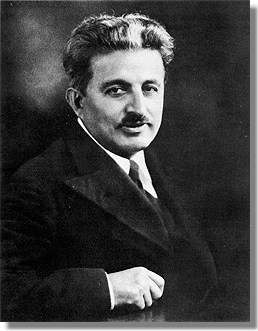
Ameen Rihani

Last picture
Last picture

* Founder of The Arab American Literature
* First Lebanese Arab to:
– Introduce free verse to modern Arabic poetry
– Write and publish a novel in English Writer And Author of:
*
– 29 volumes in English
– 26 volumes in Arabic

Biography

Born in Freike, Lebanon, on November 24, 1876, Ameen Rihani was one of six children and the oldest son of a Lebanese Maronite raw silk manufacturer, then a flourishing local industry. His father had commercial ambitions which beckoned him to America. In the summer of 1888, Ferris Rihani, the father, sent his brother and eldest son, Ameen, to the United States and followed a year later….

read on

A few quotations :

My wish is to live without disliking anyone,
To love without being jealous of anyone,
To rise without being elevated over anyone, and
To advance without stepping on anyone or becoming envious of those above me
(translated from Arabic)

THE RIHANI ESSAYS
(Ar Rihaniyat)

I am the East,
I am the corner stone
Of the first temple of God
And the first throne of Humanity…

I am the East,
I possess philosophies and creeds
So who would exchange them with me for technology

(translated from Arabic)

HYMNS OF THE VALLEYS
(Hutaf-ul Awdiya)

Like the seasons of the year, like history, truth always repeats itself…THE PATH OF VISION

….And especially to my friends, the writers, I invite you to travel with me to a land that is magical despite its poverty, to a people that is generous despite its conflicts and disagreements, and to a nation that is free and dignified despite its limitations.
(translated from Arabic)
Introduction to KINGS OF ARABIA

(Muluk-ul ‘Arab) Source

Ikhtari (choose) Qabbani and Kathem el Saher

I read somewhere that this is how Nizar proposed

The translation in English, the text in Arabic  and the song (from here) :
Kathim el-Saher – Choose

Blog at WordPress.com.

Up ↑