Search

band annie's Weblog

I have a parallel blog in French at http://anniebannie.net

Category

Palestine

New BBC documentary ‘The Road to 7th October’ is an utter travesty

Pressured into removing a humanising portrait of Gaza’s children, the BBC offers instead a series on Israel-Palestine that frantically revives the very narrative that made the genocide possible

Jonathan Cook

Mar 09, 2025

Audio here

There has been a prolonged furore over the BBC’s craven decision to ban a documentary on life in Gaza under Israel’s bombs after it incensed Israel and its lobbyists by, uniquely, humanising the enclave’s children.

The English-speaking child narrator, 13-year-old Abdullah, who became the all-too-visible pretext for pulling the film Gaza: How to Survive a Warzone because his father is a technocrat in the enclave’s Hamas government, hit back last week.

He warned that the BBC had betrayed him and Gaza’s other children, and that the state broadcaster would be responsible were anything to happen to him.

His fears are well-founded, given that Israel has a long track record of executing those with the most tenuous of connections to Hamas – as well as the enclave’s children, often with small, armed drones that swarm through its airspace.

The noisy clamour over How to Survive a Warzone has dominated headlines, overshadowing another new BBC documentary on Gaza – this one a three-part, blockbuster series on the history of Israel and Palestine – that has received none of the controversy.

And for good reason.

Israel and the Palestinians: The Road to 7th October, whose final episode airs this Monday, is such a travesty, so discredited by the very historical events it promises to explain, that it earns a glowing, five-star review from the Guardian.

It “speaks to everyone that matters”, the liberal daily gushes. And that’s precisely the problem

What we get, as a result, is the very worst in BBC establishment TV: talking heads reading from the same implausibly simplistic script, edited and curated to present western officials and their allies in the most sympathetic light possible.

Which is no mean feat, given the subject matter: nearly eight decades of Israel’s ethnic cleansing, dispossession, military occupation and siege of the Palestinian people, supported by the United States.

But this documentary series on the region’s history should be far more controversial than the film about Gaza’s children. Because this one breathes life back into a racist western narrative – one that made the genocide in Gaza possible, and justifies Israel’s return this month to using mass starvation as a weapon of war against the Palestinian people.

‘Honest broker’ fiction

The Road to 7th October presents an all-too-familiar story.

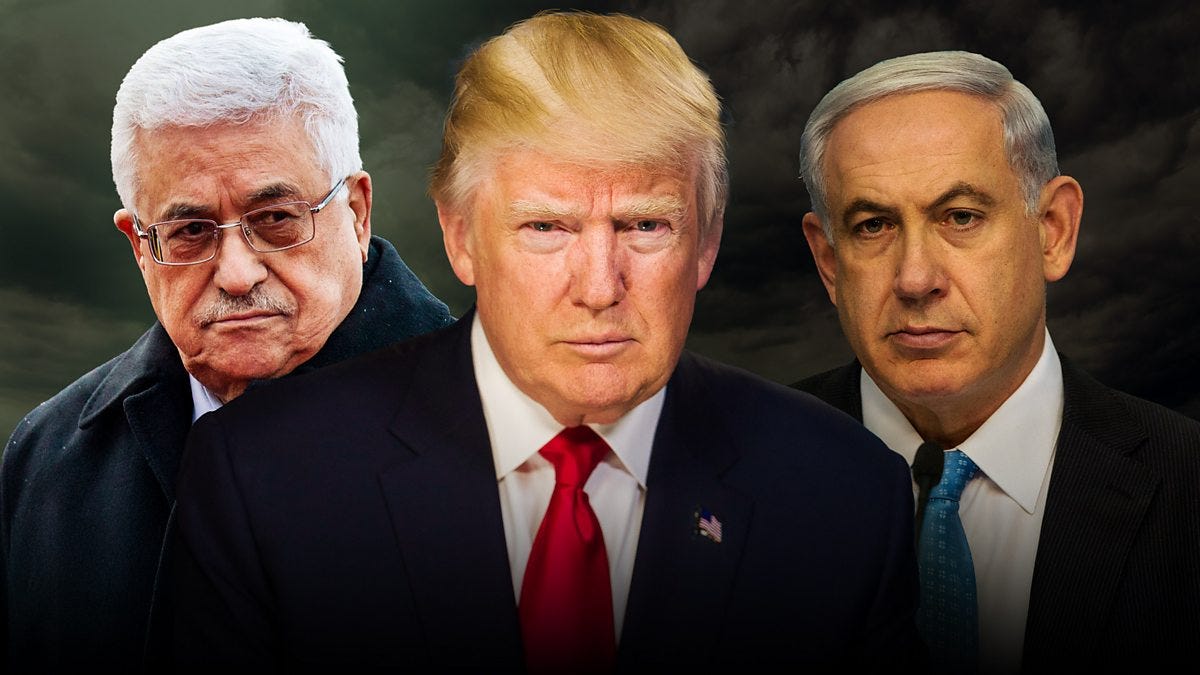
The Palestinians are divided geographically and ideologically – how or why is never properly grappled with – between the incompetent, corrupt leadership of Fatah under Mahmoud Abbas in the West Bank, and the militant, terrorist leadership of Hamas in Gaza.

Israel tries various peace initiatives under leaders Ariel Sharon and Ehud Olmert. These failures propel the more hardline Benjamin Netanyahu to power.

The United States is the star of the show, of course. Its officials tell a story of Washington desperately trying to bring together the two parties, Israel and Fatah (the third party, Hamas, is intentionally sidelined), but finds itself constantly hamstrung by bad luck and the intransigence of those involved.

Yes, you read that right. This documentary really does resurrect the Washington as “honest broker” fiction – a myth that was supposed to have been laid to rest a quarter of a century ago, after the Oslo accords collapsed.

The film-makers are so lost to the reality in Israel and Palestine that they imagine they can credibly keep Washington perched on a pedestal even after we have all spent the past 16 months watching, first, President Biden arm Israel’s “plausible” genocide in Gaza, killing many tens of thousands of Palestinians, and then President Trump formulate an illegal plan to ethnically cleanse the enclave of its surviving Palestinian population to develop it as a luxury “waterfront property”.

A viewing of a short, Trump-endorsed, AI-generated promo video for a glitzy, Palestinian-free “Trump Gaza”, built on the crushed bodies of the enclave’s children, should be enough to dispel any remaining illusions about Washington’s neutrality on the matter.

Enduring mystery

This documentary, like its BBC predecessors – most notably on Russia and Ukraine, and the implosion of Yugoslavia – excels at offering a detailed examination of tree bark without ever stepping back far enough to see the shape of the forest.

The words “apartheid”, “siege” and “colonialism” – the main lenses through which one can explain what has been happening to the Palestinian people for a century or more – do not figure at all.

There is a single allusion to the events of 1948, when a self-declared Jewish state was violently founded as a colonial project on the ruins of the Palestinians’ homeland.

Or as the documentary delicately puts it: “Millions of their people [the Palestinians] had been made refugees by decades of conflict.”

As ever, when the plight of the Palestinians is discussed, the passive voice is put to sterling use. Millions of Palestinians were accidentally ethnically cleansed, it seems. Who was responsible is a mystery.

In fact, most of Gaza’s population are descended from Palestinian families expelled by the newly declared state of Israel from their homes in 1948. They were penned up in a tiny piece of land by European colonisers in the same manner as earlier generations of European colonisers confined the Native Americans to reservations.

Even when the term “occupation” appears, as it does on the odd occasion, it is presented as some vague, unexamined, security-related problem the US, Israel and the Fatah leadership are engaged in trying to fix.

The settlements are mentioned too, but only as the backdrop to land-for-peace calculations that never come to fruition as the basis for an elusive “peace”.

In other words, this is the reheating of a phoney tale that Israel and the US have been trying to sell to western publics for many decades.

It was holed well below the water line last year by the International Court of Justice (ICJ), the highest court in the world. It ruled that Israel’s occupation of the West Bank, Gaza and East Jerusalem was illegal, that Israeli rule over the Palestinians was a form of apartheid, and that its illegal settlements needed to be dismantled immediately.

That is the forest all the documentary’s furious bark-studying is designed to avoid.

Path to genocide

The makers of Israel and the Palestinians: The Road to 7th October choose to begin their time line on an obscure date: 19 August 2003, when a Palestinian suicide bomber blows up a bus in Jerusalem, killing 23 Israelis.

Why then?

The programme, despite its title, is not really about the “Palestinians”. Note that the BBC dares not refer to “Palestine”.

The true focus is on Hamas and its rise to power in Gaza, as viewed chiefly by the other parties: the US, Israel and Fatah.

Starting the story in 2003 with a bus bombing, the programme can navigate “The Road to 7thOctober” in ways that assist the self-serving narratives those other parties wish to tell.

On the Palestinian side, the story opens with a terror attack. On Israel’s side, it opens with Sharon deciding, in response, to dismantle the illegal settlements in Gaza and withdraw Israeli troops from the enclave.

This entirely arbitrary date allows the programme makers to create an entirely misleading narrative arc: of Israel supposedly ending the occupation and trying to make peace, while being met with ever greater terrorism from Hamas, culminating in the 7th October attack.

In short, it perpetuates the long-standing colonial narrative – contrary to all evidence – of Israel as the good guys, and the Palestinians as the bad guys.

In an alternate universe, the BBC might have offered us a far more informative, relevant documentary called Israel and Palestine: The Path to Genocide.

Don’t hold your breath waiting for that one to air.

Dystopian movie

In fact, Sharon’s so-called Disengagement Plan of 2005 had nothing to do with ending the occupation or peace-making. It was a trap laid for the Palestinians.

The disengagement did not end the occupation of Gaza, as the ICJ noted in its ruling last year. It simply reformulated it.

Israeli soldiers pulled back to the perimeter of the enclave – what Israeli and US officials like to falsely term its “borders” – where Israel had previously established a highly fortified wall with armed watchtowers.

Stationed along this perimeter, the Israeli army instituted an oppressive Medieval-style siege, blockading access to Gaza by land, sea and air. The enclave was monitored 24/7 with drones patrolling the skies.

Even before Hamas won legislative elections in 2006 and came to power in Gaza, the tiny coastal strip of land looked like it was the backdrop for a dystopian Hollywood movie.

But after Hamas’ victory, as the talking heads cheerily explain, the gloves really came off. What that meant in practice is not spelled out – and for good reason.

The Israeli army put Gaza on “rations”, carefully counting the calories entering the enclave to create widespread hunger and malnutrition, especially among Gaza’s children.

The Israeli official behind the scheme explained the reasoning at the time: “The idea is to put the Palestinians on a diet, but not to make them die of hunger.”

That official – Dov Weisglass, Olmert’s main adviser – is one of the central talking heads in episode one. And yet strangely, he is never asked about Gaza’s “diet”.

‘Die more quietly’

Stephen Hadley, George W Bush’s deputy national security adviser, claims – unchallenged – that Sharon’s disengagement was “a downpayment on a Palestinian state. … They [the Palestinians] would have an opportunity to build and show the world that they were ready to live side by side in peace with Israel”.

Israel’s real goal, all too evident then and impossible to ignore now, was something else entirely.

Yes, withdrawing from Gaza allowed Israel to falsely claim the occupation in Gaza had ended and focus instead on the colonisation of the West Bank, as the documentary briefly grants.

Yes, it split geographically the main territories forming the basis of a future Palestinian state and encouraged irreconciliable leaderships in each – divide and rule on steroids.

But even more importantly, by making Gaza effectively a giant concentration camp, blockaded on all sides, Israel ensured that the accommodationists of Fatah would lose credibility in the enclave and militant resistance movements led by Hamas would gain ascendancy.

That was the trap.

Hamas, and the people of Gaza, were denied any legitimacy so long as they insisted on a right – enshrined in international law – to resist their occupation and besiegement by Israel.

It was a message – a warning – directed at Fatah and the West Bank too. Resistance is futile. Keep your heads down or you’ll be next.
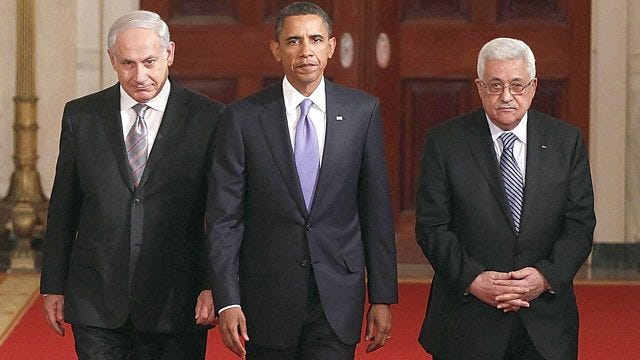
Which is exactly the lesson Abbas learnt, soon characterising his security forces’ collusion with the Israeli occupation as “sacred”.

For Gaza, the US notion of living in “peace alongside Israel” meant surviving just barely and quietly, inside their cage, accepting the diet Olmert and Weisglass had put them on.

Making any noise – such as by firing rockets out of the concentration camp, or massing at the heavily armed walls of their cage in protest – was terrorism. Die more quietly, Israel and the international community demanded.

Perversely, much of episiode one is dedicated to US officals spinning their conspiracy to foil the results of the 2006 Palestinian election, won by Hamas, as democracy promotion.

They demanded Hamas give up armed resistance or the 2 million people of Gaza, half of them children, would face a continuing blockade and starvation diet – that is, illegal collective punishment.

Or as Robert Danin, a US State Department official, puts it, the plan was “either Hamas would reform and become a legitimate political party or it would remain isolated”. Not just Hamas isolated, but all of Gaza. Die more quietly.

The hope, he adds, was that by immiserating the population “Gazans would throw off the yoke of Hamas” – that is, accept their fate to live as little more than “human animals” in an Israeli-run zoo.

‘Mowing the lawn’

Hamas, both its proto-army and its proto-government, learnt ways to adapt.

It built tunnels under the enclave’s one, short border with Egypt to resist Israel’s siege by trading with the neighbouring population in Sinai and keeping the local economy just barely afloat.

It fired primitive rockets, which rarely killed anyone in Israel, but achieved other goals.

The rocket fire created a sense of fear in Israeli communities near Gaza, which Hamas occasionally managed to leverage for minor concessions from Israel, such as an easing of the blockade – but only when Israel didn’t prefer, as it usually did, to respond with more violence.

The rockets also prevented Gaza and its suffering from disappearing completely from international news coverage – the “Die more quietly” agenda pursued by Israel – even if the price was that the western media could denounce Hamas even more noisily as terrorists.

And the rockets offered a strategic alternative – armed resistance, its nature shaped by Hamas’ confinement in the Gaza concentration camp – to Fatah’s quietist, behind-the-scenes diplomacy seeking negotiations that were never forthcoming.

Finally, confronted with the permanent illegitimacy trap set for it by Israel and the US, Hamas approved in 2018 mass, civil disobedience protests at the perimeter fence of the concentration camp it was supposedly “ruling”.Subscribe

Israel, backed by the US, responded with increased structural violence to all these forms of resistance.

In the last two programmes, Israeli and US officials set out the challenges and technical solutions they came up with to prevent their victims from breaking out of their “isolation” – the concentration camp that Gaza had been turned into.

Underground barriers were installed to make tunnelling more difficult.

Rocket fire was met with bouts of “mowing the lawn” – that is, carpet-bombing Gaza, indifferent to the Palestinian death toll.

And thousands of the ordinary Palestinians who massed for months on end at the perimeter fence in protest were either executed or shot in the knee by Israeli snipers.

Or as the documentary’s narrator characterises it: “At the border with Israel, protesters clashed with Israeli forces, and dozens of Palestinians were killed.”

Blink, and you might miss it.

Nothing learnt

Only by looking beneath the surface of this facile documentary can be found a meaningful answer to the question of what led to the attack on 7th October.

Israel’s strategy of “isolation” – the blockade and diet – compounded by intermittent episodes of “mowing the lawn” was always doomed to failure. Predictably, the Palestinians’ desire to end their imprisonment in a concentration camp could not be so easily subdued.

The human impulse for freedom and for the right to live with dignity kept surfacing.

Ultimately, it would culminate in the 7th October attack. Like most breakouts from barbaric systems of oppression, including slave revolts in the pre-civil rights US, Hamas’ operation ended up mirroring many of the crimes and atrocities inflicted by the oppressor.

Israel and the US, of course, learnt nothing. They have responded since with intensified, even more obscene levels of violence – so grave that the world’s highest court has put Israel on trial for genocide.

Obscured by The Road to 7th October is the reality that Israel has always viewed the Palestinians as “human animals”. It just needed the right moment to sell that script to western publics, so that genocide could be recast as self-defence.

The 7th October attack offered the cover story Israel needed. And the western media, most especially the BBC, played a vital part in amplifying that genocide-justifying narrative through its dehumanisation of the Palestinian people.

Its one break with that policy – its humanising portrait of Gaza’s children in How to Survive a Warzone – caused an uproar that has echoed for weeks and seen the BBC’s director general, Tim Davie, dragged before a parliamentary committee.

But in truth, we ought to be appalled that this is the only attempt the BBC has made, after 17 months of genocide, to present an intimate view of life for the people of Gaza, especially its children, under Israel’s bombs. The state broadcaster only dared doing so after stripping away the politics of Gaza’s story, reducing decades of the Palestinian people’s oppression by Israel to a largely author-less “humanitarian crisis”.

Not only is the programme never likely to see the light of day again on the BBC but, after all this commotion, the corporation is unlikely ever again to commission a similarly humanising programme about the Palestinian people.

There is a good reason why there has been no comparable clamour for the BBC to pull Israel and the Palestinians: The Road to 7th October.

The historical and political context offered by the documentary does nothing to challenge a decades-old, bogus narrative on Israel and Palestine – one that has long helped conceal Israel’s turning of Gaza into a concentration camp, one that made something like the 7thOctober breakout almost inevitable, and one that legitimised months of genocide.

The Road to 7th October seeks to rehabilitate a narrative that should be entirely discredited by now.

In doing so, the BBC is assisting Israel in reviving a political climate in which the genocide in Gaza can resume, with Netanyahu re-instituting mass starvation as a weapon of war and spreading Israel’s ethnic cleansing operations to the West Bank.

We don’t need more official narratives about the most misrepresented “conflict” in history. We need journalistic courage and integrity. Don’t look to the BBC for either.

[Many thanks to Matthew Alford for the audio reading of this article.]

Share

Leave a comment


All my posts are freely accessible, but my journalism is possible only because of the support of readers. If you liked this article or any of the others, please consider sharing it with friends and making a donation to support my work. You can do so by becoming a paid Substack subscriber, or donate via Paypal or my bank account, or alternatively set up a monthly direct debit mandate with GoCardless. A complete archive of my writings is available on my website. I’m on Twitter and Facebook.

Roger Waters

Alon Mizrahi on X

@alon_mizrahi

Can you imagine how much bleaker, hopeless, and shitty this world would be if Roger Waters were on the side of the massacres, starvation and mass-scale brutality and sadism?

‘Thanks for small mercies’, the cliche goes, and it is so true in the case of the political stances one of the greatest, most glorious, and admired musicians in history took in real time, in defiance of the cultural and political establishment of his era Personally, I’d be heartbroken if the musical hero of my youth went from singing ‘Mother do you think they’ll drop the bomb?’ to supporting genocide; it would have been too terrible. I hate to even think about it.

Waters remained true to his lyrics, his vision, and his integrity. His pain as a fatherless child who lost his political and brave father in WW2, and who made generations of listeners cry and feel the wound of his fatherlessness. I remember listening to The Final Cut as a teenager and being mesmerized by ‘The Gunner’s Dream’, which starts

‘Floating down, through the clouds

Memories come rushing up to meet me now

But in the space between the heavens

And the corner of some foreign field

I had a dream I had a dream’

We all had a dream. We all do. Roget Waters remained true and faithful to his. and for this, for this absolute show of character and grace, he has my eternal love and admiration

The only regional power that constantly and unconditionally supported the Palestinian cause is Iran. 

By Ilan Pappe – The Palestine Chronicle  

Ever since the death of Egyptian President Gamal Abdul Nasser, none of the regional powers in the Middle East had shown genuine solidarity with the Palestinian liberation movement. 

Jordan severed its ties with the Palestine Liberation Organization (PLO) in 1970; Lebanon ceased to be the geographical hinterland for the movement in 1982; Syria, which probably was more loyal than other states, did not allow Palestinian independent strategy and visions while Egypt altogether ceased to play a prominent role in regional politics. 

Other Arab countries were also quite absent from the Palestinian struggle. 

Türkiye, under Erdogan, at times showed greater solidarity, in particular with the besieged Gaza since 2005, but also pursued an ambivalent policy due to its strategic relationship with Israel. 

The only regional power that constantly and unconditionally supported the Palestinian cause was Iran. 

Erroneous Equation

The Western narrative equates erroneously, and probably intentionally, Iran with the Islamic State (ISIS), that very same organization that, in actuality, planted bombs in Iran, killing many people. 

It should also be remembered that the Western support of Sunni Jihadism as a counterforce to the secular and left anti-colonial movement planted the seeds from which both Al-Qaeda and ISIS grew and prospered. 

Their violence was also directed against Shia groups in Southeast Asia and the Arab world. Many of these groups are directly linked to Iran. 

Contrary to Western propaganda, the Iranian support to mainly Shia resistance groups is part of its perception of self-defense and not derived from a wish to impose a kind of Jihadist regime all over the world.

De-Zionized Palestine

Since the fall of the Soviet Union, over 30 years ago, Israel is the only state in the region that enjoyed unconditional support from an external superpower and its allies. 

And it is important, even at the risk of sounding trite, to mention once more what this unconditional support is for. 

Under this US-championed international immunity, Israel stretched over the whole of historical Palestine, ethnically cleansed more than half of its population over the years, and subjected the other half to a regime of apartheid, colonization and oppression.

Thus, direct support for the Palestinian cause from an important regional power such as Iran is meant to counteract the existential danger faced by the Palestinian people in the last 75 years. 

Iran is a complicated ally. It still has some way to go in terms of its own human rights record. 

The vocabulary and reservoir of images used by Iranian leaders and, at times, media does a disservice to the truly genuine Iranian solidarity.

Slogans such as “Small Satan” or “Death to Israel”, along with promises of total destruction, are all unnecessary tropes for galvanizing a nation that is already galvanized. Indeed, during the dictatorship of the Shah, the Iranian people supported Palestine and resented their regime for its close ties with Israel. 

Aside from rhetoric, however, the policy itself is highly valuable in terms of redressing the imbalance of power between apartheid Israel and the occupied Palestinians, who, again, are facing an existential threat.

It should also be noted that the language Israeli propaganda uses in referring to Iran, the Palestinians or Hamas is far worse – as was revealed in full in the material the government of South Africa handed over to the International Court of Justice last December.

In this respect, many of us share Iran’s vision of a de-Zionized and decolonized one-state solution in historical Palestine, which, at least I hope, will also be a democratic welfare state.

Iran’s policies towards Israel are portrayed in the West as motivated by antisemitism of the worst kind. 

Due to Israel’s intrinsic resentment of any pro-Palestine sentiments, in the Middle East or anywhere else in the world, Iran’s strong position in support of the Palestinians makes it the main target for Israel and its allies. In order for Israel to maintain Western-led pressure on Iran, it often, if not always, rewrites the history, the very chronology of the events, thus always presenting Iran as an aggressor and Israel as a country in a permanent state of self-defense.

Israel’s Aggressions and Iranian Counterattack

For a long time, Iran has tolerated sabotage acts on Iranian soil, including the assassination of scientists, the killing and wounding of its personnel in Syria and the Israeli pressure on the US to abolish the Iran nuclear deal in 2015.

Imagine if Iran would have destroyed an American embassy, killing some of the most senior officers of the US army, one would only imagine what the American reaction would have been.

In their last attack on Israel, on April 13, Iran did everything in its power to show that it is not seeking collateral damage or wishing to target civilians. In fact, they gave Israelis more than ten days to get ready for the strike. 

Yet, Israel and the West were very quick to declare that the Iranian attack was an utter failure that caused no damage at all. A few days later, however, they had to admit that two Israeli air bases were, indeed, directly hit in the Iranian strike. 

But this is hardly the point. Of course, both sides have the capability to inflict great damage and loss of life on each other. This balance of power, however, has implications that are far more important than the ones analyzed by military experts.

A Counterweight

If the Hamas operation on October 7 cast doubt on the invincibility of the Israeli army, the technological know-how Iran has introduced is another indicator that Israel is not the only military superpower in the region. 

It should also be noted that Israel needed direct support from Britain, France, the US, Jordan and some other Arab countries to protect itself from the Iranian attack.

So far, there is no sign Israelis internalized the important lessons they should have learned in the last seven months: about the limitations of power, the inability to exist as an alien state in the midst of the Arab and Muslim world, and the impossibility to permanently maintain a regime of racial apartheid and military oppression.

In this respect, the technological capacities of a powerful regional power such as Iran, by itself, is not a game changer. But it does constitute a counterweight to a strong and wide coalition that has always supported the Zionist project since the very beginning. A counterweight that was not there for many years.

It is obvious that the situation in historical Palestine will not change through the development or transformation of one single factor. Indeed, change will occur as a result of many factors. The combination of these processes will eventually merge into a transformative event, or a series of events, which will result in a new political reality that is situated within decolonization, equality and restorative justice in historical Palestine.

This matrix requires a strong Iranian presence, which can even be more effective if coupled with reforms inside Iran itself. It also requires the global south to prioritize Palestine; a similar change should also be registered in the global north. 

A united and younger Palestine liberation movement, alongside the de-Zionization of the global Jewish communities, are also two important factors. 

The social implosion inside Israel, the economic crisis and the inability of the government and the army to address the current needs, are also crucial developments. 

When fused, all of these factors will create a powerful transformation on the ground, which will lead to the creation of a new regime and a new political outfit.

It is too early to give the new outfit a name and it is premature to predict the outcome of the liberation process.

However, what is quite visible is the need to help this new reality to unfold as soon as possible. Without it, the genocide in Gaza would not be the last horrific chapter in Palestine’s history.

– Ilan Pappé is a professor at the University of Exeter. He was formerly a senior lecturer in political science at the University of Haifa. He is the author of The Ethnic Cleansing of Palestine, The Modern Middle East, A History of Modern Palestine: One Land, Two Peoples, and Ten Myths about Israel. He is the co-editor, with Ramzy Baroud of ‘Our Vision for Liberation.’ Pappé is described as one of Israel’s ‘New Historians’ who, since the release of pertinent British and Israeli government documents in the early 1980s, have been rewriting the history of Israel’s creation in 1948. He contributed this article to The Palestine Chronicle.

Palestinian Released From Israeli Prison Describes Beatings, Sexual Abuse and Torture

Gideon Levy and Alex Levac Haaretz

Apr 28, 2024

Amer Abu Halil, a West Bank resident who was active in Hamas and was jailed without trial, recalls the wartime routine he endured in Israel’s Ketziot PrisonShare in TwitterShare in WhatsAppGift this article

מדור אזור הדמדומים 26.4.24

Amer Abu Halil, who was recently released from Ketziot Prison, demonstrating how he was forced to walk, with hands bound behind his back.Credit: Alex Levac Gideon LevyAlex Levac

Apr 28, 2024

There is no resemblance between the young man who sat with us this week for hours in his backyard, and the video of his release from prison last week. In the clip, the same young man – bearded, unkempt, pale and gaunt – is seen as barely able to walk; now he’s well groomed and sports a crimson jacket with a checkered handkerchief tucked into its pocket. For 192 days, he was forced to remain in the same clothes in prison – maybe that accounts for his extreme elegance now.

Nor is there any resemblance between what he relates in a never-ending cascade of words that’s hard to staunch – more and more shocking accounts, one after the other, backed up by dates, physical exemplifications and names – and what we knew until now about what’s been happening in Israeli detention facilities since the start of the war. Since his release, on Monday of last week, he hasn’t slept at night for fear of being arrested again. And seeing a dog in the street terrifies him.

The testimony of Amer Abu Halil, from the town of Dura, near Hebron, who was active in Hamas, about what is going on in Ketziot Prison in the Negev, is even more shocking than the grim account reported in this column a month ago, of another prisoner, Munther Amira, aged 53, who was incarcerated in Ofer Prison. Amira likened his prison to Guantanamo, Abu Halil calls his prison Abu Ghraib, evoking the notorious facility in Saddam Hussein’s Iraq, and later used by the Allies following Saddam’s overthrow.

Among candidates for U.S. sanctions, Israel’s Prison Service should be next on the list. This is apparently the realm where all the sadistic instincts of the minister of national security, Itamar Ben-Gvir, find their outlet.

We were accompanied on the visit to Abu Halil’s home in Dura this week by two field researchers of B’Tselem, the Israeli human rights organization: Manal al-Ja’bari and Basel al-Adrah. Abu Halil, who’s 30, is married to 27-year-old Bushra and is the father of 8-month-old Tawfiq, who was born while his father was in prison. Abu Halil met him for the first time last week, though it’s still emotionally difficult for him to hold the infant in his arms.

Amer Abu Halil, with his son.

Abu Halil is a graduate in communications from Al-Quds University in Abu Dis, adjacent to Jerusalem, where he was active in the school’s Hamas branch, and he is a former spokesperson for the Palestinian cellular communications company Jawwal.

Since his first arrest, in 2019, he’s spent a cumulative period of 47 months in Israeli imprisonment, much of it in “administrative detention” – in which the detainee is not brought to trial. The Palestinian Authority also wanted to take him into custody at one time, but he didn’t report for the interrogation. Like some of his brothers, Amer is active in Hamas but he’s not a “senior figure in Hamas,” he says in his few prison-Hebrew words.

The brothers: Umar, 35, lives in Qatar; Imru, 27, who is suffering from cancer, is incarcerated in Ofer Prison for his activity in Hamas and has spent seven years imprisoned in Israel and 16 months in a Palestinian facility; 23-year-old Amar is sitting with us in a white robe and a kaffiyeh – the imam of the mosque in Dura, he hopes soon to hold the same position in a mosque in North Carolina, which he would like to immigrate to. Not since 2013 have all the brothers – Amer, Amar, Imru and Umar – sat together for a holiday meal. Someone was always in custody.

On one occasion, Amer Abu Halil was summoned to an interrogation by the Shin Bet security service, through a call to his father: “Why haven’t you been praying in the mosque lately?” the Shin Bet agent asked him. “Your quiet is suspicious.” “When I’m quiet you suspect me, and when I’m not quiet – the same,” he told his interrogator. That’s how they “sat on” him, as the term goes.

He was in and out of interrogation rooms up until December 4, 2022, when his home was raided in the dead of the night, he was again arrested, and again he was sent into administrative detention with no trial. This time it was for four months, which was extended twice, each time for an additional four months. Abu Halil was slated to be released in November 2023. But then the war broke out and the prison underwent a radical change. The terms of all the Hamas prisoners who were scheduled for release – Abu Halil among them – were extended automatically and sweepingly.

In his latest term, he worked as a cook in the prison’s Hamas wing. On the Thursday before the war broke out, he thought of preparing falafel for the wing’s 60 inmates, but then decided to postpone the falafel until Saturday. On Friday he delivered the sermon in the afternoon prayers and talked about hope. On Saturday he awoke at 6 A.M. to prepare the falafel. Inmates there were no longer allowed to prepare their own food or deliver sermons. Not long afterward, Channel 13 broadcast images of Hamas pickup trucks driving through Sderot, and a barrage of rockets fired from Gaza fell in the area of the prison, which is north of Jerusalem, in the West Bank. “Allahu akbar” – “God is greatest” – the prisoners said accordingly, as a blessing. They hid under their beds from the rockets; for a moment they thought Israel had been conquered.

Around midday, the prison guards arrived and impounded all the televisions and radios and the cell phones that had been smuggled in. The next morning they didn’t open the cell doors. The shackling, beating and abuse began on October 9. On October 15, large forces entered the prison and confiscated all personal items in the cells, including watches and even the ring Abu Halil wore that had belonged to his late father. That marked the start of 192 days during which he was unable to change clothes. His cell, which was meant to hold five inmates, now held 20, afterward 15 and more recently 10. Most of them slept on the floor.

On October 26, large forces of the Prison Service’s Keter unit, a tactical intervention unit, accompanied by dogs, one of them unleashed, stormed into the prison. The wardens and the dogs went on a rampage, attacking the inmates whose screams left the whole prison in a state of terror, Abu Halil recalls. The walls were soon covered with inmates’ blood. “You are Hamas, you are ISIS, you raped, murdered, abducted and now your time has come,” said one warden to the prisoners. The blows that followed were brutal, the inmates were shackled.

Ketziot Prison, in May.

The beatings became a daily affair. Occasionally the guards demanded of prisoners that they kiss an Israeli flag and declaim, “Am Yisrael Chai!” – “The People of Israel live.” They were also ordered to curse the prophet Mohammed. The usual call to prayer in the cells was prohibited. The prisoners were afraid to utter any word starting with the sound “h” lest the guards suspect they had said “Hamas.”

On October 29, the supply of running water to the cells was halted, except between 2 P.M. and 3:30 P.M. And each cell was permitted only one bottle for storing water for an entire day. That was to be shared by 10 inmates, including for use in the toilet inside cell. The doors of the toilet were ripped off by the guards; the inmates covered themselves with a blanket when they relieved themselves. To avoid a stench in the cell, they tried to contain themselves until water was available. During the hour and a half when there was running water, the prisoners allocated five minutes in the toilet to each cellmate. With no cleaning supplies, they cleaned the toilet and the floor with the bit of shampoo they were given, using their bare hands. There was no electricity at all. Lunch consisted of a small cup of yogurt, two small, half-cooked sausages and seven slices of bread. In the evening they received a small bowl of rice. Sometimes the guards delivered the food by throwing it on the floor it.

On October 29, the inmates of Abu Halil’s cell requested a squeegee to wash the floor. The response to that was to send the terrifying Keter unit into their cell. “Now you will be like dogs,” the guards ordered. The prisoners’ hands were cuffed behind their back. Even before they were shackled, they were ordered to move only with their upper body bent over. They were led to the kitchen, where they were stripped and forced to lie one on top of the other, a pile of 10 naked prisoners. Abu Halil was the last. There, they were beaten with clubs and spat on.

A guard then started to stuff carrots into the anus of Abu Halil and other prisoners. Sitting at home now, reciting his story, Abu Halil lowers his gaze and the flow of words slows down. He’s embarrassed to talk about this. Afterward, he continues, dogs hunched over them and attacked them. They were then allowed to put on their underwear before being led back to their cell, where they found their clothes thrown into a heap.

The loudspeaker in the room wasn’t silent for a second, with curses of Hamas leader Yahya Sinwar or a sound check in the middle of the night to the tune of “Get up, you pigs!” to deprive the prisoners of sleep. The Druze guards cursed and abused in Arabic. They underwent checks with a metal detector while naked, and the device was also used to deliver blows to their testicles. During a security check on November 2 they were made to chant “Am Yisrael am hazak” (“The people of Israel is a strong people”), a variation on a theme. Dogs urinated on their thin mattresses, leaving an awful smell. One prisoner, Othman Assi from Salfit, in the central West Bank, pleaded for more gentle treatment: “I am disabled.”The guards told him, “Here no one is disabled,” but agreed to remove his handcuffs.

Yet the worst was still to come.

November 5. It was a Sunday afternoon, he recalls. The administration decided to move the Hamas prisoners from Block 5 to Block 6. The inmates of cells 10, 11 and 12 were ordered to come out with hands bound behind their back and the usual hunched-over walk. Five guards, whose names Abu Halil provides, took them to the kitchen. Again they were stripped. This time they were kicked in the testicles. The guards would lunge at them and kick, lunge and kick, again and again. Nonstop brutality for 25 minutes. “We are Bruce Lee,” the guards proclaimed. They shook them and shoved them around like balls from one corner of the room to the other, then moved them to their new cells in Block 6.

Guards claimed that they had heard Abu Halil saying a prayer on behalf of Gaza. In the evening the Keter unit entered his cell and began beating everyone, including 51-year-old Ibrahim al-Zir from Bethlehem, who is still in prison. One of his eyes was almost torn out from the blows. The prisoners were then forced to lie on the floor as the guards stepped on them. Abu Halil lost consciousness. Two days later came another round of blows and he passed out again. “This is your second Nakba,” the guards said, referring to the catastrophe experienced by Palestinians at the time of Israel’s founding. One of the guards struck Abu Halil on the head with a helmet.

Abu Halil.

Between November 15 and 18 they were beaten three times a day. On November 18, the guards asked which of them was Hamas, and no one replied. The blows weren’t long in coming. Afterward they were asked, “Who here is Bassam?” Again, no one replied, because none of them was named Bassam – and again the Keter unit was called in. They came that evening. Abu Halil says that this time he passed out before being beaten, from sheer fright.

Around this time, Tair Abu Asab, a 38-year-old prisoner died in Ketziot Prison. It’s suspected that he was beaten to death by guards for refusing to bow his head as ordered. Nineteen guards were detained for questioning on suspicion of having attacked Abu Asab. They were all released without any charges.

In reply to a request for comment, a Prison Service spokesperson sent Haaretz the following statement this week:

“The Prison Authority is one of [Israel’s] security organizations, and it operates in accordance with the law, under the strict supervision of many oversight authorities. All prisoners are held in accord with the law and with strict protection of their basic rights and under the supervision of a professional and trained corrections staff.

“We are not familiar with the claims described [in your article], and to the best of our knowledge, they are not correct. Nonetheless, every prisoner and detainee has the right to complain via the accepted channels, and their claims will be examined. The organization operates according to a clear policy of zero tolerance of any action that violates the values of the Prison Service.

“With regard to the death of the prisoner, you should be in touch with the unit for the investigation of prison officers.”

Source

    GOP Congressman calls for Gaza genocide: “It should be like Nagasaki and Hiroshima: Get it over Quick”

    JUAN COLE 03/31/2024

    Tweet

    Ann Arbor (Informed Comment) – US Representative Tim Walberg (R-MI), a former pastor, called this week for a genocide, the Final Solution of the Palestinian Problem..

    Michigan’s 5th congressional district stretches across the far bottom of the state, encompassing cities such as Albion and Jackson and abutting Ohio and Indiana. I don’t have any reason to think that the district is full of merciless psychopaths and mass murderers. Jackson has a famous ice cream shop, The Parlour, where the portions are to say the least generous, and which is pleasant to visit on a hot summer day. The district has a population of 768,000 and a median household income of $64,000 (for the US as a whole it is $74,580). It is about 85% white, with Hispanics, African Americans and mixed-race persons making up most of the other 15%. It has voted for a Democratic president in every election in this century and even favored Hilary Clinton over Trump. That Walberg represents this district demonstrates the axiom that Americans buy peanut butter more intelligently than they vote.

    That is, the district is represented in Congress by a cruel would-be mass murderer. His soul lacks any hint of the milk of human kindness. Walberg, a fundamentalist former Christian pastor, once ran the homophobic, far right Moody Bible Institute in Chicago while supposedly representing a Michigan district, Walberg is against everything— a woman’s right to choose, the Affordable Care Act, gay marriage, and any attempt to counter the climate crisis. He went to Uganda to voice support for that country’s Anti-Homosexuality Act, which prescribes executions for gay people.

    So genocidal tendencies were already apparent. Some 14 million American adults identify as LGBT in polling and apparently Rep. Walberg would happily see them all murdered. It should be remembered that some 90,000 gay men were rounded up in Nazi Germany, with as many as 15,000 sent to death camps, where perhaps 60% were killed. The only difference between Walberg and Heinrich Himmler, who created the Reich Central Office for Combating Homosexuality and Abortion, is that Walberg hasn’t yet found a way to implement his sadistic dreams.

    At a meeting in Dundee with constituents on March 25, Walberg said that President Biden had spoken of our need to get aid into Gaza. He said, “I don’t think we should. I don’t think any of our aid that goes to Israel, to support our greatest ally, arguably maybe in the world, to the feet of Hamas, and Iran, and Russia. Probably North Korea is in there and China, too — with them, helping Hamas. We shouldn’t be spending a dime on humanitarian aid. It should be like Nagasaki and Hiroshima. Get it over quick.”


    “Nuking Gaza,” by Juan Cole, Digital, Dream / Dreamland v. 3 / IbisPaint, 2024.

    Unfortunately for Walberg, who likely talks like this all the time with his inner circle of fellow sociopaths, his remarks were recorded.

    It is worth noting the bizarre conspiracy theory that any US aid money sent to Gaza would somehow benefit Russia, China and North Korea or that those three countries back Hamas. I might once have called such paranoid fever dreams abnormal, but I see them and their like normalized all around me these days.

    The 2.2 million Gaza noncombatants cannot be blamed for the actions of a small Hamas guerrilla group. These civilians are in imminent danger of mass starvation and some are already dying of hunger. Half of them are children. Most of the rest are women and noncombatant men. Some 70% of them are in Gaza because Zionist gangs chased them out of their homes in 1948 in what became southern Israel, and made them stateless refugees. Now they are being killed on a scale unseen in any conflict in this century.

    And, again, mass starvation was a key Nazi technique of war.

    In our thousands, in our millions: On Aaron Bushnell’s final act

    Source

    What Aaron Bushnell did was an act of fierce, principled love in a situation of extreme desperation. It unflinchingly declared that even in the heart of the empire the lies of Zionism no longer hold. 

    BY BRITT MUNRO    2

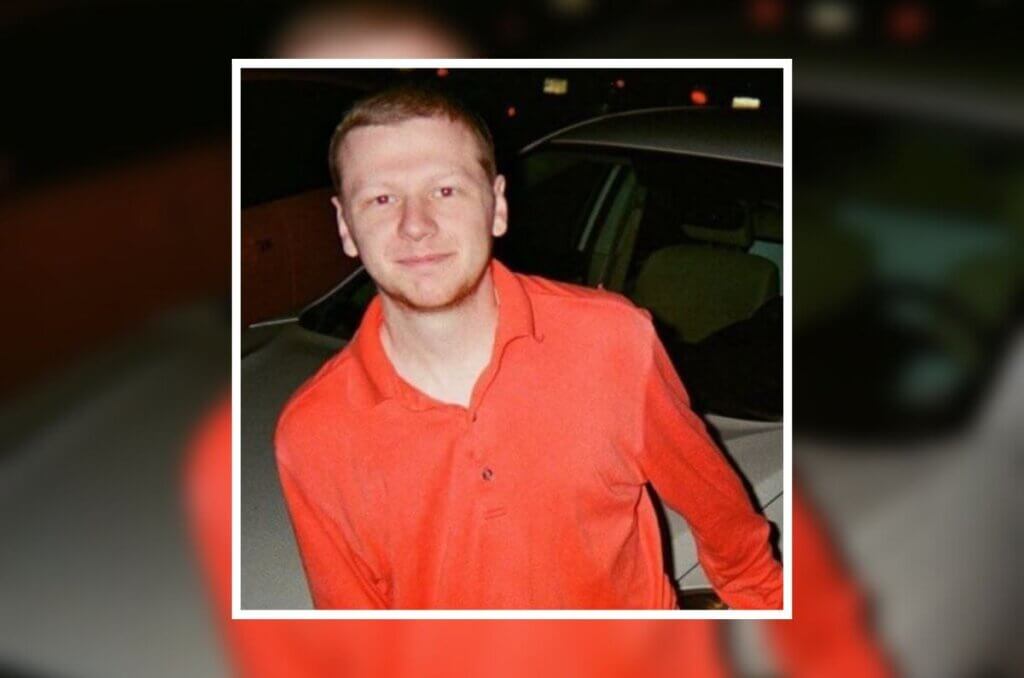
    Aaron Bushnell (Photo: Social Media)AARON BUSHNELL (PHOTO: SOCIAL MEDIA)

    Israel’s legitimacy in the West is not long for this world. There is no way to come back from what we have seen over the past five months, no way to collectively forget the bombings of hospitals, the children white with shock and plaster, the nurses shot by snipers while at work in operating theaters, the amputations without anesthesia, the toddlers screaming for their martyred parents, the starving pregnant women, the men paraded naked and bound, the elders imprisoned and tortured, the bodies of loved ones eaten by animals, the babies crying out in pain because they have not been fed (and will not be fed), the bodies of infants decomposing in ICU incubators. We will never unsee the teenagers camped out to block aid trucks, the soldiers parading with Palestinian women’s underwear, the celebratory TikToks of Israelis detonating university buildings and schools, the politicians calling publicly to ‘eliminate everything‘ and to ‘kill them all.’ Last December, after a US citizen self-immolated in front of the Israeli embassy in Atlanta (in a protest that was swiftly buried by the mass media), the consul general of the embassy called it an act of ‘hate’ against Israel, claiming that ‘the sanctity of life is our highest value.’ We laugh at this statement. We laugh because if we do not laugh, we will scream. 

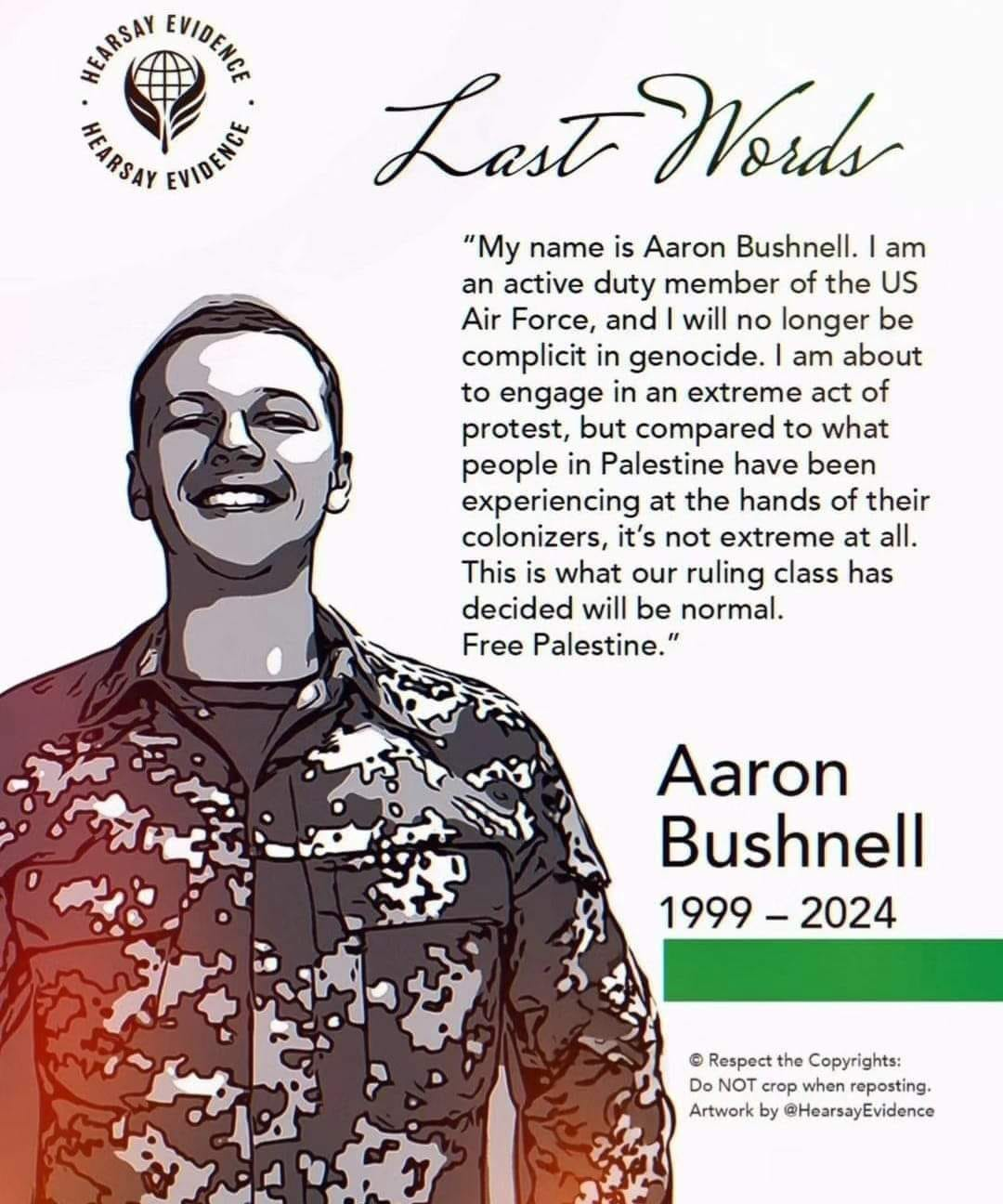
    Aaron Bushnell screamed ‘FREE PALESTINE’ as his body burned outside the Israeli embassy in DC on the 25th of February 2024. The force of his act has stirred the deepest parts of those of us struggling against Israeli/US genocide from within the heart of the empire. We will echo his screams and we will amplify them, a million times over, and from all corners of the earth. In death, Bushnell joins those martyred while resisting within Palestine, not only every resistance fighter but every civilian killed. On the day of Bushnell’s protest, almost one hundred people were martyred in Palestine, including Muhammed al-Zayegh, just 60 days old, who died of starvation. We honor them all. 

    What Bushnell’s act revealed- as he knew it must- was that zionist lies are crumbling. On the day that he burnt himself alive, Aaron Bushnell wore his army fatigues and declared himself an active member of the US air force, not because he wanted to reclaim American nationalism (he was a self-declared anarchist with plans to leave the airforce), but because he understood the power of where he stood in relation to US empire. What his act declared so unflinchingly was that even in the heart of the empire– a twenty-five-year-old white man, an active member of the US military raised in a zionist household- the lies no longer hold. 

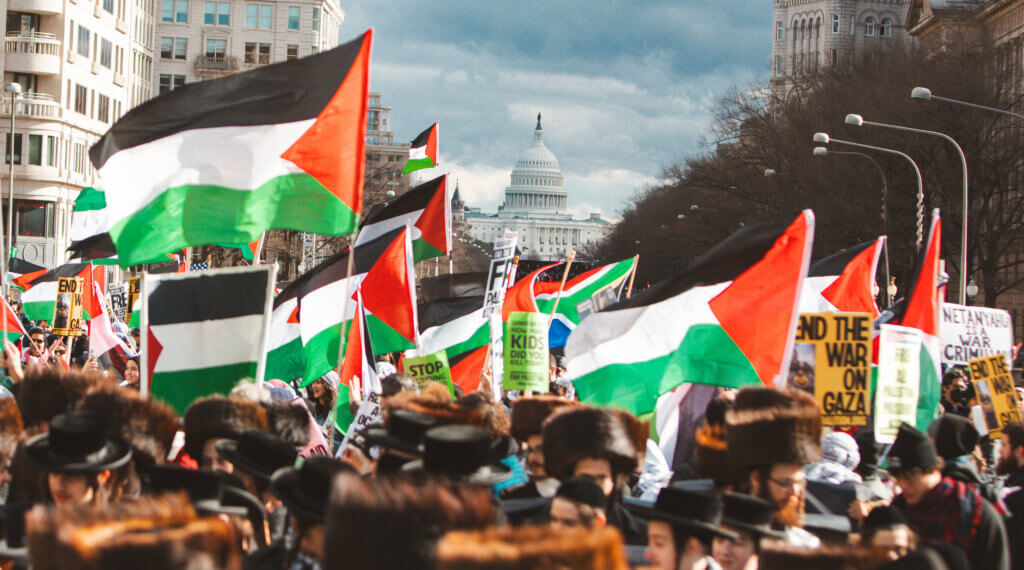
    Upwards of 400,000 Pro-Palestine protestors take the streets in a national march in Washington DC to show support for Palestinians and call for a ceasefire and end the genocide in Gaza, January 13, 2024. (Photo: Eman Mohammed)
    UPWARDS OF 400,000 PRO-PALESTINE PROTESTORS TAKE THE STREETS IN A NATIONAL MARCH IN WASHINGTON DC TO SHOW SUPPORT FOR PALESTINIANS AND CALL FOR A CEASEFIRE AND END THE GENOCIDE IN GAZA, JANUARY 13, 2024. (PHOTO: EMAN MOHAMMED)

    We cannot ignore what this means. Despite a global propaganda machine working overtime to tell us that targeting hospitals is not targeting hospitals and killing civilians is not killing civilians, awareness of Israel’s crimes is spreading like wildfire across the globe. This is due in no small part to the tenacity of the Palestinian armed resistance, which has managed to defy containment by Israel’s 40-mile long ‘iron wall’ and continues to resist an Israeli invasion on the ground. At the same time, Palestinian artists, writers, journalists, and academics have worked tirelessly to dismantle zionist colonization of the global- particularly Western- imaginary, with story, with song, with music, and with art.  

    This resistance in all its forms is having ripple effects. Since October 7, people have continued to flood the streets in every nation with chants of ‘In our thousands, in our millions, we are all Palestinians.’ Josephine Guilbeau, a former member of the US military, said on Monday at a vigil for Bushnell that ‘I don’t think this is going to be the last of our military members resisting. I feel like there are many, many Aarons out there. Who will speak for them?’ Israel’s lies have long lacked legitimacy among the peoples of the Global South, and particularly the Middle East. But today Taylor Swift fans show up to protests holding signs declaring ‘Swifties for Palestine‘ and videos of lawyers proclaiming the Israeli occupation existentially illegal before the International Court of Justice go viral on Twitter. Palestinian journalists reporting from Gaza have bigger online followings than the US president, and buildings in the West are emblazoned with their images and quotes. In a statement responding to Bushnell’s protest the Popular Front for the Liberation of Palestine (PFLP) stated “(Bushnell’s act) indicates that the status of the Palestinian cause, especially in American circles, is becoming more deeply entrenched in the global conscience, and reveals the truth of the zionist entity as a cheap colonial tool in the hands of savage imperialism.”

    Israel’s legitimacy is crumbling, and it is taking the US empire with it. This is not to suggest that Israel is pulling the strings- rather, it shows how far the US is prepared to go before it will risk its hegemony in the region. The refusal of all but a handful of states to join the US-led coalition ‘Operation Prosperity Guardian’ to defeat Yemen in the Red Sea (notable among absentees was Saudi Arabia, which has since joined the BRICS group of nations alongside China, Russia and Iran) was telling. Increasingly, the imperialism of the Western media is being exposed, and voices from the Global South locating these lies within much longer histories of Western colonial violence are being heard in new ways, by a new generation. 

    In a talk he gave on October 21st, 2023, historian Ilan Pappé stated: ‘Before October I wrote an article saying this is the beginning of the end of Zionism…after last week in fact I’m even more convinced. As happened in apartheid South Africa, this is a very dangerous period. The regime fights for its life….historically I have no doubt that this is what we are experiencing, we are experiencing cruelty and brutality because a certain regime is losing it, not because it’s winning, but because it’s losing.’ Israel’s attacks on Iran and Lebanon, attempting to lure the US into a broader regional war, are another sign of that desperation. 

    When he stood in front of the Israeli embassy on Monday, engulfed by dark orange balls of flame, Aaron Bushnell was choosing to embody his refusal of this brutality. “I will no longer be complicit in genocide’ he had explained moments earlier, ‘I’m about to engage in an extreme act of protest, but compared to what people are experiencing in Palestine at the hands of their colonizers, it’s not extreme at all. This is what our ruling class has decided will be normal.” What Bushnell did was an act of fierce, principled love in a situation of extreme desperation, in which the US political machinery and zionist media have cornered those of us who do not wish to be complicit in genocide into an increasingly restricted space.

    Bushnell’s act will be (and has been) misrepresented by the imperialist mass media; this is no surprise. As with Mohamed Bouazizi, the Tunisian vendor who burned himself to death in protest against the corruption of the Tunisian government, they will attempt to strip Bushnell’s death of its political content, to pathologize his act as somehow the result of individual mental illness (as if that were in itself antithetical to agency), to deem it a personal tragedy. Even within the movement, organizers have responded to Bushnell’s death by claiming that we must act ‘collectively’ and not ‘individually,’ lamenting his act as misguided and desperate. But what Bushnell’s protest demonstrated was that we are always-already collective, and that it is because of this that the truth of Israel’s violence will not be suppressed. This truth will resonate from within the deepest cracks of empire, a testament to the survival of that which binds us to those resisting in Palestine. It will appear in a brilliant burst of light, in millions of bodies flooding into the streets, in a chorus of voices thundering Bushnell’s words and those of every person resisting in Palestine since 1948: 

    FREE PALESTINE

    FREE PALESTINE

    FREE PALESTINE

    Aaron Bushnell

    What did 7 October achieve?

    Basem Naim The Electronic Intifada 5 February 2024

    Crowds demonstrate with the Palestinian flag
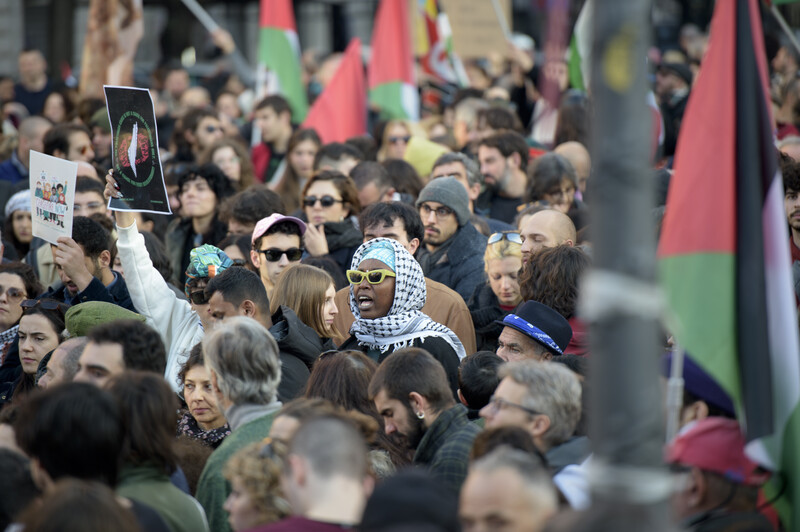
    Millions have come out around the world in support of the Palestinian struggle for freedom, here in Rome on 27 January.  Marcello ValeriZUMAPRESS

    As we approach the fifth month of the Zionist aggression against our Palestinian people, it is perhaps useful to take a step back and evaluate both the 7 October Al-Aqsa Flood operation and its aftermath.

    Was 7 October legitimate? What did it achieve?

    What have we learned from the Zionist reaction? What are the repercussions for all parties, inside or outside Palestine, for local, regional or global actors?

    First, it is important to establish that everyone who communicated with the leadership of Hamas before 7 October, from politicians and diplomats to mediators and journalists, heard a clear, unequivocal message: An explosion was only a matter of time.

    The reason? Israel was trying to transform what is a political conflict over a Palestinian state, the right of return of Palestinian refugees, and self-determination for the Palestinian people, into a religious conflict pitting Judaism (and Christianity) against Islam.

    These policies included Israel’s attempts to exert full control over al-Aqsa mosque, with a view to its eventual demolition; its decades-old attempts to Judaize Jerusalem, expelling Palestinians from their homes and lands; and its de facto annexation of the wider West Bank along with threats to formally annex its illegal settlements.

    They also included the continued siege on Gaza, under which the coastal strip and its 2.3 million people were isolated and imprisoned. They included the mistreatment of Palestinian prisoners, which accelerated under Itamar Ben-Gvir, the national security minister.

    And they finally included attempts at persuading, under American cover, Arab and Muslim countries to ignore Palestinian rights and normalize relations with the Zionist entity without resolving the Palestinian issue, rendering it a purely domestic Israeli concern.

    Hamas leaders conveyed all of these issues to anyone who would listen, but no one took heed. Either they considered warnings of an explosion an empty threat; they had fully adopted the Zionist narrative that Hamas was “deterred” and primarily concerned with consolidating its rule in Gaza; or they were intoxicated by Zionist power.

    Operation Al-Aqsa Flood, led by Hamas and other resistance factions, was a response to what was a clear and imminent danger to our national cause, and a reaction to regional and international indifference to Palestine and its people.

    Without the preemptive step of 7 October, the Palestinian cause could have been forgotten and erased entirely.

    But did it achieve its desired goals?

    Incredible resilience

    There are two phases to discuss. The first began and ended on 7 October, and the second is what followed and continues to this day.

    The goals of 7 October were fully achieved. Al-Aqsa Flood demolished the myth of Israel’s invincible army and all-seeing, all-knowing intelligence agencies, capable of striking in every corner of the region and the world.

    All this was done with just a handful of men with simple, limited means but firm faith and fierce resolve.

    In the second phase, the Palestinian people have paid a very steep price. But Palestinians have deep faith in their right to a free and dignified homeland.

    Alongside a resourceful resistance that has surprised all observers, friends and foes alike, they have thwarted Israel’s plans to crush the resistance, deport Gaza’s population and recover its captives.

    After four months, it is clear that the resistance leadership still firmly manages the battlefield with skill and ingenuity, continuing to inflict painful blows on the enemy military.

    Despite all the horrors unleashed on our people – over 65,000 tons of explosives have been dropped on Gaza 2.3 million people since 7 October – Israel has failed to break people’s will and attachment to their land.

    Our people, despite the pain and suffering, have shown incredible resilience, astonishing the world.

    And despite all technological and intelligence efforts from the East and West to locate captives in Gaza, the enemy has failed at every attempt. The Israeli military has managed to kill some captives, along with those who came to their rescue, but no captive has returned to their families except under the conditions and timeline set by the resistance.

    The core question is now: What next?

    We are still in the middle of a fierce battle and it may be premature to draw conclusions. However, all indicators point in one direction: What comes next will not be the same as what had been before 7 October.

    Al-Aqsa Flood and everything that has followed will alter the strategic terms of the conflict in favor of our Palestinian people and their just cause on the national, regional or international levels, as well as for the enemy and its future.

    Change at the top

    On the national level, our people have regained their vigor and confidence in their ability to overcome the shameful Oslo reality and its catastrophic consequences. Most importantly, the possibility of liberation, return and dismantling Israel’s occupation has become not only possible but very likely.

    One of the consequences is that the leadership whose political project failed with the 1993 Oslo accords and brought national calamity cannot remain at the helm.

    Opinion polls undertaken since the aggression began confirm this truth. We must turn a new page in our intra-national relations, to build on the battle’s outcomes and rebuild the Palestinian house democratically in light of the new realities established by this battle.

    The most important step is to construct the Palestinian political institutions and the Palestinian national project to reflect the changes over the past decades to be truly representative of our people’s aspirations, sacrifices and political experience, especially the disastrous Oslo experience.

    On the regional level, Al-Aqsa Flood has had fundamental and strategic repercussions. Most importantly, it disrupted the catastrophic “normalization” project, which would have certainly ended with the erasure of the Palestinian issue.

    The 7 October operation demonstrated to those who looked to Israel for support and protection that the Zionist entity is fragile and too weak to even protect itself. The battle has opened a huge divide between the region and its people on one side, and Israel and the possibility of its integration on the other.

    This turn of events has revived in people what had almost died due to lean years in the region – rekindling the great hope of return, liberation of holy sites and self-determination.

    Gaza has presented an exceptional model of initiative and action despite enormous challenges and obstacles. If besieged Gaza can do this, why can’t we, throughout the Arab homeland, repeat the experience?

    This in turn will undoubtedly have fundamental repercussions on how the peoples of the region view themselves and their capacity for action and change, regardless of their political orientations or geographic location.

    We can thus expect a new cycle of the Arab Spring in the region since the official response to Gaza’s bloody confrontation has been far from the aspirations of the nation, its peoples and the historical responsibility of the Arab nation to the Palestinian cause.

    End the aggression

    On the international level, the breakthrough was significant, strategic and irreversible.

    Firstly, the Palestinian issue, despite Zionist attempts to bury it, has become a personal cause for millions of people worldwide.

    The world has directly witnessed the reality of this racist project, a stark contrast to its claims of representing the West and the values of freedom, democracy and respect for human rights. It has instead revealed itself as a bloody predator, playing the role of victim and extorting humanity for decades.

    The significance of this narrative shift lies in Israel’s reliance on two main pillars of support for its survival: its material strength (military and economic) and international acceptance of its legitimacy.

    Our people and their resistance have dealt with the first factor. The second has collapsed dramatically in the aftermath of 7 October.

    On the official international level, the battle is still in its early stages. Those who founded this malicious project, built and nurtured it for decades within the framework of mutual interests between the Zionist movement and imperialist powers, have rushed to its rescue when it nearly collapsed.

    However, we can at least observe important transformations. Many countries have realized that erasing the Palestinian issue and bypassing the Palestinian people is simply not possible.

    No one will enjoy security and stability in the region or beyond without resolving this conflict and meeting the inherent rights of the Palestinian people.

    As for the Zionist enemy, the battle and its repercussions have deepened severe internal divisions, be they political, social or ideological. One of the main reasons why this battle is continuing is the Israeli leadership’s attempts to escape the consequences of their actions, fearing the day after and the threat of collapse.

    Most importantly, 7 October landed a strategic blow to the Israeli public’s faith in its political, security, and military leaderships, and their ability to lead, provide security or protect their citizens.

    The resistance and its leadership still firmly hold the reins. On the field, there is still ground to cover in defeating the enemy, forcing it to stop the aggression and withdraw from our beloved Gaza.

    At the same time, efforts are ongoing to relieve our people and alleviate this humanitarian disaster.

    On the national political level, some are trying to revert us to the political context prior to 7 October, but it should be clear that neither the resistance nor our people will accept the status quo ante or any outcome that does not honor our people’s enormous sacrifices.

    Here it may be useful to point out that the two priorities of the resistance at this stage – which it communicates to states and mediators – is to immediately and comprehensively end the aggression and secure the withdrawal of all occupation forces from the entirety of the Gaza Strip, and address the humanitarian catastrophe created by the aggression.

    Any proposals that do not immediately achieve these two goals as a first step will not be accepted and will not be successful.

    Political process

    A medium and long-term political process can begin only later, starting with a prisoner exchange, the lifting of the siege and rebuilding what the occupation has destroyed.

    This should then be followed by a reorganization of the Palestinian body politic on foundations that restore the credibility of the original national project, culminating in a political process to end the Zionist occupation, uphold the Palestinian right to self-determination, establish an independent Palestinian state with Jerusalem as its capital and secure the return of refugees in accordance with relevant international resolutions.

    Al-Aqsa Flood marked a defining moment and a strategic opportunity, not only for our people but for our Arab and Islamic nations, to regain the initiative in civilization, presenting a different model for managing human affairs.

    The West, its leaderships and systems, have failed to protect humanity from fascism, racism and their catastrophic impacts on humanity.

    This opportunity must not slip from our hands, or we may, God forbid, have to wait decades for a similar moment. This battle should become a launching pad for our people and their just cause, just as we see massive international transformations with the decline of the unipolar system to a multipolar, or multi-actor, system.

    This would be marked by the advance of the Global South, of which we are part, to a position befitting its peoples after centuries of colonization, enslavement, resource plunder and marginalization.

    Dr. Basem Naim is a former Palestinian minister of health and a member of the political bureau of Hamas. He has previously appeared and published in several media outlets, including Australia’s ABC network, the UK’s Sky NewsThe GuardianMiddle East EyeAl Jazeera and The Jewish Daily Forward.

    Summing up of preceding post : Yes, Peace Is Made With Murderers

    The Haaretz article delves into the critical and often overlooked aspect of the Israeli-Palestinian conflict – the potential role of Palestinian prisoners in facilitating a long-term peace settlement, especially in the aftermath of the Gaza war. This consideration is rooted in two primary motivations: the vision articulated by U.S. President Joe Biden for the establishment of a Palestinian state alongside Israel, and the urgent necessity to reconstruct and govern the Gaza Strip effectively post-conflict.

    Biden’s vision, as outlined in a Washington Post column, emphasizes revitalizing the Palestinian Authority (PA) to govern a new Palestinian state with enhanced political legitimacy and operational efficiency. This vision is intertwined with the immediate need for a robust governance structure in Gaza to manage the colossal task of rebuilding the territory’s devastated infrastructure and social services, ensuring law and order, and preventing a slide back into violence.

    The article highlights the unique position of Palestinian prisoners, who, through their sacrifice and involvement in the national struggle, hold symbolic and practical significance that could be pivotal in governance and peace-building efforts. Drawing on historical examples from Northern Ireland and South Africa, where prisoners played instrumental roles in negotiating and implementing peace agreements, the authors argue for a similar engagement with Palestinian prisoners.

    The narrative underscores the complexity of rehabilitating Gaza amid the chaos of war and political fragmentation. It suggests that integrating Hamas into a political framework, possibly within the Palestine Liberation Organization (PLO), could be facilitated by a prisoner exchange, boosting Hamas’s short-term prestige but ultimately aiding in its political integration for long-term stability.

    The opposition from Israeli Prime Minister Benjamin Netanyahu to Biden’s blueprint, stemming from a long-standing policy to prevent a unified Palestinian state, is critiqued. The article posits that Netanyahu’s approach, favoring a fragmented governance model based on clans over a centralized authority, is unsustainable and neglects the socio-political realities shaped by the conflict.

    The authors propose that the release of security prisoners committed to non-violence could enhance the political legitimacy and administrative capacity of a post-war Palestinian government. They spotlight the broad support among Palestinians for figures like Marwan Barghouti, suggesting that such prisoners, once released, could assume leadership roles conducive to peace and reconciliation.

    Reflecting on a comparative study of political-security prisoners in ethno-national conflicts, the article elucidates the distinct impact of prisoners in conflict resolution, contrasting the Oslo Accords’ failure to engage prisoners meaningfully with the successful integration of prisoners in the peace processes of Northern Ireland and South Africa. It emphasizes the prisoners’ role in shaping national consciousness, agenda-setting for resistance movements, and transitioning from armed struggle to negotiation.

    The article concludes by advocating for a significant reevaluation of Israel’s stance on Palestinian prisoners, suggesting that engaging with them could form a crucial part of a broader strategy for achieving a two-state solution. It calls for Israel to adopt a more inclusive approach, recognizing the potential of prisoners to contribute to peace-building and governance, thereby aligning with international efforts for a sustainable resolution to the Israeli-Palestinian conflict.

    Blog at WordPress.com.

    Up ↑