21 Apr 2013
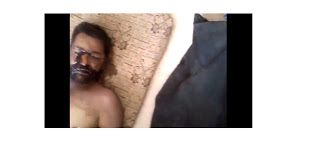
There is a lot of speculation about how the butchery took place exactly. Considering that the town is close to the capital, it is likely the regime is trying to make a point. The same happened last year when rebels tried to enter Damascus in the beginning of the summer.

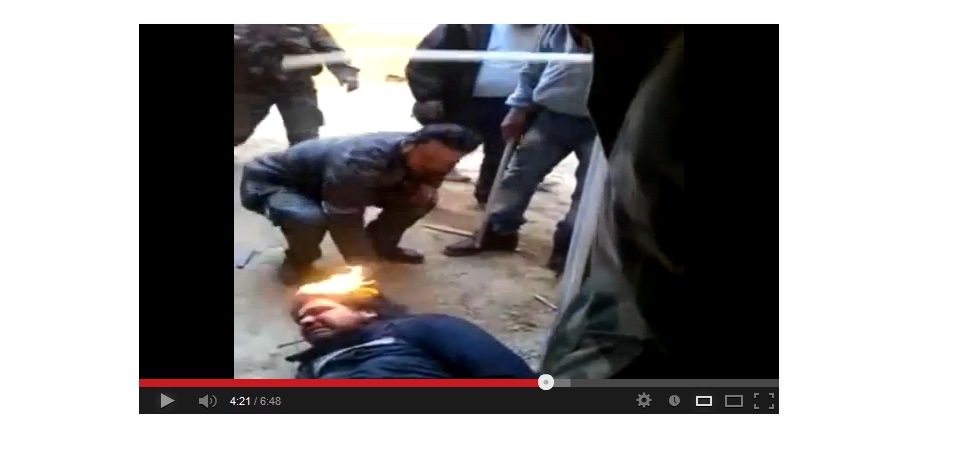
Why did the bodies of 110 men suddenly wash up in the river running through Aleppo city six weeks ago? A Guardian investigation found out
- Share 36
-

-
-
Martin Chulov with photographs and video by Ben Solomon
- The Guardian, Monday 11 March 2013
-


Bodies revealed by the Queiq river’s receding waters. Photo: Thomas Rassloff/EPA
It is already one of the defining images of the Syrian civil war: a line of bodies at neatly spaced intervals lying on a river bed in the heart of Syria’s second city Aleppo. All 110 victims have been shot in the head, their hands bound with plastic ties behind their back. Their brutal execution only became apparent when the winter high waters of the Queiq river, which courses through the no man’s land between the opposition-held east of the city and the regime-held west, subsided in January.
It’s a picture that begs so many questions: who were these men? How did they die. Why? What does their story tell us about the wretched disintegration of Syria? A Guardian investigation has established a grisly narrative behind the worst – and most visible – massacre to have taken place here. All the men were from neighbourhoods in the eastern rebel-held part of Aleppo. Most were men of working age. Many disappeared at regime checkpoints. They may not be the last to be found. Locals have since dropped a grate from a bridge, directly over an eddy in the river. Corpses were still arriving 10 days after the original discovery on January 29, washed downstream by currents flushed by winter rains.
The grate over the Queiq river in southern Aleppo, which locals have placed hoping to catch the bodies that flow downstream see clip in full article
Just after dawn on 29 January, a car pulled up outside a school being used as a rebel base in the Aleppo suburb of Bustan al-Qasr with news of the massacre. Since then a painstaking task to identify the victims and establish how they died has been inching forwards. The victims, many without names, were mostly buried within three days — 48 hours longer than social custom dictates, to allow for their families to claim them.
Ever since, relatives have been arriving to identify the dead from photographs taken by the rescuers. Each family member who has made the journey to a makeshift office, set up inside a childcare centre, brings with them accounts of when they last saw their father, son, cousin, or brother and where he had travelled before he was murdered.
There are no women on the grisly slideshow of dead men that is replayed in melancholy slow motion every time a relative arrives. Nor are there more than a handful of males aged over 30. Most of the dead dragged from Aleppo’s Queiq River were men of working age.
Another thread strongly unites the fate of the river massacre victims; each of them had either been in the west of the city, or had been trying to get there. They had to pass though checkpoints run by the Syrian army, or their proxy militia, the Shabiha. The process involved handing over identification papers that detailed in which area of the city the holder of the papers lived.
………….
1:00 AM Damascus Time
For Prompt Release and Distribution
الأن تحصل مجزرة
حصري_إدلب _كنصفرة: استشهاد أكثر من150مدني في كنصفرة نتيجة قصف مركز على تجمعات النازحين المدنيين في المزارع بين الزيتون ..كانوا هاربين من مداهمات الامن و الشبيحة و هم من القرى التالية كنصفرة, كفرعويد, المزره 13 شهيد منهم من عائلة واحدة من بيت الحاج علي 4 شهداء أخوة
… القرى الان مكلومة و تدفن شهداءها تحت القصف و العدد مرشح للزيادة..أغلب الجثث وصلت متفحمة..
للعمل على إيقاف هذه المجزرة الآن: انشر هذا الخبر أيها القارئ الكريم في كل جروب أنت مشترك فيه، وفي صفحات الأخبار كلها
A massacre is ongoing right now.
Idlib, Kensafra, More than 150 civilians were murdered in Kensafra as a result of the targeted bombing of the gathering of refugees in between olive orchards. in several villages (Kensafra, Kafar-oueyd, Mazra). There are 13 martyrs from one family 4 brothres.
Villages are in mourning now and they are burying he martyrs. The number is increasing and most corpses arrived burned like charcoal.
Please distribute this on Facebook and in every news site.
بيان من برهان غليون
استغل النظام السوري التوقيع على بروتوكول المراقبين العرب في اطار المبادرة العربية للقيام بهجوم وحشي لا سابق له على المدن والاحياء السورية الثائرة.لقد بلغ عدد الشهداء في اليوم الاول لهذا التوقيع مئة وعشرين شهيدا وهو يتجاوز اليوم الثلاثاء المئتين وعشرين شهيدا اضافة الى مئات الجرحى والمفقودين.
ادعو الامين العام للجامعة العربية السيد نبيل العربي والامين العام للامم المتحدة بان كي مون للتدخل فورا لوقف المجازر التي يرتكبها النظام السوري بحق المدنيين العزل متسترا بتوقيعه على بروتوكول المراقبين كما ادعو الراي العام والمجتمع الدوليين للتظاهر والاحتجاج وعمل كل ما بوسعهما لاعلان تضامنهما مع الئعب السوري والعمل بجميع الوسائل لوضع حد لمجازر النظام السوري وفضح اعماله الوحشية.
A Press Release From Burhan Ghalyoun
The Syrian regime is using its signing on the observers’ protocol within the AL initiative to conduct a barbaric vicious attack on dissident villages and towns. The number of martyrs reach 120 on the first day, and today it is exceeding 220 martyrs in addition to hundreds of wounded and missing.
I call on the Secretary General of the Arab League, Mr. Nabil Al-Arabi and the Secretary General of the UN to interfere immediately to put a halt to the massacres being commited by the Syrian regime against unarmed civilians hiding under its signature of the observers’ protocol. I also call on the international community and the international public opinion to demonstrate and protest and do everything they could to declare solidarity with the Peoples of Syria and to spare to method to halt the massacres committed by the Syrian regime and to expose its barbaric actions.

 |
| Some of those who were massacred in Kufur Qasim on October 29, 1956. |
By Seraj Assi
On October 29, 1956, the Israel Border Police (Magav) announced a sudden curfew on the village of Kufur Qasim located on the Israeli side of the Green Line. Colonel Yiskhar Shadmi, then the Brigade Commander of Israel’s Central District, gathered the border patrol battalion commanders and instructed them to shot and kill anyone found outside his or her place during the curfew, including women and children. When asked what to do with those workers who were unaware of the curfew, he replied with the cynical Arabic term “Allah Yirhamhu (May God have mercy on him).
Less than thirty minutes after the curfew had been announced, village workers returning home were lined up and shot to death. In less than two hours, the massacre claimed the lives of 48 Palestinian citizens all but four of whom were residents of Kufur Qasim. The majority of the victims were children and women. One of the victims was a pregnant woman who was killed with her unborn child.
On November 20, 1957, a sulha (ceremony of reconciliation) was held in Kufur Qasim and attended by over 400 representatives of the Israeli society and Arab villages. Local Palestinian newspapers reported how Israeli military authorities forced representatives from the families of the victims to attend the sulha in an attempt to sweep the crime under the rug of “Arab tradition”.
Shira Robinson has summarized the Israeli responses to the massacre in the refusal to hold public trial, the release of the convicted soldiers, the appointment of the responsible commanders to higher government posts and the imposition of the sulha on the victims’ families.
In fact, Israel’s responses to the massacres were consistent with its founding ideology. Indeed, what made the murder of forty-eight innocent civilians possible and forgivable from the Israeli standpoint was the very idea of the Jewish State that belonged to the Jewish People, in which Palestinian Arabs were seen as permanent enemies. A series of Israeli massacres of Palestinians committed over the past decades was grounded in this ethnocentric vision.
From the Palestinian perspective, the motivation behind the Kufur Qasim massacre was linked to the Zionist commitment to cleansing the country of its native Palestinian population. The massacre was a direct outcome of Israel’s policies towards the Palestinian Arab minority since 1948. These included, as Robinson has pointed out, the suppression of their national identity and collective memory, the deprivation of their civil rights, the confiscation of their land and the cultivation of racist attitudes against them in Jewish schools and public discourse.
Kufur Qasim Massacre left no doubt that Israeli violence towards Palestinian citizens was an end in itself. Its target was the generation of the Nakba whose memory of explosion, loss and family separation was still fresh. The massacre took place in the midst of the military rule (1949-66) imposed by Israel on the remaining Palestinian population, which was completely cut off from the rest of the Arab world, the Palestinian people and from each other. Captured in the iron cage fashioned by the military regime, the first generation of Palestinians inside Israel was born in total isolation.
Two decades passed before the Land Day events of March 30, 1976 culminated in the murder of six Palestinian citizens by the Israeli army and security forces. Twenty-four years later, in September 2000, the Second Intifada broke out in Palestine and spread throughout the Arab villages inside Israel. By early October 2000, thirteen Palestinian citizens had been massacred by the Israeli police. The victims were all from the young generation whose insistence on its Palestinian identity had reached maturity in the course of the annual Land Day commemorations.
These events were met by a young generation whose collective memory was constructed upon the rejection of the old sulha manipulations. This generation knows very well how to draw strong links between the Kufur Qasim Massacre and the other Israeli massacres of Palestinians in Deir Yasin, Qibya, Nahalin, Rafah and Gaza. The strong line etched in the memory of this generation stretched between the Nakba of 1948 and the Intifada of October 2000. It reminds us that the memory of a people can never be suppressed.
During the past decade a new generation of Palestinian filmmakers, rappers, writers and poets came to celebrate the decisive failure of Israel to de-Palestinize their memory. In early 2010, the fresh Palestinian hip-hop band Damar (destruction), composed of two young Palestinian girls from two small villages near Nazareth, sent this clear message:
“You think that the Third Generation will be Israeli? Come on! Time does not make us forget, but remember”
– Seraj Assi is a PhD Candidate in Arabic and Islamic Studies, Georgetown University, Washington DC. He contributed this article to PalestineChronicle.com.

On the evening of October 29, 1956 Israeli troops shot and killed 49 unarmed Palestinian civilians in the village of Kafr Qasem, 20 km east of Tel Aviv near the green line.
Now the village has a population of 18,100 Palestinians, some of who marched today alongside neighboring Arab villages to commemorate those killed 1956. People marched from the village center to the memorial site and placed candles for those killed; village leaders made speeches in commemoration.
Background
From 1949 till late 1966 the Israeli government decided to consider all its Palestinians citizens a “hostile population “. All major Arab population centers were governed by military administrations and divided into four districts.
Seven Arab villages, including Kafr Qasim, all along the green line, were considered as high infiltration threat. The villages were patrolled regularly by border police (Magav) under the command of Israeli army brigade commander Colonel Issachar Shadmi. Those villages, containing some 40, 000 villagers, were called the Central District.
October 29, 1956
On the day of the massacre, the Israeli army decided to place all seven villages along the green line under a curfew called the War Time Curfew, from 5 in the evening until 6 the following morning. Israeli soldiers were instructed to shoot and kill any villager violating the curfew.
Even though the border police troops were given the order by their commander at 3:30 in the afternoon, they only informed the mayor of Kafr Qasim about an hour later, leaving a window of 30 minutes for the 400 villagers working in the fields or outside the village to come back home.
According to Israeli investigation committee records, from 5:00 pm until 6:30 on October 29, 1956, border police shot and killed 49 villagers from Kafr Qasim as they tried to return home. Among those killed were 23 children and one pregnant woman.
The killed and injured were left unattended through the night. After the curfew ended, villagers took the injured to hospitals and laid the dead to rest in a mass grave.
In his testimony during the investigation, the survivor Jamal Farij said that soldiers shot villagers without any warning. He was driving back to his village along with 28 passengers in a truck.
‘We talked to them. We asked if they wanted our identity cards. They didn’t. Suddenly one of them said, ‘Cut them down’ – and they opened fire on us like a flood.’
Legal Action
Eight Israeli soldiers were charged by the Israeli court and found guilty of murder. The two commanding officers of the unit, Malinki and Dahan, received 17 and 15 years’ imprisonment, respectively. These sentences were later reduced.
Colonel Issachar Shadmi was tried and found guilty only of extending the curfew without authority. He was released after paying a fine of one Israeli cent. On November 1959, after two years, the Israel Committee for the Release of Prisoners released all eight convicted soldiers on orders.
Malinki retained his military post and got a promotion to be in charge of security for a top secret Israeli Nuclear Research Center located in the Negev. Dahan was appointed as the head of the “Arab Affairs” department by the city of Ramla, another Palestinian village Israel taken over during 1948.
During Israel’s creation in 1948, and years later, Israeli soldiers shot and killed hundreds of Palestinian civilians. No legal action has been taken against any Israeli leader, commander, or soldier involved in what would later become known as the Palestinian Nakba.
Ghassan Bannoura – Palestine News Network
October 31, 2010
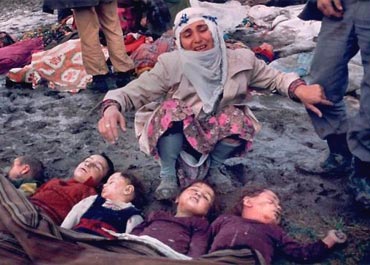
Our doves are still here. Our carnations give fragrance.The sparrows sing their usual songs. Yet Abu Zuhair is nowhere to be found.
Beirut you took all I had. You took my last spark in life and my heart dies dead on your streets.
Full text here
 band annie's Weblog