Search

band annie's Weblog

I have a parallel blog in French at http://anniebannie.net

Category

literature

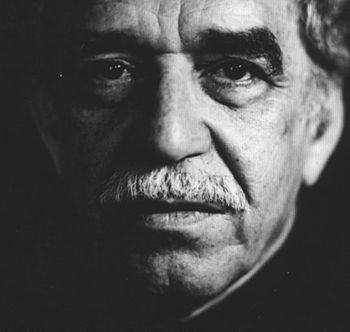
Gabriel Garcí­a Márquez

gab

“If I knew that today would be the last time I’d see you, I would hug you tight and pray the Lord be the keeper of your soul. If I knew that this would be the last time you pass through this door, I’d embrace you, kiss you, and call you back for one more. If I knew that this would be the last time I would hear your voice, I’d take hold of each word to be able to hear it over and over again. If I knew this is the last time I see you, I’d tell you I love you, and would not just assume foolishly you know it already.” 
 Gabriel Garcí­a Márquez


“Tell him yes. Even if you are dying of fear, even if you are sorry later, because whatever you do, you will be sorry all the rest of your life if you say no.” 
 Gabriel Garcí­a Márquez, Love in the Time of Cholera

Pity The Nation…

Pity the nation that is full of beliefs and empty of religion.
Pity the nation that wears a cloth it does not weave,
eats a bread it does not harvest,
and drinks a wine that flows not from its own wine-press.

Pity the nation that acclaims the bully as hero,
and that deems the glittering conqueror bountiful.

Pity a nation that despises a passion in its dream,
yet submits in its awakening.khalil gibran pity the nation

Pity the nation that raises not its voice
save when it walks in a funeral,
boasts not except among its ruins,
and will rebel not save when its neck is laid
between the sword and the block.

Pity the nation whose statesman is a fox,
whose philosopher is a juggler,
and whose art is the art of patching and mimicking.

Pity the nation that welcomes its new ruler with trumpeting,
and farewells him with hooting,
only to welcome another with trumpeting again.

Pity the nation whose sages are dumb with years
and whose strong men are yet in the cradle.

Pity the nation divided into into fragments,
each fragment deeming itself a nation

So, did you make the connection between the nation Khalil based his poem on: Lebanon/Syria and Pakistan?

Nihad Sirees’s ‘The Silence and the Roar’ One of PW’s Top 10 Books of 2013

By on November 1, 2013 • ( 2 )

Publishers Weekly today revealed their top 101 Best Books of 2013, which span the adult genres, “nonfiction; fiction; poetry; religion; mysteries and thrillers; cookbooks and lifestyle; health; parenting; crafts and hobbies; comics and graphic novels; science fiction, fantasy and horror; and romance and erotica.” From this list, PW also selects an unranked “top ten”; among these is Syrian novelist and screenwriter Nihad Sirees’s The Silence and the Roar, beautifully trans. Max Weiss:1117-1In PW‘s citation, they note that, “With incisive wit, Sirees marks the celebration that affects freedom, romance, and the right to simply walk down the street unmolested.”Sirees’s was the only book translated from the Arabic that made the list, and — it seems from a cursory look — one of very view translations.

Also this year, Sirees won Germany’s Coberg Rückert Prize, an award given by the German city of Coburg, and a PEN award for Writing in Translation. Sirees is the author of seven novels, a number of plays, and acclaimed television dramas. He was forced to leave Syria in January 2012.

On ArabLit:

‘The Silence and the Roar’: On Life as a Silenced Writer  – Interview with Sarah Irving

Two Views of ‘Syria Speaks’: A Lens on Syria Through the Arts – By Sarah Irving and Nadia Ghanem

Author Nihad Sirees: ‘We Are Fighting the Formal History of a Regime’– By Nadia Ghanem

Syrian Novelist Nihad Sirees: ‘Creative Writing is Stalled Today’ – From Jadaliyya

‘When They Start to Think Only God is With Them, This is Bad’ – From interviews on CNN and BBC

Nihad Sirees on Writers in Syria: ‘What Should We Talk About?’ – By M. Lynx Qualey, from Qantara

Novelist Nihad Sirees on Aleppo Then, Aleppo Now, Aleppo Imagined – From PEN Atlas

On PW:

The review of The Silence and the Roar

An interview with Sirees – “Politics and Prose”

Sirees in English:

A translation of Sirees’s حالة شـغف (here called A Case of Passion, here A State of Passion) both times by Khaled al-Jbaili.

Daddy Dearest: Inside the Mind of Bashar al-Assad – on Daily Beast

Sirees’s twitter feed (@nihadsirees), often in English.

The Silence and the Roar:

The first three chapters of ”الصمت والصخب” on Sirees’s website.

source

Moroccan Heaven, Moroccan Hell: A Trip Down ‘Ben Barka Lane’

By on July 6, 2013 • ( 1 )

This summer, an English translation of Mahmoud Saeed’s 1970 novel, Ben Barka Lane, came out from Interlink Books, trans. Kay Heikkinen:

Ben Barka LaneBen Barka Lane follows an unnamed Arab, called al-Sharqi (The Easterner), who has come to Morocco to work as a teacher. Like the author, the narrator fled oppression in Iraq, and is now on his summer vacation in a small town on the Moroccan coast that — on its surface — seems like paradise. The novel is set in the mid-1960s, during Morocco’s “leaden years:” this was the name given to the time that followed King Hassan II’s dissolution of parliament, leftist leader Ben Barka’s assassination, and other crackdowns and arrests.

The book’s setting has the veneer of heaven — beautiful and charming young people, lovely beaches, the warmth and delights of a summer holiday — but as al-Sharqi digs at this postcard-veneer, he turns up layers upon layers of corruption, poverty, and violence.

The English-language reader has a lot to elbow through in the first twenty pages. The characters’ names have much more density in translation, as an English-language reader must memorize names like “al-Sharqi,” “al-Shaqra,” and “al-Jazai’ri,” rather than seeing them as “The Easterner,” “The Blonde,” and “The Algerian.”

We are also introduced to multiple names for the city (Mohammediya / Fadala), the street where the protagonist lives (Zuhur Street / Ben Barka Lane), and his landlord (the Chinaman / M. Bourget) in the first two pages. These multiple namings are important, as they reflect contested identities, but they also create an initial barrier for the reader.

None of this matters after page 20. Once Ruqayya arrives, the novel’s pacing rapidly increases, and it moves into its strength: The love and life entanglements of characters who are all struggling (or have struggled) over the country’s future.

The narrator falls immediately in love with the beatuiful, playful, difficult-to-grasp Ruqayya, who for her part declares her love for al-Habib, one of Morocco’s former leaders, now under strict control by the king’s government. But there is yet another party to this love trapezoid: A former patron of al-Habib’s, the now-uber-wealthy Si Idris, who wants to prove money conquers all.

As the narrator is caught in the struggle between Si Idris, Ruqayya, and al-Habib, he begins to learn more about his adopted country. He sees terribly impoverished farmworkers out on Si Idris’s luxurious estate and, on another day, a cluster of tin shacks, where:

Two children slept near one, in the shade, bathed in sweat, and naked except for the layer of dirt. An emaciated young woman, her eyes hollow, fanned them with a small piece of cardboard. Her pale cheeks were tight over a hidden pain.

But paradise’s pain isn’t just in the form of poverty; it’s also in hopelessness. On an idyllic beach, full of young people, al-Sharqi sees a young man who he imagines “was waiting for a magic stroke of luck that would make one of the European women fall in love with him and extricate him from unemployment, ruin, and the killing wait for something that does not come.”

The translation is generally solid, although not always as light as it might be. There are some jokes that feel closed-off to the English reader — such as calling the protagonist al-Lubnani (not al-Sharqi), as Lebanon is at the absolute edge of the known (Arab) universe. There are also a few parts that could have been more loosely translated or tightly edited, such as: “They began to laugh together in the intimacy she habitually created with anyone she conversed with.”

But, taken as a whole, the book works as both a portrait of a Moroccan coastal town in the pivotal summer of 1965 and as a romantic murder-mystery with larger-than-life characters.

source

The Fictions of Fawwaz Haddad

Vice magazine has just published an excerpt of Fawwaz Haddad’s Solo Piano Music (trans. Max Weiss), as well as Weiss’s introduction to the work:

images (1)

Fawwaz Haddad, as Weiss notes, was a “late bloomer.” Although Haddad told Syria Today that he began writing at the age of 14, he published his debut novel, Mosaic Damascus 39, at the (ripe old) age of 44.

“To write a good book you need a lot of intellect, reading and life experience,” Haddad told Syria Today in 2009.

Haddad has since made the rolls of the International Prize for Arabic Fiction twice: shortlisted in 2009 for The Unfaithful Translator and longlisted in 2011 for God’s Soldiers. 

The Damascus-born author has not yet been published in English translation, outside of this excerpt in Vice and another in Banipal, but he told Syria Today that he thought such a project was important:

I think it’s important to translate Syrian novels into English, not only because it will give foreign readers an insight into Syrian literature, but because it will allow them to get a different image of Syrian society than the one that is created within the international political debate. This, in turn, will create a connection between Syria and the West and make us realise that we are more similar than we thought.

Indeed, until a sudden boom in 2012-13 (which saw the publication of Samar Yazbek’s Woman in the Crossfire and Cinnamon, Khaled Khalifa’s In Praise of Hatred, and Nihad Sirees’s The Silence and the Roar) few Syrian novels had appeared in English.

Haddad also told The National in 2009: “Stagnating in tragedy is like relaxing in optimism. Not only do we have not to forget, but also to bring about a situation that will put an end to all that may be an impairment of people’s rights.”

Haddad, however, has not been active in the Syrian uprising of 2011-2012. Weiss writes in his introduction to Solo Piano Music:

images (2)Like much of the literary elite in Syria, the novelist Fawwaz Haddad has watched his country disintegrate over the past 20 months without explicitly taking an outspoken position for or against the regime. As an author, he evinces a fusion of clear-eyed realism and careful optimism in his assessment of the Syrian situation. He signed off one recent email to me expressing his wish that we would see each other soon, “once peace arrives in my country.” But as his homeland falls deeper into civil war, Fawwaz’s neutrality may have reached its limit. He has left the country, although he intends to return to Syria, as much of his family is still there.

Read the excerpt:

Solo Piano Music, trans. Max Weiss

An earlier excerpt:

From Haddad’s 2007 novel Passing Scene, trans. Paul Starke

source

Notes from George Orwell on Writing and Revolution

As I first re-read George Orwell’s “Why I Write,” I thought I was just stopping by for the delightful sketch of an unhappy childhood (and the triumphalist idea that I, by riding on George Orwell’s coattails, had also bested my unhappy years).

But then I reached this passage:

 ”Every line of serious work that I have written since 1936 has been written, directly or indirectly, against totalitarianism and for democratic socialism, as I understand it. It seems to me nonsense, in a period like our own, to think that one can avoid writing of such subjects. Everyone writes of them in one guise or another. It is simply a question of which side one takes and what approach one follows. And the more one is conscious of one’s political bias, the more chance one has of acting politically without sacrificing one’s aesthetic and intellectual integrity.”

It is not unlike what (poet) Mahmoud Darwish has said about writing-while-Palestinian, that one “has to use the word to resist the military occupation, and has to resist – on behalf of the word – the danger of the banal and the repetitive. How can he achieve literary freedom in such slavish conditions? And how can he preserve the literariness of literature in such brutal times? The questions are difficult.”

In his essay, Orwell lays out four reasons why the human writes: (i) Sheer egoism, (ii) Aesthetic enthusiasm, (iii) Historical impulse, and (iv) Political purpose. If Orwell had lived in quieter times, he adds, he would have preferred to give free reign to the first three motives, purple prose and all. Of course, he did not — as we do not. Really, I have trouble imagining them: “quiet times.”

Orwell closes his essay…well, quietly:

 I cannot say with certainty which of my motives are the strongest, but I know which of them deserve to be followed. And looking back through my work, I see that it is invariably where I lacked a political purpose that I wrote lifeless books and was betrayed into purple passages, sentences without meaning, decorative adjectives and humbug generally.

This week, Nov. 13-15, Cairo University is hosting a “Creativity and Revolution” conference. If you’re going, well, it wouldn’t hurt to re-read Orwell’s essayIt probably also wouldn’t hurt to download the program.

‘The Nabati Poetry of the United Arab Emirates’ Takes BRISMES Award

This is old news, since the British Society for Middle Eastern Studies (BRISMES) book award ceremony took place on Halloween (October 31 for you non-revelers) but I only just saw it:

At the London ceremony, The Nabati Poetry of the United Arab Emirates (Ithaca Press) took the BRISMES runner-up award. There, co-author Professor Clive Holes said, according to Middle East Online:

“In western academe, Arabic popular poetry is a very under-researched area, even though it is a living, vibrant tradition, and one which provides unique insights into the lives and thoughts of ordinary Arabs on the affairs of the day, both domestic and international. Reading it provides confirmation, if confirmation were needed, of Ibn Khaldun’s famous dictum that the language of poetry need not be ‘classical’ in order to artful, eloquent and pithy. We hope that our English verse translations will convey something of the flavour of the original Arabic poems to an English-speaking audience.”

I have not read the anthology, co-edited by Clive Holes and Said Salman Abu Athera, although chunks of it are available on Amazon. The BRISMES judges said that it the collection’s translations “work fabulously in English, showing a range of style, technique, sensitivity to the tone and historical context of the original. The work with rhyme schemes is nothing short of astounding!”

For instance (I can’t make the spacing work in this new iteration of WordPress, but:

“Son, you’ve wasted what you’ve got
and if I’d wit what now I wot,

You’d not have sucked at my breast;
but breathed your last so you could not,

Beatle-like, have gone to pot!”

I must admit that, as I scan through, rhyme seems a very difficult thing to pull off in English, and feels wearying after a while. And the occasional xenophobia (“Indian types, not Arab men”; “No pure-bred son of decent kin / Should contemplate a foreign wife”) and calls to return to traditional gender roles don’t much appeal to me. But, according to a review in The National,
the collection is all in all successful. And:

If anything, the common thread in this collection is the ambivalence of feeling – admiration for the country’s rulers, satisfaction with the comforts and opportunities they have brought, but also wistful memories of simpler days, and unease about newfangled customs and features. The poets often keep us guessing whether their reflections are meant to be taken serious or with a conniving wink, while other poems simply remodel conventional themes.

The BRISMES runner-up prize, awarded for the best scholarly work on the Middle East, brings its co-winners £1,500.

Mabrouk, Yussef El Guindi

Last week, Egyptian-British-American playwright Yussef El Guindi took the prestigious 2012 Harold and Mimi Steinberg/American Theater Critics Association (ATCA) New Play Award for his “Pilgrims Musa and Sheri in the New World.

The Steinberg/ATCA recognizes the best American scripts that premiered outside New York City.

The announcement was made Saturday in Louisville, Ky, USA. The award includes a prize of $25,000, and is, El Guindi told the Seattle Times, “like being handed a bottle of water in a marathon run. It just keeps you going.”

“Pilgrims” is, according to ATCA, a “gentle romantic comedy wrapped around a serious examination of issues facing immigrants today.” The play’s wrapping is a budding relationship between an immigrant Middle Eastern cabbie and an American waitress (pictured above). El Guindi has written nine plays to date, many of them about how Arab-American characters relate to the larger US society.

El Guindi was born in Egypt, raised in London, and is now based in Seattle. He got a B.A. from the American University in Cairo and an MFA in playwriting from Carnegie-Mellon University. It would be interesting to have him back here for a collaboration, I’m sure.

Syrian Scenarios

Lloyd Young

1. A person suffering from autism stands in front of the camera and makes us witness the scars of the whipping and electrocution on his chest, legs and arms. His eyes are swollen, his cheeks black and blue, his lips split, yet he continues to smile. He is happy to be filmed and to soak up the attention.

2. The little girl lost her mother. Everyone was preoccupied with escorting the martyr to her final resting place, with the revolution, with the slogans. The girl closed the door behind her and drew an image of her mother with chalk on the floor of the room. Beside it she wroteMummy’. She fell asleep embracing her drawing.

3. One wounded ankle is bleeding, the other is covered by a sock adorned with a red ball. A girl, four years of age, with a shoe size of 27, was not rushed to hospital. They treated her in the same way that they treated all the patient revolutionaries – at home, in hiding, and without anaesthetic. As the bullet was removed from her ankle, she screamed in pain. The doctor tried to calm her: ‘Soon the pain will be gone!’

4. A three-year-old child knew his faith and his Lord, knew his friend from his foe, knew his path from the moment they killed his mother. He led protests every day, chanting ‘Allahu Akbar, takbeer! Allahu Akbar, takbeer! The President will fall!’ And he would repeat, ‘Allahu Akbar, the People Want the Execution of the President!’ He looks in anger from the corner of his eye and inspires those present to follow his lead and to also call: ‘Takbeer! Takbeer!’

5. Hiding in underground passages, sitting on a ragged rug and shifting their weight from side to side, drinking maté, dreaming of freedom and justice, and talking in quiet and quivering voices. They discuss politics and sing; yet at every moment they are under threat of being raided and attacked, tortured, killed, and cut up into pieces.

6. The family wrapped up their martyred son, laid him on two wooden ledges, and tied the corpse with rope. They said, ‘Bismillah ur-rahman ur-rahim, In the name of the Most Gracious, the Most Merciful.’ They threw the rope to the neighbouring alleyway; the people of the alleyway pulled him along, and then they in turn threw the rope to the next alleyway. Passing in this way from neighbourhood to neighbourhood, their murdered son, shot by gunfire, tied to two ledges, and under continuous gunfire, arrived safely at his grave. In one voice all the alleyways repeated: ‘Alhumdulillah! Alhumdulillah! Thank God! thank God!’

7. Her father arrived home dead. The sound of the mother’s, aunts’ and the whole family’s wailing could be heard everywhere. A girl amongst them screamed: ‘But this isn’t my dad! My dad is more beautiful than this.’

8. Two young men remained for months in the city of wonders. One wrote lyrics and the other sang. The first would randomly write word after word without rhythm or care and the second would happily sing, both of them in harmony and mutual understanding. Hearing them, the residents of the sad city became happy. They would meet every day and gather around these young men calling for the fall of the tyrant and they clapped as they sang. One day the television announced that the singer had been killed. The people were shocked. Then they disregarded this news which did not concern them. So no-one knows how the two voices survived; one would write lyrics and the other would sing and warble.The residents of the city, whose number grew steadily less as they were killed, continued to protest and to call their slogans unceasingly.

9. When the lover was informed, she came at great speed. Pouncing without any thought, she began kissing the face and cheek of her husband’s corpse. Her tears fell; she lifted his head and buried it in her chest. Tilting her head and scolding him fiercely, then kissing his face and cheeks and stroking his skin softly. Her headscarf and coat were coming undone. Her sister called: ‘Come here!’ The woman did not hear; she was entirely unaware of her lack of modesty.

10. The young man leaping up from between the protestors, the veins on his neck bulging, his index finger raised, shouts: ‘I am not an animal.’

11. The man’s palm caresses the corpse of his murdered son. He tries to swallow his tears so that he can clearly and in a manly fashion describe the manner in which his son was killed at the protest. Yet the piercing camera sees through his attempts to compose himself. The lens does not turn a blind eye to the man’s condition as he had hoped; in fact it exposes all the tenderness in his voice, his weakness and his pain.

12. The mother looks in bewilderment on the moving casket which is carrying her son away, her eyes unbelieving, yet she continues to repeat, reassuring herself and those who hear her, from the Lord in the heavens to His creatures on earth, that her son is a martyr.

13. Exiled, far away, alone, he follows his motherland’s revolutions, wishing, craving, laughing, crying, screaming, praying – and when his loved ones are killed, he kneels down in prayer. He screams aloud with his hand covering his mouth. No one hears or sees him in this state. When he is done wailing, he washes his face and returns to his seat in front of the computer. He follows the news, wishing, laughing, screaming, praying – and when his loved ones are killed, he kneels down in prayer.

14. The person, who doesn’t understand anything of what is happening except his pain, rushes to the frontline, threatens and promises, then reprimands the world for its negligence – and when he calms down he states an opinion.

15. In his grief the distant citizen yearns to shackle the hands of the aggressors who are fiercely beating their victims, while he watches via the television screen.

16. Pupils at school are chanting with the revolutionaries as if they were adults. Their mothers are waiting at home. These pupils, or at least some of them, may not return, even though their mothers are awaiting their return so that they may bathe, have supper and sleep.

17. He abstained from international festivities. He crouched in the corner replaying all that had happened. He was overcome with sorrow. He thought he’d be able to strap himself with bombs and blow up the world. Later on, with a trembling heart, he was on the verge of surrendering to tears. By the time Valentine’s Day arrived his heart was numb and the criminals were victorious.

Manhal al-Sarraj is a Syrian novelist based in Sweden. Her first novel, As the River Must, considers the Hama massacre of 1982, and is banned in Syria.

Source
Blog at WordPress.com.

Up ↑