Search

band annie's Weblog

I have a parallel blog in French at http://anniebannie.net

Category

psychopath

‘I’m bored, so I shoot’: The Israeli army’s approval of free-for-all violence in Gaza

Israeli soldiers describe the near-total absence of firing regulations in the Gaza war, with troops shooting as they please, setting homes ablaze, and leaving corpses on the streets — all with their commanders’ permission.

source

Oren ZivByOren ZivJuly 8, 2024

In partnership with

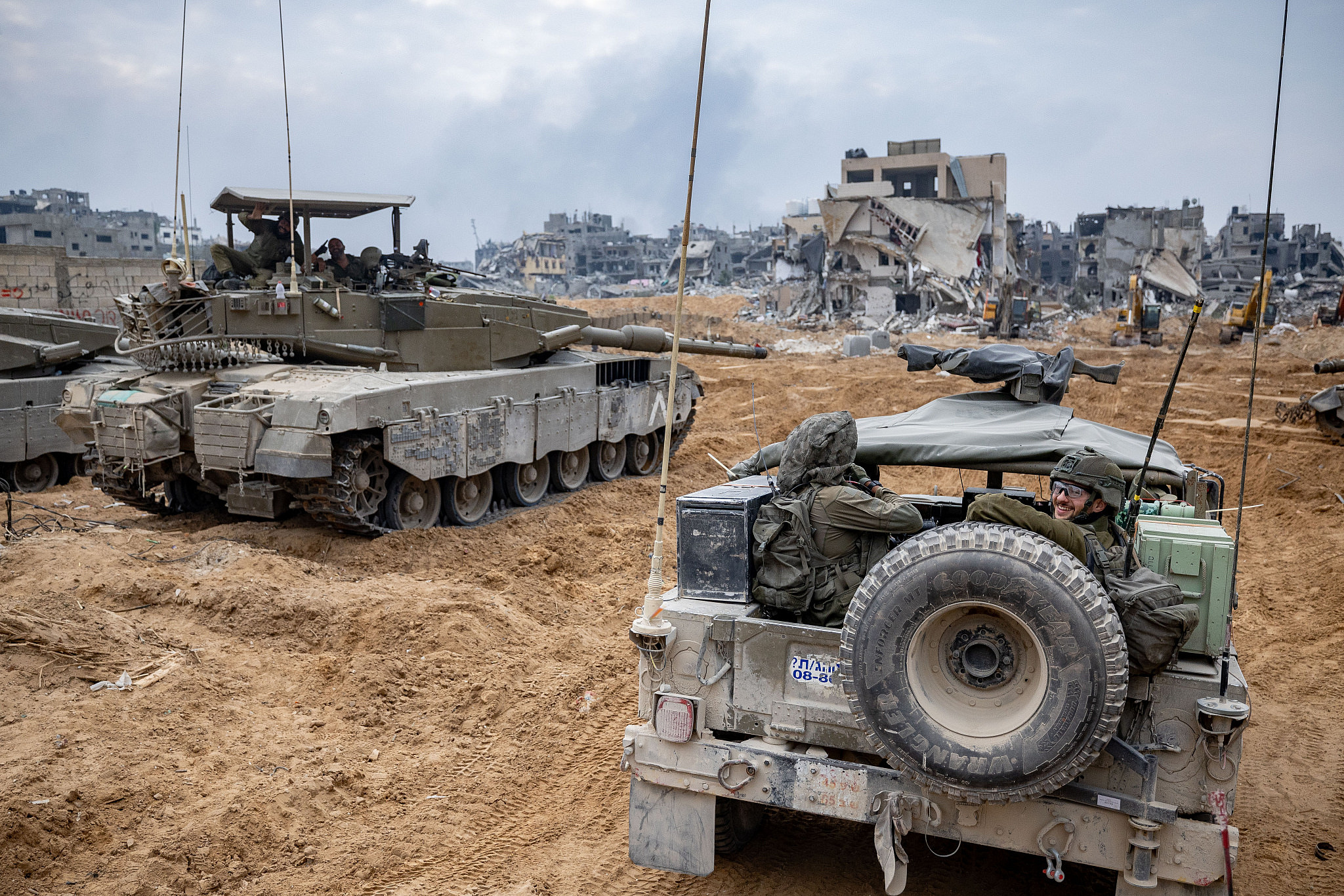
In early June, Al Jazeera aired a series of disturbing videos revealing what it described as “summary executions”: Israeli soldiers shooting dead several Palestinians walking near the coastal road in the Gaza Strip, on three separate occasions. In each case, the Palestinians appeared unarmed and did not pose any imminent threat to the soldiers.

Such footage is rare, due to the severe constraints faced by journalists in the besieged enclave and the constant danger to their lives. But these executions, which did not appear to have any security rationale, are consistent with the testimonies of six Israeli soldiers who spoke to +972 Magazine and Local Call following their release from active duty in Gaza in recent months. Corroborating the testimonies of Palestinian eyewitnesses and doctors throughout the war, the soldiers described being authorized to open fire on Palestinians virtually at will, including civilians.

The six sources — all except one of whom spoke on the condition of anonymity — recounted how Israeli soldiers routinely executed Palestinian civilians simply because they entered an area that the military defined as a “no-go zone.” The testimonies paint a picture of a landscape littered with civilian corpses, which are left to rot or be eaten by stray animals; the army only hides them from view ahead of the arrival of international aid convoys, so that “images of people in advanced stages of decay don’t come out.” Two of the soldiers also testified to a systematic policy of setting Palestinian homes on fire after occupying them.

Several sources described how the ability to shoot without restrictions gave soldiers a way to blow off steam or relieve the dullness of their daily routine. “People want to experience the event [fully],” S., a reservist who served in northern Gaza, recalled. “I personally fired a few bullets for no reason, into the sea or at the sidewalk or an abandoned building. They report it as ‘normal fire,’ which is a codename for ‘I’m bored, so I shoot.’”

Since the 1980s, the Israeli military has refused to disclose its open-fire regulations, despite various petitions to the High Court of Justice. According to political sociologist Yagil Levy, since the Second Intifada, “the army has not given soldiers written rules of engagement,” leaving much open to the interpretation of soldiers in the field and their commanders. As well as contributing to the killing of over 38,000 Palestinians, sources testified that these lax directives were also partly responsible for the high number of soldiers killed by friendly fire in recent months.

Israeli soldiers from the 8717 Battalion of the Givati Brigade operating in Beit Lahia, in the northern Gaza Strip, during a military operation, December 28, 2023. (Yonatan Sindel/Flash90)

“There was total freedom of action,” said B., another soldier who served in the regular forces in Gaza for months, including in his battalion’s command center. “If there is [even] a feeling of threat, there is no need to explain — you just shoot.” When soldiers see someone approaching, “it is permissible to shoot at their center of mass [their body], not into the air,” B. continued. “It’s permissible to shoot everyone, a young girl, an old woman.”

B. went on to describe an incident in November when soldiers killed several civilians during the evacuation of a school close to the Zeitoun neighborhood of Gaza City, which had served as a shelter for displaced Palestinians. The army ordered the evacuees to exit to the left, toward the sea, rather than to the right, where the soldiers were stationed. When a gunfight erupted inside the school, those who veered the wrong way in the ensuing chaos were immediately fired at.

“There was intelligence that Hamas wanted to create panic,” B. said. “A battle started inside; people ran away. Some fled left toward the sea, [but] some ran to the right, including children. Everyone who went to the right was killed — 15 to 20 people. There was a pile of bodies.”

‘People shot as they pleased, with all their might’

B. said that it was difficult to distinguish civilians from combatants in Gaza, claiming that members of Hamas often “walk around without their weapons.” But as a result, “every man between the ages of 16 and 50 is suspected of being a terrorist.”

“It is forbidden to walk around, and everyone who is outside is suspicious,” B. continued. “If we see someone in a window looking at us, he is a suspect. You shoot. The [army’s] perception is that any contact [with the population] endangers the forces, and a situation must be created in which it is forbidden to approach [the soldiers] under any circumstances. [The Palestinians] learned that when we enter, they run away.”

Even in seemingly unpopulated or abandoned areas of Gaza, soldiers engaged in extensive shooting in a procedure known as “demonstrating presence.” S. testified that his fellow soldiers would “shoot a lot, even for no reason — anyone who wants to shoot, no matter what the reason, shoots.” In some cases, he noted, this was “intended to … remove people [from their hiding places] or to demonstrate presence.”

M., another reservist who served in the Gaza Strip, explained that such orders would come directly from the commanders of the company or battalion in the field. “When there are no [other] IDF forces [in the area] … the shooting is very unrestricted, like crazy. And not just small arms: machine guns, tanks, and mortars.”

Even in the absence of orders from above, M. testified that soldiers in the field regularly take the law into their own hands. “Regular soldiers, junior officers, battalion commanders — the junior ranks who want to shoot, they get permission.”

S. remembered hearing over the radio about a soldier stationed in a protective compound who shot a Palestinian family walking around nearby. “At first, they say ‘four people.’ It turns into two children plus two adults, and by the end it’s a man, a woman, and two children. You can assemble the picture yourself.”

Only one of the soldiers interviewed for this investigation was willing to be identified by name: Yuval Green, a 26-year-old reservist from Jerusalem who served in the 55th Paratroopers Brigade in November and December last year (Green recently signed a letter by 41 reservists declaring their refusal to continue serving in Gaza, following the army’s invasion of Rafah). “There were no restrictions on ammunition,” Green told +972 and Local Call. “People were shooting just to relieve the boredom.”

Green described an incident that occurred one night during the Jewish festival of Hanukkah in December, when “the whole battalion opened fire together like fireworks, including tracer ammunition [which generates a bright light]. It made a crazy color, illuminating the sky, and because [Hannukah] is the ‘festival of lights,’ it became symbolic.”

Israeli soldiers from the 8717 Battalion of the Givati Brigade operating in Beit Lahia, northern Gaza Strip, December 28, 2023. (Yonatan Sindel/Flash90)

C., another soldier who served in Gaza, explained that when soldiers heard gunshots, they radioed in to clarify whether there was another Israeli military unit in the area, and if not, they opened fire. “People shot as they pleased, with all their might.” But as C. noted, unrestricted shooting meant that soldiers are often exposed to the huge risk of friendly fire — which he described as “more dangerous than Hamas.” “On multiple occasions, IDF forces fired in our direction. We didn’t respond, we checked on the radio, and no one was hurt.” 

At the time of writing, 324 Israeli soldiers have been killed in Gaza since the ground invasion began, at least 28 of them by friendly fire according to the army. In Green’s experience, such incidents were the “main issue” endangering soldiers’ lives. “There was quite a bit [of friendly fire]; it drove me crazy,” he said. 

For Green, the rules of engagement also demonstrated a deep indifference to the fate of the hostages. “They told me about a practice of blowing up tunnels, and I thought to myself that if there were hostages [in them], it would kill them.” After Israeli soldiers in Shuja’iyya killed three hostages waving white flags in December, thinking they were Palestinians, Green said he was angry, but was told “there’s nothing we can do.” “[The commanders] sharpened procedures, saying ‘You have to pay attention and be sensitive, but we are in a combat zone, and we have to be alert.’”

B. confirmed that even after the mishap in Shuja’iyya, which was said to be “contrary to the orders” of the military, the open-fire regulations did not change. “As for the hostages, we didn’t have a specific directive,” he recalled. “[The army’s top brass] said that after the shooting of the hostages, they briefed [soldiers in the field]. [But] they didn’t talk to us.” He and the soldiers who were with him heard about the shooting of the hostages only two and a half weeks after the incident, after they left Gaza.

“I’ve heard statements [from other soldiers] that the hostages are dead, they don’t stand a chance, they have to be abandoned,” Green noted. “[This] bothered me the most … that they kept saying, ‘We’re here for the hostages,’ but it is clear that the war harms the hostages. That was my thought then; today it turned out to be true.”

Israeli soldiers from the 8717 Battalion of the Givati Brigade operating in Beit Lahia, in the northern Gaza Strip, December 28, 2023. (Yonatan Sindel/Flash90)

‘A building comes down, and the feeling is, “Wow, what fun”’

A., an officer who served in the army’s Operations Directorate, testified that his brigade’s operations room — which coordinates the fighting from outside Gaza, approving targets and preventing friendly fire — did not receive clear open-fire orders to transmit to soldiers on the ground. “From the moment you enter, at no point is there a briefing,” he said. “We didn’t receive instructions from higher up to pass on to the soldiers and battalion commanders.” 

He noted that there were instructions not to shoot along humanitarian routes, but elsewhere, “you fill in the blanks, in the absence of any other directive. This is the approach: ‘If it is forbidden there, then it is permitted here.’”

A. explained that shooting at “hospitals, clinics, schools, religious institutions, [and] buildings of international organizations” required higher authorization. But in practice, “I can count on one hand the cases where we were told not to shoot. Even with sensitive things like schools, [approval] feels like only a formality.”

In general, A. continued, “the spirit in the operations room was ‘Shoot first, ask questions later.’ That was the consensus … No one will shed a tear if we flatten a house when there was no need, or if we shoot someone who we didn’t have to.” 

A. said he was aware of cases in which Israeli soldiers shot Palestinian civilians who entered their area of operation, consistent with a Haaretz investigation into “kill zones” in areas of Gaza under the army’s occupation. “This is the default. No civilians are supposed to be in the area, that’s the perspective. We spotted someone in a window, so they fired and killed him.” A. added that it often was not clear from the reports whether soldiers had shot militants or unarmed civilians — and “many times, it sounded like someone was caught up in a situation, and we opened fire.”

But this ambiguity about the identity of victims meant that, for A., military reports about the numbers of Hamas members killed could not be trusted. “The feeling in the war room, and this is a softened version, was that every person we killed, we counted him as a terrorist,” he testified.

“The aim was to count how many [terrorists] we killed today,” A. continued. “Every [soldier] wants to show that he’s the big guy. The perception was that all the men were terrorists. Sometimes a commander would suddenly ask for numbers, and then the officer of the division would run from brigade to brigade going through the list in the military’s computer system and count.”

A.’s testimony is consistent with a recent report from the Israeli outlet Mako, about a drone strike by one brigade that killed Palestinians in another brigade’s area of operation. Officers from both brigades consulted on which one should register the assassinations. “What difference does it make? Register it to both of us,” one of them told the other, according to the publication.

During the first weeks after the Hamas-led October 7 attack, A. recalled, “people were feeling very guilty that this happened on our watch,” a feeling that was shared among the Israeli public writ large — and quickly transformed into a desire for retribution. “There was no direct order to take revenge,” A. said, “but when you reach decision junctures, the instructions, orders, and protocols [regarding ‘sensitive’ cases] only have so much influence.”

When drones would livestream footage of attacks in Gaza, “there were cheers of joy in the war room,” A. said. “Every once in a while, a building comes down … and the feeling is, ‘Wow, how crazy, what fun.’”

Palestinians at the site of a mosque destroyed in an Israeli airstrike, near the Shaboura refugee camp in Rafah, southern Gaza Strip, April 26, 2024. (Abed Rahim Khatib/Flash90)

A. noted the irony that part of what motivated Israelis’ calls for revenge was the belief that Palestinians in Gaza rejoiced in the death and destruction of October 7. To justify abandoning the distinction between civilians and combatants, people would resort to such statements as “‘They handed out sweets,’ ‘They danced after October 7,’ or ‘They elected Hamas’ … Not everyone, but also quite a few, thought that today’s child [is] tomorrow’s terrorist.

“I, too, a rather left-wing soldier, forget very quickly that these are real homes [in Gaza],” A. said of his experience in the operations room. “It felt like a computer game. Only after two weeks did I realize that these are [actual] buildings that are falling: if there are inhabitants [inside], then [the buildings are collapsing] on their heads, and even if not, then with everything inside them.”

‘A horrific smell of death’

Multiple soldiers testified that the permissive shooting policy has enabled Israeli units to kill Palestinian civilians even when they are identified as such beforehand. D., a reservist, said that his brigade was stationed next to two so-called “humanitarian” travel corridors, one for aid organizations and one for civilians fleeing from the north to the south of the Strip. Within his brigade’s area of operation, they instituted a “red line, green line” policy, delineating zones where it was forbidden for civilians to enter.

According to D., aid organizations were permitted to travel into these zones with prior coordination (our interview was conducted before a series of Israeli precision strikes killed seven World Central Kitchen employees), but for Palestinians it was different. “Anyone who crossed into the green area would become a potential target,” D. said, claiming that these areas were signposted to civilians. “If they cross the red line, you report it on the radio and you don’t need to wait for permission, you can shoot.”

Yet D. said that civilians often came into areas where aid convoys passed through in order to look for scraps that might fall from the trucks; nonetheless, the policy was to shoot anyone who tried to enter. “The civilians are clearly refugees, they are desperate, they have nothing,” he said. Yet in the early months of the war, “every day there were two or three incidents with innocent people or [people] who were suspected of being sent by Hamas as spotters,” whom soldiers in his battalion shot.

The soldiers testified that throughout Gaza, corpses of Palestinians in civilian clothes remained scattered along roads and open ground. “The whole area was full of bodies,” said S., a reservist. “There are also dogs, cows, and horses that survived the bombings and have nowhere to go. We can’t feed them, and we don’t want them to get too close either. So, you occasionally see dogs walking around with rotting body parts. There is a horrific smell of death.”

Rubbles of houses destroyed by Israeli airstrikes in the Jabalia area in the northern Gaza Strip, October 11, 2023. (Atia Mohammed/Flash90)

But before the humanitarian convoys arrive, S. noted, the bodies are removed. “A D-9 [Caterpillar bulldozer] goes down, with a tank, and clears the area of corpses, buries them under the rubble, and flips [them] aside so that the convoys don’t see it — [so that] images of people in advanced stages of decay don’t come out,” he described. 

“I saw a lot of [Palestinian] civilians – families, women, children,” S. continued. “There are more fatalities than are reported. We were in a small area. Every day, at least one or two [civilians] are killed [because] they walked in a no-go area. I don’t know who is a terrorist and who is not, but most of them did not carry weapons.”

Green said that when he arrived in Khan Younis at the end of December, “We saw some indistinct mass outside a house. We realized it was a body; we saw a leg. At night, cats ate it. Then someone came and moved it.” 

A non-military source who spoke to +972 and Local Call after visiting northern Gaza also reported seeing bodies strewn around the area. “Near the army compound between the northern and southern Gaza Strip, we saw about 10 bodies shot in the head, apparently by a sniper, [seemingly while] trying to return to the north,” he said. “The bodies were decomposing; there were dogs and cats around them.”

“They don’t deal with the bodies,” B. said of the Israeli soldiers in Gaza. “If they’re in the way, they get moved to the side. There’s no burial of the dead. Soldiers stepped on bodies by mistake.”

Last month, Guy Zaken, a soldier who operated D-9 bulldozers in Gaza, testified before a Knesset committee that he and his crew “ran over hundreds of terrorists, dead and alive.” Another soldier he served with subsequently committed suicide.

‘Before you leave, you burn down the house’

Two of the soldiers interviewed for this article also described how burning Palestinian homes has become a common practice among Israeli soldiers, as first reported in depth by Haaretz in January. Green personally witnessed two such cases — the first an independent initiative by a soldier, and the second by commanders’ orders — and his frustration with this policy is part of what eventually led him to refuse further military service. 

When soldiers occupied homes, he testified, the policy was “if you move, you have to burn down the house.” Yet for Green, this made no sense: in “no scenario” could the middle of the refugee camp be part of any Israeli security zone that might justify such destruction. “We are in these houses not because they belong to Hamas operatives, but because they serve us operationally,” he noted. “It is a house of two or three families — to destroy it means they will be homeless.

“I asked the company commander, who said that no military equipment [could be] left behind, and that we did not want the enemy to see our fighting methods,” Green continued. “I said I would do a search [to make sure] there was no [evidence of] combat methods left behind. [The company commander] gave me explanations from the world of revenge. He said they were burning them because there were no D-9s or IEDs from an engineering corp [that could destroy the house by other means]. He received an order and it didn’t bother him.” 

“Before you leave, you burn down the house — every house,” B. reiterated. “This is backed up at the battalion commander level. It’s so that [Palestinians] won’t be able to return, and if we left behind any ammunition or food, the terrorists won’t be able to use it.”

Before leaving, soldiers would pile up mattresses, furniture, and blankets, and “with some fuel or gas cylinders,” B. noted, “the house burns down easily, it’s like a furnace.” At the beginning of the ground invasion, his company would occupy houses for a few days and then move on; according to B., they “burned hundreds of houses. There were cases where soldiers set a floor alight, and other soldiers were on a higher floor and had to flee through the flames on the stairs or choked on smoke.”

Green said the destruction the military has left in Gaza is “unimaginable.” At the beginning of the fighting, he recounted, they were advancing between houses 50 meters from each other, and many soldiers “treated the houses [like] a souvenir shop,” looting whatever their residents hadn’t managed to take with them.

Most read on +972
Smoke rises after Israeli airstrikes in Beit Lahia, in the northern Gaza Strip, December 28, 2023. (Yonatan Sindel/Flash90)

‘Lavender’: The AI machine directing Israel’s bombing spree in Gaza
Israeli soldiers operating in Rafah, in the southern Gaza Strip, July 15, 2024. (Oren Cohen/Flash90)

By failing to stop the Gaza genocide, the ICJ is working exactly as intended
Tamer Nafar (courtesy of the author)

What can Palestinian artists do in the face of our slaughter?

Israeli female soldiers break the silence

If videos turn out black  go straight to the Youtube link on the right side below

………………..

…………………..

See the whole collection of shovrim videos here

‘Do you know any Arabs in London?’ Israeli airport authorities grill British photojournalist before kicking him out

by Mark Kerrison on March 31, 2013 280

IMG 9889 EI
Detail of the Apartheid Wall, Bethlehem Palestine April 30, 2011 (photo: Mark Kerrison)

“I don’t pretend to know night-time from day, but if I were your God I’d have something to say” (Ben Gurion Prison, 14th March 2013)

These words, scrawled inconspicuously on the wall just above my head amid a plethora of other graffiti, drew my eyes as I sat on a dirty, broken bunk in an Israeli ‘facility’.

Or at least that’s what the Israelis call it. In my lexicon, rows of cells with no door handles on the inside and double bars across the windows are found in a ‘prison’.

That’s where I found myself on 13th March, six hours after arriving at Tel Aviv’s Ben Gurion airport at the start of a photographic holiday.

Initially, things were as I would have expected on arrival in Israel.

IMG 0779 EI
Mark Kerrison

At about 4 pm, I waited patiently in a queue to have my passport checked with a colleague from work that I had met by chance on the plane.

I stepped forward and was asked why I was visiting Israel and whether I’d visited before. I told the immigration official that I was visiting as a tourist and that I’d visited before as a child and in 2011.

This answer sufficed for him to tell me that my passport was being retained and that I should direct myself to a room in a quiet corner of the immigration hall for “a few more questions.”

I was surprised – I’ve travelled extensively without problems – but aware that security at Ben Gurion airport is quite unlike anywhere else in the world. I was also uncomfortable at having surrendered my passport, aware that this ran contrary to UK Foreign and Commonwealth Office advice because of the risk of passport cloning by Israeli authorities.

At first sight, the room indicated by the immigration official wasn’t too unwelcoming; generic airport seating and a drinks vending machine for those who travel with currency. Every seat was taken, though. I wasn’t sure if that was reassuring or not.

However: a young German female and I were the only Caucasians present. Travellers to Israel were being selected for interrogation based on their racial or ethnic profile. This appalled me and I set about counting. During the six hours that I was to spend in and around that room, 25 travelers were similarly detained; only three of us were Caucasian.

My turn for interrogation came at 6:40 pm, 2½ hours after my arrival.

“Mark, come.”

I followed a young Israeli woman in uniform into a small office. We sat at either side of a desk and a computer. On my left sat two casually dressed males. I was later informed that they were officers from Shin Bet, Israel’s internal security service.

“Why did you come to Israel?” the woman started aggressively.

“For a much-needed holiday, a photographic holiday,” I replied calmly.

She failed to understand and asked me to speak up.

I repeated my answer, just as loudly and clearly as I had the first time.

It was already clear that no pleasantries were on offer in this office.

“Where are you going in Israel?”

I told her that I would first spend two or three days in and around Jerusalem, visiting the Church of the Holy Sepulchre to pray for my brother (I explained why) and traveling to Bethlehem and Masada, before moving on to Tel Aviv, Haifa, Galilee and, I hoped, Eilat.

I was, of course, faced with the usual conundrum for anyone arriving in Israel wishing to include the West Bank as part of an itinerary. Mention any West Bank destination other than Bethlehem and you will be refused admission to Israel; fail to mention it and have it suspected and you will be refused admission anyway. I did also intend to visit the West Bank.

“Who do you know in Israel?”

“No one.”

“How long in Israel?”

“About three weeks.”

“What? Three weeks in Israel? Three weeks is too long! No one comes for three weeks to Israel!”

I considered pointing out that the Israeli Ministry of Tourism might see things differently, but thought better of it.

Instead, I repeated that I had three weeks in which to see as much of the country as I could.

One of the two men intervened.

“And the Gaza Strip? And the West Bank?”

“I am not visiting the Gaza Strip or the West Bank,” I said firmly but politely.

I felt as though I had been catapulted into a scene from a cheesy spy thriller, but although uncomfortable at being forced to state only a partial truth, I remained completely calm.

“Where are you staying in Israel?” the woman resumed.

I told her the name of my guesthouse, that I had booked two nights and handed her a copy of the reservation.

“Why only two nights?”

I explained that I only ever book one or two nights when I travel, so that I can plan my holiday on the fly and stay longer in places that I like.

“Where have you traveled this year?”

“Paris, Prague, Dublin and Turkey.”

“How can you travel so much? It’s not possible that you can travel so much.”

I explained that some of my trips were for work rather than for pleasure.

More intrusive questions followed, about my family, my marriage and family holidays.  Almost every question was followed by an inevitable “Are you sure?”

One of the men stood up.

“What about the Gaza Strip? When did you go to the Gaza Strip?”

“I have never been to the Gaza Strip,” I replied calmly.

At times, their interrogation, although intimidating, bordered on caricature.

The woman resumed.

“Is it your first time in Israel?”

“No. I came with my school when I was 13 and again in 2011.”

“Why did you come with your school? Are you a teacher?”

“No, I was 13!”

“What’s your job?”

I told her that I work in consumer electronics; I didn’t tell her that I also freelance as a photojournalist.

“When was the second time?”

“2011.”

“How long in Israel?”

“Two weeks.”

“Where did you go?”

“Jerusalem, Tel Aviv and Bethlehem.”

“What? In two weeks? Only Jerusalem, Tel Aviv and Bethlehem? That’s not possible!” she mocked.

I explained that it would easily have been possible to spend the entire two weeks in Jerusalem, so much was there to see in and around the city. I added that this was the main reason for me returning to see more of Israel.

“No one comes to Israel more than once!”

Another strapline for the Israeli Ministry of Tourism.

Other questions followed in quick succession.

I told her the name of the convent where I had stayed and that I had spoken to people in restaurants and shops as well as to other guests in the convent.

I reeled off a couple of random first names from memory and told her that we had spoken about Jerusalem’s religious and other tourist sites.

I recall thinking that it was a bit like conversing with a persistent toddler.

One of the men intervened.

“So you didn’t meet any Palestinians?”

“No, I didn’t,” I said clearly, gathering that there must be some kind of prohibition on speaking to Palestinians.

“Are you sure?”

“Very sure.”

“So if I take your phone I won’t find the names of any Palestinians?”

“No, you won’t.”

“It’s better if you tell me now because if I find them you’ll be in big trouble.”

I repeated my answer.

“Do you know any Arabs in London?”

“I have friends from many different countries owing to my work and studies.”

“What about Mohamed?”

“Mohamed? Who’s he?” I laughed.

He asked for my phone.

For an instant, I considered refusing – this seemed beyond the bounds of reasonable questioning – but any refusal would have been pointless.

He seemed satisfied with a quick check. I later discovered that he had used £5.00 of my PAYG credit without asking permission.

The woman asked me to write down my name, home phone number, mobile phone number, home e-mail address, work e-mail address, father’s name and grandfather’s name.

One of the men asked if I had any other e-mail addresses.

“No.”

“A facebook account?”

I had read an article suggesting that Israeli immigration officers ask travelers to open e-mail and facebook accounts for them to trawl, so I opted to say that I hadn’t.

This was a mistake.

He showed me on-screen an old e-mail address of mine entered in the sign-in page of a facebook account.

I started to explain, entirely truthfully, that I’d not actively used the e-mail address for years and that the facebook account has always remained entirely blank, but he cut me short and yelled at me from close proximity.

“You’ve been lying since the moment you walked through the door! Everything you’ve said has been a lie! Either you start to tell me the truth or you’re going to find yourself in serious trouble. I can make things very difficult for you. If I refuse you entry to Israel, you will have problems in many other countries. You will have to answer lots of questions about why you were refused entry to Israel. Now, tell me about your time in the West Bank. Who did you meet? Which Palestinians did you meet? Which Israelis did you meet? I want names. NOW!”

I repeated, quite simply, that I had not visited the West Bank.

“GET OUT! GET OUT!” he snarled at me.

It was about 7:25 pm. I shrugged my shoulders and walked outside.

He returned ten minutes later with my phone.

“You will not be entering Israel tonight.”

I sensed that there would be no tomorrow.

A shocked fellow detainee asked him why but he walked away.

On the face of it, I had been denied entry because I had forgotten about an e-mail account unused for years and a never-used facebook account; neither contained a single reference to either Israel or Palestine.

At 7.55 pm, an immigration officer led me to the baggage handling area.

The left-luggage attendant joked that he had completed a claim form because my rucksack had remained unclaimed for so long.

I guess he must repeat the same joke every day.

I was then led to a large room, closed to prying eyes. Everything was white. It contained a huge x-ray machine and a long row of tables.

I said that I didn’t have a laptop but that, as a photojournalist, I was carrying a lot of photographic equipment. This was the first time I mentioned that I also freelance as a photojournalist.

My luggage was x-rayed.

Two intelligence officers started to rifle through my rucksack with an electronic device as I was gestured into a small room by the immigration officer.

“Empty your pockets.”

I pulled out some British coins and my press credentials. My passport still hadn’t been returned to me.

I was then asked to remove my shirt and shoes and to unbutton my fly. I fixed the official in the eye as if to question this and he indicated that I should proceed.

I’d never been subjected to a strip search before.

Not in Soviet Russia. Not in Albania. Not in Latin America. Not in the US.

Only in Israel.

He patted me from head to toe and then swabbed me with an electronic device, including around my genitals.

An unwelcome invasion of privacy for me as a Caucasian male, I pondered how degrading and invasive this process must be for other travelers.

The contents of my rucksack and hand luggage had now been security-checked and were strewn all over the tables. I was asked to repack. Just the paraphernalia of modern life required by any backpacker on holiday.

Minus my bottle of water – they’d thrown that away.

At 8.25 pm, I was escorted back to the original room in the immigration hall. There were free seats now. An immigration official sat near to me.

A Muslim woman waiting when I arrived just after 4 pm was still there. There was no change in the ethnic profile of those waiting.

I had had no access to a toilet for over 5 hours and no food for 12 hours.

I phoned my guesthouse, knowing at least that I would no longer need accommodation that evening. I told them that I had been detained by Israeli immigration, that I did not know why and that I may or may not be allowed through the following day.

When I finished the call, the immigration official informed me that I was being deported. He apologised that I had not been told before and pointed out that he was not in charge. I asked him whether he knew why I was being deported; he said he didn’t.

At 9:20 pm, a female intelligence officer entered the room.

She also informed me that I was being deported and said that my flight to the UK would leave at 5 pm the following day.

I again asked why I was being deported.

“Security.”

“But what’s the reason?”

“Security. That’s all I can say.”

At 9:55 pm, two men told me that they were taking me to a ‘facility’ where I could eat and sleep.

One smiled as he read a form bearing my photo given to him by an intelligence officer.

“What did you do? Did you throw stones at the soldiers?”

I explained that I had just arrived in Israel on holiday and asked him if the form explained why I had been denied entry.

He said that my refusal came not from Israeli immigration but from the Shabak. I later learned that Shabak is another name for Shin Bet, Israel’s internal security service.

I was transported to a prison in the back of an armored prison van, a journey of around 10 minutes from the airport.

Once there, a warder told me to leave my baggage downstairs and to take only my money and any jewellery. I could not take my stomach medication.

He asked my nationality and why I was there. I told him that I was from the UK and that I had come to Israel on holiday.

He offered me food – which I refused in protest at my unjust detention – and then apologized as he showed me to my cell, adding before he slammed the door that I should bang on the door if I needed anything.

It was 10:20 pm, over six hours after my arrival.

The lights were off, but I could see that the cell contained three double-bunks. Two were half-occupied and the occupants were trying to sleep.

I sat on the free bunk.

The cell stank of urine. There were double bars on the window. The door had a peephole but no handle on the inside. I could see a toilet and a basin. The walls of the cell and the underside of the bunk above me were covered in graffiti.

I used the toilet – my first opportunity for seven hours – and settled down to meditate on my bunk. I knew I wouldn’t sleep so I didn’t even try. I later discovered that I had been bitten by bed bugs merely from sitting on the filthy bunk.

As the night wore on, I could periodically hear other inmates shouting and banging on the doors of cells in the same corridor. Some of the voices were female. The only response I ever heard was an unsympathetic “Go to sleep!”

Two more men entered at around 7 am. They talked to one of the other occupants in Russian.

As daylight started to penetrate the barred window, I could see more of my surroundings. My bunk was broken in several places and there were bare electric wires sprouting from the wall right next to my head.

I began to read the graffiti. Those detained here had come from all over the globe. There were so many different languages represented.

I was shocked to think that all these people were being deported.

Much, if not all, of the text was harsh in its condemnation of Israel and its human rights record. I noticed a number of slogans calling for a ‘Free Palestine’. The few anti-Semitic comments and swastikas sickened me.

My eyes were most drawn, though, to some words in small, inconspicuous lettering immediately above my head: “I don’t pretend to know night-time from day, but if I were your God I’d have something to say.”

I found these words comforting and I memorized them.

I refused breakfast and lunch and tried to explain to my cellmates – only one of whom spoke a few words of English – that my refusal was in protest at my unjust detention. I should not, in any case, eat without my stomach medication.

I was sharing the cell with a Thai and three Moldovans. The Thai was being deported after four years in Israel and one of the Moldovans after ten years.

At 10 am, a cleaner arrived and we were ushered out of the cell. The Thai and one of the Moldovans left for their deportation flights. I joined the other two Moldovans for a quick cigarette outside, amusing myself with the thought that this was the only sun I would see in Israel. They also left an hour or so later.

At 4:10 pm, 24 hours after my arrival, a warder informed me that I was being taken to catch the 5 pm flight to London. He granted me access to my stomach medication. I had difficulty swallowing it without water. I hadn’t drunk any water for well over 24 hours.

I sat alone in a sealed compartment in the middle of an armored truck. Two immigration officers sat in the front, one carrying handcuffs.

We passed through a number of security checkpoints.

At one, the door to my compartment opened.

“Hello,” said a very young Israeli woman.

I returned her greeting with a smile and had a strong sense that she found it difficult to imagine that I had done anything wrong.

I hadn’t.

Maybe she had that feeling every time she saw someone pass in one of those armored trucks on their way to a deportation flight.

At 5:45 pm, I was escorted across the tarmac towards my flight, the first passenger to board.

One of the immigration officers explained that my passport would be handed to the captain, only to be returned to me when we reached the UK.

I was greeted by the Easyjet crew at the top of the mobile stairway. The captain handed me my passport and smiled.

“You’re on British soil now,” he said.

I still don’t know for sure why I was denied entry to Israel.

I imagine, though, that Israeli intelligence Google-searched my human rights photojournalism in advance of my arrival and decided not to interrogate me around that as to deny access to a holidaying photographer is less likely to attract criticism than to deny access to a photojournalist.

Until such time as our Governments apply genuine pressure on Israel to permit travelers to openly state on arrival that they wish to visit the West Bank without risk of being denied entry, I fear that other people, too, may find themselves in the same distasteful predicament.

IMG 9891 EI
Palestinian stallholder April 24, 2011 (photo: Mark Kerrison)

Some of Kerrison’s work can be seen here.

source

Gaza : Hypocrisy, As Usual

Qunfuz

Robin Yassin-Kassab

Omar al-Masharawi, son of a BBC cameraman in Gaza, murdered by Zionist bombs.

Israel has launched yet another attack against the Gaza Strip, striking the densely-populated and besieged territory from the air and the sea, and as usual the United States, Canada and Britain have lined up in support of Zionist terrorism.

Speaking from a system poisoned by the Israel lobby, State Department spokesman Mark Toner says: “There is no justification for the violence that Hamas and other terrorist organizations are employing against the people of Israel. We call on those responsible to stop these cowardly acts immediately. We support Israel’s right to defend itself.” Confusing Zionist settlers for ‘the Jewish people’, confusing perpetrator with victim, and then parroting outmoded ‘war on terror’ propaganda, Canadian foreign minister John Baird vomits the following: “Far too often, the Jewish people find themselves on the front lines in the struggle against terrorism, the great struggle of our generation.” Then Britain’s foreign minister William Hague makes the following immoral and illogical comment: “I utterly condemn rocket attacks from Gaza into southern Israel by Hamas and other armed groups. This creates an intolerable situation for Israeli civilians in southern Israel, who have the right to live without fear of attack from Gaza.”

Two things must be said. First, this round of escalation, like the 2008/2009 slaughter, was started by Israel. It is totally mendacious to pretend otherwise. The Hamas government in Gaza refrained from stopping other groups from firing missiles as a result of Israel’s murder of a disabled man and of a twelve-year-old boy in Gaza. Here is a timeline of events. Second, the settlers of southern Israel do not have the right to live without fear of attack while the original inhabitants of ‘southern Israel’ are herded into refugee camps. Eighty percent of people in Gaza are descendants of refugees ethnically cleansed from their villages and towns by Zionist militias in 1947 and 1948.

No Western approach to the Middle East will be coherent or helpful so long as the West remains attached to apartheid Israel. America has granted some millions of dollars to support Syrian refugees and to provide a few revolutionary activists with satellite phones, but Obama refuses to recognise the Syrian National Coalition as representative of the Syrian people, and has made it clear that the US won’t be supplying weaponry to the Free Syrian Army. Indeed, the Obama administration has been preventing Qatar and Saudi Arabia from providing effective weaponry to the resistance. Fear of Islamism translates here into fear of anti-Zionism. No weapons can be supplied which might one day be turned against the occupiers of the Golan Heights and the tormentors of the Palestinians.

Oil and geostrategy also ensure that Western policy on the Middle East will continue to lack credibility. After visiting Syrian refugee camps in Jordan David Cameron seemed to incline to arming the Syrian resistance, but he arrived in Jordan after a tour of the Gulf in which he’d offered to arm several tyrannies, including the Bahraini tyranny which is killing, imprisoning and torturing its democratic opposition. Bahrain hosts the US Fifth Fleet.

States and politicians are beholden to interests and lobbies. There is less excuse for individual activists and ‘anti-imperialists’ who are partial to one group’s freedom but make excuses for denying that of another. Many support the Bahraini revolution but not the Syrian, or vice versa, for sectarian reasons or out of blanket thinking (of course, sectarianism is a form of blanket thinking). And many of those who are quite correctly calling for demonstrations today against Zionist terror have not stirred in the last two years as forty thousand Syrians have been slaughtered, except perhaps to explain that the victims are enacting a dastardly plot against a resistance regime. A recent Facebook status from Sharif Nashashibi serves as an excellent rejoinder: “Sadly, there are people who condemn the slaughter of Palestinians but defend the slaughter of Syrians, and vice versa. As a Palestinian and a Syrian, I totally reject these hypocrites’ so-called support. The suffering of Palestine is the suffering of Syria, and vice versa. We are one and the same.”

This is absolutely correct. The slaughter of the people of bilad ash-Sham is as much of an abomination in Syria as it is in Palestine. American support for the frenzied Zionist bombing of Gaza is no more or less disgusting than Russian (and Iranian) support for Asadist barbarism. Furthermore, both Palestinians and Syrians have the right to self-defence. This is why I support providing anti-aircraft weaponry to both the Syrian and the Palestinian resistance.

Many analysts believe the timing of Israel’s attack has been determined by upcoming elections. Netanyahu needs to look tough for his rabid public, so he brings more trauma and death to Gaza. It is grotequely easy for Zionists to act out their impulses on the Palestinians, just as they used to find south Lebanon easy. In this revolutionary age, is no Arab power going to make the slaughter more expensive?

Saad el-Katatny of Egypt’s Muslim Brotherhood says, “The brutal aggression on Gaza proves that Israel has not yet learned that Egypt has changed.” So far, President Morsi has recalled the Egyptian ambassador from Tel Aviv, called a UN Security Council meeting, and opened the Rafah border for medical evacuations. This is far more than Mubarak would have done, but it’s still not nearly enough. The Qatari foreign minister says, “This filthy crime must not pass without a punishment.” Again, words are not enough. (By the by, I wonder if infantile leftists will decide that Palestinian resistance is a foreign plot now that the Qatari emir has visited Gaza and funded some projects there?)

While pointless adventurism would be criminally stupid at this moment of general Arab crisis, the new leaders of revolutionary Egypt, Tunisia and Libya, and old leaders seeking to adapt to the revolutionary wave, should remember that national dignity as expressed through a pro-Arab and anti-imperialist foreign policy is one of the key demands of Arab revolutionaries. This is a test for the Egyptian Muslim Brotherhood in particular. The Palestinians must not be left alone indefinitely.

source

Two women’s story of being detained and interrogated at Ben Gurion

by  on June 2, 2012


ben gurion airport
Ben Gurion Airport

I am an American citizen. I went to American schools my entire life, graduated from an American university and work as an architect in New York City. Why was this happening to me? It all started with a simple question. “What is your father’s name?”

“Bassam.”

“Okay, please wait a few moments in the waiting room over there.”

Little did I know that my father’s Arab name would make me guilty until proven innocent. A “few moments” would turn into a 14-hour nightmare at Ben Gurion Airport in Tel Aviv.

SN2
Sasha Al-Sarabi and Najwa Doughman

I was hoping they wouldn’t separate me from my friend Sasha, whom I was traveling with. We had been warned about possible interrogations and security checks but were reassured that since we were both young, female professionals from New York City with American passports, it wouldn’t be a problem to enter Israel. It was going be my third visit and Sasha’s first.

Sasha was called in to be interrogated by a bleach-blonde pregnant woman and was led into a small office to the left of our waiting room. Twenty minutes passed until Sasha came out, walking quickly back to her seat.

She attempted to reassure me. “It’s going to be fine. They just want to see if we’re lying about anything.” But she was obviously flustered.

Now it was my turn.

“Najwa, come.”

– – –

“Do you feel more Arab or more American?” she asked. I had answered the ten previous questions very calmly, but with this question I looked back at the security official confused and irritated. She couldn’t have been much older than me—her business attire and stern facial expressions did not mask her youth.

“I don’t know, I feel both. Why? Does this affect my ability to get in?”

She ignored my question. “Surely you must feel a little more Arab, you’ve lived in many Middle Eastern countries.”

I did not see the correlation. I have never felt the need to choose. “Yes I have but I also lived in the US for the past seven years, and was born there, so I feel both.” My response did nothing to convince her.

“Hm. Will you go to Al-Aqsa?”

“Yeah, maybe.”

“Will you go to Jewish sites as well?”

“Yes, why not? We want to see everything.”

“But you have been here two times already. Why are you coming now for the third time? You can go to Venezuela, to Mexico, to Canada. It is much closer to New York, and much less expensive!”

I realized the conversation was going nowhere. “Right, but I wanted to come back here again. Don’t you have tourists who come back more than once?”

“I’m asking the questions here,” she replied disgruntled.

“Okay, we are going to do something very interesting now!” Her face transformed from a harsh stare to a slight smirk. She proceeded to type “www.gmail.com” on her computer and then turned the keyboard toward me. “Log in,” she demanded.

“What? Really?” I was shocked.

“Log in.”

I typed in my username and password in complete disbelief. She began her invasive search: “Israel,” “Palestine,” “West Bank,” “International Solidarity Movement.”

Looking back, I realize I shouldn’t have logged in. I should have known that nothing I did at this point would change my circumstances, and that this was an invasion of my privacy. Yet all the questions, the feeling that I had to defend myself for simply wanting to enter the country, and the unwavering eye contact of the security officers left me feeling like I had no choice. I was worried I would let Sasha down if I refused and that it would be the reason for both of our denials into the country.

She sifted through my inbox, reading every single email with those keywords. She read sentences out loud to her colleague, sarcastically reenacting and mocking old Google Chat conversations between Sasha and me about our future trip to Jerusalem. I squirmed in my seat.

The Israeli authorities have a notorious reputation for denying entry to Palestinians of all citizenships, and I had received all sorts of advice, solicited and unsolicited, on how to cope with the problem. The security officer opened an email from a friend living in Jerusalem who had advised me to remove myself from internet searches. “They are heavy on googling names at the airport recently,” he had written. “See if you can remove yourselves, not crucial but helpful.”

The security guard found this especially hilarious. With a laugh, she called her blonde colleague over and reread the sentence mockingly. “You can tell your friend, not only do we google you, we read your emails, too!”

I was beyond uncomfortable, uncertain of how else they would try to humiliate me. “Okay, I think you’ve read enough,” I said. “Is what you’re doing even legal? Can you please log out now?”

The guard became even more defensive. “You could ask me to log out, but you know what that would mean, right? Tell me to log out,” she dared me.

I was speechless. I felt completely helpless, furious, and exhausted; I was now entering my fourth hour of interrogation.

After reading several more emails, they wrote down every contact name, email, and phone number they could find. Finally, the interrogator said, “Okay you can go.” But before I could even feel the slightest sense of relief she added, “Good luck getting into Israel.”

Three more hours passed. A large bald man eventually approached us holding our passports. “Come with me,” he ordered. We walked straight across the hall to another waiting room, in front of two small offices.

“As of right now, you have been denied from entering Israel.” Despite the looming feeling I had after walking out of the interrogation room that my hours in this country were numbered, the words still stung with disappointment, frustration, and anger.

Sasha had had it. “Okay, I want a lawyer,” she said. “And I want to call the American embassy, now.”

The guard was not fazed by her requests. “Yes, yes, call whoever you want, after you do procedure.” He turned his back and walked away.

We peered into the office. A stout woman in uniform, about fifty years old, was taking pictures and fingerprints of a man sitting in front of her. Sasha was called in next. The woman told Sasha to sit in front of the camera.

“Wait, before you take my picture, can you tell me why we have to do this?” Sasha asked.

“This is procedure. This is how we do things in Israel,” the woman responded, looked back to her camera.

“You’re treating me like a criminal! I don’t want you to take my picture,” Sasha said. “We’ve already been denied. Why are you doing this?”

“You will take a picture and then wait in a facility until your flight.”

Sasha was persistent. “What facility? Our flight is in nine days! Why were we denied? We need to call the embassy now!”

“You will call after you take your picture. I don’t know why you were denied. My job is just to do procedure. When I go to America, the same happens to me. I get denied from America,” claimed the woman.

“No,” replied Sasha, “No, you don’t.”

After our pictures were taken, we officially felt like criminals. It didn’t help that two new female guards were now assigned to watch us at all times. The most humiliating thing was each guard couldn’t have been more than twenty years old. Everywhere we went, they were right behind us. Even when Sasha went to the restroom, the security guard went with her. After about 30 minutes, six more security guards surrounded us to walk us to another room across the airport. It was as if all the shepherds had come to herd two small sheep.

We had not committed any crime. Our only sin was being born to Arab parents. It was then that we realized what a sheltered life we had lived. We had always read about racial profiling and heard accounts from family members and friends in college. We always sympathized and were infuriated by it, but never had we felt it first hand.

Sasha and I paced back and forth with anxiety while we were made to wait in the hallway. At one point I turned my head and noticed the female guards pointing at our attire and admiring Sasha’s pants. It hit me then, for the first time, that these guards were actually young girls, interested in fashion and trends, like we were. Under different circumstances, could we have actually been friends?

They led us into the next room, which was painted white and had an intimidating, large “Explosive Detection” machine. The guards proceeded to open our luggage. They picked through every single piece of clothing and every tube of makeup. They inspected my laptop and Sasha’s iPad, wiped each item with a cloth, and ran them through the machine. They x-rayed and scanned everything—twice.

After they had gone through every one of our belongings, they proceeded to the body search. I was taken to the back of the room with one male and two female security officers. The room was smaller and closed off with a curtain. The older woman seemed to be training the younger one. She would murmur directions in Hebrew as the younger officer patted me in different places. The man stood right outside the half-open curtain. They scanned my body with a metal detector, and it beeped at the button on my jeans. “Take off your pants,” said the older officer immediately.

I lost my last nerve. “NO,” I responded. “We’ve already been denied. You searched everything. Why do I need to take my pants off after you’ve denied me? I will not take my pants off.”

“This is how we do things in Israel,” the woman snapped back. “You have to take them off.”

“And if I don’t?”

“Then someone will make you.” They all walked out of the room.

I began crying and shaking as my mind went through a million different nightmares. Were they going to get more people to hold me down? What the hell is going to happen to us? I wanted to see Sasha and not be alone for a minute longer, but was too afraid of the consequences of leaving the room.

The guards returned a few minutes later with shorts taken from my luggage. “Fine,” they said. “Wear these.”

I struggled into them with tears streaming down my face. I stood ashamed and mortified as she patted me down all over again. I had never felt so humiliated, so degraded, and so violated.

Once my “security search” was over, I changed back into my jeans and returned to the white room. It was Sasha’s turn to be searched.

When this was over, two men from immigration services approached us holding our passports.

“Now you will be taken to a facility.”

“A facility? You mean a jail? Are we arrested? How long are we going to be there?”

“This is not jail. It’s a facility. This is where everybody goes that is denied entry from the State of Israel.”

They took all of our luggage and our phones and drove us about five minutes away from the airport to a gated, white building. All of the windows had double bars on them, and none of the doors had doorknobs. We walked through the dark halls and passed by open rooms filled with bunk beds.

“You can call your parents from my phone, not yours. Leave your phones here. But if it is an international call, use yours. Your flight back is at 8 am tomorrow morning.”

We called our parents, and he took us to our room on the second floor. Inside were ten bunk beds, four sleeping women, a sink, a bathroom, and a shower.

We both stared at the beds for a minute before lying down. The mattresses looked like they were made of duct tape, the room smelled of urine, and there was a grey, furry sheet on each bed. We folded my sweater in half to use as a pillow, and lay in the three-foot-wide bed together, looking up at the bottom of the bunk above us. “FREE PALESTINE, I Shall Return—Maryam 2006” and “21 Gaza Peace Activists detained” were scribbled on the wood. Reading those sentences over and over gave me an odd sense of peace, and we drifted into a restless sleep.

At about 5 am, the guard came to wake the Spanish woman in the bed beside ours. “Wash your face,” he told her. She sprung up, splashed water on her face, and waited for him to come back and unlock the door. We sat up anxiously in the bed waiting for our turn to leave.

At 6:15, a guard came and told us that the US embassy was phoning for us. My parents had called them from Virginia after our two-minute conversation to inform them of what was happening. Sasha answered the phone. “Oh, thank God, we’ve been trying to get in touch with you! This is Sasha. We’ve been through a lot the past few hours.”

“As I told your friend’s parents yesterday, there is really nothing we can do. I’m just glad that you’re going to be able to get on the next flight.” the woman said dispassionately.

“This is ridiculous. They went through my friend’s email. Is that legal?”

“Well, they can do whatever they want. There is nothing we can do. They are their own country, and they make their own rules.”

“If only you could see the conditions we are in. I just wish you could come and smell the room.”

“Oh, I’m really sorry, but at least you’ll be getting on the next flight,” her voice was annoyingly monotonous.

“I can’t believe we are funding this system. I understand the special relationship between America and Israel, but there is clearly something wrong with the way we are being treated”.

“Well, there’s a lot of things wrong with a lot of systems.” She clearly wasn’t going to help us.

“You are right. We should all just sit here and be complacent like you. Well, thanks for your call.” And Sasha hung up.

We had been desperately waiting for this call, and the amount of frustration we felt after receiving it was overwhelming. We had demanded over and over to be able to talk to the American embassy, hoping that being American would give us some sort of protection or a little sense of security. There is no difference between every citizen in America, we thought naively. Surely the US Embassy would rescue us and demand that we be treated like human beings. Surely they would reprimand the Israelis for their appalling practices and demand that they act like the democracy they claim to be.

If we were two American citizens in a Syrian or Iranian “facility,” would the American embassy’s reaction be the same? Would Obama himself not have made a statement by now, demanding our release? If we were Americans of Polish or Chinese descent, would we have been treated this way? American citizens are usually given a three-month visa upon arrival. Why were we an exception? There are a lot of things wrong with a lot of systems, but when we are funding one with billions of our tax dollars, this means that we are supporting it.

An hour later, which seemed like an eternity, the guard showed up. It was now 7:30 am, which was only thirty minutes before our flight. This turned out to be no problem, as we were driven straight to the steps of the airplane. Our passports were given to the captain of the Air France flight. When we arrived in France, three policemen waited for us at the door of the plane, took our passports from the captain, and led us down the stairs of the airplane straight into their police car.

“Does this happen often?” Sasha asked.

“Every day,” replied the officer.

Source

Israel rides the rollercoaster of mass hysteria

18 April 2012

The US continues to indulge Netanyahu’s manufactured hysteria.

(Pete Souza / White House Photo)

Spending a week in Israel these days is like being trapped within a scene from the movie One Flew Over the Cuckoo’s Nest.

Like Jack Nicholson in the lead role of that classic film, you might not be insane but the doctors and nurses who run the psychiatric ward manufacture every few minutes a collective hysteria to keep everyone in the grip of fear and hatred. Everyone is an enemy, every a visitor an existential threat.

A retired French activist in her sixties — part of the most recent Welcome to Palestine fly-in — is met in the airport by a military brigade and massive police force that left much of Israel at the mercy of its petty criminals who had a field day while the officers of the law went to arrest the invading aliens who came from Europe.

A week earlier, a poem by an 85-year-old honest and noble Nobel laureate, Günter Grass, which warned against an Israeli attack on Iran and pleaded with the Israelis to show compassion towards the occupied Palestinians, was depicted as a text that is not only worse than Adolf Hitler’s Mein Kampf but one that could have a similar impact on history. Hence, the national response was entrusted to the hands of Prime Minister Benjamin Netanyahu and Minister of the Interior Eli Yishai who banned the entry of the ageing bard.

Hallucination in Washington

This was April 2012. The month before, Netanyahu, the world expert of manufactured hysteria, crossed the Atlantic to join his American counterparts. In Washington, before an AIPAC audience only too eager to indulge him, Netanyahu likened a refusal to launch a war against Iran as tantamount to refusing a request from Jewish leaders to bomb Auschwitz.

Together Netanyahu and his fawning American audience rode the roller coaster of mass hysteria of the most sickening, hallucinating kind at a time when the US needs leadership that will take it out of its economic crisis and Israel needs to find a way in a world that more than ever before refuses to tolerate its colonization, occupation and dispossession of Palestine.

On his way back from this mutual warmongering and fanaticism, Netanyahu and Defense Minister Ehud Barak, mates from the days when they both played Rambo as Israeli commandos, continued to send the Israelis into the bunkers and simulate chemical attacks in preparation for a massive Iranian attack that would be triggered by a pre-emptive Israeli strike on Iran.

French grandmas, a retired poet and nuclear holocaust are all threats of the same magnitude in the post-modern world of the current captains of the Israeli Titanic.

Brinkmanship

Being part visitor and part inmate in the ward I found solace in three books, each one of which tells us how best to keep our wits even when the most armed and aggressive state in the region has replaced diplomacy and national strategy with hysterical brinkmanship that could easily transform into real war and greater bloodshed.

The first is an old classic, George Orwell’s 1984. In despotic Oceania, the leadership, the Inner Party, depends on a constant war with the other two global powers. The leaders manufacture hysteria to keep it going, but begin to believe in it themselves:

It is precisely in the Inner Party that war hysteria and hatred of the enemy are strongest. In his capacity as an administrator, it is often necessary for a member of the Inner Party to know that this or that item of war news is untruthful, and he may often be aware that the entire war is spurious and is either not happening or is being waged for purposes quite other than the declared ones: but such knowledge is easily neutralized by the technique of doublethink.

The second book is Miko Peled’s The General’s Son. Peled’s research in the Israeli military archives exposed how the generals of Israel on the eve of the June 1967 war manufactured mass hysteria in Israel and spun a tale of an imminent second Holocaust — as did David Ben-Gurion in 1948 — knowing very well, in both historical instances, they were facing a weak, disarrayed opponent more willing to compromise than to fight.

The third is Jay Feldman’s Manufacturing Hysteria, a compact history of how the leadership in the US manufactures collective hysteria whenever faced with real or imagined crises that had the potential to cost them their seat of power. Going to unnecessary wars, scapegoating minorities in the United States, oppressing other peoples around the world and the poor at home, are only some of the unavoidable outcomes of such hysteria (I dedicate this brief reading list to Wall Street Occupiers whose library was brutally destroyed and to whom I promised to recommend a reading list for a new future library, which I never managed to do).

Unlike in the Jack Nicholson movie, the hysteria is not kept within the ward, and it is not the inmates who are the problem but those who run the prison-hospital and want to intern even more people in their zone of hysteria, control and violence.

Advanced stage of disease

But Israel in 2012 is in a far more severe and advanced stage of the disease, whether the one imagined by Orwell in 1984, reported by Peled about 1967 or summarized historically by Feldman in the US in 2012.

The hysteria manufactured in Israel has become a constant state of mind and nothing less than a strategy. Its main purpose is to keep both the Israeli Jewish and Palestinian populations within a certain, permanent, anxious existence. The Palestinian population under occupation is denied contact with those who want to show solidarity with their plight, so that the ghettoization of the West Bank would be as effective as the one achieved in the Gaza Strip by a military siege, and yet at the same time would not be too bothersome for the international allies of the Jewish state.

Life there has to be oppressive enough to encourage people to leave or to remain jailed in the largest mega-prison on earth, but more seemingly plausible so as to discourage another uprising.

The Jewish population has to be constantly distracted from what pushed almost half a million of its members to protest massively in the streets of Tel Aviv last summer and continue to be oblivious to the oppression of the Palestinians on the one hand, and the growing global moral repugnance towards Israel, on the other.

In our ward here, the time between Passover and what Israel calls Independence Day, during which national Holocaust Day falls, is very special.

This is when we receive overdoses of manufactured hysteria directly into our veins. And then we begin to hallucinate: the Egyptian Pharaoh of ancient times, Hitler, the grandma from Paris, the old Poet from Berlin and Osama Bin Laden are all fused into one apparition, and everyone who is not a Zionist can embody that apparition.

Whether we think of them as the wardens of the Cuckoo’s Nest, or the hysterical Inner Party, the rulers driving the hysteria mean business. They are armed to the teeth and have the power to push the red button that would send us, and everyone else around us, to hell or heaven as the case may be.

At the end of One Flew Over the Cuckoo’s Nest one of the heroes is brutally subdued by the ward’s keepers while another escapes the confines of the ward. We cannot afford such an ambiguous ending. But it is not too late for us, as long as more of us join together to refuse to play their game.

The author of numerous books, Ilan Pappe is professor of history and director of the European Centre for Palestine Studies at the University of Exeter.

source

The Devil Sings Again

by Gilad Atzmon
Wednesday, April 11th, 2012

Itamar Yaoz-Kest

Itamar Yaoz-Kest

Israel National News published today a poem by Itamar Yaoz-Kest, a Holocaust survivor. The poem is presented as “letter-poem in reply to German Günter Grass’ attack.” The poem is a clear reminder of horrific danger that is embedded within Jewish identity politics and contemporary Jewish nationalism. It is a glimpse into unique psychotic genocidal sense of retribution.

The “letter-poem” starts as follows:

Danger,

I want to be a danger,

I want to be a danger to the world,

so that after my destruction, not a single blade of grass will remain on the face of the Earth,

or a single blade of grass for Gunther Grass’s pipe,

upon the Earth where, since I was born, I pose a danger to the world.

Because it is my right!

It is my right to live or die while annihilating my annihilators, without riding again as a crying-boy in a transport train,

Into the world-vacuum, while placing my head in the lap of a mother who is disappearing into the fresh air of the Land of Wotan,

and the urine tin darts dark-yellow specks onto the walls of the cabin – like gunshots that spray

a yellowish-reddish liquid from besides the train guards, and among them – maybe – the soldier G.G., also, wearing a steel helmet.

Later in the poem, Yaoz-Kest issues what appears to be a statement of intent along the lines of “the Samson Option”:

“For it is the right of the Nation of Israel to finally shut the gates to the world after it leaves this place (not of its free will!), and we have the right to say, at the price of the 3,000 year old fear: “If you force us yet again to descend from the face of the Earth to the depths of the Earth – let the Earth roll toward the Nothingness.”

The Samson Option – taking out Israel’s enemies with it, possibly causing irreparable damage to the entire world – has been a phantasmic Israeli strategy since the early 1950’s.

The message for the rest of us is clear- Israel is the biggest threat to world peace. Time is overdue to discharge the Jewish State of its destructive power.

atomic

source

Sickening: Israeli television mocks the deaths and the destruction at Gaza

19/01/2009 (Spanish and Hebrew)

bandannie just found this video and article on Norman Finkelstein’s facebook and although it goes back to the war on Gaza, she is afraid it is still relevant

Televisión israelí se mofa de las muertes y destrucción en Gaza

“Es una sociedad de sádicos y psicópatas”, afirma el doctor Muhamad Yadala.

El último programa Eretz Nehederet (Un país maravilloso) que sale a antena cada semana en el Canal 2 de Israel, giró en torno a la guerra de Gaza y las burlas más sarcásticas se dedicaron al número de palestinos muertos en los intensos bombardeos del Ejército. Los humoristas se ríen incluso de las explosiones de las guarderías. Un actor que representa a un corresponsal militar transmite al estudio constantemente el número de víctimas del conflicto. “Ya van quinientos contra cuatro”, dice en alusión a los palestinos y los israelíes muertos. “Acabamos de bombardear un estudio de moda, ya tenemos 501 puntos”, añade al poco rato. Los locutores usan un tono fútbolístico para narrar un bombardeo. La cuenta va creciendo y desde el estudio central se conecta con varias capitales europeas para que los corresponsales voten el número de muertos palestinos que cada país estaba dispuesto a permitir.

El programa también realiza una conexión con la ciudad de Gaza para hablar con un miembro de Hamás que ha montado un jardín de infancia para criar niños que luego se convertirán en escudos humanos. “Tenemos niños muy majos que pueden servir de escudos humanos”, dice el supuesto director del jardín de infancia. El sarcamo se ceba con las muertes infantiles: “Si vais a bombardear una zona civil, podéis avisarnos para que podamos enviar nuestras cámaras de televisión”.

“El programa refleja que más del 90% de los israelíes apoyan la guerra y seguramente también respaldan estos programas. Es una sociedad de sádicos y psicópatas”, afirma el doctor Muhamad Yadala.

WebIslam

Blog at WordPress.com.

Up ↑