Search

band annie's Weblog

I have a parallel blog in French at http://anniebannie.net

Category

israel

Akiva Orr, an interesting lesson in history

Saturday, August 27 2011|Joseph Dana

Over the years of writing and wrestling with Israel/Palestine, Akiva Orr has become a supportive figure. Born in 1930’s Berlin, Orr has lived the entirety of Israel’s existence. From Eric Fried to Joe Slovo, Akiva can speak for days about his personal relationships with some of the most interesting revolutionary leaders of the late twentieth century. It is not Akiva’s circle of friends rather his work on the ground in Israel/Palestine as a founding member of Matzpen which is most fascinating. Orr wrote Max Blumenthal and me an email this morning in reference to our latest piece about Israel’s tent protests. It is reprinted in full along with an interview Blumenthal and I did with Orr last summer regarding Israel’s wars as well as a youtube link to a full length documentary about Orr’s political party in Israel, Matzpen.


Your article on the “social-protest” is excellent. Full of factual data and ideological insights. I found it excellent and learnt facts I did not know. I fully agree with its content but I still consider this protest unique and politically important in Israeli politics. This is so due to my own political development. Let me explain.

I was politicized by my participation in the great Israeli seamen’s strike in 1951. By the way,  a film about that strike was shown in Rothschild tents recently and I was asked to comment.

Until the seamen’s strike I was just an ordinary Israeli kid imbibing all the Zionist education without questioning it.  I grew up in a non-political home,  as a Tel Aviv ‘Beach Boy.’ I joined the “Hagannah” in 1945 when I entered High School. So did 25 of my other class mates out of which three joined Begin’s ETZEL and one joined the Stern Gang. The remaining six class mates joined nothing.  Keep in mind that this was typical to all Jewish high schools at that time. In the “Hagannah” we did military training in summer holidays and fly-posted Tel Aviv streets with weekly at nights. We also participated in anti-British demos. We never did anything anti-Arab. I participated in “Hagannah” activity as a cog participates in a machine. I became platoon commander at 16 and trained 30 kids in drill and use of fire arms but we never fired a bullet (too expensive). All this sounds very political but I was totally a-political. I knew nothing about Marx, Lenin, or the USSR and could not tell the difference between the various Jewish political parties in Palestine. I detested all politics.  It reeked of emotional blackmail.

I visited neighbouring Jaffa often as a kid and though it was 100% Arab it never occurred to me that the Arabs might oppose Jewish independence in Palestine. To me – and to most of my generation – the Arabs were part of the physical landscape like the mountains and the vegetation. We did not hate – or fear – them. It never occured to us that a lengthy military/political conflict with them is inevitable. It was simple: our enemy were the British who ruled us,  not the “natives”.

Only during the 1951 seamen’s strike did I become politically critical because I read the various press reports about the strike. At that time most Israeli newspapers belonged to political parties.  I read them and saw that most press reports were biased against the seamen, and distorted the real facts of the strike. Only one paper gave a factually accurate reporting – and supported the seamen.

It was the paper of the Communist Party (CP). So I joined that party knowing nothing about Marx, Lenin, Trotsky, or the USSR. It took another 2 years of CP membership before I became an anti-Zionist. In the CP, I met Palestinian comrades who were not “Uncle Tom’s” and when I sold the CP paper in Jerusalem (every Friday for 6 years), I encountered violent hostility and opposition that forced me to learn the facts about Capitalism and the Zionist-Palestinian conflict. The 1950s were the peak of the “Cold War” and anti-communism was rough and rampant. I acquired my political education not by books but by political confrontations. I firmly believe that political confrontations with adversaries is the best political education.

[youtube http://youtu.be/hfcFno2pqJg?]
Now back to Rothschild tents. Most young people in the tents face their first political confrontation in those tents. Before July 14 they were just fodder in politics. Now they are becoming politically critical – and aware. Whatever the outcome of this unique protest – their minds and attitudes are changed and will stay so. They will not be political fodder again. Give them time and many will become anti-Zionist. One cannot be weaned in a week from what one embraced uncritically for many years at home, in nursery and school. This confrontation/protest changes their minds – and lives. Nothing similar ever happened in Israel before. Moreover,  thanks to the mobile phones, Facebook, and the Internet, this protest is completely self-managed. No external organization hatched it or runs it. Massive Citizens’ self-organizing activity never existed in Israel before. This makes all political parties tremble. They know that this protest changed the rules of the political game in Israel. Israeli citizens cannot be treated as “election fodder” in the future. Whoever will treat them so will pay dearly at the ballot box.

My political activity aims to make the ballot box obsolete by direct participation of all citizens in all political decisions.

This protest is a “first small step” in that direction, and as Mao used to say: ”The longest journey starts with one small step.” Though I am not – and never was – a Maoist,  I agree with him. That is why I support this protest despite all its drawbacks.

Keeping up the struggle – and enjoying it

Aki

The soldier is a human being, isn’t he?

by Aya Kaniuk and Tamar Goldschmidt on August 27, 2011

علي خليفةAli Khalifa معتصم عدوانMu’tasem Udwan

On Monday, August 1st, 2011, at dawn, the Occupation soldiers murdered Mu’tasem Udwan and Ali Khalifa and seriously wounded Ma’amun Awad.

It was the first morning of Ramadan.

Murder is always shocking. And because afterwards there is nothing. But what shocked me in particular was how Mu’tasem’s mother saw him very soon after he was murdered, lying on the ground by his house door, his brain splashed on the asphalt. This is how she saw him, her son, and somehow this is what shocks me most of all. Because as soon as he is dead, he is already gone and my thoughts go to the holes that he has left behind. But this particular hole, of Mu’tasem’s mother, is what turns off all the lights for me.

On the one hand, what happened that dawn in Qalandiya refugee camp is not extraordinary. Such things happen all the time. The Occupation soldiers invade one Palestinian locality or another, especially at night, under this or that pretext, and then they break doors, and after breaking in they smash things inside the house, closets and plate glass and television sets, and usually pick up one or another youth, about whom this or that has been said, some truth or some falsehood, usually taken as testimony from another boy under some pressure or other, whereby it is reasonable to assume that he would say anything he was told to say and confess anything he was ordered to confess, and usually there are also stones hurled at the Occupation soldiers and mostly the Occupation soldiers shoot at the stone throwers who are usually mere children, and they also fire rubber or teargas ammunition and even live bullets into homes and on the streets just like that, and here and there at the end of all of this people are wounded or killed, and all this is not that extraordinary. Not in the Qalandiya refugee camp, not throughout the Occupied West Bank.

Still, the murders of Ali Khalifa and Mu’tasem Udwan were cast in the camp as a unique event and different from all the other events that have become routine with the dripping of the years.

Again and again people have been saying, “how could they possibly do this”, and “why of all days on the first day of Ramadan”, the religious and the secular ask alike.

And not because the blood of a person murdered during Ramadan is more precious than that of a victim on any other day. But perhaps it is only that people cannot complain to the same extent at any given moment and shout ‘No!’ and that it is unbearable, unacceptable. For if they did that, no joy would be left, no endurance and the ability to exert oneself and bring up one’s children properly in spite of it all, and live in spite of everything, and also it is normally too dangerous to revolt, and involves tremendous effort.

But there are such moments when the truth, always present, emerges and is heard, and time stops.

Ramadan is such a symbolic moment. Perhaps because in Ramadan the shops remain open at night, too, and one has the duty of doing good deeds, and because people need such moments of shift away from the everyday, and this is provided by religion and tradition, and not only for Palestinians under Occupation.

“This is what happened that night”, says Haitham Hamed, our friend. A gentle, special man from Qalandiya refugee camp. “This is what I heard happened”.

“They came for Wajih. Wajih Haitham Khatib. He is a 15-year old boy. More than 200 soldiers came. 200 soldiers to catch a 15-year old boy. 200 soldiers came for one kid and killed two adults. That’s what happened. They always come, all the Israeli soldiers, to the camp. They bring with them all those forces just to pick up a kid or two… And the Border Patrol and… They keep coming from a thousand ways. From down here, from outside, from the settlement above. They come down, or up, and around the camp where the airplanes were (what used to be the Atarot airfield) and from the main road, from lots of roads. This time, too. They came from near the settlement.

And he’s accused – this I heard in the camp – do you know of what? Are you familiar with the settlement next to the camp? Not Psagot, what’s it called? Kochav Hashachar. He’s accused of having burnt the mountain. Burnt the mountain? With all those soldiers and Border Patrol and the guys with the guns and jeeps and fence and guards and cameras all around. He came to them and burnt a mountain there?

What a story. Just doesn’t enter one’s head. But that’s what his parents told me. That this is what he is accused of. That this 15-year old kid went near the settlement and burnt the mountain. The soldiers didn’t know his real address. So they entered more than one house. And in every house they broke stuff. That’s what I heard. And it’s normal for them to break stuff. They don’t know any other way. First they break the doors with their special machines that they bring. They don’t knock. Only this way, without saying a word, they place the device on the door and press a button and – pow – it opens the door. Always. Not once or twice. Like they did at our home, remember? People replace doors a lot in our camp (chuckling).

In short, they came to the camp, and didn’t find the boy. They didn’t find the boy. So if you don’t find the boy, you raise such hell? Right, Tammi? You don’t find the boy so you go ahead and kill two people? And then what did they do? What they did was to pick up his cousin. 22-years old. They didn’t find Wajih so they took his cousin, and said that they were taking him until the kid’s father would turn him in.”

And Tamar said: “It’s shocking, Haitham. Shocking. Not only do they kill them, they take in his nephew… kidnap…”

“Yes,” said Haitham. “And his dad brought him to Ofer prison the next day, I think. So his nephew would be released… Under what kind of law do they do this? Taking his cousin, telling his dad if you bring your own son, you can take back your nephew… What law has such words… For the father to hand in his own child. In his own hands he takes his child to prison. And the child knows he’s going…I can’t lie to you, stones have been thrown at them. They left Wajih’s house on the way to the another one, and stones were thrown at them. But often they entered the camp and picked the people up, and every time stones were thrown at them. But they didn’t always do this. So why did you come this time, in Ramadan? For a boy no older than 15 or 16? And you knew there were people in the street because of Ramadan. And you knew stones would be thrown at you. And I want to say something about the stone-throwing thing. Throwing stones, that’s the maximum. For who in the camp would have the heart to pick up a gun and shoot at soldiers? So maximum they throw stones. Say a Molotov cocktail, right, Tammi? At most, a Molotov cocktail or stones. So a stone was thrown, so what. They don’t kill you with a stone, right? A stone doesn’t kill, only wounds you. So for this you came and killed two?”

“Mu’tasem, Mu’tasem Udwan, the first fellow they killed. He is my neighbor,” says Majdi from the camp, whom we have just recently met. “He lives just 10 meters away. We were all woken up by the shooting… it was war… I went up to the roof. And there was this soldier down in the street. His rifle placed on a tripod… And Mu’tasem opened his door to take a look outside because of the shooting and the noise. Terrible noise… and teargas and lots of shooting. Mu’tasem who looked down didn’t notice the soldier. The soldier shot him in the head, and he fell to the floor. He opened the door of his home and the soldier shot him with a live bullet to the head… and his brain spilt on the ground. And he didn’t have a head anymore. He didn’t have a head…I saw all that from my roof. I’ll never forget this as long as I live. He had no more head… and his brain spilt on the floor. Abu Ali, Ali Khalifa the second one, he lives down hill. But that night he was at the camp. With his friends. That’s how it is during Ramadan. A bit like your Thursday and Friday nights. People hanging out together. All night. And guys beating traditional drums to wake people up before dawn so they might still get bread or other things for the house before the fast…….And then it all began….When the shooting got really heavy he wanted to go back home. To get away. His car was parked near my house. He may have come there because he wasn’t as familiar with the camp as we are, so he came back for his car. And he saw Mu’tasem lying on the ground. All alone. It was just 6 minutes after he was shot. And he went over, to Mu’tasem, he may have thought he was wounded, and wanted to help him. He didn’t notice the soldier…and the soldier shot him too. Two bullets. One came out the other side. And a hole opened up in his abdomen. And then he fell, right by Mu’tasem.”

“That’s how he went… How Abu Ali went…”

“Haitham, did you call him Abu Ali?”

“His name was Ali Khalifa. But he was called this way. Abu Ali, because his name is Ali. So you add the Abu. Like that.”

“Everyone knows these guys”, says Haitham. “The camp is small, but everyone knows Abu Ali most. I knew him well, the day before I saw him at the gas station, washing his car. But earlier too. He was with me in prison. As a boy. At the Russian Compound. He was a good person… He used to help people, the elderly, all of us cannot believe he’s dead, I swear to you. That he’s gone. Unbelievable. And he is a Jerusalemite. A Jerusalemite. He lives down the hill. Not in the camp… His parents pay municipal taxes. I knew Mu’tasem, too, but not well. He’s a nice guy. Really nice. Studied at the university. He was about to graduate in a year’s time. And he didn’t do anything. Doesn’t throw stones. He was at home. Looking out through his own door and was shot in the head.”

“And the one who was wounded, Ma’amun Awad, he was shot inside his car”, says Majdi. “He was trying to get away, and the soldiers wouldn’t let him pass, and he pleaded, and finally they threw a gas canister into his car, and smoke broke out, and he opened the car door to escape the smoke, and they shot him, they had an M-16, and he is wounded now. Badly wounded.”

“Maybe you know him”, says Haitham, “this is Ma’amun Awad, whose father owns a gas station at Semiramis, where the army camp used to be and the soldiers would throw stones at the taxis, remember? Poor guy. Got two bullet. Two bullets sitting in his backbone, and the doctors fear that if they’re removed, he will become paralyzed. They say if the bullets are taken out, he’ll end up paralyzed.”

And we fell silent again. Time passed. Then I asked: “Haitham, after that happened to Mu’tasem, did his family see?” Because I kept thinking of it the whole time.

“Sure they saw. He was shot at the entrance to his house. In the beginning his mother was upstairs, watching everything. She saw someone on the ground, his brain spilt… she didn’t realize at first that it was her own son she was seeing. Poor guy, she said, poor wounded child, crying for him not knowing it was her son. But shortly afterwards she knew. And rushed out. She couldn’t recognize him. his head was blasted, the brain was spilt on the ground. That’s what they say. And from the eyes up there’s nothing… And his mother went mad, poor woman. We all cried for her. Pulling at her hair. She’s ill. She’s ill now…”

“The thing that hurts you about Mu’tasem is that the fellow was inside his own home. Standing inside his home. You know what that means, at home? Where the heart is. That’s the worst. The most painful. Right?”

“I couldn’t eat for 4, 5 days after all of this”, says Majdi, “nor sleep properly… not after seeing his brain splashed on the ground.. his flesh hot. His and Abu Ali’s, hot… Abu Ali’s abdomen on the floor… all the flesh, the meat… After the soldiers left I went down where they lay, Mu’tasem and Abu Ali. I thought I’d pick all that up from the ground and put it away, on the side. But I was told not to. That they will take it too, to later sew it back into their bodies… So we collected all of this and put it in plastic bags, and it was hot, hot, their flesh was hot.”

“I think they do it on purpose”, Haitham added. “It’s on purpose. Tammi…. People are sitting like this anyway, and have nothing, and their life is hard. Such a hard life… So why pack in Ramadan like this? Why do this and leave people with no illusions? That’s the reason, I say. To take away their illusions. Their… How do you say this in Hebrew, I’ve forgotten. To take away their hope, Aya. That’s the word. That’s the point and I’m not racist. I look at things from many angles. This will happen and that will happen and I’ll think again and again. And I don’t see everyone the same way. But they did this out of racism. That’s what I think. Not because of the stones, and not because of Wajih. Because of racism. Otherwise they wouldn’t kill two people. It’s their racism that got Mu’tasem. And Abu Ali. Their racism…”

“The camp is very heavy now. Our heart is heavy” says Haitham, after we sat quietly for some more moments. “And fear. People are walking around afraid of soldiers, that if they go out at night, they’d be killed. From far away. And it’s quiet at night. People don’t open their windows out of fear. This is the story of what happened that night of Ramadan in our camp… This is what happened.”

And this is what our friend A., another friend from Qalandiya, told us (A. is a very close friend of ours, and he is always asking us to keep him anonymous because he is afraid that if the soldiers find out that he is talking about what happens at the camp, they would hurt his family). He is the one who first told us about this all, right after it happened. He called us twenty minutes after the murder in the camp, to tell, while the calls for the first prayer of Ramadan were still heard in the background, and Mu’tasem was already dead, and Ali not yet, and Ma’amun unconscious, and it all sounded unreal, like a film or a book or a nightmare:

“Mu’tasem, you know, is such a cute guy. He heard a noise… We say “this guy’s clock is through”. Now he stepped out of the door, the soldiers standing outside, saw a guy look out, so they shot him. I don’t know, I say this, you know, he’s dead, but someone shot him. The guy who shot, I mean what is he saying in his own home now? He’s sitting alone, I think he has kids, he too has a family, or a mother, brothers, his father… And he’s sitting at home, and saying I killed a child today. Why? He can’t say why. Because, why? What did the kid do? What did he do to me? Was he armed? No, he carried no weapon. Was he, how do you say this, was he one of the Arab fighters? No, he was not one of those. And I know he had nothing on him. He didn’t throw stones. He just stepped out of his home, and suddenly I killed him – the soldier would say and I say, this soldier, what can he say? If he has a heart, what does he end up saying? He’d say, wow, why did I kill him? That’s what I think. Just like that. Because, why? What did he do?”

And Tamar said, “I think he’s sitting at home and making this… screen… making up some story for himself.”

“No, no, listen”,  A. interrupts her. “He did this and he knows. He could have aimed at the leg, no? He could shoot at the leg and wound him. If he’d want to. But he aimed at the head. And Tammi, on their rifle they have this… he sees through his sights… he looks, he knows. You understand… So I don’t know, I don’t know what he… how he sits at home, knowing, knowing he killed. Say, the soldier is a human being, right? He has a heart, doesn’t he? So what does he tell himself. That I killed a boy today. What does he tell himself…”

(Crossposted @ mahsanmilim. Translated from Hebrew by Tal Haran)

source
BDS Brides Boycott SodaStream and Ahava Sales at Bed Bath & Beyond

[youtube http://youtu.be/8njU1jZAHbI?]

Unforgettable Words From an Israeli General’s Son

Miko Peled is a peace activist who dares to say in public what others still choose to deny. Born in Jerusalem in 1961 into a well known Zionist family, his grandfather, Dr. Avraham Katsnelson was a Zionist leader and signer of the Israeli Declaration of Independence. His Father, Matti Peled, was a young officer in the war of 1948 and a general in the war of 1967 when Israel conquered the West Bank, Gaza, Golan Heights and Sinai.

Miko’s unlikely opinions reflect his father’s legacy. General Peled was a war hero turned peacemaker.

[youtube http://youtu.be/c4ZfnpN4Dfc?]

Miko grew up in Jerusalem, a multi-ethnic city, but had to leave Israel before he made his first Palestinian friend, the result of his participation in a dialogue group in California. He was 39.

On September 4, 1997 the beloved Smadar, 13, the daughter of Miko’s sister Nurit and her husband Rami Elhanan was killed in a suicide attack.

Peled insists that Israel/Palestine is one state—the separation wall notwithstanding, massive investment in infrastructure, towns and highways that bisect and connect settlements on the West Bank, have destroyed the possibility for a viable Palestinian state. The result, Peled says is that Israelis and Palestinians are governed by the same government but live under different sets of laws.

At the heart of Peled’s conclusion lies the realization that Israelis and Palestinians can live in peace as equals in their shared homeland.

Source: PakistanPal

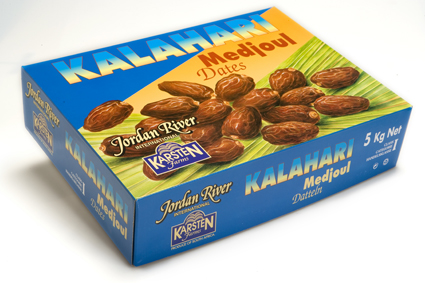
‘ Bomaja Medjoul’

Date: Thursday, 4 August, 2011, 21:35

Hi people,

Willem and I just arrived in Holland for hols. We go to our local Dekamarkt
supermarket to stock up with provisions and what do we find? A whole pile
of boxes of Medjoul dates, prominently displayed in the middle of the store,
bearing the label “Bomaja”. Being curious, we examined these closely to see
where they originated from. Not a trace of any country of origin whatsoever.
A couple of young men, presumed Muslim, were also eyeing them suspiciously
and we all agreed that they were probably Israeli.

Googling on “bomaja dates”, look at the first hit that comes up:

http://www.hadiklaim.com/Info/Packaging

Scroll down a bit and there they are. Yet another Israeli brand to watch out
for. Please spread the word about these and all the other brand names listed
on the Hadiklaim page.

The good news is that nobody in our branch of Dekamarkt seemed to be
buying them. Who knows, maybe by tomorrow they will have acquired some
labelling which makes their country of origin clear. 😉

Sue B

Israelis Debate on the Web: Did Norway Get What It Deserved?

By J.J. Goldberg

The Norway massacre has touched off a nasty war of words on the Israeli Internet over the meaning of the event and its implications for Israel. And I do mean nasty: Judging by the comments sections on the main Hebrew websites, the main questions under debate seem to be whether Norwegians deserve any sympathy from Israelis given the country’s pro-Palestinian policies, whether the killer deserves any sympathy given his self-declared intention of fighting Islamic extremism and, perhaps ironically, whether calling attention to this debate is in itself an anti-Israel or anti-Semitic act.

The debate seems to be taking place almost entirely on Hebrew websites. There’s a bit of bile popping up on the English-language Jerusalem Post site as well (for example, there are a handful of choice comments of a now-they’ll-know-what-it-feels-like variety following this Post news article reporting on Israel’s official offer of sympathy and aid). In Hebrew, though, no holds are barred. I’ve translated some of the back-and-forth from the Ynet and Maariv websites below, to give you taste.

The debate exploded aboveground on Saturday in an opinion essay at Ynet (in Hebrew only) by Ziv Lenchner, a left-leaning Tel Aviv artist and one of Ynet’s large, bipartisan stable of columnists. It’s called “Dancing the Hora on Norwegian Blood.” He argues that the comment sections on news websites are a fair barometer of public sentiment (a questionable premise) and that the overwhelming response is schadenfreude, pleasure at Norway’s pain. As I’ll show below, that judgment seems pretty accurate.

He goes on to blame the Netanyahu government, which he accuses of whipping up a constant mood of “the whole world is against us.” Again, a stretch—a government can exacerbate a mood, but it can’t create it out of whole cloth. Israelis have been scared and angry since long before this government came in two and a half years ago, for a whole variety of reasons. The government isn’t working overtime to dispel the mood, but it can’t be blamed for creating it. Finally, Lenchner argues, on very solid ground, that the vindictive mood reflected on the Web is immoral and un-Jewish, citing the biblical injunction “do not rejoice in the fall of your enemy.”

His article has drawn hundreds of responses—more than any of the articles he complains about. They fall into four basic categories in roughly equal proportions: 1.) Hurray, the Norwegians had it coming; 2.) What happened is horrible but maybe now they’ll understand what we’re up against; 3.) What happened is horrible and the celebrations here are appalling; 4.) This article is a bunch of lies, Ziv Lenchner invented this whole schadenfreude thing because he’s a lying leftist who wants to destroy Israel.

It’s worth noting that at some point late on Saturday several readers found links to Norwegian news sites showing that some kids at the campground where the shooting took place had been brandishing signs a day or two earlier calling for a boycott of Israel. These links were posted (here and here) and the mood quickly got darker—sympathy for the shooting victims dropped fast.

The background to this, as Ynet reported in a news article, is that Norwegian foreign minister Jonas Gahr Store had visited the campsite on Wednesday, two days before the shootings, as he does every year (he was a camper there as a kid) and addressed the group. He was asked from the audience about Palestinian statehood, and he said Norway was looking forward to the Palestinians’ U.N. bid, but he wouldn’t recognize a Palestinian state before that. He was also asked about boycotting Israel. He said it was a bad idea and would make the conflict worse rather than help bring peace. At some point during the day, some of the campers held up the signs that appear in the photos. Israeli readers seem to have concluded that the pictures show the camp program was anti-Israel and therefore fair game.

Here are some of the responses to Lenchner’s article:

15. Almog, Beer Sheva: they have it coming, period. Your article is pointless. Anyone who acts without mercy towards us, there’s no reason I should pity them!!!! Let them continue to respect and honor Muslims.

16. Gidon: I never enjoyed any support from Norway all these years when there were terror attacks in Israel just the opposite you bent, corrupt person let them understand that terror is not a solution to anything you self-righteous Jew

54. Roi, Bet Shemesh: Ziv Lenchner you’re a leftist!! If you haven’t noticed you’re a leftist like the rest of the media!!! Enough with the leftist incitement!!! There’s no getting away from it Norway was always against the state of Israel it’s not new and never will be!! We’re not in favor of the attack but to say that maybe they’ll understand us better after what happened is entirely legitimate!!!

103. Yossi, the north: Oslo … Maybe they’ll learn in Oslo that they’re not immune they’ll feel what many Israelis have felt and some of them can no longer feel because of the activity of Israelis and Norwegians in Oslo.

104. Ilan, on the stoning of gays [sic]: Anti-Jewish? Have you ever heard of an eye for an eye and a tooth for a tooth? Suddenly a few little Jew-boys have popped up and “invented” a new Torah! Before the Torah is moral it is first of all for survival and the destruction of all enemies! Sing to the Lord for He is highly exalted the horse and his rider hath He thrown into the sea [Exodus 17:21, after the drowning of Pharaoh’s army—JJG]

303. Effie: I feel no sorrow about it!!!! Anyone who doesn’t feel the no pain of my people shouldn’t ask sympathy for his own pain.

392. We’re more unfortunate: Enough demagoguery! The Norwegians and Europe generally are super-anti-Semitic. So 100 people were killed there are 7 billion more people in the world. I don’t pity them they’re my enemies they hate Israel so they have it coming!!!

393. The whole world dances on Jewish blood. Europe is the same Europe and even more anti-Semitic. The killer is right!!! Europe is defeated, Norwegians are becoming a minority.

458. Very sorry: With all due sorrow they were waving a sign on the island the day before calling to boycott us. So I really don’t feeling like showing empathy. Very sorry. If you don’t believe me here the link to the lovely picture:

When the first news report appeared Friday on Ynet, the Yediot Ahronot website and Israel’s most trafficked news site, comments seemed to run about 3- or 4-to-1 (at a rough eyeball guess) hostile rather than sympathetic. The reported death toll at this point was 11, and the perpetrators were assumed to be Islamic extremists. Here are a few typical comments:

181. Noam: Ha Ha Ha! Europeans, this is your “liberalism”

240. D.A.: Bring the Oslo criminals to justice?

242. Radical Dreamer: Let them eat what they cooked.

243. Just a Person: Speedy recovery to the wounded and condolences to the families.

260. Shai, Tel Aviv: Give Norway back to the Arabs! End the occupation of Norway!

268. Shimon: Good news for Shabbat. So may they increase and learn the hard way.

285. Nir, Hasela Ha’adom: Allow me a few moments of pleasure.

315. Moshe, Haifa: I’m sorry, it doesn’t move me. From my point of view, let them drown in blood.

Ynetnews, the English website, carried an English translation of the story. The comments are far more moderate: almost none express outright pleasure, and there’s a rough balance between sympathy and sarcasm.

When the news came out on Saturday that the killer was not a Muslim but a right-wing Norwegian nationalist angered at multiculturalism, liberalism and tolerance of Islam, the tone sharpened. Suddenly there was a rush of comments claiming the killer was right and the victims had it coming. Here is Maariv’s report on the killer’s 1,500 page manifesto, calling for a European-wide uprising to “reclaim” the continent (here, for you English-language readers, is NPR’s report on the same document). Maariv’s readers piled on.

1. Y.: The best thing to come out of this is that Norway will be divided.

12. Gandi: the boy wanted to send a message. Extreme, yes, but they don’t understand anything else.

13. Yossi: To commenter no. 1: You’re mentally ill. How can you see anything good the depraved murder of boys and girls think for a minute (if you’re capable) what if some of them were your relatives

  • To self-righteous Yossi: Coming soon to all the Norwegians. And all the Europeans.
  • Y.: My relatives aren’t Muslims. It’s time for Europe to deal with these Arabs. From my point of view they could kill 1,000,000 of them here too.
  • AA: You leftists have to be wiped out too. And it will happen soon. When the economic house of cards comes down, even your shoes won’t be left (unlike last time)…

18. Anti-Left: Of course I condemn this terrible murder but in a larger sense he was right!

19. Ron: A freedom fighter for Norway cleared of foreigners…!!! But this time it won’t be easy for you … Muslims aren’t Jews — who go willingly to death!

  • Horrifying but correct, Muslims will teach them a few lessons. They won’t go like sheep to the slaughter, but today neither will we!
  • We also let them piss on us

Boycott Israeli Dates by Friends of Al Aqsa

[youtube http://youtu.be/rBqDbZBbXqE?]

Flytilla blocked

[youtube http://youtu.be/k0D0yyoTqs8?]

RT mixes up the flytilla and the Free Gaza flotilla


[youtube http://youtu.be/YrP9LiqPNjY?]

Portland BDS Coalition Flash Mobs New Seasons: May 29, 2011

[youtube http://youtu.be/OI6MY2qeKH0?]

Blog at WordPress.com.

Up ↑