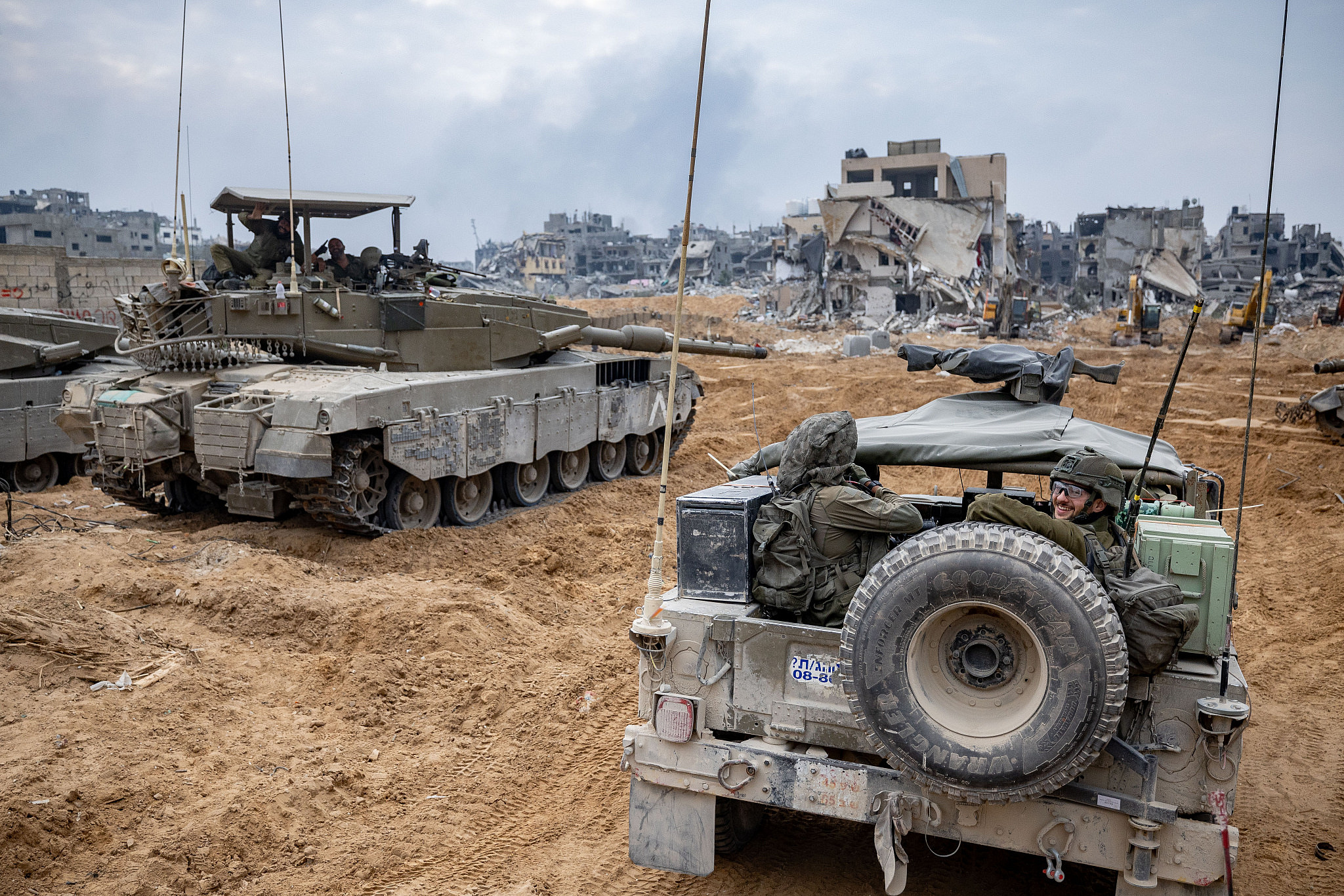
For decades, Israel has supplied weapons and military technology to the world’s most brutal military regimes. This is a brief history of Israel’s support for apartheid, atrocities, war crimes and genocide around the world.
Chile
In the 1970s-80s, Israel supplied arms to Chile’s Augusto Pinochet during its 17-year long military rule in which civilians were routinely targeted, tortured, and disappeared. The Israeli military trained the Chilean secret service, the DINA, described by the CIA in 1974 as a “Gestapo-type police force,” which tortured at least 35,000 and disappeared over 3,000 people. Meanwhile, Israel maintained excellent relations with Chile throughout Pinochet’s rule, sponsoring Chilean leaders on many state visits.
Now, an Israeli-Chilean family seeks justice for their father, who was tortured and killed by the dictatorship. They have sued the Attorney General to open investigations into the involvement of Israeli government institutions in arms deals with Pinochet. The Israeli lawyer and human rights activist Eitay Mack has filed a series of freedom of information petitions for the release of documents that would detail the nature of Israel’s involvement. “The human rights issue is not part of the consideration of the officials in the Ministry of Defense and the Ministry of Foreign Affairs, unless there is big public pressure on them,” Mack said. Israeli leaders are unconcerned with how the weapons are used so long as they improve Israel’s diplomatic ties abroad.
Guatemala
In 1977, Israel became Guatemala’s principal weapons supplier, providing the country’s authoritarian leaders with $6 million worth of Galil rifles and Uzi submachine guns. Israel also supplied spyware and electronic surveillance and designed and operated the radar system at Guatemala City’s international airport. Guatemalan officials have even bragged their soldiers carry Israeli weapons and underwent training from Israeli soldiers. Guatemalan leaders have also embraced Israeli military tactics, such as using the theoretical presence of guerilla forces in an area as a pretext to indiscriminately kill civilians. During the civil war, right wing supporters of the regime even spoke about the “Palestinianization” of Guate’s indigenous population.
Then, in 1982, Israeli officials helped Guatemala’s Efraín Ríos Montt carry out a military coup. Montt, who later thanked over 300 Israeli advisors for their help in the takeover, ruled during the bloodiest period of Guatemala’s civil war — known as the Mayan genocide or the Silent Holocaust. In 30 years, over 200,000 Mayan people were killed, tortured, and disappeared. Montt’s rule lasted from 1982-83 during which time his regime disappeared some 70,000 people.
South Africa
In the 1970s and 1980s, Israel became one of apartheid South Africa’s most important arms suppliers. In 1988, South Africa saved Israel’s cash-starved defense industry after it purchased 60 Kfir combat planes for $1.7 billion. Israel was then able to launch a reconnaissance satellite that was only made possible after the weapons sales to the apartheid regime.
South Africa operated an apartheid state, a racist legal system that segregated social and civil life in South Africa, privileging the white minority and condemning the Black majority. Apartheid security forces killed between 11,000 and 21,000 people and detained more than 80,000 people without trial over the course of the regime’s four decades of rule. Today, South Africa continues to suffer from the ramifications of apartheid rule.
Serbia
In 1991, Israel made one of the largest arms deals with Serbia during the Bosnian Genocide, concealing the weapons transfers in violation of a UN arms embargo that same year. Israel’s military relationship with Serbia continued through at least 1995, with Serbian soldiers having received covert Israeli training in Greece and toting Israeli Uzis, snipers, shells and missiles. In 2016, the Israeli Supreme Court declined to release documents despite a petition filed by Mack and others because it would pose a risk to Israeli foreign relations. To this day the extent of Israeli support for the Bosnian genocide remains unknown.
The Serbian wars waged against Muslims in Bosnia and Croatia after the dissolution of Yugoslavia have been described as the most egregious acts of ethnic cleansing “Europe had seen since the Holocaust.” Between 1991 and 1995 over 250,000 people were killed, and many more injured, raped, and held in concentration camps.
Rwanda
Israel provided arms to Hutu government forces during the Rwandan Genocide. Israeli weapons manufacturing companies sent 7 shipments of bullets, rifles and grenades to Rwanda between April and July 1994 alone despite an international arms embargo. In 2014, human rights lawyer Mack, alongside others, once again petitioned for documents on the arms trade but were denied because the information might harm “Israel’s state security and foreign relations.”
In 1994, Hutu militias killed more than half a million Tutsis in Rwanda in less than 100 days. It was the culmination of decades of tension between Rwanda’s majority ruling ethnic group, the Hutus, and the Tutsi minority. In total, over 1 million people perished in what is considered to be the fastest genocide in human history.
The Philippines
Israel supplied weapons to the Philippines during President Rodrigo’s Duterte’s infamous drug war in which government forces and death squads killed over 12,000 people. Philippine Security forces carried out the executions with Israeli rifles and handguns in largely poor, urban neighborhoods of the country.
In a 2018 visit to Israel, Duterte openly acknowledged that he favored purchasing Israeli weapons because there are virtually no restrictions on the sales while boastfully comparing himself to Hitler. In 2016, Duterte ran on a presidential campaign promising to kill 100,000 people in his first six months in office. He won by a landslide.
Myanmar
Since 2018, Israeli companies have supplied at least four shipments of weapons to the military junta in Myanmar, including patrol boats, advanced radar systems, air combat maneuvering instrumentation and drones.
Israel Aerospace Industries and Elbit Systems, for instance, continued pre-existing trade relations with the regime, ignoring both an international arms embargo and a 2017 Israeli Supreme Court ban. Israel’s government claimed it had stopped sending weapons to Myanmar in 2018, but arms shipments continued as late as 2022, after the junta overthrew the country’s democratically elected leaders a year earlier. In addition, Israel CAA Industries sold millions worth of arms-manufacturing equipment to Myanmar while an Israeli cyber firm supplied the country with spyware to surveil civilian populations.
In 2017, Israeli weapons and equipment were used to carry out a genocide of Rohingya Muslims. That year, Myanmar’s military Junta killed 9,000 Rohingya between August and September alone, with over 500,000 having fled to Bangladesh.
South Sudan
An Israeli general has been accused of trafficking $150 million worth of arms to the South Sudanese government under the guise of an agricultural firm. Israel provided assault rifles and operated surveillance equipment that has been used to target journalists and opposition figures. This was in spite of a 2018 UN Security Council arms embargo, a 2015 UN Report detailing Israeli violations of a previous ban of weapon sales and Israel’s ongoing promises since 2011 to suspend transfers of lethal equipment.
Years of political unrest and conflict between ethnic and militia groups in South Sudan have culminated in what some say is the “biggest hunger crisis” in recent history. Since 2018, some 400,000 people have been killed due to violence, starvation and disease, and between 4 and 11 million people have been displaced.
Azerbaijan
Israel has sold billions of dollars worth of arms to Azerbaijan since 2012. The Azerbaijani military even published videos displaying Israeli missiles and suicide drones and a factory producing these drones on Azeri soil. Meanwhile, the government has also used the Israeli company NSO’s spyware to target journalists and opposition activists.
In 2023, Azerbaijani forces continued to use Israeli arms to institute a 9-month blockade of Nagorno-Karabakh after decades of fighting that had left tens of thousands dead. They starved out the region’s 120,000 ethnic Armenians, blocking access to food, medicine, and fuel until January 24, 2024 when Azerbaijani forces ethnically cleansed the last remaining Armenians in the beleaguered enclave.
——
Israeli arms dealers have been intimately involved in many of the world’s most horrific acts of violence over the past half-century. In addition to the cases cited above, Israel has also reportedly supplied weapons to Argentina, Venezuela, Equatorial Guinea, and Nicaragua. In each of these cases as well, Israeli arms have been used to carry out atrocities. The Israeli firm Pegasus is also distributing its spyware to authoritarian states, where the technology will almost certainly be used to crack down on journalists and opposition figures.
Israeli human rights lawyer Mack emphasizes that the sales are intended to boost Israel’s diplomatic standing in the world. “In my opinion, economic incentive should never be above the moral issues and the human rights issues.”
My Mother once told me the story of an emaciated woman in the Warsaw Ghetto who would wail from her window sill that all the Jews in the ghetto would be killed. She came to be called Cassandra, after the prophetess of doom in Greek mythology. Everyone just assumed that she was mad. My Mother speculated in retrospect that somehow she had become privy to the truth: Jews weren’t being “relocated” in the East; they were being transported to their deaths.
I have hesitated thus far to sound the alarm. But at the risk of being thought mad, it must, as an act of political responsibility, be said out loud: Israel is hurling toward the precipice and dragging the rest of the world with it.
A rational analysis of the current predicament must begin with this bedrock fact: Israel is a crazy state. Not a “bad actor.” Not a “rogue” regime. A crazy state. The full range of Israeli elite opinion, itself reflective of Israeli society at large (which overwhelmingly supports the genocidal war in Gaza; only a handful of Israelis have refused to serve), spans a mere flea’s hop:
AT ONE POLE stand “crackpot realists,” of whom sociologist C. Wright Mills wrote in the American context: “they have come to believe that there … is no other solution but war, even when they sense that war can be a solution to nothing … they still believe that ‘winning’ means something, although they never tell us what.” (1) Professor Benny Morris is cut squarely from this mold. He is urbane, educated, secular—and a crackpot. He once even “proved” that Israeli Jews couldn’t coexist with barbarian Palestinians by inter alia mustering stats on how many more road accidents Palestinians got into! (2) Morris exhorts the US to join in an attack on Iran and then rattles the threat that if Washington doesn’t rise to the occasion, Israel will go it alone by nuking Iran. He must be cognizant as he breezily proffers such counsel that an attack would not only incinerate tens of millions of Iranians—he reckons they have it coming—but also trigger a terminal retaliation. Hezbollah alone is alleged to possess 150,000 missiles. It’s a circuitous auto-da-fé. That prospect, however, doesn’t appear to faze Morris one bit.
AT THE OTHER POLE stand full-blown crazies—or those just one step short of this threshold. “The greatest danger facing Israel right now,” Noam Chomsky presciently observed already four decades ago, “is the ‘collective version’ of Samson’s revenge against the Philistines—‘Let me perish with the Philistines’—as he brought down the Temple in ruins.” The Samson clones ensconced in Jerusalem have either already gone mad—“we shall kill and bury the Gentiles around us while we ourselves shall die with them”—or pretend to “go crazy” so as to terrify enemies and allies alike into submission. Feigned lunacy, be it noted, easily transmutes into the real thing as the imaginary phantoms one repeatedly conjures seep into the psyche’s inner chambers. The upshot is that this madness, real or contrived, “renders rational calculations … questionable” as Israel “may behave in the manner of what have sometimes been called ‘crazy states.’” (3) A report in yesterday’s paper fleshes out in real time this Israeli propensity to unhinged outbursts: when one senior Israeli official counseled caution, if only in the immediate term, after Iran’s symbolic retaliation, a far-right cabinet minister demanded on the contrary that Israel go “crazy.” (4)
*
The April 14 speech at the Security Council emergency session by Israel’s representative, Gilad Erdan, brought home just how lunatic Israel has become. Presenting a master class in—if nothing else—proximate projection, Erdan was seemingly persuaded to the bone of his being that “the Islamic regime of today is … no different than Adolf Hitler’s Third Reich…. Just like the Nazi regime, the Ayatollah regime sows death and destruction everywhere…. For years, the world has watched the rise of this Shite Islamist Reich, yet just like during the rise of Nazism, the world has been silent”; that “Iran’s hegemonic ambitions of global domination must be stopped before it drives the world to a point of no return, to a regional war that can escalate to a world war”; that Iran was “barreling towards nuclear capabilities … its breakout time to produce an arsenal of nuclear weapons is now weeks, mere weeks.” If the world didn’t rein in Iran, then Israel had no recourse except to bear this crushing burden on its own of stopping Hitler’s Third Reich: “We are being fired upon from all fronts, from every border. We are surrounded by Iran’s terror proxies…. All of the terror groups attacking Israel are tentacles of the same Shiite octopus, the Iranian octopus. So, I ask you, and be honest with yourselves, what would you do? What would you do if you were in Israel’s shoes? How would you react if your existence was threatened every single day? Israel cannot settle for inaction. We will defend our future.” Holding up his iPad to display an image of Israel allegedly intercepting an Iranian drone over al-Aqsa mosque, Erdan even claimed for Israel the mantle of the true guardian of Islam’s holy sites—“look at this video that shows how Israel intercepts Iranian drones above the Temple Mount and al-Aqsa mosque”—against the defilers of them in Teheran. The tonal register of his rhetorical delivery was as if a defiant accusation, Who dares doubt me?! “In every speech and in countless letters,” Erdan further recalled, “I rang the warning bell regarding Iran.” He got right that the bell must be sounded; but he got wrong from whence the madness emanates. Medice, cura te ipsum. If Erdan represents even half of the Israeli state and society—the fraction is arguably much higher—a catastrophe looms. True, Israeli leaders have in the past uttered certifiable lunacies. It is sufficient to recall Prime Minister Netanyahu holding up a Loony Tunes-like cartoon of the Iranian bomb at the UN and his pronouncement that it was not Hitler but the Palestinian Mufti of Jerusalem who masterminded the Final Solution. Indeed, already as far back as the 1978 Camp David negotiations, President Carter mused about Israel’s head of state, “It’s becoming clearer that the rationality of [Menachem] Begin is in doubt.” (5) All the same, a civilizational leap backwards separates the Israel that once was from what it has become. Israel’s UN representative at the time of the 1967 (“Six-Day”) war, Abba Eban, could serially prevaricate—albeit with consummate eloquence, as befitted the triple-first graduate of Cambridge—without batting an eyelash. But still, it was possible to rationally parse his propositions (as I once endeavored) to prove them wrong. (6) It is no more possible to parse Erdan’s speech than a psychopath’s rant.
*
It might be urged upon Iran to tread lightly so as not to agitate the lunatic in the room. But alas, that is not, in my opinion, a viable option. The documentary record demonstrates that, once Israel has fixed a country in its crosshairs, nothing short of abject submission will bring it to desist. If the “enemy” power resists initial provocation, Israel will keep escalating with another and another provocation until it proves politically untenable for the targeted entity to passively absorb further blows. That’s what happened when Israel targeted Egypt’s Gamel Abdel Nasser in the early 1950s. (7) (It was feared by Israeli Prime Minister Ben-Gurion that the “radical nationalist” Egyptian president might one day preside over a modern state able to check Israel’s regional ambitions.) That’s what happened when Israel targeted the Palestine Liberation Organization in Lebanon in the early 1980s. (8) (It was feared by Israeli Prime Minister Begin that the PLO’s “peace offensive”—the Palestinians supported but Israelis opposed a two-state settlement—would bring international pressure on Israel to withdraw from the West Bank.) That’s what happened in 2002 during the second intifada when Israel carried out targeted assassinations of Palestinian leaders. (9) (It was feared by Prime Minister Sharon that the Palestinians would stop armed attacks in exchange for a negotiated ceasefire.) That’s what happened in 2008 when Israel broke a ceasefire with Hamas in order to launch Operation Cast Lead. (10) (It was feared by Israeli Prime Minister Olmert that Hamas would gain international legitimacy as it moderated its political program.) The lamentable truth is that, short of national suicide, Iran cannot exercise the option of inaction: Israel will almost certainly keep ratcheting up the provocations until Teheran has no choice but to respond. It wouldn’t surprise were Israel to assassinate Ayatollah Khamenei then (wink, wink) deny it.
*
The Israeli government has ever been on the alert to exploit opportunities in order to implement its preconceived plans. In 1989, during the Tiananmen Square massacre, Benjamin Netanyahu urged his government to exploit this media distraction by carrying out a mass expulsion of Palestinians in the West Bank. On November 4, 2008, when the United States elected its first Black president, Prime Minister Olmert exploited this media distraction by breaking the ceasefire with Hamas. On July 17, 2014, when a Malaysian airliner flying over Ukraine was downed, Prime Minister Netanyahu exploited this media distraction by launching the murderous ground invasion of Gaza in Operation Protective Edge. The pretexts of October 7 and now Iran’s “retaliation” present the lunatics in Jerusalem with an unprecedented opportunity to rid Israel of the triple challenge to its regional domination: by destroying Gaza, Hezbollah, and Iran; the “fog” of such an explosion would also enable Israel’s ethnic cleansing of the West Bank. If it is hoped that a sane cabal among the Israeli leadership will crystallize to stop this headlong lurch over the precipice, then it must be said that the odds are against it. Hitler’s biographer, Ian Kershaw, observed that, if it took so long for coup plans to hatch against the Fuhrer, it was because of “a deep sense of obedience to authority and service to the state,” the belief that it was “not merely wrong, but despicable and treacherous to undermine one’s own country in war,” and “even as the military disasters mounted and ultimate catastrophe beckoned, the fanatical backing for Hitler had by no means evaporated and continued, if as a minority taste, to show remarkable resilience and strength.”(11) It’s hard not to notice cognate factors at play in elite Israeli circles. On the last point, whereas Netanyahu’s critics have been writing his political obituary for years, he too keeps bouncing back notwithstanding his missteps. Why? Because Israelis see their reflection in him. Indeed, Netanyahu IS Israel: an obnoxious, narcissistic Jewish supremacist for whom only Jews reckon in God’s grand design. It must, finally, be acknowledged that not all Israeli fears are unfounded—the wish is by now widespread that Israel vanish from the map while its capacity has diminished to terrorize its neighbors into submission. But, for the most part, it is a corner that Israel has boxed itself into. Before October 7 Hamas had gestured toward a two-state settlement while Iran consistently voted with the UN General Assembly majority in support of the two-state consensus. Israel rebuffed it.
Will Prime Minister Netanyahu resist the irresistible temptation to cut the Gordian regional knot or, like Samson, will he bring down the Temple—the rest of us—with him? Cassandra would probably say: All bets are off!
References
1. Mills, Causes of World War III.
2. Morris, One State, Two States.
3. Chomsky, Fateful Triangle. Investigative journalist Seymour Hersh later elaborated on Chomsky’s insights in The Samson Option.
4. New York Times, April 15, 2024.
5. Carter, White House Diary.
6. Finkelstein, Image and Reality of the Israel-Palestine Conflict.
7. Benny Morris, Border Wars.
8. Robert Fisk, Pity the Nation.
9. Norman Finkelstein, Beyond Chutzpah.
10. Norman Finkelstein, Gaza.
11. Kershaw, Hitler, 1936-1945: Nemesi
Thanks for reading Norman Finkelstein! Subscribe for free to receive new posts and support my work.
An Israeli soldier operates in the Gaza Strip with a dog from the army’s canine unit in January, 2024.Credit: IDF Spokesperson’s UnitGideon Levy
Aug 14, 2024 11:39 pm IDT
The Israel Defense Forces has decided to downsize the Oketz unit, Unit 7142, ahead of its cancellation. The unit for dogs and their trainers has been suffering from a shortage recently. Quite a number of dogs have been killed in the Gaza Strip, and it was therefore decided to use cheaper, more efficient means. It turns out that the new unit, which has yet to be given a name by the IDF computer, brings the same operational results. There’s no need to train dogs for months, no need for the iron muzzles that shut their frightening jaws, and their food will be cheaper,pp too: Instead of expensive Bonzo dog food, leftovers from battle rations.
And the money for burial and commemoration will also be canceled: The Oketz dogs were generally given ceremonial military burials, with weeping soldiers and tear-jerking articles on the first page of the IDF newsletter Yedioth Ahronoth. The replacements have no need for burials, their bodies can simply be tossed out. The annual August 30 memorial ceremonies for the dogs can also be dispensed with. The new dogs will have no monument. The sensitive souls of the soldiers who handle them will no longer be damaged when they die.
The pilot project is now in process and there’s already one dead in the new unit. Soon, the IDF will export the knowledge it has acquired to other armies worldwide. In Ukraine, Sudan, Yemen and maybe even in Niger, they’ll be happy to rely on it.
– Advertisement –
According to the Oketz Wikipedia page: “The unit activates unique war materiel – the dog, which provides unique operational advantages that have no human or technological substitute.” Oops, a mistake. There may be no technological substitute, but a human substitute has been found. “Human” is an exaggeration of course, but the IDF has a new type of dog, cheap, obedient, and far better trained, whose lives are worth less.
The IDF’s new dogs are the residents of the Gaza Strip. Not all of them of course, only those that the army scout chooses carefully, out of 2 million candidates; the auditions take place in the displaced persons camps. There is no age restriction.
The army’s headhunters have already found children and elderly people, and there are no restrictions on the activation of the new manpower. They use them and then toss them out. Meanwhile they haven’t been trained for attack missions and for identifying explosives by smell, but the army is working on that. At least they won’t bite Palestinian children in their sleep like the previous Baskerville hounds.
On Tuesday, Haaretz published a photo of one of the new dogs on the first page: a young resident of Gaza in handcuffs, dressed in rags that were once uniforms, his eyes covered with a rag, his gaze downcast, armed soldiers standing next to him. Yaniv Kubovich, the most courageous military correspondent in Israel, and Michael Hauser Tov revealed that the IDF uses Palestinian civilians to check tunnels in Gaza. “Our lives are more important than their lives,” the commanders told the soldiers, repeating what is self-evident.
These new “dogs” are sent to the tunnels in handcuffs. Cameras are attached to their bodies, and from them one can hear the sound of their frightened breathing.
They “cleanse” shafts, are held in worse conditions than Oketz dogs and their activity has become widespread, systematic. Al-Jazeera, boycotted in Israel for causing “damage to security,” revealed the phenomenon. The military denied it, as usual, with its lies. Two Haaretz reporters brought the full story on Tuesday, and it’s terrifying.
There were soldiers who protested at the sight of the new “dogs,” several brave ones even gave testimony to Breaking the Silence. But the procedure, which was once specifically forbidden by the High Court of Justice, has been adopted on a broad scope in the army. The next time that the public protests the fact that Benjamin Netanyahu ignores High Court rulings, we should remember that the army also brazenly ignores its rulings.
The process of dehumanization of the Palestinians has reached a new height. Haaretz reported that the IDF senior command knows about the new unit. In the opinion of the army, a dog’s life is worth more than a Palestinian’s. Now we also have the official version.
This is Palestine, In Your Inbox, Making Sense of the Madness The 8 Tiers of Israeli Apartheid, Explained The State of Israel recognizes 8 tiers of people under its control. For all 8 tiers, Israel controls the registration of births, marriages, divorces, deaths and address changes. Israel controls the telecommunication networks, electricity grids, water supply, airspace and currency. Israel controls the movement of people in and out of the country. All tiers of people are controlled by a single state, with a single Prime Minister, a single Defense Minister, a single cabinet and a single chain of military command. But each tier has different legal rights. That’s why every major human rights organization has called Israel an apartheid state. This is a brief survey of how it operates.
Tier 1: Jewish citizens of Israel (7.2 million people) Jewish citizens of Israel have full voting rights. They can rent, buy or own property in 900+ localities in Israel. They can buy property from the Jewish National Fund, which owns about 13% of the land of Israel. There are no family reunification restrictions on Jews. Jews can destroy Palestinian property in the West Bank with near total impunity. Jews who protest their government rarely encounter lethal or even disproportionate violence by the Israeli police. The Israeli Parliament is likely to forbid the state from placing Jews in “administrative detention,” in which a person is imprisoned without trial and without having committed an offense. In 2018, Israeli lawmakers passed the nation-state law, defining Israel as a state for the Jewish people. The state exists for the purpose of serving the interests of Jews. This is not the case for any other tier.
Tier 2: Palestinian (& other non-Jewish) citizens of Israel (2.5 million people) Palestinian citizens of Israel have full voting rights. But they are in practice barred from buying or owning land in 900+ localities in Israel. They cannot buy property from the Jewish National Fund, which owns about 13% of the land of Israel. Palestinian citizens are prohibited from having their family members in the West Bank or Gaza live with them in Israel. Palestinians who protest the Israeli government often face disproportionate violence or retribution, such as a 1997 protest where Israeli forces injured hundreds of Palestinians protesting the confiscation of 10,000 acres of land near Umm al-Fahm. Palestinian schools, local councils and municipalities receive far less funds per capita than Jewish ones. The Israeli Parliament is likely to pass a law allowing the state to limit the effective use of its “administrative detention” policy to Palestinians only.
Tier 3: Unrecognized Palestinian Citizens of Israel, (85,000 people) These citizens of Israel live in dozens of communities unrecognized by the State of Israel. They are primarily of Bedouin origin and have been living in Israel long before Israel existed, indeed, before Zionism existed. Their communities are denied access to the Israeli electrical grid, water mains and trash-pickup. Israel does not allow public buses to reach them. Israel does not pave the roads nor does it allow new construction in the unrecognized towns. There are outstanding home demolition orders on thousands of homes and structures in the unrecognized towns that can be executed on at any moment. In May 2024, for example, Israeli forces demolished 47 homes in Wadi al-Khalil, an unrecognized Palestinian Bedouin village in southern Israel resulting in the forcible displacement of over 300 Palestinian Bedouins.
Tier 4: Palestinians living in Israeli occupied East Jerusalem (360,000 people) Palestinian residents of East Jerusalem are not given Israeli citizenship at birth, even though they live in territory annexed by Israel in 1967. Instead, they are provided residency permits that can be revoked. Since 1967, Israel has stripped more than 15,000 East Jerusalem Palestinians of their residency permits. Israel also rejects 93% of Palestinian building permit applications in E. Jerusalem, which has meant that 85% of Palestinian homes in E. Jerusalem are considered illegal and could be demolished at any moment. Israeli law also allows Jews to take over property in E. Jerusalem once owned by Jews before 1948, but does not allow Palestinians to take over property they once owned before 1948 in West Jerusalem or anywhere else. In Jerusalem, Palestinian schools, clinics, hospitals, parks and roads are all underfunded relative to Jewish ones.
Tier 5: Palestinians living in Area A of the West Bank (1.6 million) Palestinians living in Area A of the West Bank are stateless peoples who have been subject to a 57-year long Israeli military occupation. They do not have the right to vote for the government that controls their lives. They do not have freedom of movement within the West Bank nor can they leave the West Bank without a permit. And, If they leave for more than 3 years, they can lose their right to be an occupied, stateless person. They can be imprisoned indefinitely without charge, a policy known as “administrative detention.” The water under the ground and the sky over their heads is controlled by Israel. In addition, the Israeli military’s subcontractor, the Palestinian Authority (PA), further restricts their freedom of assembly and freedom of speech through violent crackdown on protests and imprisonment or murder of political opponents, such as Nizar Banat.
Tier 6: Palestinians living in Area B of the West Bank (1.3 million) Palestinians living in Area B of the West Bank are stateless peoples who have been subject to a 57-year long Israeli military occupation. They face the same restrictions on their freedom of movement and speech and right to residence and assembly as Area A West Bank Palestinians. In addition, they encounter Israeli checkpoints whenever passing into Area A or C of the West Bank. They must obtain permits to access their lands if they happen to be in Area A or C. Moreover, the current Israeli government has begun expanding its control over Area B just as it has over Area C (discussed subsequently), making it the next major site for Israel’s ongoing land seizures and depopulation efforts. This has involved the legalization of five settlement outposts in the West Bank, and the issuance of tenders for thousands of new housing units in Israeli settlements in Area B.
Tier 7: Palestinians living in Area C of the West Bank (100,000 people) Palestinians living in Area C of the West Bank are stateless peoples who have been subject to a 57-year long Israeli military occupation. They face even more restrictions on their freedom of movement and speech, as well as right to residency and assembly as Area A and B West Bank Palestinians. Less than 1% of the land in Area C is currently available to Palestinians for construction. Palestinians living in Area C are 100 times more likely to have demolition orders placed on their homes than be granted permits to build homes. Meanwhile, a dozen some Palestinian communities in Area C have been ethnically cleansed in the past few years in Khirbet Humsa, Masafer Yatta, Ein Samiya, Ras a-Tin, Lifjim, Khirbet Zanuta, Khirbet al-Ratheem, al-Qanub, Ein al-Rashash and Wadi al-Seeq.
Tier 8: Palestinians Living in Gaza (2.2 million people) Palestinians living in Gaza are stateless peoples who have been living under Israeli military occupation for 57 years, as well as a 17-year long siege and a 9-month genocidal onslaught. In just the past 9+ months, Israel has denied the people of Gaza the right to shelter, health care, water, food, electricity and the right to life itself: Israel has killed at least 39,000 Palestinians in Gaza with as many as 186,000 likely to die from the genocide. Israel is also starving to death more than 1 million Palestinians in Gaza and leaving the rest in conditions of hunger and catastrophic food insecurity. Israel has reduced the amount of water available in Gaza by 94%. Israel has damaged or completely destroyed every single hospital in Gaza and completely destroyed 76% of Gaza’s schools. Israel has also forcibly displaced nearly all 2.2 million Palestinians in Gaza.
Israeli soldiers describe the near-total absence of firing regulations in the Gaza war, with troops shooting as they please, setting homes ablaze, and leaving corpses on the streets — all with their commanders’ permission.
In early June, Al Jazeera aired a series of disturbing videos revealing what it described as “summary executions”: Israeli soldiers shooting dead several Palestinians walking near the coastal road in the Gaza Strip, on three separate occasions. In each case, the Palestinians appeared unarmed and did not pose any imminent threat to the soldiers.
Such footage is rare, due to the severe constraints faced by journalists in the besieged enclave and the constant danger to their lives. But these executions, which did not appear to have any security rationale, are consistent with the testimonies of six Israeli soldiers who spoke to +972 Magazine and Local Call following their release from active duty in Gaza in recent months. Corroborating the testimonies of Palestinian eyewitnesses and doctors throughout the war, the soldiers described being authorized to open fire on Palestinians virtually at will, including civilians.
The six sources — all except one of whom spoke on the condition of anonymity — recounted how Israeli soldiers routinely executed Palestinian civilians simply because they entered an area that the military defined as a “no-go zone.” The testimonies paint a picture of a landscape littered with civilian corpses, which are left to rot or be eaten by stray animals; the army only hides them from view ahead of the arrival of international aid convoys, so that “images of people in advanced stages of decay don’t come out.” Two of the soldiers also testified to a systematic policy of setting Palestinian homes on fire after occupying them.
Several sources described how the ability to shoot without restrictions gave soldiers a way to blow off steam or relieve the dullness of their daily routine. “People want to experience the event [fully],” S., a reservist who served in northern Gaza, recalled. “I personally fired a few bullets for no reason, into the sea or at the sidewalk or an abandoned building. They report it as ‘normal fire,’ which is a codename for ‘I’m bored, so I shoot.’”
Since the 1980s, the Israeli military has refused to disclose its open-fire regulations, despite various petitions to the High Court of Justice. According to political sociologist Yagil Levy, since the Second Intifada, “the army has not given soldiers written rules of engagement,” leaving much open to the interpretation of soldiers in the field and their commanders. As well as contributing to the killing of over 38,000 Palestinians, sources testified that these lax directives were also partly responsible for the high number of soldiers killed by friendly fire in recent months.
Israeli soldiers from the 8717 Battalion of the Givati Brigade operating in Beit Lahia, in the northern Gaza Strip, during a military operation, December 28, 2023. (Yonatan Sindel/Flash90)
“There was total freedom of action,” said B., another soldier who served in the regular forces in Gaza for months, including in his battalion’s command center. “If there is [even] a feeling of threat, there is no need to explain — you just shoot.” When soldiers see someone approaching, “it is permissible to shoot at their center of mass [their body], not into the air,” B. continued. “It’s permissible to shoot everyone, a young girl, an old woman.”
B. went on to describe an incident in November when soldiers killed several civilians during the evacuation of a school close to the Zeitoun neighborhood of Gaza City, which had served as a shelter for displaced Palestinians. The army ordered the evacuees to exit to the left, toward the sea, rather than to the right, where the soldiers were stationed. When a gunfight erupted inside the school, those who veered the wrong way in the ensuing chaos were immediately fired at.
“There was intelligence that Hamas wanted to create panic,” B. said. “A battle started inside; people ran away. Some fled left toward the sea, [but] some ran to the right, including children. Everyone who went to the right was killed — 15 to 20 people. There was a pile of bodies.”
‘People shot as they pleased, with all their might’
B. said that it was difficult to distinguish civilians from combatants in Gaza, claiming that members of Hamas often “walk around without their weapons.” But as a result, “every man between the ages of 16 and 50 is suspected of being a terrorist.”
“It is forbidden to walk around, and everyone who is outside is suspicious,” B. continued. “If we see someone in a window looking at us, he is a suspect. You shoot. The [army’s] perception is that any contact [with the population] endangers the forces, and a situation must be created in which it is forbidden to approach [the soldiers] under any circumstances. [The Palestinians] learned that when we enter, they run away.”
Even in seemingly unpopulated or abandoned areas of Gaza, soldiers engaged in extensive shooting in a procedure known as “demonstrating presence.” S. testified that his fellow soldiers would “shoot a lot, even for no reason — anyone who wants to shoot, no matter what the reason, shoots.” In some cases, he noted, this was “intended to … remove people [from their hiding places] or to demonstrate presence.”
M., another reservist who served in the Gaza Strip, explained that such orders would come directly from the commanders of the company or battalion in the field. “When there are no [other] IDF forces [in the area] … the shooting is very unrestricted, like crazy. And not just small arms: machine guns, tanks, and mortars.”
Even in the absence of orders from above, M. testified that soldiers in the field regularly take the law into their own hands. “Regular soldiers, junior officers, battalion commanders — the junior ranks who want to shoot, they get permission.”
S. remembered hearing over the radio about a soldier stationed in a protective compound who shot a Palestinian family walking around nearby. “At first, they say ‘four people.’ It turns into two children plus two adults, and by the end it’s a man, a woman, and two children. You can assemble the picture yourself.”
Only one of the soldiers interviewed for this investigation was willing to be identified by name: Yuval Green, a 26-year-old reservist from Jerusalem who served in the 55th Paratroopers Brigade in November and December last year (Green recently signed a letter by 41 reservists declaring their refusal to continue serving in Gaza, following the army’s invasion of Rafah). “There were no restrictions on ammunition,” Green told +972 and Local Call. “People were shooting just to relieve the boredom.”
Green described an incident that occurred one night during the Jewish festival of Hanukkah in December, when “the whole battalion opened fire together like fireworks, including tracer ammunition [which generates a bright light]. It made a crazy color, illuminating the sky, and because [Hannukah] is the ‘festival of lights,’ it became symbolic.”
Israeli soldiers from the 8717 Battalion of the Givati Brigade operating in Beit Lahia, northern Gaza Strip, December 28, 2023. (Yonatan Sindel/Flash90)
C., another soldier who served in Gaza, explained that when soldiers heard gunshots, they radioed in to clarify whether there was another Israeli military unit in the area, and if not, they opened fire. “People shot as they pleased, with all their might.” But as C. noted, unrestricted shooting meant that soldiers are often exposed to the huge risk of friendly fire — which he described as “more dangerous than Hamas.” “On multiple occasions, IDF forces fired in our direction. We didn’t respond, we checked on the radio, and no one was hurt.”
At the time of writing, 324 Israeli soldiers have been killed in Gaza since the ground invasion began, at least 28 of them by friendly fire according to the army. In Green’s experience, such incidents were the “main issue” endangering soldiers’ lives. “There was quite a bit [of friendly fire]; it drove me crazy,” he said.
For Green, the rules of engagement also demonstrated a deep indifference to the fate of the hostages. “They told me about a practice of blowing up tunnels, and I thought to myself that if there were hostages [in them], it would kill them.” After Israeli soldiers in Shuja’iyya killed three hostages waving white flags in December, thinking they were Palestinians, Green said he was angry, but was told “there’s nothing we can do.” “[The commanders] sharpened procedures, saying ‘You have to pay attention and be sensitive, but we are in a combat zone, and we have to be alert.’”
B. confirmed that even after the mishap in Shuja’iyya, which was said to be “contrary to the orders” of the military, the open-fire regulations did not change. “As for the hostages, we didn’t have a specific directive,” he recalled. “[The army’s top brass] said that after the shooting of the hostages, they briefed [soldiers in the field]. [But] they didn’t talk to us.” He and the soldiers who were with him heard about the shooting of the hostages only two and a half weeks after the incident, after they left Gaza.
“I’ve heard statements [from other soldiers] that the hostages are dead, they don’t stand a chance, they have to be abandoned,” Green noted. “[This] bothered me the most … that they kept saying, ‘We’re here for the hostages,’ but it is clear that the war harms the hostages. That was my thought then; today it turned out to be true.”
Israeli soldiers from the 8717 Battalion of the Givati Brigade operating in Beit Lahia, in the northern Gaza Strip, December 28, 2023. (Yonatan Sindel/Flash90)
‘A building comes down, and the feeling is, “Wow, what fun”’
A., an officer who served in the army’s Operations Directorate, testified that his brigade’s operations room — which coordinates the fighting from outside Gaza, approving targets and preventing friendly fire — did not receive clear open-fire orders to transmit to soldiers on the ground. “From the moment you enter, at no point is there a briefing,” he said. “We didn’t receive instructions from higher up to pass on to the soldiers and battalion commanders.”
He noted that there were instructions not to shoot along humanitarian routes, but elsewhere, “you fill in the blanks, in the absence of any other directive. This is the approach: ‘If it is forbidden there, then it is permitted here.’”
A. explained that shooting at “hospitals, clinics, schools, religious institutions, [and] buildings of international organizations” required higher authorization. But in practice, “I can count on one hand the cases where we were told not to shoot. Even with sensitive things like schools, [approval] feels like only a formality.”
In general, A. continued, “the spirit in the operations room was ‘Shoot first, ask questions later.’ That was the consensus … No one will shed a tear if we flatten a house when there was no need, or if we shoot someone who we didn’t have to.”
A. said he was aware of cases in which Israeli soldiers shot Palestinian civilians who entered their area of operation, consistent with a Haaretz investigation into “kill zones” in areas of Gaza under the army’s occupation. “This is the default. No civilians are supposed to be in the area, that’s the perspective. We spotted someone in a window, so they fired and killed him.” A. added that it often was not clear from the reports whether soldiers had shot militants or unarmed civilians — and “many times, it sounded like someone was caught up in a situation, and we opened fire.”
But this ambiguity about the identity of victims meant that, for A., military reports about the numbers of Hamas members killed could not be trusted. “The feeling in the war room, and this is a softened version, was that every person we killed, we counted him as a terrorist,” he testified.
“The aim was to count how many [terrorists] we killed today,” A. continued. “Every [soldier] wants to show that he’s the big guy. The perception was that all the men were terrorists. Sometimes a commander would suddenly ask for numbers, and then the officer of the division would run from brigade to brigade going through the list in the military’s computer system and count.”
A.’s testimony is consistent with a recent report from the Israeli outlet Mako, about a drone strike by one brigade that killed Palestinians in another brigade’s area of operation. Officers from both brigades consulted on which one should register the assassinations. “What difference does it make? Register it to both of us,” one of them told the other, according to the publication.
During the first weeks after the Hamas-led October 7 attack, A. recalled, “people were feeling very guilty that this happened on our watch,” a feeling that was shared among the Israeli public writ large — and quickly transformed into a desire for retribution. “There was no direct order to take revenge,” A. said, “but when you reach decision junctures, the instructions, orders, and protocols [regarding ‘sensitive’ cases] only have so much influence.”
When drones would livestream footage of attacks in Gaza, “there were cheers of joy in the war room,” A. said. “Every once in a while, a building comes down … and the feeling is, ‘Wow, how crazy, what fun.’”
Palestinians at the site of a mosque destroyed in an Israeli airstrike, near the Shaboura refugee camp in Rafah, southern Gaza Strip, April 26, 2024. (Abed Rahim Khatib/Flash90)
A. noted the irony that part of what motivated Israelis’ calls for revenge was the belief that Palestinians in Gaza rejoiced in the death and destruction of October 7. To justify abandoning the distinction between civilians and combatants, people would resort to such statements as “‘They handed out sweets,’ ‘They danced after October 7,’ or ‘They elected Hamas’ … Not everyone, but also quite a few, thought that today’s child [is] tomorrow’s terrorist.
“I, too, a rather left-wing soldier, forget very quickly that these are real homes [in Gaza],” A. said of his experience in the operations room. “It felt like a computer game. Only after two weeks did I realize that these are [actual] buildings that are falling: if there are inhabitants [inside], then [the buildings are collapsing] on their heads, and even if not, then with everything inside them.”
‘A horrific smell of death’
Multiple soldiers testified that the permissive shooting policy has enabled Israeli units to kill Palestinian civilians even when they are identified as such beforehand. D., a reservist, said that his brigade was stationed next to two so-called “humanitarian” travel corridors, one for aid organizations and one for civilians fleeing from the north to the south of the Strip. Within his brigade’s area of operation, they instituted a “red line, green line” policy, delineating zones where it was forbidden for civilians to enter.
According to D., aid organizations were permitted to travel into these zones with prior coordination (our interview was conducted before a series of Israeli precision strikes killed seven World Central Kitchen employees), but for Palestinians it was different. “Anyone who crossed into the green area would become a potential target,” D. said, claiming that these areas were signposted to civilians. “If they cross the red line, you report it on the radio and you don’t need to wait for permission, you can shoot.”
Yet D. said that civilians often came into areas where aid convoys passed through in order to look for scraps that might fall from the trucks; nonetheless, the policy was to shoot anyone who tried to enter. “The civilians are clearly refugees, they are desperate, they have nothing,” he said. Yet in the early months of the war, “every day there were two or three incidents with innocent people or [people] who were suspected of being sent by Hamas as spotters,” whom soldiers in his battalion shot.
The soldiers testified that throughout Gaza, corpses of Palestinians in civilian clothes remained scattered along roads and open ground. “The whole area was full of bodies,” said S., a reservist. “There are also dogs, cows, and horses that survived the bombings and have nowhere to go. We can’t feed them, and we don’t want them to get too close either. So, you occasionally see dogs walking around with rotting body parts. There is a horrific smell of death.”
Rubbles of houses destroyed by Israeli airstrikes in the Jabalia area in the northern Gaza Strip, October 11, 2023. (Atia Mohammed/Flash90)
But before the humanitarian convoys arrive, S. noted, the bodies are removed. “A D-9 [Caterpillar bulldozer] goes down, with a tank, and clears the area of corpses, buries them under the rubble, and flips [them] aside so that the convoys don’t see it — [so that] images of people in advanced stages of decay don’t come out,” he described.
“I saw a lot of [Palestinian] civilians – families, women, children,” S. continued. “There are more fatalities than are reported. We were in a small area. Every day, at least one or two [civilians] are killed [because] they walked in a no-go area. I don’t know who is a terrorist and who is not, but most of them did not carry weapons.”
Green said that when he arrived in Khan Younis at the end of December, “We saw some indistinct mass outside a house. We realized it was a body; we saw a leg. At night, cats ate it. Then someone came and moved it.”
A non-military source who spoke to +972 and Local Call after visiting northern Gaza also reported seeing bodies strewn around the area. “Near the army compound between the northern and southern Gaza Strip, we saw about 10 bodies shot in the head, apparently by a sniper, [seemingly while] trying to return to the north,” he said. “The bodies were decomposing; there were dogs and cats around them.”
“They don’t deal with the bodies,” B. said of the Israeli soldiers in Gaza. “If they’re in the way, they get moved to the side. There’s no burial of the dead. Soldiers stepped on bodies by mistake.”
Last month, Guy Zaken, a soldier who operated D-9 bulldozers in Gaza, testified before a Knesset committee that he and his crew “ran over hundreds of terrorists, dead and alive.” Another soldier he served with subsequently committed suicide.
‘Before you leave, you burn down the house’
Two of the soldiers interviewed for this article also described how burning Palestinian homes has become a common practice among Israeli soldiers, as first reported in depth by Haaretz in January. Green personally witnessed two such cases — the first an independent initiative by a soldier, and the second by commanders’ orders — and his frustration with this policy is part of what eventually led him to refuse further military service.
When soldiers occupied homes, he testified, the policy was “if you move, you have to burn down the house.” Yet for Green, this made no sense: in “no scenario” could the middle of the refugee camp be part of any Israeli security zone that might justify such destruction. “We are in these houses not because they belong to Hamas operatives, but because they serve us operationally,” he noted. “It is a house of two or three families — to destroy it means they will be homeless.
“I asked the company commander, who said that no military equipment [could be] left behind, and that we did not want the enemy to see our fighting methods,” Green continued. “I said I would do a search [to make sure] there was no [evidence of] combat methods left behind. [The company commander] gave me explanations from the world of revenge. He said they were burning them because there were no D-9s or IEDs from an engineering corp [that could destroy the house by other means]. He received an order and it didn’t bother him.”
“Before you leave, you burn down the house — every house,” B. reiterated. “This is backed up at the battalion commander level. It’s so that [Palestinians] won’t be able to return, and if we left behind any ammunition or food, the terrorists won’t be able to use it.”
Before leaving, soldiers would pile up mattresses, furniture, and blankets, and “with some fuel or gas cylinders,” B. noted, “the house burns down easily, it’s like a furnace.” At the beginning of the ground invasion, his company would occupy houses for a few days and then move on; according to B., they “burned hundreds of houses. There were cases where soldiers set a floor alight, and other soldiers were on a higher floor and had to flee through the flames on the stairs or choked on smoke.”
Green said the destruction the military has left in Gaza is “unimaginable.” At the beginning of the fighting, he recounted, they were advancing between houses 50 meters from each other, and many soldiers “treated the houses [like] a souvenir shop,” looting whatever their residents hadn’t managed to take with them.
Dr. Adnan Al-Bursh was the head of the orthopedic wing at Shifa Hospital in Gaza City. During the war, he had to wander from one hospital to the next, as they were all destroyed by the IDF. He has not been back to his home in Jabalya since the start of the war, and last December all trace of him disappeared. Recently, it transpired that he had died in an Israeli jail, apparently due to the torture of beatings during interrogation.
The last people to see him were other doctors and detainees who have been released. They told Haaretz correspondents Jack Khoury and Bar Peleg that they had barely recognized him. “It was clear he had been through hell, torture, humiliation, and sleep deprivation. He wasn’t the person we knew; he was a shadow of himself.” (Haaretz, May 12.) A photo of him published after his death showed an elegant man. A photo from during the war showed his hospital gown covered in blood. He had a wife, Jasmine, and they had six children. He studied medicine in Romania and did a residency in the United Kingdom. The rapper Tamer Nafar wrote a beautiful lament for him. (Haaretz, May 6.)
A doctor, a hospital ward director, was beaten and tortured to death in an Israeli jail. That did not set off alarms here. Nearly all his physician colleagues, including heads of the medical establishment and those who take part in the horrific torture ongoing at Sde Teiman base and in Israeli prisons, did not say a word. A department director was beaten to death. So what? After all, almost 500 doctors and medical staffers have been killed in the war and their fate failed to arouse any attention. So why should Al-Bursh‘s death attract any attention? Because he was a department director? No war crime committed by Israel in Gaza has aroused any feelings here in Israel, with the exception of the joy felt by the bloodthirsty right-wing.
On top of the doctor’s death came another heinous act: the response of the authorities. The Shin Bet was silent as usual. Ex-Shin Bet officers are now star commentators on television, asked to show us the way, to give us their opinion, but the Shin Bet never talks about those it has interrogated and tortured. The IDF shirked responsibility; the doctor was only “processed” at an army detention facility, and was immediately transferred to the Shin Bet interrogation facility in Kishon, and from there to Ofer Prison, which is under the charge of the Israel Prison Service. The IPS response was pure audacity: “The service does not address the circumstances of the deaths of detainees who are not Israeli citizens.”
A man dies in prison, yet the Israel Prison Service does not think it should report the circumstances of his death to the public because he was not a citizen of the state. In other words, the lives of those who are not citizens have no value in Israeli prisons. We should remember this when an Israeli is arrested in Cyprus for rape, or in Peru for drugs, and we are outraged by the conditions of his detention. We remember this even more poignantly when we complain to the world, and rightly so, about the fate of our hostages.
Dr. Adnan Al-Bursh, who was the head of orthopedics at Al-Shifa Hospital in Gaza City.
How can people identify with the pain felt by Israelis over the fate of the hostages, when these same Israelis turn out to be cold-hearted and indifferent to the fate of the other side’s hostages? Why isn’t there a single banner in Tel Aviv’s “Hostage Square” calling for an investigation into the killing of the doctor from Gaza? Is his blood less red than the blood of the Israeli hostages who died? Why should the whole world take an interest and work only for our for hostages, and not for the Palestinian hostages, whose conditions of imprisonment and whose deaths in Israeli prisons should horrify everyone?


 By
By




 band annie's Weblog