Posted: 28 Nov 2013 08:32 AM PST

Iranians welcoming the Geneva delegation back home, Serat News, Nov. 25
According to Sheera Frenkel, Israeli officials were made aware by Saudi Arabia of the backdoor talks between the US and Iran detailed in depth by Laura Rozen at Al Monitor this past weekend, which culminated in the interim Geneva agreement. In brief, the deal will see Iran recoup some US$7-8 billion in sanctions relief through 2014 if, in exchange, Tehran does not enrich any more uranium over 5%, allows for new IAEA site inspections, and downgrads its remaining enriched-to-20% uranium stockpile. Some outstanding issues, like the Arak heavy water reactor under construction and Iran’s “right to enrich,” remain to be discussed in talks down the road. Saudi Arabia would not have been a venue for these talks, of course – nor would its closest GCC associate, Bahrain, given the Al Khalifas’ mistrust of the Islamic Republic – but other Gulf states were. Namely Oman — which the US uses as a third party to approach untouchables like the Taliban and the Islamic Republic — and perhaps the UAE as well (unlike its Saudi neighbors, the Emirati Cabinet very quickly welcomed the interim accord). News of the meeting went from these states to Riyadh and then probably got to Tel Aviv, obviously infuriating the Israelis because they were not told up front about the talks.
So, if the Israelis did know weeks in advance, that makes Netanyahu’s intransigence this past Fall more explainable. Appraised of the progress being made in the talks outside normal channels, he was nonetheless unable to make public Israel’s foreknowledge of the deliberations. He is not so reckless as to think he could get away with letting the cat out the bag like that; doing so really would cause significant damage to US-Israeli relations. He had few options to confront a process leading to a deal he opposed because it did not dismantle all Iranian nuclear capabilities. He and his supporters leaned on the most receptive audiences they had: the US Congress, the French Foreign Ministry, and the Sunday talk show circuit, making the case that no deal would be better than a “bad deal”.
Some officials gave Yedioth Ahronoth and Channel 10 details of US-Iran meetings that showed the backdoor to Iran was in place for at least a year. These reports, however, did not affect the pace of the negotiations or public opinion. Netanyahu now has to worry a lot more about the home front, where he faces members of the security establishment expressing support for the deal, politicians outside his coalition criticizing his criticism of Obama, and his reappointed Foreign Minister, Avigdor Lieberman, breathing down his neck. Even the Israeli stock exchange seems to be weighing in against him: its ongoing rally, which began days before Sunday, was not adversely impacted by the deal.
More importantly, though, is what this episode says about the response of certain American allies to the interim deal. The Saudis are unhappy, and Netanyahu even more so. But their leverage going forward is limited, even though it would not take much to trip up the agreement if Iran is found to be in non-compliance. The Obama Administration has thrown its entire political capital behind the deal, which will be very hard, even for AIPAC and Democratic hawks, to handle. There is very little the Saudis can do after already protesting the US handling of the Syria crisis with their refusal of a UN seat and their minister-princes’ complaints in The Times, Bloomberg, and The Wall Street Journal. As an al Quds al Arabi editorial put it, “[i]n order to reach this agreement, Iran has played the many cards it has been working to prepare for decades, and also the cards it has acquired from the mistakes of the United States and its European allies after the occupation of Afghanistan and Iraq, and from the accumulation of the mistakes of the Arab regimes, which do not have a single balancing pillar that presents a real strategy for confronting the real danger surrounding the Arab region.”
But worst of all from Netanyahu’s perspective, is that in offering sanctions amelioration, Iran seems to gain legitimacy in international affairs (for Saudi Arabia, this fear is also felt, and directly connected to the outcome of the Syrian civil war). This deal is a stopgap measure meant to halt Iranian activities while negotiations continue, so it is not an economic godsend. Chip away at the sanctions regime, and Iran’s economy could start to see results, which is especially important for the leadership if this deal leads to a lasting agreement. But it is the prospective dilution of these sanctions (not their financial bottom-line) that deeply disturbs Netanyahu, whether you believe he is serious about it being 1938 all over again or not, because it raises the possibility that Europe and the US will defer less and less to his demands to keep Iran diplomatically and economically isolated.
The public mood in Iran is mixed between caution and acclaim. The returning negotiating team was feted, and did not seem to draw the sort of hecklers who came out to greet President Rouhani when he returned from the UN. As Golnaz Esfandiari reports, crowds waiting for Iranian Foreign Minister Zarif in Tehran chanted “Kayhan, Israel, Condolences, Condolences” (Kayhan is a hardline newspaper, which like other conservative outlets close to the Supreme Leader emphasized the “flexibility” aspect of the interim deal, downplaying Iran’s concessions – in part because the deal is vague on recognizing the “natural rights” of Iranian nuclear work – and the impact of the sanctions thus far). But overall, the reception in the media was positive and the deal is a loss for the ultraconservative arm of the Islamic Republic’s leadership, which would like to pretend the Revolution is still ongoing. By agreeing to the terms of the deal, Iran is electing to participate in the international system on that system’s terms (unlike fellow nuclear pariah North Korea). And if economic relief can develop further, even more Iranians, perhaps, may begin to wake up to the fact that the sanctions have been exploited inside Iran to greatly enrich not just certain businessmen and politicians, but the twin pillars of the state itself: the Supreme Leader’s office, and the Revolutionary Guards.
Philip Weiss on October 14, 2013 166
Last month, I went to the Ben Yehuda pedestrian mall in West Jerusalem to interview Israelis, and spent half an hour sitting with three teenagers. After a few minutes, they allowed me to turn on my video camera. Max Blumenthal was with me, and I believe the exchange bears out the themes of Blumenthal’s new book, Goliath: that building and sustaining a Jewish state in defiance of most of the indigenous population has endowed young Israelis with fiercely militant, Jewish-supremacist ideas.
Specifically, the teenagers say that young Jews should not date Palestinians and that Palestinians should not have representation in the Knesset, because these inclusions undermine the Jewish character of the state. And the Jewish people need Israel to survive.
“We know that we can’t be Jewish anywhere else,” says one.
And all this as a guitarist picks out rock tunes in the background, including Tom Petty’s Free Falling.
The three teenagers are religious nationalists, but they say their attitudes are widely shared; and polls have indicated that 50 percent or more of Israelis have similar attitudes toward Palestinians.
The forceful young man on the right who is going into the army soon is named Matanya. He’s 19. The girl on the left in the Justin Bieber tshirt is Shiran, 18. The girl in the middle is 17, and named Shoham.
As the video is very long, I’m supplying a partial transcript below.
Matanya begins by explaining why it is necessary to act in Syria, and why the old are reluctant to do so. “Younger people have fire in their eyes” and are willing to die for their “ideals.” Matanya says he is willing to serve in Syria, whatever the risk.
“We have to do something. Something serious.”
The three agree that Arabs are not ready for democracy. “They don’t have the mentality for democracy like we do,” Matanya says. All humanity is moving toward democracy, but Arab political culture is particularly resistant to it.
Shiran says that she can relate to the uprisings of the Arab Spring. “The Jews always had pain in their history so you can understand being oppressed.”
I ask Matanya about the American belief that the occupation is the problem.
“I say that’s nonsense… I know they say that. It’s not true, because 40 years ago when we had the borders of ’67, still the Arabs want to kill us and want us not to be here anymore…They don’t want us here period.”
Is there an occupation? Max asks.
“In my opinion, No. because we were here before the Arabs.”
Shiran adds that Arabs and Jews could have coexisted but Arabs chose not to, beginning in 1948. “They could have a state right next to us. They didn’t want it from the start. Now the [Israeli] people don’t want it either because of the way they treated the Jews in the last few years.”
Matanya explains that Islam doesn’t permit a Jewish state. “If they want peace, of course we will give them peace. Our religion is all for it… [Judaism] says specifically that we should treat nicely the people who are not from our people. [i.e., the stranger]”
I ask the young people my favorite question of young Jews: Isn’t it better that Israel cease to be a Jewish state than that one more young person die for it to be such a thing? “Am I wrong to say that?”
Shiran says a binational state is a utopian idea. “It’s possible but it can’t be, because the Arab don’t want it.” And neither do the Jews. “The Jews need a place to be where they are not oppressed, a place where they can be Jewish.”
Matanya is more authoritative.
“This country has to stay Jewish for a few reasons. First of all, we saw what happens when there is no Jewish country. I am sure about it, if there’s not a Jewish country, there will be another Holocaust…. Our religion is true, I believe in all my heart that it’s true. This nation has been existing for the longest time in history. I think there’s something true about our religion. You see that something real is happening here.
“We know that we can’t be Jewish anywhere else. We know that Jewish people are forgetting their resource and wherever they come from in other countries, and we know there’s going to be another Holocaust if we’re not here.”
I ask if his attitude is representative. He says, “Most of the older people think exactly like me. That’s why they stay here and they want the country to stay Jewish.”
I say that during the civil rights movement, black and white people sometimes fell in love with one another, and in some parts of the country, that was considered bad. How do they look on love across religious/racial lines?
“We’re religious so religious people are not allowed to do it,” Shoham says.
Shiran says it’s not just religious people. “In girls’ schools, they tell you, teach you about how– I’m not saying that all the Palestinians are bad… they tell you how dangerous it can be.”
Shoham explains the danger. “It’s a different culture. They live in different places.” And sometimes when Israeli women marry Palestinians, they move to their villages. “It’s a different way of living And Israelis people are not used to it.”
“Oppressive,” Shiran says.
“Primitive,” Matanya says. “They treat women very primitively. I would not want… a girl I know to marry some Palestinian guy. Not because he’s bad. But because of the way they treat….”
I ask how much they would do to stop such a pairing.
Shiran: “I would try very hard to stop it.… I’m not saying that they all live that way but still– you’re Jewish, you shouldn’t marry a non-Jew… even if [that person is] a very good person, you don’t know what their family would think, friends would think. Also because You should try and raise your kids Jewish. Not religious– Jewish.”
Max then asks if their schools warn them about these dangers.
Shiran: “Yeah they do. Because it’s very important… Not in a way that Arabs are bad. They don’t wash your brain.”
Shoham clarifies, “They’re talking about family and it’s like– they warn you about not marrying an abusive husband. So it’s like they’re also talking about not marrying a non-Jewish man.”
Matanya ties this into ideas of nationality. “We know that we’re not responsible only for ourselves, but for our whole country and also for the Jewish people. So any action you take you have to think about that.”
I say, I know lots of Jews in the U.S. and half of my friends are married to non-Jews. Is that what Matanya means when he sees Jews falling away?
“Yes. I think that’s the way that the Jewish vanish. If all the Jews will do that, there won’t be Jewish people anymore, and we want to keep the Jewish people running for a lot more generations.”
Near the end now, and I ask about tribal beliefs that Jews are smarter. The teenagers don’t buy this. But they do say that Israelis have more get-up-and-go.
Matanya says, “We push harder, we go further, we’re not afraid. You don’t see it in a lot of places in the world. In the US you live very calmly, you don’t have a lot of pressure. Not like here. Here you have life and death situations. In every area of living, from high tech to army…. We come to a place where no one ever succeeded in doing anything with those lands, and we made them great lands with a lot of crops.”
Shiran: “We work harder, we don’t give up.”
Max says, “How come the Jews aren’t smart enough to get out of this situation of endless war?”
I don’t think the answers make a lot of sense, though Matanya emphasizes, “We don’t come to kill. We come to save life, not to take life. We have no intention of taking anyone’s life.”
I say that these young people seem to want to renew the Zionist dream, and Matanya agrees.
Then I ask about strong leaders.
Matanya says, “I’m not sure we have a lot of them now. But I’m sure there’s going to come new blood.”
Shiran says that the leaders have been “letting us down.” She seems to mean in the economy.
Max asks if Ariel Sharon was strong.
Shiran says, “We don’t like him.”
Matanya: “He did a lot of very good things for the Israeli people. He gave his whole life for our security. But at the end of his life he made a big mistake, a very big mistake.” He refers to the removal of settlers from Gaza in 2005.
“So, no further pullouts of settlers?” Max asks.
“For sure. Ever,” Matanya says.
I then ask Matanya about visiting him in the Knesset 50 years from now, and will there be peace?
“I pray with all my heart that there will be peace, but anyway we’ll keep going.” He says that Arabs will be free to live here peacefully, with liberty and have the best life they can have, better than in neighboring Arab countries.
“But in my opinion they should not have political figures in our Knesset.
“In other words, they should not have Arab members in the Knesset?” Max says.
“Ideally, yeah. We will. For sure, the Jewish people will take care of the Arabs, they will get what they have to get, the food, the liberty, they can work wherever they want, but if we want to keep our country Jewish and Israeli and in peace, we have to take control of what is happening.”
Shiran: “The way they treat us is exactly the way their leaders treat them. Something has to be done.”
Max. “So Haneen Zoabi has to get out of the Knesset.”
Matanya: “No doubt. She has to get out. She is a representative of the Israeli nation, and she goes on the Marmara, that was completely against the country, it was a betrayal…. I think the only way there will be peace is if she won’t be there, and we’ll be there.”
But what rights will Palestinians have? I ask. And must they leave?
Matanya says, they can stay where they live. “We’re not going to take the lands.. but we’re not going to give any of our lands and we will expend what we can expend because it’s our country.” Arabs have the right to live here, but the refugees cannot return. “That won’t happen. But they can stay on the land, we will have control of the country, and they can live here peacefully, and happily, with all the rights.”
If Israel was able to inflict fatalities in 2000 just as it did in Kafr Qasim in 1956, with no accountability to the victims and affected families, how can Arabs feel safe about their rights as citizens?
By Amjad Iraqi

This week, Palestinian citizens of Israel marked the 57th anniversary of the Kafr Qasim massacre, when an Israeli paramilitary unit shot dead 49 Arabs (almost half of whom were children) as they returned from their farms, unaware of the new military curfew that had been imposed on their village. The perpetrators served meager jail sentences, with several officers promoted upon their return to the security forces.
Although there has never been an incident as grave as the 1956 massacre, the legacies of Kafr Qasim are far from being a distant memory for the Palestinian community in Israel. This past month, Palestinians also marked the 13th anniversary of the October 2000 killings, when Israeli police shot 13 Palestinian citizens during protests against escalating military violence in the Occupied Territories. Despite years of vigorous advocacy and a landmark government commission issuing extensive recommendations, not a single police officer was brought to court. One of the killers even got a promotion in the security forces several years later.
The October 2000 events, and many other episodes before that, are shocking echoes of the violence and absence of accountability that were seen in 1956. Though Palestinians citizens are no longer under military rule, the mechanisms that allowed those two incidents to occur remain the same. The state continues to believe that Arab citizens remain a collective danger to the state, that Arabs who protest in the Israeli public sphere are a threat, and that Arabs must be kept in their place – as a marginalized fragment of Israeli society.
This mentality is consistently seen in the state’s responses to countless exercises of Arab rights. In the months after the Kafr Qasim massacre in 1956, Palestinians across Israel held large demonstrations in anger at the brutal deaths and in protest of the discriminatory policies that were growing in the nascent Israeli state. My grandfather, who lived in Tira at the time, told me how he watched the town’s demonstration from the roof of his home: as the peaceful marchers approached the military roadblocks, police opened fire at the crowds to disperse the protest. Other villages faced the same response.
Fifty-seven years later, in 2013, I watched as Israeli police violently broke up Arab demonstrations against the Prawer Plan with clubs, tear gas and stun grenades and arbitrarily arrested dozens of Palestinian participants. The police gave them only one hour to protest and argued that the demonstrators were trying to block major junctions. What they did not explain was why a social justice protest organized by Jewish citizens in Tel Aviv that same week, which blocked the Ayalon highway, was allowed to continue late into the night without hindrance.
The differences in the state’s treatment of Jews and Arabs are widespread and well known, but there are still many Israelis who do not comprehend the impact of this pervasive and historic discrimination. By allowing these forms of mistreatment to continue, Palestinian citizens are being told to accept their inferior status: that we are not allowed to enter the public sphere, that we should fear for our freedom of expression, and that we will not find justice for any actions taken against us. While many Palestinians overcome those threats and assert their presence nonetheless, many more remain fearful of the unpredictable consequences. If the state can inflict fatalities in 2000 just as it did in 1956, with no accountability to the victims and families it is affecting, how can Arabs feel safe about their rights as citizens?
These fears continue to exist as Israel enacts more discriminatory laws, attacks minority civil and political rights and implements policies like the Prawer Plan that further entrench Arabs’ status as second-class citizens. None of these even begin to mention Israel’s actions in the Occupied Territories, where Palestinian life is repressed by direct and structural violence on a daily basis. Regardless of whether they are on this side of the Green Line or the other, Israel’s goal of restricting the space and freedoms of Palestinians is enforced by the racist belief that non-Jews are an inherent problem to its survival. Remembering Kafr Qasim is therefore not just a commemoration of the lives lost in 1956, but a reminder that the attitudes that permitted such events to occur have not changed.
Amjad Iraqi works at Adalah – The Legal Center for Arab Minority Rights in Israel. The views in this article are the author’s alone and do not represent the views of Adalah. The author thanks Fady Khoury for his assistance.
For additional original analysis and breaking news, visit +972 Magazine’s Facebook page or follow us on Twitter. Our newsletter features a comprehensive round-up of the week’s events. Sign up here.
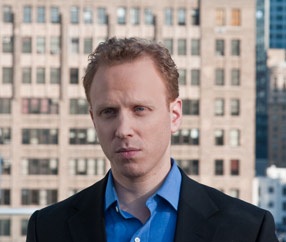
Max Blumenthal
|
A Response to JJ Goldberg of the Forward Picking up where Eric Alterman left off, and defending his thousands of words of error-laden invective, JJ Goldberg of the Jewish Daily Forward has turned out an indignant non-review (see the latest Alterman flubs here) of my book that reveals its chapter titles but fails to discuss their contents. Goldberg warps the responses of Alterman’s many critics, failing to provide links, and concludes with a distorted account of an exchange I had with Ian Lustick, mangling my quotes to falsely to suggest I had demanded the mass departure of Jewish Israelis from historic Palestine. Goldberg might have once been a sharpshooter in the Israeli Border Police, but in his attempt to reinforce Alterman’s attacks, he badly misses the mark. Echoing Alterman, Goldberg expresses outrage with the titles of the chapters in Goliath but makes no attempt to present what I actually wrote in them or why they are titled as they are. For instance, he bemoans the name of my chapter, “This Belongs To The White Man,” but does not mention that the title was merely a reference to the notorious statement by former Interior Minister Eli Yishai, who said the following about non-Jewish African asylum seekers in Israel: “Most of those people arriving here are Muslims, who think the country doesn’t belong to us, the white man.” Ignoring the hard facts presented in Goliath, Goldberg has spent the years since Israel elected the most right-wing government in its history projecting his political wishful thinking onto the country’s pro-settler leadership, imagining everyone from Benjamin Netanyahu to Shaul Mofaz (check out this howler) as potential peacemakers, which is not unlike describing Rob Ford as the political future of Canada. Goldberg has labored to sustain his trance-like optimism in the face of the reality of record settlement construction as well as other harsh realities. After the Egyptian military staged its coup, an act that has led the U.S. to cut military aid, Goldberg warned that any reduction in military aid to Egypt would “kill Mideast peace hopes,” writing that “America’s billion-dollar-plus annual aid package to Egypt does not exist for Egypt’s benefit, but for Israel’s.” Apart from this strange formulation, as though Egypt only exists for the U.S. as a function of his notion of what its policy should be toward Israel, he completely neglected to mention the U.S. at all, as though the U.S. has no independent interests or principles of our own at stake. To clarify Goldberg’s distortions for readers of The Forward: Goldberg claims I did not “tell[] of the thousands of rockets bombarding Negev towns for years” before Operation Cast Lead. However, I wrote on the first page of my book that “Hamas’s armed wing…fired dozens of rockets” in November 2008. Similarly, Goldberg claims I did not “mention the hundreds of Israelis killed by…suicide bombers.” In fact, I devoted an entire chapter of the book to Nurit Peled-Elhanan, a remarkable Israeli academic whose daughter, Smadar, was killed by a suicide bomber. I discuss at length her and her husband’s experience after their daughter’s murder and how they became two of their society’s more outspoken opponents of the Israeli occupation. I go on to detail Israeli society’s response to suicide bombings during the Second Intifada in my chapter, “The Big Quiet,” explaining how it influenced the rise of hafrada, or Israel’s policy of demographic separation. Goldberg further takes issue with an exchange between Ian Lustick and me during an October 17 discussion of Goliath at the University of Pennsylvania. But, not providing the link to the video, he produced a badly mangled version of my remarks. Here is the context to the exchange in question: Lustick had remarked that Israeli society could increasingly be described as “fascistic,” suggesting that Israel had possibly crossed a moral Rubicon, then asked me to take on the role of God and decide whether to destroy “Gomorrah,” even though there were some “good” people living inside it – people like the Israeli dissidents, critics and reformers I profile extensively in Goliath. My response proposed a direction for preserving the presence of Jewish Israelis in a future Israel-Palestine while stripping away the violent, inhumane mechanisms of demographic engineering, endless dispossession and the walls that have pitted Israeli Jews against the Arab world. My prescription was essentially a rejection of Ehud Barak’s explicitly colonial view of Israel as a Europeanized “villa in the jungle.” Philip Weiss of the Mondoweiss.com website transcribed parts of my answer and summarized the rest. Here is the relevant part of transcript, which Goldberg omitted. (The full exchange arrives around 38:00 in the video):
My meaning is plain: That the walls must come down — the separation wall, the legal walls of ethnic discrimination, and the psychological walls — as a basis for true peace. Goldberg claimed without evidence that “Lustick appear[ed] stunned,” when Lustick nodded in acknowledgement of my answer and did not express any perceptible displeasure; nor did he state any to me. In fact, what I said was intended to support what Lustick wrote in his recent essay on the “Two State Illusion” for the New York Times, Lustick offered a remarkably similar vision of an alternative future allowing Israeli Jews to live in peace in the Middle East; in which ultra-Orthodox Jews and Mizrahi Jews of Arab descent – groups routinely derided by liberal Zionists like Goldberg as retrograde and politically burdensome — could emerge as their society’s bridge builders, forging practical alliances with Palestinians:
I mentioned in my reply to Lustick that his question related to a debate that was raging among many of my leftist friends and acquaintances in Tel Aviv. As I detail in the final chapter of Goliath, “The Exodus Party,” a number of my human rights-minded Israel friends have chosen to exercise the secondary, “emergency” passports that provide multitudes of Ashkenazi Jewish Israelis with EU citizenship, and they have moved to places like Berlin and London. Then there are others, like the Israeli journalist Haggai Matar, who are seeking means of assimilating themselves into the wider culture of the Middle East. Goldberg has claimed, “Outside the far-left and anti-Israel blogosphere, ‘Goliath’ has been ignored.” But it is Goldberg who has ignored reviews by figures like Anshel Pfeffer, Haaretz’s military and political correspondent, and Akiva Eldar, the Israeli journalist and author who served as chief political columnist for Haaretz for 35 years — writers who could hardly be described as “anti-Israel.” Eldar wrote that, “a significant part of [Goliath’s] strength lies in the effect that is naturally created when a foreign correspondent describes the reality of your life and surroundings. Thus, as if from a bas relief, details are raised to which the local eye has become so accustomed that it no longer notices their existence.” I hoped to engage Goldberg in a discussion about his critiques of my book and about the future of Israel-Palestine. Unfortunately, that debate will apparently not take place. When Atlantic editor Robert Wright invited Goldberg to engage with me on the online political debating forum Bloggingheads, Goldberg declined, as Alterman did before him. |
Monday, 4 November 2013

The jubilation over Israel’s release last week of 26 Palestinian prisoners was understandable to an extent. After all, the issue is highly emotive for a people with thousands of loved ones languishing in Israeli jails, victims of a woefully unjust judicial system.
However, that must be tempered by the fact that Israel used the prisoner release as cover to announce 5,000 new settler homes on occupied territory, while Palestinian attention was diverted with celebrations. Israeli newspaper Haaretz described this as “an effort to ‘offset’ the release of Palestinian prisoners.” Indeed, 1,500 of these illegal homes were announced immediately after the release.
The cover may have even been used by the Palestinian Authority. While it has denied Israeli claims that it knew of the settlement announcement beforehand, the fact that it is still partaking in negotiations is highly suspect. So is the fact that almost three-quarters of those released (19 out of 26) are reportedly members of the Fatah party, which is led by President Mahmoud Abbas.
Given that Israel has made a habit out of announcing further settlement expansion along with previous prisoner releases, the PA can hardly claim ignorance. The last such occasion was in August, when Israel released 26 prisoners while announcing plans for more than 2,000 new settler homes.
Israel portrays these releases as painful concessions, while the United States praises them as important confidence-building measures. “The decision to release the prisoners is one of the most difficult I’ve had to make,” Israeli Prime Minister Benjamin Netanyahu said last week. This, of course, is blatant propaganda aimed at legitimizing settlement expansion as some kind of farcical balancing act or compensatory measure.
Releasing a handful of prisoners, all of them jailed before the 1993 Oslo Accord, while announcing thousands of new settler homes is clearly of far greater benefit to Israel than to the Palestinian people. However, it also benefits the PA, if only in the short term, despite the fact that it cannot be oblivious to Israel’s manipulations in this regard.
The PA uses the prisoner issue cynically, trying to boost its dwindling domestic popularity through such small-scale releases, and appeasing its Fatah support base by ensuring that most of those freed come from its ranks. This achieves quick, easy results, but in the grand scheme of things they are mere breadcrumbs. All the while, Israel arrests Palestinians at a far greater rate than those it releases.
Meanwhile, last week a top official with the Fatah-dominated Palestine Liberation Organization said the current Israeli negotiating position is the worst since before the Oslo Accord was signed 20 years ago. Yasser Abed Rabbo added that there had been “no tangible progress” in talks that resumed in July after a hiatus of nearly three years.
“They want… the borders of the state of Palestine [to] be set out according to Israeli security needs that never end, and that will undermine the possibility of establishing a sovereign Palestinian state,” said Abed Rabbo, secretary general of the PLO executive committee.
Fueling suspicions
Since the latest round of negotiations has been ongoing for months, why is the PA continuing to talk? This lends credence to suspicions that it is bowing to unreasonable conditions, and making concessions that it should not be making. Allegations that the secrecy surrounding the talks is precisely so that such concessions can be made without a public backlash are proving less and less outlandish.
After all, Israel has announced several thousand new settler homes since the talks began – the very antithesis of negotiating in good faith. The PA is simply accepting this by continuing to talk while its people’s lands are relentlessly colonized.
It is playing a dangerous and futile game. The PA cannot indefinitely make small gains to cover up much bigger losses. It also cannot forever dupe the Palestinian people into thinking that its unconditional, supine commitment to negotiations – with a party that has consistently shown its disdain for a genuine peace – is bearing fruit.
There are two further releases of 26 prisoners forthcoming. I will not be celebrating, because this will come at a price that the Palestinians cannot afford to pay, and with the shameful knowledge and acquiescence of their leaders.
Given that the occupation and colonization of Palestine is continuing unabated, releasing prisoners is not granting them freedom if they are simply moving to a larger (though ever-shrinking) jail under the same warden. The only thing worse than the denial of freedom is the illusion of it.
__________________________
Sharif Nashashibi, a regular contributor to Al Arabiya English, The Middle East magazine and the Guardian, is an award-winning journalist and frequent interviewee on Arab affairs. He is co-founder of Arab Media Watch, an independent, non-profit watchdog set up in 2000 to strive for objective coverage of Arab issues in the British media. With an MA in International Journalism from London’s City University, Nashashibi has worked and trained at Dow Jones Newswires, Reuters, the U.N. Development Programme in Palestine, the Middle East Broadcasting Centre, the Middle East Economic Survey in Cyprus, and the Middle East Times, among others. In 2008, he received the International Media Council’s “Breakaway Award,” given to promising new journalists, “for both facilitating and producing consistently balanced reporting on the highly emotive and polarized arena that is the Middle East.” He can be found on Twitter: @sharifnash
(Max) Blumenthal explained how The New York Times commissioned the
11-minute video, but after the paper’s editors saw it, refused to
publish it: “I was asked to submit something by The New York Times op
docs, a new section on the website that published short video
documentaries. I am known for short video documentaries about the right
wing in the US, and extremism in Israel. They solicited a video from me,
and when I didn’t produce it in time, they called me for it, saying
they wanted it. So I sent them a video I produced with my colleague,
David Sheen, an Israeli journalist who is covering the situation of
non-Jewish Africans in Israel more extensively than any journalist in
the world. We put together some shocking footage of pogroms against
African communities in Tel Aviv, and interviews with human rights
activists. I thought it was a well-done documentary about a situation
very few Americans were familiar with. We included analysis. We tailored
it to their style, and of course it was rejected without an explanation
after being solicited. I sent it to some other major websites and they
have not even responded to me, when they had often solicited articles
from me in the past. Blumenthal, author of the bestselling and widely
promoted 2009 book Republican Gomorrah, also spoke about the difficulty
he has had getting any mainstream media attention for his new book
Goliath: Life and Loathing in Greater Israel. Just like this video,
Blumenthal’s new book offers an unflinching look at the racist reality
of Israel that America’s establishment media simply does not have the
guts to confront.” ~ Max Blumenthal
Israel Cranks Up the PR Machine
It’s deploying all its resources to fight the growing world movement against the occupation.
http://www.thenation.com/article/1767…
If taken down, see on fb : https://www.facebook.com/photo.php?v=10151915107113984
 band annie's Weblog