Search

band annie's Weblog

I have a parallel blog in French at http://anniebannie.net

Category

israel

What it’s like to be the most hated man in Israel


Gideon Levy finds it impossible not to wonder: How did one journalist – and not the country’s most widely read or most widely distributed – become an object of such rage and hatred?

By Gideon Levy | Aug. 27, 2014 | 7:25 PM |  40
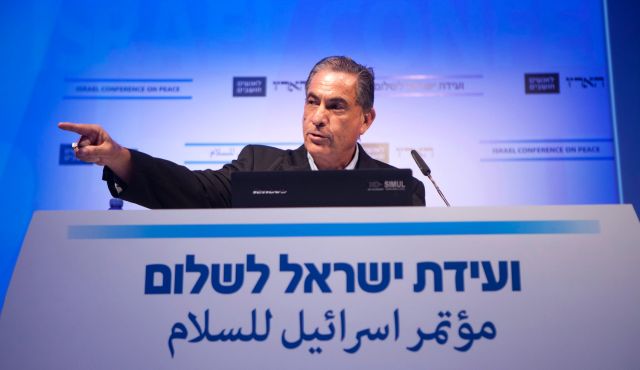
Gideon Levy speaks at Haaretz's Israel Conference on Peace, July 8, 2014. Photo by Tomer Appelbaum
Gideon Levy speaks at Haaretz’s Israel Conference on Peace, July 8, 2014. Photo by Tomer Appelbaum

By Gideon Levy | Aug. 27, 2014 | 11:32 AM |  1

It was four years ago. The British newspaper The Independent published an interview under the title: “Is Gideon Levy the most hated man in Israel or just the most heroic?” The question was groundless – I wasn’t the most hated, and certainly not the most heroic. In the summer of 2014 the answer would be more succinct – I’m the most hated, second only to Khaled Meshal. Unpleasant, but not too terrible, at this point. The narrator must not become the story; a journalist is always the means, not the end.

And yet, it’s impossible to ignore the troubling question: How did one journalist – and not the most widely read or the most widely distributed – become an object of such rage and hatred? How is one small cracked mirror, a tiny pocket flashlight, capable of evoking so much fury? How is it that one voice made so many Israelis, from left and right, north and south, blow their top?

It can only be that even the last of the inciters are conscientious people. They too feel, apparently, that something is burning under their feet, under the rugs of justifications and defenses they laid for themselves. Otherwise, why are they seething with such rage? And why are they no longer sure they’re in the right?

The truth is, I’m very proud of what I wrote in this wretched war and I’m ashamed of the responses – which said more about Israeli society than they did about anything I wrote. It’s a society that is denying itself to death, fleeing from the news and lying to itself in its propaganda and its hatred.

No other war had turned my stomach, every day and every hour, like this one did. The horrific pictures of Gaza haunted me. They were almost not shown in the Israeli media, the greatest voluntary collaborator of this war. I thought it was impossible to not be appalled by the crimes in Gaza, that it was okay to express compassion for its residents, that 2,200 killed people are an outrageous matter – regardless whether they’re Palestinians or Israelis. I thought it was okay to be ashamed, that it was necessary to remind ourselves that some people bear responsibility for the brutality, and these people aren’t only Hamas, but first and foremost the Israelis, their leaders, commanders and even their pilots.

For the average Israeli, who has become accustomed to blame the Arabs and the whole world for all his country’s wrongs, it was too much, certainly at a time of war. I thought it was my duty to express my sentiments in real time, in the time of truth. I knew it wouldn’t make much difference, but I felt the things had to be said. The absolute majority of Israelis thought otherwise. They thought that comparing between the blood of Israelis and Palestinians is a sin. That feeling dismay is treason, compassion is heresy and that placing responsibility is an inexpiable crime.

Well, dear friends, history has proved long ago that the brainwashed majority isn’t always right, certainly not when it falls on the negligible minority with such ferocious aggression.

I’ve been covering the Israeli occupation for some 30 years. I’ve seen possibly more occupation than any other Israeli (excluding Amira Hass). That’s my original sin. That is also what forged my awareness more than anything else. I’ve heard all the lies, seen the ongoing injustices from point-blank range. Now they’ve reached another of their ignoble nadirs in this damned war. That’s what I’ve written about and that’s what Haaretz reported, thus becoming another target of hatred. It wasn’t only our right; it was our professional obligation.

The spiteful looks in the street, the curses and attacks have made no difference. Nor will they. The thuggish right wing, the complacent, indifferent, doubt-free center, even the always smug so-called left, which claimed that I was “ruining the left,” all joined in one shrill choir, proving that the differences between them are smaller than they had appeared.

There were enough people who wrote and spoke, ad nauseam, about Israel’s right of way, which is always absolute and about the Jewish victim, which is the only victim in the world. I wanted to say something else as well – and the majority opinion almost went berserk. So let them get angry, let them hate me,  let them attack and ostracize me – I’ll go on doing my thing.


By Haaretz | Aug. 18, 2014 | 7:06 PM


The difference between children


It is human that the killing of an Israeli boy, a child of ours, would arouse greater identification than the death of some other child. What is incomprehensible is the Israeli response to the killing of their children.

By Gideon Levy | Aug. 24, 2014 | 4:16 A


After the first child, nobody batted an eye; after the 50th not even a slight tremor was felt in a plane’s wing; after the 100th, they stopped counting; after the 200th, they blamed Hamas. After the 300th child they blamed the parents. After the 400th child, they invented excuses; after (the first) 478 children nobody cares.

Then came our first child and Israel went into shock. And indeed, the heart weeps at the picture of 4-year-old Daniel Tragerman, killed Friday evening in his home in Sha’ar Hanegev. A beautiful child, who once had his picture taken in an Argentinean soccer team shirt, blue and white, number 10. And whose heart would not be broken at the sight of this photo, and who would not weep at how he was criminally killed. “Hey Leo Messi, look at that boy,” a Facebook post read, “you were his hero.”

Suddenly death has a face and dreamy blue eyes and light hair. A tiny body that will never grow. Suddenly the death of a little boy has meaning, suddenly it is shocking. It is human, understandable and moving. It is also human that the killing of an Israeli boy, a child of ours, would arouse greater identification than the death of some other child. What is incomprehensible is the Israeli response to the killing of their children.

In a world where there is some good, children would be left out of the cruel game called war. In a world where there is some good, it would be impossible to understand the total, almost monstrous unfeelingness in the face of the killing of hundreds of children – not ours, but by us. Imagine them standing in a row: 478 children, in a graduating class of death. Imagine them wearing Messi shirts – some of those children wore them once too, before they died; they also admired him, just like our Daniel from a kibbutz. But nobody looks at them; their faces are not seen, no one is shocked at their deaths. No one writes about them: “Hey Messi, look at that boy.” Hey, Israel, look at their children.

An iron wall of denial and inhumanness protects the Israelis from the shameful work of their hands in Gaza. And indeed, these numbers are hard to digest. Of the hundreds of men killed one could say that they were “involved”; of the hundreds of women that they were “human shields.” As for a small number of children, one could claim that the most moral army in the world did not intend it. But what shall we say about almost 500 children killed? That the Israel Defense Forces did not intend it, 478 times? That Hamas hid behind all of them? That this legitimized killing them?

Hamas might have hidden behind some of those children but now Israel is hiding behind Daniel Tragerman. His fate is already being used to cover all of the sins of the IDF in Gaza.

The radio yesterday already talked about “murder.” The prime minister already called the killing “terror,” while hundreds of Gaza’s children in their new graves are not victims of murder or terror. Israel had to kill them. And after all, who are Fadi and Ali and Islaam and Razek, Mahmoud, Ahmed and Hamoudi – in the face of our one and only Daniel.

We must admit the truth: Palestinian children in Israel are considered like insects. This is a horrific statement, but there is no other way to describe the mood in Israel in the summer of 2014. When for six weeks hundreds of children are destroyed; their bodies buried in rubble, piling up on morgues, sometimes even in vegetable refrigeration rooms for lack of other space; when their horrified parents carry the bodies of their toddlers as a matter of course; their funerals coming and going, 478 times – even the most unfeeling of Israelis would not allow themselves to be so uncaring.

Something here has to rise up and scream: Enough. All the excuses and all the explanations will not help – there is no such thing as a child that is allowed to be killed and a child that is not. There are only children killed for nothing, hundreds of children whose fate touches no one in Israel, and one child, just one, around whose death the people unite in mourning.

source


More Orientalist insinuations in the New York Times

Steven Erlanger, expert on the Orient

Orientalism is more cunning and subtle than just simple prejudice against Arabs and Muslims.  The other day, the New York Times offered another nice specimen of Orientalist technique. A “news analysis” by Steven Erlanger included the following paragraph:

“Unlike Fatah, Hamas claims the whole of the British mandate of Palestine as land granted by Allah, which cannot be ceded. In other words, Israel is illegitimate and its occupants should ‘go home.’ The most any senior Hamas official ever offered was a ‘hudna,’ a cease-fire, which the Prophet Muhammad offered enemies to restore his strength.”

There are several Orientalist gems packed into these short sentences. First, leaving “God” untranslated from the Arabic “Allah” is a standard exoticizing practice. Timesarticles about French- or Spanish-speaking people do not have them saying “Dieu” or “Dios.” And in Israel/Palestine itself, no Times reporter would be allowed to write, say, “Jews who have settled in the West Bank claim the whole of the British mandate of Palestine as land granted by Yahweh, which cannot be ceded.”

The sentence about a cease-fire reveals even more about Orientalist thinking. There are plenty of instances in world history of cease-fires, including in the recent Middle East, but our reporter is compelled to go back to the Prophet Muhammad in the 7th century for his example. This is Orientalism 101. Muslims and Arabs have an unchangeable essence, a core way of being, which is revealed in their ancient texts and in their history.

Our reporter’s sly insinuation is obvious. Nearly 1300 years ago, the first Muslim, the Prophet Muhammad, offered his enemies a truce “to restore his strength.” Therefore, Hamas, who are also Muslims, are duplicitous by their very nature, and you cannot trust them. Just like Muhammad, once their strength is restored they will stab you in the back. (This classic Orientalist view is, probably unconsciously, reinforced by the photograph which accompanies the article, which shows a large group of Muslim men praying inside a damaged mosque in Gaza.)

Imagine if the Times applied this kind of “news analysis” to the Israeli government. What if the newspaper summarized a feature of Prime Minister Netanyahu’s policy, and then immediately compared it to one of the villainous characters in ancient Israel who we read about in the Torah?

Hamas and its policy toward Israel is of course a large and legitimate question. Fortunately, we have genuine scholars, like Professor Jerome Slater, who study reality today instead of using the 7th Century as their guide into the Muslim Mind. Professor Slater has written about Hamas and Israel at length; he argues, using one piece of specific, present-day evidence after another, that Hamas is ready to recognize Israel, perhaps grudgingly, but of course as part of a comprehensive settlement that will bring justice to Palestinians.  Professor Slater publishes in scholarly journals, and also makes his findings available to a wider public here. Maybe the next New York Times “news analysis” will include views like his, instead of more Orientalist insinuations?

source

Book Discussion on Old Wine, Broken Bottle

CLICK ON IMAGE

norman_finkelstein_suffolk

Norman Finkelstein, author of Old Wine, Broken Bottle: Ari Shavit’s Promised Land, talked about the Israeli-Palestinian conflict and provided a critique of the Israeli government’s actions. Mr. Finkelstein spoke at Red Emma’s Bookstore in Baltimore. close 

From The Holocaust To The Massacre In Gaza Through Ben-Gurion Airport, by Miko Peled

The morning after “Lailat Al Qadr” the death toll in Gaza was approaching its first thousand. I spent the holy night of “Al Qadr,” (The night before the last Friday of the holy month of Ramadan is a special night, believed to be the night when the Holy Koran was revealed to the prophet Mohammad)  with friends in Ramallah, after participating in the 48K March for Gaza. The march began in Ramallah and went to Qalandia checkpoint. What began as a peaceful event with families with children and even babies in strollers, ended with young Palestinians with gunshot wounds being rushed in ambulances to the local hospital.

Qalandia crossing was fortified and air tight, and the Israeli soldiers stationed were shooting live ammunition at the crowd. As the ambulances were speeding through the crowd I couldn’t help wondering why there is no hospital between Qalandia and Ramallah, a good distance which includes the municipalities of Jerusalem, Al-Bire and Ramallah.

48K March, July 2014

The following night I was scheduled to leave Palestine to return to the US but Israeli forces sealed all the roads from Ramallah to Jerusalem for the night, and they were likely to be sealed the following day as well.  At the crack of dawn, when things quieted down, my friend Samer drove me to a checkpoint that he suspected would be open. It was open, albeit for Israelis only, and from there I made my way back to Jerusalem.

COOPERATION WITH THE AUTHORITIES

That evening, as I was preparing to leave for Ben-Gurion airport in Tel-Aviv, people around me were trying to calm me down. “Don’t aggravate them, cooperate and they will be nice,” “why go through all this unnecessary inconvenience?” They were talking about the “Smiling Gestapo,” Israeli security officers at Tel-Aviv airport that go by the squeaky clean name of “Airport Security Division.”

בודקת

(image taken off of Israel Airport Authority WEBSITE,  )

Listening to this I was reminded of Jewish communities under the Nazi regime who believed that if they cooperate and show they are good citizens then all will be well.  But the road from cooperation to the concentration camps and then the gas chambers was a direct one. The Nazis would not have been able to kill millions of people if it were not for the naive belief held by the victims, that if one would cooperate and lay low things will be ok.  The policies of racist discrimination and humiliation at Ben-Gurion airport, and the policies of ethnic cleansing and murder of Palestinians in Gaza, emanate from the same Zionist ideology. As we have seen over the past seven decades, cooperation and laying low do not make things ok.

It is often said that Hitler was a monster. But hitler was not a monster, and any child will tell you that there are no such things as monsters. There are however many cruel people who get the support and cooperation of others in order to do unspeakable things.  Hitler was not unique, the list of vicious, murderous men and women who as leaders of nations committed unspeakable crimes is too long to recount. But none of them could have done it without the cooperation of the victims and society in general.

Cooperation with the Israeli authorities might lead to short term relief but it also validates Israel’s right to terrorize and humiliate Palestinians with our consent, “we” being all people of conscience.  Whether we are Palestinian or not, the call of the hour is non-cooperation and resistance against the injustice.

HAMAS IS NOT THE PROBLEM 

Today people lay the blame for the violence in Gaza on Hamas, but Israel did not start its assaults on the Gaza Strip when Hamas was established in the late 1980’s. Israel began attacking Gaza when the Gaza Strip was established and populated with refugees in the early 1950’s.  Palestinians, particularly in Gaza, are not faced with an option to resist and be killed or live in peace. They are presented with the options of being killed standing up and fighting or being killed sleeping in their beds.

Gaza is being punished because Gaza is a constant reminder to Israel and the world of the original sin of the ethnic cleansing of Palestine and the creation of a so-called Jewish state.  Even though Palestinian resistance has never presented a military threat to Israel, it has always been portrayed as an existential threat to Israel. Moshe Dayan, the famed Israeli general with the eyepatch described this in a speech in April 1956. He spoke in Kibbutz Nahal Oz, an Israeli settlement on the border of the Gaza strip where Israeli tanks park each time there is a ground invasion of Gaza.

Dayan giving the eulogy at Nahal Oz settlement, April, 1956

“Beyond this border exists an ocean of hatred and a deep desire for vengeance,” Dayan said then. Ironically, when six months later Israel had occupied Gaza and my father was appointed its military governor he said he saw “no hatred or desire for vengeance but a people eager to live and work together for a better future.”

Still, today, Israeli commanders and politicians say pretty much the same: Israel is destined to live by the sword and must strike Gaza whenever possible.  Never mind the fact that Palestinians have never posed a military challenge, much less a threat to Israel. After all, Palestinians have never possessed as much as a tank, a war ship or a fighter jet, not to say a regular army.

A THREAT TO ISRAEL’S LEGITIMACY 

So why the fear? Why the constant, six-decade-long campaign against Gaza? Because Palestinians in Gaza, more so than anywhere else, pose a threat to Israel’s legitimacy.

Israel is an illegitimate creation, born of the unholy union between racism and colonialism, and the refugees who make up the majority of the population in the Gaza Strip are a constant reminder of this.  They are a reminder of the crime of ethnic cleansing upon which Israel was established. The poverty, lack of resources and lack of freedom stand in stark contrast to the abundance, freedom and power that exist in Israel and that rightfully belongs to Palestinians.

Alshati refugee camp, Gaza

Back at Ben-Gurion airport that night, I was told that if I cooperate and plead with the shift supervisor it would make the security screening go faster. When I declined this generous offer I was told they “did not like my attitude” and they proceeded to paste a sticker with the same bar code on my luggage and give me the same treatment Palestinians receive.

“NEVER AGAIN?”

As I write these words, the number of innocents murdered by Israel in Gaza has risen beyond two thousand. Ending the insufferable, brutal and racist regime that was created by the Zionists in Palestine is the call of our time. Criticizing Palestinian resistance is unconscionable. Israel must be subjected to boycott, divestment and sanctions. Israeli diplomats must be sent home in shame. Israeli leaders, and Israeli commanders traveling abroad must fear prosecution. And these measures are to be combined with disobedience, non-cooperation and uncompromising resistance.  This and only this will show mothers, fathers and children in Gaza that the world cares and that “Never Again” is  more than an empty promise.

Never again?

source

Sayed Kashua: why I have to leave Israel

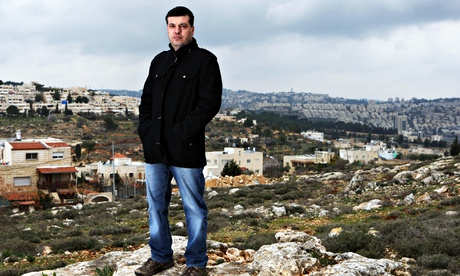
 Sayed Kashua in Jerusalem. ‘I wanted to tell the Israelis a story, the Palestinian story. Surely when they read it they will understand.’ Photograph: Ziv Koren/Polaris /eyevine

Sayed Kashua in Jerusalem. ‘I wanted to tell the Israelis a story, the Palestinian story. Surely when they read it they will understand.’ Photograph: Ziv Koren/Polaris /eyevine


The Arab-Israeli author moved to Jerusalem as a child and has devoted his life to telling Israelis the Palestinian story. But last week he decided to emigrate with his family to the US


Quite soon I am going away from here. In a few days we’ll be leaving Jerusalem, leaving the country. Yesterday we bought little suitcases for the kids. No need to take a lot of clothes, we’ll leave our winter clothes; in any event they won’t be warm enough given the cold of southern Illinois, USA. We’ll just need a few things until we get settled. Perhaps the kids should take some books, two or three in Arabic, and another few in Hebrew, so they don’t forget the languages. But I’m already not sure what I want my kids to remember of this place, so beloved and so cursed.

The original plan was to leave in a month for a year’s sabbatical. But last week I understood that I can’t stay here any longer, and I asked the travel agent to get us out of here as fast as possible, “and please make them one-way tickets”. In a few days we’ll land in Chicago, and I don’t even know where we’ll be for the first month, but we’ll figure it out.

I have three children, a daughter who is already 14 years old, and two sons, aged nine and three. We live in West Jerusalem. We are the only Arab family living in our neighbourhood, to which we moved six years ago. “You can choose two toys,” we said this week in Hebrew to our little boy who stood in his room gazing at boxes of his toys, and he started to cry despite our promises that we will buy him anything he wants when we get there.

I also have to decide what to take. I can choose only two books, I said to myself standing in front of shelves of books in my study. Other than a book of poetry by Mahmoud Darwish and another story collection by Jubran Khalil, all of my books are in Hebrew. Since the age of 14 I have barely read a book in Arabic.

When I was 14 I saw a library for the first time. Twenty-five years ago my maths teacher in the village of Tira, where I was born, came to my parents’ home and told them that next year the Jews would be opening a school for gifted students in Jerusalem. He said to my father that he thought I should apply. “It will be better for him there,” I remember the teacher telling my parents. I got in, and when I was the age of my daughter I left my home to go to a Jewish boarding school in Jerusalem. It was so difficult, almost cruel. I cried when my father hugged me and left me at the entrance of the grand new school, nothing like I had ever seen in Tira.

I once wrote that the first week in Jerusalem was the hardest week of my life. I was different, other; my clothes were different, as was my language. All of the classes were in Hebrew – science, bible, literature. I sat there not understanding one word. When I tried to speak everyone would laugh at me. I so much wanted to run back home, to my family, to the village and friends, to the Arabic language. I cried on the phone to my father that he should come and get me, and he said that only the beginnings are hard, that in a few months I would speak Hebrew better than they do.

I remember the first week, our literature teacher asked us to read The Catcher in the Rye by Salinger. It was the first novel I ever read. It took me several weeks to read it, and when I finished I understood two things that changed my life. The first was that I could read a book in Hebrew, and the second was the deep understanding that I loved books.

Very quickly my Hebrew became nearly perfect. The boarding school library only had books in Hebrew, so I began to read Israeli authors. I read Agnon, Meir Shalev, Amos Oz and I started to read about Zionism, about Judaism and the building of the homeland.

During these years I also began to understand my own story, and without planning to do so I began to write about Arabs who live in an Israeli boarding school, in the western city, in a Jewish country. I began to write, believing that all I had to do to change things would be to write the other side, to tell the stories that I heard from my grandmother. To write how my grandfather was killed in the battle over Tira in 1948, how my grandmother lost all of our land, how she raised my father while she supported them as a fruit picker paid by the Jews.

I wanted to tell, in Hebrew, about my father who sat in jail for long years, with no trial, for his political ideas. I wanted to tell the Israelis a story, the Palestinian story. Surely when they read it they will understand, when they read it they will change, all I have to do is write and the Occupation will end. I just have to be a good writer and I will free my people from the ghettos they live in, tell good stories in Hebrew and I will be safe, another book, another movie, another newspaper column and another script for television and my children will have a better future. Thanks to my stories one day we will turn into equal citizens, almost like the Jews.

Twenty-five years of writing in Hebrew, and nothing has changed. Twenty-five years clutching at the hope, believing it is not possible that people can be so blind. Twenty-five years during which I had few reasons to be optimistic but continued to believe that one day this place in which both Jews and Arabs live together would be the one story where the story of the other is not denied. That one day the Israelis would stop denying the Nakba, the Occupation, and the suffering of the Palestinian people. That one day the Palestinians would be willing to forgive and together we would build a place that was worth living in.

Twenty-five years that I am writing and knowing bitter criticism from both sides, but last week I gave up. Last week something inside of me broke. When Jewish youth parade through the city shouting “Death to the Arabs,” and attack Arabs only because they are Arabs, I understood that I had lost my little war.

I listened to the politicians and the media and I know that they are differentiating between blood and blood, between peoples. Those who have become the powers that be say expressly what most Israelis think, “We are a better people than the Arabs.” On panels that I participated in, it was said that Jews are a superior people, more entitled to life. I despair to know that an absolute majority in the country does not recognise the rights of an Arab to live.

After my last columns some readers beseeched that I be exiled to Gaza, threatened to break my legs, to kidnap my children. I live in Jerusalem, and I have some wonderful Jewish neighbours, and friends, but I still cannot take my children to day camps or to parks with their Jewish friends. My daughter protested furiously and said no one would know she is an Arab because of her perfect Hebrew but I would not listen. She shut herself in her room and wept.

Now I am standing in front of my bookshelves, Salinger in hand, the one I read 14 years ago. I don’t want to take any books, I decided, I have to concentrate on my new language. I know how hard it is, almost impossible, but I must find another language to write in, my children will have to find another language to live in.

“Don’t come in,” my daughter shouted angrily when I knocked on her door. I went in anyway. I sat down next to her on the bed and despite her back turned to me I knew she was listening. You hear, I said, before I repeated to her exactly the same sentence my father said to me 25 years ago. “Remember, whatever you do in life, for them you will always, but always, be an Arab. Do you understand?”

“I understand,” my daughter said, hugging me tightly. “Dad, I knew that a long time ago.”

“Quite soon we’ll be leaving here,” as I messed up her hair, just as she hates. “Meanwhile, read this,” I said and gave her The Catcher in the Rye.

Sayed Kashua is a Palestinian writer whose novels have been translated into 15 languages. The film Dancing Arabs, based on his first novel, opened the 2014 Jerusalem international film festival. His most recent novel, Exposure, was published by Chatto & Windus. Translated by Deborah Harris

source

Go to Gaza, see for yourself


Palestinians search destroyed cars in Rafah's district of Shawkah in the southern Gaza Strip. August 5, 2014. Photo by AP
Palestinians search destroyed cars in Rafah’s district of Shawkah in the southern Gaza Strip. August 5, 2014. Photo by AP

In the absence of hatred, one can understand the Palestinians. Without it, even some of Hamas’ demands might sound reasonable and justified.

By Gideon Levy | Aug. 10, 2014 | 6:28 AM |  1


Can we possibly conduct a discussion, however brief, that is not saturated with venomous hatred? Can we let go for a moment of the dehumanization and demonization of the Palestinians and speak dispassionately of justice, leaving racism aside? It’s crucial that we give it a try.

In the absence of hatred, one can understand the Palestinians. Without it, even some of Hamas’ demands might sound reasonable and justified. Such a rational discourse would lead any decent person to clear-cut conclusions. Such a revolutionary dialogue might even advance the cause of peace, if one may still dare say such things. What are we facing? A people without rights that in 1948 was dispossessed of its land and its territory, in part by its own fault. In 1967 it was again stripped of its rights and lands. Ever since it has lived under conditions experienced by few nations. The West Bank is occupied and the Gaza Strip is besieged. This nation tries to resist, with its meager powers and with methods that are sometimes murderous, as every conquered nation throughout history, including Israel, has done. It has a right to resist, it must be said.

Let’s talk about Gaza. The Gaza strip is not a nest of murderers; it’s not even a nest of wasps. It is not home to incessant rampage and murder. Most of its children were not born to kill, nor do most of its mothers raise martyrs — what they want for their children is exactly what most Israeli mothers want for their own children. Its leaders are not so different from Israel’s, not in the extent of their corruption, their penchant for “luxury hotels” nor even in their allocating most of the budget to defense.

Gaza is a stricken enclave, a permanent disaster zone, from 1948 to 2014, and most of its inhabitants are third- and fourth-time refugees. Most of the people who revile and who destroy the Gaza Strip have never been there, certainly not as civilians. For eight years I have been prevented from going there; during the preceding 20 years I visited often. I liked the Gaza Strip, as much as one can like an afflicted region. I liked its people, if I may be permitted to make a generalization. There was a spirit of almost unimaginable determination, along with an admirable resignation to its woes.

In recent years Gaza has become a cage, a roofless prison surrounded by fences. Before that it was also bisected. Whether or not they are responsible for their situation, these are ill-fated people, a great many people and a great deal of misery.

Despairing of the Palestinian Authority, Gazans chose Hamas in a democratic election. It’s their right to err. Afterward, when the Palestine Liberation Organization refused to hand over the reins of power, Hamas took control by force.

Hamas is a national-religious movement. Anyone who champions hatred-free dialogue will notice that Hamas has changed. Anyone who manages to ignore all the adjectives that have been applied will also discern its reasonable aspirations, such as having a seaport and an airport. We must also listen to scholars who are free of hatred, such as Bar-Ilan University Mideast expert Prof. Menachem Klein, whose reading of Hamas goes against the conventional wisdom in Israel. In an interview to the business daily Calcalist last week, Klein said Hamas was founded not as a terror organization but rather as a social movement, and should be viewed as such even now. It has long since “betrayed” its charter, and conducts a lively political debate, but in the dialogue of hatred there is no one to hear it.

From the perspective of the dialogue of hate, Gaza and Hamas, Palestinians and Arabs, are all the same. They all live on the shore of the same sea, and share the single goal of throwing the Jews into it. A less primitive, less brainwashed discussion would lead to different conclusions. For example, that an internationally supervised port is a legitimate and reasonable goal; that lifting the blockade on the Strip would also serve Israel; that there is no other way to stop the violent resistance; that bringing Hamas into the peace process could result in a surprising change; that the Gaza strip is populated by human beings, who want to live as human beings.

But in Hebrew, “Gaza,” pronounced ‘Aza, is short for Azazel, which is associated with hell. Of the multitude of curses hurled at me these days from every street corner, “Go to hell/Gaza” is among the gentler ones. Sometimes I want to say in response, “I wish I could go to Gaza, in order to fulfill my journalistic mission.” And sometimes I even want to say: “I wish you could all go to Gaza. If only you knew what Gaza is, and what is really there.”

source

pr

Citing Holocaust, Israel “demands” ‘Strict Regulation’ of Antiwar Protests in Europe

Push for EU Special Commissioner to Regulate Protests

by Jason Ditz, July 28, 2014

A new Holocaust is imminent, if one is to believe Israeli MPs, who spent the afternoon berating European officials about the growing antiwar protests across their countries, centered on criticizing the Israeli invasion of the Gaza Strip.

Officials blamed “one-sided” media reports on the large number of dead civilians in Israel’s attack, and demanded the European Union impose “strict regulations on the format and content” of antiwar demonstrations going forward.

Some of the EU officials present, notably Danish officials, insisted that they had a right to free expression that would be abridged by the proposed “regulations,” but Israeli officials were having none of it, insisting that criticism of Israel was anti-Semitism in and of itself, and that “there is a difference between free speech and incendiary speech.

The Israeli proposal would see the creation of a Special Commissioner in the European Union that would empowered to “monitor” antiwar protesters and restrict them from portraying Israel an “an aggressor” during its assorted invasions of Palestinian territory.

source

Blog at WordPress.com.

Up ↑