Search

band annie's Weblog

I have a parallel blog in French at http://anniebannie.net

Category

israel

srael has no answer to BDS, Barghouti tells packed hall at Columbia

Screenshot-2014-12-05-11.57.56

Omar Barghouti’s appearance at Columbia University on Tuesday night felt like a landmark in the Palestinian solidarity movement in the U.S. A large hall at the law school was crowded to overflowing and the mood was celebratory. Luminaries of the community were in attendance, among them Lila Abu-Lughod, Rula Jebreal, Rashid Khalidi, Rebecca Vilkomerson, Nadia Abu El-Haj, Dorothy Zellner, Lia Tarachansky. Barghouti’s speech was hugely optimistic. He said that the Boycott Divestment Sanctions movement was racking up victories far faster than the organizers had imagined when they began nine years ago, faster than the South African movement had progressed. And the BDS movement has the “closet” support of the Netanyahu administration, which was doing its utmost to demonstrate the fallacy of a Jewish democracy.

The suspense of waiting for the Israel supporters to say something was a bit of a fizzle, not the big drama it used to be at such events. Law professor Katherine Franke had urged the crowd not to be civil in discussing one of the most challenging moral questions of our time, and at the end, a man at the back said he had a short question.

“Do you believe that the Jewish people have a right to self determination?” And if so, “Where should it be?”

Barghouti said it was not up to him as a Palestinian to decide whether Jewish communities make up a nation, and where they should have a state. Though he pointed out that there was not consensus among Jews globally about whether they are a people; this is a recent debate, and in fact up till the 1945 the majority of  Jews did not support Jewish nationhood. Then he said sharply:

One thing I do know– not at my expense. If they are a nation and have a right of self-determination, not at my expense. That does not give them the right to expel us or to take our land–

The audience broke into applause, the first time that any speaker had been interrupted by applause in two hours. Barghouti swiftly moved on to other questions. The questioner walked out of the hall.

That summed up the spirit of the event. Its title was, “Palestine’s South Africa Moment?” Barghouti said that Palestine appeared at last to be approaching that moment. Speaker Mahmood Mamdani said it is not. I will get to Mamdani’s analysis in the next few days. In the meantime, though, here is a summary of Barghouti’s remarks.

Barghouti began by quoting Ze’ev Jabotinsky’s declaration in 1923 that because Palestinians would never accept the Zionist takeover of their lands, the Zionists must build an “iron wall” and convince the Palestinians that it was impossible to resist colonization. Barghouti said it was realistic in the view of geopolitics then for Zionists to conclude that Palestinians would give up the struggle, and if Jabotinsky could see President Mahmoud Abbas today, he would “celebrate in his grave: ‘See, I told you, They’ve given up.’”

But recent history shows that Palestinians have not given up, and in fact are commanding the world’s sympathy and attention.

The latest discussion in Israel about the Jewish nation state law has brought to the fore the very possibility of the unraveling of the entire Zionist project. And these are not my words, these are the words of certain very important leaders in Israel, who say that. What’s happening is that the oxymoron of the Jewish and democratic identity of the state of Israel is unraveling.

I can understand the frustration of the extreme right in Israel. ‘Why is the whole world, even the US, against us with this new law? Why are they so mad? We’ve been doing it all along, we’re just making it a bit more formal.’

Since its establishment in 1948, Israel has always consistently discriminated by law against the indigenous Palestinians. Other than ethnically cleansing them of course. So  why is everyone so angry that they’re trying to codify the Jewish identity of the state. Some say it’s at the expense of the democratic identity. What democratic identity? When you have 50 laws that discriminate against a minority of your citizenry, that’s not democracy…

What Netanyahu and his far right government are doing is resolving this oxymoron. It cannot exist any longer. Let’s be very honest, Forget  democracy. This is an ethnocracy… this is a Jewish supremacist state. So– no pretense of democracy. And that’s a very important development because it’s revealing Israel’s true nature.  The last mask of Israel’s so-called democracy has been dropped.

Barghouti moved on to the tactics and success of the Boycott, Divestment and Sanctions movement.

We’ve got to see it as our goal, as part of what we do in this country in the BDS movement… to disabuse  Americans of the myth of empire being beneficial to all… Only then will most people in this country realize that Israel does not serve American interests writ large, but the 1 percent’s interests. The great majority of Americans cannot possibly benefit from what Israel is doing to the Palestinian people.

Shabtai Shavit, former Mossad chief, wrote in Haaretz a couple of weeks ago, that for the first time in his life, he’s really concerned about the future of the Zionist project. Shabtai Shavit is no lefty. He’s not your typical Che Guevara but an honest to goodness hard core Zionist. He’s really, really concerned… He’s saying, Europe is closing in our faces, European markets, even the US, our best friend,  the relationship can’t be worse, it’s an unprecedented lowpoint. And the third point he mentions as an indicator of this hopelessness, university campuses in the west, like yours, are hothouses for the future leadership of their countries. He says, We’re losing the fight for support for Israel in the academic world. An increasing  number of Jewish students are turning away from  Israel. The global BDS movement has grown and quite  a few Jews are members.

That’s one of the very rare times that an Israeli leader mentions the Jewish dimension of the BDS movement. It’s ignored completely.

Barghouti said that when he wrote an op-ed piece for the New York Times last January, “Why Israel Fears the Boycott,” he had to insist on including the fact that BDS had small but strong Jewish support. That was an “extremely difficult point that I had to negotiate, with the New York Times.”

At appearances in the States, he is invariably asked to compromise on the third plank of the BDS call, honoring the right of return of Palestinian refugees. In fact, this is the most significant right for Palestinian people. The percentage of Palestinians who are refugees, including those internally displaced in Israel, approaches 69 percent. “That is why the right of return is absolutely the most significant right in the BDS call.”

Then Barghouti moved on to describe the great success of the movement, and why he believes Israel is approaching its South Africa moment.

The BDS call was modeled on the South African boycott and divestment call, but you don’t cut and paste. There are important differences. “Israel is a worse system than South African apartheid in some ways.” Israel had committed ethnic cleansing and massacres that were worse than South African episodes, his partners there have told him.

“We’d never seen F16s bomb us in our Bantustans. We never had different license plates on our cars.” And so on and so forth

Israel has a more sophisticated and evolved system of oppression than South Africa’s. And the BDS movement has moved faster than in South Africa.

Since BDS was launched until now, we’ve achieved far more than we had initially thought possible within nine years. Actually, the  movement has gone much, much faster than South Africa. There are many reasons for this. Israel is at the center of universe; Israelis tend to think so– but in some ways  they are, because of United States power, the Holocaust, many factors. The internet.

Communiques from the anti apartheid movement in South Africa to supporters at his alma mater Columbia used to come through some clandestine fax in someone’s basement, Barghouti said. Now social media and email make these communications wide and instantaneous.

In 2013, Israel classified BDS officially as a strategic threat, when it transferred the fight against the movement from the ministry of foreign affairs, a propaganda ministry, to the ministry of strategic affairs.

Why should Israel, a nuclear power that’s still very powerful economically, be afraid of this nonviolent nuisance as they called us in the beginning. Well I would be very afraid if I were them. But I can be a bit smarter in how to fight it. But I won’t tell them that. [Laughter] I think their IQ is dipping, I don’t now what’s happening with Zionism. But when I went to school here, Zionists used to be very smart… Either smarter people have abandoned Zionism or the average IQ of Zionists has gone down, but they’re really not thinking straight. Because they haven’t come up with one smart tactic to fight BDS… since 2005. We’re not being cocky about that. I mean, seriously, we’re not facing serious challenges there. It’s becoming an open door.

For several years the battle was over Israel’s image. Israel has pumped billions into rebranding the country as a liberal democracy and a haven for gays and scientists and artists and entrepreneurs, and abused the Holocaust to foster this image, Barghouti said. And still it competes for unpopularity with North Korea, which spends nothing on propaganda.

The problem is again, talking about IQ– you commit one massacre in Gaza, it [the branding campaign] all disappears. It doesn’t work. Ok you can send over your nice ballerinas and musicians. But then you commit one major war crime and it’s gone. People are not idiots.

Barghouti ran down a list of BDS’s triumphs in the last year or two, including many in the academic community and church community. A year ago he could not have said that the movement was having an economic impact on Israel. Now he can. He cited bank divestments in Europe and Bill Gates‘s sale of shares in an Israeli prison contractor, G4S.

There was a time, he said, when the phrase “Made in South Africa” was “toxic, untouchable.” He said: “We’re not there yet, but we’re getting closer.”

Israel was aiding this trend.

They’re not coming up with rational solutions to BDS. Not that there is an easy solution….There won’t be a solution till the system of oppression which has been revealed to the world…mainly thanks to the BDS movement and the apartheid government[, ends]. We’ve got to give credit to Netanyahu. Without him we could not have reached this far, at this time. It could have taken much, much, much, much longer, but with the help of  the Israeli government, our biggest closet supporters in the world, we’re going much faster.

Increasingly it appears that  Israel’s South Africa moment is arriving at last, he said.


About Philip Weiss

Philip Weiss is Founder and Co-Editor of Mondoweiss.net.

Other posts by .

source

Abiding by international law — when it’s convenient

Israeli institutions seek to obtain the benefits of the international legal order while refusing to accept the corresponding burdens and obligations.

By Gerard Horton

For some time now the Israeli army’s Military Courts’ Unit has distributed a five-page briefing paper to foreign delegations visiting military courts in the West Bank. The briefing paper is intended to persuade the reader that the military courts — which have been used to prosecute approximately 755,000 Palestinian men, women and children since 1967 — were established, and are currently operating, in accordance with international law. The document commences with the following statement:


The Military Courts in Judea and Samaria (hereinafter: ‘The Military Courts’) were established in accordance with international law, and have jurisdiction to hear ordinary criminal cases and cases involving security offenses.

This statement is significant because the only provision of international law that authorizes the prosecution of civilians in military courts is the Fourth Geneva Convention (the Convention). Under Article 64 of the Convention the penal laws of the occupied territory should remain in force, but may be temporarily suspended and replaced with military law in cases of security or in order to facilitate the application of the Convention.

In circumstances where military law has been imposed, Article 66 of the Convention provides that persons accused of violating the temporary measures can be prosecuted in “properly constituted, non-political military courts.” These are the legal provisions the Military Courts Unit is referring to when it asserts that Israeli military courts “were established in accordance with international law.”

However, in circumstances that can only serve to undermine the rule of law, the political, military and judicial authorities in Israel refuse to apply the same Convention, for example, in relation to settlement construction or the transfer of Palestinian detainees to prisons inside Israel.

Article 49 of the Convention provides that Israel is not permitted to transfer parts of its own civilian population into the territory it occupies, thus making all settlement activity in East Jerusalem and the West Bank illegal – a conclusion confirmed by the UN Security Council and the International Court of Justice.

Article 76 of the Convention prohibits the transfer and detention of Palestinian detainees outside occupied territory – a legal conclusion confirmed by the U.K.’s Foreign Office and senior government ministers. Be that as it may, approximately 90 percent of Palestinian prisoners continue to be transferred and detained inside Israel.

This gives rise to the untenable situation whereby Israeli institutions seek to obtain the benefits of the international legal order while refusing to accept the corresponding burdens and obligations. It may be that this inconsistency is of little concern in the region today, but no one should later express surprise if one day Israel finds that it has stumbled into pariah status.

Gerard Horton is a lawyer and co-founder of Military Court Watch. Gerard has worked on the issue of children prosecuted in the Israeli military courts for the past seven years and is the author of a number of leading reports on the subject.

Related:
The consequences of a culture of lies
Conviction rate for Palestinians in Israel’s military courts: 99.74%
Testimonies: Eyes on Israeli military courts

For additional original analysis and breaking news, visit +972 Magazine’sFacebook page or follow us on Twitter. Our newsletter features a comprehensive round-up of the week’s events. Sign up here.

Ilan Pappe (relay)

Prof. Dr. Ilan Pappe speaks at IPMN Annual Conference in Chicago, Illinois. October 23, 2014, Church of Our Savior in Lincoln Park.

97 Years Ago: Balfour and British Imperialism in Palestine

p.200 #244_1


“The four Great Powers are committed to Zionism. And Zionism, be it right or wrong, good or bad, is rooted in age-long traditions, in present needs, in future hopes, of far greater import than the desires and prejudices of the 700,000 Arabs who now inhabit that ancient land.” – Arthur James Balfour


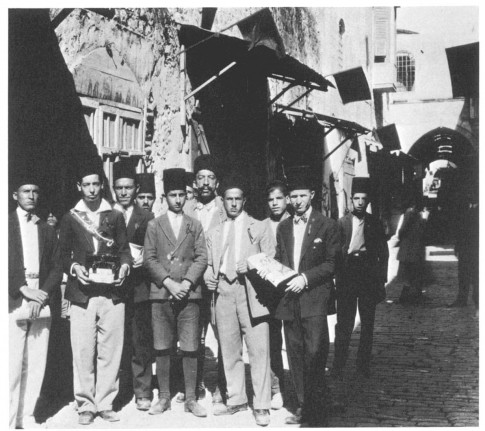
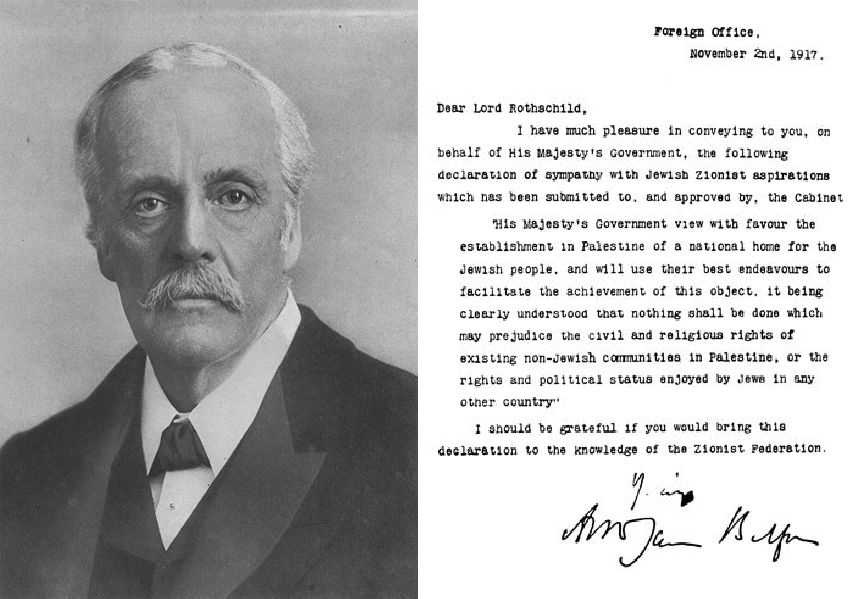
November 2nd marked the 97th anniversary of the 1917 Balfour Declaration declaring “His Majesty’s Government view with favour the establishment in Palestine of a national home for the Jewish people” in a letter from U.K. Foreign Secretary Arthur James Balfour to British Zionist partisan Lionel Walter Rothschild. Although the Zionist movement had an active leadership, which had inaugurated a series of congresses and established modest settlements in Palestine, it is the endorsement of Zionism by the leading imperial power of the day that would elevate the nationalist crusade into a genuine European colonial project à la the Afrikaners’ South Africa.
p.102 #96

For Lord Balfour, Zionism stirred Protestant aspirations for a Jewish “return” to the Holy Land and appeared to settle the so-called “Jewish Question” by guiding the waves of eastern European and Russians Jews fleeing anti-Semitic pogroms to Palestine rather than Western Europe and North America.


At the 1919 Paris Peace Conference, the victorious leaders of the United States, France, Italy, and Great Britain awarded the latter dominion over Palestine in the framework of a League of Nations mandate that entrusted London with carrying out the task of establishing representative institutions and recognition of the Jewish people’s “right to reconstitute their National Home [in Palestine].”


The unavoidable contradiction between supporting a Jewish homeland and self-determination in an overwhelmingly Arab country was not missed by Balfour, who attended the conference and wrote in a memo, “the contradiction between the letter of the Covenant [of the League of Nations] and the policy of the Allies is even more flagrant in the case of the ‘independent nation’ of Palestine… For in Palestine,” we do not propose even to go through the form of consulting the wishes of the present inhabitants of the country.” That contradiction was easily settled by Balfour as the epigraph above concludes the memo.
p.246 #294

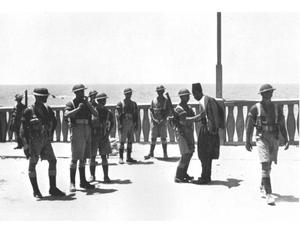
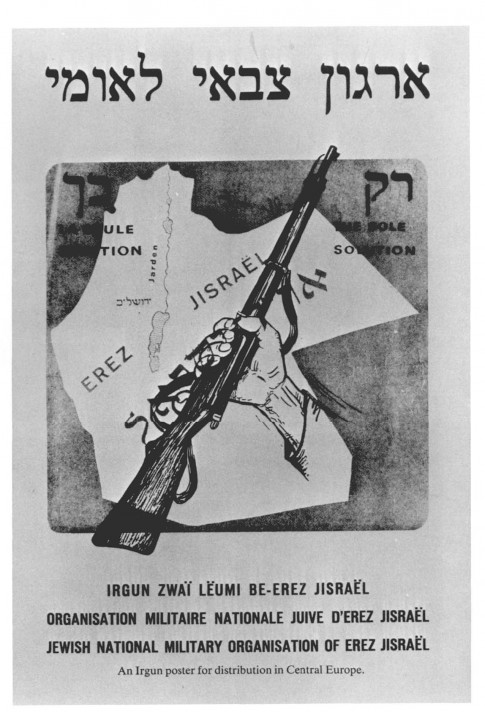
British sovereignty over Palestine and sponsorship of a now confident colonial venture furthered Zionist settlement growth and, more crucially, suppressed inevitable Palestinian resistance to Zionism, particularly the 1936-1939 revolt. The success of the Zionist project in the birth of the State of Israel, and its corollary of Palestinian expulsion, dispossession and military occupation, would have been inconceivable without British imperial aid and support.


“Everything that has followed in that conflict-riven land has flowed inevitably from this decision” to endorse a Jewish state in an Arab country by “the greatest power of the age,” Journal for Palestine Studieseditor Rashid I. Khalidi wrote in Resurrecting Empire. Whatever one may think of Israel and the Palestinians, it would be hard to argue against the judgment that Palestinians and Israelis continue to residue in the shadow of the Balfour Declaration and all its attendant consequences.


Portrait of Lord Balfour and the original declaration:
Balfour_portrait_and_declaration


Featured Articles from the Journal of Palestine Studies:


Colonialism, Nationalism, and the Politics of Teaching History in Mandate Palestine

Author: Elizabeth Brownson

Source: Journal of Palestine Studies, Vol. 43, No. 3 (Spring 2014), pp. 9-25


Dividing Jerusalem: British Urban Planning in the Holy City

Author: Nicholas E. Roberts

Source: Journal of Palestine Studies, Vol. 42, No. 4 (Summer 2013), pp. 7-26


War-Time Contingency and the Balfour Declaration of 1917: An Improbable Regression

Author: William M. Mathew

Source: Journal of Palestine Studies, Vol. 40, No. 2 (Winter 2011), pp. 26-42


From Law and Order to Pacification: Britain’s Suppression of the Arab Revolt in Palestine, 1936–39

Author: Matthew Hughes

Source: Journal of Palestine Studies, Vol. 39, No. 2 (Winter 2010), pp. 6-22


The Hebrew Reconquista of Palestine: From the 1947 United Nations Partition Resolution to the First Zionist Congress of 1897

Author: Walid Khalidi

Source: Journal of Palestine Studies, Vol. 39, No. 1 (Autumn 2009), pp. 24-42


Was Balfour Policy Reversible? The Colonial Office and Palestine, 1921-23

Author: Sahar Huneidi

Source: Journal of Palestine Studies, Vol. 27, No. 2 (Winter, 1998), pp. 23-41


 The Unregarded Prophet: Lord Curzon and the Palestine Question

Author: David Gilmour

Source: Journal of Palestine Studies, Vol. 25, No. 3 (Spring, 1996), pp. 60-68
source

Yehuda Shaul Breaking the Silence

Why did Israel target and kill Hebrew speakers in Gaza?

With the eyes of the world’s media well and truly off of Gaza and onto the hideous situations in Iraq and Syria, the Palestinian people are once again neglected; their dead go unnoticed.But the consequences of Israel’s latest and deadliest war against the civilian population of Gaza this past summer go on. For seven weeks, Israel bombarded the coastal strip, targeting whole neighbourhoods, wiping out entire families and systematically dismantling civilian infrastructure. The Palestinian resistance factions, who were, on paper, seriously outgunned, stood their ground and fought, killing 64 Israeli soldiers.

Israel acted its customary fashion: massive, brutal and deliberate targeting of the people of Gaza themselves. In the Israeli military and in the increasingly right-wing crucible that is Israeli society, Palestinian civilians are regarded as non-existent. Therefore, it is considered permissible by most Israelis to kill and devastate the population as a whole during Israel’s wars. Punish the mothers, as one popular racist Israeli lawmaker put it this summer, since they will only give birth to “little snakes” – her vile way to describe Palestinian babies.

By the end of it in August, 2,139 Palestinians were left dead by Israel’s war machine.

According to UN figures, some 75-80 percent of these dead were civilians. With each new war, the proportion of Palestinian civilians to fighters dead seems to rise. Israeli attacks get more and more ruthless. We can no longer speak of “indiscriminate” Israeli attacks against Palestinians civilians, since, with such sophisticated weapons, and with such a consistently high number of Palestinians dead, this must be deliberate.

To go alongside the dead and wounded, there was decimation of Palestinian homes and businesses. The people of Gaza are only now beginning to be able to deal with and recover from this severe collective trauma. They may have dropped out of the headlines, but their suffering goes on.

Out of this devastation, testimonies are beginning to emerge, the likes of which have not been heard before.

Max Blumenthal, a colleague and friend of mine recently headed to Gaza in the wake of Israel’s summer war. Avoiding the clichés and sometimes fly-by-night nature of war reporting, Blumenthal spoke to people about the horrors they had seen and the sheer devastation they had been through.

At a talk of his in London last week that I attended, and at his testimony to the Russell Tribunal on Palestine recently, Blumenthal recounted some of the stories Palestinian eyewitnesses had told him. You can watch a video of his talk at the Russell Tribunal here, or read the transcript of his prepared remarks here.

According to several different eyewitnesses he spoke to, offering corroborating accounts of different incidents, it seems that Israeli soldiers were executing a new practice during this latest Gaza war. As Max puts it: “wanton targeting of Palestinian civilians who spoke Hebrew”.

One example: “In Khuza’a just east of Khan Younis, multiple witnesses described soldiers gathering locals in the centre of town as they occupied the area on July 23, then asking if anyone spoke Hebrew. When a 54-year-old man stepped forward to answer in the affirmative, they shot him in the heart.”

While Arabic is Palestinians’ first language, many Palestinians speak at least some Hebrew, especially those who regularly come into contact with Israelis. In Gaza, sealed off from the world for so long, there are far less Hebrew speakers than in the West Bank, and certainly far less than in Jerusalem. But some of the older generation, who still had permits to travel into Israel for work, do speak the language. And many Palestinian prisoners learn the language while in jail.

This targeting is a new phenomenon, to my knowledge. I have never heard of it happening in any sort of systematic way before. Dena Shunra, an Israel expert I asked about this concurred on that.

Why would Israeli soldiers do this? Surely they would find Hebrew-to-Arabic translation useful in issuing orders to Palestinians in their custody.

These are preliminary reports coming out of Gaza that warrant further examination and analysis. But we can start to surmise some possible explanations.

It could have been a wanton act of control, something to keep people in line and afraid. If there were no way for Palestinians to know what the soldiers were planning, they would have been able to keep them guessing for longer.

The idea that occurred to me, however, is one with longer-reaching implications. Over the last few years, with more and more boycott initiatives targeting the state of Israel, and more and more legal cases for war crimes and other acts of oppression against the Palestinians being carried forward in international venues, Israel has become more conscious of its international image.

Such cases almost always draw on Palestinian eyewitness testimonies. That is why the Russell Tribunal, for example, invited Palestinians to testify at its various hearings. Israel has been known to block Palestinian activists from travelling abroad for just such activism, or for punishing them afterwards.

Could it be that Israel was killing Hebrew speakers in Gaza to stop more detailed understanding of Israeli soldiers’ war crimes in the Strip?

For now, we simply don’t know, but with the emergence of further testimonies over time, the picture may become clearer.

An associate editor with The Electronic Intifada, Asa Winstanley is an investigative journalist who lives in London.

source

Dozens of reserve soldiers from Israeli intelligence unit publicly declare their refusal to operate in Palestine.

Israeli reservists refuse to serve

The letter was delivered weeks after Operation Protective Edge killed more than 2,200 people [Reuters]

Dozens reservists and former members of an elite Israeli army intelligence unit have condemned alleged “abuses” of Palestinians in the occupied territories.

The forty-three reserve soldiers expressed their condemnation in an open letter addressed to Israel’s prime minister, armed forces chief, head of military intelligence and distributed to media on Thursday.

“We veterans of Unit 8200, reservists past and present, declare that we refuse to take part in activity against Palestinians and refuse to be tools to deepen the military control in the occupied territories,” the soldiers wrote.

“There’s no distinction between Palestinians who are, and are not, involved in violence, we cannot continue to serve this system in good conscience, denying the rights of millions of people” they wrote.

The soldiers went on to express their concern towards human rights abuses and the disruption of Palestinians everyday lives.

They clarified that they will no longer take part in any act that harms innocent people and called upon all soldiers to join their cause and speak out.

“We call for all soldiers serving in the Intelligence Corps, present and future, along with all the citizens of Israel, to speak out against these injustices and to take action to bring them to an end.”

One soldier also told Channel 10 TV he feels most of the work was motivated by “political reasons”  to cement Israel’s control over the West Bank and not security concerns.

The letter was published less than three weeks after the military’s fierce offensive against Palestinian fighters in the Gaza Strip killed more than 2,200 people, many of them civilians.

The 8200 army unit is one of Israel’s best and brightest unit , taking care of surveillance and communications monitoring in addition to sharing information with Israel’s civilian intelligence agencies.

A former commander of the unit, reserve Brigadier General Hanan Gefen, accused the letter’s authors of a grave breach of trust.

“If this is true and if I were the current unit commander, I would put them all on trial and would demand prison sentences for them, and I would remove them from the unit,” General Hanan Gefen said on Friday.

source


Children in Chains

Hajo Meyer 2003 Interview – East Jerusalem

Ilan Pappe : My good friend Hajo Meyer died last week. He was an outstanding fighter for the freedom of Palestine. A Holocaust survivor who believed strongly the universal legacy of what he experienced was to struggle against human oppression, even if, and particularly if, the oppressors, are Jews.

Blog at WordPress.com.

Up ↑