Search

band annie's Weblog

I have a parallel blog in French at http://anniebannie.net

Category

Israeli dissidents

Son of Israeli general speaks for Palestine

Wednesday, September 28, 2011
Miko Peled.

Israeli activist and author Miko Peled, currently touring Australia, is convinced that the Israel-Palestine conflict can be solved.

But, he told public meetings in Sydney and Newcastle, he doesn’t believe that it will happen while the government of Israel remains committed to Zionism (the maintenance of Israel as an exclusively “Jewish” state) and continues its ethnic cleansing operation by moving Palestinians off their land.

“It is not some inexorable process of nature,” Peled said. “It is a conflict between people, and it is therefore something over which people can have control.”

Peled was raised in a prominent Zionist family in Jerusalem. His grandfather, Dr Avraham Katsnelson, was a Zionist leader and signatory to the May 14, 1948 Israeli Declaration of Independence.

Katsnelson was also a member of Hashomer Hatzair Workers Party of Palestine that, in 1946, was the sole Zionist political organisation in Palestine at the time that recognised the national rights of the Palestinian Arabs.

Peled’s father, Matti Peled, was a young officer in the war of 1948 that led to Israel’s establishment. He was a general in the war of 1967 when Israel conquered the West Bank, Gaza, Golan Heights and the Sinai from Egypt, Jordan and Syria.

When he retired, Matti Peled became part of a group of retired army officers who met secretly with the Palestine Liberation Organisation to work on finding a two-state solution.

Peled recounted several life changing episodes — including the death of his niece from a suicide bombing attack in 1997 and the deaths of children of several Palestinian friends — that pushed him to discover and understand the true nature of Israel’s ongoing war on Palestinians that was having such a devastating impact on his family and friends.

He is now a fearless campaigner for one secular state for Palestinians and Israelis in which all live in equality.

He also supports the non-violent boycott, divestment and sanctions (BDS) movement against Israel. He said the boycott of Max Brenner cafes was not anti-Semitic, explaining how the Stauss Group openly support the Israeli government’s apartheid politics and an Israeli army unit responsible for war crimes.

He added: “All businesses based in Israeli are a legitimate target, since all of Israel is based on Palestinian land.”

Peled was asked to brief the ALP’s foreign affairs committee in Canberra. He said he was asked some strange questions in response to his argument for one democratic secular state. Someone asked, “But wouldn’t the Arabs outnumber Jews if there was a single state?” Peled answered, “Yes. And?”

Responding to foreign minister Kevin Rudd’s accusations that BDS was “anti-Semitic”, Peled said there is no comparison. “Then, the Jews were victims. Today, it is the Israeli Defence Force [IDF] that is a terrorist organisation. Mr Rudd should be proud that Australians are standing up for the cause of justice and supporting the BDS.”

It takes enormous courage to stand up against the Zionist mind-set Israelis are raised with. Peled recounted a moving story about his first journey to the West Bank. It was a pivotal moment.

Driving past the Israeli checkpoints into the West Bank, in an Israeli-plated car, he suddenly felt very unsafe. His unfounded fears worsened when became lost and felt he couldn’t ask for directions as he only spoke Hebrew.

He finally managed to arrive at his destination in Bil’in — unscathed.

Peled now laughs while narrating this story. But he expresses concern that Israelis are taught from a young age to be racist by the racism embedded in their text books. For example, school maps of Israel do not include any Palestinian towns.

Children grow into adults only knowing that Israel is surrounded by it Arab neighbours and have little or no idea of the reality of the Occupied Territories.

Peled references tragic personal events alongside Israel’s 2008-09 attack on Gaza as examples of terrorism. He describes the 2008-2009 Israeli attack on Gaza — Operation Cast Lead — a deliberate act of terrorism committed against children.

“Gaza is a children’s land: there are 800,000 children there. The aerial bombing was timed to start precisely when the first shift of Palestinian school children were leaving school to go home. The second shift were leaving home to go to school.

“The Israel pilots who carried out the bombing went home every night to their wives and families, and go up the next morning to do it again and again.”

His conclusion is that Israel is a terrorist state, that Israel’s conquest of Palestine has been made “irreversible” and that a Palestinian state based on the territories Israel occupied in 1967 (the West Bank and Gaza) “can never emerge”.

Referring to the Palestinian Authority’s current push for a Palestinian state in the United Nations, he reminded people that the UN had already voted that way — in 1947. When Israel was created, in 1947, an overwhelming majority of countries voted in favour of the Partition Plan: 33 in favor, 13 against with 10 abstentions.

“However Israel immediately set out to conquer some 80% of the remaining Palestinian territory, destroying hundreds of homes and forcing some 800,000 people to flee. Its aim was to make sure the conquest of Palestine was irreversible, to prevent any possibility of a Palestinian state emerging.”

Peled exposed the myth that Israel launched the Six-day war in 1967 because it faced an external threat from neighbouring Arab states. Rather, his father, General Peled, urged the Israel cabinet to attack its neighbours arguing that an opportunistic attack would succeed as the Arab states were “unprepared”.

Peled said that documents from cabinet meetings prior to the war confirm that there was never any mention of any existential threats.

Immediately after the war, his father argued for a Palestinian state to be set up in the West Bank and Gaza Strip “to avoid Israel becoming an occupying power”. This was advice the Israeli Cabinet did not take.

“The two-state solution may have been possible 50 years ago”, Peled argued, “but not now.”

“Both sides have much the same population but Israel takes 80% of the resources. Palestinians are given about 1/20th the amount of water allocated to the Israeli settlers, for instance, and Israel refuses to negotiate this.”

But Peled believes that there is hope. “There is growing discussion that Israel has to change from being an occupier to a democracy”, Peled said. Citing the uprisings across the Arab world, Peled commented that mid way through last year it was inconceivable to imagine Egypt without Mubarak. “Change doesn’t happen from a single cause or reason. Apartheid in South Africa fell because of pressure from the outside, as well as within.

“Zionism is incompatible with peace because it offers no compromise. The only solution is to dismantle the Zionist framework and apply the rule of law equally to both people. It is not impossible, because the people of Egypt remind us that nothing is impossible.”

[Miko Peled’s book, The General’s Son will be available in February 2012. To find out more click here.]
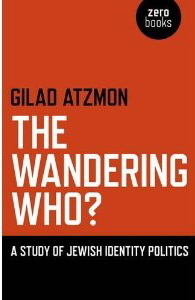
Gilad Atzmon: The Open Society and its Enemy Within

[youtube http://youtu.be/TNngjZ1COJA?]

This film is dedicated to the so-called Jewish ‘anti’ Zionists who were harassing and detracting us ahead of the Freiburg Conference (‘Palestine, Israel and Germany – Boundaries of Open Discussion). Ideally, we would like to see many Jews contributing to the discourse rather than attempting to dismantle it. However, we will prevail!!!

One righteous man : Miko Peled

Miko Peled is the son of General Matti Peled, who was a leader in the 1967 war who also fought in the War of Independence in 1948. Like his father, Peled is an advocate for an end to the occupation of Palestine. As an Israeli, he offers an insider’s perspective on just how far Israel has strayed from its democratic principles, and how it has created a society marred by racism and indifference to the suffering of others. His observations are now collected in a book, “The General’s Son: The Journey of an Israeli in Palestine.” In this segment, Miko Peled tells of his experiences as a young soldier in the Israeli army. He describes a confrontation with the same army on a recent visit to Israel and the West Bank.

Miko Peled is a peace activist who dares to say in public what others still choose to deny. Born in Jerusalem in 1961 into a well known Zionist family, his grandfather, Dr. Avraham Katsnelson was a Zionist leader and signer of the Israeli Declaration of Independence. His Father, Matti Peled, was a young officer in the war of 1948 and a general in the war of 1967 when Israel conquered the West Bank, Gaza, Golan Heights and Sinai.
Miko’s unlikely opinions reflect his father’s legacy. General Peled was a war hero turned peacemaker.
Miko grew up in Jerusalem, a multi-ethnic city, but had to leave Israel before he made his first Palestinian friend, the result of his participation in a dialogue group in California. He was 39.
On September 4, 1997 the beloved Smadar, 13, the daughter of Miko’s sister Nurit and her husband Rami Elhanan was killed in a suicide attack.
Peled insists that Israel/Palestine is one state—the separation wall notwithstanding, massive investment in infrastructure, towns and highways that bisect and connect settlements on the West Bank, have destroyed the possibility for a viable Palestinian state. The result, Peled says is that Israelis and Palestinians are governed by the same government but live under different sets of laws.
At the heart of Peled’s conclusion lies the realization that Israelis and Palestinians can live in peace as equals in their shared homeland.

Gilad Atzmon : The wandering who

Gilad’ s New Book: The Wandering Who? will be out in October. It is already available (pre-order)  on Amazon.com

bandannie read the book and was mesmerized by the accuracy of his analysis.

Jewish identity is tied up with some of the most difficult and contentious issues of today. The purpose in this book is to open many of these issues up for discussion. Since Israel defines itself openly as the ‘Jewish State’, we should ask what the notions of ’Judaism’, ‘Jewishness’, ‘Jewish culture’ and ‘Jewish ideology’ stand for. Gilad examines the tribal aspects embedded in Jewish secular discourse, both Zionist and anti Zionist; the ‘holocaust religion’; the meaning of ‘history’ and ‘time’ within the Jewish political discourse; the anti-Gentile ideologies entangled within different forms of secular Jewish political discourse and even within the Jewish left. He questions what it is that leads Diaspora Jews to identify themselves with Israel and affiliate with its politics. The devastating state of our world affairs raises an immediate demand for a conceptual shift in our intellectual and philosophical attitude towards politics, identity politics and history.

You can now pre-order the book on Amazon.com  or Amazon.co.uk

“A formidable improvisational array…a local jazz giant steadily drawing himself up to his full height…”-John Fordham, The Guardian

 “Best Musician” living in the world today, Robert Wyatt, The Guardian 


“…Atzmon is an astonishing musician.” John Lewis, Metro

Click below for  samples of his music :

http://player.soundcloud.com/player.swf?url=http%3A%2F%2Fapi.soundcloud.com%2Ftracks%2F5470845&show_comments=true&auto_play=true&color=ff7700

The Tide Has Changed by Gilad Atzmon

Amazon.co.uk

Akiva Orr, an interesting lesson in history

Saturday, August 27 2011|Joseph Dana

Over the years of writing and wrestling with Israel/Palestine, Akiva Orr has become a supportive figure. Born in 1930’s Berlin, Orr has lived the entirety of Israel’s existence. From Eric Fried to Joe Slovo, Akiva can speak for days about his personal relationships with some of the most interesting revolutionary leaders of the late twentieth century. It is not Akiva’s circle of friends rather his work on the ground in Israel/Palestine as a founding member of Matzpen which is most fascinating. Orr wrote Max Blumenthal and me an email this morning in reference to our latest piece about Israel’s tent protests. It is reprinted in full along with an interview Blumenthal and I did with Orr last summer regarding Israel’s wars as well as a youtube link to a full length documentary about Orr’s political party in Israel, Matzpen.


Your article on the “social-protest” is excellent. Full of factual data and ideological insights. I found it excellent and learnt facts I did not know. I fully agree with its content but I still consider this protest unique and politically important in Israeli politics. This is so due to my own political development. Let me explain.

I was politicized by my participation in the great Israeli seamen’s strike in 1951. By the way,  a film about that strike was shown in Rothschild tents recently and I was asked to comment.

Until the seamen’s strike I was just an ordinary Israeli kid imbibing all the Zionist education without questioning it.  I grew up in a non-political home,  as a Tel Aviv ‘Beach Boy.’ I joined the “Hagannah” in 1945 when I entered High School. So did 25 of my other class mates out of which three joined Begin’s ETZEL and one joined the Stern Gang. The remaining six class mates joined nothing.  Keep in mind that this was typical to all Jewish high schools at that time. In the “Hagannah” we did military training in summer holidays and fly-posted Tel Aviv streets with weekly at nights. We also participated in anti-British demos. We never did anything anti-Arab. I participated in “Hagannah” activity as a cog participates in a machine. I became platoon commander at 16 and trained 30 kids in drill and use of fire arms but we never fired a bullet (too expensive). All this sounds very political but I was totally a-political. I knew nothing about Marx, Lenin, or the USSR and could not tell the difference between the various Jewish political parties in Palestine. I detested all politics.  It reeked of emotional blackmail.

I visited neighbouring Jaffa often as a kid and though it was 100% Arab it never occurred to me that the Arabs might oppose Jewish independence in Palestine. To me – and to most of my generation – the Arabs were part of the physical landscape like the mountains and the vegetation. We did not hate – or fear – them. It never occured to us that a lengthy military/political conflict with them is inevitable. It was simple: our enemy were the British who ruled us,  not the “natives”.

Only during the 1951 seamen’s strike did I become politically critical because I read the various press reports about the strike. At that time most Israeli newspapers belonged to political parties.  I read them and saw that most press reports were biased against the seamen, and distorted the real facts of the strike. Only one paper gave a factually accurate reporting – and supported the seamen.

It was the paper of the Communist Party (CP). So I joined that party knowing nothing about Marx, Lenin, Trotsky, or the USSR. It took another 2 years of CP membership before I became an anti-Zionist. In the CP, I met Palestinian comrades who were not “Uncle Tom’s” and when I sold the CP paper in Jerusalem (every Friday for 6 years), I encountered violent hostility and opposition that forced me to learn the facts about Capitalism and the Zionist-Palestinian conflict. The 1950s were the peak of the “Cold War” and anti-communism was rough and rampant. I acquired my political education not by books but by political confrontations. I firmly believe that political confrontations with adversaries is the best political education.

[youtube http://youtu.be/hfcFno2pqJg?]
Now back to Rothschild tents. Most young people in the tents face their first political confrontation in those tents. Before July 14 they were just fodder in politics. Now they are becoming politically critical – and aware. Whatever the outcome of this unique protest – their minds and attitudes are changed and will stay so. They will not be political fodder again. Give them time and many will become anti-Zionist. One cannot be weaned in a week from what one embraced uncritically for many years at home, in nursery and school. This confrontation/protest changes their minds – and lives. Nothing similar ever happened in Israel before. Moreover,  thanks to the mobile phones, Facebook, and the Internet, this protest is completely self-managed. No external organization hatched it or runs it. Massive Citizens’ self-organizing activity never existed in Israel before. This makes all political parties tremble. They know that this protest changed the rules of the political game in Israel. Israeli citizens cannot be treated as “election fodder” in the future. Whoever will treat them so will pay dearly at the ballot box.

My political activity aims to make the ballot box obsolete by direct participation of all citizens in all political decisions.

This protest is a “first small step” in that direction, and as Mao used to say: ”The longest journey starts with one small step.” Though I am not – and never was – a Maoist,  I agree with him. That is why I support this protest despite all its drawbacks.

Keeping up the struggle – and enjoying it

Aki

Unforgettable Words From an Israeli General’s Son

Miko Peled is a peace activist who dares to say in public what others still choose to deny. Born in Jerusalem in 1961 into a well known Zionist family, his grandfather, Dr. Avraham Katsnelson was a Zionist leader and signer of the Israeli Declaration of Independence. His Father, Matti Peled, was a young officer in the war of 1948 and a general in the war of 1967 when Israel conquered the West Bank, Gaza, Golan Heights and Sinai.

Miko’s unlikely opinions reflect his father’s legacy. General Peled was a war hero turned peacemaker.

[youtube http://youtu.be/c4ZfnpN4Dfc?]

Miko grew up in Jerusalem, a multi-ethnic city, but had to leave Israel before he made his first Palestinian friend, the result of his participation in a dialogue group in California. He was 39.

On September 4, 1997 the beloved Smadar, 13, the daughter of Miko’s sister Nurit and her husband Rami Elhanan was killed in a suicide attack.

Peled insists that Israel/Palestine is one state—the separation wall notwithstanding, massive investment in infrastructure, towns and highways that bisect and connect settlements on the West Bank, have destroyed the possibility for a viable Palestinian state. The result, Peled says is that Israelis and Palestinians are governed by the same government but live under different sets of laws.

At the heart of Peled’s conclusion lies the realization that Israelis and Palestinians can live in peace as equals in their shared homeland.

Source: PakistanPal

THE GENERAL’S SON

Former Israeli soldiers break the silence on military violations

Testimonies posted on YouTube by campaign group describe routine harassment and humiliation of Palestinian civilians

Harriet Sherwood in Jerusalem

Israel's three-week offensive in Gaza

Campaign group Breaking the Silence has met with a hostile response from Israel, especially after it published testimony by soldiers who took part in the war on Gaza in 2008-09. Photograph: Ali Ali/EPA

Transgressions by the Israeli army in the occupied Palestinian territories will be disclosed by a group of former soldiers in an internet campaign aimed at raising public awareness of military violations.

Video testimonies by around two dozen ex-soldiers – some of whom are identifying themselves for the first time – will be posted on YouTube. The campaign by Breaking the Silence, an organisation of former soldiers committed to speaking out on military practices, launches with English subtitles on Monday.

Some of the former soldiers describe the “neighbour procedure”, a term for the use of Palestinian civilians, often children, as human shields to protect soldiers from suspected booby traps or attacks by militants. The procedure was ruled illegal by Israel‘s high court in 2005.

Others speak of routine harassment of civilians at checkpoints, arbitrary intimidation and collective punishment.

Idan Barir, who served in the artillery corps, describes in his testimony how an officer forced Palestinian civilians to crawl in a “race” towards a checkpoint near Jenin in the West Bank during the 2000 olive harvest. Only the first three out of “teams” of eight were allowed to pass.

Another, Itamar Schwarz, says Palestinian homes were routinely ransacked in search operations. He describes the day of the World Cup final in 2002, when soldiers confined a Palestinian woman and child in the kitchen of their home for two hours while the unit watched the game in the middle of an operation.

Arnon Degani, who served in the Golani brigade, describes the distress of a young woman who tearfully pleaded to be allowed to pass through a Jenin checkpoint in order to sit an important exam. He gradually came to understand, he says, that the Israeli army’s intention was “to enforce tyranny on people who you know are regular civilians” and to “make it clear who’s in control here”.

“Part of the silence of Israeli society is to believe these are isolated and exceptional incidents. But these are the most routine, day-to-day, banal stories,” said Yehuda Shaul, of Breaking the Silence.

Identification of the ex-soldiers willing to speak out was important, he said, “so that Israelis understand that there are people behind these stories, that in a sense we’re all involved”.

The former soldiers were aware of the potential legal and social consequences of going public, Shaul added. “They understand that they risk being prosecuted for what they’re saying. But they’re doing it because it needs to be done.”

Since Breaking the Silence was launched in 2004, it has met with a hostile response from Israel’s political and military establishment, partly targeting the anonymity of some witnesses. There have been attempts to discredit supporters and block funding, and its leaders have been subject to interrogation. Censure increased after it published testimony by soldiers who took part in the war on Gaza in 2008-09.

Schwarz, 29, who served in the Nahal infantry brigade between 2000 and 2003, told the Guardian that he had gone public with his testimony “because to me it’s important that Israeli society is exposed to the moral price and moral experience that an Israeli soldier goes through in armed service”.

The events he describes are “things that are really little, but they tell you the big picture of the occupation”.

He said his army experience was “like a scar, I carry it with me. We have to talk about it, to put it out to the world. Only then can a society deal with the moral price.”

The Israeli Defence Forces said: “The allegations made by Breaking the Silence are unfamiliar to us. The organisation has been informed, on numerous occasions, of the option of filing specific complaints including personal testimonies and other evidence through the appropriate channels. This is to ensure that their allegations are subjected to a thorough and proper legal investigation. To date the organisation has refused to provide substantiated allegations, making it impossible to properly examine their claims.”

Twenty thousand march in Tel-Aviv against McCarthyism, racism and fascism

samedi 15 janvier 2011, par Parti communiste d’Israėl

Twenty thousands of activists, Jews and Arabs, from left-wing movements,
parties and human rights organizations march in Tel Aviv on Saturday
(January 15, 2001) in protest of the Knesset’s decision to set up a
committee of inquiry to probe the funding sources of human rights movements.

The protest march, under the headline “Demonstration (since it’s still
possible) for democracy”, left from Tel Aviv’s Meir Park, in front of the
Likud headquarters, toward the plaza in front of the Tel Aviv Museum of Art,
where a rally take place in which Knesset members from Hadash, Kadima and
Meretz as well as officials from Peace Now and human rights groups deliver
speeches.

Protesters chanted in support of democracy and free speech and against
racism and fascism, and carried hundreds of red flags and signs with slogans
such as “Jews and Arabs together against Fascism”, “Awaiting Democracy”,
“Danger – End of Democracy Ahead !”, “Fighting the Rightist Government of
Darkness” and “Democracy is Screaming for Help”. Among the MKs taking part
in the event were Dov Khenin (Hadash), Afo Agbarie (Hadash), Meir Sheetrit
(Kadima), Hanna Swaid (Hadash), Nitzan Horowitz (Meretz) and Mohammad
Barakeh (the Chairman of Hadash, the Democratic Front for Peace and Equality
– Communist Party of Israel).

MK Horowitz inveighed against Prime Minister Benjamin Netanyahu and Defense
Minister Ehud Barak, whom he said were “supporting Lieberman’s incitement
and encouraging racist legislation in the Knesset”. “Tonight we are telling
the Labor Party that it is a full partner of the most racist government in
state history, and that they must leave it immediately,” he said. Peace Now
Secretary-General Yariv Oppenheimer said at the rally that Israel was
suffering not only from the Iranian threat but also from the “Liebermanian
threat”.

Hadash Chairman Barakeh said, “We are at a dangerous crossroads where
democracy is concerned. Democracy is collapsing, not because of Lieberman
but because of the support he is receiving from the prime minister. Jews and
Arabs who care about democracy cannot fail at this time. Anyone who wishes
to know the power of the people can look to Tunisia”. In the same vein he
added, “The victory of the people in Tunis over cruel dictatorship teaches
us that oppression is not the fate of mankind and the people can win.”

MK Sheetrit denounced Foreign Minster Avigdor Lieberman’s proposal to probe
the funding sources of human rights organizations. “If such legislation is
passed, it will be like taking a brick out of the wall of democracy. I am
surprised that Likud members support this. It’s simply shameful that they
can sit in a government that makes such a proposal,” he said.

MK Khenin said during the protest that “the thousands of people who are here
understand that our democracy needs protection against its destroyers. We
are voicing a clear voice in support of human rights and democracy, and
against racism, fascism, McCarthyism and future destruction of the
democratic values. We will continue to fight for democratic rights, freedom
of speech, equal rights for Jews and Arabs and the end of the occupation.”

List of participating organizations in the Emergency rally

Hadash (the Democratic Front for Peace and Equality) // Communist Party of
Israel // ACRI (Association For Civil Rights in Israel // Meretz // New
Israel Fund // Peace Now // The Kibbutz Movement // The Progressive Movement
// The Green Movement // Physicians for Human Rights // The Geneva
Initiative // Ha’Shomer Ha’tzair // Yisrael Hofshit (Free Israel) //
Coalition of Women for Peace // Public Committee Against Torture // Yesh
Gvul // Shutafut/Sharakah – Organizations for a Shared, Democratic and
Egalitarian Society : Agenda, The Abraham Fund, Negev Institute – NISPED,
Sikkuy, Kav Mashve, Keshev, Shatil // Gush Shalom // Yesh Din // Almuntada
Altakadumi – The Progressive Circle in Ar’ara // Negev Coexistence Forum //
Peace NGO’s Forum // Amnesty International Israel // Banki-Shabiba – Young
Communist League // Hagada Hasmalit Alternative Cultural Center in Tel-Aviv
// Tandi – Democratic Women’s Movement // Parents Circle – Families Forum //
Social Workers for Peace and Social Welfare // Arab Movement for Renewal //
Mossawa Centre – the Advocacy Center for Arab Citizens in Israel // Adalah –
the Legal Center for Arab Minority Rights in Israel // Yesh Din – Volunteers
for Human Rights // Machsom Watch // Tarabut-Hithabrut // Rabbis for Human
Rights // Ir Amim // Maan – Workers’ Advice Center // Daam – Workers Party
// Syndianna Galilee for Fair Trade // Israeli Children // Campus Le’Kulanu
– Left Students Movement, the Hebrew University in Jerusalem and Haifa
University // ASSAF – Aid Organization for Refugees and Asylum Seekers in
Israel // ICAHD – The Israeli Committee against House Demolitions // Social
TV // Socialist Struggle // Labor Party Young Guard // HAMOKED – Center for
the Defense of the Individual // BINA – Center for Jewish Identity, Hebrew
Culture and Social Justice // AIC – Alternative Information Center // Our
Heritage – The Charter for Democracy //


source : by e-mail

Blog at WordPress.com.

Up ↑