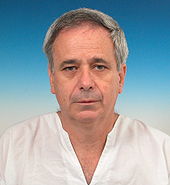
Two Israeli teenagers — Noam Gur and Alon Gurman — publicy refused to serve in the Israeli military earlier today. They explained that they refused to join the army because of Israel’s occupation of the West Bank and siege on Gaza, and ongoing Israeli crimes committed against Palestinians. A group of Israeli activists demonstrated in front of the military base in Ramat Gan to support their decision. For more information, visit http://alternativenews.org
-
ANY WHERE in the World YOU Are!
-
21 April 2012 will be the first day in the 9th year Mordechai Vanunu, Israel’s Nuclear Whistle Blower has been under 24/7 surveillance and denied the RIGHT to leave Israel; on top of 18 years in jail for telling the TRUTH and providing the photographic proof that led nuclear physicists to conclude Israel had manufactured upwards of 200 nuclear warheads by 1986!Please post your PUBLIC ACTION in Comment section and join the Cause FREE VANUNU Now @
http://www.causes.com/causes/523841-free-mordechai-vanunuThe first announced is scheduled to begin noon 21 April at STRAWBERRY FIELDS in Central Park, New York City, with a Reading of Vanunu’s words from Ashkelon Prison, 1987:“The passive acceptance and complacency with regard to the existence of nuclear weapons anywhere on earth is the disease of society today.
“This struggle is not only a legitimate one – it is a moral, inescapable struggle…no government, not even the most democratic, can force us to live under this threat. No state in the world can offer any kind of security against this menace of a nuclear holocaust, or guarantee to prevent it.
“Already now there are enough nuclear missiles to destroy the world many times over. This issue should unite us all, because that is our real enemy.
“Any country, which manufactures and stocks nuclear weapons, is first of all endangering its own citizens. This is why the citizens must confront their government and warn it that it has no right to expose them to this danger. Because, in effect, the citizens are being held hostage by their own government, just as if they have been hijacked and deprived of their freedom and threatened.
“Indeed, when governments develop nuclear weapons without the consent of their citizens – and this is true in most cases – they are violating the basic rights of their citizens, the basic right not to live under constant threat of annihilation.
“Is any government qualified and authorized to produce such weapons.”
I Am Your Spy by Mordechai Vanunu
I am the clerk, the technician, the mechanic, the driver.
They said, Do this, do that, don’t look left or right,
don’t read the text. Don’t look at the whole machine. You
are only responsible for this one bolt. For this one rubber-stamp.
This is your only concern. Don’t bother with what is above you.
Don’t try to think for us. Go on, drive. Keep going. On, on.So they thought, the big ones, the smart ones, the futurologists.
There is nothing to fear. Not to worry.
Everything’s ticking just fine.
Our little clerk is a diligent worker. He’s a simple mechanic.
He’s a little man.
Little men’s ears don’t hear, their eyes don’t see.
We have heads, they don’t.Answer them, said he to himself, said the little man,
the man with a head of his own. Who is in charge? Who knows
where this train is going?
Where is their head? I too have a head.
Why do I see the whole engine,
Why do I see the precipice–
is there a driver on this train?The clerk driver technician mechanic looked up.
He stepped back and saw — what a monster.
Can’t believe it. Rubbed his eyes and — yes,
it’s there all right. I’m all right. I do see
the monster. I’m part of the system.
I signed this form. Only now I am reading the rest of it.This bolt is part of a bomb. This bolt is me. How
did I fail to see, and how do the others go on
fitting bolts. Who else knows?
Who has seen? Who has heard? — The emperor really is naked.
I see him. Why me? It’s not for me. It’s too big.Rise and cry out. Rise and tell the people. You can.
I, the bolt, the technician, mechanic? — Yes, you.
You are the secret agent of the people. You are the eyes of the nation.
Agent-spy, tell us what you’ve seen. Tell us what the insiders, the clever ones, have hidden from us.
Without you, there is only the precipice. Only catastrophe.I have no choice. I’m a little man, a citizen, one of the people,
but I’ll do what I have to. I’ve heard the voice of my conscience
and there’s nowhere to hide.
The world is small, small for Big Brother.
I’m on your mission. I’m doing my duty. Take it from me.Come and see for yourselves. Lighten my burden. Stop the train.
Get off the train. The next stop — nuclear disaster. The next book,
the next machine. No. There is no such thing.-1987, Ashkelon Prison
We, the Tarabut-Hithabrut movement, support unequivocally the Syrian people in their struggle for their liberty and their rights.
There are those who say that the situation in Syrian and the wider regional reality is complex, and they are right. However, we want to directly address the various objections raised against taking a position in favor of the democratic uprising of the Syrian people:
There are those who say that the Syrian regime is anti-imperialist and comprises the last barrier to Western domination in our region.
The Baath Party in Syria is a corrupt regime of a small group of super-wealthy and powerful people who control enormous amounts of capital, which was stolen directly out of the pockets of the Syrian people. This ruling junta is not motivated by anti-imperialist ideals and can serve neither as a model for these ideas or as a defender of socialism. Although this regime is in a confrontation with Israel and the United States, a series of event such as the Gulf War show that the regime’s positions on international affairs are not consistent or principled but opportunistic. In addition, the Cold War is long over and the regime has since become friendly to Putin’s Russia, which is, as should be emphasized, a capitalist, authoritarian government with its own imperialist ambitions in addition to being a regime supported by the new empire, China, which is equally devoid of scruples or constraints.
Protesters against the regime are peons in an imperialist plot
The uprising in Syria started in Dar’a when a group of parents who protested when the security forces jailed and tortured their children, who dared to write “the People Demand to Depose Bashar” on their school building’s wall. Insults and humiliations directed toward the children’s parents and local leaders triggered the mass protests. The protests that spread throughout the country were inspired by the successful democratic uprisings in Tunisia and Egypt. We cannot forget this.
There are also foreign forces that are trying to take advantage of the situation and ride the wave of Syrian protesters, but this does not turn the protesters themselves into peons or agents of imperialism. The source of the protest is in the Syrian situation itself. Syria has no official statistics and no trustworthy data, but Syrians are well aware that even before the protests the unemployment rate was incredibly high and since then it has only worsened. Many people could only make a livelihood by joining the oppression and investigation apparatus of the regime or by supplementing their income by collaborating with them. Most of the population can only survive their day-to-day lives through bribery, where they must receive and take bribes in order to live and get a hold of basic good and services. Syrian voices demanding fundamental change have grown steadily louder and the masses started to shake free from the fear. The Syrian people are the source of the present protest and any consideration of this issue must begin with them, their rights, their suffering and their legitimate demands.
The Syrian regime defends the Palestinian resistance
The Syrian regime has a special security force whose purpose is to monitor and oppress the political activism of the Palestinian refugees who live there. The regime does not allow any political organizing that does not conform to the regime. Regime dissidents are disappeared and murdered. Syria has 19 different security forces who have one goal: to eliminate any threat to the Syrian regime. From a historical point of view, the Asad family’s support of Palestinian organizations always came with preconditions. The Syrian Army massacred Palestinians several times during its wars in Lebanon (Tel AlZaatar, Tripoli) and of course, the regime acted again and again to divide the Palestinian national movement (their support for Abu Musa in Lebanon and their encouragement of the war between Hamas and Fatah are only two of the most obvious cases) and by doing this they blocked the Palestinian national movement’s ability to make decisions independently.
The social protest is primarily a struggle between ethnic groups. The regime defends ethnic minorities and especially the Alawi group, which might suffer from a Sunni takeover.
There are inter-ethnic tensions in Syria, which sometimes result in hate crimes and revenge attacks. But the current regime is not an Alawi regime. The security force known as “AlShabiha” (literally “ghosts,” thugs that drive Mercedes cars that the regime pays for) is a security force established by the Baath party whose goal is to suppress resistance and political activity among the Alawis. Because Asad finds it complicated to use the standing army and the official security forces against his own community, he established an additional security force which is above the law. Many Alawi opposition leaders have been murdered by the regime and its agents, and many Alawis are in the opposition’s ranks today. “AlShabiha” have been trying to exacerbate inter-ethnic tensions in recent months, and this is also the purpose of the recent attacks in Christian neighborhoods, whose perpetrators are not known. This has no connection to the protests against the regime, in which members of all ethnic groups took part.
A large part of the Syrian people supports the regime, as many as oppose it if not more.
In a dictatorial regime, there isn’t much meaning to citizens protesting in favor of the regime. Decades of dictatorial rule break social structure down and prevent the emergence of local leadership. Every citizen who shows signs of leadership is in danger of being eliminated by the government. Other citizens know this and live in fear. The same TV networks that broadcast the “support protests” also broadcast citizens kissing Bashar AlAsad’s photograph and declaring that “There is No God but Bashar” while soldiers are stepping on their backs and pointing a gun to their head. If we examine our own history, we will remember that, before the First Palestinian Intifada, Israeli TV would film Palestinian merchants and passers by in the West Bank answer “yes” to a question by an Israeli journalist about whether they are happy, and a determined “no” when they were asked if there were any political problems. To see these expressions of support as something authentic is to be blind to the deep fear and oppression in Syrian society in light of these forced expressions of support by frightened citizens.
It s important to emphasize how paralyzed the political system is, even though it is dependent on the regime: until now, after a whole year of protests, there was not a single published statement of support for the regime by any local branch of the Baath party or the artificial parties affiliated with it under the “National Progressive Front.”
Opposition to the Asad regime is armed and therefore not popular and not legitimate
Among the protesters there are those that use weapons. However, the strongest and clearest voice that emerges from the protests in Syria from their very beginnings is one that speaks of nonviolent revolution and resistance. There are testimonies of armed groups of rebels that also commit war crimes and murder citizens—we condemn these crimes to the same degree that we condemn the regime’s crimes. Behind these crimes there may be different interests, but their background is a decades-long oppression that has prevented the establishment of a democratic political culture.
Concerning the question of the legitimacy of the armed resistance movement: let us not forget that Syria, like the countries that support it, arms and supports other armed organizations in other countries. Those who oppose the Syrian resistance because it is armed and support other armed resistance movements unconditionally are operating under a double standard.
It is not our purpose in this article to pass moral or ideological judgment as to whether the use of violence in order to rebel against an even more violent regime is justified or not, but history has proven to us numerous times that the weapons of the resistance have eventually been turned onto citizens, whether after the victory or on the way to it.
What about international intervention?
Today, after months of widespread protest and economic crisis, the current regime is being held alive today only through the generous assistance of other states such as China, Russia and Iran. This is also a form of international intervention in the matters of the Syrian people.
We oppose international military intervention. Every place where such intervention took place, the consequences have been dire. The powers that intervene militarily do not do this out of their dedication to the good of the world’s freedom-seeking people, but rather out of economic and strategic interest. There are numerous examples in both space and time: Iraq and Libya. Nothing good comes to the world’s people from imperial military intervention, and there has never been a “Robin Hood” armed with combat jets that will faithfully prevent massacres without massacring and plundering himself. This has been true especially for the US and NATO, but not only them. Obviously, Turkish intervention would also not be for the Syrian people but rather for the suppression of the Kurds and the interests of the Turkish establishment. Different competing local organizations can invite foreign imperialist intervention—that’s the way that it’s always been. Every foreign military intervention is always under the cover of a local organization that invites them.
The question is not who is more cruel in bombing civilians—the Western powers or the local dictators. From a humanitarian point of view, all bombings are equal. But from the point of view of the long-term consequences of military intervention, the consequences of the initiation by local and foreign powers of pseudo-legitimate military activity in the region are totally different. It is a terrible blow to a people fighting for their freedom. Since at least the 19th century, Western powers have been invading different countries to save the poor indigenous peoples from themselves. The argument about the cruel locals who slaughter each other is not new. This is how it was done in Africa, in Asia and even Israel tried it. We cannot fall into the trap of foreign military intervention in the name of the humanitarian ideals of an enlightened elite.
What will happen when the regime falls? A worse regime will rise in its place.
It is not for us to decide in the place of the Syrian people. The masses have flooded the streets and they are demanding the end of the current regime. There is no way of knowing what happens the day after the regime’s fall. It is very likely that there will be additional, painful struggles.
We too are concerned by a potential rise of an Islamic, intolerant regime or a puppet regime ruled by the US, or perhaps a regime that will continue the current state of affairs under a different cover. There is a big chance that this is exactly what will happen. However, it is the Syrian people’s prerogative to create the alternative and to judge its merit.
Many revolutions erupted to promote certain ideas, but after the revolution, a regime totally opposed to the revolution’s ideas arose. For example, the Algerian revolution ended with the establishment of an oppressive and dictatorial regime, and the revolution in Iran, which promoted freedom for Iranians, ended up being an oppressive and murderous regime. The final result does not undermine the justice of the struggle against colonial France in Algeria or the Shah’s rule in Iran.
In Syria, more than 10,000 citizens have already been murdered by the regime. This fact on its own is enough to call for this regime’s immediate end. Even if certain aspects of the current regime are better than some possible alternatives, that doesn’t mean that this regime has any legitimacy to continue to exist.
Of course, we prefer that a civilian, democratic, non-ethnic regime will be formed in Syria, one that respects the lives of its citizens and their social rights—a regime that expresses the will of the people, an independent regime free of external influence of the US, China, Russia, Turkey, Iran or others, which would express the Syrian people’s goal to free the Golan Heights from Israeli occupation and which will be friendly to the peoples of the region. But as we have said, this is the Syrian people’s decision, and only they have the authority to decide which regime and what government to have.
We are sure that a people that has bravely opposed a murderous regime will never again accept oppression and dictatorship from any new regime that arises. The Syrian people have begun a path to freedom from which there is no going back, and they will continue to struggle until they achieve their demands.
++++++
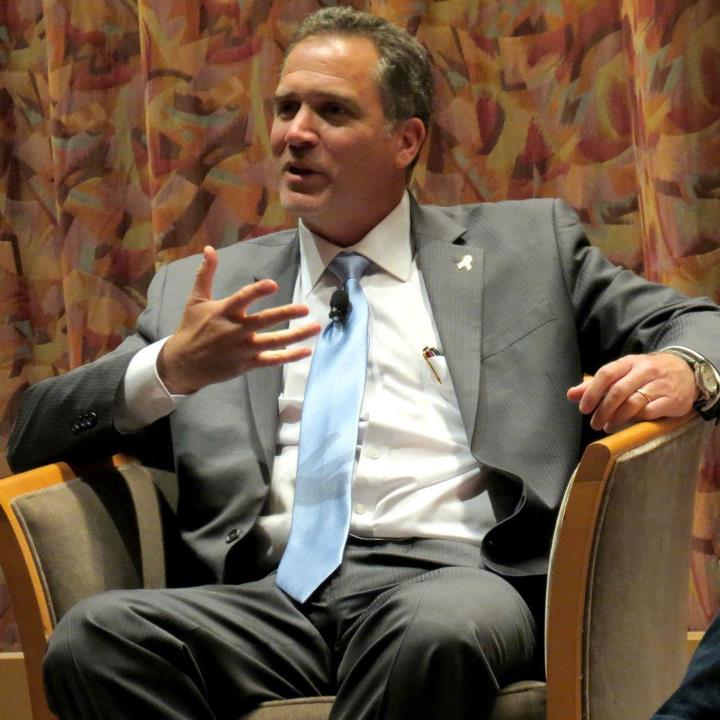
Breaking news/a good day for free speech: despite extensive efforts by the new Amcha Initiative to get Israeli historian Ilan Pappe booted from Cal State University campuses, where he is scheduled to speak next week, the presidents of Cal State Fresno, Cal State Northridge, and Cal Poly have taken a strong, unanimous stand in support of free speech on college campuses.
If you’re near any of these campuses, please go hear Ilan Pappe speak the week of February 20th. He’s a brave, important scholar whose analysis and insights are invaluable to understanding Israel and Palestine. He’s speaking at Cal State Northridge, Cal Poly in San Luis Obispo and Cal State Fresno.
In the attempt to censor Pappe, who is a Jewish Israeli, UC Santa Cruz Hebrew lecturer Tammy Rossman-Benjamin, under the aegis of her new group, “The Amcha Initiative: Protecting Jewish Students,” recently sent a letter to the president of the CSU system against Pappe and his CSU hosts. The letter is a prime example of doublespeak, emphasizing – using bold font and capital letters – that “are NOT asking that these three events be cancelled or that Ilan Pappe be censored.” (emphasis in original)
What, then, were they asking for? For the Cal State campuses and Cal Poly to “rescind all … sponsorship and support” from the Pappe events. What does that mean, exactly? Removing the events from campus and preventing the faculty from hosting Pappe in their official capacity. So no, that wouldn’t exactly be censoring Pappe – he could still speak off-campus, we presume – but it would surely be censoring the faculty who invited him, making a mockery of the freedom of intellectual inquiry and free speech that are so essential to college campuses.
(continued here)
Demonstration in commemoration of the killing of Mustafa Tamimi, Nabi Salih, West Bank (16 December 2011).
If we had a wish list for 2012 as Palestinians and friends of Palestine, one of the top items ought to be our hope that we can translate the dramatic shift in recent years in world public opinion into political action against Israeli policies on the ground.
We know why this has not yet materialized: the political, intellectual and cultural elites of the West cower whenever they even contemplate acting according to their own consciences as well as the wishes of their societies.
This last year was particularly illuminating for me in that respect. I encountered that timidity at every station in the many trips I took for the cause I believe in. And these personal experiences were accentuated by the more general examples of how governments and institutions caved in under intimidation from Israel and pro-Zionist Jewish organizations.
A catalogue of complicity
Of course there were US President Barack Obama’s pandering appearances in front of AIPAC, the Israeli lobby, and his administration’s continued silence and inaction in face of Israel’s colonization of the West Bank, siege and killings in Gaza, ethnic cleansing of the Bedouins in the Naqab and new legislation discriminating against Palestinians in Israel.
The complicity continued with the shameful retreat of Judge Richard Goldstone from his rather tame report on the Gaza massacre — which began three years ago today. And then there was the decision of European governments, especially Greece, to disallow campaigns of human aid and solidarity from reaching Gaza by sea.
On the margins of all of this were prosecutions in France against activists calling for boycott, divestment and sanctions (BDS) and a few u-turns by some groups and non-governmental organizations (NGOs) in Europe caving in under pressure and retracting an earlier decision to cede connections with Israel.
Learning firsthand how pro-Israel intimidation works
In recent years, I have learned firsthand how intimidation of this kind works. In November 2009 the mayor of Munich was scared to death by a Zionist lobby group and cancelled my lecture there. More recently, the Austrian foreign ministry withdrew its funding for an event in which I participated, and finally it was my own university, the University of Exeter, once a haven of security in my eyes, becoming frigid when a bunch of Zionist hooligans claimed I was a fabricator and a self-hating Jew.
Every year since I moved there, Zionist organizations in the UK and the US have asked the university to investigate my work and were brushed aside. This year a similar appeal was taken, momentarily one should say, seriously. One hopes this was just a temporary lapse; but you never know with an academic institution (bravery is not one of their hallmarks).
Standing up to pressure
But there were examples of courage — local and global — as well: the student union of the University of Surrey under heavy pressure to cancel my talk did not give in and allowed the event to take place.
The Episcopal Bishops Committee on Israel/Palestine in Seattle faced the wrath of many of the city’s synagogues and the Israeli Consul General in San Francisco, Akiva Tor, for arranging an event with me in September 2011 in Seattle’s Town Hall, but bravely brushed aside this campaign of intimidation. The usual charges of “anti-Semitism” did not work there — they never do where people refuse to be intimidated.
The outgoing year was also the one in which Turkey imposed military and diplomatic sanctions on Israel in response to the latter’s refusal to take responsibility for the attack on the Mavi Marmara. Turkey’s action was in marked contrast to the European and international habit of sufficing with toothless statements at best, and never imposing a real price on Israel for its actions.
Do not cave in to intimidation
I do not wish to underestimate the task ahead of us. Only recently did we learn how much money is channeled to this machinery of intimidation whose sole purpose is to silence criticism on Israel. Last year, the Jewish Federations of North America and the Jewish Council for Public Affairs — leading pro-Israel lobby groups — allocated $6 million to be spent over three years to fight BDS campaigns and smear the Palestine solidarity movement. This is not the only such initiative under way.
But are these forces as powerful as they seem to be in the eyes of very respectable institutions such as universities, community centers, churches, media outlets and, of course, politicians?
What you learn is that once you cower, you become prey to continued and relentless bashing until you sing the Israeli national anthem. If once you do not cave in, you discover that as time goes by, the ability of Zionist lobbies of intimidation around the world to affect you gradually diminishes.
Reducing the influence of the United States
Undoubtedly the centers of power that fuel this culture of intimidation lie to a great extent in the United States, which brings me to the second item on my 2012 wish list: an end to the American dominance in the affairs of Israelis and Palestinians. I know this influence cannot be easily curbed.
But the issue of timidity and intimidation belong to an American sphere of activity where things can, and should be, different. There will be no peace process or even Pax Americana in Palestine if the Palestinians, under whatever leadership, would agree to allow Washington to play such a central role. It is not as if US policy-makers can threaten the Palestinians that without their involvement there will be no peace process.
In fact history has proved that there was no peace process — in the sense of a genuine movement toward the restoration of Palestinian rights — precisely because of American involvement. Outside mediation may be necessary for the cause of reconciliation in Palestine. But does it have to be American?
If elite politics are needed — along with other forces and movements — to facilitate a change on the ground, such a role should come from other places in the world and not just from the United States.
One would hope that the recent rapprochement between Hamas and Fatah — and the new attempt to base the issue of Palestinian representation on a wider and more just basis — will lead to a clear Palestinian position that would expose the fallacy that peace can only be achieved with the Americans as its brokers.
Dwarfing the US role will disarm American Zionist bodies and those who emulate them in Europe and Israel of their power of intimidation.
Letting the other America play a role
This will also enable the other America, that of the civil society, the Occupy Wall Street movement, the progressive campuses, the courageous churches, African-Americans marginalized by mainstream politics, Native Americans and millions of other decent Americans who never fell captive to elite propaganda about Israel and Palestine, to take a far more central role in “American involvement” in Palestine.
That would benefit America as much as it will benefit justice and peace in Palestine. But this long road to redeeming all of us who want to see justice begins by asking academics, journalists and politicians in the West to show a modicum of steadfastness and courage in the face of those who want to intimidate us. Their bark is far fiercer than their bite.
The author of numerous books, Ilan Pappe is Professor of History and Director of the European Centre for Palestine Studies at the University of Exeter.
Alternate Focus interviews Nurit Peled-Elhanan, author of the forthcoming book Palestine in Israeli School Books: Ideology and Propaganda in Education. Nurit Peled-Elhanan argues that the textbooks used in the school system are laced with a pro-Israel ideology, and that they play a part in priming Israeli children for military service. She analyzes the presentation of images, maps, layouts and use of language in History, Geography and Civic Studies textbooks, and reveals how the books might be seen to marginalize Palestinians, legitimize Israeli military action and reinforce Jewish-Israeli territorial identity.
PULSE
An excerpt from my interview with Israeli journalist, Amira Hass for Guernica Magazine:
When it comes to her coverage of Palestinians, Israeli journalist Amira Hass is one of a kind. Yet she blends right in at the Canadian bus station where I pick her up. Vancouver is the second stop on the nationwide speaking tour organized for her by the advocacy group Canadians for Justice and Peace in the Middle East. She greets me with a warm smile and lifts her small but heavy bags into the trunk of the car. Hass is used to taking care of herself while traveling, doing it weekly as she navigates through Israeli military checkpoints while tracking a story or simply trying to visit a friend. Before I can help her with her bag, in fact, she helps me with mine. When she sees me struggling with my bag outside her lecture venue, she takes it from my shoulder, laughing, “I know. I do it too.”
Hass has worked for the Israeli daily newspaper Haaretz since 1989. She left her academic roots during the First Intifada and started her media career there as a copyeditor. A few months later, she convinced the paper to send her to Europe to cover the Romanian revolution. In Romania she proved her skills as a writer, and in 1993 her editors assigned her to Gaza. She had become familiar with the area while volunteering with a group that had her visiting Gazans to deliver money they were owed from Israeli employers who’d withheld their pay. It was during this time that her “romance” with Gaza began.
No one encouraged Hass to live in Gaza; in fact, she was specifically told not to. But determined to learn about the occupation from the inside, she moved there in 1993 and made a permanent home in the West Bank in 1997. This initiative made her the only Israeli journalist to live and work among Palestinians full-time.
For the past seventeen years Hass has reported extensively on Israel’s policies in the occupied territories, exposing their devastating effects on Palestinians. But the divided Palestinian leadership has not escaped her scrutiny either, and both governments have tried to impede her reporting using various intimidation tactics. But the unrelenting Hass has continued regular critiques, which she has collected in two books. She is regarded internationally as one of Israel’s most prominent journalists, and in 2009 she received a Lifetime Achievement Award from the International Women’s Media Foundation.
Hass was invited to Canada to lecture about Israel-Palestine. But unlike others who speak on the subject, she gives a different talk in each city and resists flashy rhetoric in favor of hard reporting. Prior to the lecture, while searching for a restaurant, she tells me she will not talk about the region’s basic history because the audience will likely be informed. So for forty-five minutes she speaks about the Israeli policy of “closure,” the ongoing fragmentation of Palestinian territory and the severing of Palestinian control of governing activities such as changing addresses or registering newborns. “It’s not like killing, but it affects everybody,” explains Hass. “If a baby is born in Gaza and is not registered with the Israeli Ministry of the Interior, that baby does not exist, it does not count,” she tells the audience. “I get very annoyed when my Palestinian friends complain, ‘Why didn’t they give me a permit, I am not a terrorist,’ because it is not about the person, it is about a policy that people can’t articulate because there is no discourse to explain the political intention behind it.”
Read more.