Magnified, sanctified Be the holy name Vilified, crucified In the human frame A million candles burning For the help that never came You want it darker
There is no single definition that defines all who identify themselevs as Jewish. Is Jewishness a religion? A gene? A culture? A nationality? A legal status? In the confusion of these overlapping and contradicting identities, modern Israel has forged its own unprecedented synthesis; a fusion of five elements never fully welded in Jewish history: religion, land, power, language, and sovereignty. The product of this Israeli crucible is a cultural mutation that dares to call itself Judaism.
At this moment in Israeli history, three of those elements; religion, power, and land, have metastasized into malignant growths. Power has become too great and is now wielded in service of the most pathological interpretations of Judaism, bent on conquest and domination. The immediate cost of this cancer is the unraveling of Israeli sovereignty. Power has been handed over to violent messianic militias; their gang leaders now serve as government ministers. Together, from the top and the bottom simultanously, they have dismantled the Israeli state. That country no longer exists.
These destructive elements were always present in the Jewish whole, but they were usually contained, marginalized, restrained. Today, after two thousand years, they have seized control and are implementing their darkest impulses. Every Jew must now confront two fundamental questions: What is my Jewish identity? And am I with them, or against them?
There is no middle ground. There mustn’t be.
To stand with them is to align oneself with the ruinous forces of our past. With those who launched a reckless and delusional revolt against the Roman Empire, bringing the destruction of the Second Temple and untold suffering upon our people. To stand with them is to embrace the biblical commandments of annihilation of the native nations and the myth of mass suicide at Masada. It is to follow a separatist, supremacist culture: a world where non-Jews are reviled, and Jews are chosen and exalted.
There are thick, unbroken lines stretching from Bar Kokhba’s hubris to Ben-Gvir’s thuggery; from Rabbi Akiva’s messianic madness to Smotrich’s crudity and zealotry. The lords of ruin in Jewish history never truly died and now they even kill.
But Judaism has always held within it another civilization. One rooted in introspection, critique, compassion, and moral action. The prophet Nathan stood before King David, Israel’s most powerful ruler, and indicted him for corruption and bloodshed. Centuries later, the prophet Jeremiah warned the decadent elites of Jerusalem of the looming First Temple’s destruction. In the year 70 CE, Rabbi Yochanan ben Zakkai fled the city of zealots and blood-lust and inaugurated the new alternative Judaism: a faith of worship without temple, of identity without territory, of strength without force, and of spiritual authority without political sovereignty.
This was the Judaism that later embraced Yiddish, the language Isaac Bashevis Singer once described as “the language of exile… a language without land and without borders, unsupported by any government, a language with no words for weapons, for ammunition, for military maneuvers or warfare tactics. In the ghettos, Yiddish speakers lived out what the great religions merely preached: a daily practice of studying humanity and human relations. What they called Torah, Talmud, ethics, and mysticism. The ghetto, far from just a refuge for the persecuted, was a grand experiment in peaceful living, self-meaning, and care for others. And it still survives, refusing to surrender, despite the cruelty that surrounds it”.
This inner tension in the Jewish soul is still alive. Between the forces of domination, bloodlust, and silencing of others, and that Judaism of tolerance, openness, and dialogue.
Now, a great moral exaltation is required of all who refuse to accept the dictatorship of power and corruption led by Caesar Netanyahu and his coalition of apocalyptic zealots.
Now is the time to walk out of the city, as Yohanan ben Zakkai did, and rekindle a Judaism of morality and humanity. We have no institutions, no vast resources. We are scattered, often alone. We possess no military or governmental power. But we do have the spiritual and ethical strength of our past. We have Jewish history on our side.
That is why we can and must stop the flow of blood.
Here is how we can begin: We need one million Jews. Less than ten percent of the global Jewish population to file a joint appeal to the International Court of Justicein The Hague. A collective legal complaint against the State of Israel for crimes against humanity committed in our name and under the false banner of our Jewish identity.
It is time to say: enough!
Two suns will rise on that day. One will shine within the Jewish firmament, casting light on our inner darkness and replacing fanaticism with moral clarity. The other will shine across the world, declaring that among Jews there are those who resemble the worst criminals of the nations and there are those who, without fear or favor, stand against them.
Yes, Hamas committed heinous crimes against humanity. But none of that justifies Israel’s actions in Gaza since.
This is a moment of reckoning. We must not run from it.
So this is my plea:
If you are an individual, a community, or a Jewish organization anywhere in the world, and you are shaken by what Israel is doing; if you align yourself with the values of humanistic Judaism, with basic moral decency and collective responsibility, join this historic initiative. Not by turning to weapons or power structures, but to the conscience of humanity. Turn to The Hague.
In our appeal, we shall declare: We will not allow the State of Israel, which systematically inflicts violence upon a civilian population, to speak in our name. We will not allow Judaism to be a cover for crimes. This is not a rejection of our people it is a defense of its soul. Not destruction but repair.
We are thousands, tens of thousands, hundreds of thousands. A million Jews who simply say: We are here, and we are against.
Conscientious individuals whose souls are stirred, thinkers, scholars, clergy, artists, jurists, the time is now. Connect. Sign. Organize. Raise the Jewish voice of moral resistance. The light exists. It only needs many candles.
I really hope activist readers will raise to this call and initiate it
Will hear the most ancient call -, “Where art thou?” and will respond like Leonard Cohen responded:
Spare me the selective outrage. Israel’s crimes against humanity didn’t just pop up on October 7th — they’ve been grinding on since before the land was even renamed “Israel.” Decades of stolen land, murdered civilians, and systemic oppression, apartheid. Hamas did exactly what resistance movements throughout history have done: fight the occupier and defend their people, the Palestinians. Viva Palestine!
We use necessary cookies to make our site work. With your consent, we also set performance and functionality cookies that help us make improvements by measuring traffic on our site and we process respective personal data. You can withdraw
A great part of the Israeli public has known all about the genocide in Gaza, delighted in this knowledge, and screamed for more – throughout this so-called ‘war’. Every image on social media of, for example, a girl in Gaza murdered by bombs or snipers, immediately elicits an enormous number of replies from Israelis shouting that this isn’t nearly enough, that they want to see all her sisters, cousins, schoolmates and neighbors also dead, that not a single child should be left alive. There is, indeed, an unfortunate tendency among the citizens of many countries to ignore or deny reports about atrocities committed by their armed forces; but this is absolutely not the main problem here in Israel.
The following post from The Daily Politik responds to the excuse now increasingly being offered, that “Most Israelis are not aware of what is going on in Gaza, and what is being done in their name”:
“Do you guys remember when Israel first cut off drinking water to Gaza in October 2023, and Israelis started making videos on social media of them wasting water? Leaving their taps running down the sink. And pouring clean water into the gutter while smiling at the camera and blowing kisses?
Or the ‘Pallywood’ video series, where Israelis posted videos on social media where they put flour and chalk on their faces and mocked Palestinians stuck under the rubble in Gaza?
Or the videos Israeli soldiers were sharing videos with their fellow Israelis of themselves blowing up Palestinian homes, mosques, universities, schools, water purification infrastructure, agricultural land, essential infrastructure etc?
Or the videos the tank driving battalions shared of them slowly rolling over and crushing the dead bodies of Palestinian children and their families in the streets, showing only callous disrespect for dead civilians. (Lots of war crimes caught on tape in this series)
Or the videos of Israeli soldiers destroying Palestinian homes, hanging little girls dolls by nooses for them to find if they ever return home, putting racist graffiti on the walls of their homes, looting their valuables, wearing the women’s lingerie. Not to mention the sniper targeting competitions seeing how many kids they can pick off – more points for babies hearts, smaller targets.
How can Israelis possibly even try to pretend that they had no idea of the depravity their own brothers and sisters and families were committing as members of the IDF. They cannot even try to feign ignorance on this, the world’s first broadcasted genocide. Even their news anchors and guests were calling for genocide. We have seen the social media videos they saw. And we knew as a result what was and is happening. So they certainly knew too!”
[I would just add to the examples mentioned in the text quoted above:
There were also the videos on TikTok in which Israeli mothers mocked the wailing of Gazan mothers over their dead children; Israeli children also participated in these videos, acting the roles of the dead children.
And there was the very recent trend among Israeli children and teens of making prank phone calls to the parents of their friends and other adult acquaintances, in which the prankster pretends to be someone who is collecting donations for the starving children of Gaza, and the person who receives the call inevitably responds furiously to such a request. The premise of this prank, on the part of the pranksters, is that any desire to help these starving children is both hilarious and infuriating].
Additional clarification/explanation: My purpose in this post is not to engage in useless moral denunciation. I’m just trying to spread the following message – only massive external pressure (arms embargoes, economic sanctions etc.) will put a stop to this genocide. You cannot rely on any moral awakening on the part of the Israeli public; you just have to continue demanding that your governments and all other institutions do whatever they can in applying sheer force. (Of course, all governments and most institutions in the West haven’t even begun doing this, and are thus totally complicit in the genocide).
Source facebook : a large part of this post is a quotation from “The Daily Politik“.
The power dynamics are similar as well: dozens of people against one driver, like the best-equipped army in the world against a helpless Gaza population
The far-right supporters group La Familia attending a Beitar Jerusalem match at Teddy Stadium. Credit: AHMAD GHARABLI / AFP
They kicked him and beat him, threw objects at him and butted him as he lay injured and helpless on the floor of the bus. A crowd of people stood around him: Some cheered, others were silent, and a few were stunned.
Like a model village, a scaled-down version that is strikingly similar. In Israel, the model drew more opposition than the original, but the war in Gaza is infinitely more brutal than the attack in Jerusalem.
The hooligan fans of the Beitar Jerusalem soccer team don’t need a reason to beat up an Arab bus driver who provides them with service, but this time they had one: Zahi Ahmed, an Arab player, had the audacity to score a goal against Beitar, helping his team, Hapoel Be’er Sheva, win the Israel State Cup in the final.
To Beitar’s hooligans, a goal by an Arab player, especially in the cup final, is almost October 7. It cannot be ignored. Like after October 7, an immediate response is necessary. The way they see it, the league should have been Arab-free long ago; the chutzpah of an Arab player scoring against the most Jewish team – in the cup final, to boot – could not go unanswered.
If you were stunned by the assault, how can you not be stunned by the war?
Both the assault and the war had a pretext. Not that one can even begin to compare the horrors of October 7 to a soccer goal, but neither can two injured bus drivers be compared to a thousand dead babies. October 7 was a horrific crime. In the eyes of La Familia, an ultra group that supports Beitar, an Arab scoring a goal against a Jewish team is also a crime that cannot be brushed aside.
Beitar Jerusalem assaulting an Arab bus driver in Jerusalem on Thursday.
From here on out, the similarity only increases. In both cases, the response was unlawful, illegitimate and completely disproportionate. Calling the war in Gaza a just war – “the most just war in our history” – is as crazy as saying the Beitar fans had a reason for beating up the drivers. These drivers have as much of a connection to Beitar’s loss as the children of Gaza do to October 7.
To say that the objective of the war is to free the hostages and defeat Hamas is as ridiculous as thinking that assaulting a bus driver will prevent Arab players from scoring goals. The hooligans thought to deter players by assault, and Israel thinks it will deter Gaza by genocide. The thirst for revenge is also similar.
In both cases, there was no restraint, neither legal nor moral. Beating without mercy is like bombing and shelling without mercy. In both cases, most of the victims are innocent. The power dynamics are also similar: dozens of people against one driver, like the best-equipped army in the world against a helpless population. A brutal assault on Gaza. Bombing and shelling it, even when it is already lying on the ground, sick, hungry and bleeding, just like kicking the driver as he lies bruised and bleeding.
The assaults were not the first of their kind in Jerusalem, nor will they be the last; according to the Bus Drivers Union, every day there are at least two attacks on Arab drivers in Jerusalem. The current attack on Gaza is also not the first, of course, nor the last.
As for the surrounding crowd. “Oh, Oh,” the bystanders shout, whether in shock or excitement. No one came to the drivers’ defense, not even a single righteous person in Jerusalem. The two drivers won’t recover quickly from the trauma, and it’s doubtful they’ll ever be able to drive a bus in this fascist city again. Gaza won’t recover either. It will remain forever stunned by what Israel has done to it.
Look at the assaults in Jerusalem and see Israel; look at the passive bystanders shouting “Oh, Oh” – and see us, almost every one of us
We were ordered to burn the house; I notified them that I was not willing to comply. I left Gaza and never returned
Yuval Green, Haaretz, March 21 2025
Like many Israelis, I enlisted in the military out of a sense of loyalty to the state and a willingness to sacrifice. After a challenging combat service, I continued to serve as a reserve soldier. On October 7th, I was called, along with my comrades, to defend the borders of the country. That very evening, I arrived at the supply warehouses of my reserve unit. There, we received old and faulty equipment and witnessed how the military, on which we relied, failed to prepare for an extreme scenario.
In the following days, we entered the affected settlements around the Gaza Strip. I saw the deserted paths of Gaza villages, corpses lying in them, cars riddled with bullets, destroyed homes.
After the first days of the war, my unit entered a period of waiting and training. During that time, doubts began to take root in me. I believed that Israel’s primary commitment should be toward the hostages, who had been taken cruelly from their homes due to the security failure. I thought that there was no military solution to the hostage problem.
It was clear to me that military action in Gaza was endangering the lives of the hostages. At the same time, I assumed that Hamas would be willing to sign a deal — after all, they kidnapped the people to free prisoners in Israel. Moreover, after the terrible disaster we experienced on October 7th, I thought that the last thing we needed was more fallen soldiers.
Beyond the consequences of the war for us, Israelis, I watched in pain what was happening in Gaza. Already in the early days of the war, there were thousands of casualties, thousands of destroyed homes, displaced persons, suffering, and pain.
Despite my doubts, I chose to enter Gaza with my comrades. I did this because, as a platoon medic, I felt a strong sense of commitment to them. Furthermore, at that time, I still struggled to know what the right thing was — maybe I am wrong? Maybe the way to bring back the hostages does go through military action?
A few days after we entered Gaza, in early December 2023, I heard a news report on the radio stating that Israel was refusing to end the war in order to bring back the hostages. This news devastated me. My motivation for service was shaken even more. Still, my sense of duty as a medic kept me in Gaza.
A few weeks later, 50 days after entering Gaza, we received an order from our company commander: after we leave the house we are staying in, we must burn it. The order left me in shock. I asked the commander why we were burning the house. His first response — which, in my eyes, exemplifies the indifference to Palestinian lives — I will never forget: “We are burning the house because we don’t have a D9 bulldozer available.” After I insisted on understanding, he added: “We burn every house we leave.” My requests to reconsider the act went unanswered, and that evening, around four buildings were burned in Khan Yunis. I witnessed those fires, the black smoke. How many families lost their homes that evening?
I informed my commander that I was not willing to cooperate with this action, and I was leaving the fighting. I set a clear moral boundary in the face of immoral actions. I left Gaza in the first supply vehicle and never returned, five days before my unit withdrew from the fighting.
The commentators in the studios engage in debates about “total victory” or the “collapse of Hamas.” I don’t know the military situation of Hamas, but I know one thing — it doesn’t matter at all. The reasons that led to the rise of Hamas in Gaza are the same reasons that led to the rise of the fedayeen in the 1950s and the rise of the PLO in the 1960s. Without a political settlement, when the Palestinians are under our control, they will always rise against us, carry out attacks, and fight. Even if Hamas is eradicated, another movement will rise in its place.
This war, despite being sold to us as a change in the reality of the Middle East, in fact entrenches exactly the same reality. Another waste of blood, more killing, leading to more violent opposition, which leads to more killing.
The war in Gaza continues primarily because of a rotten and corrupt political culture, where cynical and unworthy politicians are dragged into a messianic struggle led by religious fanatics, who view settling the land as a higher value than human life.
I believe that Israeli culture, which blindly elevates military service above any other human value, is what allows extremists to lead us down this path. I see many people around me who recognize reality as I see it. They understand that the military pressure is killing the hostages, understand that the war is killing soldiers, understand that we are fighting mainly due to pressure from extreme elements. But they continue to show up for service. They don’t connect their military service with the continuation of the war.
We are often accused, those of us who refuse to participate in the war, of harming the army and thereby endangering the security of the state. However, I believe that in a country walking the path of fascism, where ending the war is seen as a “painful concession” in negotiations, there will never be enough soldiers. Even if we recruit all the yeshiva students, send all the youth to the front, and even mobilize the Arab population, there will always be more land to conquer in Syria, another enclave in the West Bank to seize.
In my opinion, strengthening the security of the state lies in a firm opposition to the war that endangers our soldiers, harms our economy, kills many Palestinians, and thus sows deep seeds of hatred — and of course, abandons our brothers and sisters in captivity.
My comrades and I in the organization “Soldiers for Hostages” declared that we will not be willing to continue cooperating with the abandonment of the hostages. If the government does not change course, we will not continue to serve. In such an extreme political climate, our role has become more important than ever. In recent months, since the publication of our letter in an article by Liza Rozovsky (“Haaretz”, 9.10.2024), we have received significant responses that indicate how much our movement is troubling the leadership. This, despite the fact that at the time of publication, we were only 130 soldiers. The Prime Minister addressed our group in a cabinet meeting and said about us: “They’ve lost their national compass.” In addition, each signatory of the letter received a personal phone call from their battalion or brigade commander, demanding they remove their signature.
It is important to clarify that we, the signatories of the letter, now more than 200 soldiers, are neither deserters nor evaders. Among us are fighters and officers who fought in Gaza and Lebanon. We choose this path not out of a desire to evade our duties and not because of the burden of reserve duty, but precisely because of our deep commitment to the state.
Just as we were willing to risk ourselves, strive, and fight in battle, today we believe we must give of ourselves to stand up to social pressure. We do this because we think it’s time to draw a red line for the war.
My old office in Gaza is a pile of rubble. The streets around it, where I went for a coffee, ordered maftool or manakish, had a haircut, are flattened. Friends and colleagues are dead, or more often have vanished, last heard from weeks or months ago, no doubt buried somewhere under the broken slabs of concrete. The uncounted dead. In the tens perhaps hundreds of thousands.
Gaza is a wasteland of 50 million tons of rubble and debris. Rats and dogs scavenge amid the ruins and fetid pools of raw sewage. The putrid stench and contamination of decaying corpses rises from beneath the mountains of shattered concrete. There is no clean water. Little food. A severe shortage of medical services and hardly any habitable shelters. Palestinians risk death from unexploded ordnance, left behind after over 15 months of air strikes, artillery barrages, missile strikes and blasts from tank shells, and a variety of toxic substances, including pools of raw sewage and asbestos.
Hepatitis A, caused by drinking contaminated water, is rampant, as are respiratory ailments, scabies, malnutrition, starvation and the widespread nausea and vomiting caused by eating rancid food. The vulnerable, including infants and the elderly, along with the sick, face a death sentence. Some 1.9 million people have been displaced, amounting to 90 percent of the population. They live in makeshift tents, encamped amid slabs of concrete or the open air. Many have been forced to move over a dozen times. Nine in 10 homes have been destroyed or damaged. Apartment blocks, schools, hospitals, bakeries, mosques, universities — Israel blew up Israa University in Gaza City in a controlled demolition — cemeteries, shops and offices have been obliterated. The unemployment rate is 80 percent and the gross domestic product has been reduced by almost 85 percent, according to an October 2024 report issued by the International Labor Organization.
Israel’s banning of the United Nations Relief and Works Agency for Palestine Refugees in the Near East — which estimates that clearing Gaza of the rubble left behind will take 15 years — and blockage of aid trucks into Gaza ensures that Palestinians in Gaza will never have access to basic humanitarian supplies, adequate food and services.
The United Nations Development Program estimates that it will cost between $40 billion and $50 billion to rebuild Gaza and will take, if the funds are made available, until 2040. It would be the largest post-war reconstruction effort since the end of World War Two.
Israel, supplied with billions of dollars of weapons from the U.S. Germany, Italy and the U.K., created this hell. It intends to maintain it. Gaza is to remain under siege. Gaza’s infrastructure will not be restored. Its basic services, including water treatment plants, electricity and sewer lines, will not be repaired. Its destroyed roads, bridges and farms will not be rebuilt. Desperate Palestinians will be forced to choose between living like cave dwellers, camped out amid jagged chunks of concrete, dying in droves from disease, famine, bombs and bullets, or permanent exile. These are the only options Israel offers.
Israel is convinced, probably correctly, that eventually life in the coastal strip will become so onerous and difficult, especially as Israel finds excuses to violate the ceasefire and resume armed assaults on the Palestinian population, a mass exodus will be inevitable. It has refused, even with the ceasefire in place, to permit foreign press into Gaza, a ban designed to blunt coverage of the horrendous suffering and mass death.
Stage Two of Israel’s genocide and the expansion of “Greater Israel” — which includes the seizing of more Syrian territory in the Golan Heights (as well as calls for expansion to Damascus), southern Lebanon, Gaza and the occupied West Bank, where some 40,000 Palestinians have been driven from their homes — is being cemented into place. Israeli organizations, including the far right Nachala organization, have held conferences to prepare for Jewish colonization of Gaza once Palestinians are ethnically-cleansed. Jewish-only colonies existed in Gaza for 38 years until they were dismantled in 2005.
Washington and its allies in Europe do nothing to halt the live-streamed genocide. They will do nothing to halt the wasting away of Palestinians in Gaza from hunger, disease and bombs and their eventual depopulation. They are partners in this genocide. They will remain partners until the genocide reaches its grim conclusion.
But the genocide in Gaza is only the start. The world is breaking down under the onslaught of the climate crisis, which is triggering mass migrations, failed states and catastrophic wildfires, hurricanes, storms, flooding and droughts. As global stability unravels, industrial violence, which is decimating the Palestinians, will become ubiquitous. These assaults will be committed, as they are in Gaza, in the name of progress, Western civilization and our supposed “virtues” to crush the aspirations of those, mostly poor people of color, who have been dehumanized and dismissed as human animals.
Israel’s annihilation of Gaza marks the death of a global order guided by internationally agreed upon laws and rules, one often violated by the U.S. in its imperial wars in Vietnam, Iraq and Afghanistan, but one that was at least acknowledged as a utopian vision. The U.S. and its Western allies not only supply the weaponry to sustain the genocide, but obstruct the demand by most nations for an adherence to humanitarian law.
The message this sends is clear: We have everything. If you try and take it away from us we will kill you.
The militarized drones, helicopter gunships, walls and barriers, checkpoints, coils of concertina wire, watch towers, detention centers, deportations, brutality and torture, denial of entry visas, apartheid existence that comes with being undocumented, loss of individual rights and electronic surveillance are as familiar to the desperate migrants along the Mexican border or attempting to enter Europe as they are to the Palestinians.
Israel, which as Ronen Bergman notes his book “Rise and Kill First” in has “assassinated more people than any other country in the Western world,” employs the Nazi Holocaust to sanctify its hereditary victimhood and justify its settler-colonial state, apartheid, campaigns of mass slaughter and Zionist version of Lebensraum.
Primo Levi, who survived Auschwitz, saw the Shoah, for this reason, as “an inexhaustible source of evil” which “is perpetrated as hatred in the survivors, and springs up in a thousand ways, against the very will of all, as a thirst for revenge, as moral breakdown, as negation, as weariness, as resignation.”
Genocide and mass extermination are not the exclusive domain of fascist Germany. Adolf Hitler, as Aimé Césaire writes in “Discourse on Colonialism,” appeared exceptionally cruel only because he presided over “the humiliation of the white man.” But the Nazis, he writes, had simply applied “colonialist procedures which until then had been reserved exclusively for the Arabs of Algeria, the coolies of India, and the blacks of Africa.”
The German slaughter of the Herero and Namaqua, the Armenian genocide, the Bengal famine of 1943 — then British Prime Minister Winston Churchill airily dismissed the deaths of three million Hindus in the famine by calling them “a beastly people with a beastly religion” — along with the dropping of nuclear bombs on the civilian targets of Hiroshima and Nagasaki, illustrate something fundamental about “western civilization.”
The moral philosophers who make up the western canon – Immanuel Kant, Voltaire, David Hume, John Stuart Mill and John Locke – as Nicole R. Fleetwood points out, excluded enslaved and exploited people, indigenous peoples, colonized people, women of all races and the criminalized from their moral calculus. In their eyes European whiteness alone imparted modernity, moral virtue, judgment and freedom. This racist definition of personhood played a central role in justifying colonialism, slavery, the genocide of Native Americans, our imperial projects and our fetish for white supremacy. So when you hear that the western canon is an imperative, ask yourself — for whom?
“In America,” the poet Langston Hughes said, “Negros do not have to be told what fascism is in action. We know. Its theories of Nordic supremacy and economic suppression have long been realities to us.”
The Nazis, when they formulated the Nuremberg laws, modeled them on our Jim Crow-era segregation and discrimination laws. Our refusal to grant citizenship to Native Americans and Filipinos, although they lived in the U.S. and U.S. territories, was copied to strip citizenship from Jews. Our anti-miscegenation laws, which criminalized interracial marriage, was the impetus to outlaw marriages between German Jews and Aryans. American jurisprudence, which determined who belonged to which race, classified anyone with one percent of Black ancestry, the so called “one drop rule,” as Black. The Nazis, ironically showing more flexibility, classified anyone with three or more Jewish grandparents as Jewish.
Fascism was quite popular in the U.S. in the 1920s and 1930s. The Ku Klux Klan, mirroring the fascist movements sweeping through Europe, experienced a huge revival in the 1920s. Nazis were embraced by American eugenicists, who lauded the Nazi goal of racial purity, and disseminated Nazi propaganda. Charles Lindberg, who accepted a swastika medal from the Nazi Party in 1938, along with the evangelist Gerald B. Winrod’s pro—Hitler Defenders of the Christian Faith, William Dudley Pelley’s Silver Shirts (the initials SS were intentional) and the veteran-based Khaki Shirts were just a few of our openly fascist organizations.
The idea that America is a defender of democracy, liberty and human rights would come as a huge surprise to those Frantz Fanon called “the wretched of the earth” who saw their democratically elected governments subverted and overthrown by the United States in Panama (1941), Syria (1949), Iran (1953), Guatemala (1954), Congo (1960), Brazil (1964), Chile (1973), Honduras (2009) and Egypt (2013). And this list does not include a host of other governments that, however despotic, as was the case in South Vietnam, Indonesia or Iraq, were viewed as inimical to American interests and destroyed, in each case inflicting death and immiseration on millions.
Empire is the external expression of white supremacy.
But antisemitism alone did not lead to the Shoah. It needed the innate genocidal potential of the modern bureaucratic state.
The millions of victims of racist imperial projects in countries such as Mexico, China, India, the Congo and Vietnam, for this reason, are deaf to the fatuous claims by Jews that their victimhood is unique. So are Black, Brown and Native Americans. They also suffered holocausts, but these holocausts remain minimized or unacknowledged by their western perpetrators.
Israel embodies the ethnonationalist state the far-right in the U.S. and Europe dreams of creating for themselves, one that rejects political and cultural pluralism, as well as legal, diplomatic and ethical norms. Israel is admired by these proto-fascists, including Christian nationalists, because it has turned its back on humanitarian law to use indiscriminate lethal force to “cleanse” its society of those condemned as human contaminants. Israel is not an outlier, but expresses our darkest impulses, ones being turbo-charged by the Trump administration.
I covered the birth of Jewish fascism in Israel. I reported on the extremist Meir Kahane, who was barred from running for office and whose Kach Party was outlawed in 1994 and declared a terrorist organization by Israel and the United States. I attended political rallies held by Benjamin Netanyahu, who received lavish funding from rightwing Americans, when he ran against Yitzhak Rabin, who was negotiating a peace settlement with the Palestinians. Netanyahu’s supporters chanted “Death to Rabin.” They burned an effigy of Rabin dressed in a Nazi uniform. Netanyahu marched in front of a mock funeral for Rabin.
Prime Minister Rabin was assassinated on Nov. 4, 1995 by a Jewish fanatic. Rabin’s widow, Lehea, blamed Netanyahu and his supporters for her husband’s murder.
Netanyahu, who first became prime minister in 1996, has spent his political career nurturing Jewish extremists, including Avigdor Lieberman, Gideon Sa’ar, Naftali Bennett, and Ayelet Shaked. His father, Benzion — who worked as an assistant to the Zionist pioneer Vladimir Jabotinsky, who Benito Mussolini referred to as “a good fascist” — was a leader in the Herut Party that called on the Jewish state to seize all the land of historic Palestine. Many of those who formed the Herut Party carried out terrorist attacks during the 1948 war that established the state of Israel. Albert Einstein, Hannah Arendt, Sidney Hook and other Jewish intellectuals, described the Herut Party in a statement published in The New York Times as a “political party closely akin in its organization, methods, political philosophy and social appeal to Nazi and Fascist parties.”
There has always been a strain of Jewish fascism within the Zionist project, mirroring the strain of fascism in American society. Unfortunately, for us, the Israelis and the Palestinians these fascistic strains are ascendant.
“The left is no longer capable of overcoming the toxic ultra-nationalism that has evolved here,” Zeev Sternhell, a Holocaust survivor and Israel’s foremost authority on fascism, warned in 2018, “the kind whose European strain almost wiped out a majority of the Jewish people.” Sternhell added, “[W]e see not just a growing Israeli fascism but racism akin to Nazism in its early stages.”
The decision to obliterate Gaza has long been the dream of far right Zionists, heirs of Kahane’s movement. Jewish identity and Jewish nationalism are the Zionist versions of the Nazi’s blood and soil. Jewish supremacy is sanctified by God, as is the slaughter of the Palestinians, who Netanyahu compared to the Biblical Amalekites, massacred by the Israelites. Euro-American settlers in the American colonies used the same Biblical passage to justify the genocide against Native Americans. Enemies — usually Muslims — slated for extinction are subhuman who embody evil. Violence and the threat of violence are the only forms of communication those outside the magical circle of Jewish nationalism understand. Those outside this magic circle, including Israeli citizens, are to be purged.
Messianic redemption will take place once the Palestinians are expelled. Jewish extremists call for the Al-Aqsa mosque – the third holiest shrine for Muslims, built on the ruins of the Jewish Second Temple, which was destroyed in 70 CE by the Roman army – to be demolished. The mosque is to be replaced by a “Third” Jewish temple, a move that would set the Muslim world alight. The West Bank, which the zealots call “Judea and Samaria,” will be formally annexed by Israel. Israel, governed by the religious laws imposed by the ultra-orthodox Shas and United Torah Judaism parties, will become a Jewish version of Iran.
There are over 65 laws which discriminate directly or indirectly against Palestinian citizens of Israel and those living in the occupied territories. The campaign of indiscriminate killing of Palestinians in the West Bank, many by rogue Jewish militias who have been armed with 10,000 automatic weapons, along with house and school demolitions and the seizure of remaining Palestinian land is exploding.
Israel, at the same time, is turning on “Jewish traitors” who refuse to embrace the demented vision of the ruling Jewish fascists and who denounce the horrific violence of the state. The familiar enemies of fascism — journalists, human rights advocates, intellectuals, artists, feminists, liberals, the left, homosexuals and pacifists — are targeted. The judiciary, according to plans put forward by Netanyahu, will be neutered. Public debate will wither. Civil society and the rule of law will cease to exist. Those branded as “disloyal” will be deported.
The zealots in power in Israel could have exchanged the hostages held by Hamas for the thousands of Palestinian hostages held in Israeli prisons, which is why the Israeli hostages were seized. And there is evidence that in the chaotic fighting that took place once Hamas militants entered Israel, the Israeli military decided to target not only Hamas fighters, but the Israeli captives with them, killing perhaps hundreds of their own soldiers and civilians.
Israel and its western allies, James Baldwin saw, is headed towards the “terrible probability” that the dominant nations “struggling to hold on to what they have stolen from their captives, and unable to look into their mirror, will precipitate a chaos throughout the world which, if it does not bring life on this planet to an end, will bring about a racial war such as the world has never seen.”
I know the killers. I met them in the dense canopies in the war in El Salvador and Nicaragua. It was there that I first heard the single, high-pitched crack of the sniper bullet. Distinct. Ominous. A sound that spreads terror. Army units I traveled with, enraged by the lethal accuracy of rebel snipers, set up heavy .50 caliber machine guns and sprayed the foliage overhead until a body, a bloodied and mangled pulp, dropped to the ground.
I saw them at work in Basra in Iraq and of course Gaza, where on a fall afternoon at the Netzarim Junction, an Israeli sniper shot dead a young man a few feet away from me. We carried his limp body up the road.
I lived with them in Sarajevo during the war. They were only a few hundred yards away, perched in high rises that looked down on the city. I witnessed their daily carnage. At dusk, I saw a Serb sniper fire a round in the gloom at an old man and his wife bent over their tiny vegetable plot. The sniper missed. She ran, haltingly, for cover. He did not. The sniper fired again. I concede the light was fading. It was hard to see. Then, the third time, the sniper killed him. This is one of those memories of war I see in my head over and over and over and do not like to talk about. I watched it from the back of the Holiday Inn, but by now I have seen it, or the shadows of it, hundreds of times.
These killers targeted me, too. They struck down colleagues and friends. I was in their sights traveling from northern Albania into Kosovo with 600 fighters from the Kosovo Liberation Army, each insurgent carrying an extra AK-47 to hand off to a comrade. Three shots. That crisp crack, too familiar. The sniper must have been far away. Or maybe the sniper was a bad shot, although the bullets came close. I scrambled for cover behind a rock. My two bodyguards bent over me, panting, the green pouches strapped to their chests packed full of grenades.
I know how killers talk. The black humor. “Pint sized terrorists” they say of Palestinian children. They are proud of their skills. It gives them cachet. They cradle their weapon as if it is an extension of their body. They admire its despicable beauty. This is who they are. Their identities. Killers.
In the hypermasculine culture of Israel and our own emergent fascism killers, lauded as exemplars of patriotism, are respected, rewarded, promoted. They are numb to the suffering they inflict. Maybe they enjoy it. Maybe they think they are protecting themselves, their identity, their comrades, their nation. Maybe they believe the killing is a necessary evil, a way to make sure Palestinians die before they can strike. Maybe they have surrendered their morality to the blind obedience of the military, subsumed themselves into the industrial machinery of death. Maybe they are scared to die. Maybe they want to prove to themselves and others that they are tough, they can kill. Maybe their mind is so warped that they believe killing is righteous.
They, like all killers, are intoxicated by the god-like power to revoke another person’s charter to live on this earth. They revel in the intimacy of it. They see in fine detail through the telescopic sight,the nose and mouth of their victims. The triangle of death. They hold their breath. They pull slowly, gently on the trigger. And then the pink puff. Severed spinal cord. It is over.
They are numb and cold. But it does not last. I covered war for a long time. I know, even if they do not, the next chapter of their lives. I know what happens when they leave the embrace of the military, when they are no longer a cog in these factories of death. I know the hell they enter.
It starts like this. All the skills they acquired as a killer on the outside are useless. Maybe they go back. Maybe they become a gun for hire. But this only delays the inevitable. They can run, for a while, but they cannot run forever. There will be reckoning. And it is the reckoning I will tell you about.
They will face a choice. Live the rest of their life, stunted, numb, cut off from themselves, cut off from those around them. Descend into a psychopathic fog, trapped in the absurd, interdependent lies that justify mass murder. There are killers, years later, who say they are proud of their work, who claim not a moment’s regret. But I have not been inside their nightmares. If this is the route they take they will never again truly live.
Of course, they do not talk about what they did to those around them, certainly not to their families. They are feted as heroes. But they know, even if they do not say it, that this is a lie. The numbness, usually, wears off. They look in the mirror, and if they have any shred of conscience left, their reflection disturbs you. They repress the bitterness. They escape down the rabbit hole of opioids and, like my uncle, who fought in the South Pacific in World War II, alcohol. Their intimate relationships, because they cannot feel, because they bury their self-loathing, disintegrate. This escape works. For a while. But then they go into such darkness that the stimulants used to blunt the pain begin to destroy them. And maybe that is how they die. I have known many who died like that. And I have known those who ended it quickly. A gun to the head.
I have trauma from war. But the worst trauma I do not have. The worst trauma from war is not what you saw. It is not what you experienced. The worst trauma is what you did. They have names for it. Moral injury. Perpetrator Induced Traumatic Stress. But that seems tepid given the hot, burning coals of rage, the night terrors, the despair. Those around them know something is terribly, terribly wrong. They fear this darkness. But they not let others into their labyrinth of pain.
And then, one day, they reach out for love. Love is the opposite of war. War is about death. It is about smut. It is about turning other human beings into objects, maybe sexual objects, but I also mean this literally, for war turns people into corpses. Corpses are the end products of war, what comes off its assembly line. So, they want love, but death has made a Faustian bargain. It is this. It is the hell of not being able to love. They carry this death inside them for the rest of their lives. It corrodes their souls. Yes. We have souls. They sold theirs. The cost is very, very high. It means that what they want, what they most desperately need in life, they cannot attain.
They spend days wanting to cry and not knowing why. They are consumed by guilt. They believe that because of what they did, the life a son or daughter or someone they love is in danger. Divine retribution. They tell themselves this is absurd, but they believe it anyway. They start to include little offerings of goodness to others as if these offerings will appease a vengeful god, as if these offerings will save someone they care about from harm, from death. But nothing wipes away the stain of murder.
They are overwhelmed with sorrow. Regret. Shame. Grief. Despair. Alienation. They face an existential crisis. They know that all the values they were taught to honor in school, at worship, at home, are not the values they upheld. They hate themselves. They do not say this out loud.
Shooting unarmed people is not bravery. It is not courage. It is not even war. It is a crime. It is murder. And Israel runs an open-air shooting gallery in Gaza and the West Bank as we did in Iraq and Afghanistan. Total impunity. Murder as sport.
It is exhausting trying to ward off these demons. Maybe they will make it. Being human again. But that will mean a life of contrition. It will mean making the crimes public. It will mean begging for forgiveness. It will mean forgiving themselves. This is very hard. It will mean orientating every aspect of their lives to nurturing life rather than extinguishing it. This is the only hope for salvation. If they do not take it, they are damned.
We must see through the empty jingoism of those who use the abstract words of glory, honor, and patriotism to mask the cries of the wounded, the senseless killing, war profiteering, and chest-pounding grief. We must see through the lies the victors often do not acknowledge, the lies covered up in stately war memorials and mythic war narratives, filled with stories of courage and comradeship. We must see through the lies that permeate the thick, self-important memoirs by amoral statesmen who make wars but do not know war. War is necrophilia. War is a state of almost pure sin with its goals of hatred and destruction. War fosters alienation, leads inevitably to nihilism, and is a turning away from the sanctity and preservation of life. All other narratives about war too easily fall prey to the allure and seductiveness of violence, as well as the attraction of the godlike power that comes with the license to kill with impunity.
The truth about war comes out, but usually too late. We are assured by the war-makers that these stories have no bearing on the glorious violent enterprise the nation is about to inaugurate. And, lapping up the myth of war and its sense of empowerment, we prefer not to look.
We must find the courage to name our darkness and repent. This willful blindness and historical amnesia, this refusal to be accountable to the rule of law, this belief that we have a right to use industrial violence to exert our will marks, I fear, the start, not the end, of campaigns of mass slaughter by the Global North against the world’s growing legions of the poor and the vulnerable. It is the curse of Cain. And it is curse we must remove before the genocide in Gaza becomes not an anomaly but the norm.
Pressured into removing a humanising portrait of Gaza’s children, the BBC offers instead a series on Israel-Palestine that frantically revives the very narrative that made the genocide possible
There has been a prolonged furore over the BBC’s craven decision to ban a documentary on life in Gaza under Israel’s bombs after it incensed Israel and its lobbyists by, uniquely, humanising the enclave’s children.
The English-speaking child narrator, 13-year-old Abdullah, who became the all-too-visible pretext for pulling the film Gaza:How to Survive a Warzone because his father is a technocrat in the enclave’s Hamas government, hit back last week.
He warned that the BBC had betrayed him and Gaza’s other children, and that the state broadcaster would be responsible were anything to happen to him.
His fears are well-founded, given that Israel has a long track record of executing those with the most tenuous of connections to Hamas – as well as the enclave’s children, often with small, armed drones that swarm through its airspace.
The noisy clamour over How to Survive a Warzone has dominated headlines, overshadowing another new BBC documentary on Gaza – this one a three-part, blockbuster series on the history of Israel and Palestine – that has received none of the controversy.
And for good reason.
Israel and the Palestinians: The Road to 7th October, whose final episode airs this Monday, is such a travesty, so discredited by the very historical events it promises to explain, that it earns a glowing, five-star review from the Guardian.
It “speaks to everyone that matters”, the liberal daily gushes. And that’s precisely the problem
What we get, as a result, is the very worst in BBC establishment TV: talking heads reading from the same implausibly simplistic script, edited and curated to present western officials and their allies in the most sympathetic light possible.
Which is no mean feat, given the subject matter: nearly eight decades of Israel’s ethnic cleansing, dispossession, military occupation and siege of the Palestinian people, supported by the United States.
But this documentary series on the region’s history should be far more controversial than the film about Gaza’s children. Because this one breathes life back into a racist western narrative – one that made the genocide in Gaza possible, and justifies Israel’s return this month to using mass starvation as a weapon of war against the Palestinian people.
‘Honest broker’ fiction
The Road to 7th October presents an all-too-familiar story.
The Palestinians are divided geographically and ideologically – how or why is never properly grappled with – between the incompetent, corrupt leadership of Fatah under Mahmoud Abbas in the West Bank, and the militant, terrorist leadership of Hamas in Gaza.
Israel tries various peace initiatives under leaders Ariel Sharon and Ehud Olmert. These failures propel the more hardline Benjamin Netanyahu to power.
The United States is the star of the show, of course. Its officials tell a story of Washington desperately trying to bring together the two parties, Israel and Fatah (the third party, Hamas, is intentionally sidelined), but finds itself constantly hamstrung by bad luck and the intransigence of those involved.
Yes, you read that right. This documentary really does resurrect the Washington as “honest broker” fiction – a myth that was supposed to have been laid to rest a quarter of a century ago, after the Oslo accords collapsed.
The film-makers are so lost to the reality in Israel and Palestine that they imagine they can credibly keep Washington perched on a pedestal even after we have all spent the past 16 months watching, first, President Biden arm Israel’s “plausible” genocide in Gaza, killing many tens of thousands of Palestinians, and then President Trump formulate an illegal plan to ethnically cleanse the enclave of its surviving Palestinian population to develop it as a luxury “waterfront property”.
A viewing of a short, Trump-endorsed, AI-generated promo video for a glitzy, Palestinian-free “Trump Gaza”, built on the crushed bodies of the enclave’s children, should be enough to dispel any remaining illusions about Washington’s neutrality on the matter.
Enduring mystery
This documentary, like its BBC predecessors – most notably on Russia and Ukraine, and the implosion of Yugoslavia – excels at offering a detailed examination of tree bark without ever stepping back far enough to see the shape of the forest.
The words “apartheid”, “siege” and “colonialism” – the main lenses through which one can explain what has been happening to the Palestinian people for a century or more – do not figure at all.
There is a single allusion to the events of 1948, when a self-declared Jewish state was violently founded as a colonial project on the ruins of the Palestinians’ homeland.
Or as the documentary delicately puts it: “Millions of their people [the Palestinians] had been made refugees by decades of conflict.”
As ever, when the plight of the Palestinians is discussed, the passive voice is put to sterling use. Millions of Palestinians were accidentally ethnically cleansed, it seems. Who was responsible is a mystery.
In fact, most of Gaza’s population are descended from Palestinian families expelled by the newly declared state of Israel from their homes in 1948. They were penned up in a tiny piece of land by European colonisers in the same manner as earlier generations of European colonisers confined the Native Americans to reservations.
Even when the term “occupation” appears, as it does on the odd occasion, it is presented as some vague, unexamined, security-related problem the US, Israel and the Fatah leadership are engaged in trying to fix.
The settlements are mentioned too, but only as the backdrop to land-for-peace calculations that never come to fruition as the basis for an elusive “peace”.
In other words, this is the reheating of a phoney tale that Israel and the US have been trying to sell to western publics for many decades.
It was holed well below the water line last year by the International Court of Justice (ICJ), the highest court in the world. It ruled that Israel’s occupation of the West Bank, Gaza and East Jerusalem was illegal, that Israeli rule over the Palestinians was a form of apartheid, and that its illegal settlements needed to be dismantled immediately.
That is the forest all the documentary’s furious bark-studying is designed to avoid.
Path to genocide
The makers of Israel and the Palestinians: The Road to 7th October choose to begin their time line on an obscure date: 19 August 2003, when a Palestinian suicide bomber blows up a bus in Jerusalem, killing 23 Israelis.
Why then?
The programme, despite its title, is not really about the “Palestinians”. Note that the BBC dares not refer to “Palestine”.
The true focus is on Hamas and its rise to power in Gaza, as viewed chiefly by the other parties: the US, Israel and Fatah.
Starting the story in 2003 with a bus bombing, the programme can navigate “The Road to 7thOctober” in ways that assist the self-serving narratives those other parties wish to tell.
On the Palestinian side, the story opens with a terror attack. On Israel’s side, it opens with Sharon deciding, in response, to dismantle the illegal settlements in Gaza and withdraw Israeli troops from the enclave.
This entirely arbitrary date allows the programme makers to create an entirely misleading narrative arc: of Israel supposedly ending the occupation and trying to make peace, while being met with ever greater terrorism from Hamas, culminating in the 7th October attack.
In short, it perpetuates the long-standing colonial narrative – contrary to all evidence – of Israel as the good guys, and the Palestinians as the bad guys.
In an alternate universe, the BBC might have offered us a far more informative, relevant documentary called Israel and Palestine: The Path to Genocide.
Don’t hold your breath waiting for that one to air.
Dystopian movie
In fact, Sharon’s so-called Disengagement Plan of 2005 had nothing to do with ending the occupation or peace-making. It was a trap laid for the Palestinians.
The disengagement did not end the occupation of Gaza, as the ICJ noted in its ruling last year. It simply reformulated it.
Israeli soldiers pulled back to the perimeter of the enclave – what Israeli and US officials like to falsely term its “borders” – where Israel had previously established a highly fortified wall with armed watchtowers.
Stationed along this perimeter, the Israeli army instituted an oppressive Medieval-style siege, blockading access to Gaza by land, sea and air. The enclave was monitored 24/7 with drones patrolling the skies.
Even before Hamas won legislative elections in 2006 and came to power in Gaza, the tiny coastal strip of land looked like it was the backdrop for a dystopian Hollywood movie.
But after Hamas’ victory, as the talking heads cheerily explain, the gloves really came off. What that meant in practice is not spelled out – and for good reason.
The Israeli army put Gaza on “rations”, carefully counting the calories entering the enclave to create widespread hunger and malnutrition, especially among Gaza’s children.
The Israeli official behind the scheme explained the reasoning at the time: “The idea is to put the Palestinians on a diet, but not to make them die of hunger.”
That official – Dov Weisglass, Olmert’s main adviser – is one of the central talking heads in episode one. And yet strangely, he is never asked about Gaza’s “diet”.
‘Die more quietly’
Stephen Hadley, George W Bush’s deputy national security adviser, claims – unchallenged – that Sharon’s disengagement was “a downpayment on a Palestinian state. … They [the Palestinians] would have an opportunity to build and show the world that they were ready to live side by side in peace with Israel”.
Israel’s real goal, all too evident then and impossible to ignore now, was something else entirely.
Yes, withdrawing from Gaza allowed Israel to falsely claim the occupation in Gaza had ended and focus instead on the colonisation of the West Bank, as the documentary briefly grants.
Yes, it split geographically the main territories forming the basis of a future Palestinian state and encouraged irreconciliable leaderships in each – divide and rule on steroids.
But even more importantly, by making Gaza effectively a giant concentration camp, blockaded on all sides, Israel ensured that the accommodationists of Fatah would lose credibility in the enclave and militant resistance movements led by Hamas would gain ascendancy.
That was the trap.
Hamas, and the people of Gaza, were denied any legitimacy so long as they insisted on a right – enshrined in international law – to resist their occupation and besiegement by Israel.
It was a message – a warning – directed at Fatah and the West Bank too. Resistance is futile. Keep your heads down or you’ll be next.
Which is exactly the lesson Abbas learnt, soon characterising his security forces’ collusion with the Israeli occupation as “sacred”.
For Gaza, the US notion of living in “peace alongside Israel” meant surviving just barely and quietly, inside their cage, accepting the diet Olmert and Weisglass had put them on.
Making any noise – such as by firing rockets out of the concentration camp, or massing at the heavily armed walls of their cage in protest – was terrorism. Die more quietly, Israel and the international community demanded.
Perversely, much of episiode one is dedicated to US officals spinning their conspiracy to foil the results of the 2006 Palestinian election, won by Hamas, as democracy promotion.
They demanded Hamas give up armed resistance or the 2 million people of Gaza, half of them children, would face a continuing blockade and starvation diet – that is, illegal collective punishment.
Or as Robert Danin, a US State Department official, puts it, the plan was “either Hamas would reform and become a legitimate political party or it would remain isolated”. Not just Hamas isolated, but all of Gaza. Die more quietly.
The hope, he adds, was that by immiserating the population “Gazans would throw off the yoke of Hamas” – that is, accept their fate to live as little more than “human animals” in an Israeli-run zoo.
‘Mowing the lawn’
Hamas, both its proto-army and its proto-government, learnt ways to adapt.
It built tunnels under the enclave’s one, short border with Egypt to resist Israel’s siege by trading with the neighbouring population in Sinai and keeping the local economy just barely afloat.
It fired primitive rockets, which rarely killed anyone in Israel, but achieved other goals.
The rocket fire created a sense of fear in Israeli communities near Gaza, which Hamas occasionally managed to leverage for minor concessions from Israel, such as an easing of the blockade – but only when Israel didn’t prefer, as it usually did, to respond with more violence.
The rockets also prevented Gaza and its suffering from disappearing completely from international news coverage – the “Die more quietly” agenda pursued by Israel – even if the price was that the western media could denounce Hamas even more noisily as terrorists.
And the rockets offered a strategic alternative – armed resistance, its nature shaped by Hamas’ confinement in the Gaza concentration camp – to Fatah’s quietist, behind-the-scenes diplomacy seeking negotiations that were never forthcoming.
Finally, confronted with the permanent illegitimacy trap set for it by Israel and the US, Hamas approved in 2018 mass, civil disobedience protests at the perimeter fence of the concentration camp it was supposedly “ruling”.Subscribe
Israel, backed by the US, responded with increased structural violence to all these forms of resistance.
In the last two programmes, Israeli and US officials set out the challenges and technical solutions they came up with to prevent their victims from breaking out of their “isolation” – the concentration camp that Gaza had been turned into.
Underground barriers were installed to make tunnelling more difficult.
Rocket fire was met with bouts of “mowing the lawn” – that is, carpet-bombing Gaza, indifferent to the Palestinian death toll.
And thousands of the ordinary Palestinians who massed for months on end at the perimeter fence in protest were either executed or shot in the knee by Israeli snipers.
Or as the documentary’s narrator characterises it: “At the border with Israel, protesters clashed with Israeli forces, and dozens of Palestinians were killed.”
Blink, and you might miss it.
Nothing learnt
Only by looking beneath the surface of this facile documentary can be found a meaningful answer to the question of what led to the attack on 7th October.
Israel’s strategy of “isolation” – the blockade and diet – compounded by intermittent episodes of “mowing the lawn” was always doomed to failure. Predictably, the Palestinians’ desire to end their imprisonment in a concentration camp could not be so easily subdued.
The human impulse for freedom and for the right to live with dignity kept surfacing.
Ultimately, it would culminate in the 7th October attack. Like most breakouts from barbaric systems of oppression, including slave revolts in the pre-civil rights US, Hamas’ operation ended up mirroring many of the crimes and atrocities inflicted by the oppressor.
Israel and the US, of course, learnt nothing. They have responded since with intensified, even more obscene levels of violence – so grave that the world’s highest court has put Israel on trial for genocide.
Obscured by The Road to 7th October is the reality that Israel has always viewed the Palestinians as “human animals”. It just needed the right moment to sell that script to western publics, so that genocide could be recast as self-defence.
The 7th October attack offered the cover story Israel needed. And the western media, most especially the BBC, played a vital part in amplifying that genocide-justifying narrative through its dehumanisation of the Palestinian people.
Its one break with that policy – its humanising portrait of Gaza’s children in How to Survive a Warzone – caused an uproar that has echoed for weeks and seen the BBC’s director general, Tim Davie, dragged before a parliamentary committee.
But in truth, we ought to be appalled that this is the only attempt the BBC has made, after 17 months of genocide, to present an intimate view of life for the people of Gaza, especially its children, under Israel’s bombs. The state broadcaster only dared doing so after stripping away the politics of Gaza’s story, reducing decades of the Palestinian people’s oppression by Israel to a largely author-less “humanitarian crisis”.
Not only is the programme never likely to see the light of day again on the BBC but, after all this commotion, the corporation is unlikely ever again to commission a similarly humanising programme about the Palestinian people.
There is a good reason why there has been no comparable clamour for the BBC to pull Israel and the Palestinians: The Road to 7th October.
The historical and political context offered by the documentary does nothing to challenge a decades-old, bogus narrative on Israel and Palestine – one that has long helped conceal Israel’s turning of Gaza into a concentration camp, one that made something like the 7thOctober breakout almost inevitable, and one that legitimised months of genocide.
The Road to 7th October seeks to rehabilitate a narrative that should be entirely discredited by now.
In doing so, the BBC is assisting Israel in reviving a political climate in which the genocide in Gaza can resume, with Netanyahu re-instituting mass starvation as a weapon of war and spreading Israel’s ethnic cleansing operations to the West Bank.
We don’t need more official narratives about the most misrepresented “conflict” in history. We need journalistic courage and integrity. Don’t look to the BBC for either.
[Many thanks to Matthew Alford for the audio reading of this article.]
All my posts are freely accessible, but my journalism is possible only because of the support of readers. If you liked this article or any of the others, please consider sharing it with friends and making a donation to support my work. You can do so by becoming a paid Substack subscriber, or donate via Paypal or my bank account, or alternatively set up a monthly direct debit mandate with GoCardless. A complete archive of my writings is available on my website. I’m on Twitter and Facebook.
I’m free! I wrote this on the plane and I’m posting it just after landing at Istanbul.
On Monday evening I was brought to Zurich airport in handcuffs, in a small metal cage inside a windowless prison van and led all the way to the plane by police.
This is after three days and two nights in a Swiss prison cut off from communication with the outside world, in a cell 24 hours a day with one cell mate, not even permitted to contact my family. On Saturday in a police interview in the presence of my lawyer they accused me of “offending against Swiss law” without ever telling me what crime I had committed in Switzerland or listing any charges.
As far as I know I have not been charged with any crime whatsoever and I was held in “administrative detention.” On Sunday morning, they took me from my cell for questioning by Swiss defense ministry intelligence agents without the presence of my lawyer, and they again refused to allow me to contact her or my family. I refused to talk to them without my lawyer and told them take me back to my cell.
During my imprisonment I refused every meal and every cup of coffee or tea they offered me except the last meal, after I knew I would be going home. I accepted only water, which is the right of every human being.
All of this was after I was abducted off the street around 1:30pm on Saturday while on my way to the Palestine teach-in by undercover agents, handcuffed, forced into an unmarked car and sped straight to the prison.
My “crime”? Being a journalist who speaks up for Palestine and against Israel’s genocide and settler-colonial savagery and those who aid and abet it. I came to Switzerland at the invitation of Swiss citizens to talk about justice for Palestine, to talk about accountability for a genocide in which Switzerland too is complicit.
But while I was hauled off to prison like a dangerous criminal before I even had a chance to say a word, the Israeli president Isaac Herzog, who declared at the start of the genocide that there are no civilians in Gaza, no innocents, received a red carpet welcome in Davos, a carpet soaked in the blood of the more than 47,000 known victims of the genocide and the thousands more still under the rubble, or who died of deliberately inflicted starvation and denial of medical care. And on this very day Netanyahu freely travels to Poland to make a mockery of the Auschwitz commemoration despite an outstanding ICC arrest warrant. That is the perverse, unjust world we live in.
This ordeal lasted three days but that taste of prison was more than enough to leave me in even greater awe of the Palestinian heroes who endure months and years in the prisons of the genocidal oppressor. More than ever I know that the debt we owe them is one we can never repay and all of them must be free and they must remain our focus.
The police gave me my phone back only at the gate of the plane so I’m only seeing now the extent of the overwhelming support and solidarity from all over the world. I’m deeply grateful to each and every person who stood up for me. I’m especially grateful to my lawyer Dina Raewel and her team, to our friends in Zurich who I learned afterwards demonstrated outside the prison, to my family and my colleagues at EI and so many others. I honestly had no idea what was happening outside that concrete room! Thank you from the bottom of my heart. I want to tell the whole story of what happened, perhaps in an @intifada livestream in the next day or two, because I think it’s important for people to know the depths to which their Western so-called “democracies” have sunk in the abject service of genocidal Zionism.
Right now I’m glad to be on my way home. I’m looking forward to hugging my mom and dad, taking a shower and sleeping in my own bed. Journalism is not a crime! Speaking out for Palestine is not a crime! Standing against racist genocidal Zionism is not a crime!
Say it with me:From the river to the sea Palestine will be free
Readers’ comments and the discussions that unfold beneath my articles often inspire my thinking and writing. These exchanges reveal what preoccupies people’s minds as they struggle, both emotionally and intellectually, to process Israel’s genocide of the Palestinian people and their own relationship to these events. A recurring theme emerging from these discussions is the complex question of identity—specifically, how Israel invokes its self-designation as a ‘Jewish state’ to claim exceptional status in human history. The following essay is built around some of those discussions.
Thanks for reading Avigail Abarbanel’s Fully Human Essays! Subscribe for free to receive new posts and support my work.
‘Positive’ and ‘negative’ exceptionalism
Israel is gradually exterminating the Palestinian people in full view of the world. Most of the West’s leaders and the corporate media maintain shameless and unrepentant support for Israel. They repeat the fraudulent justifications Israel offers for what it does, namely that Israel is reluctantly engaged in a ‘war against terror’, and that everything Israel is doing, including (but not limited to) destroying hospitals, directly targeting medical staff, and murdering children and babies, is necessary for Israel’s security. Most media outlets continue to perpetuate the fallacy that there is symmetry between Israel—a settler-coloniser society—and its victims—the Palestinian people.
The phrase ‘settler-colonialism’ is never mentioned. Infuriatingly, our politicians and the media continue to peddle the image Israel has sold the rest of the world for decades, that it is an ‘enlightened’ and ‘normal Western democracy’, a nice and benevolent country that desires nothing other than to live in peace. This, along with the ongoing supply of arms, munition, spare parts, and other destructive military and surveillance technology enables Israel to proceed, uninterrupted, with its genocidal settler-colonial plan.
Israel’s Zionist settler-colonialism’s aims are:
To eliminate all the Palestinian people from all of historic Palestine,
Destroy all evidence of their culture, history and existence,
Take over all the land and natural resources from the river to the sea, and now also to the north (parts of Lebanon and Syria), and
Replace all of historic Palestine’s non-Jewish inhabitants with what Israel calls Jews.
You do not have to be an expert in International Law to recognise that Israel’s actions qualify as genocide.
It is clear for anyone to see that Israel enjoys extraordinary exceptionalism that enables it to not only get away with genocide, but also receive seemingly unlimited military and diplomatic cover. (Whether this will finally change remains to be seen). However, the exceptionalism that others see Israel enjoying bears little resemblance to Jewish Israelis’ understanding of their own situation.
Inside Israeli society, Israel’s exceptionalism is perceived differently. Jewish-Israeli society focuses only on criticism of, and objections to what Israel does. Israeli Jews perceive any criticism of Israel’s policies and behaviour as stemming solely from antisemitism, treating it as completely detached from, and unrelated to Israel’s actual conduct. The strong belief within Israeli society that everyone hates Jews serves as justification for their view that Israel is treated differently to other countries. Israeli society and its politicians, as well as supporters of Israel around the world, frequently compare what Israel is doing with other examples of human rights violations and genocide. They ask, ‘Why are you criticising us? Why do you single us out when others are doing bad things too?’
I thought exactly this way when I still lived in Israel. The Israeli media routinely downplay the support Israel receives and emphasise statements that are seen as hostile or critical of Israel. When I was in Israel, I believed everyone hated us. It is hard to explain to outsiders how obsessive we were about scouring every story about some celebrity overseas to see whether they liked us or not. If they did not absolutely admire us, or were even the least bit critical, we dismissed them as antisemites. (In Israel there is no distinction between society and the individual — ‘us’ means ‘Israel’). People’s views about Israel were the only measure by which we evaluated their worth. It did not matter what character or achievements people had. All we cared about was what they thought of us. I was frightened when I moved to Australia, because I genuinely believed everyone there would hate me. I still remember how shocked I was to discover that reality was exactly the opposite of what I was taught.
This selective understanding of exceptionalism—seeing only criticism whilst remaining wilfully blind to the unprecedented level of support Israel enjoys—reveals a deeper pattern. Israeli Jews have no real concept of how much money and how much support Israel is getting, as this would contradict their deeply held belief that they are uniquely victimised. This cognitive dissonance enables the population to be perpetrators while maintaining their self-image of victimhood. In other words, Israel’s perception of exceptionalism is ‘negative’. They believe they are singled out for unfair treatment, because of antisemitism, which is also seen as a unique and ‘exceptional’ form of racism.
About identity and ’specialness’ — Sharing a few comments and replies
In my previous article I wrote about my own relationship with the definition of Jewishness imposed on me by Israel, and referred to Rabbi Yaakov Shapiro’s interview with Katie Halper. In the interview Rabbi Shapiro argued that Jews do not need to emphasise Jewishness when they stand up for the Palestinian people because this just lends support to Israel’s false claim to be the state of all Jews, and to speak for all Jews. Katie Halper kindly commented on my article, and I share some of our exchange below.
Katie Halper: Thanks for the shout out. I identify as Jewish for several reasons but what I find undeniable is that it is politically wise to identify as a pro Palestine Jew because it dispels the notion that being Zionist and being Jewish is one in the same and it helps dispel the notion that antizionism is antisemitism.
My reply:Thanks for taking an interest in my essay and for commenting. Here is a previous reply I made to someone with respect to this essay: … I see both sides. I agree with the Rabbi’s point, but also with those who choose to call themselves Jews and do not accept Israel’s definition of a ‘good Jew’ (that’s a real thing in Israeli culture). I wanted to mention my own choice, which is to not call myself a Jew because I have no idea what makes me a Jew except Israel’s nonsense ‘race science’. I am only making a choice for myself, while seeing that others have a pov of their own.
Katie Halper:If, for argument’s sake, a majority of Palestinians thought it was helpful for people to identify as anti Zionist Jews would you still advise against it?
My reply:There are many opinions among Palestinians I know. Most don’t care about my background at all, only that I am another human standing shoulder to shoulder with them. The article [my previous essay, on which Katie is commenting] is entitled ‘our shared humanity’ for a reason. I believe the majority of Palestinians do not see what Israel is doing as a ‘Jewish thing’, and have no qualms with Jewish religion, only with Zionism’s genocidal setter-colonialism.
I find it offensive that Israel defines my ‘identity’ and ‘affiliation’ for me, seemingly leaving me with no choice. I did not grow up on any of the ‘Jewish values’ that you and other good people in the US say you have grown up on. I believe you, and I envy you to some extent, but that was not my experience at all.
Israeli society, its philosophy of life, and its institutions are there to justify genocide. This includes the interpretation of Jewish religion they teach even in the secular school system.
I have always been puzzled by how anyone who calls themselves Jewish does not, at least, critique the morality behind Joshua leading a comprehensive genocide in Canaan1, supposedly at god’s instructions. I never understood how anyone can celebrate the Passover Seder and not consider how wrong it is to rejoice in the killing of all the eldest sons of Egypt on the eve of the Exodus.
Of course, none of it is actual history but these are identity myths that go right to the heart of Jewish ‘identity’. As a human being I can’t possibly identify with this, and if to be Jewish means I have to accept such stories/myths uncritically, then I choose to not be Jewish (and it is a choice, unless you believe in ‘race science’).
I don’t know (I really don’t know) what goes on in non-orthodox synagogues in the West, and how they reconcile these stories with enlightened ‘Jewish values’. Israel revels in these stories, which are taught uncritically right from kindergarten and in families even earlier. There is never any moral questioning of any of this.
It is all taught as identity stories even in the secular school system, which I attended. No one questions the morality of it, because the moment they do, the entire quasi-religious justification for Zionism, the Nakba and the continued genocide in Palestine falls apart.
In light of my upbringing in Israel and my education there, I am justifiably suspicious of Jewish identity, as it is understood by non-religious Western Jews. As I said, I don’t know anything about what is taught in non-orthodox Synagogues, and whether these identity stories are questioned and critiqued on moral grounds. If they are not, then you can see the inherent contradiction between them and universal human values.
I think everyone needs to make their own choice, katie … I am making mine. I am not decreeing anything for anyone else. My position is just that, my position, and there is always a diversity of views in any group and in any contexts, as you obviously well know. I also do not know everything as I said above.
My own personal moral sense does not align with any version of Jewishness that I grew up with in Israel. One of the disadvantages of Western Jews, I think (and I could be wrong), is that they really don’t know, or understand Israel at all. The only ones who do are the ones who join the ranks of the ‘settlers’. “
Until you live there you can’t know Israel and this is deliberate. Israel has always presented a very carefully crafted image of itself to the world, including to Western Jewish communities. Its citizens (including the 20% Palestinian citizens who are now in great danger) know the real Israel. Thank you for reading and commenting.
On another thread I had this exchange with reader Irfan A Khan
Irfan A Kahn: Indoctrination based on religious and racial exceptionalism can create a deep sense of entitlement in the minds of any population and that feeling of entitlement can be exploited easily toward mistreatment of ‘the other’. The extent of mistreatment of ‘the other’ can be exacerbated into settler colonialism, ethnic cleansing and genocide with a small nudge in the right direction.
This phenomenon is not true for Jews of Israel only. Muslims, Christians, Buddhists, Hindus and even small tribes in the mountains have this trait in common. In Bangladesh, ~90% Muslims majority population is protesting and crying for the plight of Palestinians, but are doing the exact same thing to the indigenous tribes in the hill tracts of Chittagong for more than 50 years. No empathy. Interestingly, one of the victims of this abuse – the Chakma tribe tends to do the exact same thing to the smaller tribes when they get the opportunity.
Then you look at the ethnic cleansing and genocide in Kashmir by the Hindus, in Myanmar by Buddhist monks, in Iraq and Syria by the Turks, In China by communists, in Yemen by Saudi Arabia and see the pattern. I am sorry if I have missed any other genocide and ethnic cleansing going on at the moment.
One thing I know for sure, it is not really about religion or race.
My reply:Of course. One of the main points I always emphasise is that despite Israel’s sense of ‘specialness’, there is nothing special about it or what it is doing. Israel is just a case study in world history. It is among the most noxious ones, but it is by no means original. Israel needs to be called out for what it is: One of the worst examples of humanity, but still one of many in human history, as far back as we remember our history.
Very clearly it is not about religion and race, but both are used to justify a particular psychological mindset based on deep fear and survivalism. Very human. Having said that Israel is making it about race and to some extent religion as well, and it is important that people do not get trapped in the Israeli mindset, and maintain the position you (and I) hold, that what Israel is doing is a fundamentally a human problem. The Palestinians are human and their persecutors, Israel and its society are also human. That is why what Israel is doing is a crime against humanity, not some ‘special case’ that requires ‘special consideration’.
Does religion justify genocide?
Discussions in the comments section keep going back to Judaism and Jewish identity and their relationship to what Israel is doing. In South Africa, Christian interpretations were wielded to justify apartheid. To those who called themselves ‘Christian’ supporters of apartheid, the fundamental command to ‘love one another‘ conveniently excluded black people. Today, we see the Taliban use their interpretation of Islamic teachings to enforce what stands as one of modern history’s most severe examples of formal oppression of women. Meanwhile, in parts of Asia, Buddhist monks—followers of one of the world’s most explicitly non-violent religions—preach hatred against Muslims and participate in their murder. One can only imagine what the Buddha’s response would be to such a perversion of his teachings.
It is people. … some people are able to use Bible as a means of opposing injustice, whereas others are able to find justification. You can find justification for slavery in the Bible. Some say this is what the Bible says and that closes the argument. You will find that the Bible, if you want it to, will justify many things. St. Paul had a very male chauvinistic view of women. He would say things like women must not talk in church, must cover their heads, they mustn’t talk and must remember that it was a woman who first tempted and this whole mess started because women messed us up. So you can read it in such a way that it justifies polygamy. Most of the leading figures of the Old Testament were polygamists. Abraham had several wives and concubines. If they wanted, they could say this was approved in the Bible.
People will use anything. Look, when you think of the KKK, they actually have as their emblem a fiery cross. And they don’t see any contradiction between the cross, an instrument of suffering that procured our reconciliation with God, and its use as a symbol for nefarious attacks on black people. But they believe that they are being obedient to God because they can read things that they see. People in apartheid South Africa can tell you that God cursed black people when they cursed Him. And so the hermetic people were condemned to be drawers of water and of wood.
There are no monolithic religions or philosophies. Everything splits into countless interpretations as humans mould these belief systems to their needs. We, humans, possess an extraordinary talent for manipulating any system of belief to validate our pre-existing convictions, and we seem to harbour a deep psychological need for such validation. Even the most morally compromised individuals must possess a conscience somewhere in the depths of their being—a quiet voice that unsettles their certainties. Religious justifications and rationalisations have proven particularly effective at silencing this inner voice, especially because they can invoke divine authority.
Self-deception comes at a psychological cost, usually manifesting in chronic anxiety. But for many people, perceived survival takes precedence over everything, including their own wellbeing. They would rather endure a life riddled with anxiety, than confront their own inner contradictions. When Israeli Jews believe that they are facing mortal danger from Palestinians, they will find something in Jewish religion to justify genocide. But are such justifications truly there? As Desmond Tutu points out, the Bible says many things.
Our fundamental psychology, which predates all religions and philosophical systems, underlies every belief we hold and every action we take. People will extract whatever meaning serves their purposes from any text. Zionists reading my essays immediately perceive the words of a traitor. What others might consider basic human decency, they can only interpret as betrayal of the group. Their psychology predisposes them to elevate group loyalty above all other values, including truth and justice. Meanwhile, some anti-Zionist readers scan the same text and somehow see pro-Israeli sentiment. When I ask either group to read my actual words more carefully, they respond with hostility. I have had to ban some Zionists and anti-Zionists from this Substack page, because they are unable to engage with what I say and end up attacking me as a person.
This selective perception is not accidental. Our more primitive limbic psychology predisposes us to see what we want to see, filtering out information that contradicts our pre-held beliefs. We are all at risk of that. Only through conscious integration can we hope to transcend these limitations. (See my short book Therapy Without A Therapist). A psychology dominated by fear and survivalism inevitably breeds tribalism, cultism, or racism. It also produces the ‘me first’ mentality we witness in our new ‘religion’ of economic neoliberalism, where indifference to others’ suffering is repackaged as rational self-interest.
Our identity is not given to us, we need to choose it
In my family therapy education, I studied Murray Bowen’s body of theory with a special focus on his theory of ‘self-differentiation’2. Bowen defined ‘differentiation’ as ‘the amount of self you have in you’. Differentiation is another word for maturity or growth, or in Interpersonal Neurobiology (IPNB) terms, integration. My teachers were adamant that if psychotherapists do not commit to their own process of ‘differentiation’, they have no business seeing clients.
Bowen understood differentiation as the process of crafting one’s own identity within the web of relationships that shape us. He recognised that as human beings develop, they inevitably synthesise their unique identity from a complex tapestry of influences: their family of origin, its beliefs and patterns, their societal context, and the historical forces that shaped their family, their people, and humanity. Bowen urged individuals to trace their family history as far back as records would permit. While we cannot draw straight lines of causation from past to present, we can develop a profound understanding of the rich context that shaped us.
I cannot recall if it was Bowen’s own metaphor, or one my teachers devised, but we can understand differentiation through the image of sorting through a personal inheritance chest. Picture a chest filled with everything you have inherited from your family and ancestors: beliefs, patterns, traditions, values, behaviours, ways of relating to others, and of seeing yourself and the world around you. As you open this chest and examine each item within, you must decide what to keep and what to discard. If your goal in life is to grow and develop to your potential, you would keep the elements that nurture your authentic development, and discard everything else. If your main goal is to survive, you would keep the elements the support your survival, and get rid of the rest. This mental exercise demands both a clear-sighted perspective and honesty with ourselves. It makes us think about what we want from our life and what is important to us. We do not simply accept all of our inheritance and live with it. By differentiating, we choose our own identity.
The most significant limitation in Bowen’s theory lies in his tendency to ignore or overlook the role of emotions. Bowen saw differentiation as primarily an intellectual journey. He underestimated, I believe, the role of uncomfortable emotions, especially fear. Difficult emotions often drive people’s resistance to differentiating from their family or group. Bowen could not imagine any reason why anyone would not want to grow towards their potential. But it is usually uncomfortable emotions that people cannot face or handle that hold them back from differentiating, and growing towards their innate potential. Emotions such as fear, guilt, loyalty, often keep people tied to an inherited identity, or a group sometimes at a great personal cost. I had to differentiate from my family of origin to be well psychologically, and from Israeli society and the identity it gave me in order to become a decent human being.
Bowen did acknowledge the fundamental tension between ‘separateness’ and ‘togetherness’ that all humans experience. We harbour both a deep need to be our unique selves, and an equally powerful, survival-driven need to belong. I have always interpreted ‘togetherness’ not merely as belonging, but as sameness. In other words, we experience tension between the need to be ourselves, and the need to be like others, to conform. This tension emerges at the very start of life in response to our environment.
Growth and differentiation are easier within mature, confident groups that are not driven by fear. Such groups value difference and diversity, and actively encourage and support their members to develop their authentic selves. For example, mature parents and grandparents consciously help children develop their own unique self, and do not demand that they think, feel, behave, eat, or dress like others in the family. Unfortunately, mature groups remain the minority. At its present level of development humanity is dominated by immature groups that make conformity the price of belonging. The more primitive the group, the more intensely it demands our conformity, and the more likely it is to interpret the individual need to differentiate as betrayal.
When people actively engage with their process of self-differentiation, their moral compass increasingly points away from group loyalty. Their ethical choices emerge from a deeper understanding of a human connection that transcends tribal boundaries. This understanding is fundamentally embodied—it starts with our shared physical experience of being human.
I have a human body, a brain, sensations, and emotions. It requires little imagination to connect with what it feels like to be wet, cold and hungry. I can viscerally relate to the terror of human beings like me who are bombed out of their homes, losing all their familiar surroundings, cherished possessions, and routines. Fear lives in every human body. I know its taste, and can imagine the primal dread of hearing approaching jets, drones and bombs. I can comprehend the psychological devastation of witnessing, or experiencing abuse by barbaric Israeli soldiers. I understand what loss feels like, and the bewildering pain of not understanding why it’s happening, or why the world stands by and does nothing to stop it.
Our shared humanity provides all the moral guidance we need. It is the most trustworthy anchor, more reliable than any religion, philosophy, or group identity, no mater how benign. The deep, embodied recognition of our shared humanity does not require us to abandon our diversity, customs, beliefs, traditions, or any labels we choose for ourselves. These can enrich our lives and communities. But our fundamental guiding principle must be our recognition of our shared human experience. I support the Palestinian people for no other reason than the simple and profound truth that we are all human beings, and this does not require any explanation or justification of any kind. It is a self-evident truth.
A comment on paid subscriptions
Substack encourages writers to apply paid subscriptions. They take a small cut to enable them to provide this, otherwise free-to-use platform. A few readers have pledged money for monthly or yearly subscriptions, to which I am grateful. I enjoy, and feel privileged to write and publish on this platform. But I am holding back on monetising my Substack channel, because I do not want to turn my writing into an obligation.
Below you will see a ‘buy me a coffee’ button. If you haven’t seen it before, it is a way of offering a donation to freelance writers, and others who provide similar services that are not paid work. Payments are processed securely on the ‘Buy Me A Coffee’ site, using Stripe, and I believe people can keep donations anonymous if they wish. This is entirely voluntary. Everyone is welcome to read my work free of charge.
See also my paper Differentiating from Israel. You should be able to access it via this link, but if you encounter any problems, give me a shout. See also my adaption of Bowen’s scale of differentiation, available to download from my work website.


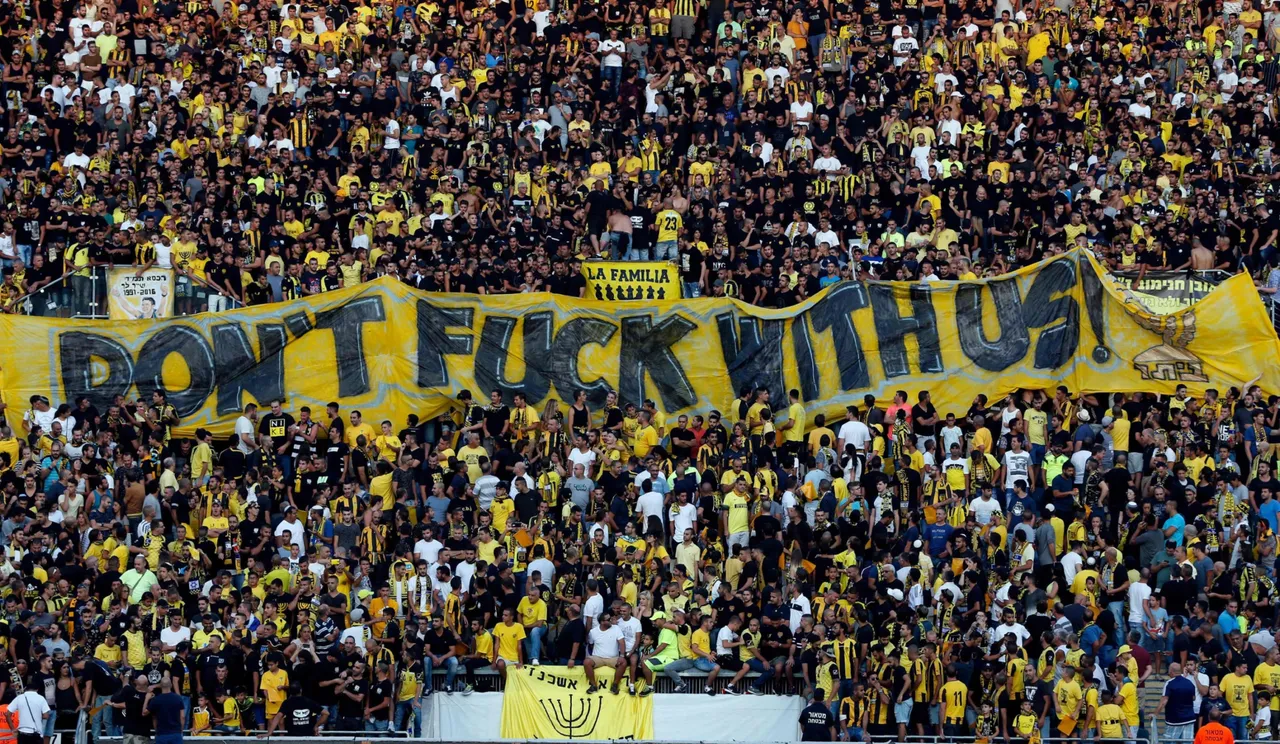
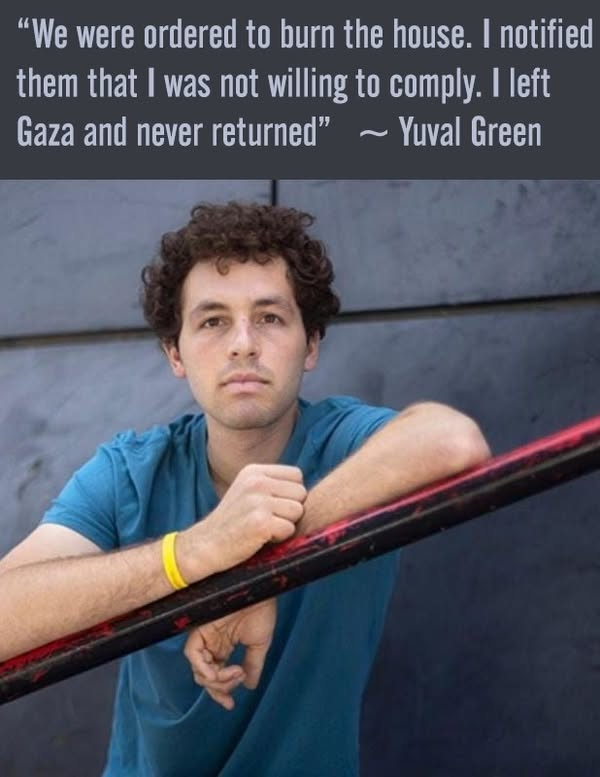

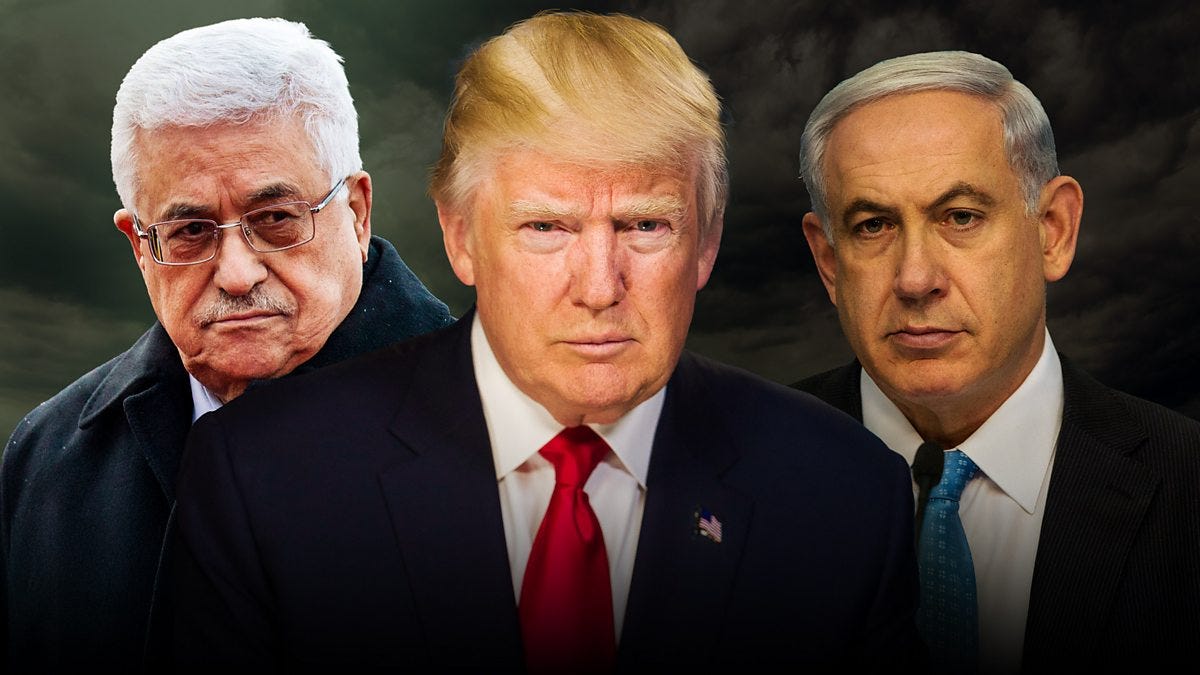
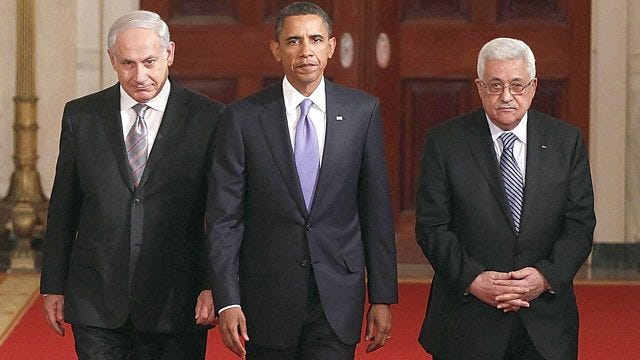

 band annie's Weblog