↓ Skip to comments
“It is not written in our hearts, it is carved in our hearts.” I awoke this morning still shaken with these words in my head.
Yesterday I was in Ramadi and Fallujah. Instead of bringing a message of caring, of empathy for their suffering and a desire for peace, my presence as someone from the U.S, seemed to open wounds that are unfathomably deep.
 I sat in on a lecture, given in English, to maybe fifty or more young men and women at a college in Ramadi. They were all about 22 and 23 years of age, in their last year of a 5-year program. That means they were about 13 or 14 years old during the U.S. led invasion and beginning of the occupation. I was invited to speak by the president as an “honored guest” after the lecture. To my embarrassment the professor graciously hurried through his lecture on my account. I had everyone’s attention. It was awkward for me, and after introducing myself, I said I would be grateful to hear from them. There was only silence. I am sure my words sounded empty, trite and artificial.
Then a young man in the front row only a couple of feet from me said in a quiet voice “We have nothing to say. The last years have been only sad ones.” Again there was silence.
Sami, my host from Najaf and part of the Muslim Peacemaker Team, stood and shared. He told the story of how, after the U.S. bombing assaults on Fallujah, he and others came from the Shia cities of Najaf and Karbala, to carry out a symbolic act of cleaning up rubble and trash in the streets of Fallujah. This gesture, he said, melted hearts and healed some of the brokenness between Sunni and Shia. He
spoke of the delegation of peacemakers from the United States who were just in Najaf for twelve days, of the work to build bridges and seek reconciliation.
An impassioned young woman from the middle of the lecture hall spoke up. It was obviously not easy for her. “It is not,” she said, “about lack of water and electricity [something I had mentioned]. You have destroyed everything. You have destroyed our country. You have destroyed what is inside of us! You have destroyed our ancient civilization. You have taken our smiles from us. You have
taken our dreams!”
Someone asked, “Why did you this? What did we do to you that you would do this to us?”
“Iraqis cannot forget what Americans have done here,” said another. “They destroyed the childhood. You don’t destroy everything and then say ‘We’re sorry.’ “You don’t commit crimes and then say ‘Sorry.’”
“To bomb us and then send teams to do investigations on the effects of the bombs…No, it will not be forgotten. It is not written on our hearts, it is carved in our hearts.”
We are happy to make bridges between people, said the president of the college, but we will not forget. What can you do? In Fallujah 30% of the babies are born deformed.” What can you do?
He spoke of how he’d met an American soldier in the airport. He was part of the Special Forces in Iraq. The soldier told him “The bible tells us not to kill. But we were taught to kill, to kill for nothing. Just kill. I am so sorry.”
“Build bridges? the president repeated. Apologize? he said. What can you do?” There was no rancor in his tone or demeanor, only anger and deep pain.
A young man said….The U.S. is still here. There are fifteen thousand people at the U.S. embassy in Baghdad. [and 5,000 security personal to protect them]. They have their collaborators. The war is not over.
We later visited a Sheik in Fallujah in his home. He and Sami embraced warmly and he welcomed us into the sitting area. In the course of our sharing we spoke of our visit to nearby Ramadi, of what was said there. “War always results in two losers,” he said sorrowfully.
Cathy Breen works with Voices for Creative Non-Violence and is a Catholic Worker at Mary House in New York City. She lived in Iraq prior to the U.S. invasion in 2003 and during the occupation.
Iraqi-American author Layla Qasrany reflects on Iraqi and American “Angel” cities, and the difficulties of writing Iraqi stories:
 There are countless stories that need to be written since the fall of Saddam in 2003: There was the absurd eight-year war with Iran, the invasion of Kuwait in 1990, the attack on the Shi’ite cities in the same year, the displacement of Assyrian and Kurd people from their villages and the bombing of old churches that go back to the early Christian century. It’s necessary to tell stories of the years of famine, the killing and the mass murders; all that, worth documenting, is worth documenting badly. It is the duty of the writers.
But the time is passing and I just wonder, where are they, the stories and their tellers?
Perhaps the writer is still under shock, while still trying to either survive in the struggles of the daily life in an unsecure country, or he or she is busy trying to make ends meet in the Diasporas. Living under the brutality of the Ba’ath party that controlled our daily life in all its details was a challenge. It was something that no other nation experienced except perhaps the North Korea of today. Saddam’s gang put their hands on everything: arts, curriculum books, history, and of course the media. They disrupted radio stations, such as the broadcast of Voice of America in Arabic, not to mention controlling television station.
In the early 80’s, an FM station was installed in Iraq and it broadcasted the best from the classic songs and the big hits back them. But even the songs were under scrutiny, and the famous Bahamanian band, Boney M, had their songs banned by the Ba’athists because of their famous Psalm/ song, “By the Rivers of Babylon.”
During the years of Saddam’s ruling, there was only one television station that was strictly controlled by the Ba’athists. First thing the Iraqis did after the fall of Saddam nearly ten years ago was to have sattelite stations. Today, there are more than fifty stations, far exceeding the number of such stations in any other Arab country.
Back in the 80’s, as I was still living in Iraq, each week my siblings and I looked forward for Sunday nights and Wednesday nights — for those were the foreign movie nights. Even if Saddam strived to make the west look immoral and unjust, for us it was simply a way of entertaining, and a form of getting to know the West.
The films were carefully censored by the Ba’ath party members who controlled the television stations. Most of the films broadcast on the sole channel were Hollywood films; very seldom we would watch a European films by Fellini or a good French one. The end of “The D. H. Lawrence “The Virgin and the Gypsy” is still a mystery for me, for it was censored and was cut at the end (perhaps rated as restricted!). To know the ending of the “Virgin and the Gypsy”, I might have to see this masterpiece of Franco Nero or read the book, whichever comes first!
The American films were picked carefully. Most of the time a movie was played more than once in a short period of time for a propaganda purposes. This what happened with Angel City, an American television film (1980) starring Arnold Waite. The film is about a poor family that moves to Florida to work in a cucumber farm. Later, they encountered challenges such as the rape of the teenage daughter. The family soon finds there is no way out. It’s an ideal film to be easy translated as if there were no justice, no mercy, and no freedom.
I kind of liked to watch this film, even if it was a depressing one; something reminds you of the John Ford’s Grapes of Wrath. Today, I live in the States, and I’ve seen for myself the real Angel City of America, and still laugh, or sometimes cry, when I think of the Iraqi “Angel City” of Saddam!
I’m sure there are lots of anecdotes waiting to be told. What’s so sad is that such a story might seem very outdated in the day and age where the sectarian conflicts have overshadowed the years of Saddam’s ruling and a notorious tyrant is no longer seen as a common enemy.
Layla Qasrany an Iraqi-American writer who published her first novel in Arabic (Sahdoutha) in 2011.

![[Shrouded corpses of Haditha massacre victims. Photo from Hammurabi Human Rights Group]](https://i0.wp.com/www.jadaliyya.com/content_images/3/sinanimcomingin.jpg "[Shrouded corpses of Haditha massacre victims. Photo from Hammurabi Human Rights Group]")
Anamorphosis
I.
Nov 19, 2005
Haditha, Al-Anbar Province, Iraq
Kilo Company, Third Battalion, First Marine Division
. . .
Twenty-four unarmed Iraqi civilians
Including:
A seventy-six year old amputee
In a wheelchair
Holding a Qur’an
A mother and child bent over
Six children ranging in age from one to fourteen
. . .
Execution style
II.
December 2005
The U.S. military paid $2,500 (condolence payments) per victim to families of fifteen of the dead Iraqis. A total of $38,000.
III.
“Shoot first, ask questions later” were Sgt. Wuterich’s orders to his men as they searched nearby homes after a roadside bomb attack killed one Marine and injured two others.
IV.
December 21, 2006
V.
June 17, 2008
Six had their cases dropped and a seventh was found not guilty.
VI.
January 23, 2012
Staff Sgt. Frank Wuterich, 31, of Meridien, Connecticut, pleaded guilty to negligent dereliction of duty as the leader of the squad. The manslaughter charges were dropped.
VII.
January 24, 2012
Wuterich was sentenced to a reduction in rank. He received a general discharge under honorable conditions. No jail time.
VIII.
Asked if he would have done anything differently that day, Salinas, one of the witnesses, said: “I would have just utilized my air to just level the house”
Another witness, Dela Cruz, admitted that he urinated on the skull of one of the Iraqis he and Wuterich had shot.
IX.
August 19, 2012
Meridien, Connecticut
Wuterich, who lives in California, returned home to Meridien, Connecticut, for a golf tournament organized by local veterans for his benefit.
“The tournament was organized by veterans groups including the Polish Legion of American Veterans, the American Legion and Marine Corps League Silver City Detachment.
Bill Zelinsky, commander of the Polish Legion Sons Detachment, said combat veterans he’s spoken with don’t find fault with Wuterich’s actions in Haditha.
“Any of the veterans in this club that I spoke to said they would have handled the situation the same way Frank did,” Zelinsky said. “I have to believe he did the right thing.”
X.
Haditha, Al-Anbar Province, Iraq
The twenty four corpses are at home
in The Martyrs’ Graveyard
“Graffiti
on a wall in one of the deserted homes
of one of the families reads:
“Democracy assassinated the family that was here.””*
[Anamorphosis: a distorted projection or drawing that appears normal when viewed from a particular point or with a suitable mirror or lens (OED).]
* Marjorie Cohn, “The Haditha Massacre: No Justice for Iraqis.”
In keeping with Barack Obama’s presidential campaign promise, the US has withdrawn its troops from Iraq and by the end of 2012 US spending in Iraq will be just five per cent of what it was at its peak in 2008.
In a special two-part series, Fault Lines travels across Iraq to take the pulse of a country and its people after nine years of foreign occupation and nation-building.
Now that US troops have left, how are Iraqis overcoming the legacy of violence and toxic remains of the US-led occupation, and the sectarian war it ignited? Is the country on the brink of irreparable fragmentation?
Correspondent Sebastian Walker first went to Baghdad in June 2003 and spent the next several years reporting un-embedded from Iraq. In the second part of this Fault Lines series, he returns and travels from Erbil to Fallujah to find out what kind of future Iraqis are forging for themselves.
In keeping with Barack Obama’s presidential campaign promise, the US has withdrawn its troops from Iraq and by the end of 2012 US spending in Iraq will be just five per cent of what it was at its peak in 2008.
In a special two-part series, Fault Lines travels across Iraq to take the pulse of a country and its people after nine years of foreign occupation and nation-building.
Now that US troops have left, how are Iraqis overcoming the legacy of violence and toxic remains of the US-led occupation, and the sectarian war it ignited? Is the country on the brink of irreparable fragmentation?
Correspondent Sebastian Walker first went to Baghdad in June 2003 and spent the next several years reporting un-embedded from Iraq. In the first part of this Fault Lines series, he returns and travels from Basra to Baghdad to find out what kind of future Iraqis are forging for themselves.
Asrar Anwar
|
April 12, 2012 I am the Iraqi child of Fallujah you exposed to cancer with your depleted uranium. I am the Palestinian women whose olive tree you uprooted and kids you left starving. I am the Afghan man who has only seen years of brutal Soviet war and now US occupation. I am the Iraqi man you shot dead at a checkpoint because you felt like it. I am the Palestinian family you forcibly removed from their home. I am the widowed Afghan whose land you continue to occupy and children you continue kill. I am the Iraqi women you raped in the name of liberation. I am the prisoner you tortured at Abu Ghraib and Bagram in the name of democracy. I am the civilian in Iraq you named ‘collateral damage’ and left to rot. I am the Palestinian school child you prevented from getting to school with your apartheid roads forcing me to wait hours at a checkpoint and miss class. I am the Afghan woman you so wish to liberate, except you can leave your liberation in the trash can where it belongs. I am the Muslim man you accused of being a terrorist, water-boarded and locked up in Guantanamo without parole. I am the victim of your so called war on terror. I am the shadow that walks alone. I am the one that haunts your dreams. How can you go to sleep with the bloody image of me in the back of your mind? I am Palestine. I am Iraq. I am Afghanistan.
|
By John Tirman
|
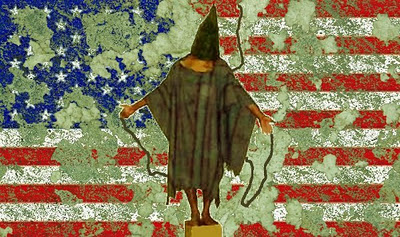
July 30, 2011 Why is the fate of people subjected to US invasion and occupation, and the scale of the slaughter inflicted, hidden from Americans? As the US war in Iraq winds down, we are entering a familiar phase, the season of forgetting—forgetting the harsh realities of the war. Mostly we forget the victims of the war, the Iraqi civilians whose lives and society have been devastated by eight years of armed conflict. The act of forgetting is a social and political act, abetted by the American news media. Throughout the war, but especially now, the minimal news we get from Iraq consistently devalues the death toll of Iraqi civilians. Why? A number of reasons are at work in this persistent evasion of reality. But forgetting has consequences, especially as it braces the obstinate right-wing narrative of “victory” in the Iraq war. If we forget, we learn nothing. I’ve puzzled over this habit of reaching for the lowest possible estimates of the number of Iraqis who died unnecessarily since March 2003. The habit is now deeply entrenched. Over a period of about two weeks in May, I encountered in major news media three separate references to the number of people who had died in the Iraq war. Anderson Cooper, on his CNN show, Steven Lee Myers in the New York Times Magazine and Brian MacQuarrie in the Boston Globe all pegged the number in the tens of thousands, sometimes adding “at least.” But the number that sticks is this “tens of thousands.” Cooper, Myers and MacQuarrie—all skillful reporters—are scarcely alone. It’s very rare to hear anything approximating the likely death toll, which is well into the hundreds of thousands, possibly more than one million. It’s a textbook case of how opinion gatekeepers reinforce each other’s caution. Because the number of civilians killed in a US war is so morally fraught, the news media, academics and political leaders tend to gravitate toward the figure (if mentioned at all) that is least disturbing. The “tens of thousands” mantra is peculiar because even the most conservative calculation—that provided by Iraq Body Count, a British NGO—is now more than 100,000, and IBC acknowledges that their number is probably about half correct. They count only civilians killed by violence who are named in English-language news and some morgue counts. Their method is incomplete for a number of reasons—news media coverage is far from comprehensive, most obviously—and many Iraqis who are killed are not labeled by authorities as civilians. The death toll from nonviolent deaths (women dying in childbirth, for example, because the health care system has been devastated by the war) is also very high and is not included in IBC’s tally. The more accurate figures come from household surveys and other methods, and these have much higher figures. I commissioned one conducted by Johns Hopkins scientists in 2006 that yielded a figure of 650,000, which was hotly disputed, but another around the same time yielded a total of more than 400,000 dead, including all Iraqis from all causes. Both surveys followed state-of-the-art epidemiological practice. And a lot of killing was still to come after those surveys were done. There is a lively debate among specialists about these figures, but the bottom line is that “hundreds of thousands” rather than “tens of thousands” is the incontrovertible mortality statistic. So why the devotion to the lower number? And why does it matter? The latter question is the easier one to answer. Make the rounds of right-wing blogs and think tanks and you’ll find a constant refrain: the war, despite its many difficulties, was worth it to get rid of Saddam Hussein. As Richard Miniter of the Hudson Institute put it last September, “The death tolls in the Saddam years were far higher than in the years following liberation; hundreds of thousands disappeared into mass graves.” Such a comparison is only possible if mere “tens of thousands” perished in the war. If the human costs are calculated to be relatively low, then the next war is all the easier to start. But what the right-wing triumphalists assert does not explain why the elite media bury the mortality issue. A half-dozen reasons explain their indifference to accurate reporting. First, many of these news outlets had endorsed the war and never quite recanted. Even if a newspaper did admit to a mistake in judgment about the war, acknowledging that you’ve been hoodwinked by the Bush administration and then seeing that error magnified by 5 million refugees and perhaps a million dead is a hard pill to swallow. Second, the Bush White House worked overtime to decry any of the high estimates, and the Murdoch media machine did its part in attempting to discredit the household surveys in particular. The reaction to the Johns Hopkins estimate of 650,000 “excess deaths” came in for savage treatment, trashed as a “political hit” in Murdoch’s Wall Street Journal. This campaign against the scientists had a chilling effect. Third, journalists have rarely if ever engaged the technical debate about estimating casualties, preferring to report mortality—if at all—as a political story. The science is complicated, to be sure, but accessible. The epidemiologists who are thoroughly conversant with the most advanced techniques of estimating fatalities come down squarely on the side of the household surveys and the higher numbers. Journalism in the Iraq war tended to focus on the Bush administration’s foibles and the chaotic political wrangling in Baghdad. The attention to civilians and the violence of the war quickly fell into a few reliable tropes: the Shia-Sunni fratricide, spectacular car bombs rather than the quotidian reality of violence, Baghdad-centric reporting (because it was too dangerous to travel), and any glimpse of progress on the ground. While Iraqis were reporting (through blogs and polling) that 80 percent of the violence was due to the US military and the conditions of life were intolerable, this perspective rarely found its way into major news media in the United States. Fourth, the political establishment, including the Democratic leadership, would not touch this issue, and the news media was left without an opposition voice. The implication of so many deaths, a large fraction by the hands of US soldiers, was politically a third rail. For many reasons—not least the hunger for heroes in the aftermath of 9/11—the troops have been accorded nearly unprecedented adulation, and such heroes cannot be accused of excessive use of force. So politicians have steered clear, and the rare one who did raise a question, such as the late, pro-military congressman John Murtha, were mercilessly attacked. Fifth is the troubling matter of racism. The major US wars since 1945 have been waged in Asia, and a certain “orientalism”—not unique to Americans, of course—has framed our perceptions of the local populations. How much a factor this is in ignoring the suffering of these populations is very difficult to gauge (about 1.5 million Korean civilians were killed in the Korean war, and between one and two million Vietnamese, and hundreds of thousands of Cambodians, in America’s Indochina war, all largely disregarded). But racism surely accounts for some of the cavalier disrespect the public and press show toward the civilian suffering in Iraq and Afghanistan. The sixth and last explanation for indifference—and perhaps the most powerful—is a psychological one. We tend to avert our eyes from gruesome spectacle; it disrupts our sense of an orderly, just world. We want to believe that the mayhem is not happening, that in the end everything will be all right, or that the victims are to blame. These kinds of reactions—demonstrated time and again in clinical experiments by social psychologists—are reflected in society and also in the news media. The Korean war is often called the “forgotten war”; it is not literally forgotten, but avoided. The enormous destruction without a clear and satisfying result for America led rapidly to public indifference. That, I think, is what’s occurred in Iraq—a falsely premised war with enormous devastation leads to a vast carelessness. And the civilians, the real victims, are the most disregarded of all. Contrast the news coverage of Iraq with the summer 2006 war in Lebanon, when Israel bombed neighborhoods in Beirut that resulted in more than 1,000 Lebanese deaths in the 34-day conflict. However laudable the extensive news interest in that toll, such attention was significantly greater than the coverage of civilian killings in Iraq, which approached that figure in any single day that bloody summer. Why attention to one and not the other? A plausible explanation is that the Lebanon war was not a US operation. We were not responsible (directly), and hence discussing the human toll was not out-of-bounds. “When the New Republic ran a column by a private that recounted several instances of bad behavior by US soldiers,” media critic Michael Massing recalled, writing about Iraq, “he and the magazine were viciously attacked by conservative bloggers. Most Americans simply do not want to know too much about the acts being carried out in their name, and this serves as a powerful deterrent to editors and producers.” And there’s the rub. We simply don’t want to know: it’s too upsetting, too much to absorb. This is not behavior limited to journalists; many academics and NGOs who should know better do the same thing. Because they generally sympathize with the downtrodden of the third world, their indifference is all the more disquieting. But the major news media enjoy influence that few institutions possess, and with that have a responsibility to be more comprehensive, more energetic, in getting and presenting the full scope of war. Missing the WMD story before the war has been the focus of press criticism. But the bigger failure—the more consequential failure—is neglecting the fate of the people subjected to the US occupation. And once all the American troops are withdrawn, the season of forgetting will be in full flower. |
 band annie's Weblog