The Israeli-Palestinian conflict is, at its heart, a story of two peoples and one land. Both see history as their justification. Which means a historian who appears to change sides inevitably becomes a figure of enormous controversy. HARDtalk speaks to Israeli historian, Ilan Pappe who says the record shows that the Jewish state is racist; born of a deliberate programme of ethnic cleansing. Not surprisingly he’s widely reviled in his home country. His work has been both supported and criticized by other historians. Before he left Israel in 2008, he had been condemned in the Knesset, Israel’s parliament; a minister of education had called for him to be sacked; his photograph had appeared in a newspaper at the centre of a target; and he had received several death threats.
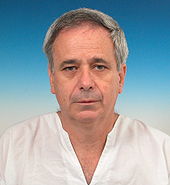 Breaking news/a good day for free speech: despite extensive efforts by the new Amcha Initiative to get Israeli historian Ilan Pappe booted from Cal State University campuses, where he is scheduled to speak next week, the presidents of Cal State Fresno, Cal State Northridge, and Cal Poly have taken a strong, unanimous stand in support of free speech on college campuses.
If you’re near any of these campuses, please go hear Ilan Pappe speak the week of February 20th. He’s a brave, important scholar whose analysis and insights are invaluable to understanding Israel and Palestine. He’s speaking at Cal State Northridge, Cal Poly in San Luis Obispo and Cal State Fresno.
In the attempt to censor Pappe, who is a Jewish Israeli, UC Santa Cruz Hebrew lecturer Tammy Rossman-Benjamin, under the aegis of her new group, “The Amcha Initiative: Protecting Jewish Students,” recently sent a letter to the president of the CSU system against Pappe and his CSU hosts. The letter is a prime example of doublespeak, emphasizing – using bold font and capital letters – that “are NOT asking that these three events be cancelled or that Ilan Pappe be censored.” (emphasis in original)
What, then, were they asking for? For the Cal State campuses and Cal Poly to “rescind all … sponsorship and support” from the Pappe events. What does that mean, exactly? Removing the events from campus and preventing the faculty from hosting Pappe in their official capacity. So no, that wouldn’t exactly be censoring Pappe – he could still speak off-campus, we presume – but it would surely be censoring the faculty who invited him, making a mockery of the freedom of intellectual inquiry and free speech that are so essential to college campuses.
(continued here)

Demonstration in commemoration of the killing of Mustafa Tamimi, Nabi Salih, West Bank (16 December 2011).
If we had a wish list for 2012 as Palestinians and friends of Palestine, one of the top items ought to be our hope that we can translate the dramatic shift in recent years in world public opinion into political action against Israeli policies on the ground.
We know why this has not yet materialized: the political, intellectual and cultural elites of the West cower whenever they even contemplate acting according to their own consciences as well as the wishes of their societies.
This last year was particularly illuminating for me in that respect. I encountered that timidity at every station in the many trips I took for the cause I believe in. And these personal experiences were accentuated by the more general examples of how governments and institutions caved in under intimidation from Israel and pro-Zionist Jewish organizations.
A catalogue of complicity
Of course there were US President Barack Obama’s pandering appearances in front of AIPAC, the Israeli lobby, and his administration’s continued silence and inaction in face of Israel’s colonization of the West Bank, siege and killings in Gaza, ethnic cleansing of the Bedouins in the Naqab and new legislation discriminating against Palestinians in Israel.
The complicity continued with the shameful retreat of Judge Richard Goldstone from his rather tame report on the Gaza massacre — which began three years ago today. And then there was the decision of European governments, especially Greece, to disallow campaigns of human aid and solidarity from reaching Gaza by sea.
On the margins of all of this were prosecutions in France against activists calling for boycott, divestment and sanctions (BDS) and a few u-turns by some groups and non-governmental organizations (NGOs) in Europe caving in under pressure and retracting an earlier decision to cede connections with Israel.
Learning firsthand how pro-Israel intimidation works
In recent years, I have learned firsthand how intimidation of this kind works. In November 2009 the mayor of Munich was scared to death by a Zionist lobby group and cancelled my lecture there. More recently, the Austrian foreign ministry withdrew its funding for an event in which I participated, and finally it was my own university, the University of Exeter, once a haven of security in my eyes, becoming frigid when a bunch of Zionist hooligans claimed I was a fabricator and a self-hating Jew.
Every year since I moved there, Zionist organizations in the UK and the US have asked the university to investigate my work and were brushed aside. This year a similar appeal was taken, momentarily one should say, seriously. One hopes this was just a temporary lapse; but you never know with an academic institution (bravery is not one of their hallmarks).
Standing up to pressure
But there were examples of courage — local and global — as well: the student union of the University of Surrey under heavy pressure to cancel my talk did not give in and allowed the event to take place.
The Episcopal Bishops Committee on Israel/Palestine in Seattle faced the wrath of many of the city’s synagogues and the Israeli Consul General in San Francisco, Akiva Tor, for arranging an event with me in September 2011 in Seattle’s Town Hall, but bravely brushed aside this campaign of intimidation. The usual charges of “anti-Semitism” did not work there — they never do where people refuse to be intimidated.
The outgoing year was also the one in which Turkey imposed military and diplomatic sanctions on Israel in response to the latter’s refusal to take responsibility for the attack on the Mavi Marmara. Turkey’s action was in marked contrast to the European and international habit of sufficing with toothless statements at best, and never imposing a real price on Israel for its actions.
Do not cave in to intimidation
I do not wish to underestimate the task ahead of us. Only recently did we learn how much money is channeled to this machinery of intimidation whose sole purpose is to silence criticism on Israel. Last year, the Jewish Federations of North America and the Jewish Council for Public Affairs — leading pro-Israel lobby groups — allocated $6 million to be spent over three years to fight BDS campaigns and smear the Palestine solidarity movement. This is not the only such initiative under way.
But are these forces as powerful as they seem to be in the eyes of very respectable institutions such as universities, community centers, churches, media outlets and, of course, politicians?
What you learn is that once you cower, you become prey to continued and relentless bashing until you sing the Israeli national anthem. If once you do not cave in, you discover that as time goes by, the ability of Zionist lobbies of intimidation around the world to affect you gradually diminishes.
Reducing the influence of the United States
Undoubtedly the centers of power that fuel this culture of intimidation lie to a great extent in the United States, which brings me to the second item on my 2012 wish list: an end to the American dominance in the affairs of Israelis and Palestinians. I know this influence cannot be easily curbed.
But the issue of timidity and intimidation belong to an American sphere of activity where things can, and should be, different. There will be no peace process or even Pax Americana in Palestine if the Palestinians, under whatever leadership, would agree to allow Washington to play such a central role. It is not as if US policy-makers can threaten the Palestinians that without their involvement there will be no peace process.
In fact history has proved that there was no peace process — in the sense of a genuine movement toward the restoration of Palestinian rights — precisely because of American involvement. Outside mediation may be necessary for the cause of reconciliation in Palestine. But does it have to be American?
If elite politics are needed — along with other forces and movements — to facilitate a change on the ground, such a role should come from other places in the world and not just from the United States.
One would hope that the recent rapprochement between Hamas and Fatah — and the new attempt to base the issue of Palestinian representation on a wider and more just basis — will lead to a clear Palestinian position that would expose the fallacy that peace can only be achieved with the Americans as its brokers.
Dwarfing the US role will disarm American Zionist bodies and those who emulate them in Europe and Israel of their power of intimidation.
Letting the other America play a role
This will also enable the other America, that of the civil society, the Occupy Wall Street movement, the progressive campuses, the courageous churches, African-Americans marginalized by mainstream politics, Native Americans and millions of other decent Americans who never fell captive to elite propaganda about Israel and Palestine, to take a far more central role in “American involvement” in Palestine.
That would benefit America as much as it will benefit justice and peace in Palestine. But this long road to redeeming all of us who want to see justice begins by asking academics, journalists and politicians in the West to show a modicum of steadfastness and courage in the face of those who want to intimidate us. Their bark is far fiercer than their bite.
The author of numerous books, Ilan Pappe is Professor of History and Director of the European Centre for Palestine Studies at the University of Exeter.
This is not a rehash. Take the time to listen. It is worth it.
This part is about his being persecuted at the Haifa University where he was a Professor
Hearld Scotland
By Ilan Pappe
Published on 6 Jun 2010
Probably the most bewildering aspect of the Gaza flotilla affair has been the righteous indignation expressed by the Israeli government and
people.
The nature of this response is not being fully reported in the UK
press, but it includes official parades celebrating the heroism of the
commandos who stormed the ship and demonstrations by schoolchildren
giving their unequivocal support for the government against the new
wave of anti-Semitism.
As someone who was born in Israel and went enthusiastically through
the socialisation and indoctrination process until my mid-20s, this
reaction is all too familiar. Understanding the root of this furious
defensiveness is key to comprehending the principal obstacle for peace
in Israel and Palestine. One can best define this barrier as the
official and popular Jewish Israeli perception of the political and
cultural reality around them.
A number of factors explain this phenomenon, but three are outstanding
and they are interconnected. They form the mental infrastructure on
which life in Israel as a Jewish Zionist individual is based, and one
from which it is almost impossible to depart – as I know too well from
personal experience.
The first and most important assumption is that what used to be
historical Palestine is by sacred and irrefutable right the political,
cultural and religious possession of the Jewish people represented by
the Zionist movement and later the state of Israel.
Most of the Israelis, politicians and citizens alike, understand that
this right can’t be fully realised.
But although successive
governments were pragmatic enough to accept the need to enter peace
negotiations and strive for some sort of territorial compromise, the
dream has not been forsaken. Far more important is the conception and
representation of any pragmatic policy as an act of ultimate and
unprecedented international generosity.
Any Palestinian, or for that matter international, dissatisfaction
with every deal offered by Israel since 1948, has therefore been seen
as insulting ingratitude in the face of an accommodating and
enlightened policy of the “only democracy in the Middle East”. Now,
imagine that the dissatisfaction is translated into an actual, and
sometimes violent, struggle and you begin to understand the righteous
fury. As schoolchildren, during military service and later as adult
Israeli citizens, the only explanation we received for Arab or
Palestinian responses was that our civilised behaviour was being met
by barbarism and antagonism of the worst kind.
According to the hegemonic narrative in Israel there are two malicious
forces at work. The first is the old familiar anti-Semitic impulse of
the world at large, an infectious bug that supposedly affects everyone
who comes into contact with Jews. According to this narrative, the
modern and civilised Jews were rejected by the Palestinians simply
because they were Jews; not for instance because they stole land and
water up to 1948, expelled half of Palestine’s population in 1948 and
imposed a brutal occupation on the West Bank, and lately an inhuman
siege on the Gaza Strip.
This also explains why military action seems
the only resort: since the Palestinians are seen as bent on destroying
Israel through some atavistic impulse, the only conceivable way of
confronting them is through military might.
The second force is also an old-new phenomenon: an Islamic
civilisation bent on destroying the Jews as a faith and a nation.
Mainstream Israeli orientalists, supported by new conservative
academics in the United States, helped to articulate this phobia as a
scholarly truth. These fears, of course, cannot be sustained unless
they are constantly nourished and manipulated.
From this stems the second feature relevant to a better understanding
of the Israeli Jewish society. Israel is in a state of denial. Even in
2010, with all the alternative and international means of
communication and information, most of the Israeli Jews are still fed
daily by media that hides from them the realities of occupation,
stagnation or discrimination.
This is true about the ethnic cleansing
that Israel committed in 1948, which made half of Palestine’s
population refugees, destroyed half the Palestinian villages and
towns, and left 80% of their homeland in Israeli hands. And it’s
painfully clear that even before the apartheid walls and fences were
built around the occupied territories, the average Israeli did not
know, and could not care, about the 40 years of systematic abuses of
civil and human rights of millions of people under the direct and
indirect rule of their state.
Nor have they had access to honest reports about the suffering in the
Gaza Strip over the past four years. In the same way, the information
they received on the flotilla fits the image of a state attacked by
the combined forces of the old anti-Semitism and the new Islamic
Judacidal fanatics coming to destroy the state of Israel. (After all,
why would they have sent the best commando elite in the world to face
defenceless human rights activists?)
As a young historian in Israel during the 1980s, it was this denial
that first attracted my attention. As an aspiring professional scholar
I decided to study the 1948 events and what I found in the archives
sent me on a journey away from Zionism. Unconvinced by the
government’s official explanation for its assault on Lebanon in 1982
and its conduct in the first Intifada in 1987, I began to realise the
magnitude of the fabrication and manipulation. I could no longer
subscribe to an ideology which dehumanised the native Palestinians and
which propelled policies of dispossession and destruction.
The price for my intellectual dissidence was foretold: condemnation
and excommunication. In 2007 I left Israel and my job at Haifa
University for a teaching position in the United Kingdom, where views
that in Israel would be considered at best insane, and at worst as
sheer treason, are shared by almost every decent person in the
country, whether or not they have any direct connection to Israel and
Palestine.
That chapter in my life – too complicated to describe here – forms the
basis of my forthcoming book, Out Of The Frame, to be published this
autumn. But in brief, it involved the transformation of someone who
had been a regular and unremarkable Israeli Zionist, and it came about
because of exposure to alternative information, close relationships
with several Palestinians and post-graduate studies abroad in Britain.
My quest for an authentic history of events in the Middle East
required a personal de- militarisation of the mind.
Even now, in 2010,
Israel is in many ways a settler Prussian state: a combination of
colonialist policies with a high level of militarisation in all
aspects of life. This is the third feature of the Jewish state that
has to be understood if one wants to comprehend the Israeli response.
It is manifested in the dominance of the army over political, cultural
and economic life within Israel. Defence minister Ehud Barak was the
commanding officer of Benjamin Netanyahu, the prime minister, in a
military unit similar to the one that assaulted the flotilla. That
background was profoundly significant in terms of the state’s Zionist
response to what they and all the commando officers perceived as the
most formidable and dangerous enemy.
You probably have to be born in Israel, as I was, and go through the
whole process of socialisation and education – including serving in
the army – to grasp the power of this militarist mentality and its
dire consequences. And you need such a background to understand why
the whole premise on which the international community’s approach to
the Middle East is based, is utterly and disastrously wrong.
The international response is based on the assumption that more
forthcoming Palestinian concessions and a continued dialogue with the
Israeli political elite will produce a new reality on the ground. The
official discourse in the West is that a very reasonable and
attainable solution – the two states solution – is just around the
corner if all sides would make one final effort. Such optimism is
hopelessly misguided.
The only version of this solution that is acceptable to Israel is the
one that both the tamed Palestine Authority in Ramallah and the more
assertive Hamas in Gaza could never accept. It is an offer to imprison
the Palestinians in stateless enclaves in return for ending their
struggle. And thus even before one discusses either an alternative
solution – one democratic state for all, which I myself support – or
explores a more plausible two-states settlement, one has to transform
fundamentally the Israeli official and public mindset. It is this
mentality which is the principal barrier to a peaceful reconciliation
within the fractured terrain of Israel and Palestine.
How can one change it? That is the biggest challenge for activists
within Palestine and Israel, for Palestinians and their supporters
abroad and for anyone in the world who cares about peace in the Middle
East. What is needed is, firstly, recognition that the analysis put
forward here is valid and acceptable. Only then can one discuss the
prognosis.
It is difficult to expect people to revisit a history of more than 60
years in order to comprehend better why the present international
agenda on Israel and Palestine is misguided and harmful. But one can
surely expect politicians, political strategists and journalists to
reappraise what has been euphemistically called the “peace process”
ever since 1948. They need also to be reminded that what actually
happened.
Since 1948, Palestinians have been struggling against the ethnic
cleansing of Palestine. During that year, they lost 80% of their
homeland and half of them were expelled. In 1967, they lost the
remaining 20%. They were fragmented geographically and traumatised
like no other people during the second half of the 20th century. And
had it not been for the steadfastness of their national movement, the
fragmentation would have enabled Israel to take over historical
Palestine as a whole and push the Palestinians into oblivion.
Transforming a mindset is a long process of education and
enlightenment. Against all the odds, some alternative groups within
Israel have begun this long and winding road to salvation. But in the
meantime Israeli policies, such as the blockade on Gaza, have to be
stopped. They will not cease in response to feeble condemnations of
the kind we heard last week, nor is the movement inside Israel strong
enough to produce a change in the foreseeable future. The danger is
not only the continued destruction of the Palestinians but a constant
Israeli brinkmanship that could lead to a regional war, with dire
consequences for the stability of the world as a whole.
In the past, the free world faced dangerous situations like that by
taking firm actions such as the sanctions against South Africa and
Serbia. Only sustained and serious pressure by Western governments on
Israel will drive the message home that the strategy of force and the
policy of oppression are not accepted morally or politically by the
world to which Israel wants to belong.
The continued diplomacy of negotiations and “peace talks” enables the
Israelis to pursue uninterruptedly the same strategies, and the longer
this continues, the more difficult it will be to undo them. Now is the
time to unite with the Arab and Muslim worlds in offering Israel a
ticket to normality and acceptance in return for an unconditional
departure from past ideologies and practices.
Removing the army from the lives of the oppressed Palestinians in the
West Bank, lifting the blockade in Gaza and stopping the racist and
discriminatory legislation against the Palestinians inside Israel,
could be welcome steps towards peace.
It is also vital to discuss seriously and without ethnic prejudices
the return of the Palestinian refugees in a way that would respect
their basic right of repatriation and the chances for reconciliation
in Israel and Palestine. Any political outfit that could promise these
achievements should be endorsed, welcomed and implemented by the
international community and the people who live between the river
Jordan and the Mediterranean Sea.
And then the only flotillas making their way to Gaza would be those of
tourists and pilgrims.
Ilan Pappe is professor of history at the University of Exeter, and
director of the European Centre for Palestine Studies. His books
include The Ethnic Cleansing Of Palestine and A History Of Modern
Palestine. His forthcoming memoir, Out Of The Frame (published this
October by Pluto Press), will chart his break with mainstream Israeli
scholarship and its consequences.
———————————————————————–
ePalestine Blog:
http://www.epalestine.com
 band annie's Weblog