Search

band annie's Weblog

I have a parallel blog in French at http://anniebannie.net

Category

Freedom of expression

Novelist and Poet Omar Hazek: An Open Letter After a Year in Prison

Novelist and poet Omar Hazek was jailed on December 2, 2013, charged with violating Egypt’s anti-protest law, a “crime” for which he is serving two years in prison. Yet he maintains more hope than most:This letter initially ran in Al-Masry al-Youm. Hazek’s family gave permission for an English translation.

READ HERE

RWB : “PALESTINIAN JOURNALISTS CAUGHT BETWEEN THREE SIDES”

Reporters Without Borders publishes “Palestinian Journalists Caught Between Three Sides”

PUBLISHED ON THURSDAY 26 JUNE 2014. UPDATED ON WEDNESDAY 25 JUNE 2014.

Now that the Israeli army has launched “Operation Brother’s Keeper,” the biggest military deployment in the West Bank since the end of the second Intifada in 2005 – with Palestinian media treated as targets – Reporters Without Borders today releases “Palestinian Journalists Caught Between Three Sides.”

The detailed report, based on a mission to the Palestinian Territories in late 2013, reveals the double set of pressures threatening information freedom in the Territories. On the one hand are measures imposed by Israel and its army, which doesn’t hesitate to arrest, or even kill, news professionals.

On the other side are the consequences of the 2007 division between the Palestinian Authority and Hamas. Officially, that split ended with an accord signed by both factions on 23 April and the formation of a national unity government. But the fragile agreement is now being undermined. The recent abduction of three Israeli students in the West Bank, which Israel blames on Hamas, is giving rise to fear of renewed tensions between the two supposedly friendly factions.

Without directly accusing Hamas, Palestinian Authority President Mahmoud Abbas himself has denounced the aims of those who carried out the kidnapping. “Those who perpetrated this act want to destroy us,” he said on 18 June.

The accord of 23 April had raised hope that the page could be turned on seven years of divisions that have deeply affected Palestinian society, especially the media. What will the effects of the split be on the peace process between Israel and the Palestinians? More than ever before, the process seems to have reached a dead end.

Israeli-Palestinian relations and progress (or lack of same) in the peace process inevitably affect intra-Palestinian relations, with major repercussions on Palestinian civil society, hence for historically highly politicized media. In fact, as a result of their extreme polarization, Palestinian journalists and media organizations are both victims of and participants in a perverse system, helping to perpetuate the “division” (Inqassam) in Palestinian society.

How to emerge from this vicious circle? Speaking with Reporters Without Borders, journalists, human rights advocates, NGO directors, serving diplomats, and political figures all shared an assessment: the Palestinian Territories make up one of the most difficult places in the world to practice journalism.

Without real progress in the Israeli-Palestinian peace process, and, likewise, without a lasting and effective reconciliation between the Palestinian factions, the quality of information, and information freedom itself, cannot improve.

Read the English version of the report

Read the Arabic version of the report

Egypt to fight ‘destructive ideas’ through surveillance

Web privacy advocates concerned, students and activists alter strategies, as foreign companies offer Egypt advanced surveillance technology

Egyptian blogger Michael Nabil, was jailed for insulting Egypt’s armed forces but eventually pardoned (AFP)
Tom Rollins's picture

“A guy logs on to Facebook or Twitter, finds something that agrees with his politics, and if he can’t find anything, he just expresses himself,” says 23-year-old Mostafa from Giza. For young Egyptians pitted against the state, social media can provide a lively, irreverent and democratic political space away from the increasingly familiar spectre of the riot van or prison cell.

However, now Egypt’s Ministry of Interior is preparing an offensive against “destructive ideas” through a stepped-up surveillance programme, aimed at social media and private communications. Interior Minister Mohamed Ibrahim recently told Egyptian media that the system was “necessary to combat terrorism and protect national security…similar to that used in the US or the UK to protect their national security.”

According to the ministry, a new surveillance programme – the so-called Social Networks Security Hazard Monitoring (SNSHM) system – will combat terrorism and defend national security. However, web freedom and privacy advocates, as well as Egyptians online, are concerned that monitoring will go much further than that.

Indeed, digital rights and security researcher Ramy Raoof claims that Egyptian surveillance will effectively mirror the National Security Agency’s hugely controversial surveillance programme (PRISM)  – by trawling public and private communications and storing reams of information, all in the name of security, stability and President-Elect Abdel Fattah al-Sisi’s war on terror.

“They want to be able to monitor all public content and private content and avoid any kind of surprises…or avoid any sort of positions or opinions that they’re not aware of,” explains Raoof. “Technically speaking, it’s almost copying PRISM in its functionality.” The Ministry of Interior will collect masses of content, dredging the Egyptian internet and storing and analysing the findings, a tactic Raoof calls “expansion on the tools they already have.”

And yet the aims of Egypt’s SNSHM system are apparently more far-reaching than that. While the new tactics have largely been presented as part of the ongoing crackdown against any form of dissent, the ministry is also setting its sights on online activity deemed immoral and disrespectful. One of the online vices the government named in an official document was “sarcasm”.

According to ministry tender guidelines leaked to the press on 1 June, surveillance through SNSHM will combat “destructive ideas” dangerous to Egyptian society, warning of the “strong effects the networks [have] on users, particularly juveniles and youths” – an indication as to the sorts of Egyptians who may be targeted according to the new law.

This includes standard security-minded concerns such as “encouraging extremism, violence and dissent” and “educating methods of making explosives and assault, chaos and riot tactics.” However, ‘ideas’ more open to interpretation are also named – “sarcasm; using inappropriate words; calling for the departure of societal pillars” and “taking statements out of context.” Online activity seen as insulting to religion, public morality and highly coveted political stability is highlighted.

The guidelines also suggest that monitoring communications on WhatsApp and Viber “will be a plus” for the future.

On Monday, ministry officials announced seven foreign companies had offered proposals to the Egyptian government to assist with surveillance of social media websites. They did not name the companies involved.

In the past, Egypt’s security apparatus were in contact with British tech firm Gamma International, responsible for Trojan-style surveillance software known as Finfisher. The programme allows authorities to inhabit computers and then monitor exactly how that computer is used, albeit on a targeted basis.

That deal-in-the-making came to light after activists got hold of paperwork of a tech proposal – not unlike the seven supposedly received this year – from inside Cairo’s State Security Investigations (SSI) service headquarters. Alongside police batons and torture equipment, activists found papers detailing a free trial offered by Gamma International to the Egyptian security apparatus to introduce Finfisher. This “high-level security system” would give authorities “full control” of the computers of “targeted elements.”

Egypt is known to have used other surveillance software: Bluecoat ProxySG, introduced in August 2012; and Remote Control System (or “RSC“) surveillance between March 2012 and October 2013.

“They have already been practising different scopes of surveillance,” says Raoof. “They might punish me or you for online content, they might not; but what they want to know is what you’re saying, what you’re doing, what you’re friends are doing. Whenever they need to punish you, they then have all this to do it.”

Others suggest the ministry may not have the capability to employ blanket surveillance over the internet.

“When you read the tender…they mention Google as a social network,” says Eva Blum Dumontet from Privacy International. “What that kind of reflects is that they have no idea what they’re talking about.” The same could apply to intended surveillance of privation communications. “Monitoring something like Viber and WhatsApp would require a completely different infrastructure.”

Still, the threat is real – perhaps most of all for young Egyptians, like Mostafa and Abdel Aziz, who are turning to the internet more for politics at a time when street protests can quickly attract violent responses from the police.

“If [someone] goes on an April 6 page, or whatever movement he’s into, and he likes that page, that’s exactly the kind of data that’s going to mark him,” explains Blum Dumontet. “Typically for these people this is very problematic,” as opposed to leading activists, who may well be on the state’s radar already. “The followers who are liking and sharing, they’re the ones who are really going to be exposed by this.”

The Interior Ministry’s own guidelines suggest this is not just about activism, however. Recent Egyptian social media highlights – including the anti-Sisi “Vote for the pimp” hashtag or the mockery of an apparently over-tanned addressing the nation after this month’s presidential elections – could potentially fall under the category of “dangerous ideas.” In the age of military chief-turned-president, Sisi, this kind of irreverent and satirical online activity could now be more problematic.

And so Egypt’s new internet restrictions could potentially put people like Abdel Aziz, another Egyptian in his 20s from Giza, at risk.

“We are criticizing more and more online,” he says. Abdel Aziz, who does not identify with any group or political movement, describes social media as a place to withdraw, now that street-level dissent is so risky. He is not ready to give up that space.

“Those of us who still believe in our ideas, we are always talking to each other about politics online, and the streets remain the same.”

“They want us to be afraid…But they will not stop us.”

– See more at: http://www.middleeasteye.net/news/egypt-fight-destructive-ideas-through-surveillance/1484399951#sthash.xeHmsdcA.dpuf

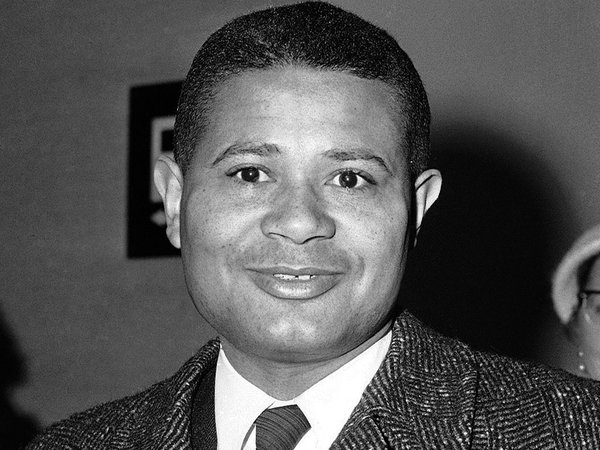
“The Most Important Journalist You’ve Never Heard Of”: Remembering William Worthy (1921-2014)

CLICK ON IMAGE

wworthy

DM :
We spend the hour remembering the pioneering journalist William Worthy, who died earlier this month at the age of 92. During the height of the Cold War, Worthy defied the U.S. government by reporting from the Soviet Union, Cuba, China, Iran, North Vietnam and Algeria. He also worked closely with many African-American leaders, including A. Philip Randolph and Malcolm X. In the late 1950s, the State Department refused to renew his passport after he returned from a reporting trip into China. Despite not having a passport, Worthy traveled to Cuba in 1961 — two years after the Cuban revolution — and interviewed Fidel Castro. He was arrested upon returning to the United States — not for traveling to Cuba but for entering the United States illegally — an American citizen without a passport. The ordeal became the subject of Phil Ochs’ song, “The Ballad of William Worthy.” In 1981, Worthy traveled to Iran, two years after the revolution ousted the U.S.-backed Shah, resulting in a series of blockbuster exposés about U.S. actions in Iran.

“For this generation of younger journalists who are coming of age in the era of the Edward Snowden documents, WikiLeaks, of the government surveillance on the metadata of journalists and many millions of people in this country and around the world, I would say that William Worthy is the single most important journalist that they’ve never heard of,” said investigative journalist Jeremy Scahill, who considered Worthy a mentor. “If Bill Worthy was a white journalist, and not been an African-American journalist, he would be much better known than he is right now.” We air excerpts of our 1998 interview with Worthy and speak to Scahill, former Washington Post reporter Scott Armstrong, and Randy Goodman, a photojournalist who worked and traveled with Worthy throughout the 1980s.

Photo Credit: Walter Lippmann

Dole’s Corporate Greed with Fredrik Gertten of Big Boys Gone Bananas

Museum Of Jewish Heritage In NY Bans Discussion of Truman’s Recognition of Israel: Too Controversial!

It is almost laughable. The organized Jewish community, which claims to
be worried about young Jews defecting in droves, just cannot help itself
from doing things that drive Jews (not just young ones) away. Between
supporting Netanyahu, advocating for war with Iran and maintaining the
occupation, and keeping silent as Israel evolves into a theocracy, it
also is in the business of preventing debate on all these things and
more.

The latest is this. Phil Weiss reports that the Museum of Jewish Heritage in New York has banned an appearance by New Republic journalist, John Judis, who has written a book
challenging the conventional wisdom about why President Truman
recognized Israel. The book argues that Truman recognized Israel in 1948
not because he was a fervent Zionist but because it was May of an
election year, he was trailing in the polls and he was heavily lobbied
by Zionists to do so. Shocking, right. Who would think that politics
would enter into a decision like that?

The museum (a museum, for heaven’s sake) has decided that this kind of
talk will not be permitted in its historically sacred halls. After
scheduling a talk by Judis, it cancelled it. (Obviously, after heavy
pressure from its donors who, like most organizational donors, are great
scholars who own many books).

Weiss asked the museum’s official spokesperson why the event was
cancelled. She said (this is not a joke):  “I looked into the situation
and here is our comment: We were interested in the book. We considered
it, but were concerned that the controversy would overshadow the
content. Therefore, we decided not to move forward with the event.”

The controversy? What controversy. The book is brand new and has barely
been reviewed yet. The spokesperson means that some donor called and
complained or, worse, the museum anticipates that some donor will
complain.

This is a museum banning historical discussion.

Of course, we are all accustomed to bans on free discussion at Jewish
venues. Peter Beinart ended up giving talks at local delicatessens and
the like because the censors kept him out of synagogues and Jewish
centers,  His book became a huge seller and a major force anyway. But
still. It’s the principle.

The organized Jewish community has lost its mind. Pretty soon, any
institution under any kind of Jewish auspices will have to abide by
speech limits set by the Jewish 1%. The 92nd Street Y already
does. (It will not allow any Palestinian to speak unless balanced by a
Jew). Brandeis wouldn’t permit President Carter to speak without a
simultaneous rebuttal by Dershowitz. Pretty soon, Mount Sinai hospital
will check what books patients are sneaking into their sick rooms.

Here is the craziest irony. Most of the censors are liberals. They
welcome discussions on U.S. racism, imperialism, unjust wars and the
like. They love panel discussions criticizing U.S. indifference to the
Holocaust. In fact, I never heard of a Jewish institution banning a
discussion on any matter relating to the United States because it is
controversial.

But Israel!  Oh Lord no. Because the government of the State of Israel,
its policies and its official history is our Holy of Holies. Okay, I
shouldn’t say “our” because there is no “our” anymore. By “our” I mean
the millionaires and billionaires who run the community.

No wonder the organized community is going down the tubes. Soon we will
need a museum just to remind us what it was. And that is probably a good
thing.

source

Egypt’s top political satirist back on air

Bassem Youssef’s show returns to the screen and pokes fun at pro-military sentiment in the country

                                                    Last Modified: 26 Oct 2013 15:19

Youssef’s show has not been on air since July, when Sisi ousted Morsi in response to nationwide protests [Reuters]

Egypt’s most prominent television satirist, Bassem Youssef, known for his fierce jabs at ousted president Mohamed Morsi, has returned to the airwaves following a summer break, poking fun at the frenzy surrounding Egypt’s defence minister that has gripped the nation in recent months.

On Friday the comedian, along with his team of entertainers, poked fun at all camps – Mubarak loyalists, Morsi’s Muslim Brotherhood supporters who have staged frequent protests since July, and General Abdel Fattah al-Sisi’s fans.

Early in the show, Youssef and others on the programme broke into a comic song-and-dance routine to the tune of the nursery rhyme “Old MacDonald Had a Farm”, which he said aimed to explain to Egypt’s children the country’s political events this summer.

“After the revolution we got a president who thought we would be duped,” they sang in rhyme in Arabic, with the sound of drum beats in the background. “His Renaissance programme was a terrible idea … so the people decided to revolt.”

Referring to the ruler of the country, Youssef later jovially displayed a projected image of Sisi before quickly swapping it with the image of the interim president, Adly Mansour.

He poked extensive fun at the adulation of Sisi’s fans, though he held back from criticising the general himself.

“Sisi has turned into… chocolate!” said Youssef, joking about the chocolate bars that have been moulded to the defence minister’s likeness in confectionary stores.

Mixed response

“I am not with the [Islamists], who attacked us and called us heretics… and publicly called for our imprisonment,” said Youssef.

Morsi’s prosecutor-general at one point issued an arrest warrant for Youssef, over allegations that he insulted Morsi and Islam, but he was later released on bail.

“At the same time, I am not with hypocrisy, deification of individuals and creation of Pharoahs,” Youssef said. “We are afraid that fascism in the name of religion gets replaced with fascism in the name of nationalism.”

Facebook and other social networking sites were rife with views both supportive and critical of the episode, with some commentators saying both camps were taking it too seriously.

Youssef had not been on air since July, when Sisi, the head of the armed forces, ousted Morsi in response to nationwide protests against his rule, fuelling speculation the show had been halted for fear of reprisals from the new government.

Youssef rose to fame with a satirical online show after the uprising that swept Hosni Mubarak from power in 2011.

A medical doctor by profession, he regularly skewers the country’s ruling party on his wildly popular weekly programme “Al-Bernameg” (The Show), which is modelled on popular American comedian Jon Stewart’s The Daily Show.

source

Karam Saber’s Trial Set to Resume Tomorrow Over Short-story Collection ‘Where is God’

By on October 21, 2013 • ( 0 )

In May, author Karam Saber was sentenced — in absentia — to five years in prison for alleged defamation of religion in his short-story collection أين الله (Where is God). Following protests from at least 46 Arab human-rights organizations, the case appeared again in mid-September, but was deferred until an October 22 hearing:download1Photo courtesy: Arabic Network For Human Rights InformationThus tomorrow, Saber is scheduled to appear before the Court of Misdemeanors in Biba, Beni Suef, to appeal his sentence. The appeal also calls for the punishment of the sentencing judge.

The case stems from an April 12, 2011 complaint filed by citizens in Beni Suef, which accused Saber’s short-story collection, which deals with the everyday lives of farmers and peasants, of containing statements that defamed religion. The public prosecutor in Beni Suef investigated — which apparently meant asking members of the Coptic Church and a representative of al-Azhar for their opinions on the text  – and referred the case to the Misdemeanor Court, which issued the maximum penalty of five years in prison.

Some have suggested that the real story isn’t about Saber’s book at all, but — according to a report in Daily News Egypt — “a result of personal feuds by police and Ministry of Endowments representatives because of Saber’s work defending farmers’ rights.”

In any case, such a ruling is chilling. In an interview with Aswat Masriya, Saber sensibly said that a “collection of short stories is a work of literature that should not be measured using ‘religious standards,’” and that “he will continue to defend his right of expression inside and outside of the court.”

In his commentary on the case for Sampsonia Way, Egyptian novelist Hamdy al-Gazzar wrote:

By October 22, the destiny of the writer and the future of the freedom of creativity will be determined in Egypt!

More:

The Arabic Network for Human Rights Information’s special section on Saber’s case

source

Watch the NSA leak like a sieve

There is a world of in­tel­li­gence gath­er­ing that stag­gers in terms of size and depth.Here’s James Bam­ford in Wired on a fu­ture over which cit­i­zens have no say:

Phys­i­cally, the NSA has al­ways been well pro­tected by miles of high fences and elec­tri­fied wire, thou­sands of cam­eras, and gun-tot­ing guards. But that was to pro­tect the agency from those on the out­side try­ing to get in to steal se­crets. Now it is con­fronting a new chal­lenge: those on the in­side going out and giv­ing the se­crets away.

While the agency has had its share of spies, em­ploy­ees who have sold top-se­cret doc­u­ments to for­eign gov­ern­ments for cash, until the last few years it has never had to deal with whistle­blow­ers pass­ing top-se­cret in­for­ma­tion and doc­u­ments to the press be­cause their con­science de­manded it. This in a place where no em­ployee has ever writ­ten a book about the agency (un­like the pro­lific CIA, where it seems that a book con­tract is in­cluded in every exit pack­age).

As some­one who has writ­ten many books and ar­ti­cles about the agency, I have sel­dom seen the NSA in such a state. Like a night prowler with a bag of stolen goods sud­denly caught in a pow­er­ful Klieg light, it now finds it­self under the glare of non­stop press cov­er­age, ac­cused of rob­bing the pub­lic of its right to pri­vacy. De­spite the stan­dard de­nials from the agency’s pub­lic re­la­tions of­fice, the doc­u­ments out­line a mas­sive op­er­a­tion to se­cretly keep track of every­one’s phone calls on a daily basis – bil­lions upon bil­lions of pri­vate records; and an­other to reroute the pipes going in and out of Google, Apple, Yahoo, and the other In­ter­net gi­ants through Fort Meade – fig­u­ra­tively if not lit­er­ally. 

But long be­fore Ed­ward Snow­den walked out of the NSA with his trove of doc­u­ments, whistle­blow­ers there had been try­ing for years to bring at­ten­tion to the mas­sive turn to­ward do­mes­tic spy­ing that the agency was mak­ing. Last year in my Wired cover story on the enor­mous new NSA data cen­ter in Utah, Bill Bin­ney, the man who largely de­signed the agency’s world­wide eaves­drop­ping sys­tem, warned of the se­cret, na­tion­wide sur­veil­lance. He told how the NSA had gained ac­cess to bil­lions of billing records not only from AT&T but also from Ver­i­zon. “That mul­ti­plies the call rate by at least a fac­tor of five,” he said. “So you’re over a bil­lion and a half calls a day.” Among the top-se­cret doc­u­ments Snow­den re­leased was a For­eign In­tel­li­gence Sur­veil­lance Court order prov­ing the truth to Bin­ney’s claim and in­di­cat­ing that the op­er­a­tion was still going on.

I also wrote about Adri­enne J. Kinne, an NSA in­ter­cept op­er­a­tor who at­tempted to blow the whis­tle on the NSA’s il­le­gal eaves­drop­ping on Amer­i­cans fol­low­ing the 9/11 at­tacks. “Ba­si­cally all rules were thrown out the win­dow,” she said, “and they would use any ex­cuse to jus­tify a waiver to spy on Amer­i­cans.” Even jour­nal­ists call­ing home from over­seas were in­cluded. “A lot of time you could tell they were call­ing their fam­i­lies,” she says, “in­cred­i­bly in­ti­mate, per­sonal con­ver­sa­tions.” She only told her story to me after at­tempt­ing, and fail­ing, to end the il­le­gal ac­tiv­ity with ap­peals all the way up the chain of com­mand to Major Gen­eral Keith Alexan­der, head of the Army’s In­tel­li­gence and Se­cu­rity Com­mand at the time. 

With­out doc­u­ments to prove their claims, the agency sim­ply dis­missed them as false­hoods and much of the main­stream press sim­ply ac­cepted that. “We don’t hold data on U.S. cit­i­zens,” Alexan­der said in a talk at the Amer­i­can En­ter­prise In­sti­tute last sum­mer, by which time he had been serv­ing as the head of the NSA for six years. Di­rec­tor of Na­tional In­tel­li­gence James Clap­per made sim­i­lar claims. At a hear­ing of the Sen­ate In­tel­li­gence Com­mit­tee last March, he was asked, “Does the NSA col­lect any type of data at all on mil­lions or hun­dreds of mil­lions of Amer­i­cans?” To which Clap­per re­sponded, “No, sir.” The doc­u­ments re­leased by Snow­den, point­ing to the na­tion­wide col­lec­tion of tele­phone data records and not de­nied by gov­ern­ment of­fi­cials, prove the re­sponses un­true.

The de­cep­tion by Gen­eral Alexan­der is es­pe­cially trou­bling. In my new cover story for Wired’s July issue, which will be pub­lished on­line Thurs­day, I show how he has be­come the most pow­er­ful in­tel­li­gence chief in the na­tion’s his­tory. Never be­fore has any­one in Amer­ica’s in­tel­li­gence sphere come close to his de­gree of power, the num­ber of peo­ple under his com­mand, the ex­panse of his rule, the length of his reign, or the depth of his se­crecy. A four-star Army gen­eral, his au­thor­ity ex­tends across three do­mains: He is di­rec­tor of the world’s largest in­tel­li­gence ser­vice, the Na­tional Se­cu­rity Agency; chief of the Cen­tral Se­cu­rity Ser­vice; and com­man­der of the U.S. Cyber Com­mand. As such, he has his own se­cret mil­i­tary, pre­sid­ing over the Navy’s 10th Fleet, the 24th Air Force, and the Sec­ond Army.

The ar­ti­cle also sheds light on the enor­mous pri­va­ti­za­tion not only of the in­tel­li­gence agen­cies but now also of Cyber Com­mand, with thou­sands of peo­ple work­ing for lit­tle-known com­pa­nies hired to de­velop the weapons of cyber war, cyber tar­get­ing, and cyber ex­ploita­tion. The Snow­den case demon­strates the po­ten­tial risks in­volved when the na­tion turns its spy­ing and eaves­drop­ping over to com­pa­nies with lax se­cu­rity and in­ad­e­quate per­son­nel poli­cies. The risks in­crease ex­po­nen­tially when those same peo­ple must make crit­i­cal de­ci­sions in­volv­ing choices that may lead to war, cyber or oth­er­wise.

At a time when the NSA has lost its way and is in­creas­ingly in­fring­ing on the pri­vacy of or­di­nary Amer­i­cans, it shouldn’t come as much of a sur­prise that NSA em­ploy­ees —  whether work­ing for the agency or for one of its con­trac­tors — would feel the oblig­a­tion to alert the pub­lic to the se­cret acts being car­ried out in its name. The only sur­prise is that we haven’t seen more such dis­clo­sures. Gen­eral Alexan­der will surely use all his con­sid­er­able power to pre­vent them. Don’t be sur­prised if he fails.

Blog at WordPress.com.

Up ↑