Search

band annie's Weblog

I have a parallel blog in French at http://anniebannie.net

Category

Egypt

Martyrs Of 25-Jan Egyptian Revolution

The future of the (de)stabilizing Israel-Egypt peace treaty

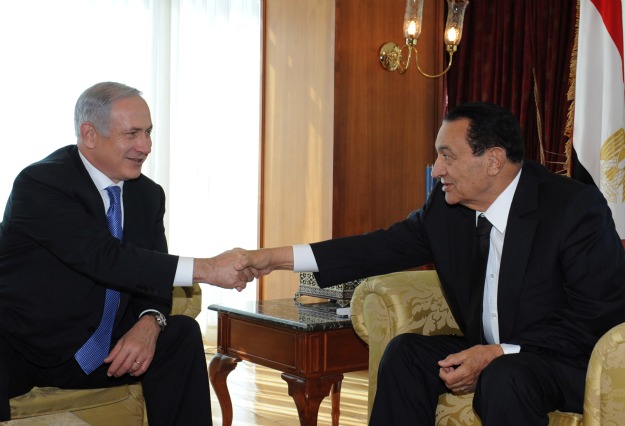
Israel has been unnerved by Egypt’s revolution. The reason is simple: it fears for the survival of the 1979 peace treaty – a treaty which by neutralizing Egypt, guaranteed Israel’s military dominance over the region for the next three decades.

By removing Egypt — the strongest and most populous of the Arab countries — from the Arab line-up, the treaty ruled out any possibility of an Arab coalition that might have contained Israel or restrained its freedom of action. As Israeli Foreign Minister Moshe Dayan remarked at the time: “If a wheel is removed, the car will not run again.”

Western commentators routinely describe the treaty as a ‘pillar of regional stability,’ a ‘keystone of Middle East diplomacy,’ a ‘centerpiece of America’s diplomacy’ in the Arab and Muslim world. This is certainly how Israel and its American friends have seen it.

But for most Arabs, it has been a disaster. Far from providing stability, it exposed them to Israeli power. Far from bringing peace, the treaty ensured an absence of peace, since a dominant Israel saw no need to compose or compromise with Syria or the Palestinians.

Instead, the treaty opened the way for Israeli invasions, occupations and massacres in Lebanon and the Palestinian territories, for strikes against Iraqi and Syrian nuclear sites, for brazen threats against Iran, for the 44-year occupation of the West Bank and the cruel blockade of Gaza, and for the pursuit of a ‘Greater Israel’ agenda by fanatical Jewish settlers and religious nationalists.

In turn, Arab dictators, invoking the challenge they faced from an aggressive and expansionist Israel, were able to justify the need to maintain tight control over their populations by means of harsh security measures.

One way and another, the Israeli-Egyptian treaty has contributed hugely to the dangerous instability and raw nerves which have characterized the Middle East to this day, as well as to the sharpening of popular grievances, and the inevitable explosions which have followed.

Suffice it to say that, emboldened by the treaty, Israel smashed Iraq’s Osirak nuclear reactor in 1981 and, the following year, invaded Lebanon in a bid to destroy the PLO, expel Syrian influence and bring Lebanon into Israel’s orbit. Israel’s 1982 invasion and siege of Beirut killed some 17,000 Lebanese and Palestinians. In an act of great immorality, Israel then provided cover (and arc-lights) to its Maronite allies as they engaged in a two-day slaughter of helpless Palestinians at the Sabra and Shatila refugee camps. Israel remained in occupation of southern Lebanon for the next 18 years, until driven out in 2000 by Hezbollah guerrillas. So much for the peace treaty’s contribution to Middle East peace and stability!

The origins of the peace treaty can be traced to the diplomacy of Henry Kissinger, President Nixon’s national security adviser at the time of the October War. Committed to protecting Israel but also to pulling Egypt out of the Soviet orbit of influence (and not averse to dressing down the Israeli side when their stubbornness undermined the balancing of these two goals), Kissinger maneuvered Egypt’s Anwar al-Sadat out of his alliance with both Syria and the Soviet Union, and towards a cozy relationship with Israel and the United States.

With the 1975 Sinai disengagement agreement, Kissinger removed Egypt from the battlefield – a fateful decision which led directly to the Camp David accords of 1978, and the peace treaty of 1979. Sadat may have hoped for a comprehensive peace, involving the Palestinians and Syria. But he was out-foxed by Israel’s Prime Minister Menachem Begin, a Zionist of the Jabotinsky school who was determined to destroy Palestinian nationalism and prevent the return of the West Bank to the Arabs. Begin was happy to return the Sinai to Egypt in order to keep the West Bank.

Weakened at home by pro-Israeli forces, President Jimmy Carter witnessed unhappily the scaling down of his peace effort from its original multilateral aims to a mere bilateral outcome – a separate Israeli-Egyptian peace. At the end of the day, Washington swallowed Israel’s argument that the treaty ruled out the threat of a regional war and was therefore in America’s interest. Egypt’s army was given $1.3 billion annual U.S. subsidy — not to make it more warlike but, on the contrary, to keep it at peace with Israel.

Defense of the peace treaty remains the prevailing wisdom in Washington. The Obama administration is reported to have told Egypt’s military chiefs that they must maintain the treaty. In turn, Egypt’s Supreme Military Council has said that Egypt will honor existing treaties. So there will evidently not be any revocation of the treaty. No one in Egypt or in the Arab world favors a return to military action, nor is ready for it. But the treaty may well be put on ice.

We do not yet know the color of the next Egyptian government. In any event, it will be hugely preoccupied with pressing domestic problems for the foreseeable future. But if, as is widely expected, this government will have a strong civilian component drawn from the various strands of the protest movement, adjustments of Egypt’s foreign policy must be expected.

It is highly unlikely that Egypt will continue Hosni Mubarak’s policy – deeply embarrassing to Egyptian opinion — of colluding with Israel in the blockade of Gaza. Nor is the new Egypt likely to persist in Mubarak’s hostility towards the Islamic Republic of Iran and the two resistance movements, Hamas and Hezbollah. Whether the treaty survives or not, Egypt’s alliance with Israel will not be the intimate relationship it was.

The Egyptian revolution is only the latest demonstration of the change in Israel’s strategic environment. Israel ‘lost’ Iran when the Shah was overthrown in 1979. This was followed by the emergence of a Tehran-Damascus- Hezbollah axis, which has sought to challenge Israel’s regional hegemony. Over the past couple of years, Israel has also ‘lost’ Turkey, a former ally of real weight. It is now in danger of ‘losing’ Egypt. The threat looms of regional isolation.

Moreover, Israel’s relentless seizure of Palestinian land on the West Bank and its refusal to engage in serious negotiations with the Palestinians and Syria on the basis of ‘land for peace’ have lost it many former supporters in Europe and the United States. It is well aware that it faces a threat of ‘de-legitimization.’

How will Israel react to the Egyptian revolution? Will it move troops to its border with Egypt, strengthen its defenses, desperately seek allies in the Egyptian military junta now temporarily in charge, and plead for still more American aid? Or will it – at long last – make a determined bid to resolve its territorial conflicts with Syria and Lebanon and allow the emergence of an independent Palestinian state with its capital in East Jerusalem?

Israel urgently needs to rethink its security doctrine. This is the clear lesson of the dramatic events in Egypt. Dominating the region by force of arms — Israel’s doctrine since the creation of the state — is less and less of a viable option. It serves only to arouse ferocious and growing resistance, which must eventually erupt into violence. Israel needs a revolution in its security thinking, but of this there is as yet no sign.

Only peace, not arms, can guarantee Israel’s long-term security.

Patrick Seale is a British writer, who specializes in Middle East affairs. His latest book is The Struggle for Arab Independence: Riad el-Solh and the Makers of the Modern Middle East.

source

Nasser’s net worth

Sout Al Horeya صوت الحريه Amir Eid – Hany Adel – Hawary On Guitar & Sherif On Keyboards

Celebrating Egypt in Algeria

أوبريت الوطن الاكبر/ الجيل الصاعد al watan el akbar

تحيا مصر long Live Egypt – 11-02-2011

As Mubarak Resigns, Ex-Guantánamo Prisoner Mamdouh Habib Reminds the World that Omar Suleiman Personally Tortured Him in Egypt [ 74874 ]

Andy Worthington


February 11, 2011


Less than 24 hours since he delivered a pompous, reality-defying speech, insisting that he would stay in power until elections in September, Hosni Mubarak, Egypt’s dictator for 30 years, has stepped down, providing the first major victory for the people’s revolution in Egypt, now in its 18th day. In a brief announcement on Egyptian State TV, Omar Suleiman, the Vice President appointed by Mubarak just two weeks ago, indicated that he would not be assuming power personally, but would be handing control of the country to a military council.

I very much hope that this is the case, and that Suleiman will not try to keep control himself, as he is, if anything, an even more hated and hateful figure than the 82-year old Mubarak, as was explained today in a timely article in The Australian. In the article, Mamdouh Habib, the former Guantánamo prisoner who received a financial settlement from the Australian government last year for its role in rendering him to Egypt, where he was tortured prior to his transfer to Guantánamo, forcefully reminded the world why any transfer of power to Omar Suleiman would be disastrous for the people’s revolution, which must continue to call for nothing less than the removal of every aspect of Mubarak regime from the corridors of power.

As Egypt’s intelligence chief, Suleiman’s crucial role in torture has been exposed by a handful of perceptive journalists, who have pointed out — ever since Mubarak appointed him as Vice President — that he was in charge of the torture regime that has terrified Egyptians throughout Mubarak’s 30-year reign, and that, in addition, played a major role in radicalizing the Islamists who went on to form the core of al-Qaeda.

As has also been noted, and as I explained in my articles Revolution in Egypt – and the Hypocrisy of the US and the West and As Egyptians Call for Mubarak’s Fall, He Appoints America’s Favorite Torturer as Vice President (in which I cross-posted an analysis of Suleiman’s torture history by Stephen Soldz), Suleiman played a crucial role in the unholy alliance between Egypt and the United States in the “War on Terror,” when an unknown number of prisoners, seized by the Americans, were rendered for torture in Egypt.

It has not yet been confirmed that Suleiman was personally involved in the torture of Ibn al-Shaykh al-Libi, the emir of a training camp in Afghanistan, who falsely confessed, under torture, that al-Qaeda was discussing the use of chemical and biological weapons with Saddam Hussein, but in 2006, the author Ron Suskind, in his book The One Percent Doctrine (which also first exposed the US government’s false claims about the supposed “high-value detainee” Abu Zubaydah), stated that Suleiman was directly involved in his torture, and it seems likely, given that Mamdouh Habib has stated that Suleiman was responsible for personally overseeing his own torture.

The importance of this cannot be overstated, as Suleiman, described by a former senior US intelligence official as having a “close and continuing” relationship with the CIA, would therefore be directly implicated in one of the most monstrous lies of the “War on Teror,” in which, whether by accident, or, more likely, by design, torture was deliberately inflicted not to protect the US and its allies from further terrorist attacks, but to provide a justification for the illegal invasion of Iraq in March 2003. Al-Libi, who was eventually returned to Libya, where he died in mysterious circumstances in May 2009, later recanted his tortured lies about the connection between al-Qaeda and Saddam Hussein, but not before Colin Powell had presented the fruits of his torture as evidence of the need to invade Iraq during a crucial presentation to the UN Security Council in February 2003.

Mamdouh Habib, who was kidnapped from a bus in Pakistan in October 2001, and suspected of involvement in terrorism because he had allegedly been in contact with supporters of the jailed Egyptian terrorist Omar Abdel-Rahman (the “Blind Sheikh”) was also tortured (subjected to electric shocks, nearly drowned, beaten, and hung from metal hooks) until he made a false confession — in his case, that he had personally trained some of the 9/11 hijackers. Although this lie was also patently untrue, the Bush administration was prepared to put him on trial at Guantánamo until Dana Priest and Dan Eggen of the Washington Post revealed the story of his torture in January 2005, and he was immediately released.

Speaking to the Australian, Habib explained that “it would be a disgrace if Mr. Suleiman became leader of Egypt given his personal role in overseeing the torture of terror suspects” from the mid-1990s onwards, when, under President Clinton, the US first started sending kidnapped terror suspects to Egypt, to be tortured. disappeared and/or tried and executed. In The Dark Side, Jane Mayer described how the program began — and how crucial Suleiman was to its development:

Each rendition was authorised at the very top levels of both governments … The long-serving chief of the Egyptian central intelligence agency, Omar Suleiman, negotiated directly with top [CIA] officials. [Former US Ambassador to Egypt Edward] Walker described the Egyptian counterpart, Suleiman, as “very bright, very realistic,” adding that he was cognisant that there was a downside to “some of the negative things that the Egyptians engaged in, of torture and so on. But he was not squeamish, by the way.”

Technically, US law required the CIA to seek “assurances” from Egypt that rendered suspects wouldn’t face torture. But under Suleiman’s reign at the EGIS [the Egyptian General Intelligence Service, or Mukhabarat el-Aama], such assurances were considered close to worthless. As Michael Scheuer, a former CIA officer [and head of the al-Qaeda desk], who helped set up the practise of rendition, later testified, even if such “assurances” were written in indelible ink, “they weren’t worth a bucket of warm spit.”

Reinforcing these claims, Mamdouh Habib told the Australian, “This guy is an agent for the United States and the CIA. If Australia supports Suleiman, they are supporting torture and crime.” As the Australian described it, Habib said that, after he was rendered to Egypt, “Mr Suleiman helped torture him,” and explained that, in his book, My Story: The Tale of a Terrorist Who Wasn’t, Habib “wrote that Mr. Suleiman had often been present during his interrogations.”

The following passages are taken from the article in the Australian:

“I was sitting in a chair, hooded, with my hands handcuffed behind my back. He came up to me. His voice was deep and rough. He spoke to me in Egyptian and English,” Mr Habib writes. “He said, ‘Listen, you don’t know who I am, but I am the one who has your life in his hands’.”

Mr Habib writes that Mr Suleiman had told him that he wanted him to die a slow death: “No, I don’t want you to die now. I want you to die slowly. I can’t stay with you; my time is too valuable to stay here. You only have me to save you. I’m your saviour. You have to tell me everything if you want to be saved. What do you say?”

When Mr Habib said he had nothing to tell him, he says Mr Suleiman had said: “You think I can’t destroy you just like that?”

They had taken Mr Habib to another room and then Mr Suleiman had said: “Now you are going to tell me that you planned a terrorist attack. I give you my word you will be a rich man if you tell me you have been planning attacks. Don’t you trust me?”

Mr Habib had replied that he did not trust anyone.

“Immediately he slapped me hard across the face and knocked off the blindfold; I clearly saw his face,” Mr Habib writes.

Mr Habib alleges Mr Suleiman said: “That’s it. That’s it. I don’t want to see this man again until he co-operates and tells me he’s been planning a terrorist attack.”

When you think that a similar process must also have taken place with Ibn al-Shaykh al-Libi, whose death in a Libyan prison in May 2009 suited three parties — the US, the Libyans, and the Egyptians, who had been somewhat humiliated by the revelations of his tortured lies — it becomes horrifically clear that the last person who should be anywhere close to a position of power in Egypt is the CIA’s most trusted foreign torturer.

Suleiman, like Mubarak, must go — and in his wake, those seeking an end to Egypt’s torture regime, and accountability for America’s repulsive alliance with the Mubarak regime in the torture program at the heart of the “War on Terror,” must focus not only on Omar Suleiman, but also on those who were feeding on the tortured lies emanating from Egypt’s dungeons — former US President George W. Bush, and former Vice President Dick Cheney.

Andy Worthington is the author of The Guantánamo Files: The Stories of the 774 Detainees in America’s Illegal Prison (published by Pluto Press, distributed by Macmillan in the US, and available from Amazon — click on the following for the US and the UK) and of two other books: Stonehenge: Celebration and Subversion and The Battle of the Beanfield. To receive new articles in your inbox, please subscribe to my RSS feed (and I can also be found on Facebook and Twitter). Also see my definitive Guantánamo prisoner list, updated in July 2010, details about the new documentary film, “Outside the Law: Stories from Guantánamo” (co-directed by Polly Nash and Andy Worthington, on tour in the UK throughout 2011, and available on DVD here), my definitive Guantánamo habeas list and the chronological list of all my articles, and, if you appreciate my work, feel free to make a donation.


:: Article nr. 74874 sent on 11-feb-2011 21:49 ECT

www.uruknet.info?p=74874

Link: www.andyworthington.co.uk/2011/02/11/as-mubarak-resigns-ex-guantanamo-prisoner-m
amdouh-habib-reminds-the-world-that-omar-suleiman-personally-tort
ured-him-in-egypt/

:: The views expressed in this article are the sole responsibility of the author and do not necessarily reflect those of this website.

The section for the comments of our readers has been closed, because of many out-of-topics.
Now you can post your own comments into our Facebook page: www.facebook.com/uruknet
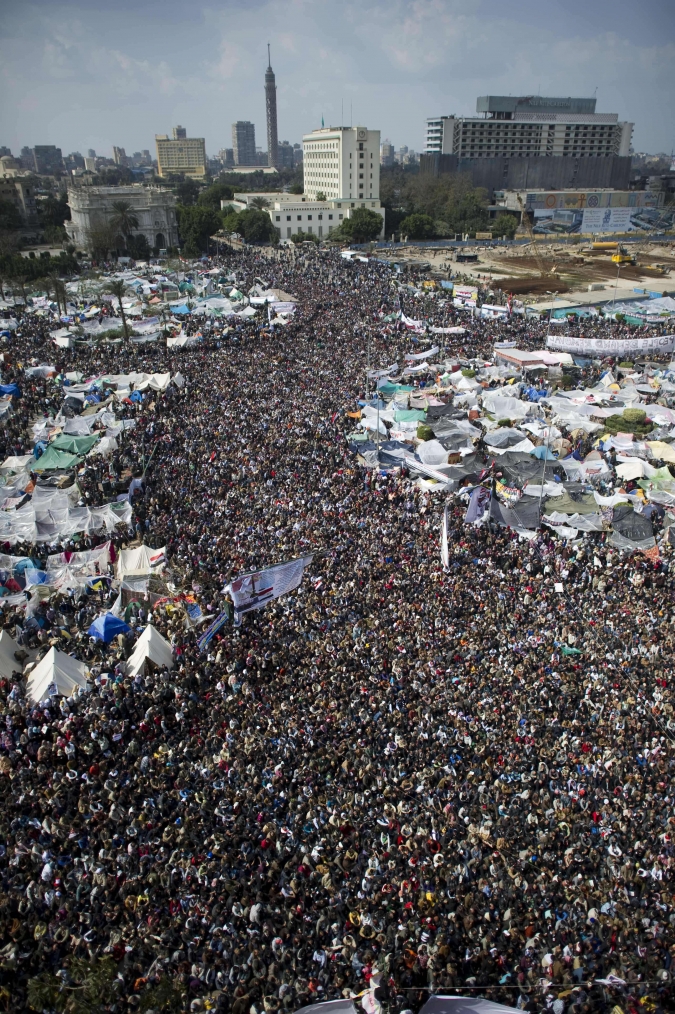
Gone ! He has resigned !

Blog at WordPress.com.

Up ↑