and Barbara Walters on her interview with the President
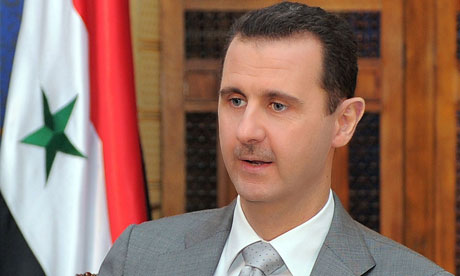
ABC’s Barbara Walters: Mr. President, you have invited us to Damascus and you have not given an interview to the American media since this crisis began. What is it you want us to know?
Syrian President Bashar al-Assad: I would like to reiterate what I used to say after 11th of September, to every American delegation I met, first of all I think the American people, people should know more about what’s happening beyond the ocean, second the American media I would like them to tell only the truth about what’s happening in the world, and for the American administration. Don’t look for puppets in the world.
Walters: Don’t look for puppets?
Assad: Only deal with administration that, on people that can tell you know about the truth, because what’s happening in the world now is taking the world toward chaos, what we need now is we need to deal with the reality. So the message now is about the reality.
Walters: Tell me what the reality here is your country is. What is the reality?
Assad: It’s too complicated, it takes hours to talk about… so let’s be specific.
Walters: Not long ago you were widely seen as a fresh pragmatic leader, a doctor whose life was in healing people, now sir, much of the world regards you as a dictator and a tyrant. What do you say to that?
Assad: What’s important how the Syrian people look at you, not how you look at yourself. So I don’t have to look at myself. This is… second, it’s about the system. You have a dictator and you have dictatorship, there’s a big difference between the two, dictatorship is about the system, we never said we are democratic country, but we’re not the same, we– we are moving forward in, in reforms, especially during the last nine month, so I think we are moving forward, it takes a long time, it takes a lot of maturity to be full fledge democratic country, but we are moving that, that direction, for me as a person, whatever I do should be based on the will of the people, because you need popular legitimacy and this is against dictatorship for person.
Walters: But you talk about the support of your people. You did have the support of your people, and then began these demonstrations, which I will discuss in more detail and crackdowns, and you have people now who don’t want you to lead. You don’t have the support of your people.
Assad: You always–
Walters: Of all of your people.
Assad: You always have people that don’t want you to be in that position, that’s self-evident, that’s normal, you cannot say that having the support of the people. All the people support you means something absolute. You’re talking about the majority, and people are against you, they’re not majority, when they are majority you don’t have to stay in that position.
Walters: But you have people who are against you who are protesting every day. It started with people marching with olive branches and with their children asking for more freedom, for freedom of press, for freedom of expression, and much of the country now, sir, is not supporting you, that’s what these, that’s what your crisis is about.
Assad: Yeah. That’s why we had the reform started quickly, after the very beginning that you described as simple, so we didn’t take the role, we didn’t play the role of stubborn government, they say they need more freedom. We right away had new party laws, new media law, new election law, new local administration law, and we are revising our constitution now.
Assad: Showing your opinion, whether you like somebody or doesn’t like government or president or whoever, should be through the election, the ballot box, this is the only way.
Walters: If you have elections, will they be elections for president?
Assad: No, no, we are going to have first of all the local administration election this month…
Walters: Local administration, but what about the president?
Assad: Yeah, after that, we are going to have the parliamentarian election, which is the most important. Talking about presidential election, it’s going to be in 2014, this is the…
Walters: People don’t want to wait that long, till 2014.
Assad: Which people?
Walters: The people who are protesting.
Assad: How, how, how much, how many, are they majority or not, that’s why you need, you need to wait first of all for the parliamentarian election, these election will tell you are you going to have majority or minority, then when you can think about presidential election, but not before, before that you don’t have any indication, any clear indication.
Walters: In 2014, when there are presidential elections, will you allow opposition parties?
Assad: That’s why we are changing the constitution.
Walters: OK. And if somebody else wins, will you step down in 2014?
Assad: If he wins he’s going to be in my position, I don’t have to step down, he’s going to be president. So you don’t step down. He will win the election, he will be president. So step down means you leave, while if you win the election, he’s going normally, he’s going to be in that position instead of me.
Walters: Mr. President, you once had positive things to say about President Obama. Now President Obama says, and I quote, “President Assad has lost his legitimacy to rule, he should step down.” What do you say to President Obama?
Assad: I’m not a political commentator. I– I comment more on action rather than word. At the same time if I want to care about something like this I would care, I would care about what the Syrian people wants. Nobody else outside Syria is part of our political map, so whatever they say we support, we don’t, he’s legitimate, or he’s not, it’s the same for me. For me what the Syrian people want, this is the popular legitimacy that put me in that position, and this is the only thought that can make me outside, so anyone could have his own opinion, whether president, official or any citizen, it is the same for me, outside our border.
Walters: Public opinion doesn’t matter?
Assad: Outside Syria?
Walters: Outside Syria.
Assad: No. It’s Syrian issue.
Walters: But Syria is almost completely isolated. The prime minister of Turkey, who was your ally has said, and I quote, “no regime can survive by killing or jailing.” Jordan says you should step down, the Arab League, Syria was a founding member, have said that they have suspended you, you’ve lost all the support of your neighbors and friends. Does that matter to you?
Assad: That depends how do you describe, or how do you define isolation and support? How did they support, how did they support me and how did they isolate me? Isolation is not by visitors or by supporting by words, it’s about your role, your position.
Assad: Nobody can support– can isolate Syria because of our position. That happened in 2005 and they couldn’t, Bush tried to isolate Syria, Chirac, Blair… everybody, they couldn’t, we have role to play. We are related to two different problems. If they isolate Syria, Syria will collapse and it’s going to be doing effect, everybody will suffer, so they don’t have interest to isolate Syria, we’re not isolated.
Walters: Sir, they are isolating you, they have economic sanctions against you, they may have further sanctions, all of these neighbors, so-called friends, have now abandoned you.
Assad: Yeah.
Walters: So you are isolated.
Assad: We’ve ban-, we’ve been under isol-, of, under embargo for the last 30, 35 years, it’s not something new, but it’s fluctuating, up and down depending on the situation, those country that you’re talking about, they have little influence on the situation in Syria.
Walters: Your neighbors have no influence?
Assad: No, no, we have, we still have good relation with them, they’re not, we’re not isolated. You have people coming and going, you have trade, you have everything, so that’s why I said, how do you define isolation, if you don’t define it, it’s just term. In reality, we’re not isolated here.
Walters: They have sanctions against you.
Assad: What kind of sanctions, nothing?
Walters: Economic sanctions against you.
Assad: It’s not implemented. They’re going to suffer, the countries around Syria the countries suffer. What about the transit, what about many, many other things, they have common interests with us, they won’t implement it, or they cannot or they’re going to suffer. That depends on the option that they are going to take, that’s why I said, isolating Syria is not something easy. It’s not only a decision that you implement, it’s not easy. So it’s not about the economy, it’s about the whole role in the, in the political arena in the Middle East, it’s not only about the economy.
Walters: You know, sir, that many leaders in the region have been overthrown.
Walters: You have seen, I am certain, the pictures of Egypt from the President Mubarak in jail, pictures of, uh, in Libya of Moammar Gadhafi killed, are you afraid that you might be next?
Assad: No, I am afraid that the people won’t support me, Syrian people.
Walters: That they won’t support you?
Assad: I mean the only thing that you could be afraid of as president to lose the support of your people that the only–
Walters: You don’t.
Assad: Thing that you should be afraid of not to be in jail or things like this.
Walters: Do you feel now that you still have the support of your people?
Assad: If you don’t have the support of the people you cannot be in this position.
Walters: But–
Assad: This is Syria. It’s not easy, it’s very compli–, it’s very difficult country to govern if you don’t have the public support.
Walters: But Mr. President, you have people an hour and a half away from here protesting you have people who have been killed and people who have been tortured and still they are protesting and you say you have the support of your people?
Assad: No, no you are mixing between the protesters and the killing, it’s different. Now we are having terrorists in many places killing.
Walters: Now?
Assad: No, no, not only now, no from the very beginning, no not now, now it’s recognized in the media that the difference, that from the very first few weeks we had those terrorists they are getting more and more, more aggressive, they have been killing. We have 1,000– over 1,100 soldier and policeman killed, who killed them peaceful demonstrations. This is not logical this is not palatable.
Walters: Let me ask the question again, do you feel now, even with people who have been protesting, that you have the support of your people?
Assad: The majority or the minority? Because you are talking about protesters.
Walters: The majority, the majority of the people you feel still support you?
Assad: Not the majority of the people only in the middle always, the majority of the Syrian people are in the middle and then you have people who support you and you have people who are against you. So the majority always in the middle. Those majority are not against you. If they are against you you cannot have stable most of the city is not Syria let’s say, as you see, you’ve been here for two days now.
Walters: You feel the majority of the people in this country support you?
Assad: I say the majority are in the middle and the majority are not against — to be precise.
Walters: OK, the majority that is in the middle support you.
Assad: Yeah.
Walters: The protest really began with after the detention and torture of children who were writing graffiti calling for your downfall; I’ve seen awful pictures of what happened, why was there such a brutal crackdown?
Assad: What happened?
Walters: Well I will give you some examples and you can tell me if you’ve seen these, these are some of the images and stories and some of the images that I saw, a 13-year-old boy who was arrested in April, a month later his body was returned to his family bearing scars of torture. A famous cartoonist whom you know who was critical of you badly beaten his arms are broken. A singer, famous singer who wrote a popular song calling for your oust he was found with his throat cut. You have seen these pictures, have you not?
Assad: No, but I, I…
Walters: Is this news to you?
Assad: No, no, no it’s not news. I met with his father, the father of that child and he said that he wasn’t tortured and he appeared on the media, you have to see, we have to see things with a stereoscopic vision with two eyes, not with one eye to be frank.
Walters: Ok, the cartoonist…
Assad: I don’t…
Walters: The cartoonist who was critical of you, I have seen his pictures, his hands were broken, he was beaten.
Assad: Many people criticize me, did they kill all of them, who killed who, most of the people that have been killed are supporters of the government not the vice versa.
Walters: But in the beginning, what about the singer with his throat cut?
Assad: I don’t know about him, I don’t know about every single case.
Walters: He was a famous singer, a famous song, you don’t know about it?
Assad: No I don’t think he’s famous. I don’t know about him.
Walters: You don’t know about him? Well I saw those pictures.
Assad: Famous in the United States but not in Syria.
Walters: This is.
Assad: Do you know about him? This is editing, I don’t know, I don’t know.
Walters: You don’t know?
Assad: No. I didn’t hear this story, it’s the first time for the child I met with his father and there were special investigation committee to see if there was torture, there was no torture. This is only false allegations to be frank with you that’s what I said at the very beginning of my message for the media to tell the truth not to listen to rumors.
Walters: Well in the beginning these protests, the women were marching with children carrying olive branches nobody at that point was asking for you to step down. It has escalated. Do you think that your forces cracked down too hard?
Assad: They are not my forces, they are military forces belong to the government.
Walters: OK, but you are the government.
Assad: I don’t own them. I am president. I don’t own the country, so they are not my forces.
Walters: No, but you have to give the order?
Assad: No, no, no. We have, in the constitution, in the law, the mission of the institution to protect the people to stand against any chaos or any terrorists, that their job, according to the constitution to their– to the law of the institution.
Walters: The crackdown was without your permission?
Assad: Would you mind, what do you mean by crackdown?
Walters: The, the reaction to the people, the some of the murders some of the things that happened?
Assad: No, there is a difference between having policy to crack down and between having some mistakes committed by some officials, there is a big difference. For example, when you talk about policy it’s like what happened in Guantanamo when you have policy of torture for example we don’t have such a policy to crack down or to torture people, you have mistakes committed by some people or we heard we have some allegations about mistakes, that is why we have a special committee to investigate what happened and then we can tell according to the evidences we have mistakes or not. But as a policy, no.
Walters: Have there been mistakes made in this crackdown, yes?
Assad: Yes, for one reason because we don’t, when you don’t prepare yourself for new situation you are going to make mistakes.
Walters: OK, have the people who made the mistakes been found accountable, have they been punished?
Assad: Some of them yes, according to the evidences, but you cannot puni–, punish anyone according to rumors or allegations so this is judicial committee independent judicial committee, it’s, it’s, uh, job to detain people if they are guilty and to send them to the court for prosecution.
Walters: So some people have been found accountable?
Assad: Yes, according to my knowledge from the very beginning.
Walters: Last week an independent United Nations Commission who interviewed more than two hundred and twenty five people issued a report what it said was that your government committed crimes against humanity and they went on torture, rape and other forms of sexual violence against protesters including against children, what do you say to them, I mean what I am saying again and again is that protesters were, were beaten, things happened to them, um, do you acknowledge that, do you acknowledge what the U.N. said?
Assad: Very simply I would say send us the documents and the concrete evidences that you have and we will see if that is true or not, you have not offered allegations now.
Walters: Did the U.N. not send you these documents?
Assad: Nothing at all.
Walters: You mean the first you’re hear–
Assad: They didn’t say. They don’t have even the names, who are the rape people or who are the tortured people who are they, we don’t have any names, they didn’t.
Walters: But they’ve issued–
Assad: Sorry.
Walters: Mr. President they have issued this report.
Assad: Yeah.
Walters: They have accused you and your regime…
Assad: According to what?
Walters: Well according to what they said is 225 people, witnesses, uh, men, women, children, whom they interviewed and identified and that’s when they called it crimes against humanity.
Assad: They should send us the documents, as long as we don’t see the documents and the evidences we cannot say yes that’s normal, we cannot say just because the United Nations who said that the United Nations is a credible institution first of all.
Walters: Who says if the United N–
Assad: Who said? We, we, we know that you have the double standard in the world in the United States policy in the United Nations that is controlled by the United States and this so it has no credibility so it’s about evidences and documents, whenever they have we can discuss it just to discuss the report that we don’t see in reality related to it. It is just a waste of time.
Walters: You do not think the United Nations is a credible organization?
Assad: No, for one reason, they haven’t implemented, they never implemented any of the resolutions that related to the Arab world for example the Palestinians to the Syrian land why don’t they, if they talk about human rights what about the Palestinians suffering in the occupied territory, what about my land is my people that live their land because it’s occupied by Israel, of course not.
Assad: For every citizen it is not for me as president I am telling you about the perception in the whole region.
Walters: You do, you do not think the United Nations is credible?
Assad: No.
Assad: Never it’s not something before my generation it’s something we inherited as a concept as a belief.
Walters: You have an ambassador to the United Nations.
Assad: Yeah, it’s a game we play. It doesn’t mean you believe in it.
Walters: I see. Even some of your armed forces are not remaining loyal. Some of them have defected and some of them are fighting now against you, what do you say to that?
Assad: What do you mean by defected?
Walters: Well they are– some of your armed forces have left the military.
Assad: But every year, in the normal situation you have thousands of soldiers that fled from the army. You have it normal when you have this situation you have a little bit more you have higher percentage and then you have some few officers that leave the army to be against you and this cannot say if you talk about deflection in the army different from having few people deflecting so we cannot generalize.
Walters: You don’t think that they are a great many, you think it’s just a few.
Assad: No, otherwise we have different situation. You are in Syria now you see most of the things are stable if you have defection in the army you cannot have stable country or stable major cities like Damascus, Aleppo and the majority of Syria is stable.
Walters: You describe your country now as a stable country?
Assad: In most of the areas, yes. We have trouble we have turbulence but not, not to the extent that you have a divided army. If you have divided army you are going to have real war. You don’t have war, you have– instability is different from war.
Walters: You do not feel now that you are at the brink of a civil war?
Assad: No. No, not because of our policy because of the history of this society.
Assad: We don’t think that we are on the brink of civil war because the people are aware about the need to live together that’s why.
Walters: I want to make this clear, you say that the country in general is stable, certainly we see here in Damascus since we’ve been here it’s business as usual but there are areas of this country an hour, an hour and a half away in which there is still fighting, in which there is still protest–
Assad: That’s true.
Walters: Do you see that as something important, people fighting for their freedom or do you see it as a little something here and a little something there?
Assad: No it’s, you have different components. Not everybody is fighting for the freedom, you have people who want freedom and that’s why we have reform because we recognize those people and most of the people that they need freedom. Not everybody in the street was fighting for freedom. You have different components, you have extremists, religious extremists, you have outlaws people who have been convicted in the courts and they have been escaping for, for years now.
Assad: Drugs smugglers and you have like-minded people of Al Qaeda and those so it’s different components. You have money coming from outside just for the media, uh, propaganda they give money to people they demonstrate for 15 minutes or for half an hour and in the media you see demonstration. You have everything, you have real demonstrations, you have peaceful demonstrations you have militants, you have terrorists, you have everything in the same place sometimes.
Walters: So here you have what seems to be much of the world condemning you so what’s the biggest misconception why is there this misconception in the USA, the country is stable, we have some factions what is the misconception?
Assad: First of all who is most of the world, most of the West do you mean?
Walters: Not just the West– Turkey, well Turkey, Jordan.
Assad: Turkey is not most of the world.
Walters: The members, that is not the West, the members of the Arab League, they are saying to you they are imposing sanctions, some of them are telling you to step down these are your neighbors?
Assad: There is an agenda for those countries. It’s not, it’s political gain it’s not because they don’t care about the killing, they don’t care about democracy most of these countries they have agenda not going to talk about it now, I am not going to talk about their agenda because we have information but when we have evidence we will announce it. But this is not because they care about the Syrian people.
Walters: Right.
Assad: If we talk about Turkey and the Arab League.
Walters: Yeah.
Assad: But going back to the condemnation no we still have good relation with most of the world and not vice versa, even with the neighboring countries we still have normal relation.
Walters: With who?
Assad: With our neighbors.
Walters: Not Jordan.
Assad: With Lebanon, we have trade, we have normal–
Walters: Not– well Lebanon…
Assad: With Iraq.
Walters: But what is the agenda, for example, of Turkey or Jordan or the Arab League, why?
Assad: I’d rather ask them. I wouldn’t answer on their behalf.
Walters: OK.
Assad: They will tell you they have an agenda.
Walters: Do they want to destroy you?
Assad: You should ask them, I cannot talk about their will I don’t know about their will to be frank.
Walters: One of the things that the Arab League has asked for consistently is to have monitors, to have objective people come and visit these areas where there is discontent. Will you allow monitors?
Walters: Will you now allow monitors to come into this country?
Assad: Of course.
Walters: Of course?
Assad: We want that but in line with our sovereignty.
Walters: What does that mean?
Assad: What does it mean to everything in cooperation with the Syrian government you have a state here?
Walters: Yeah but if–
Assad: They cannot just come and do whatever they want.
Walters: But if you had monitors they have to be free to look around they can’t be.
Assad: Of course they are free.
Walters: They can’t, but you are saying they have to be free with your people accompanying them.
Assad: NO.
Walters: They’re not independent.
Assad: They ask for protection so they need our people, they are asking for protection how can they go to conflicts and being killed if they want this is their responsibility.
Walters: I am going to ask this again because I want it very clear this is important. Will you allow monitors outside monitors to come into your country and look around to go to these other cities, to Homs for example will you allow them to come, yes or no.
Assad: Yes as a principle, of course we would say yes.
Walters: Under what circumstances?
Assad: To be in line with our sovereignty to do everything in cooperation with the Syrian government, they cannot say that we’re going to send, send say, for example, 15,000. It’s two sides. It’s contract you don’t make contract from one side it’s a technical issue you have technicalities I don’t know everything about these technicalities.
Assad: How to move, how to prepare, how to protect them, what their job, what’s our job>? We are party, you cannot have protocol just to explain to you very clearly you cannot accept protocol that is made there and we don’t have anything to discuss, very simply.
Walters: Are you now negotiating with the Arab League?
Assad: Of course that is what we are doing. Yeah, yeah.
Walters: You are?
Assad: Of course we are still negotiating, yes.
Walters: So you think that monitors will be allowed to come soon?
Assad: Of course, as I said we ask this before.
Walters: You asked for monitors?
Assad: Yeah before they have this–
Walters: Can they travel wherever they want?
Assad: Of course. But according to certain rules, how to discuss this rules, they are going to, when you make contract you discuss it. At the very beginning they didn’t want to discuss it with us. We said no if we don’t discuss it we cannot sign it, it will be discussed in details.
Walters: Are you now discussing with the Arab League allowing monitors to come?
Assad: Yeah, yeah.
Walters: Can outside foreign reporters come, they have not been allowed?
Assad: No, they were allowed and you are here.
Walters: I am here and I have a correspondent here, but in–
Assad: But you have been here for two days now did anyone tell you where to go or where not to go nobody you are free to go wherever you want.
Walters: I am appreciative that I have been allowed here and that you’ve granted an interview, can other foreign correspondents, American and others come into this country now?
Assad: Yeah, exactly.
Walters: We have not heard this, you will say yes?
Assad: You have to hear; to hear the truth, you have to look for the truth, the truth–
Walters: Well I’m, I’m asking you now.
Assad: But that doesn’t mean they can come without a visa. We are a country where they have to take visa. We give visa to people, maybe we don’t give visa to– we are like any other country against our sovereignty.
Walters: OK, but in–
Assad: That doesn’t mean anyone can come any time and do whatever they do.
Walters: I grant you but as soon as you say visa it means this one can’t come, that, in general now can foreign correspondents come to this country.
Assad: Of course. Yes, and we have been receiving the delegations from Europe, from the United States, from the rest of the world.
Walters: No sir, you have not been receiving delegations.
Assad: I met with them, I met with them.
Walters: Foreign correspondents?
Assad: Of course, of course foreign, they can give you the article they made interviews with me.
Walters: But now?
Assad: I met with two British recently, one a French we meet we had and others.
Walters: Let me ask you once more time so we are clear, in general, can foreign correspondents, if they are accredited, come to this country?
Assad: Of course they can come.
Walters: They can?
Assad: Yeah of course.
Walters: You said that if there is any outside attempt to bring you down it would mean an earthquake, what do you mean by that?
Assad: Syria is the fault line in the Middle East. You know, the Middle East is generally it’s very diverse in ethnicities, in sects, in religions, but Syria the most diverse and this is the fault line where all these diversity meet so it’s like the fault line of the Earth of the, of the Earth. When you play with it, you will have earthquake that is going to effect the whole region. So playing don’t mean to overthrow me or to deal with me it’s not about me it’s about the, the, the fabric of the society in this region that is what I meant.
Walters: You know your father led this country for 30 years until his death. You have now led the country for more than a decade.
Assad: Yes.
Walters: If the Arab Spring means anything it seems to be that the era of one-family rule is over.
Assad: OK, no I never supported being a dynasty, is that correct?
Walters: That’s correct.
Assad: Yeah of being a dynasty.
Walters: You are not raising your son to succeed you?
Assad: No, no and my father never spoke with me in politics, you don’t believe this. We never and he never tried to prepare me. He always wanted me to be a president against what you hear in the media that he asked me to come from London. He wanted me to go back to London to continue and I refused.
Walters: But your older brother was supposed to be, take your father’s place when he was killed.
Assad: No, he had no posit–
Walter: Your father asked you to come back?
Assad: My brother had no position when my father was there and I had no position. I wasn’t, I was nothing in the party, I was only, I was in the military since I was a doctor, nothing else.
Walters: But your father did not expect his sons to take his place?
Assad: Never, he never spoke about this.
Walters: Really?
Assad: Yeah.
Walters: Then, then with all due respect you’re a doctor you’re an ophthalmologist how did you become the leader of this country?
Assad: I was a military doctor and according to our laws that military law you can move from how to say sector to sector within the army.
Walters: OK.
Assad: So I left the, I was military doctor. Even when I was in London I was a military doctor. They only sent me to London not the Ministry of Higher Education, for example, or anything or the university or university. And so I was in the army since 1985 since I was made a student at the school, few people knew that. I wasn’t civil doctor. So anyway when I became, when I became president, I became president through the party after President Assad died. Not, not– When he was alive I was not there I didn’t have any position.
Walters: But when your father died the son became the leader.
Assad: Yes.
Walters: So there were not free elections to make you the leader.
Assad: No anyway we don’t have free election we have referendum this is our constitution.
Walters: So your constitution said we want the son?
Assad: No not the constitution, the party.
Walters: The party said?
Assad: And the people demonstrating and they surrounded the parliament they said we need a president so many people who didn’t want the president in the government they accepted this new president and I nominated myself, before that I never thought about it.
Walters: So when you have elections which you say is in 2014, you will have opposition parties?
Assad: Yeah.
Walters: Yes.
Assad: We have them already now.
Walters: OK and if they want somebody else and not you, you say OK and you step down?
Assad: The people will say OK, the people say OK. Of course you have to be, to leave that is self-evident you don’t have to discuss it. To stay to be president while the people don’t want you how can you, how can you succeed.
Walters: You are not training your eldest son who is now, 8?
Assad: He’s 8. No.
Walters: To take your place?
Assad: No I was never trained to be in this place.
Walters: Do you sometimes wish that you were still an ophthalmologist?
Assad: No, because I was in the public sector anyway as son of president, I couldn’t have my own clinic and get money from the people, so I was in public sector now in wider public sector in the same place. So you wish you still have kind of let’s say emotion and feeling toward that job and I am still in touch with the new innovations in that field. But you cannot look back to see yourself as a doctor now we have more important position.
Walters: You have said often that you don’t see yourself doing this job for life. You’ve said you’re doing it for your country. With all the turmoil in your country is it perhaps better for Syria that you no longer remain its leader?
Assad: I don’t have problem. For me Syria as a project, project of success, if you don’t succeed you don’t have to stay in that position and that success again depends on the public support without public support you cannot, whether you are elected or not. It’s not about the election, now it’s about public support. This is the most important thing. So when I feel that the public support declined, I won’t be here even if they say, if they ask or not I shouldn’t be here if there is no public support.
Walters: OK.
Assad: That’s conclusive.
Walters: So you are still having protests and now your military is involved and there are armed people on the other side there is turmoil in your country but you are saying that in general you have the support of your people?
Assad: Yeah but let’s wait for the elections to be, to be clear.
Walters: That’s too, no but that’s, that’s, this is 2011 we are talking this can’t go on for two years.
Assad: No, no, no I am talking now about these next elections now we are going to have the parliamentary elections.
Walters: And…
Assad: I belong to the Bath Party we will see what the position of our party is because this is an indication it’s important it’s not only the person you are part of another party of another identity.
Walters: Yeah but your party is not going to want to give up power?
Assad: Yeah no to give up why to give up if the party has the right like the other party to compete and win the elections. But to see through the election do we still have support as a party, if yes well this is an option and if not they have another option.
Walters: And your parliamentary elections which are when in two months?
Assad: In three, two to three months.
Walters: And they will be open enough so that people can vote against it?
Assad: Of course. Anyone.
Walters: And that would be the end of the Bath Party and you as terms of leadership?
Assad: If the people said no to the Bath Party, if they lost you, can say this is the end.
Walters: Is there an opposition that they can go to?
Assad: We have opposition but it takes time to have strong opposition you have so many figures now if they unified themselves and go to the election you can have one strong election that depends on the tactic that they are going to adopt I cannot tell you they are going to be strong or not I don’t know. And I don’t know about how much among the people they have, how much support they have among the people I cannot tell you.
Assad: As I said, it’s about personal mistakes. Not about policy. There was no policy of cracking down.
Walters: Who made them?
Assad: There was policy of facing the terrorists when you have militants; you have to face the militants. You don’t allow in the United States to have militants, and remember what happened in Los Angeles in the ’90s, when you send the army to the city, to face the terrorists. That the same.
Walters: Our protest, we don’t kill people. And we have– we have press seeing it all.
Assad: Yeah, but nobody knows yet who killed the people. Because– when the same question who killed the 1,100 soldiers. If you don’t know, if you don’t know who killed those, you can’t tell who killed the civilians.
Walters: The crackdown in the beginning, the brutality. Do you think it went too far?
Assad: I cannot tell you this, without the evidence. You ask me to tell you according to rumor, or to reports. It’s not enough for me, as president. For me, when there is policy, I could say yes, or no, when there is individuals with concrete evidence, who committed mistake, I will say yes or no.
Walters: Did you give the order? For the crackdown?
Assad: No, we gave the order to implement the constitution, and the law. That’s the order and that’s the job of the president.
Walters: You gave– but who gave the order to react against the protests?
Assad: You don’t need order, because this is their job.
Walters: Well somebody had to say–
Assad: No, no, no…
Walters: You know, use guns, somebody had to say their arrests.
Assad: No, no. There was even written not to use guns, that’s why I said it wasn’t policy. Their job is to prevent people like any other country, you have the own means. Whenever they used machine guns against civilians, this is breaching of the law.
Walters: It happened.
Assad: In some cases yes, and they were caught, and they were detained I mean.
Walters: People went from houses to houses. Children were arrested. I saw those pictures.
Assad: When, but you, to be frank with you, Barbara, I, you don’t live here– how did you know all this– this– you have to be here to see. We don’t see this. So it cannot depend on what you hear in the United States. You have to–
Walters: But I saw reporters who brought back pictures.
Assad: Yeah but how did you verify those pictures? Yeah so, that’s why we are talking about false allegations and distortion of reality in this region, and most of the things that happened. In Syria, not reflected in the media, I’m being frank with you. So I cannot answer about fake pretenses, I can only talk about reality. Yeah.
Walters: Some people say that it’s not the protests that may bring you down, but the economic sanctions, uh, now. Not just the West, but your, as we said, your former allies having imposed economic sanctions on your country.
Walters: Shell Oil for example, which is the largest oil production in Syria, has stopped production. How much are the economic sanctions are going to hurt Syria?
Assad: How much, it’s difficult to tell. But it– it will hurt from us, one aspect, but from another aspect, it will have positive effects because of course this is surprising. But actually, we were under sanctions, strong sanction, in the second half of the ’80s, and we built our industry in that period of time. So you can use sanctions for example the– agreement between Syria and Turkey, wasn’t fair.
Assad: It was against our interest. Many industrialists in Syria, many business men, most of the economic sector were against it, and they asked our government many times, to stop working with this treaty. They sent to see– I think two folds, export, something like this, I don’t have the numbers now, so, you have– if you– if you are smart enough, if you are creative enough. You know, every cloud has silver lining, and we have a lot of political clout in this region. So we have lot of silver lining, but you have to see the silver lining to know how to– to have the positive. So it will affect you badly, from one side, but you can decrease the harm. I wouldn’t say you can win now, let’s not exaggerate, but you can decrease this harm and get some benefits from it.
Walters: How can you get benefits from economic sanctions?
Assad: First of all we are not oil producing country, we are not like Iraq. Iraq was depend– oil dependent. We are not oil dependent, we produce. We can leave the– we export the food. We eat our food.
Walters: So you were saying that it would take more maybe creativity, more industry.
Assad: Exactly.
Walters: In this whole country to become independent.
Assad: Exactly. And we can. We don’t have problems if– and this could be the strong point of Syria. That’s why I said they cannot isolate Syria.
Walters: They cannot isolate you?
Assad: No.
Walters: I have seen the markets filled with food so I, you are able to– to keep feeding your people.
Assad: Of course, no, we don’t have trouble. We can– we can eat two years without, with full embargo. We export wheat to many countries.
Walters: Your wife was raised and went to school in England. It has been said that she is a force for moderation. I’d like to know, when you and she discuss things, um, what has she said about what’s happening in your country?
Assad: We are used to live as one family in Syria, because Syria is small country. Whenever you have one crime, the whole country will hear about it. It’s very safe country. Of course it’s still the same pain, to feel– we feel sorry about what’s happening, but at the end– the– the, the discussion– is always and I think everywhere in Syria is part– what can we do to have to prevent more blood shedding in Syria.
Walters: Your wife has her own projects in the country.
Assad: Yes. Development project. Charity of course.
Walters: But do you discuss the situation?
Assad: Of course yes. That’s what I said, part of the solution is how to make life better in different aspects. Development is part of the solution. It’s not only about demonstrations and militants and terrorists and things like that.
Walters: Is your wife a source of support for you?
Assad: Of course, all my family.
Walters: Let me ask about the children. Because you have three young children, 9, 8 and 6.
Assad: Yes.
Walters: What have you told them about what’s happening in this country?
Assad: The reality.
Walters: Which is what?
Assad: What– what I told you.
Walters: What do you say to them?
Assad: I told them all.
Walters: Especially the older boy?
Assad: I told them about terrorists, I told them about people– innocent people being killed. About investigation we have to know who– who helped looked for the reason. Everything.
Walters: You’ve told them about innocent people getting killed?
Assad: Of course.
Walters: Some of whom are children.
Assad: Uh we didn’t talk about whether– innocent is innocent. Whether it’s children or– is innocent.
Walters: Do they see pictures? Do they have Facebook?
Assad: Of course.
Walters: Or YouTube?
Assad: Of course. Of course.
Walters: Do they ask questions?
Assad: They can watch the Internet every day. Of course. They ask a lot.
Walters: Pay attention?
Assad: They are very curious to know.
Walters: What do they say?
Assad: About the question– about what’s happening? Why– why do you have militants, why do you have evil people? Why do the– why do those people want to kill?
Walters: I want to hear the answers, what do you say?
Assad: I told them a lot of things. Sometimes people commit mistakes, sometimes you have bad people. In every society you have bad people. So they kill more to undermine the government, that’s what you explain to the children.
Walters: How does this all end? How do you restore peace?
Assad: By reform and facing the terrorists.
Walters: Is the reform, too little too late?
Assad: No, because anyway, the reform will not have direct impact on the terrorists, because most of the terrorists, and I would say, all the terrorists, they don’t have political agenda. They don’t care about reforming. The reform is for the majority in the middle that I told you about and the people who support you, and the people who are against you. But terrorists don’t care about this.
Walters: Will you allow freedom of expression, freedom of press?
Assad: We already have it.
Walters: You don’t have freedom of press, they can’t criticize you.
Assad: We have in every– every society, you have a, like– I wouldn’t call taboo? You have a limit.
Walters: Taboo? Not in mine. We have freedom of press.
Walters: How do you hope that you will be remembered?
Assad: By doing the best I can, can for, for this country. Whether you agree, or whether the people agree or don’t, don’t agree, but at– at the end, I was not a puppet. I care a lot about being independent president for independent Syria. And do my best, according to my convictions. That’s the most important thing. At the end, even if they disagree with you, they will respect you.
Walters: What do you think is the biggest misconception that my country has of what’s happening here, if indeed there is a misconception?
Assad: Misconception about a lot of things. I cannot tell you, because it’s so many facts, distorted facts, you have them in the media. But the most important thing, as accumulation of these facts, you don’t have vision. The problem with the West in general, especially the United States, They don’t have vision about– at least my region, I wouldn’t talk about the rest of the world — failing in Iraq, failing in Afghanistan, failing in fighting terrorism.
Assad: The situation is getting worse and worse in the rest of the world. The question you ask as American, what did you get? Well, where did you win? Well, you spent trillions, where you could spend few hundred of millions, and get the terrorists out. So that will– you– it harms your interest, but at the same time, it harms others’, interest. So this is the misconception I think.
Walters: Dealing with the protest– with the protesters. What is the misconception, if there is any?
Assad: About this situation?
Walters: About the protests, that’s what is being focused on now.
Assad: OK, we don’t kill our people, nobody kill. No government in the world kill its people, unless it’s led by crazy person. For me, as president, I became president because of the public support. It’s impossible for anyone, in this state, to give order to kill people.
Assad: We have militants, those militants killing– soldiers and killing civilians. This morning, we lost nine civilians, killed in Homs, in the middle of Syria, and they are supporters. Most of the victims are support government supporters. That’s something they don’t know, they think every civilian is demonstrator, and every civilian is against the government, which is not true.
Walters: But the protesters in the beginning, who were killed…
Assad: Yeah.
Walters: What about them?
Assad: What do you mean?
Walters: OK. Our view is there are peaceful protesters, they were killed, some were tortured. It was a brutal reaction. Are we wrong in thinking that?
Assad: Every single– every brute reaction, was by individual. Not by institution. That’s what you have to know.
Assad: We don’t have institution that kill people, or give order to– for brute reaction. This is individual– and that’s what I call– what I describe as– individual mistakes.
Walters: OK. Done by the military, or done by whom?
Assad: We don’t know everything. In some cases done by the police. In some cases done by civilians.
Walters: But not by your command?
Assad: No, no, no. We don’t have– nobody– no one’s command. There was no command, to kill or to be brutal.
Walters: So that was individual people?
Assad: Of course.
Walters: Are you remorseful?
Assad: Let me just check…
(side chat)
Assad: What do you mean remorseful? You mean being sad or– or regret?
Walters: Regret.
Assad: No, a regret– you regret when you do– when you do mistakes, when you commit a mistake. I always try to protect my people. How can I feel remorseful if I try to protect the Syrian people?
Walters: But people were killed. You’re not remorseful?
Assad: Well, just let me be. So you mean remorseful be sad?
Walters: Yeah, do you feel guilty? Guilty. Guilt.
Assad: Because if you mean guilty, it means you made the mistake. That’s why I have be precise. So if you can change the term just for me to–
(side chat)
Walters: And then I’m done. Do you feel guilty?
Assad: I did my best to protect the people, so I cannot feel guilty, when you do your best. You feel sorry for the lives that has been lost, but you don’t feel guilty — when you don’t kill people.
Walters: Thank you, Mr. President.
Assad: Thank you.




 band annie's Weblog